- https://www.onlinelegalindia.com/blogs/memorandum-of-understanding
Table of Contents
Loved what you read? Share it with others!


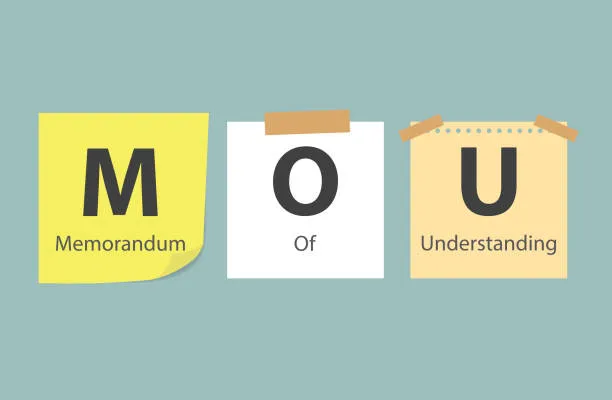
Memorandum of Understanding: Types of MOU, Features and Legal Importance in India 2026
Updated : March 13, 2026, 2:57 PM
Author :
 Vivek
Vivek
Summary
A Memorandum of Understanding (MoU) outlines mutual intentions between parties to collaborate and serves as a preliminary framework for future agreements. Depending on its nature, it can be binding or non-binding and varies by purpose commercial, government, educational, or research-related. MoUs may also be bilateral or multilateral, depending on the number of parties involved. Understanding these types helps define enforceability, clarify responsibilities, and prevent disputes. NoBroker’s legal experts assist in drafting, reviewing, and finalising all types of MoUs, ensuring clarity, legal protection, and smooth collaboration.
Table of Contents
In the world of business and legal agreements, a Memorandum of Understanding (MoU) serves as a vital preliminary document. It is a formal agreement that records the mutual intentions and a common line of action between two or more parties before a formal contract is signed. MoUs are essential in business, government, and international relations as they create a foundational roadmap for collaboration. It is crucial to understand that while an MoU signals serious intent, it is generally not legally binding, acting as a formal "handshake" to guide the parties toward a future definitive agreement.
Features of an MoU
Before exploring the various types of MoU, it is important to recognize the core characteristics that define this unique document and distinguish it from a legally binding contract.
- Declaration of Mutual Goals: The primary function of an MoU is to clearly state the shared vision and objectives of all participating parties. It serves as a written record of the consensus reached during initial negotiations, ensuring that everyone involved is aligned on the core purpose of the collaboration.
- Preliminary and Foundational Framework: An MoU acts as a skeletal structure or a blueprint for a future, more comprehensive legal agreement. It establishes the basic terms, scope, and responsibilities that will be expanded upon in a detailed, legally enforceable contract at a later stage.
- Inherent Flexibility: Unlike rigid and highly detailed contracts, MoUs are typically more flexible. They allow parties the freedom to explore the terms of their potential partnership and make adjustments as negotiations progress, without being locked into strict legal obligations from the outset.
- Conditional Enforceability: A key feature is that an MoU's enforceability can be conditional. While the main body of the document is often non-binding, specific clauses—such as those pertaining to confidentiality, exclusivity, or governing law—can be explicitly drafted to be legally enforceable to protect the parties' interests during the negotiation period.
- Clarity of Preliminary Roles: An effective MoU assigns preliminary roles and responsibilities to each party. This early-stage clarification helps prevent misunderstandings and ensures that each party knows what is expected of them as they move toward finalizing the partnership.
Types of MoU
A memorandum of understanding for partnership or any other form of collaboration can be categorized based on several factors, including its legal status, its specific purpose, and the number of parties involved. Understanding these classifications is essential for drafting the right kind of document for your needs.[1]
1. Based on Legal Binding Nature
The most critical distinction among MoUs is their legal enforceability. This determines whether a court of law can compel the parties to adhere to their stated commitments.
- Binding MoU: This type of MoU is drafted with the clear and explicit intention of creating legally enforceable obligations. It contains all the essential elements of a formal contract, such as offer, acceptance, and consideration, and uses specific language to indicate that the parties intend to be legally bound. In case of a breach, the aggrieved party can seek legal remedies in court.
- Non-binding MoU: This is the far more common form of an MoU. It functions as an "agreement to agree" or a "gentleman's agreement," outlining the parties' intentions and goodwill without creating any legal liabilities. If a party decides to withdraw or fails to perform, there is no legal recourse, as the document is not enforceable in a court of law.
2. Based on Purpose
MoUs are versatile documents used across a wide range of sectors. The content, structure, and focus of an MoU change significantly depending on its intended purpose.
- Commercial MoU: This is the most frequent type in the business world, used to explore potential collaborations. It can be a mou for business partnership, a preliminary framework for a merger, or a mou for joint venture. For example, a joint venture memorandum of understanding would define the contributions, objectives, and management structure of the proposed enterprise. It often serves as the initial step before a detailed joint development agreement is drafted.
- Government/Institutional MoU: This type of agreement is signed between different government departments, between a government body and a public-sector undertaking, or between a government agency and a non-profit organisation (NGO). These MoUs typically focus on cooperation for public infrastructure projects, policy implementation, research, or social welfare initiatives.
- Educational MoU: Commonly used in the academic sector, these MoUs are signed between universities, colleges, or schools to facilitate partnerships. They lay the groundwork for student and faculty exchange programs, joint research projects, shared academic resources, and collaborative curriculum development.
- Research & Development (R&D) MoU: This MoU is specifically designed for collaborations focused on innovation and technology. It is frequently used when a tech company partners with a university or a research institute to work on a new product or scientific discovery. The MoU typically outlines the research objectives, intellectual property rights, funding, and the roles of each collaborating entity.
3. Based on Parties Involved
An MoU can also be classified based on the number of entities that are signatories to the agreement.
- Bilateral MoU: This is the most straightforward type of MoU, involving an agreement between two distinct parties. A classic example is a memorandum of understanding between two partners who are in the initial stages of forming a new business.
- Multilateral MoU: This is a more complex agreement that involves three or more parties. Multilateral MoUs are necessary for large-scale projects, industry-wide collaborations, or international treaties where multiple stakeholders must align their goals and responsibilities to achieve a common objective.
Importance of Knowing MoU Types
Understanding the different types of memorandum of understanding is a practical necessity for any individual or organisation planning a new collaboration.[1]
- Determining Legal Standing: Knowing the type of MoU helps you understand whether the commitments made are legally enforceable or are merely statements of intent, which is crucial for risk assessment.
- Defining the Scope of Partnership: The chosen type of MoU helps in setting clear boundaries and expectations for the collaboration, ensuring all parties have a unified understanding of the project's scope.
- Aiding in Precise Drafting: When you know the specific purpose of the MoU (e.g., commercial vs. educational), you can draft a more effective and relevant document that includes the appropriate clauses and terminology.
- Preventing Misunderstandings: A clearly defined MoU, regardless of its type, aligns the expectations of all parties from the outset, which is the most effective way to prevent future disagreements and disputes.
Key Components of a Well-Drafted MoU
To be effective, any MoU, regardless of its type, must contain several essential components to ensure absolute clarity. The standard mou format in India includes the following key sections: [1]
- Parties Involved: The full legal names and registered addresses of all participating entities. This section clearly identifies who is entering into the agreement.
- Core Purpose and Objectives: A clear, unambiguous statement that defines the primary goal of the collaboration and what the parties hope to achieve together.
- Contributions and Responsibilities of Each Party: A detailed breakdown of the specific roles, duties, and contributions expected from each party. This section clarifies "who will do what."
- Duration and Timeline: The official start date of the understanding, its proposed duration, and any critical timelines or milestones that need to be met.
- Confidentiality Agreement: A legally binding clause that obligates all parties to protect any sensitive or proprietary information shared during the negotiation process.
- Dispute Resolution Process: An agreed-upon mechanism, such as mediation or arbitration, for resolving any disagreements that may arise, which helps in avoiding lengthy and expensive court proceedings.
- Signatures of Authorized Representatives: The dated signatures of individuals who have the legal authority to represent each party, signifying their consent to the terms outlined in the document.
How NoBroker Can Help with Legal Services
While a Memorandum of Understanding might appear simpler than a contract, drafting one without proper legal expertise can lead to ambiguities, especially in significant transactions like real estate deals. A poorly written MoU can result in disputes over property ownership or financial obligations. NoBroker’s legal services provide access to experienced lawyers who can help you draft and review all types of MoU, ensuring clarity, protecting your interests, and creating a solid foundation for your partnership.
Frequently Asked Questions?
Q1. What is an MoU and how is it different from a contract?
Ans: An MoU outlines the intentions of parties to collaborate and is generally not legally binding. A contract, on the other hand, is a legally enforceable agreement with specific obligations and legal consequences for non-compliance.
Q2. Is an MoU legally binding?
Ans: Typically, no. However, an MoU can be made legally binding if it includes all the essential elements of a contract and explicitly states that the parties intend to be legally bound by its terms.
Q3. What are the key components of an MoU?
Ans: A well-drafted MoU includes the details of the parties, the purpose of the agreement, the roles and responsibilities of each party, the duration, confidentiality clauses, and a dispute resolution mechanism.
Q4. Can an MoU be converted into a contract?
Ans: Yes, an MoU often serves as the foundational first step. The terms and mutual understanding established in the MoU are used to draft a more detailed and legally binding contractual agreement.
Q5. What is the difference between bilateral and multilateral MoU?
Ans: A bilateral MoU is a formal agreement between two parties. A multilateral MoU is a more complex agreement that involves three or more parties, typically for large-scale or multi-stakeholder projects.
ARTICLE SOURCES
Most Viewed Articles
Franking Charges Explained: Meaning and Benefits
January 31, 2025
1117026+ views

Society Maintenance Charges : Meaning, Cost, Types and Calculation
January 31, 2025
202866+ views

Daughter's Right in Fathers' Property - the Law is Finally Equal for both Genders?
June 1, 2025
146942+ views

BBMP E-Khata Registration process for property owners in Bangalore, Karnataka in 2025
March 19, 2025
145603+ views

Rectification Deed Format and Process in India 2026
June 1, 2025
137000+ views
Author
Loved what you read? Share it with others!
Recent blogs in
Arbitration Clause in Leave and License Agreement: Meaning, Validity & Dispute Resolution Guide
March 24, 2026 by Vivek Mishra
Difference Between Perpetual Lease Deed and Conveyance Deed: Meaning & Key Features
March 23, 2026 by Ananth










 Full RM + FRM support


Join the conversation!