Commercial electricity in Haryana costs ₹6.45 per unit (kVAh) up to 10 kW, ₹6.80 for 10-20 kW and ₹6.60 for 20-50 kW, plus a fixed charge of ₹100-₹250/kW per month. Above 50 kW, HT rates are ₹6.75-₹6.95 plus ₹290/kVA. HERC kept these rates unchanged for FY 2026-27. The 10-20 kW band pays the most per unit, so check your sanctioned load. UHBVN supplies North Haryana; DHBVN the south. This guide covers bill calculation and payment.
Commercial Electricity Rate Per Unit in Haryana 2026-27
HERC's FY 2026-27 tariff order retains the applicable commercial rates for UHBVN and DHBVN consumers, with energy charges specified in kVAh based on the sanctioned load or supply voltage.
Commercial Electricity Tariff in Haryana
As per the Haryana Electricity Regulatory Commission tariff order for FY 2026-27, the energy charge for commercial customers ranges from ₹6.45 to ₹7.25 per unit for LT and HT connections, depending on the sanctioned load and supply voltage. The tariff also includes fixed or demand charges that are separate from the per-unit energy charge.
| Supply Category | Sanctioned Load / Supply Voltage | Energy Charge (₹/kVAh) | Fixed Charge | How the Rate Apply? |
|---|
| LT Supply | Up to 10 kW | ₹6.45/unit | ₹100/kW/month | One flat rate applies to the billed kVAh; there are no consumption slabs within this tariff category |
| LT Supply | Above 10 kW and up to 20 kW | ₹6.80/unit | ₹100/kW/month | This category has the highest LT energy charge at ₹6.80/kVAh |
| LT Supply | Above 20 kW and up to 50 kW | ₹6.60/unit | ₹250/kW/month | The energy charge is lower than the 10-20 kW category, but the fixed charge increases to ₹250/kW/month |
| HT Supply | 11 kV | ₹6.95/unit | ₹290/kVA/month | Applies to HT consumers supplied at 11 kV; the fixed charge is ₹290/kVA/month |
| HT Supply | 33 kV | ₹6.85/unit | ₹290/kVA/month | The energy charge is lower than the 11 kV rate for supply at this higher voltage |
| HT Supply | 66/132 kV | ₹6.75/unit | ₹290/kVA/month | The energy charge decreases further for supply at these higher voltages. |
Note: The energy charge is only one part of a commercial electricity bill. Depending on the connection, the final amount will also likely include electricity duty, fuel and power purchase adjustment surcharge, fixed or demand charges and other charges.
How Is a Commercial Electricity Bill Calculated?
A commercial electricity bill is not calculated by simply multiplying your total units by the per-unit rate. The bill will include:
- Energy charges, evaluated based on the units consumed and applicable tariff
- Fixed or demand charges, based on the sanctioned load or contract demand
- Electricity duty, charged as applicable
- FPPAS, i.e. Fuel and Power Purchase Adjustment Surcharge
- Other charges: Any applicable taxes, municipal charges or regulatory charges.
For example, a shop with a sanctioned load of 10 kW and consumption of 1,000 kVAh would have:
- Energy charge: 1,000 kVAh × ₹6.45 = ₹6,450
- Fixed charge: 10 kW × ₹100 = ₹1,000
- Electricity duty: 1,000 kVAh × ₹0.10 = ₹100
- Municipal tax: 1,000 kVAh × ₹0.05 = ₹50
- Total before FPPAS: ₹7,600
The load band can also affect the bill. If the same shop had a sanctioned load of 11 kW, the applicable LT energy rate would be ₹6.80/kVAh. For the same 1,000 kVAh consumption, the energy charge would therefore be ₹6,800, which is ₹350 more than at 10 kW. The fixed charge would also increase by ₹100, from ₹1,000 to ₹1,100.
Who Is Responsible for Providing Commercial Electricity in Haryana?
Electricity supply in Haryana is handled by different power utilities, each with a specific role. While UHBVN and DHBVN distribute electricity to consumers, HPGCL is responsible for state-owned power generation, and HERC regulates the electricity sector and approves tariffs.
Uttar Haryana Bijli Vitran Nigam
UHBVN is one of Haryana's two electricity distribution companies. It is responsible for the distribution and retail supply of electricity in its designated areas, covering districts such as Panchkula, Ambala, Yamunanagar, Kurukshetra, Kaithal, Karnal, Panipat, Sonepat, Rohtak and Jhajjar.
Dakshin Haryana Bijli Vitran Nigam
DHBVN is the second electricity distribution company in Haryana. It handles the distribution and retail supply of electricity in its designated southern Haryana areas, including districts such as Faridabad, Palwal, Nuh, Gurugram, Mohindergarh, Rewari, Bhiwani, Charkhi Dadri, Hisar, Fatehabad, Sirsa and Jind.
Haryana Electricity Regulatory Commission
HERC is the state's electricity regulatory authority. It regulates Haryana's power utilities and is integral in approving electricity tariffs, including the tariff structure applicable to consumers. This is why the commercial electricity rate you pay is not decided independently by UHBVN or DHBVN.
Who Can Apply for a Commercial Electricity Connection in Haryana?
Any owner, tenant or company using a premises for business can apply for a commercial electricity connection, provided they can submit proof of ownership or legal occupancy. A company applying through a representative will also need to submit an authority letter or board resolution, as applicable. The connection can be applied for by:
- Property owners using the premises for commercial purposes
- Tenants or lessees operating a business from rented premises, provided they can submit valid proof of legal occupancy
- Companies, firms or other organisations applying for a connection for their commercial premises
- An authorised person representing a company or institution, with the required authority letter or resolution where applicable
- An applicant holding a valid legal occupancy arrangement, such as a sale deed, allotment letter, lease deed, rent deed, or other accepted proof of ownership or occupancy.
Documents Required for a Commercial Electricity Connection in Haryana
The documents required for a commercial electricity connection vary depending on the applicant, property and type of connection. You should in general have the following documents with you before applying:
- Proof of ownership or occupancy: Sale deed, allotment letter, lease deed or rent deed in the applicant's name. A property tax receipt or tax demand notice along with a rent deed or other legal proof of occupancy might also be accepted
- Identity proof: Electoral identity card, passport, driving licence, ration card, government-issued photo ID, PAN card or Aadhaar card
- Authority letter or resolution: If the applicant is a company, trust, educational institution or government department, the application must be signed by an authorised person and accompanied by the relevant resolution or authority letter.
- Application and load details: Details required in the new-connection application, including the applicable category and proposed load.
How to Apply for a Commercial Electricity Connection in Haryana Online
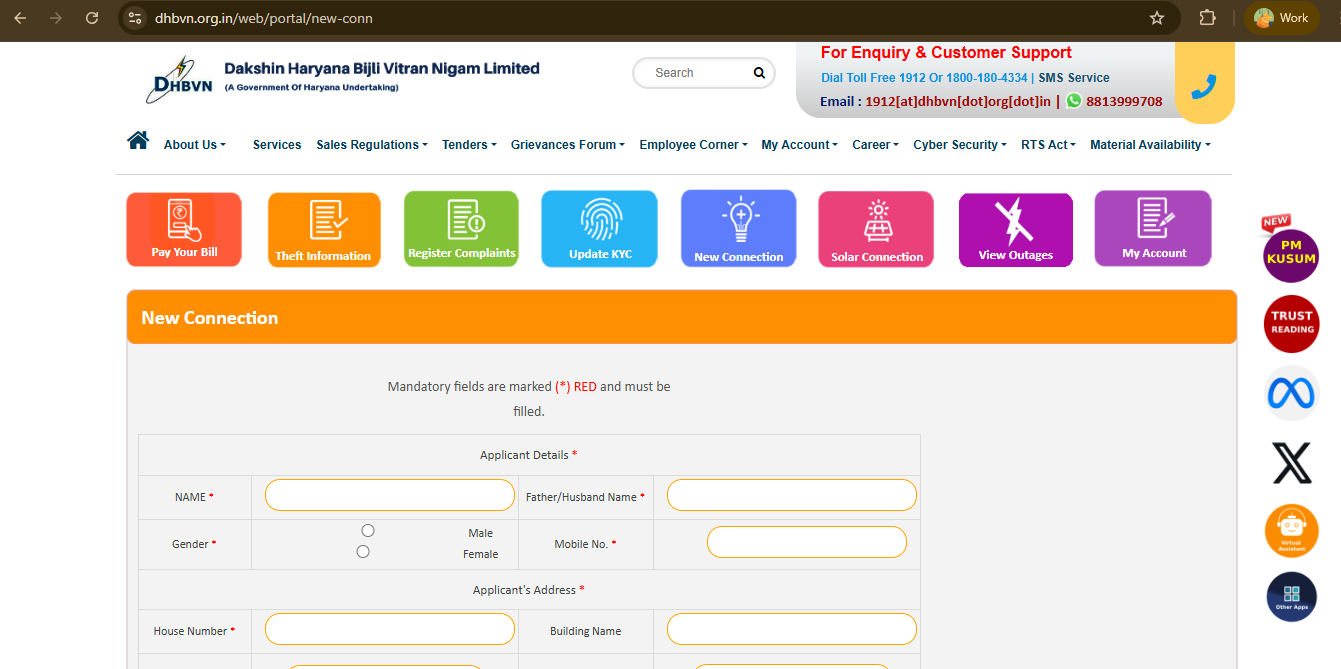
You can apply for a new commercial electricity connection through the online services provided by the DISCOM serving your area. The step-by-step process to apply is as follows:


- Step 3: Enter your applicant and property details such as your name, mobile number, email address, property address and other information as requested in the DICOM application

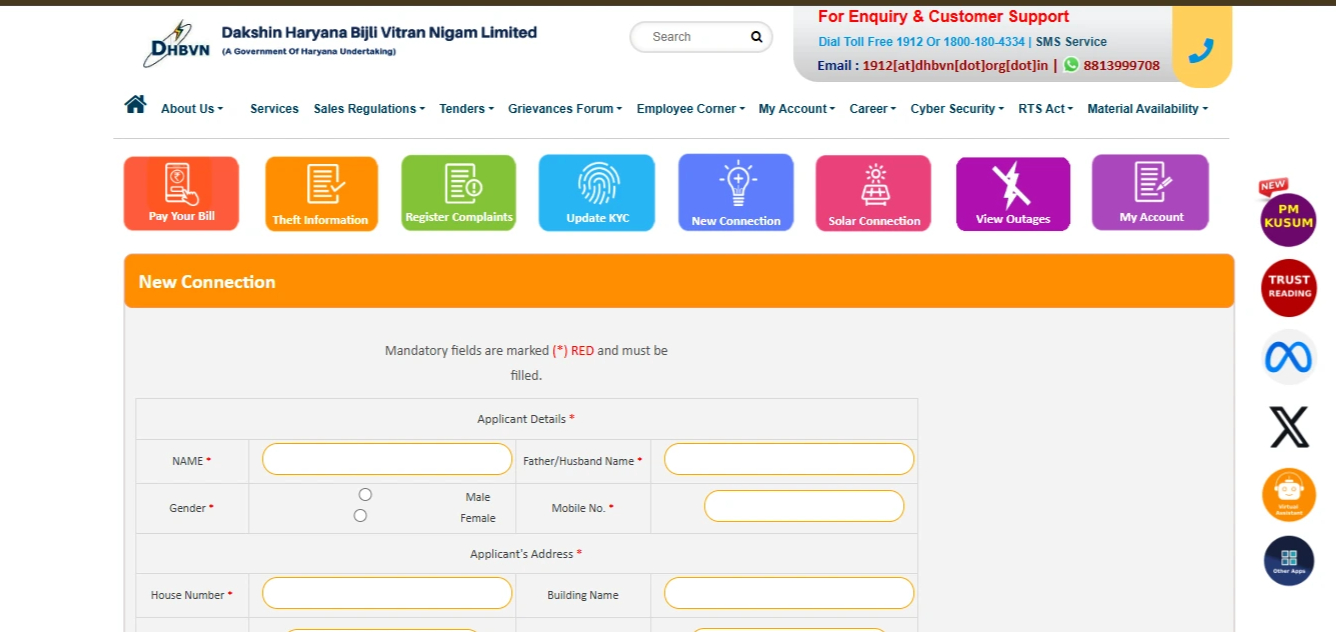
- Step 4: Select the applicable connection category and enter the load requirement in kW based on the electrical equipment and expected power requirement of your business
- Step 5: Upload the requested ownership or occupancy documents, identity proof and other documents requested by the DISCOM
- Step 6: Review the information, submit the application and pay the applicable connection charges, security deposit and other charges shown
- Step 7: The DISCOM will then process the application and, where required, carry out the necessary verification or site inspection. Any additional requirements will be communicated to you during the process
- Step 8: Once the application is approved and the required formalities are completed, the DISCOM will arrange for meter installation and release of the electricity connection.
How to Pay Your Commercial Electricity Bill Online in Haryana
You can pay your commercial electricity bill online through the website or payment services provided by UHBVN or DHBVN, depending on your connection. Here's how you can do it:
You can pay your commercial electricity bill online through the website or payment services provided by UHBVN or DHBVN, depending on your connection. Here's how you can do it:
- Step 1: Open the official payment portal for your DISCOM:
- Step 2: Enter your account number, mobile number and email for DHBVN and account number, Parivar Pehchan Patra number and Aadhar number for UHBVN, then click on proceed
- Step 3: Check the displayed consumer details and bill amount before proceeding
- Step 4: Select an available payment method and complete the transaction. UHBVN supports options such as credit/debit card, net banking and NEFT/RTGS/IMPS. DHBVN lists net banking, UPI, debit card, credit card, QR code and RTGS/NEFT
- Step 5: Save or download the payment receipt after the transaction is completed.
How to Check Your Commercial Electricity Bill and Payment Status
You can check your bill amount, due date and payment status online through the respective DISCOM's portal through details like your account number, consumer number or other bill details. Once you log in or enter your consumer details, you can check:
- Current outstanding bill amount
- Due date
- Previous bill or payment details
- Payment status
- Payment receipt or transaction details
What Happens If You Don't Pay Your Commercial Electricity Bill on Time?
Missing the due date can increase the amount you need to pay and, if the dues remain unpaid, can eventually affect your electricity supply. For a business, this can mean extra costs as well as the risk of interruption to daily operations. Here’s what you should expect:
- Late payment surcharge: UHBVN and DHBVN levy a Late Payment Surcharge of 1.5% per month, compounded monthly, on overdue amounts.
- Unpaid amount carries forward: If you do not clear the full bill, the outstanding amount can be carried forward and added to subsequent bills along with applicable surcharge.
- Disconnection notice: Under the HERC Supply Code, the distribution licensee must give at least 15 clear days' written notice before disconnecting supply for non-payment. The electricity bill itself can carry the required disconnection notice.
- Reconnection after disconnection: If your supply is disconnected, you must clear the outstanding dues and pay the applicable reconnection charge. HERC's Schedule of General and Miscellaneous Charges specifies ₹200 for a non-domestic consumer.
How to Reduce Your Commercial Electricity Bill
Reducing electricity consumption can lower the energy component of your commercial bill, but businesses should also look at their sanctioned load and operating patterns. You can reduce it by:
- Check your load band. A connection with a sanctioned load of 11 kW falls under the ₹6.80/kVAh tariff, while a connection up to 10 kW is charged ₹6.45/kVAh. If your actual requirement falls within the lower load band, check with your DISCOM whether reducing the sanctioned load would work.
- Monitor your power factor. Haryana's commercial tariff uses kVAh for these categories, so power factor can affect the amount of apparent energy billed. Businesses with power-factor issues should check their bill and consult a qualified electrical professional or their DISCOM, such as capacitor-based power-factor correction where applicable.
- Check each bill for unusual increases. Compare your monthly consumption and charges with previous bills. A sudden unexplained increase could warrant checking the meter, connected equipment or changes in operating patterns with your DISCOM.
- Check your load band. A shop at 11 kW pays ₹6.80 per unit, but at 10 kW it pays ₹6.45. If your actual use fits under 10 kW, ask your discom about reducing your sanctioned load.
- Fix your power factor. Haryana bills in kVAh, so a poor power factor raises the units you're billed for, even on small LT connections. A capacitor bank can help.
- Check each bill. A sudden jump can mean a faulty meter or equipment problem.
Bill or Payment Problem? Who to Contact
If you have an issue with your Haryana commercial electricity bill or a payment that has not been reflected, you can contact the DISCOM supplying your connection. Keep your consumer number, bill details and payment transaction/reference number ready when raising a complaint.
For UHBVN Consumers:
You can contact UHBVN for issues such as incorrect bill amounts, payment not reflected, supply-related complaints or other account-related queries. You can contact UHBVN through:
- Toll-free: 1912 or 1800-180-1550
- Email: 1912@uhbvn.org.in
- WhatsApp: 9815961912
- Missed call for no-supply complaints: 9990231912
- Online complaint: Use the UHBVN complaint portal to register and track your complaint.
For DHBVN Consumers
You can contact DHBVN through:
- Toll-free: 1912 or 1800-180-4334
- Email: 1912@dhbvn.org.in
- WhatsApp: 8813999708
- Online complaint: Register a complaint through the DHBVN consumer complaint portal.
Pay Your UHBVN or DHBVN Commercial Electricity Bill Through NoBroker Pay
You can pay your UHBVN or DHBVN electricity bill through NoBroker Pay. The platform lets you enter your consumer details, view the bill amount and complete the payment online. NoBroker Pay is powered by BBPS, giving you a secure way to pay your utility bills online.
Pay your Haryana electricity bill on NoBroker →
How to Pay Your UHBVN or DHBVN Bill Through NoBroker Pay
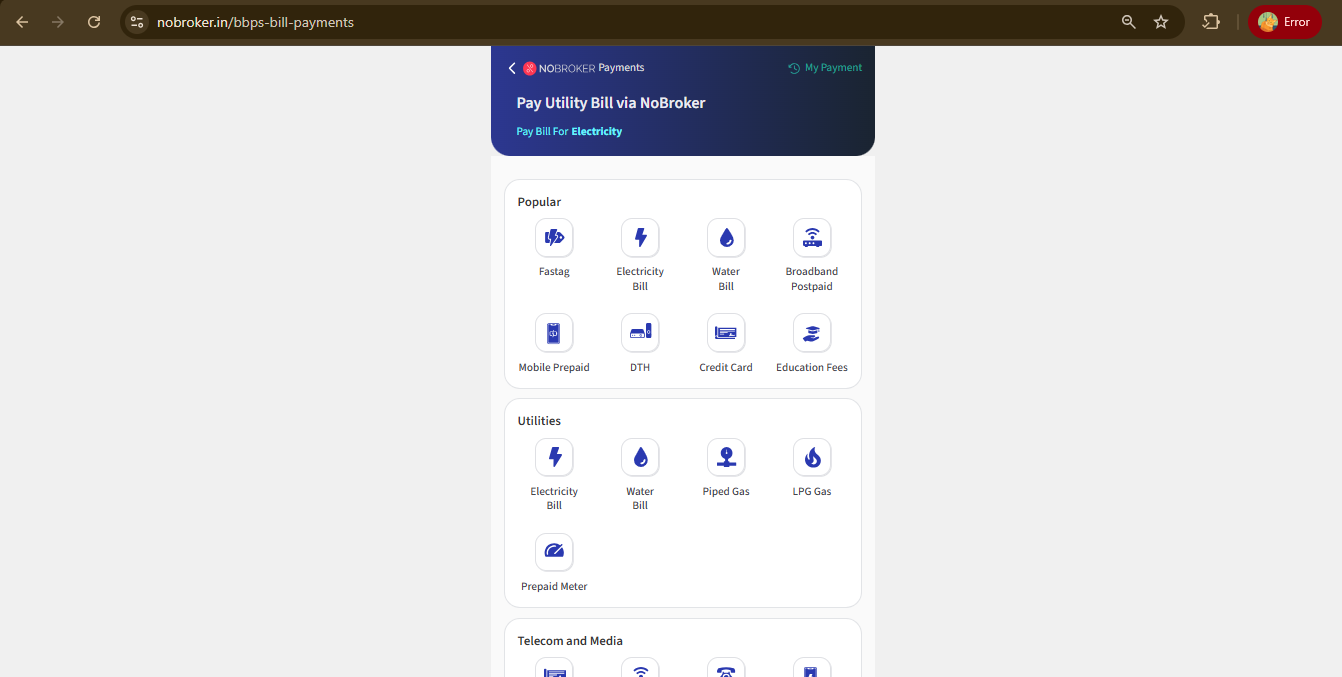
- Step 1: Go to the NoBroker Payments page and select Electricity Bill
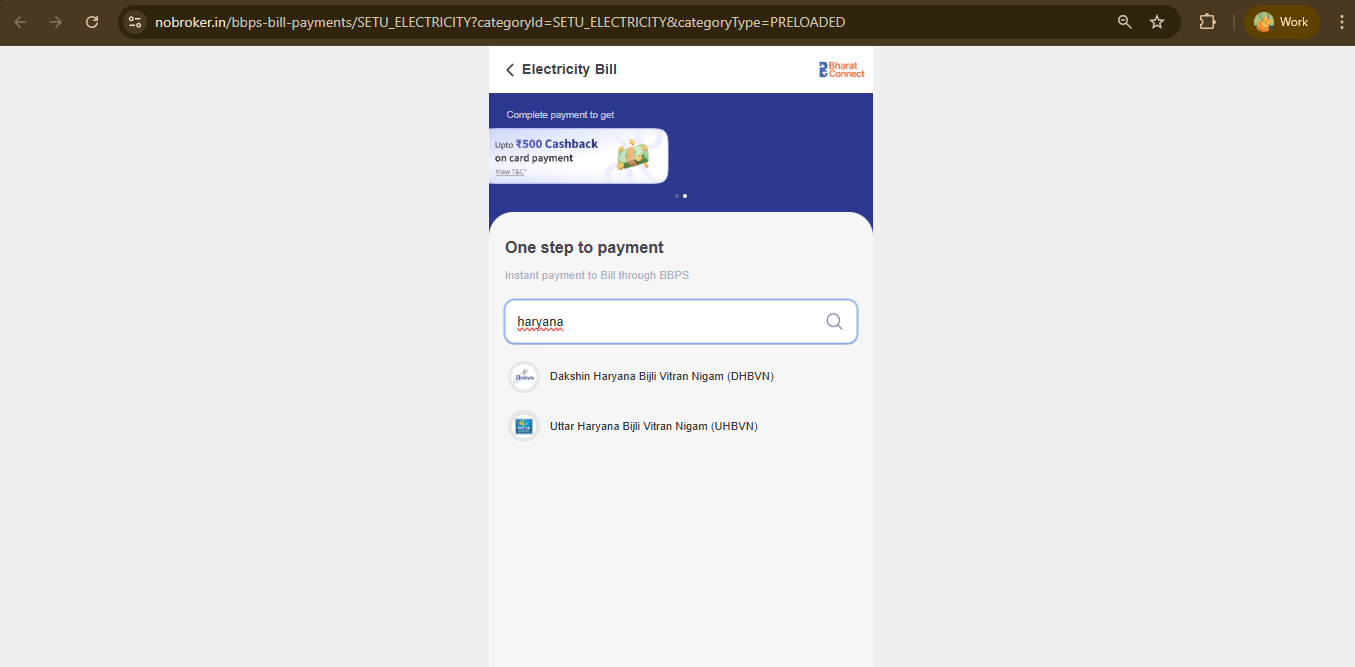
- Step 2: Search for and select UHBVN or DHBVN, depending on the DISCOM supplying electricity to your commercial premises
- Step 3: Enter your mobile number and account number as shown on your electricity bill and submit the details
- Step 4: Check the bill details and outstanding amount fetched on the payment screen. Make sure the consumer details and amount are correct before proceeding
- Step 5: Choose an available payment method, complete the transaction and save the payment confirmation or receipt for your records.
Pay your Haryana electricity bill on NoBroker →
H2: FAQs:
NoBroker Interior Design Tips & Ideas Testimonials
Most Viewed Articles
Suju is a content writer at NoBroker who writes guides for people renting a home, from finding a flat to rent agreements, deposits and tenant rights. Suju takes every rule and charge from official sources and explains it in simple steps, so tenants know what to expect before they sign.
Loved what you read? Share it with others!
Faster, better & smooth experience on the app
Exclusive app features
Real-time property alerts
Smart property suggestions
Continue on web
You're all set!
Get ready for regular updates
and more.
>
❌
Please select any bank
Thank you
for showing your interest.We will get back to you soon
You're all set!
Get ready for regular updates
and more.

Login / Sign up
Zero Brokerage.
Thousands of new listings daily.
100 Cr+ Brokerage saved monthly.