Simple 10 Lakhs Budget House Plans in 2026

Interior Design Tips & Ideas

9.6K Views
Table of Contents
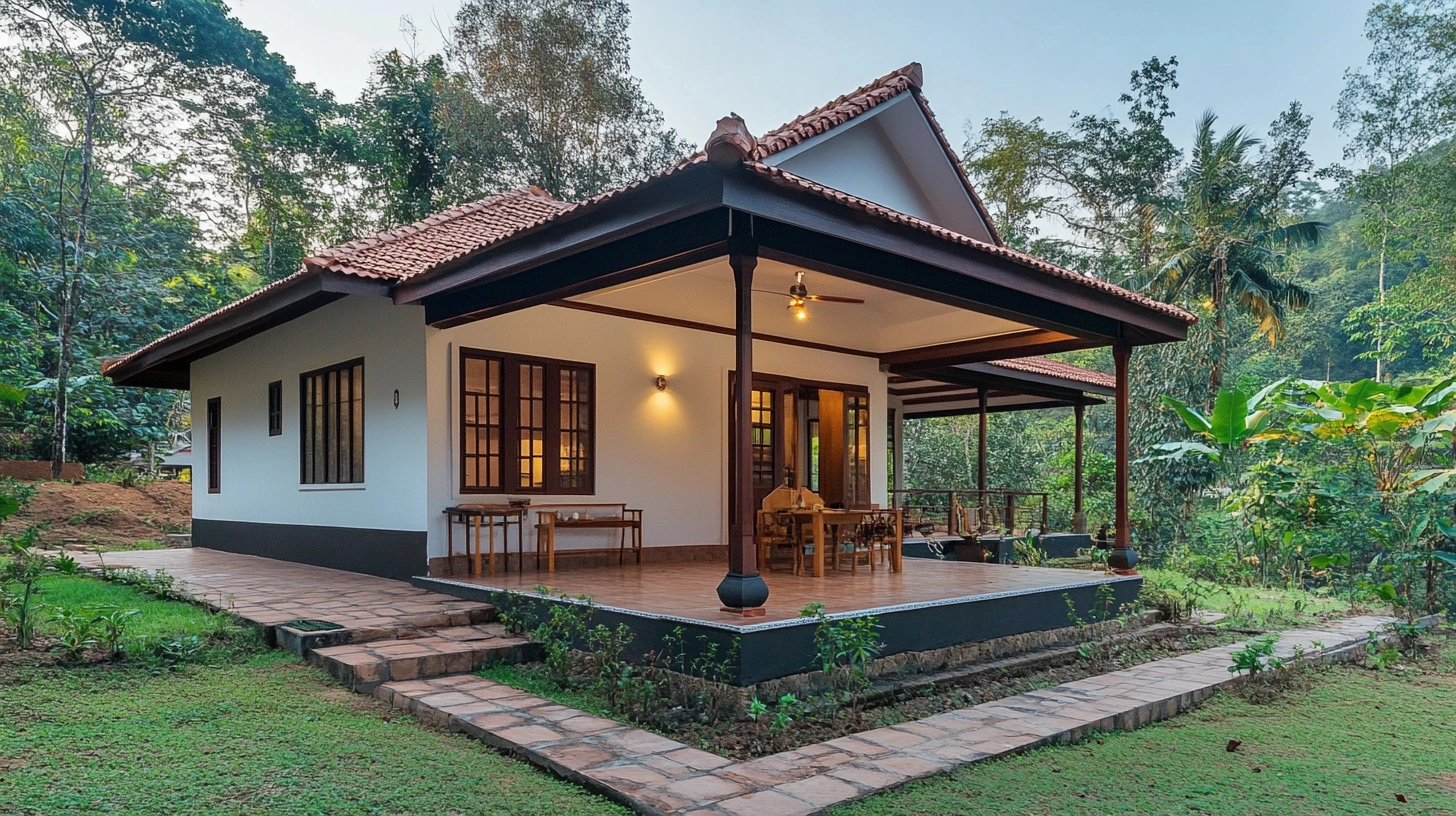
A 10 lakhs budget house plan remains a realistic option for many families, particularly in villages and smaller towns where construction costs are relatively lower. While this budget may not accommodate large built-up areas or premium finishes, it can support a comfortable home with efficient space planning and essential amenities. Many 10 lakh budget house plans focus on compact 1 BHK and 2-bedroom layouts, simple elevations, and cost-effective construction methods. This guide explores practical floor plans, simple 10 lakh house design ideas, budget-friendly construction approaches, and key factors that affect whether a 10 lakh house design is achievable in your location.
House Construction Price Table
Get a detailed cost breakdown of building a house within a ₹10 lakh budget
Recommended Reading
Top Hanging Light Ideas to Illuminate Yo...
395.8K Views


Modern Wall-Mounted Dining Table Design ...
106.7K Views
Best 3 Bedroom House Plans: Modern and S...
75.8K Views

28 Latest 2 BHK House Plans for Your Mod...
32.8K Views
Wooden Partition Walls for Living Room -...
27.3K Views
1 BHK · ~450-600 sq ft
Essential Home
- Free personalised design consultation
- 3D layout + material preview
- Modular kitchen with loft storage
- Bedroom wardrobe with mirror
- TV unit + living room design
- Site supervision & timely handover
2 BHK · ~750-1000 sq ft
Complete Home
- Everything in Essential, plus:
- Full modular kitchen + chimney & hob
- Master + guest bedroom wardrobes
- False ceiling with lighting design
- Foyer + dining area design
- Dedicated project manager
3 BHK · ~1200-1500 sq ft
Premium Home
- Everything in Complete, plus:
- Premium finishes — laminates & veneer
- Kids' bedroom with study unit
- Bathroom vanity + accessories
- Smart storage solutions throughout
- Priority support & quality checks
Online Interior Design Cost Calculator for Home
Select your apartment size to get accurate, personalised price estimates for your interiors.
Select one
Which rooms to design?
Select all rooms that need interior work and set how many of each you need.
Add rooms & quantities
Pick your interior package
Choose the plan that fits your budget and lifestyle. All plans include a 10-year warranty.
Select a plan

- Modular kitchen with standard finish
- 1–3 wardrobes based on BHK
- TV unit included
- Standard materials & fittings
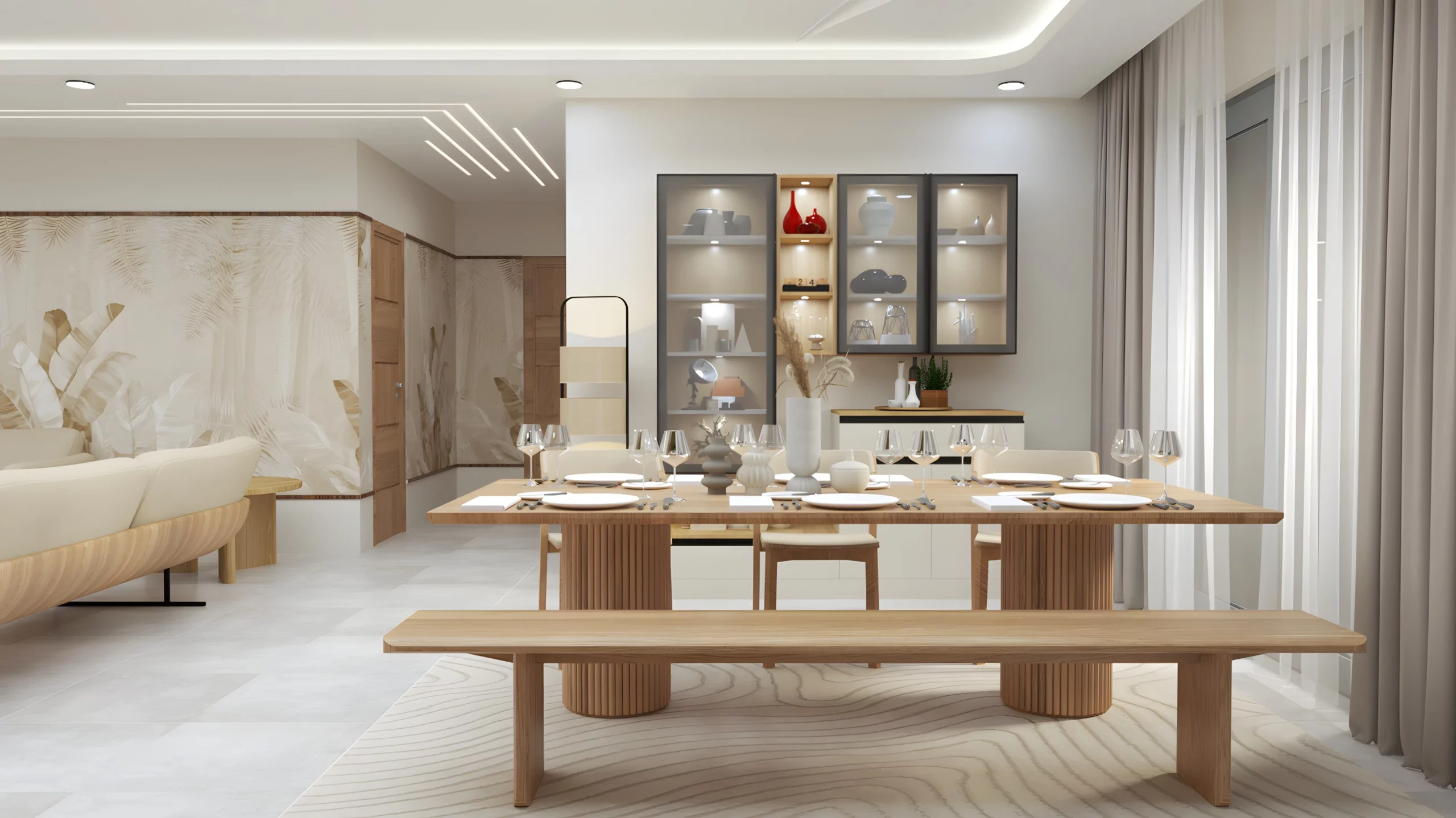
- Modular kitchen + living room unit
- 1–3 wardrobes + puja unit + TV unit
- Basic false ceiling (living area)
- Quality materials & accessories
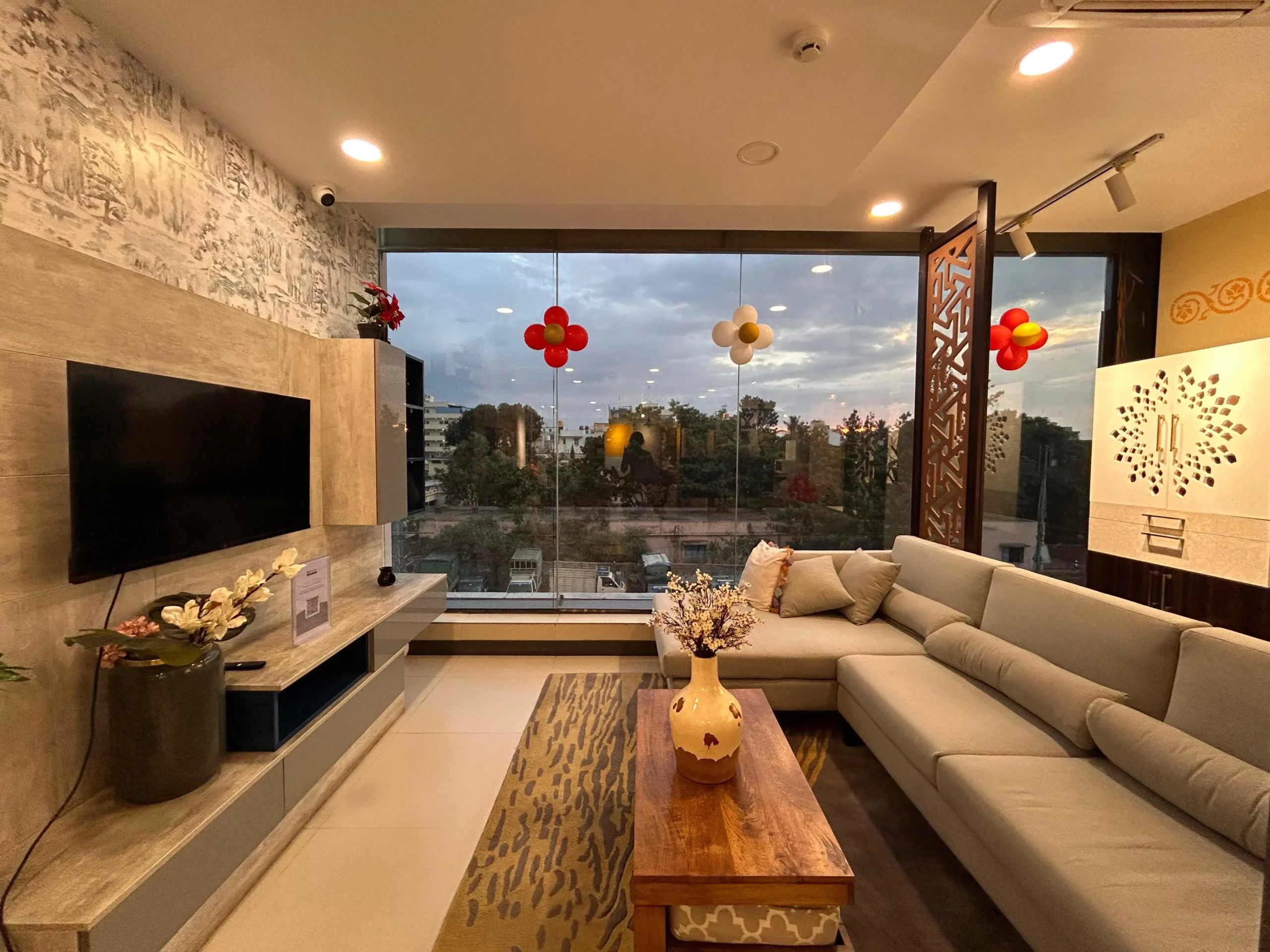
- Premium kitchen + full living & dining
- 2–4 wardrobes + shoe rack + crockery unit
- False ceiling — living, dining & bedroom
- Foyer unit + balcony utility
- Top-grade materials & finishes
Is ₹10 Lakhs Enough to Build a House in India?
Yes, a 10 lakhs budget house plan is possible in India, particularly in villages and smaller towns. Within this budget, a compact 1 BHK or a simple 2-bedroom layout with basic finishes is usually achievable. The success of a 10 lakh budget house plan depends on location, labour rates, material choices, and total built-up area. A 10 lakh house plan in village locations often stretches further than a similar house design under 10 lakh in major cities, where construction and labour costs are significantly higher.
10 Lakhs Budget House Plan, Designs and Layout Ideas
Creating a beautiful and functional budget requires smart design choices. Here are ten ideas focusing on affordability and practicality for your 10 lakh budget home:
1. The Ultra-Simple Studio Layout
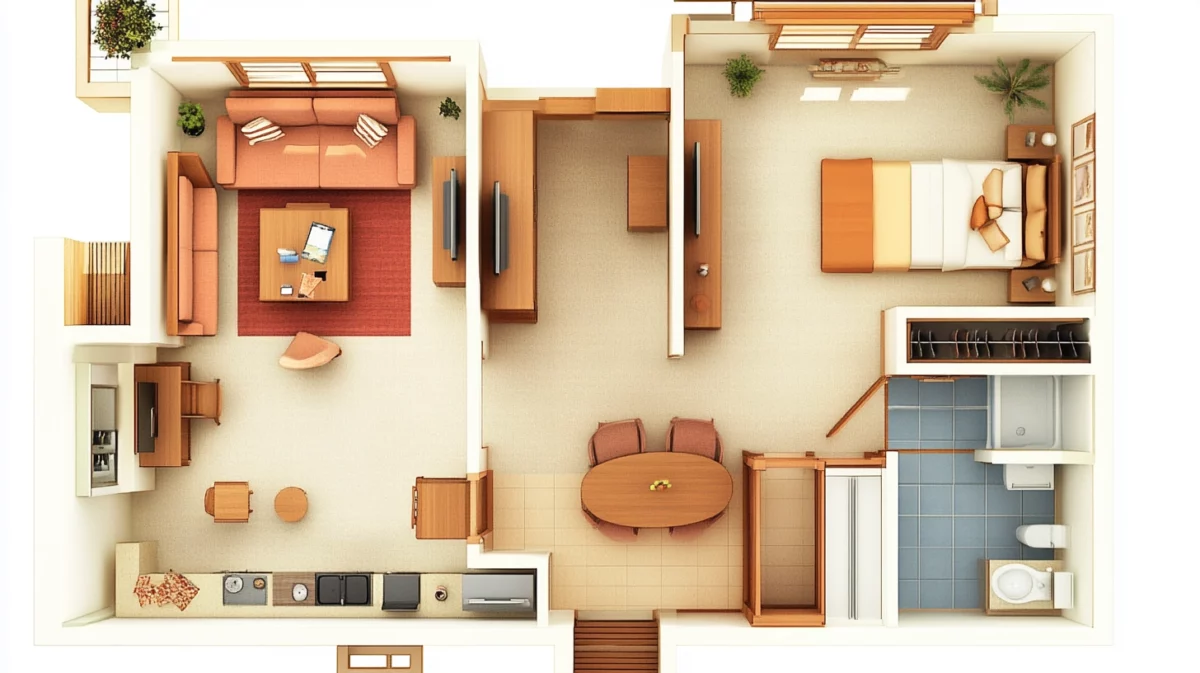
Ideal for individuals or couples, this plan features one main room serving as a living, dining, and sleeping space, with a separate small kitchen and bathroom. Maximises utility in minimal square footage (around 400-500 sq ft).
2. Compact 1 BHK Rectangular Plan
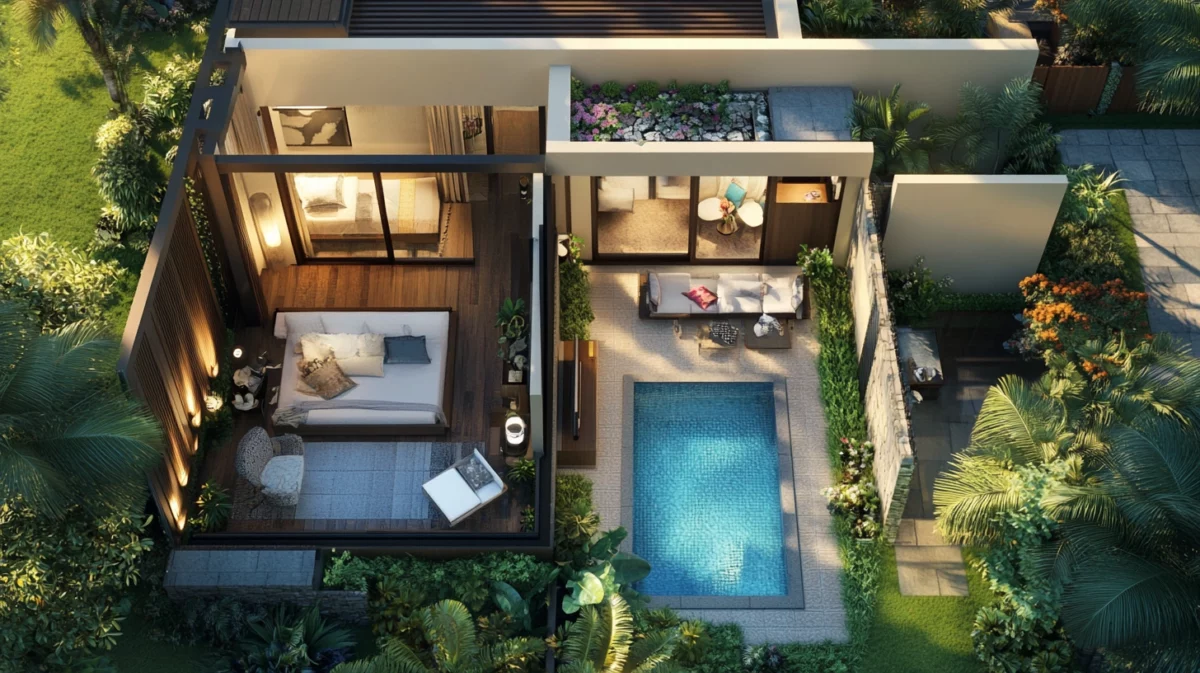
A straightforward rectangular design minimises construction complexity. This plan includes one bedroom, a hall/living area, a kitchen, and a bathroom, fitting comfortably within 500-600 sq ft. It is perfect for small families seeking basic comfort.
3. Space-Efficient Budget House Plan
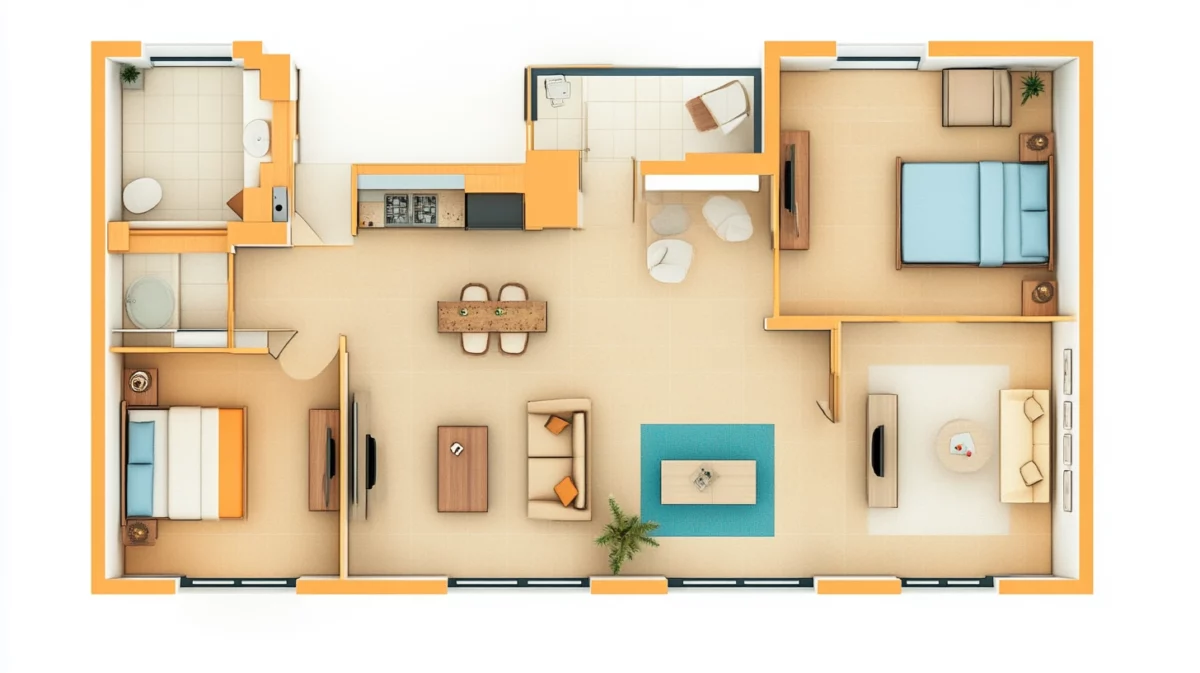
Achieving a 2 BHK house plan requires extreme efficiency. This space-efficient budget house plan features two small bedrooms, a compact living/dining area, a functional kitchen, and one common bathroom, likely around 600-700 sq ft. Walls are minimal, focusing on core utility.
4. L-Shaped Efficient Design
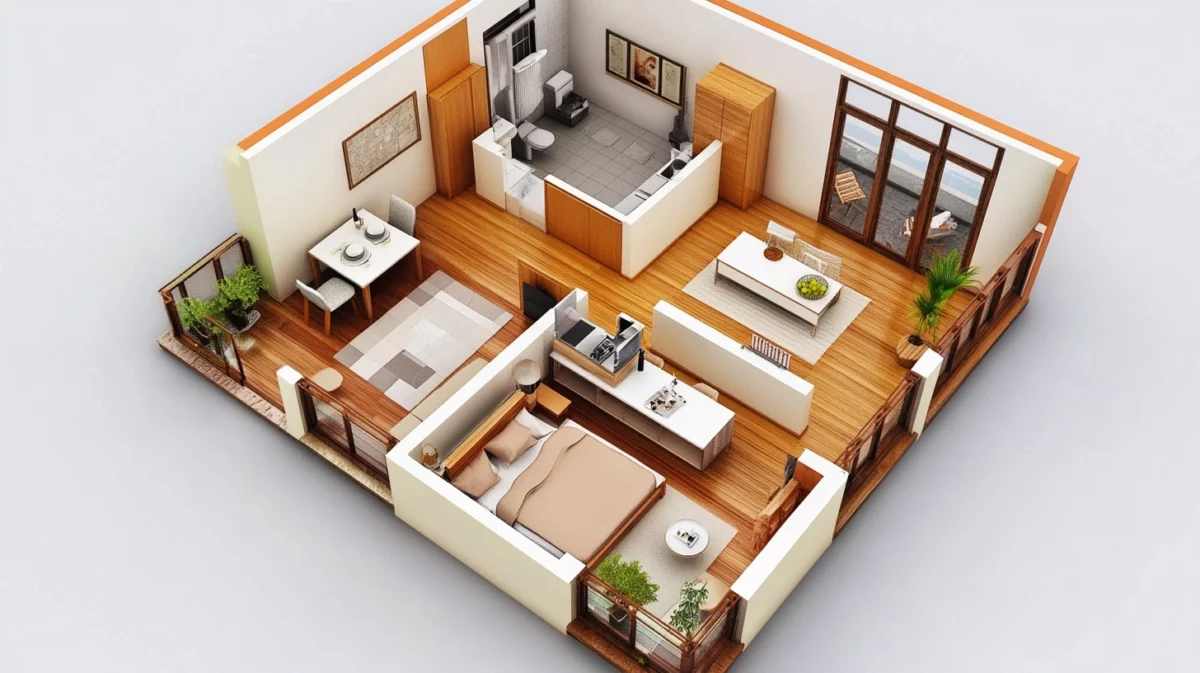
An L-shaped layout can offer better zoning and potential for a small courtyard or garden space. This 10 lakh budget house design might include a bedroom, living area, kitchen, and bathroom, optimising space within 550-650 sq ft.
5. Open Plan Concept Home
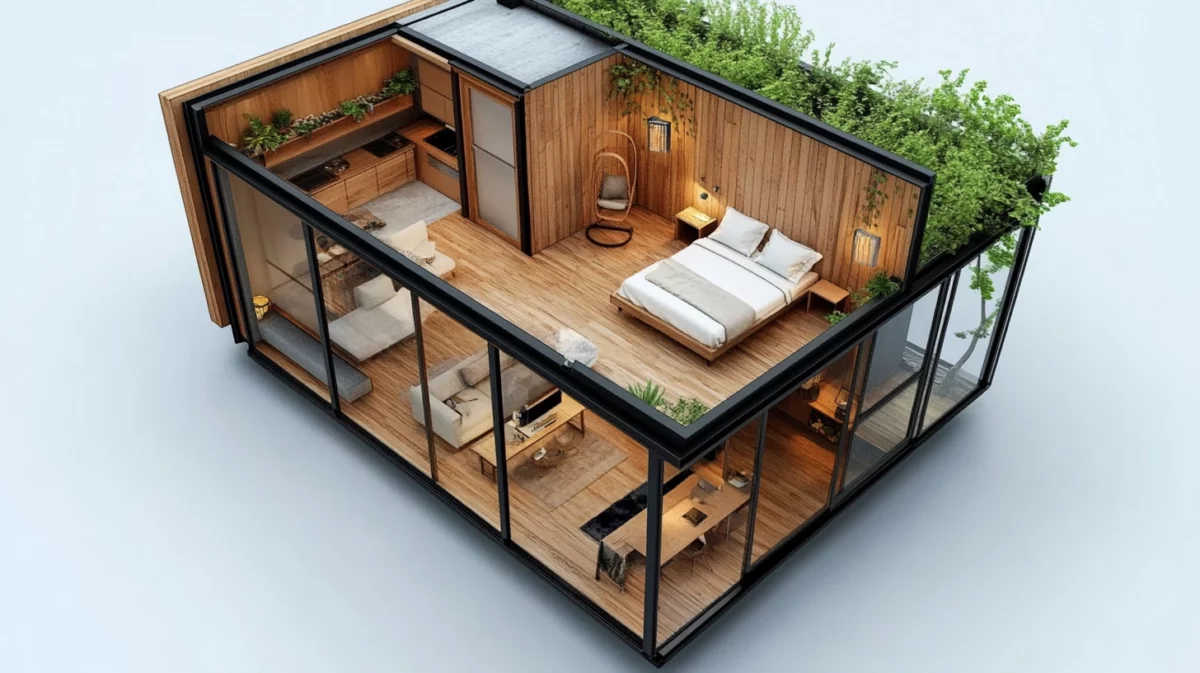
Reducing internal walls saves costs. This 10 lakh budget home design combines the living, dining, and kitchen areas into one ample space, creating a sense of openness. Separate areas include one or two small bedrooms and a bathroom.
6. Traditional-Architecture-Inspired Home
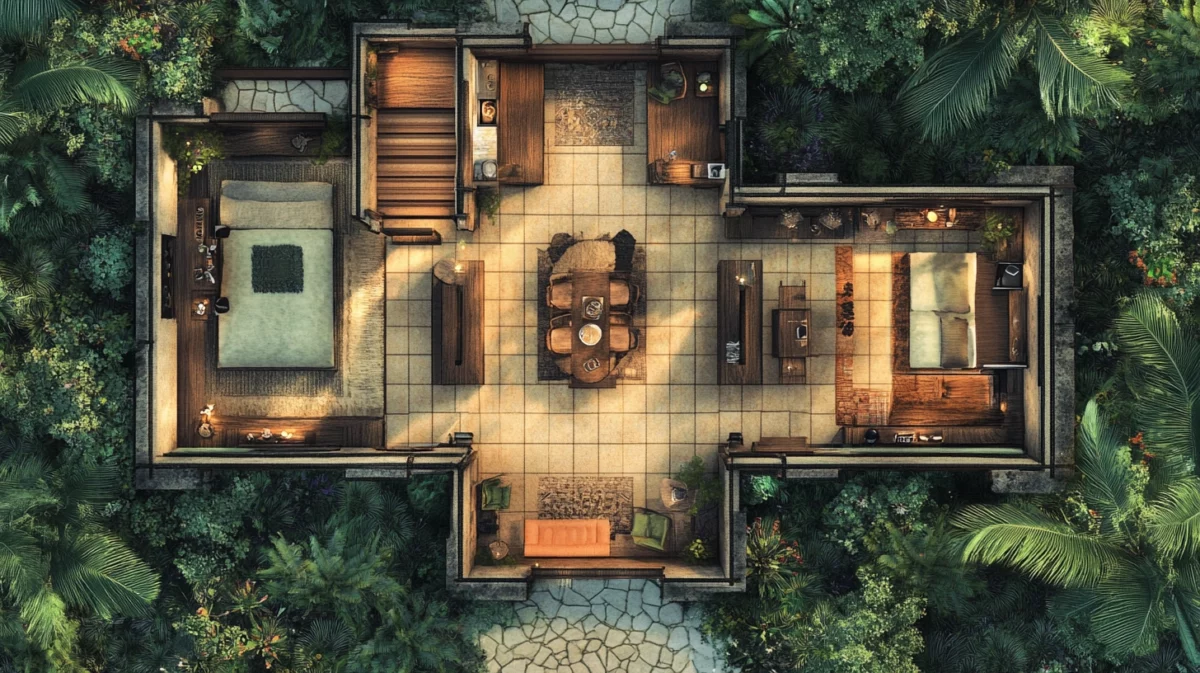
Adapting local architectural styles often utilises readily available materials and labour skilled in those techniques, potentially reducing costs. This design focuses on climate appropriateness and cultural aesthetics within the ten lakhs budget-house framework.
7. Focus on Functional Kitchen & Bath
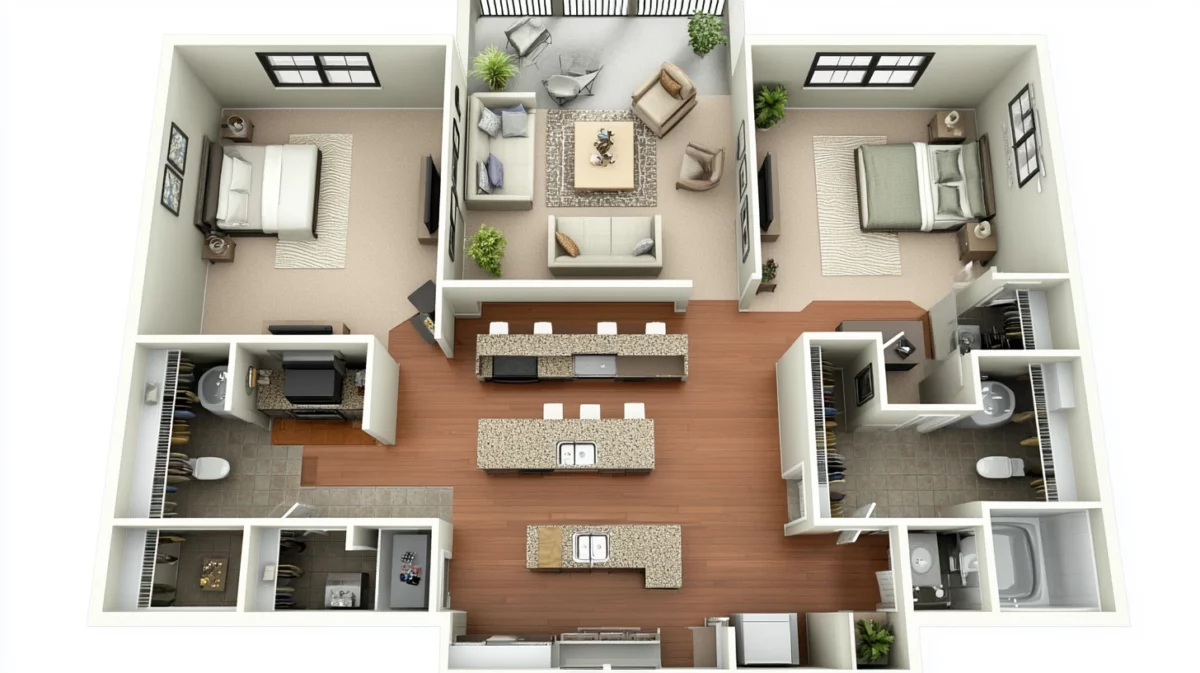
This plan prioritises slightly better-finished or more functional kitchen and bathroom spaces, keeping bedrooms and living areas very basic. It caters to those who value utility in these core areas within their budget house plans under 10 lakhs.
8. Expandable Core House Plan
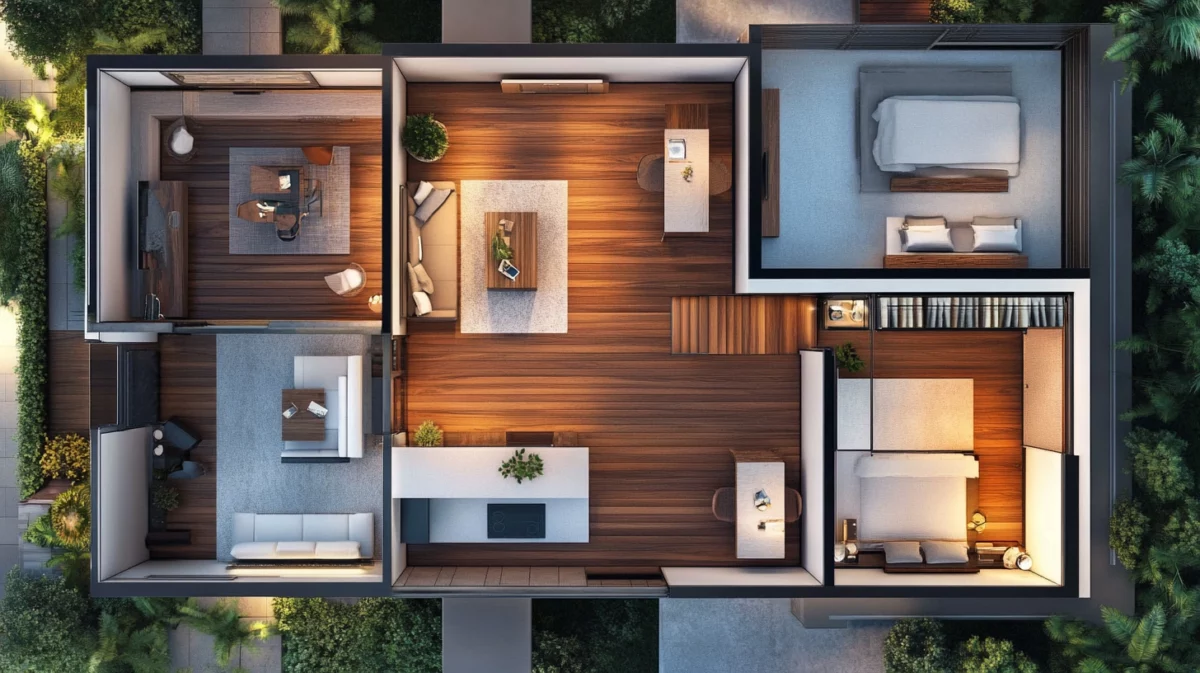
Build only the absolute essentials now (e.g., one room, kitchen, bath) with a solid foundation and structure designed for future additions. This allows you to stick with the initial 10 lakh budget home plan and expand later when funds permit.
9. Utilising Cost-Effective Materials Visibly
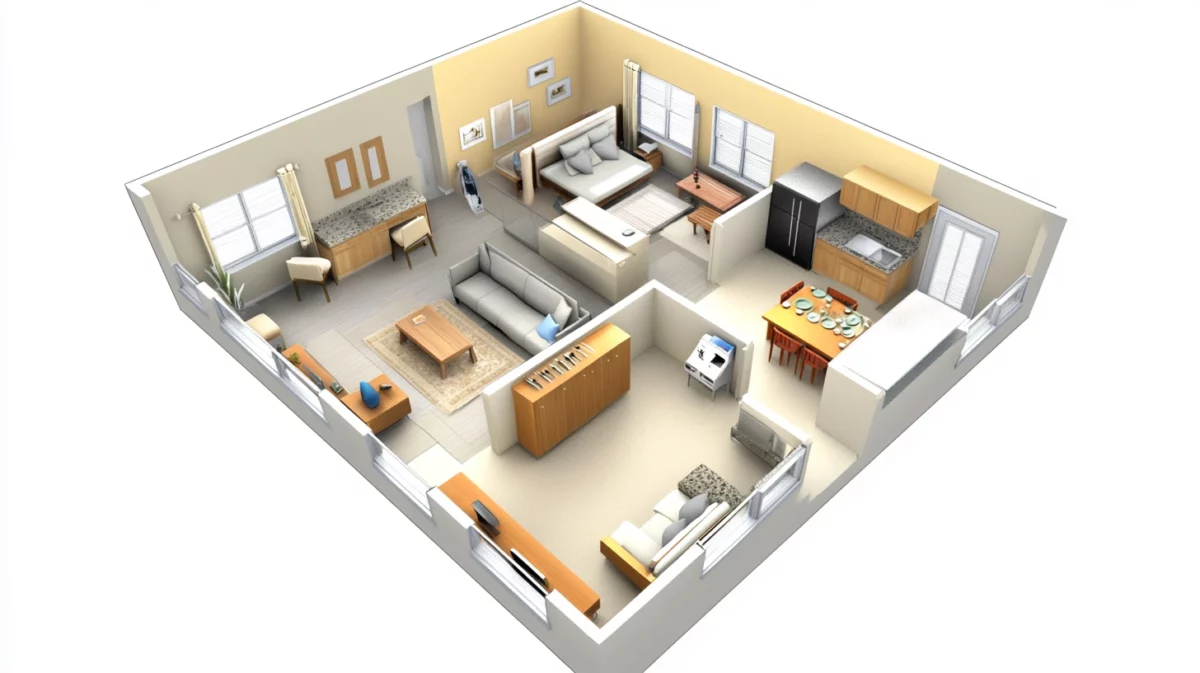
Instead of expensive plastering and painting, this design embraces the aesthetic of basic construction materials like exposed fly ash bricks or polished cement flooring. This home design saves on finishing costs while offering a rustic or industrial look.
10. Simple Sloping Roof Design
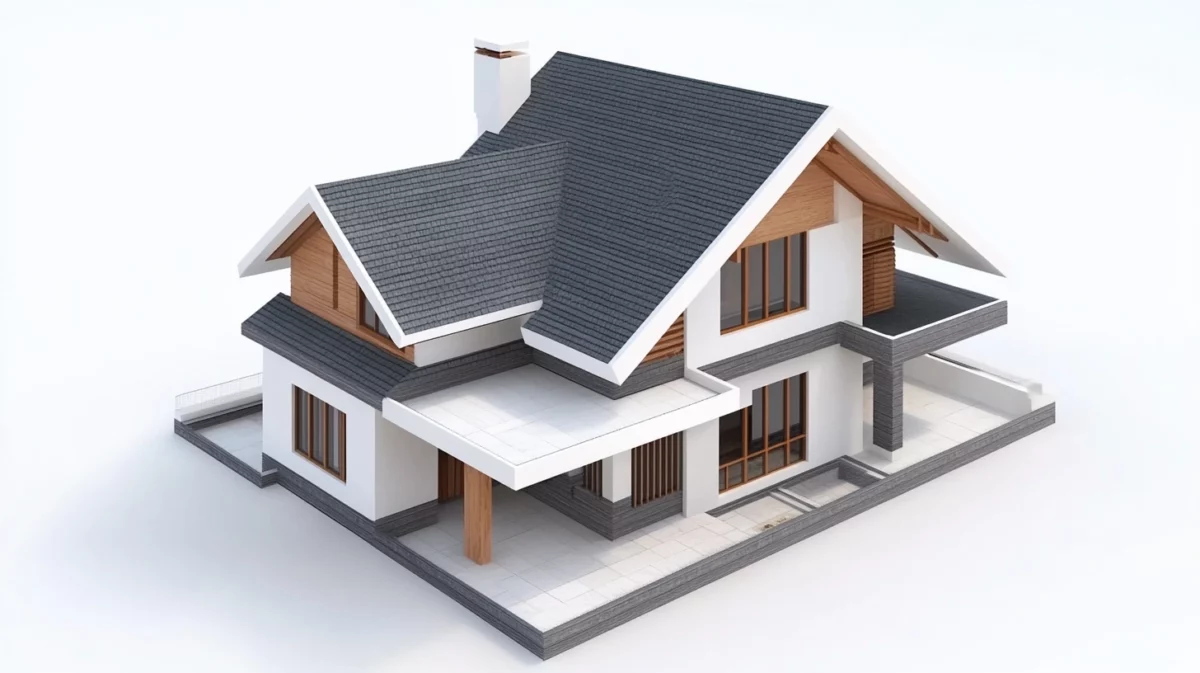
Complex roof structures add high cost. A simple sloping roof (gable or shed style) is easier and cheaper to construct, ensures good water drainage, and is ideal for a 10 lakh budget house plan in India, especially in areas with heavy rainfall.
Calculate your budget ideas
Planning your home interiors on a tight budget? Before exploring design ideas, use our home interior design cost calculator below to estimate your interior expenses instantly.
Online Interior Design Cost Calculator for Home
Select your apartment size to get accurate, personalised price estimates for your interiors.
1Home Type2Rooms3PackageSelect one
1 BHK1 bed · 1 hall · 1 kitchenSmallBelow 600 sq ftLargeAbove 600 sq ft2 BHK2 bed · 1 hall · 1 kitchenSmallBelow 900 sq ftLargeAbove 900 sq ft3 BHK3 bed · 1 hall · 1 kitchenSmallBelow 1200 sq ftLargeAbove 1200 sq ftCost Estimator · 3 StepsWhich rooms to design?
Select all rooms that need interior work and set how many of each you need.
Home Type2Rooms3PackageAdd rooms & quantities
Modular Kitchen1Bedroom(s)1Living Room1Dining Area1Puja Unit0Foyer / Entrance0Balcony0Wardrobe / Storage0Selected: 4 roomsKitchen ×1 Bedroom ×1 Living ×1 Dining ×1Cost Estimator · Final StepPick your interior package
Choose the plan that fits your budget and lifestyle. All plans include a 10-year warranty.
Home TypeRooms3PackageSelect a plan
SelectedEssential Plan
- Modular kitchen with standard finish
- 1–3 wardrobes based on BHK
- TV unit included
- Standard materials & fittings
Delivery in 35–45 daysSelected PopularPremium Plan
- Modular kitchen + living room unit
- 1–3 wardrobes + puja unit + TV unit
- Basic false ceiling (living area)
- Quality materials & accessories
Delivery in 40–50 daysSelectedLuxury Plan
- Premium kitchen + full living & dining
- 2–4 wardrobes + shoe rack + crockery unit
- False ceiling — living, dining & bedroom
- Foyer unit + balcony utility
- Top-grade materials & finishes
Delivery in 45–55 days
House Plans Under ₹10 Lakhs Based on Family Size
A ₹10 lakh budget can produce very different house layouts depending on who will live in the home. A couple, a small family, and a household planning future expansion rarely need the same amount of space. Before finalising a floor plan, it helps to consider room requirements, daily routines, and whether additional space may be needed later, as these decisions often influence the layout more than the budget itself.
House Plan for Couples
Most couples building within a ₹10 lakh budget don't need extra rooms that remain unused for years. A compact 1 BHK with a connected living room and kitchen keeps construction straightforward and leaves more of the budget for better materials or future upgrades. The layout feels less cramped because fewer walls break up the available space.
House Plan for Small Families
A small 2 BHK is usually where most families start. The second bedroom gives children their own space, while a combined living and dining area avoids wasting square footage on formal rooms that rarely get used. When the budget is limited, simpler circulation often works better than trying to fit too many separate spaces into the plan.
House Plan for Growing Families
Future expansion matters more than extra rooms on day one. Many low-budget homes leave part of the plot open or prepare the structure for an additional floor later. A room used as a study, work area, or guest room today can easily become a bedroom as requirements change.
What Can You Build Under a ₹10 Lakh Budget?
A ₹10 lakh budget can support anything from a simple studio home to a compact 2BHK, depending on the plot size, location, and construction specifications. The key is to focus on efficient planning rather than trying to fit too many rooms into a limited budget.
| Budget | Approximate House Size | Suitable Layout |
| ₹6–8 lakh | 350–500 sq. ft. | Studio home or compact 1BHK |
| ₹8–10 lakh | 500–700 sq. ft. | Comfortable 1BHK with separate living and kitchen spaces |
| ₹10 lakh+ | 650–850 sq. ft. | Small 2BHK with practical room planning |
A studio or compact 1BHK works well for couples, retirees, or small households. As the budget approaches ₹10 lakh, it becomes possible to include a separate living room, better storage, and, in some cases, a modest 2BHK layout. The final outcome depends less on the number of rooms and more on how efficiently the available space is planned.
Estimated Construction Cost Breakdown
A ₹10 lakh house budget is usually spent across structural construction, flooring, electrical work, plumbing, finishing materials, and a few essential interior elements. While the exact distribution varies from project to project, the structure and roof typically consume the largest share of the budget.
| Component | Approximate Budget Share |
| Structure (foundation, walls, roof) | 45–50% |
| Flooring | 8–10% |
| Electrical work | 5–7% |
| Plumbing and sanitary work | 5–7% |
| Finishing (painting, doors, windows) | 15–20% |
| Basic interiors (kitchen and storage) | 8–12% |
Factors Affecting a ₹10 Lakh House Budget
Even with the same budget, two houses can look very different depending on where and how they are built. Several factors influence the final construction cost:
- Location plays a major role, as labour rates and material prices vary between villages, towns, and cities.
- The built-up area directly affects material consumption, labour requirements, and finishing costs.
- Material selection can significantly affect costs, especially for roofing systems, flooring finishes, doors, and windows.
- Layout complexity influences both construction time and labour costs. Simpler floor plans are generally more budget-friendly.
- The number of bathrooms impacts plumbing work, sanitary fittings, and water supply requirements.
- Interior additions such as modular kitchens, wardrobes, and custom storage units can increase the overall budget.
- Future expansion planning may require stronger foundations or structural provisions during the initial construction phase.
- Local material availability can help reduce transportation expenses and make construction more cost-effective.
A well-planned layout often has a greater impact on the final outcome than expensive materials. Keeping the design simple, compact, and easy to build is usually the most effective way to maximise a ₹10 lakh budget.
Key Considerations for a 10 Lakh Budget House Plan
Building a 10 lakh budget house requires meticulous planning. Several factors significantly influence the final cost, and understanding these is crucial before laying the foundation.
- Location and Plot Cost: The cost of land varies dramatically across India. A ₹10 lakh construction budget typically excludes the plot cost. This budget becomes more feasible if you own land, especially in a Tier II/III city or a rural area. Building in major metropolitan areas will likely exceed this budget due to higher land and material costs.
- Size and Layout: The total built-up area directly impacts cost. For a ₹10 lakh budget, expect a relatively compact house, likely between 500 and 750 sq. ft., making 600 sq ft house plans a practical reference point. Simple, functional layouts (like rectangular or square shapes) are more cost-effective than complex designs with many corners or curves. Prioritise essential spaces like bedrooms, a kitchen, a bathroom, and a small living area. Explore small house designs for space-saving ideas.
- Material Selection: Materials account for a large chunk of the construction budget. Opting for locally sourced, standard-quality materials can lead to significant savings. Consider cost-effective alternatives like fly ash bricks instead of traditional red bricks, standard ceramic tiles instead of premium vitrified ones, and locally available stone or concrete flooring in certain areas. Avoid expensive finishes and imported fixtures.
- Labour Costs: Labour costs also vary by region. Hiring skilled but reasonably priced local labour is key. Compare quotes from multiple contractors. Sometimes, employing labour on a contract basis for specific tasks can be more economical than a turnkey contract for the entire project under such a tight budget. Understanding the overall breakdown of house construction costs is vital.
- Design Simplicity: Elaborate architectural features, intricate facades, multiple projections, or complex roof designs escalate costs. Stick to a simple, functional design. Within this budget constraint, building a single-storey structure is generally more economical than a multi-storey one. Embrace a low-budget, simple house design.
- Permits and Approvals: Factor in the costs of obtaining necessary building permits and approvals from local authorities. These costs can vary depending on your location.
- Contingency Fund: Always allocate a small percentage (5-10%) of your budget for unexpected expenses or cost overruns. This prevents the project from stalling due to unforeseen circumstances.
- Finishing Touches: Consider finishing costs – paint, plumbing fixtures, electrical fittings, doors, and windows. Choose standard, durable options rather than high-end luxury products. You can always upgrade later.
Urban vs Village House Plans Under ₹10 Lakhs
The same ₹10 lakh budget can produce very different results depending on where the house is being built. In cities, the budget is often spent on making the most of a smaller plot. In villages, the same amount can usually cover a larger footprint because labour and construction costs tend to be lower.
Urban House Plans
In urban areas, most 10 lakh budget house plans focus on compact layouts that avoid wasted space. A small 1 BHK or a carefully planned 2-bedroom layout is usually more achievable than a larger home.Open living and dining spaces, fewer internal walls, and straightforward elevations help control construction costs. Many city homes also leave room for future expansion rather than trying to build everything at once.
What usually works best:
- Compact 1 BHK or small 2 BHK layouts
- Combined living and dining areas
- Simple front elevations
- Future first-floor expansion planning
Village House Plans
A 10 lakh house plan in village locations often allows more flexibility because plot sizes are larger and labour costs may be lower. Instead of building vertically, many families prefer a single-floor layout with a verandah, small courtyard, or open outdoor space.The focus usually stays on usable rooms and long-term durability rather than decorative finishes.
What usually works best:
- Compact 2 BHK layouts
- Front verandah or sit-out area
- Single-floor construction
- Locally available materials were practical
Where Does the Budget Usually Go?
For most house designs under 10 lakh, the largest share of the budget goes into the structure itself. In most cases, around 65 to 70% of the total budget goes toward structural and civil works. The remaining amount is divided between finishing materials, electrical and plumbing services, labour charges, and a few essential interior elements.
| Component | Approx Share |
| Structure and roofing | 45–50% |
| Labour | 20–25% |
| Flooring and finishes | 10–15% |
| Electrical and plumbing | 8–10% |
| Basic interiors | 5–10% |
The easiest way to stretch a ₹10 lakh budget is usually not by using cheaper materials but by adopting a simpler layout. Every additional corner, projection, bathroom, and decorative feature increases both material and labour requirements.
Best Construction Tips to Stay Within a ₹10 Lakh Budget
Building affordably requires discipline and brilliant execution. Here are crucial tips to keep your 10 lakh budget house construction on track financially:
- Standardise Everything: Use standard sizes for doors, windows, and tiles. Customisation increases costs significantly, while standard fittings are readily available and cheaper.
- Source Locally: Purchase construction materials like bricks, sand, aggregate, and cement from local suppliers to save on transportation costs. Build relationships for potential discounts.
- Compare Labour Quotes: Get detailed quotations from at least 3-4 contractors or labour teams. Don't just choose the cheapest; assess their experience and reliability too.
- Minimise Structural Complexity: Stick to simple load-bearing structures or basic RCC frames. Avoid cantilevers, complex beams, or unusual shapes that require more material and expertise.
- DIY Non-Skilled Tasks: If feasible, undertake tasks like basic painting, site cleaning, or gardening yourself to save on labour costs. Every saving counts.
- Efficient Space Planning: Ensure every square foot has a purpose. Avoid wasted space, such as long corridors. Good planning maximises utility within a smaller footprint.
- Phased Finishing: If funds get tight, prioritise essential structural work. Basic flooring and a single coat of paint can suffice initially, and fancy finishes can be added later.
- Supervise Closely: Regular supervision ensures materials aren't wasted, work quality is maintained, and the project stays on schedule, preventing costly delays or rework.
- Opt for Functional Fittings: Choose durable but basic plumbing and electrical fixtures. Avoid luxury brands or overly complex systems that inflate the budget.
- Use Cost-Effective Alternatives: Research materials like fly ash bricks, RCC door/window frames, or cement oxide flooring, which offer durability at a lower cost than conventional options.
While a ₹10 lakh budget is challenging, it is not impossible with rigorous planning and cost control. It forces a focus on essential needs over luxury wants, leading to a practical, affordable home. Even ideas from extremely low budgets, like ₹5 lakh budget house plans, can offer insights into extreme cost-saving measures if needed.
How to Choose the Right ₹10 Lakhs Budget House Plan?
A limited budget works best when the house is planned around essential needs rather than unnecessary additions. Clear priorities during the planning stage can help maximise usable space without increasing construction costs.
Step 1: Identify Family Size
Start by understanding how many people will live in the house and the amount of space needed for comfortable daily living.
Step 2: Select Required Rooms
Decide on the number of bedrooms, bathrooms, and common spaces based on actual requirements instead of future assumptions.
Step 3: Choose Plot Dimensions
The plot size and shape influence room placement, ventilation, parking options, and overall layout efficiency.
Step 4: Plan Future Expansion
If additional rooms or an extra floor may be needed later, include basic structural provisions during construction.
Step 5: Balance Budget with Functionality
Focus on practical layouts, good ventilation, and efficient space planning before spending on decorative features.
Common Mistakes to Avoid While Building a House Under ₹10 Lakhs
1. Choosing Oversized Layouts
Trying to fit too many rooms into a limited budget often results in cramped interiors, poor lighting, and compromises in construction quality.
2. Ignoring Ventilation
Insufficient windows, poor room placement, and lack of airflow can make the house uncomfortable and increase dependence on artificial cooling.
3. Spending Heavily on Elevation
Expensive facade treatments, decorative cladding, and complex roof designs can consume funds that are better allocated to structural quality and interior functionality.
4.No Future Planning
Failing to consider future expansion may lead to costly structural modifications when additional space becomes necessary later.
5. Poor Material Selection
Choosing materials based solely on low upfront cost can increase maintenance expenses and shorten the house's lifespan over time.
Plan Budget-Friendly Homes with NoBroker Interiors
Many families start with a fixed construction budget but find costs increasing once room layouts, storage requirements, and material selections are finalised. Poor planning can lead to wasted space, unnecessary construction expenses, and costly changes later. NoBroker Interiors helps simplify the process through efficient layout planning, modular interior solutions, and practical design recommendations tailored to budget requirements. With a focus on space utilisation and cost control, the result is a home that feels organised, comfortable, and easier to build within budget.
Frequently Asked Questions
Can a house be built for 10 lakhs in India?
What is the average size of a house with a budget of 10 lakh?
What are the cheapest construction materials for such plans?
Can I get a 2-bedroom house under 10 lakhs?
What is the best design for a 10 lakh home?


Our Recent Projects



Reviews

Pavan Anure

Overall, I had a good experience with NoBroker Interiors. The quality of the materials used was good, and the execution team did an exc... Read more

Mimi
Sales team is amazing 🤩

Sahina Begum
Very good experience

Gul Nehar
Thank you for the amazing experience

Muhina Firdus
Excellent service!!

Noor Nehar
I had a good experience with NoBroker Interiors team. All were responsive and good at their job. Fully satisfied with the outcome, from... Read more

Mithlesh Thakur
No hidden charges, transparent pricing. Stress-free experience with NoBroker Interior.

Vanshika Thakur
Did our 2BHK and the quality of materials is excellent. Feels like a premium home now.

Vanshu Thakur
Punctual team and the final work matched the 3D designs perfectly.

Khushi
prompt response

Ranjana Agnihotri
cooperative team

aarti beniwal
perfect to comm

Aman
Easy process

Chesta Agnihotri
Nice experience

Awaiz Azeez
It’s one of the best experience centers and we had great conversations with the NoBroker design team, who understood our needs in a s... Read more

Jabir Ahmed Mazumder
Whitefield never disappoints. Friendly staff, excellent service, and a wonderful overall experience. Looking forward to visiting again!

dipti suman
A wonderful place with excellent service. Everything was well managed, and the attention to detail made the experience even better.

Prasanta Deka 63
"Absolutely loved my experience at Whitefield. The ambiance is beautiful, the service is exceptional, and the staff is incredibly welco... Read more

Isha Suman
Excellent service and a great atmosphere. Everything was well organized, and the team made the experience smooth and enjoyable. Would d... Read more

Shinde
Nice interiors and best designs with colour combination

V Sane
I love the designs very much

VIVEK SHINDE
Excellent interior designs

Vicky
I like the interior, it's eye catching and looking excellent 👍

Vivek
Nice and excellent design, i love it

Ramesh Babu
Hello, I really appreciate the professionalism and dedication shown by the entire team throughout my home interior project. It was a wo... Read more

Fatema Tata
Well their service is so worth it of money

Rajak Ahmed
Honestly best experience worth it

Prince Mustafa
Love their service thank you so much

rina Begum
Honestly so so good experience

Anshula
My experience was great

Adrija
Their attention to detailing in work is really commendable

Mouly
Best in buisness for sure, totally satisfied with their work

Sharmila
Great experience with them !

Ankita
I had a great experience with their interior service

Bhumi Nath
I had a great experience with NoBroker Interiors. The team was professional, responsive, and paid attention to every detail. They under... Read more
Jabir Ahmed Mazumder
Whitefield never disappoints. Friendly staff, excellent service, and a wonderful overall experience. Looking forward to visiting again!
dipti suman
"A wonderful place with excellent service. Everything was well managed, and the attention to detail made the experience even better."
Prasanta Deka 63
"Absolutely loved my experience at Whitefield. The ambiance is beautiful, the service is exceptional, and the staff is incredibly welco... Read more
Isha Suman
Excellent service and a great atmosphere. Everything was well organized, and the team made the experience smooth and enjoyable. Would d... Read more

Onkita
Good work done.

Anuradha
Good service.

Ankita Dutta
Very good service.

Payel Dey
Very good service and customer care.

Jhimli
Good job, please carry on.

Ankita Dutta
They give very good service.
Vanshu Thakur
Transparent pricing and no hidden charges. Great experience overall.

Virat Thakur
Premium finish for our flat in Gachibowli. Feels like a show home now.

Vanshika Thakur
Punctual team and handled everything end to end. Very satisfied.
Vanshika Thakur
Best for stress-free interiors in Hyderabad. Listened to all our needs.
Testimonials
View All
NoBroker Interiors | Customer Testimonial by Prinyakar Polley

NoBroker Interiors | Hyderabad Customer Testimonial by Prashant Choudhary

NoBroker Home Interiors | Hyderabad 4BHK Customer Review

NoBroker Interiors Customer Testimonial | Jatan's Story
NoBroker Interiors Customer Testimonial | Fast & Quality Home Interiors

NoBroker Interiors Review | Modern Dream Home Customer Testimonial
NoBroker Interiors Review | Hyderabad Customer Testimonial

NoBroker Interiors Customer Testimonial | Pune Dream Home

NoBroker Interiors| Bangalore Customer Testimonial
NoBroker Interiors: Sports Theme Interiors by NoBroker #interiordesign #nobrokerinteriors #nobroker

NoBroker Interiors - Customer Testimonials

That 3 PM meeting where ideas turn into floor plans, materials, and magic. 💫

Your 2026 list is here.

Smart wardrobe design that fits your life, beautifully.
POV: You gave your home a holiday hug.🥰

Blink and you’ll miss the makeover.👀

When your home finally gets its own weekend mood, this bar unit does the job beautifully.

A calm pooja corner every home needs.

NoBroker Home Interior Service | Saurabh & Prachi Share Their Story #interiordesign #shorts

NoBroker Home Interior Services Bangalore Review | Anu Garg #shorts #happycustomer
About the Author

Priyanka Jha
Author
Priyanka Jha is an architect with over 3+ years of professional experience designing functional, aesthetically pleasing spaces. With a strong academic background in Architecture, she has de...









Recent Blogs
Subscribe to our Newsletter
Get latest news delivered straight to your inbox