- https://www.asianpaints.com/blogs/how-much-paint-is-needed-to-paint-house-walls.html
- https://aapkapainter.com/blog/how-to-calculate-number-of-paint-coats/
- https://aapkapainter.com/blog/how-much-paint-we-do-need-to-paint-house-walls/
- https://www.asianpaints.com/blogs/10-mistakes-to-avoid-while-painting-your-homes.html
Table of Contents
Paint Coverage Chart (India Standard)Formula to Calculate Paint Required for a RoomExample Calculations for Different Room Sizes Paint Requirement by Room SizeFactors That Affect How Much Paint Is Required for a Room How Wall Condition Affects Paint Quantity? How Many Coats of Paint Are Required? Primer Requirement â How Much Primer Do You Need? Mistakes to Avoid When Calculating Paint Requirement How NoBroker Helps You Calculate & Apply the Right Amount of Paint?Frequently Asked Questions?
Loved what you read? Share it with others!


Home
Blog
Home Services Tips & Ideas
Painting Tips & Color Ideas
How Much Paint Is Required to Paint a Room
How Much Paint Is Required to Paint a Room: Easy Calculation Based on Size and Coats
Updated : January 9, 2026, 3:43 PM
Author :
 Kruthi
Summary
You can estimate paint quantity using a simple formula: divide the total paintable area by paint coverage per litre and multiply by the number of coats. Most paints in India cover about 120–170 sq. ft. per litre, and an average room needs 3–6 litres for two coats. Wall texture, colour changes, primer use, and surface condition can affect paint usage and final results.
Table of Contents
Paint Coverage Chart (India Standard)Formula to Calculate Paint Required for a RoomExample Calculations for Different Room Sizes Paint Requirement by Room SizeFactors That Affect How Much Paint Is Required for a Room How Wall Condition Affects Paint Quantity? How Many Coats of Paint Are Required? Primer Requirement â How Much Primer Do You Need? Mistakes to Avoid When Calculating Paint Requirement How NoBroker Helps You Calculate & Apply the Right Amount of Paint?Frequently Asked Questions?
Accurately determining how much paint is required to paint a room is the foundational step for any successful house painting project, preventing both costly waste and inconvenient mid-project shortages. The calculation relies on more than just wall size; it also accounts for factors such as surface texture, paint type, and the number of coats required for a flawless finish. This easy-to-follow guide offers straightforward formulas, helpful examples, and valuable professional tips to help you accurately determine the right amount of paint for your room, making the painting process smooth and stress-free.
Paint Coverage Chart (India Standard)
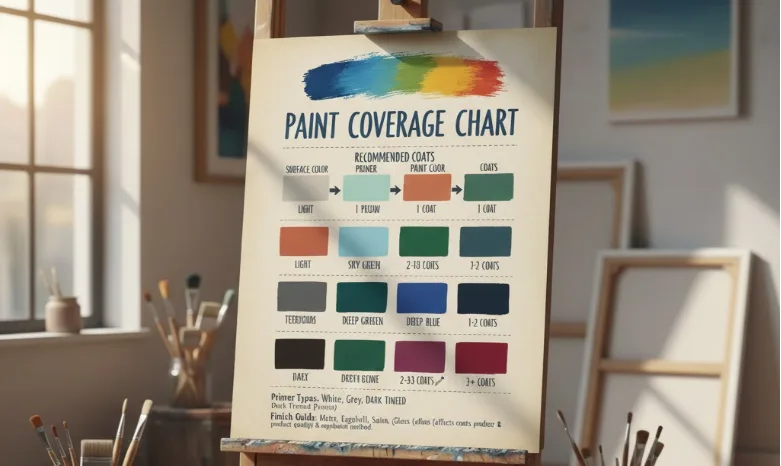
Paint consumption per sq ft varies by product quality and type. Manufacturers list coverage in sq. ft./L. This chart shows standard rates for common interior paints in India for the first coat on primed surfaces.
| Paint Type | Finish | Standard Coverage (Sq. Ft./Litre - First Coat) | Ideal Use |
|---|---|---|---|
| Interior Emulsion | Matte to Satin | 120 – 160 sq. ft./Litre | Walls and Ceilings (General Use) |
| Premium Emulsion | Rich Finish, High Washability | 140 – 170 sq. ft./Litre | Living Rooms, Bedrooms (High Quality) |
| Distemper Paint | Flat Finish, Low Washability | 100 – 120 sq. ft./Litre | Economical Projects, Temporary Walls |
| Oil-Based Enamel | Gloss/High Sheen | 80 – 100 sq. ft./Litre | Wood, Metal, Doors, and Trim |
| Primer (Water-Based) | Sealer | 180 – 220 sq. ft./Litre | Sealing porous surfaces before painting |
Formula to Calculate Paint Required for a Room
To find out how much paint you need for a room, you must first calculate the total paintable surface area. After that, divide the area by the paint’s coverage rate. This basic method helps you understand exactly how many litres of paint are needed. [1]
- Main formula:
- Paint Required (litres) = (Total Paintable Area ÷ Coverage per Litre) × Number of Coats
- Start by calculating the total area of all the walls (and ceiling if you will paint it). Then subtract the areas of the windows and doors, as these parts are not painted.
- Total Wall Area Formula:
- Total Wall Area = 2 × (Length + Width) × Height
- Total Paintable Area: (Total Wall Area + Ceiling Area) – (Window Area + Door Area)
- Coverage Rate: The coverage given by the paint brand (example: 140 sq. ft./Litre)
- Number of Coats: Usually 2 coats are required, and sometimes 3 when covering dark colours.
Example Calculations for Different Room Sizes
Below are examples using a 10-foot wall height and an average coverage of 130 sq. ft./litre for two coats. These examples help you understand how much area 1 litre of paint covers. [1]
1. Paint Required for 10×10 Room (100 sq ft room)
- Room size: 10 ft × 10 ft, height 10 ft
- Total Wall Area = 2 × (10 + 10) × 10 = 400 sq. ft.
- Minus window/door area (40 sq. ft.): 360 sq. ft.
- Paint Required (2 coats): 360 ÷ 130 = 2.77 litres
You will need around 3 litres of paint for the walls (an extra litre for the ceiling). This shows how many litres of paint are required for a 10×10 room.
2. Paint Required for 12×12 Room
- Room size: 12 ft × 12 ft, height 10 ft
- Total Wall Area: 2 × (12 + 12) × 10 = 480 sq. ft.
- Minus door/window area (45 sq. ft.): 435 sq. ft.
- Paint Required: 435 ÷ 130 = 3.34 litres
You will need around 4 litres of paint for the walls.
3. Paint Required for 14×14 Room
- Room size: 14 ft × 14 ft, height 10 ft
- Total Wall Area = 2 × (14 + 14) × 10 = 560 sq. ft.
- Minus openings (50 sq. ft.): 510 sq. ft.
- Paint Required: 510 ÷ 130 = 3.92 litres
You will need around 4 litres of paint.
4. Paint Required for a Small Bedroom (100–120 sq ft)
- Typical bedroom size: 11 ft × 10 ft
- Wall area: 420 sq. ft.
- Paintable area after subtracting door/window: 375 sq. ft.
- Paint Required: 375 ÷ 130 = 2.88 litres
You will need around 3 litres of paint.
5. Paint Required for a Living Room (200–250 sq ft)
- Living room size: 18 ft × 14 ft
- Wall area: 640 sq. ft.
- Paintable area after deductions: 580 sq. ft.
- Paint Required: 580 ÷ 130 = 4.46 litres
You will need around 5 litres of paint.
Paint Requirement by Room Size
This table offers a basic estimate of paint needed for a room with standard Indian dimensions (10-foot ceilings, two coats, mid-range paint). Useful for budgeting and figuring out how much paint I need. [1]
| Room Size (Length x Width) | Total Wall Area (Approx. Sq. Ft.) | Paint Required (Approximate Litres for 2 Coats) |
|---|---|---|
| 10 ft x 10 ft | 400 sq. ft. | 3 Litres |
| 12 ft x 12 ft | 480 sq. ft. | 4 Litres |
| 15 ft x 15 ft | 600 sq. ft. | 5 Litres |
| 20 ft x 15 ft (Large Room) | 700 sq. ft. | 6 Litres |
| Standard Bathroom (6 ft x 8 ft) | 280 sq. ft. | 2-3 Litres |
Factors That Affect How Much Paint Is Required for a Room
Beyond simple measurements, several key variables influence paint consumption per sq ft, directly impacting the total quantity of paint you need to purchase. [2]
- Wall Texture: Textured, rough, or sand-faced walls absorb significantly more paint than smooth surfaces, drastically reducing the effective wall paint coverage (sometimes by 20-30%).
- Colour Change: Painting a light colour over a very dark, existing colour will require more coats (often three or more) or a special tinted primer, increasing the total paint required for a room.
- Paint Quality/Type: Premium, high-quality emulsion paints typically offer better coverage in fewer coats than lower-grade distemper or economy paints.
- Manufacturer’s Coverage: The exact coverage rate (paint required for a 10x10 room) varies by brand and product line; always check the manufacturer’s label guidelines for the most accurate figure.
- Application Method: Using a roller is generally more efficient than brushing, but professional spray application can result in slightly higher paint usage due to overspray.
How Wall Condition Affects Paint Quantity?
The condition of the wall surface is a determinant of how to calculate paint requirements, particularly the initial absorption rate of the first coat. [3]
- Unprimed or New Plaster: Fresh plaster and unprimed surfaces are highly porous and will rapidly absorb the paint binder, so a sealer/primer coat is required first; otherwise, the first coat of paint will be severely compromised.
- Poorly Repaired Patches: Areas with repaired cracks or large patches of filler (putty) are more absorbent than the surrounding smooth wall, often necessitating localised spot priming before the full coat application.
- Chalking or Flaking Walls: Walls with peeling or chalking paint will not provide a good base, and the new paint will fail. This requires extensive scraping and cleaning, followed by a stabilising primer, increasing project cost and complexity.
How Many Coats of Paint Are Required?
For nearly all interior and exterior wall painting projects, two coats of paint are the industry standard requirement. The first coat serves as the base layer, providing adhesion and initial coverage. In contrast, the second coat is necessary to achieve the final, deep colour, ensure uniformity, and complete the desired protective and aesthetic finish. A third coat may be needed if you are drastically changing colours (e.g., red to white) or if the final coat looks patchy due to poor quality.
Primer Requirement – How Much Primer Do You Need?
Primer is needed when painting a new, unpainted wall (fresh plaster), drastically changing the colour, or if the wall surface shows signs of staining or poor condition. Primer generally offers higher paint consumption per sq ft than colour paint, often covering 180 to 220 sq. ft. per litre in a single coat. Use the same surface area calculation to determine the required volume for one coat of primer.
Mistakes to Avoid When Calculating Paint Requirement
Avoiding these common missteps will ensure the calculation of paint quantity is accurate, saving both time and money. [4]
- Ignoring Openings: Failing to subtract the area of large windows, doors, and built-in wardrobes, leading to overestimation of the paint quantity.
- Forgetting the Second Coat: Calculating paint usage based on only one coat when two are always required for the final colour and finish.
- Guessing Coverage: Relying on a rough estimate (e.g., "1 litre covers 100 sq ft") instead of checking the manufacturer's exact specifications for the chosen product.
- Misjudging Texture: Underestimating the extra paint needed for textured or rough surfaces, which absorb substantially more material than smooth walls.
- Skipping the Ceiling: Forgetting to calculate the ceiling area separately, especially if it requires a different paint type or shade.
How NoBroker Helps You Calculate & Apply the Right Amount of Paint?
Removing the guesswork from how much paint is required to paint a room is vital for efficiency. NoBroker provides expert calculation services, ensuring the precise quantity of room paint is determined based on your specific room dimensions, paint type, and surface condition. Our professional painting services use optimised application methods to reduce waste and guarantee a smooth, flawless finish that adheres perfectly and achieves the intended colour and durability, all within your budget.
Frequently Asked Questions?
Q1. How much paint is required to paint a room?
Ans: The required paint volume is calculated by finding the total paintable wall area (in sq. ft.), dividing it by the manufacturer’s specified coverage rate per litre, and then multiplying the result by the number of coats (usually two).
Q2. How do I calculate wall area for painting?
Ans: Calculate the total wall area using this formula: 2 × (Length + Width) × Room Height
After finding this number, subtract the area of any doors and windows to get the final paintable wall area.
Q3. How many litres of paint for a 10×10 room?
Ans: Assuming a 10-foot ceiling and two coats of standard emulsion, approximately 3 Litres of paint are required for the walls of a 10-foot by 10-foot room.
Q4. How many coats of paint do I need?
Ans: You typically need two coats of colour paint for the final finish; the first coat serves as a base, and the second provides uniform colour and full coverage.
Q5. Does primer reduce paint consumption?
Ans: Yes, primer significantly reduces overall paint consumption by sealing porous surfaces (such as new plaster) and preventing the expensive topcoat from being unnecessarily absorbed into the wall.
Q6. What affects paint coverage?
Ans: Paint coverage is primarily affected by wall texture (rougher surfaces consume more paint), existing colour (dark to light requires more paint), and the quality/type of the paint used.
Q7. How much paint is needed for a small bedroom?
Ans: For a small bedroom (approx. 10 ft x 10 ft), you need about 3 Litres of paint for the walls (two coats).
Q8. How much paint is required for a living room?
Ans: For a standard living room (e.g., 18 ft x 14 ft), approximately 5 Litres of paint are required for the walls (two coats).
Q9. What is the coverage of emulsion paint per litre?
Ans: Standard interior emulsion paint typically covers around 120–160 sq. ft. per litre for the first coat on a smooth, primed surface.
Q10. Does NoBroker help with paint quantity calculation?
Ans: Yes, NoBroker provides expert consultation and precise quantity calculations, ensuring you buy the exact amount of paint needed for your project and preventing both waste and shortages.
Recommended Reading
Best Kitchen Colors as Per Vastu: Direction, Placements, Tips and Benefits in 2026
May 17, 2025
53321+ views
The Best Types of Wall Paint for All Walls
January 31, 2025
16895+ views

Best Paint for Walls: Top Choices for a Stunning and Durable Finish in 2026
January 31, 2025
8795+ views
10 Best Texture Paint Designs for Halls that Are Perfect for You!
January 31, 2025
7279+ views
How Much Paint Is Required to Paint a Room: Easy Calculation Based on Size and Coats
January 9, 2026
1657+ views
ARTICLE SOURCES
NoBroker Painting Tips & Color Ideas Testimonials
Before this festive season
get your house painted
Most Viewed Articles
40+ Best Stunning Two Colour Combinations for Bedroom Walls to Elevate Your Space in 2026
January 31, 2025
336676+ views

Top 25 Outside Color Combinations with Colour Codes for Indian Homes in 2026
May 16, 2025
313999+ views
Asian Paint Price 20 Litre for Different Variants in India: Coverage, Durability and Benefits
May 17, 2025
175881+ views
25 Latest Main Gate Colour Combination Ideas: Direction and Placement as Per Vastu in 2026
October 9, 2025
159291+ views
Top 26 Wall Paint Colour Combinations Ideas With Codes for Every Room in 2026
February 3, 2025
137006+ views
Author
Loved what you read? Share it with others!
Recent blogs in
Top 8 Modern Marble Texture Wall Paint for Stylish Homes in [2026]
March 27, 2026 by Krishnanunni H M
Top 10 Light Grey Paint Colors Combination with Codes That Improve Room Appearance in [2026]
March 27, 2026 by Krishnanunni H M
Colour Psychology for Home Interiors: How to Choose Wall Colours Based on Mood
March 27, 2026 by Kruthi









 Full RM + FRM support



Join the conversation!