Table of Contents
Loved what you read? Share it with others!


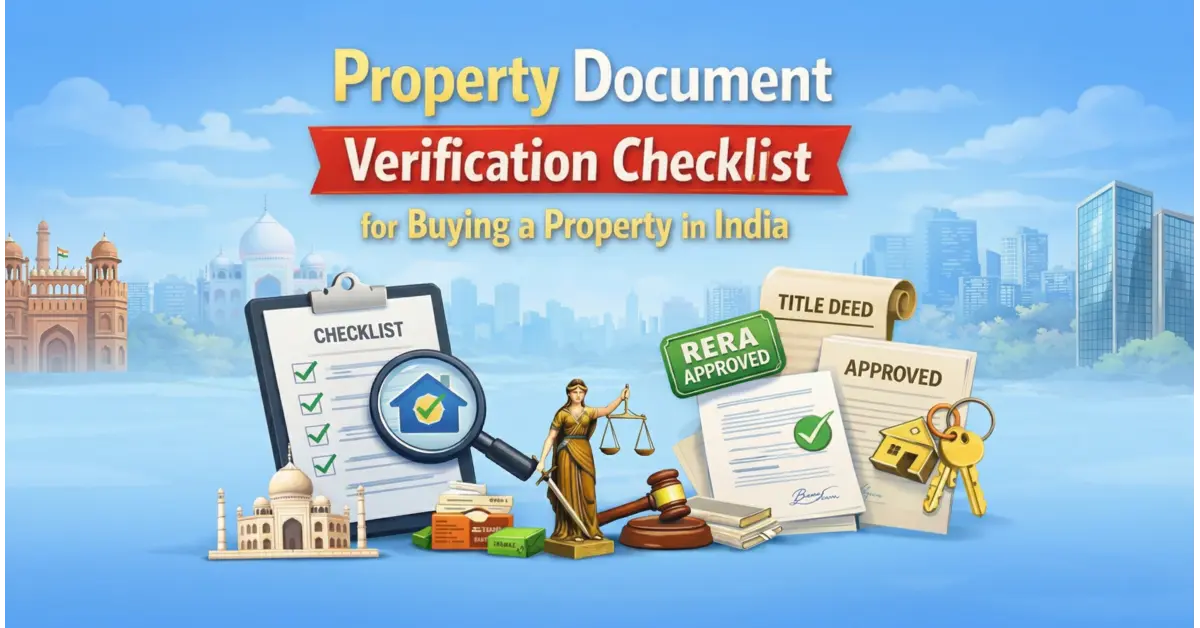
The Complete Document Checklist For Buying a Property in India
Updated : March 31, 2026, 5:07 PM
Author :

Table of Contents
Buying a flat in India often starts with paying a token amount or booking payment, but many buyers overlook the property document verification checklist at this early stage. In reality, this is the most critical point at which to check the documents, because once a booking is made, financial and legal commitments quickly follow. Without proper due diligence, buyers may face issues like disputed ownership, project delays, hidden liabilities, or even fraudulent developments.
This is why it is essential to follow a complete checklist for buying a property in India before paying any booking amount. A careful document review helps confirm whether the project is legally approved, financially secure, and compliant with government regulations.
What Is a Property Document Verification Checklist and Why Does It Matter?
A property document verification checklist helps homebuyers verify legal ownership, approvals, and liabilities before purchase. In India's complex, state-varying real estate laws, it serves as a crucial risk control. It confirms developer claims with government records, establishing the "root of title" to ensure the seller's right to transfer ownership. This prevents future litigation and validates your investment as a legal asset.
Why You Must Verify Property Documents Before Booking an Under-Construction Flat?
Verifying property documents before booking an under-construction flat is a non-negotiable step to protect your finances from common real estate risks.
- Land Ownership Disputes: Gaps in historical titles can invite third-party claims. These legal battles can stall a project’s progress indefinitely, preventing you from gaining clear, marketable ownership of your future residential unit.
- Builder Insolvency: Checking a developer's financial health is vital to avoid stalled projects. Builder insolvency often leads to incomplete construction, leaving buyers with significant financial losses and no home to occupy.
- Delayed Possession: Failure to verify RERA-committed timelines often results in possession dates being pushed years beyond the promised timelines. Monitoring these portals ensures the builder remains accountable for the specified handover deadline.
- Illegal Construction: Buildings lacking sanctioned plans face severe municipal penalties. Without proper approvals, authorities may issue demolition orders, making it impossible to secure an Occupancy Certificate or legal utility connections.
Remember that booking money is often non-refundable after the initial receipt, and builder brochures are not legally binding in court. Buyers in Mumbai, Pune, Noida, or Gurgaon should be wary of hidden encumbrances or loans on the land. Only registered papers ensure a secure transaction.
Complete Property Document Verification Checklist Before Booking a Flat
A property document verification checklist is an essential part of any buying flat checklist, helping confirm ownership, approvals, and compliance. Reviewing these documents reduces fraud, disputes, delays, and ensures the property is legally valid.
Land Title and Mother Deed
The Title Deed shows the current owner, while the Mother Deed traces land history. Verify ownership over at least 30 years to ensure the seller's legal rights and no claims from heirs that could invalidate the purchase.
Encumbrance Certificate (EC)
An EC provides proof that the property is free from any monetary or legal liabilities. It involves verifying whether loans or legal claims exist on the property by searching the records at the Sub-Registrar's office. Confirming that the property is free from financial liabilities, such as an existing mortgage, is vital for ensuring a clear and marketable title for the new buyer.
RERA Registration Certificate
Under the RERA Act 2016, all new projects must register with the state authority. Verifying registration involves checking project details on the official RERA portal with the registration ID, ensuring legal protection by confirming developers follow approved layouts and delivery dates.
Approved Building Plan
The Approved Building Plan is sanctioned by the local municipal body, providing approval for construction and compliance with zoning regulations. Buyers must ensure their booked flat matches this plan, as deviations can make the building unauthorized and hinder obtaining an Occupancy Certificate.
Commencement Certificate
This document is the official permission and the most important one in the checklist for buying a property. It is approval from local authorities to begin construction, confirming the project complies with planning rules and that the builder has met preliminary conditions. A builder cannot start work or demand payments without a valid Commencement Certificate, making it a key verification milestone.
Khata Certificate (Karnataka Specific)
In Karnataka, a Khata is a mandatory municipal property registration record. It serves as proof that the property is listed in local government records for tax purposes. An A-Khata indicates that the property is legal and within civic jurisdiction, which is essential for obtaining utility connections and for using the property as collateral for a home loan.
Land Conversion Certificate
If a project is built on land initially classified as farmland, the builder must obtain a Land Conversion Certificate. This legal document confirms the land's conversion to residential use by the authority and is required before starting development to ensure compliance with laws.
Joint Development Agreement (JDA)
Often, developers enter into a JDA with landowners, outlining rights and responsibilities. Buyers must verify that the builder has a registered Power of Attorney from the landowner to sell units, preventing future title disputes.
Environmental Clearance
For large construction projects over a certain size, environmental approval is legally required. It ensures compliance with regulations on sewage, water harvesting, and green belts, preventing delays or halts by the National Green Tribunal and protecting the buyer from indefinite delays due to environmental violations.
Builder-Buyer Agreement Draft
The Builder-Buyer Agreement (BBA) is the key contract between buyer and developer. It must specify the possession timeline, delay penalties, and promised amenities. Never pay a booking amount without reviewing this draft, ensuring it aligns with the RERA model agreement and states the carpet area, not just the super built-up area.
Key Summary Table
| Document | What It Confirms | Why It Matters |
|---|---|---|
| Title Deed | Legal Ownership | Prevents title fraud and third-party claims |
| Encumbrance Certificate | No Financial Liabilities | Ensures the land is not pledged as collateral |
| RERA Registration | Project Legality | Provides a legal forum for grievance redressal |
| Approved Building Plan | Municipal Approval | Ensures construction is authorized and legal |
| Occupancy Certificate | Habitability | Mandatory for legal power and water connections |
Builder Due Diligence: Questions You Must Ask Before Booking
Due diligence helps buyers identify risks and avoid unreliable developers.
What if the Builder Has a Delayed Project on RERA?
It is vital to understand the difference between an isolated delay and repeated delays across multiple projects. By checking project timelines on the RERA portal, you can verify if penalties were imposed on the developer previously. Buyers should directly ask:
- Why was the previous project delayed beyond the promised date?
- Were any RERA penalties or stay orders imposed on your recent developments?
- How is the funding for this specific project secured to prevent a liquidity crunch?
How Do You Legally Ensure Amenities Are Delivered?
To legally protect your interests, buyers must verify that all promised amenities are properly documented and approved in official project records.
- Check the Agreement: Verify that every promised facility, such as a gym or pool, is explicitly detailed in the builder-buyer agreement. Verbal assurances are not legally enforceable during a dispute over missing amenities.
- Verify Layouts: Cross-check the artistic impressions in brochures against the official layout plans sanctioned by the municipal body. This ensures the promised open spaces and facilities are part of the legal structure.
- RERA Details: Review the developer's specific list of amenities uploaded on the official RERA government website. Discrepancies between marketing materials and RERA filings are major red flags for buyers.
- Penalty Clauses: Confirm the inclusion of specific penalty clauses in your contract. These must mandate financial compensation or rent-offsetting if the developer fails to deliver the promised amenities upon final possession.
Step-by-Step Process for Property Document Verification
Verifying property documents involves a systematic process to confirm ownership, approvals, and builder agreements, helping buyers reduce legal risks and ensure a transparent, safe investment.
Check RERA Registration
Visit the state's official RERA portal to verify the project’s registration number. Review the developer's quarterly reports for red flags like delays or warnings. Confirming registration ensures a legal option for grievances and that the project follows official timelines and rules.
Request Document Set
Ask the builder for a comprehensive "legal set" including the Title Deed, Mother Deed, and all NOCs from departments like fire safety, water supply, and the airport authority. Reputable developers have these documents ready for review, enabling independent verification and ensuring transparency from the start.
Verify Ownership Chain
Tracing property ownership for 30+ years via the Mother Deed is crucial. This confirms the land title is clear, marketable, and free of hidden claims or disputes, protecting your rights and verifying the seller's legal authority.
Consult a Lawyer
Hire an independent property lawyer to review the documents thoroughly. Their expertise helps identify unfair clauses or hidden charges that could cause financial surprises after paying the booking amount. A professional title search ensures that the land is free of litigation and that the agreement is fair, reciprocal, and compliant with property laws.
Cross-Check Approvals
Visit the local municipal office to verify approvals with authorities like the BDA, BMC, or DTCP. You must ensure that the building plan in the marketing brochure exactly matches the sanctioned plan on file with the government. If the developer builds additional floors or wings without official approval, you might never receive an Occupancy Certificate, which is the final legal requirement for a habitable and safe home.
Research Reputation
Research the builder's reputation by checking past project success, construction quality, and consumer complaints on forums and the RERA tracker. Understanding their track record helps assess their financial stability and ethics, avoiding those with delays or poor workmanship.
Finalize the Agreement
Before signing the Builder-Buyer Agreement, ensure that all buyer-protection clauses follow the RERA model, that interest rates for delays are reciprocal, and that the agreement states the exact RERA carpet area rather than vague super built-up figures. This protects your investment and rights.
Common Property Document Verification Mistakes Homebuyers Make
Knowing common mistakes helps buyers avoid risks, protect investments, and keep the process transparent and secure.
| Mistake | Risk |
|---|---|
| Trusting brochure promises | Marketing brochures can sometimes market wrongful layouts, amenities, and artistic impressions that may not be legally binding. Make sure to verify what will be provided in the builder-buyer agreement or approved building. |
| Skipping EC verification | No Encumbrance Certificate might mean the property has an outstanding loan, mortgage, or legal claim attached. In such cases, the buyer may unknowingly inherit the developer’s financial liabilities, which can complicate the transfer of ownership and even lead to legal disputes with banks or lenders. |
| Ignoring builder history | Failing to review the developer’s past projects and delivery record can expose buyers to projects with recurring delays, poor construction quality, or legal complaints. Builders with a weak track record may struggle to secure funding or comply with regulations. |
| Not reviewing agreements | Signing documents without carefully reading the builder-buyer agreement can bind the buyer to unfair contractual terms. |
| Accepting only copies | Buyers should always verify original property documents or certified(notarised) copies to ensure the information in the legal contract and property registrations/approvals is accurate and legally valid. |
Conclusion
Property document verification before booking a flat is crucial to avoid legal risks, hidden liabilities, and project delays in India. Platforms like NoBroker make this easier by offering verified listings and support with essential document checks.
Key Takeaways:
- Always verify the Title Deed and ownership history before booking a flat
- Obtain an Encumbrance Certificate to confirm the property has no financial liabilities
- Check RERA registration to ensure the project is legally approved
- Review approved building plans and commencement certificates
- Examine the Builder-Buyer Agreement carefully before paying the booking amount
Final Note: Explore NoBroker legal services today to find verified properties and book your flat with complete confidence and legal assurance.
FAQs About Property Document Verification
Verify land title, RERA registration, encumbrance certificate, approved building plans, commencement certificate, land-use approvals, and the builder-buyer agreement before paying any booking amount.
In Karnataka, check the Khata certificate, Khata extract, land conversion order (if agricultural land), and approvals from Bangalore Development Authority or local municipal authorities.
A delayed project on the Real Estate (Regulation and Development) Act, 2016 portal, indicates missed completion timelines. Buyers should review reasons, revised deadlines, and the developer’s compliance history carefully.
Past delays reveal execution risks. Always evaluate the developer’s delivery history, financial stability, and customer feedback before investing in another project.
Ensure all promised amenities are clearly specified in the builder-buyer agreement, with timelines and penalties for non-delivery, to make them legally enforceable.
Check the approved layout plan, project specifications, and RERA disclosures. Ensure these amenities are included in official documents and the builder-buyer agreement.
Verify RERA registration, land title, encumbrance certificate, approved building plans, occupancy certificate (if ready), and builder agreements through state regulators like Maharashtra Real Estate Regulatory Authority.
Visit your state RERA website, search using the project name or developer name, and review registration details, approvals, construction updates, and completion timelines.
Yes. A property lawyer verifies title ownership, encumbrances, approvals, builder agreements, and regulatory compliance to ensure the transaction is legally sound.
Yes, NRIs can buy residential or commercial property in India under the Reserve Bank of India's guidelines, using valid ID proof, a PAN card, and NRE/NRO bank accounts.
Review the title deed history, encumbrance certificate, and previous ownership records, typically covering 20–30 years, to ensure the property has a clear and marketable title.
Common mistakes include skipping legal verification, relying on brochures, ignoring RERA details, and failing to check title history. Always verify documents independently or through a property lawyer.
The agreement should reference RERA registration, approved building plans, commencement certificate, land title confirmation, project timelines, payment schedule, and penalties for delays.
Ideally, review at least 20–30 years of title history and encumbrance records to confirm there are no legal disputes, loans, or ownership issues affecting the property.
No. Marketing brochures are not legally binding. Always rely on approved plans, legal documents, and the builder-buyer agreement to verify project commitments.
Recommended Reading

Tamil Nadu Property Registration: Online and Offline Process, Charges and Documents in 2026
May 31, 2025
78968+ views

Stamp Duty and Property Registration Charges in Mumbai 2026
January 23, 2025
63825+ views

Stamp Duty in Kerala and Property Registration Charges in 2026
January 31, 2025
59477+ views
Stamp Duty and Property Registration Charges in Tamil Nadu: Latest Rates and Calculation in 2026
January 31, 2025
56729+ views

Stamp Duty and Property Registration Charges in Delhi: Latest Rates and Calculation in 2026
January 31, 2025
37025+ views
Most Viewed Articles

Franking Charges Explained: Meaning and Benefits
January 31, 2025
1117119+ views

Society Maintenance Charges : Meaning, Cost, Types and Calculation
January 31, 2025
203637+ views

Daughter's Right in Fathers' Property - the Law is Finally Equal for both Genders?
June 1, 2025
147518+ views

BBMP E-Khata Registration process for property owners in Bangalore, Karnataka in 2025
March 19, 2025
145603+ views

Rectification Deed Format and Process in India 2026
June 1, 2025
137410+ views
Author
Loved what you read? Share it with others!
Recent blogs in
The Complete Document Checklist For Buying a Property in India
March 31, 2026 by bikram
Force Majeure Clause in Lease Agreement: Meaning, Applicability & Impact on Rent
March 31, 2026 by Ananth
How to do Property Title Search in India: EC, Litigation Check & Title Clearance Checklist
March 30, 2026 by bikram
Commercial Sublease Agreement: Meaning, Key Elements & How It Works
March 27, 2026 by Ananth










 Full RM + FRM support


Join the conversation!