- https://study.com/academy/lesson/types-of-leases-in-real-estate.html
- https://www.maheshwariandco.com/blog/commercial-lease-agreement/
- https://www.kotak.bank.in/en/stories-in-focus/loans/home-loan/difference-between-freehold-and-leasehold-property.html
- https://amanora.com/blog/the-benefits-of-buying-a-property-on-lease
Table of Contents
Loved what you read? Share it with others!


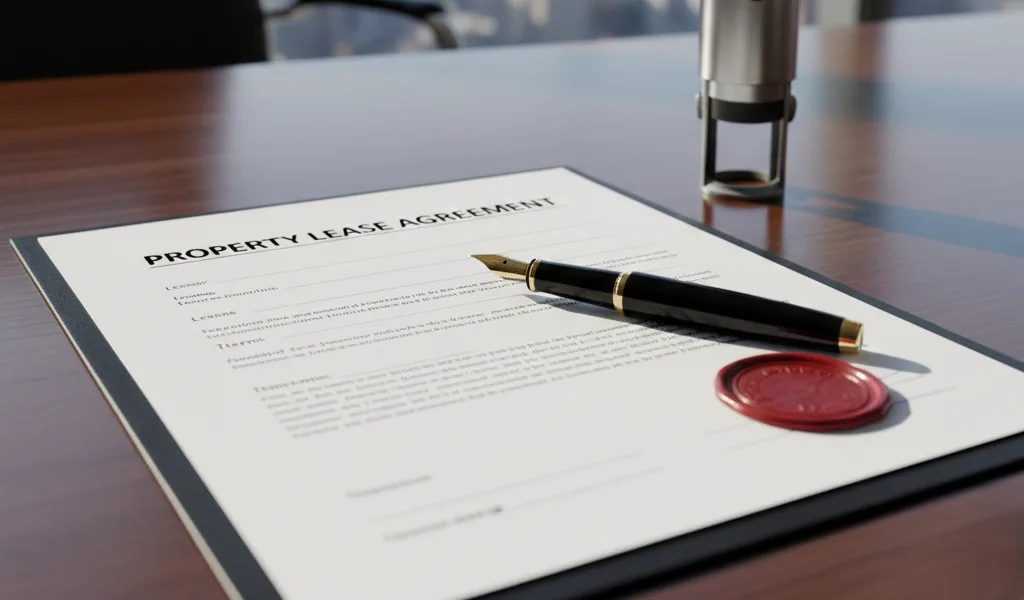
What Is Property Lease: Meaning, Types, Key Components and How it Works in India 2026
Updated : January 27, 2026, 5:45 PM
Author :
 Vivek
Vivek
Summary
A property lease is a legal agreement where a property owner allows a tenant to use the property for a fixed long term period in exchange for rent. It clearly defines lease duration, rent, security deposit, maintenance responsibilities and termination terms. Leases are commonly used for residential, commercial or industrial properties and usually require registration if the term exceeds 11 months, giving stronger legal protection to both parties.
Table of Contents
A property lease is a fundamental legal arrangement in the real estate sector that allows a property owner to grant another party the right to use their property for a specific period in exchange for rent. This concept is central to both housing and business sectors, as it provides a structured way for individuals and companies to occupy space without the heavy financial burden of purchasing it. In India, leasing is extremely common for both residential homes and commercial office spaces. Understanding the nuances of a property lease scenario is essential for ensuring your rights are protected, whether you are the owner granting the lease or the tenant moving in.
Types of Property Lease
When discussing property lease arrangements, it is important to note that one size does not fit all. Different property types and usage requirements call for specific lease structures. Let’s learn more about this! [1]
1. Residential Lease
A Residential lease agreement is used for properties intended for living purposes, such as apartments, independent houses, or villas.
- Duration: usually signed for 11 months to avoid strict registration laws, though long-term leases are also possible.
- Purpose: Strictly for habitation; commercial activities are generally prohibited.
- Maintenance: Minor repairs are often the tenant's responsibility, while structural repairs are the landlord's responsibility.
2. Commercial Lease
A Commercial property lease is designed for business purposes, such as offices, retail stores, or warehouses. These are complex and often span multiple years to ensure business stability. They are further classified based on how costs are shared:
- Gross Lease (Full-Service Lease): The tenant pays a fixed rent, and the landlord covers all operating expenses, including taxes, insurance, and maintenance. This offers predictable monthly costs for tenants.
- Triple Net (NNN) Lease: Common for standalone commercial properties, the tenant pays base rent plus property taxes, insurance, and maintenance. Rent is lower, but expenses can fluctuate.
- Ground Lease: The tenant leases land (often 50–99 years) and builds on it. At lease end, the land and improvements revert to the owner. Often used in retail and corporate setups.
- Lease with Option to Buy: The tenant rents for a set period with the option to purchase at a predetermined price. Sometimes, a portion of rent may apply toward the purchase.
Parties Involved in a Property Lease
A property lease document creates a binding relationship between specific parties. Ideally, there are two main parties, but legally, the execution of the document involves others to validate the process. [2]
- Lessor: The legal owner of the property, granting the tenant the right to use the asset while retaining ultimate ownership.
- Lessee: The tenant who obtains the right to use the property for a specific period. They are obligated to pay rent on time and to maintain the premises in good condition.
- Witnesses: These are neutral third parties who attest that the lessor and lessee signed the document voluntarily.
- Sub-Registrar: If the lease term exceeds 11 months, the document must be registered with the local Sub-Registrar's office to be legally enforceable. The Sub-Registrar is the government official who records the deed.
Key Components of Property Lease
A well-drafted property lease agreement must contain specific components to be valid and effective. These elements define the scope of the transaction and protect the interests of both parties. [3]
- Legal Ownership: It validates that the lessor has the authority to lease out the property. It ensures the tenant is dealing with the rightful owner or an authorized power-of-attorney holder.
- Duration: The agreement must specify the lease's start and end dates. This defines the tenure of the tenancy. It should also include a "lock-in period," during which neither party can terminate the agreement without a penalty.
- Deed and Registration: The lease deed is the written instrument. For any term exceeding 11 months, registration is mandatory under the Registration Act, 1908. Registration gives the lease public validity and makes it admissible in court as evidence.
- Stability: A lease provides stability regarding financial expectations. It locks in the rental amount for the duration of the agreement, protecting the tenant from sudden rent hikes and the landlord from income loss.
How a Property Lease Works?
The process of establishing a property lease follows a systematic legal and operational framework. It is not just about handing over keys; it involves several steps to ensure compliance and mutual understanding. [4]
- Negotiation: The process begins with the landlord and prospective tenant discussing terms such as monthly rent, security deposit amount, maintenance charges, and lease duration.
- Drafting the Lease Agreement: A formal property lease agreement is drafted. This document includes all clauses regarding usage, restrictions, and penalties.
- Signing: Both the lessor and the lessee must sign the agreement. In India, this is typically done on non-judicial stamp paper of an appropriate value based on the rent and tenure.
- Payment of Rent and Deposits: Upon signing, the tenant pays the security deposit (usually 2 to 10 months' rent) and the first month's rent in advance.
- Enjoyment of Property Rights: The landlord hands over possession. The tenant then has the right to "quiet enjoyment" of the property, meaning they can use it without unnecessary interference from the landlord, provided they follow the rules.
- Renewal or Termination: As the lease term nears its end, the parties can choose to renew the agreement with updated terms (often a rent increase) or terminate it. If terminated, the tenant vacates, and the landlord refunds the deposit after deducting costs for any damages.
Difference Between Leasehold vs Freehold
When understanding what is property lease, it is important to distinguish it from freehold ownership. A leasehold property means you have the right to live in or use a building for a fixed number of years (often 99 years), but you do not own the land it stands on. In contrast, freehold implies complete ownership of both the building and the land for an indefinite period.
Here is a comparison to help you understand the differences:
| Aspect | Leasehold Property | Freehold Property |
|---|---|---|
| Ownership | You own the right to use the unit, but the land belongs to the landlord (freeholder). | You have absolute ownership of both the building and the land it is built on. |
| Duration | Ownership is valid only for a fixed period (e.g., 30, 60, or 99 years). | Ownership is indefinite and perpetual; it has no time limit. |
| Transfer Rights | Transferring ownership requires the landowner's or the state authority's permission. | The owner has complete freedom to sell, transfer, or gift the property. |
| Registration | An unregistered lease deed may carry risks; registration is mandatory for transfers. | Registration of the sale deed acts as definitive proof of ownership. |
| Renewal | The lease must be renewed upon expiry, often requiring a fee payment to extend the term. | No renewal is required as ownership does not expire. |
| Property Value | The value may depreciate as the lease term shortens over the years. | The value typically appreciates over time as land is a scarce resource. |
| Mortgage Eligibility | Banks may be hesitant to lend if the remaining lease period is short. | It is easier to obtain mortgage loans as the collateral is considered more secure. |
Benefits & Risks of Property Lease
Entering into a property lease arrangement comes with its own set of advantages and challenges.
Benefits
- Predictable Rental Cost: A lease agreement fixes the rent for the entire term. This shields tenants from inflation and sudden market-driven rent spikes, allowing for better financial planning.
- Legal Protection Through Agreement: A written and registered agreement serves as robust legal proof. It protects the tenant from illegal eviction and ensures the landlord receives rent on time. It clearly outlines the movable and immovable property inclusions, preventing disputes over fixtures.
- Defined Rights for Both Parties: The lease clearly sets boundaries. It defines who pays for repairs, whether pets are allowed, and usage timings for commercial spaces. This clarity fosters a healthy landlord-tenant relationship.
Risks
- Lease Breach Penalties: Leases are binding. If a tenant needs to vacate early due to a job transfer or business failure, they may face stiff penalties or lose their security deposit if the lock-in period hasn't expired.
- Disputes Over Maintenance or Rent Escalation: Conflicts often arise over who is responsible for major repairs (such as plumbing or wiring). Additionally, disputes may arise during renewal if the landlord demands a rent increase significantly above the market rate or the agreed escalation clause.
How NoBroker Helps With Property Lease Agreements?
NoBroker simplifies the rental process by helping draft valid property lease agreements tailored to your needs. They offer expert help in rent determination, provide seamless online registration support, and ensure comprehensive legal compliance checks. Whether you need assistance with a commercial lease or a house construction agreement, NoBroker ensures your documentation is accurate and legally sound without any hassle.
Frequently Asked Questions?
Q1. How long is a typical residential lease term valid?
Ans: In India, a typical residential lease is drafted for 11 months to avoid the mandatory registration process required for leases of 12 months or more.
Q2. Can a lease agreement be renewed automatically?
Ans: No, a lease agreement generally does not renew automatically. Both parties must mutually agree to renew it by signing a new agreement or an extension deed.
Q3. Do I need to register a commercial property lease in India?
Ans: Yes, if the lease term for the commercial property exceeds 11 months, it is mandatory to register the lease deed under the Registration Act, 1908.
Q4. Can either party terminate a lease early?
Ans: Yes, a lease can be terminated early, but usually only after the "lock-in period" ends and after providing the notice period specified in the agreement (typically 1 to 3 months).
Q5. What happens if the tenant stops paying rent?
Ans: If a tenant stops paying rent, it is considered a breach of contract. The landlord can issue a legal notice for eviction and recovery of dues, and may approach the court if the tenant refuses to vacate.
ARTICLE SOURCES
Most Viewed Articles
Franking Charges Explained: Meaning and Benefits
January 31, 2025
1116903+ views
Society Maintenance Charges : Meaning, Cost, Types and Calculation
January 31, 2025
201160+ views

Daughter's Right in Fathers' Property - the Law is Finally Equal for both Genders?
June 1, 2025
145730+ views

BBMP E-Khata Registration process for property owners in Bangalore, Karnataka in 2025
March 19, 2025
145603+ views

Rectification Deed Format and Process in India 2026
June 1, 2025
136094+ views
Author
Loved what you read? Share it with others!
Recent blogs in
Article 35 I Lease Rent Deed: Process, Calculation and Legal Guidelines in 2026
March 9, 2026 by Kiran K S
Deed of Variation Lease: Meaning, Format & Legal Process Explained in 2026
March 9, 2026 by Manasvi Bachhav









 Full RM + FRM support


Join the conversation!