- https://www.birlaopus.com/blog/waterbased-vs-oilbased-paints#can-i-use-water-based-paint-over-oil-based-paint-
- https://www.asianpaints.com/blogs/whats-the-difference-between-oil-and-water-based-paint.html
- https://www.inspirationspaint.com.au/articleview/230/whats-the-difference-between-oil-and-water-based-paint?srsltid=AfmBOopz5pyYjCBoQPihFHphuGl_FbAtIWjEKpqVo5jcfsk3WREIpTpo
- https://www.duluxtrade.com.au/technical-advice/general/water-based-vs-oil-based-enamel-paints/
- https://www.asianpaints.com/blogs/water-based-paints.html
- https://www.baumerk.com/en/blog/everything-you-need-to-know-about-water-based-paint
- https://www.asianpaints.com/blogs/whats-the-difference-between-oil-and-water-based-paint.html
- https://coatingsdirectory.com/blog/oil-based-paint-types-apply-and-removal-guide/
Table of Contents
Water-Based Paint vs Oil-Based Paint â Quick Comparison TableWhat is Water-Based Paint?What is Oil-Based Paint?Key Differences - Water-Based Paint vs Oil-Based PaintWhich Paint Is Better for Indian Homes?Where to Use Water-Based Paint vs Oil-Based Paint?Pros and Cons of Water-Based PaintPros and Cons of Oil-Based PaintCost Comparison â Water-Based Paint vs Oil-Based PaintHow to Choose the Right Paint for Your Home?How NoBroker Helps You Choose the Best Paint for Your Walls?Frequently Asked Questions?
Loved what you read? Share it with others!


Home
Blog
Home Services Tips & Ideas
Painting Tips & Color Ideas
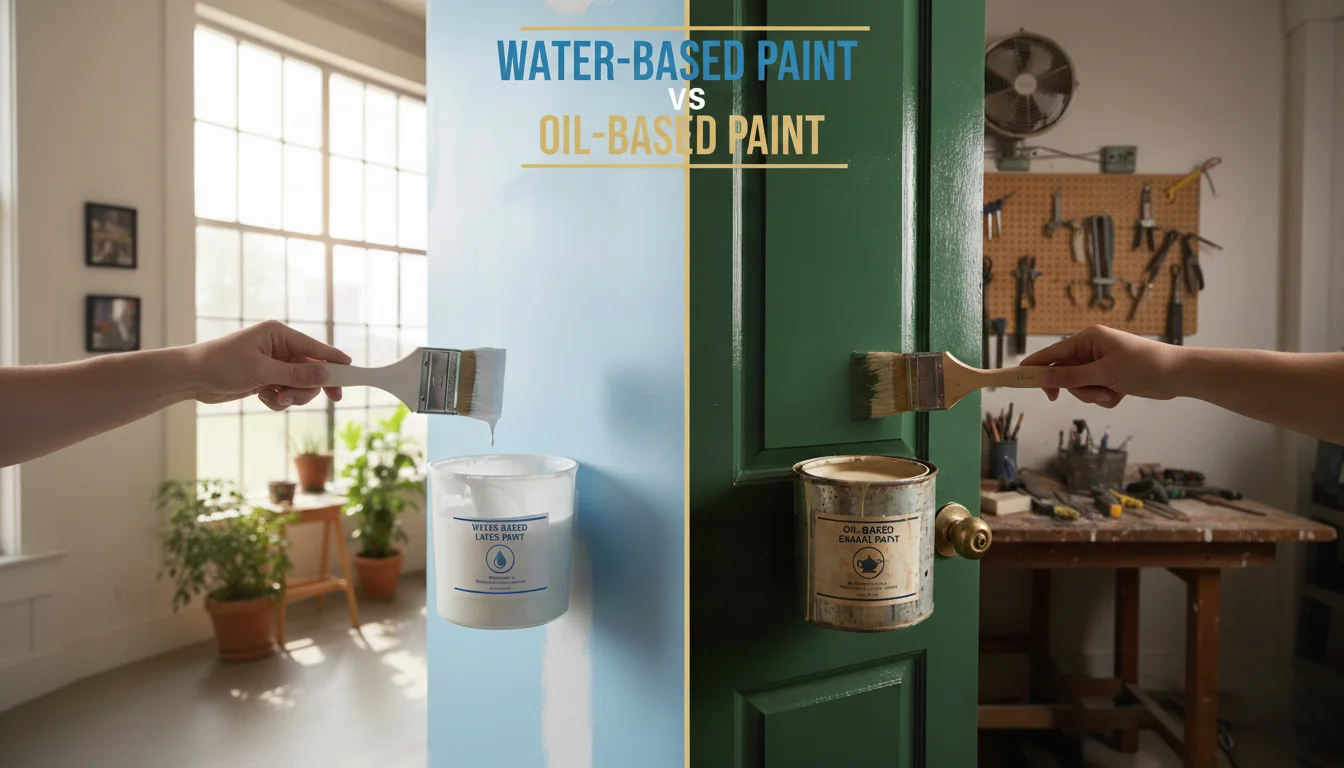
Water Based Paint vs Oil Based Paint
Water-Based Paint vs Oil-Based Paint: Differences, Uses & Cost Comparison in 2026
Updated : January 9, 2026, 3:42 PM
Author :
 Krishnanunni
Summary
Water-based paint uses water as a solvent, dries quickly, has very little smell, and is easy to clean, making it ideal for interior walls, ceilings, and damp areas. Oil-based paint uses mineral spirits, offering a smoother and more durable finish but with a stronger odor and longer drying time. It works best for doors, trims, metal surfaces, and high-traffic areas. NoBroker helps homeowners choose the right paint and delivers a clean, long-lasting professional finish.
Table of Contents
Water-Based Paint vs Oil-Based Paint â Quick Comparison TableWhat is Water-Based Paint?What is Oil-Based Paint?Key Differences - Water-Based Paint vs Oil-Based PaintWhich Paint Is Better for Indian Homes?Where to Use Water-Based Paint vs Oil-Based Paint?Pros and Cons of Water-Based PaintPros and Cons of Oil-Based PaintCost Comparison â Water-Based Paint vs Oil-Based PaintHow to Choose the Right Paint for Your Home?How NoBroker Helps You Choose the Best Paint for Your Walls?Frequently Asked Questions?
Choosing between water-based and oil-based paint depends on the solvent used, which determines the paint's durability, drying speed, and environmental impact. Water-based options prioritise low odour and fast application, making them ideal for large interior surfaces. Conversely, oil-based paints offer a harder, more resistant finish, making them superior for areas subject to frequent wear and tear, such as wooden trim and metal surfaces. Understanding this chemical divide is essential for ensuring your painting project is successful. [1] [2] [3] [4]
Water-Based Paint vs Oil-Based Paint – Quick Comparison Table
To select the best finish, a direct comparison of water-based vs. oil-based paint, based on key factors like drying speed and chemical composition, is essential. [1] [2] [3] [4]
| Aspect | Water-Based Paint (Acrylic/Latex) | Oil-Based Paint (Alkyd/Linseed) |
|---|---|---|
| Primary Solvent | Water | Organic Solvent (Alkyd/Mineral Spirits) |
| Drying Time | Speedy (1–4 hours) | Very slow (6–24 hours) |
| Clean-up | Easy (Soap and water) | Difficult (Requires Turpentine or Mineral Spirits) |
| Durability | Flexible, resists cracking; good general durability | Hard, superior resistance to scuffs and impacts |
| Odor/Fumes | Low odor; low VOCs (Volatile Organic Compounds) | High odor; high VOCs; requires maximum ventilation |
| Best For | Interior walls, ceilings, quick projects, humid climates | Doors, windows, trim, metal, high-traffic areas |
| Color Retention | Excellent; resists yellowing over time | Poor; prone to yellowing, especially in low-light areas |
What is Water-Based Paint?
Water-based paint, referred to as latex or acrylic paint, uses water as its primary solvent, making it the preferred choice for eco-conscious and high-speed applications. This composition dries quickly, often allowing multiple coats to be applied in a single day. Water-based paint is often favoured for its minimal, low odour, and very low release of volatile organic compounds (VOCs), rendering it significantly safer for large indoor applications. [5] [6]
What is Oil-Based Paint?
Oil-based paint uses an organic solvent, such as alkyd or linseed oil, which gives it superior durability and a characteristic hard finish upon curing. This solvent allows the paint to level out smoothly, providing a rich, often glossy finish that is highly resistant to impact and frequent handling. However, the organic solvent base results in a strong, lingering odour and a longer curing period—sometimes requiring up to a full day between coats which necessitates thorough ventilation during and after the application of this oil-based paint versus water-based paint. [7] [8]

Key Differences - Water-Based Paint vs Oil-Based Paint
The difference between oil-based and water-based paint hinges on five aspects. [1] [2] [3] [4]
| Aspect | Water-Based Paint | Oil-Based Paint |
|---|---|---|
| Drying Time | Dries quickly (Surface dry in 1-4 hours). | Dries slowly (Surface dry in 6-24 hours). |
| Durability | Flexible and resists cracking; prone to scuffing in high-traffic zones. | Hard finish, resists scuffs, impact, and moisture penetration better. |
| Clean-Up | Simple soap and water suffice. | Requires specialized solvents like mineral spirits or turpentine. |
| Environmental Impact | Low VOCs, low odor, safer for indoor air quality. | High VOCs, strong odor, requires extended ventilation. |
| Color Retention | Retains color exceptionally well; does not yellow over time. | Prone to yellowing, especially in low-light and low-UV exposure areas. |
Which Paint Is Better for Indian Homes?
For the vast majority of Indian homes, particularly the internal walls and ceilings, water-based paint is generally the superior choice for large surface areas. The high heat and humidity in many parts of India accelerate the drying time of water-based paint, allowing projects to be completed much faster, which is a major logistical advantage. Furthermore, the low VOC and minimal odor of water-based paint make it far more practical for occupied homes, ensuring minimal disruption and immediate usability of painted spaces. [1] [2] [3] [4]
Where to Use Water-Based Paint vs Oil-Based Paint?
Choosing the correct paint type based on the surface's function and material is important for maximum longevity and finish quality. [1] [2] [3] [4]
- Water-Based Paint: Best suited for internal drywall, plaster walls, ceilings, and surfaces that require rapid drying and low odour.
- Oil-Based Paint: Oil-based paint is the optimal choice for high-wear areas, especially wooden window frames, doors, baseboards, and metal surfaces, where superior hardness, moisture resistance, and resistance to sticky fingerprints are required.
Pros and Cons of Water-Based Paint
Water-based paints (acrylic latex vs. oil-based paint) offer distinct advantages for modern, quick applications, though they have limitations when it comes to handling extreme wear. [5] [6]
Pros
- Fast Drying and Recoat Time
- Low Odour and Safer Application
- Excellent Colour Stability
- Easy Clean-Up Process
Cons
- Requires More Surface Preparation
- Less Impact Resistance
- Slightly Higher Base Cost
- Difficult to Apply Over Glossy Oil
Pros and Cons of Oil-Based Paint
Oil-based paints offer a traditional, hard-wearing finish favoured for its durability, but these technical benefits come with drawbacks in application and the environment. [7] [8]
Pros
- Superior Hardness and Adhesion
- Excellent Coverage and Flow
- Moisture Resistance
- Rich Glossy Finish
Cons
- Extended Drying and Curing Time
- High Odor and VOC Content
- Difficult Chemical Clean-Up
- Prone to Yellowing
Cost Comparison – Water-Based Paint vs Oil-Based Paint
While the cost of raw paint materials is often similar, the long-term cost comparison reveals significant variances in application and maintenance between oil- and water-based paint. [1] [2] [3] [4]
| Component | Water-Based Paint (Mid-Range) | Oil-Based Paint (Mid-Range) |
|---|---|---|
| Paint Price (per liter) | ₹350 – ₹600 | ₹400 – ₹750 |
| Primer Requirement | Water-based primer (required over bare surface) | Oil-based or specialized primer (required over bare surface) |
| Labor Cost (Application) | Lower (Due to faster drying time and minimal cleanup effort) | Higher (Due to long wait times between coats and complex cleanup procedures) |
| Solvent/Cleaner Cost | Negligible (Soap and Water) | High (Requires cost of Turpentine/Mineral Spirits) |
| Longevity | Excellent color retention, minimal fading | Superior impact resistance, prone to yellowing |
How to Choose the Right Paint for Your Home?
Selecting the ideal finish requires careful comparison of oil-based and water-based paint, based on the substrate and the space's environmental conditions. Consider the surface material (wood, metal, or drywall), the level of wear and moisture (high-traffic areas require the durability of oil-based paint versus water-based paint), and the available ventilation, which affects the choice between low-odour acrylic latex and high-fume alkyd solvents for a lasting, safe result.
How NoBroker Helps You Choose the Best Paint for Your Walls?
Navigating the choice between water-based paint vs. oil-based paint requires expert guidance to maximise durability and aesthetic appeal. NoBroker simplifies this decision by connecting you with verified painting professionals who provide technical consultation on the suitability of oil-based or water-based options for every surface in your home. We manage the entire process, ensuring correct surface preparation, high-quality material selection, and efficient application, guaranteeing a durable, professional finish that enhances your home's longevity and look.
Frequently Asked Questions?
Q1. What is the main difference between water-based and oil-based paint?
Ans: The main difference between water-based and oil-based paint is the solvent: water-based uses water, while oil-based uses an organic solvent such as alkyd, which affects drying time, odour, and durability.
Q2. Which paint lasts longer?
Ans: Oil-based paint generally offers a harder, more impact-resistant finish that lasts longer on high-wear surfaces like wood and metal, though water-based paint retains colour longer.
Q3. Can I use water-based paint on wood?
Ans: Yes, high-quality water-based acrylic enamel paint can be used on wood, especially interior wood trim, and is favoured for its fast drying time and low tendency to yellow.
Q4. Is oil-based paint suitable for interior walls?
Ans: Oil-based paint is generally not recommended for large interior walls due to its strong fumes, high VOCs, and slow drying time, though it is excellent for interior doors and trim.
Q5. Does water-based paint peel easily?
Ans: No, modern water-based paint adheres well and is flexible, resisting cracking. Peeling usually occurs only when a primer is not applied properly over a glossy, oil-based surface.
Q6. Which paint dries faster?
Ans: Water-based paint dries significantly faster, often becoming touch-dry in 1–4 hours, allowing multiple coats in a single day, unlike oil-based paint, which can take up to 24 hours.
Q7. Is oil-based paint harmful due to fumes?
Ans: Yes, oil-based paint contains high levels of VOCs and emits strong fumes that can be harmful. Proper, extensive ventilation is mandatory during and after application.
Q8. Which is better for metal surfaces?
Ans: Oil-based paint is generally better for metal surfaces as it adheres strongly and provides a hard, moisture-resistant barrier that offers superior protection against rust and corrosion.
Q9. Can I apply water-based paint over oil-based paint?
Ans: Yes, but you must first thoroughly clean and sand the glossy oil surface and apply a specialised bonding primer before applying the water-based topcoat to prevent adhesion failure.
Q10. Which paint is better for the Indian climate?
Ans: Water-based paint is often better for general interior walls in the Indian climate due to its fast drying time (essential in high humidity) and its resistance to colour yellowing caused by heat.
Q11. Does NoBroker offer painting services with both paint types?
Ans: Yes, NoBroker offers comprehensive painting services, utilising both water-based acrylic/latex and oil-based enamel paints, guided by expert consultation to match the best type to each surface in your home.
ARTICLE SOURCES
NoBroker Painting Tips & Color Ideas Testimonials
Before this festive season
get your house painted
Most Viewed Articles
40+ Best Stunning Two Colour Combinations for Bedroom Walls to Elevate Your Space in 2026
January 31, 2025
336651+ views

Top 25 Outside Color Combinations with Colour Codes for Indian Homes in 2026
May 16, 2025
313919+ views
Asian Paint Price 20 Litre for Different Variants in India: Coverage, Durability and Benefits
May 17, 2025
175850+ views
25 Latest Main Gate Colour Combination Ideas: Direction and Placement as Per Vastu in 2026
October 9, 2025
159186+ views

Top 26 Wall Paint Colour Combinations Ideas With Codes for Every Room in 2026
February 3, 2025
136970+ views
Author
Loved what you read? Share it with others!
Recent blogs in
Top 8 Modern Marble Texture Wall Paint for Stylish Homes in [2026]
March 27, 2026 by Krishnanunni H M
Top 10 Light Grey Paint Colors Combination with Codes That Improve Room Appearance in [2026]
March 27, 2026 by Krishnanunni H M
Colour Psychology for Home Interiors: How to Choose Wall Colours Based on Mood
March 27, 2026 by Kruthi










 Full RM + FRM support



Join the conversation!