- https://www.nobroker.in/blog/encumbrance-certificate-karnataka/
- https://igr.karnataka.gov.in/new-page/Encumbrance%20Certificate%20After%2001-04-2004/en
- https://hellolandmark.com/detailed-steps-to-check-litigation-history/
Table of Contents
Quick Property Title Verification ChecklistWhat is a Property Title and Why It Matters?Why Legal Verification of Property Is Essential? Property Title Search: Checking the Ownership Chain Encumbrance Certificate (EC): The Most Important Property Check How to Get an Encumbrance Certificate Online in Karnataka? Litigation Search: Checking for Property Disputes Power of Attorney Property Sales- Risks & Due DiligenceProperty Title Clearance Checklist (Before Buying) ConclusionFrequently Asked Questions on Property Title Search
Loved what you read? Share it with others!


Home
Blog
Real Estate Legal Guide & Laws
How to do Property Title Search in India: EC, Litigation Check & Title Clearance Checklist
How to do Property Title Search in India: EC, Litigation Check & Title Clearance Checklist
Updated : March 30, 2026, 3:21 PM
Author :

Table of Contents
Quick Property Title Verification ChecklistWhat is a Property Title and Why It Matters?Why Legal Verification of Property Is Essential? Property Title Search: Checking the Ownership Chain Encumbrance Certificate (EC): The Most Important Property Check How to Get an Encumbrance Certificate Online in Karnataka? Litigation Search: Checking for Property Disputes Power of Attorney Property Sales- Risks & Due DiligenceProperty Title Clearance Checklist (Before Buying) ConclusionFrequently Asked Questions on Property Title Search
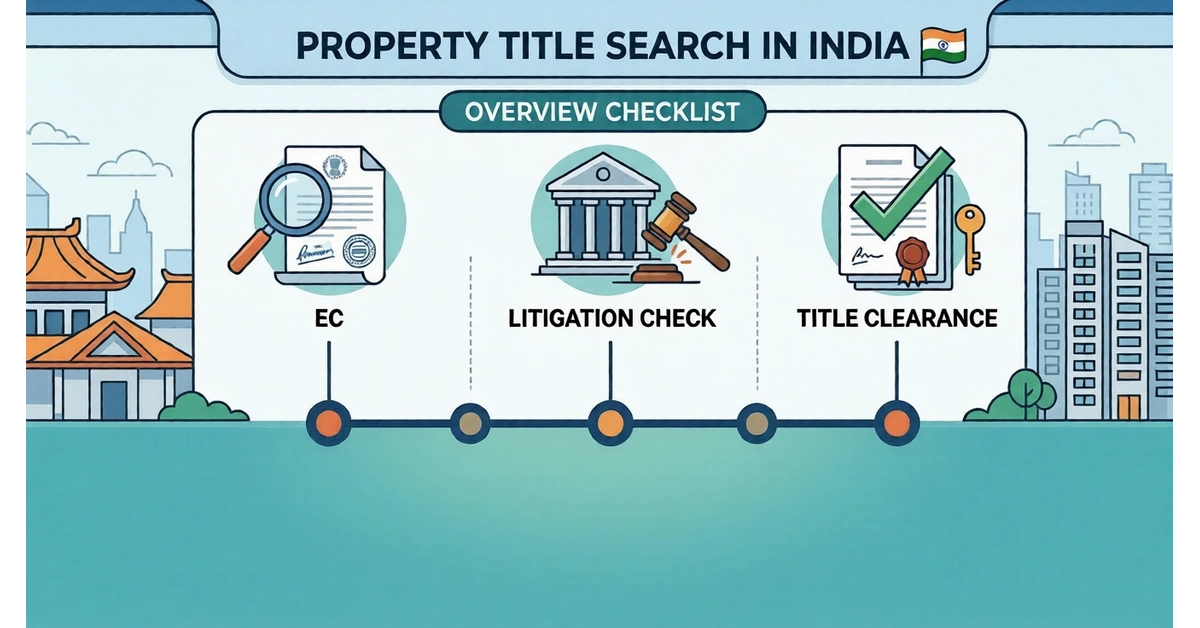
Buying property in India without conducting a property title search can lead to serious issues, including legal disputes, rejection of bank loans, or even loss of ownership rights. A property may look legitimate on the surface, but hidden liabilities or ownership conflicts can create major problems for buyers later. A proper legal checkup is needed to ensure ownership is genuine and the property is liability-free, including:
- Property title search to verify the ownership chain
- Obtaining an encumbrance certificate (EC) to detect loans or mortgages
- Conducting a litigation search to check for court disputes
- Reviewing all title documents of the property and ownership records
Quick Property Title Verification Checklist
Before buying property in India, complete critical checks to ensure a clear, valid title.:
- Check 30 years of property title history through a proper property title search
- Obtain an Encumbrance Certificate (EC) to identify loans or financial liabilities
- Conduct a litigation search in relevant courts to detect disputes
- Verify all title documents of property, including the title deed of property
- Confirm the seller’s legal authority to transfer ownership
What is a Property Title and Why It Matters?
A property title indicates legal ownership rights, identifying the owner and confirming their authority to sell, transfer, lease, or mortgage the property. Understanding the title is crucial in verifying a property's legality, as it confirms the seller's right to transfer ownership. A valid property title gives the owner three key legal advantages:
- Ownership rights: It legally confirms who holds the property and protects them from unauthorized claims.
- Transferability: A clear title allows the owner to sell or transfer the property without legal complications.
- Legal enforceability: The ownership is recognized by law and can be defended in court if disputes arise.
It is important to distinguish between a property title and the title deed. The property title represents legal ownership rights, while the title deed is the physical document proving ownership. During a property title search, buyers review various documents to verify ownership history and confirm the title is clear.
Why Legal Verification of Property Is Essential?
Legal verification of property confirms it is dispute-free, liabilities-free, and clear of ownership conflicts before purchase. This safeguards the buyer's interests and future peace of mind.
- Prevent property fraud by verifying the seller's legal ownership and authority to transfer ownership.
- Detect hidden mortgages or loans registered against the property through government records to avoid inheriting someone else's debt.
- Identify ownership disputes among family, developers, or previous buyers that could cause lengthy litigation.
- Protect home loan eligibility since banks require clear title verification before funding the purchase.
- Ensure a smooth future resale of the property without legal issues that could decrease its market value.
Property Title Search: Checking the Ownership Chain
A property title search reviews ownership records to confirm the legal transfer of ownership over time. Lawyers perform this to examine transactions, verify the continuity of ownership, and check for disputes. It confirms the seller's rights and detects irregularities like missing transfers or conflicting records. The goal is to establish a "Chain of Title" -a chronological link from the current seller to the original owner, ensuring no "broken links." exist.
What is a Property Title Search?
A property title search involves examining past ownership records, such as sale deeds, gift deeds, and partition deeds, to verify legal ownership and ensure transfers are free of disputes. Lawyers usually perform these searches before transactions to confirm the seller's authority. This search acts as a formal investigation into the property’s past, uncovering any hidden claims that might not be visible on the current title deed of the property.
Documents Checked in a Property Title Search
A property title search examines title documents to verify ownership history and confirm the seller's legal right to transfer property.
- Sale Deed: This vital document confirms the legal transfer of ownership from the seller to the buyer. It serves as the primary legal record of property ownership and is essential for verification.
- Mother Deed: The mother deed traces all historical transfers to establish the origin of property ownership and ensure an unbroken chain of title.
- Gift Deed: This document confirms that the property was transferred as a gift, registered properly, and done voluntarily without money exchanged.
- Partition Deed: A partition deed formalises the division of ownership of family property, confirming each heir's share of land and preventing overlapping claims.
- Release Deed: This certificate confirms that the previous co-owners have relinquished their ownership rights, thereby preventing future legal claims against the buyer after the sale.
- Mutation Records: These records confirm updates to land revenue registers with the latest ownership details, proving recognition of the owner by local authorities for tax purposes.
Ideal Title History Period
Lawyers review property ownership records over the years to confirm a clear title and spot disputes. Examining title documents helps verify the property's legal status.
| Property Type | Recommended Title History to Verify | Reason for Verification |
| Urban Property | 30 years | Lawyers typically examine the property title deed and other ownership records for at least 30 years to confirm a continuous, dispute-free property title history. |
| Agricultural Land | 30-40 years | Agricultural properties may have multiple inheritance or transfer records, so reviewing older title documents of property helps detect hidden ownership claims or disputes. |
| Apartments / Flats | Since project land purchase | For apartments, the property title search usually begins when the builder originally purchased the land, ensuring that the land title and development approvals are legally valid. |
Verifying the title documents of property over these periods is a standard practice to satisfy the "limitation period" within which most legal claims must be filed in India.
Encumbrance Certificate (EC): The Most Important Property Check
An encumbrance certificate (EC) is an official document from the Sub-Registrar that records all financial or legal property transactions, including sales, mortgages, leases, or gifts. Buyers use it to verify if the property has outstanding loans or liabilities. A clear EC indicates the property is free of encumbrances and safe to buy. It serves as a "financial background check," indicating whether the land was ever used as collateral for a loan.
What Information Appears in an EC
The encumbrance certificate records important details of property transactions registered with the Sub-Registrar, providing full transparency to the buyer.
- Property Description: The certificate includes a detailed property description, covering the survey number, full address, and registration details, ensuring that the legal search matches the physical location of the land or building.
- Ownership Transfer Records: This section provides a chronological list of past sales transactions, showing the name of each individual who held the title for transparency in property transfers.
- Mortgage Entries: These entries show any past or current loans on the property and indicate whether the asset is now pledged to a bank or lender as security for a debt.
- Loan Closure Records: These records confirm full repayment of the mortgage and that the bank has no further legal claim or interest in the property.
- Court Attachments: This information shows legal claims or attachments against the property that could block the owner from selling or transferring it.
Types of EC
When applying for an encumbrance certificate (EC), the Sub-Registrar’s office issues different EC formats based on whether registered transactions or liabilities are found during the search period.
| Type of EC | Meaning | What It Indicates for Property Buyers |
| Form 15 (Encumbrance EC) | Issued when registered transactions such as sales, mortgages, or leases are found in the property records. | This encumbrance certificate lists all recorded transactions during the selected period, helping buyers review past loans, ownership transfers, or legal obligations affecting the property title. |
| Form 16 (Nil EC) | Issued when no transactions are recorded for the property during the search period. | A Nil EC indicates no registered loans, mortgages, or encumbrances for the property during that period, which is usually viewed positively in property legal checks. |
While a "Nil EC" is often preferred, a Form 15 is not necessarily a bad sign, provided all previously listed loans have been officially closed and discharged.
Red Flags in an EC
When reviewing an ec online, certain entries should alert a buyer to potential risks that require further investigation.
- Active Mortgage: An active mortgage not cleared by the current owner is a major risk. This could lead the bank to seize the property later to recover unpaid debt obligations.
- Court Attachment: A court attachment indicates a legal dispute or loan default, signifying the title is officially "frozen." This prevents any legal sale or transfer until the specific court order is vacated or resolved.
- Frequent Ownership Transfers: Multiple ownership transfers in a short period often signal a hidden defect, suggesting previous buyers uncovered legal or physical issues and quickly exited.
- Missing Transaction History: Gaps in property records suggest some transfers used unregistered documents, posing a risk since ownership cannot be legally verified.
How to Get an Encumbrance Certificate Online in Karnataka?
Buyers in Karnataka can obtain an encumbrance certificate online through the Kaveri Online Services portal, which allows them to search property records and download EC documents. It simplifies verification without visiting the Sub-Registrar's office. By entering property details and selecting the search period, buyers can quickly check for financial liabilities. The system covers all registered properties in the state, ensuring transparency. (1)(2)
Step-by-Step EC Online Process
- Visit Kaveri Online Services Portal: Visit Karnataka Registration Department's Kaveri Online Services for property registration and EC services.
- Create an Account: Register with your mobile number and email to access EC services and track your application.
- Select EC Search: Select the Encumbrance Certificate search to view registered property transactions.
- Enter Property Details: Provide accurate property details like survey number, document number, or location to ensure correct property title retrieval.
- Choose Search Period: Select a time range to check property transactions. Buyers typically verify 15-30 years during a title search.
- Pay the Fee: Complete payment online via UPI, net banking, or cards. Fees vary with search period.
- Download EC: After processing, the encumbrance certificate can be downloaded from the portal. It confirms if the property has loans, mortgages, or liabilities.
Documents Needed for EC
To apply for an encumbrance certificate (EC), applicants must provide basic property and identity details to help the Sub-Registrar locate the correct records. These documents help verify the property title and ensure precise legal verification.
- Property Details: Information like survey number, property address, or document number helps authorities identify the property during a title search.
- Sale Deed Copy: A copy of the title deed or a prior sale deed confirms ownership and helps officials locate transaction records.
- Owner or Applicant ID Proof: A valid identity document like Aadhaar, PAN, passport, or voter ID is required to verify the applicant requesting the encumbrance certificate.
- Property Registration Details: Details like registration year, Sub-Registrar office, or document number help streamline EC online searches.
- Applicant Contact Information: A mobile number and email are required for online encumbrance certificate applications in Karnataka to receive updates and notifications.
EC Fees & Processing Time
The cost and processing time for an encumbrance certificate (EC) vary depending on whether it is requested online or at the Sub-Registrar's office. Online is usually faster.
| Mode | Processing Time | Estimated Cost |
| Online | 2-3 days | ₹100-₹500 depending on search period and state portal fees |
| Offline | 15-30 days | Variable; depends on the Sub-Registrar office and number of years searched |
Applying for an encumbrance certificate online in Karnataka through the Kaveri portal is typically faster and more convenient than offline applications, especially when conducting legal verification of property during a property title search.
Litigation Search: Checking for Property Disputes
A litigation search checks if a property is involved in legal disputes by reviewing court records and databases. This prevents delays or financial losses from unresolved cases, which might not appear on the EC, making independent searches crucial. (3)
What is a Litigation Search?
A litigation search checks if a property is involved in court cases, even if documents like the title deed or encumbrance certificate suggest it is legally valid. Lawyers perform these searches to find lawsuits, disputes, inheritance claims, or financial issues, helping buyers ensure the title is clear. It reviews court records related to the property, owner, or land, allowing buyers to identify disputes early, avoid risks, and confirm property safety before purchasing.
Where Litigation Searches Are Done
A thorough search involves reviewing multiple levels of the Indian judiciary to ensure there are no claims against the property title.
- Civil Court Records: Lawyers review civil court records for property disputes, such as inheritance claims, boundary conflicts, or suits by neighbours or family.
- High Court Databases: These databases are checked for major property litigation or pending appeals, as High Court rulings could reverse lower court decisions.
- NCLT Records: Checking National Company Law Tribunal records is crucial for developer insolvency cases, as it verifies the builder's financial stability and legal right to complete the project and hand over units.
- RERA Portals: State RERA portals review formal complaints against real estate developers, showing if buyers faced delays, quality issues, or fraud with a specific builder.
Lawyer vs Bank Verification
When buying property, both banks and property lawyers perform certain verification checks before approving loans or completing transactions. However, a lawyer usually conducts a more comprehensive legal verification of property and deeper property title search.
| Check | Lawyer | Bank |
| Title search | Yes - reviews the full ownership chain and title documents of property | Yes- verifies ownership mainly for loan approval |
| EC review | Yes-examines the encumbrance certificate (EC) to detect loans or liabilities | Yes- checks EC to ensure the property is not already mortgaged |
| Litigation search | Yes - conducts a detailed litigation search to detect court disputes | Limited- may check basic records but not always comprehensive |
| Risk analysis | Yes- evaluates legal risks affecting the property title and transaction safety | Limited- focuses mainly on loan security rather than full legal due diligence |
Power of Attorney Property Sales- Risks & Due Diligence
Buying property via Power of Attorney (PoA) needs careful due diligence. Although legal in some cases, buyers must verify the property title, ownership authority, and supporting documents before proceeding.
Is Buying Property via PoA Safe?
Buying property via a Power of Attorney is valid but risky without proper legal checks. A PoA enables an agent to act for the owner in sales or management. Problems can occur if the PoA is fake, expired, or revoked.
Common risks include fake PoA documents used by fraudsters to sell property without authority or after revocation, with agents trying transactions. Buyers face property fraud if ownership rights are misrepresented. They should review the title deed, conduct a property search, and verify PoA registration before purchasing.
How to Verify a PoA Property Transaction
Before purchasing property through a Power of Attorney, buyers should perform several verification checks to confirm the agent’s authority and ensure the property title is legally valid.
- Verify PoA Registration: Ensure the Power of Attorney is legally registered and valid for property sales.
- Confirm Principal Identity: Verify the original property owner's identity and their legitimate authority to the agent.
- Check Authority Scope: Review the PoA document carefully to ensure it authorizes the agent to sell the property and execute the title deed.
- Conduct Full Title Verification: Perform a property title search, review the encumbrance certificate (EC), and conduct a litigation search to confirm the property is dispute-free and clear of liabilities.
Property Title Clearance Checklist (Before Buying)
Before buying property, do legal checks for clear title and ownership to avoid risks like unpaid loans, disputes, or zoning issues. Proper due diligence protects against future legal and financial problems.
| Check | Why It Matters |
| Title Search | A title search verifies property ownership over 20-30 years, confirming the seller's legal ownership and right to transfer without disputes. |
| Encumbrance Certificate (EC) Verification | The Encumbrance Certificate (EC) indicates whether the property has financial liabilities, such as mortgages, loans, or legal claims. A clean EC indicates the property is free from registered encumbrances. |
| Litigation Search | A litigation search verifies if the property is involved in ongoing or past court disputes, ensuring it's not subject to legal claims, ownership conflicts, or lawsuits. |
| Land Use Verification | This verification confirms if the property is approved for its intended use, like residential or commercial, and ensures land complies with zoning and development regulations. |
| RERA Verification | Checking the RERA portal verifies that the project is registered and compliant, and that the builder’s claims about approvals, timelines, and specs are correct. |
Conclusion
Verifying a property title is essential to avoid legal disputes, hidden liabilities, and ownership risks before making a purchase in India. Platforms like NoBroker simplify this process by offering verified property listings and assistance with legal checks.
Key Takeaways:
- Always verify the property title before purchasing
- Conduct a title search for at least 30 years of ownership history
- Obtain an Encumbrance Certificate to check for loans or liabilities
- Perform a litigation search to ensure no ongoing legal disputes
- Consider hiring a property lawyer for professional verification
Final Note: Check out NoBroker today to browse legally verified listings and make a safe, confident property investment decision.
Frequently Asked Questions on Property Title Search
How do I check if a property has a clear title in India?
Verify the title deed, review past ownership records, check the Encumbrance Certificate, and ensure there are no legal disputes. Consulting a property lawyer helps confirm authenticity and avoid future risks.
What key searches should I conduct to verify a property’s title before buying?
Conduct a detailed title search, verify the Encumbrance Certificate, check for litigation records, confirm land-use approvals, and review past sale deeds to ensure a clear ownership chain and legal compliance.
Should a lawyer or a bank verify property documents before purchase?
It is best to involve both. A lawyer ensures legal accuracy and document authenticity, while banks conduct financial and legal checks before approving loans, providing an additional layer of security.
What is an Encumbrance Certificate (EC), and why is it important for property verification?
An Encumbrance Certificate lists all registered transactions linked to a property. It helps verify ownership history and ensures the property is free from financial liabilities like loans, mortgages, or legal claims.
How do I obtain an Encumbrance Certificate (EC) for a property in Bengaluru or Karnataka?
You can apply online through the Kaveri portal or visit the sub-registrar’s office. Provide property details, select the required period, and pay a nominal fee to obtain the certificate.
How do I interpret the details in an Encumbrance Certificate (EC)?
Review ownership changes, transaction types, and loan details mentioned in the EC. Ensure no active encumbrances are listed. A “Nil” EC indicates no registered liabilities during the selected period.
What is a litigation search on a property?
A litigation search involves checking court records to identify any ongoing or past legal disputes related to the property. This helps buyers avoid purchasing properties involved in legal complications.
How can I check if a property has any pending court cases or disputes?
Search online court databases, consult a property lawyer, and verify records at local courts. This ensures the property is not involved in any legal disputes that could affect ownership.
Is it safe to buy a property using a Power of Attorney (PoA) from the seller?
Buying through PoA can be risky if not verified properly. Ensure the PoA is registered, valid, and specific to the transaction, and confirm the original owner’s consent before proceeding.
What risks are involved in buying property through PoA, and how can they be mitigated?
Risks include fraud, misuse, or revoked authority. Mitigate them by verifying the PoA’s validity, checking registration details, confirming owner consent, and seeking legal assistance for proper due diligence.
What are the essential title documents of a property that every buyer should verify?
Buyers should verify the sale deed, mother deed, title deed, Encumbrance Certificate, property tax receipts, and approved building or land-use plans to ensure clear ownership and legal compliance.
How many years of property title history should I check during a title search in India?
It is advisable to check at least 20–30 years of ownership history. This helps identify any past disputes, claims, or irregular transactions and ensures the property has a clear legal title.
Can a property with a clear Encumbrance Certificate still have ownership disputes or hidden claims?
Yes, an EC only shows registered transactions. Unregistered agreements, inheritance issues, or ongoing disputes may not appear, so additional legal checks and document verification are essential before purchase.
How do I perform an EC search or property title verification online in Karnataka?
Visit the Kaveri Online Services portal, enter property details, choose the time period, and access the EC digitally. You can also verify property records and transaction history through the platform.
What is the difference between a sale deed, mother deed, and title deed in India?
A sale deed confirms ownership transfer between parties, a mother deed traces the complete ownership history, and a title deed legally establishes the current owner’s rights over the property.
Recommended Reading
Franking Charges Explained: Meaning and Benefits
January 31, 2025
1117111+ views

Rectification Deed Format and Process in India 2026
June 1, 2025
137361+ views

Revenue Stamp in India: Meaning, Types, Uses, Legal Value & Where to Buy in 2026
January 31, 2025
132367+ views

How to Get a Stay Order in India: Step-by-Step Legal Process in 2026
May 31, 2025
97328+ views

Doctrine of Adverse Possession: What It Means and How to Claim Property Rights in 2026
May 28, 2025
93775+ views
ARTICLE SOURCES
Most Viewed Articles
Franking Charges Explained: Meaning and Benefits
January 31, 2025
1117111+ views

Society Maintenance Charges : Meaning, Cost, Types and Calculation
January 31, 2025
203530+ views

Daughter's Right in Fathers' Property - the Law is Finally Equal for both Genders?
June 1, 2025
147472+ views

BBMP E-Khata Registration process for property owners in Bangalore, Karnataka in 2025
March 19, 2025
145603+ views
Rectification Deed Format and Process in India 2026
June 1, 2025
137361+ views
Author
Loved what you read? Share it with others!
Recent blogs in
How to do Property Title Search in India: EC, Litigation Check & Title Clearance Checklist
March 30, 2026 by bikram
Commercial Sublease Agreement: Meaning, Key Elements & How It Works
March 27, 2026 by Ananth
Long Term Lease Agreement: Meaning, Types, Key Clauses & Legal Requirements
March 27, 2026 by Vivek Mishra










 Full RM + FRM support


Join the conversation!