Table of Contents
Loved what you read? Share it with others!


Pooja Room Designs: Creative Ideas for Your Sacred Space
Updated : March 26, 2026, 7:22 PM
Author :
 Priyanka Jha
Table of Contents
A pooja room design is about creating a tranquil and sacred space within your home for prayer and meditation. It combines spirituality with aesthetics to create a peaceful, organised space free from clutter. You can choose from traditional wooden mandirs, modern minimalist designs, and modular setups, where all your pooja items can be stored in a compact space. Modular options offer unlimited possibilities. Some essential elements include the proper lighting for the space, the use of natural materials, vibrant colours or accents, soothing natural colours, and organised storage dedicated to pooja idols, scriptures, or any other religious items you may want to display. A few additional tips that could also be helpful include where to place the pooja altar, décor accents such as bells or diyas, and providing the pooja room with ventilation to enhance the sanctity of the space and the overall experience.
According to ancient Hindu traditions (Vastu Shastra), the deity in the puja room should always be placed facing the northeast direction (the direction of Kuber, the God of wealth) to ensure prosperity and happiness. However, in modern times, most people move into pre-constructed flats and apartments, where the basic layout cannot be changed. This, coupled with the constraint of space in many cases, leads to the emergence of several innovative ideas for incorporating a puja area into your living space. The Indian middle class has been widely receptive to several Hindu puja room designs in their homes.
What is the Puja Room?
The Pooja room or the prayer room is a sacred space that you can find in any Hindu home. Of course, it is also found in the houses of people practising other faiths, but according to Hindu traditions, a special area/corner of the house that is simply dedicated to meditation and worship is necessary for the well-being of the family. According to Vastu Shashtra, your idols should be placed facing the northeast corner to enhance positive energy in your space. Read more about Puja room Vastu.
Importance of a Pooja Room in an Indian House
- A Pooja room helps you feel one with the Almighty. As you chant mantras, they generate positive vibrations that guide you toward the correct path in life.
- A prayer from the core of your heart, offered in a quiet environment, possesses great power, and a prayer room serves this purpose.
- When you enter this sanctum, you feel liberated from the material world and experience a peaceful heart.
Different Indian Pooja Room Design Ideas
The concept of a separate worship area is no longer prevalent in the contemporary design structure of modern Indian homes. However, many people still prefer a separate Puja room. Moreover, the design and placement options are limited when you move into a pre-constructed flat, and this limitation is even more pronounced if the flat is small. However, even with space constraints, there are numerous Pooja room designs suitable for homes of middle-class Indians. Let us look into them.
1. A Single Mounted Shelf on the Wall

The pooja room design is a simple unit in the form of a shelf mounted on any wall of your living space. If you have space constraints, this is the best pooja room design for you. Put on focus lights or add some traditional knick-knacks to give it more character.
| Parameter | Details |
| Material | Engineered wood, MDF, laminate |
| Color | Neutral tones (white, beige, light wood), conventional dark wood finishes |
| Size/ Dimensions | 15–20 inches height, 12–18 inches width |
| Lighting | Integrated LED or spotlights |
| Furniture/Accessories | Focus lights, traditional knick-knacks, and small idols |
| Estimated Price | Basic: ₹500–₹2,000Mid-range: ₹2,000–₹5,000Premium: ₹5,000–₹10,000+ |
2. Puja Units with a Stone-Embossed Wall at the Back

The most in-demand separate pooja room design nowadays is a stone-embossed wall in your prayer area, which lends a natural and rustic feel. Experiment with a wide variety of stones in different textures and shades to create a contrast with the colour of your walls.
| Parameter | Details |
| Material | Natural stone (granite, sandstone, marble) or stone cladding |
| Color | Earthy tones (brown, beige, grey), contrasting with the wall paint |
| Size/ Dimensions | Wall panel height 6–8 ft, width 3–5 ft |
| Lighting | Warm spotlights, backlit stone panels |
| Furniture/Accessories | Wooden/marble pooja unit, brass idols, diya stands |
| Estimated Price | Basic: ₹8,000–₹15,000Mid-range: ₹15,000–₹40,000Premium: ₹40,000+ |
3. Temple Style Puja Unit

A puja unit that resembles a temple. The traditional pooja room design is spacious and large. Decorate it with a bit of intricate design, add some brass temple bells and a pair of diyas, and you are sorted.
| Parameter | Details |
| Material | Solid wood (teak, Sheesham), marble, or MDF with carvings |
| Color | Traditional wood polish (walnut, mahogany), or white/gold temple tones |
| Size/ Dimensions | 4–7 ft height, 3–6 ft width (depending on space) |
| Lighting | Hanging diyas, warm LED strip lights, brass temple lamps |
| Furniture/Accessories | Brass temple bells, carved pillars, ornate doors, and idol stands |
| Estimated Price | Basic: ₹10,000–₹25,000Mid-range: ₹25,000–₹60,000Premium: ₹60,000–₹1,50,000+ |
4. Compact Cabinet Attached to the Wall

If you have a space constraint, you can opt for this. This compact cabinet stays off the ground and can be hung on any wall in any room as desired. It has storage space for storing your puja essentials and occasionally used items.
| Parameter | Details |
| Material | Engineered wood, MDF, or plywood with a laminate/veneer finish |
| Color | Neutral tones (white, beige, wood finish) or vibrant laminates |
| Size/ Dimensions | Small wall-hung cabinet (2–3 ft width, 1–2 ft depth) |
| Lighting | LED strip or spotlights above/below the cabinet |
| Furniture/Accessories | Small brass idols, diya stand, incense holder |
| Estimated Price | Basic: ₹5,000–₹12,000Mid-range: ₹12,000–₹25,000Premium: ₹25,000+ |
5. A Separate Prayer Room
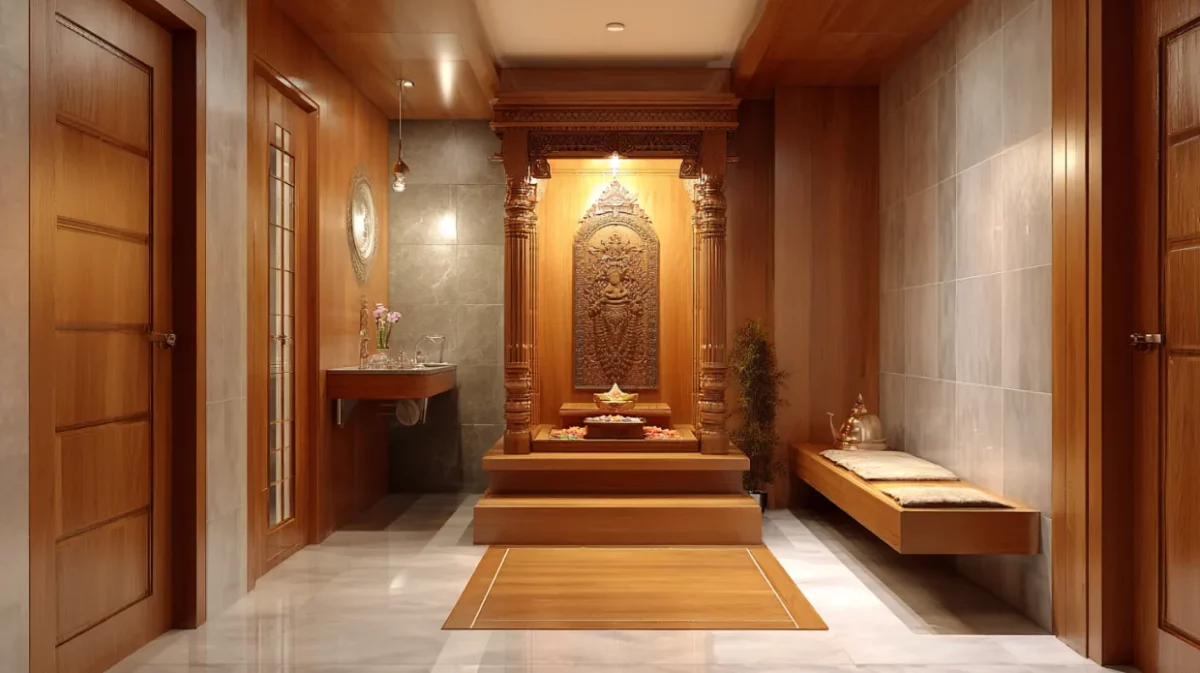
If you have ample space in your home, you can definitely transform a single room into your worship area. Include some framed idols, deities, lamps, and diyas to personalise your worshipping space. However, please keep in mind not to clutter this place, as it will lose its elegance.
| Parameter | Details |
| Material | Brick/concrete walls with wooden/marble interiors |
| Color | Traditional white/yellow with wooden polish or pastel tones |
| Size/ Dimensions | Room size: 6×6 ft to 10×12 ft |
| Lighting | Ceiling lights, warm spotlights, hanging lamps |
| Furniture/Accessories | Marble/wooden mandir, framed idols, diyas, brass bells |
| Estimated Price | Basic: ₹40,000–₹80,000Mid-range: ₹80,000–₹2,00,000Premium: ₹2,00,000+ |
6. A Niche Wall Puja Unit
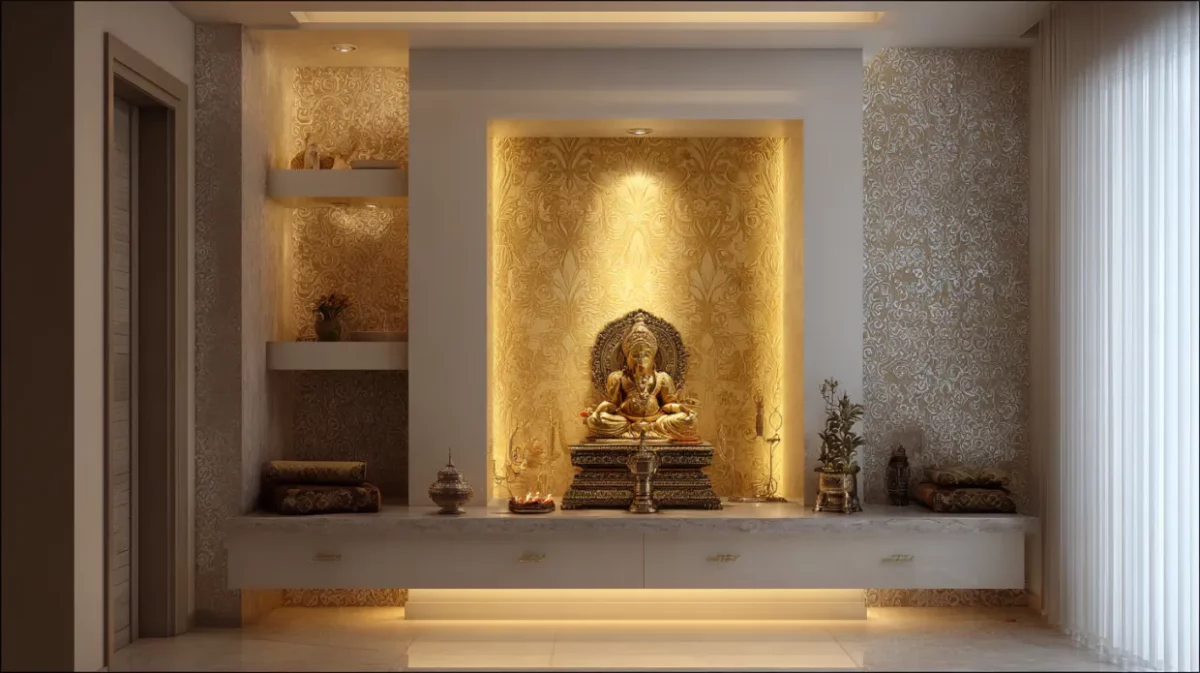
Another good example of how to optimise your space is to turn the niches and corners of your home into worship areas. Just add some matching wallpaper and soft-focusing lights, and you are good to go.
| Parameter | Details |
| Material | MDF/plywood shelves, wallpaper, or stone cladding |
| Color | Contrast tones (gold, cream, textured wallpaper) |
| Size/ Dimensions | Wall niche: 3–4 ft height, 2–3 ft width |
| Lighting | Soft focus LED lights or backlit panels |
| Furniture/Accessories | Compact idol stand, diya holder, small cabinet for storage |
| Estimated Price | Basic: ₹10,000–₹20,000Mid-range: ₹20,000–₹45,000Premium: ₹45,000+ |
7. A Complete Marble Puja Unit

You can never go wrong with a completely marble puja unit. It is appealing, low-maintenance, and oozes elegance.
| Parameter | Details |
| Material | Pure marble (white, makrana, or Italian marble) |
| Color | White, off-white, cream, or with subtle golden inlay |
| Size/ Dimensions | Customizable; standard size 3–6 ft wide, 4–7 ft tall |
| Lighting | Warm LED strip lights, spotlights to highlight idols |
| Furniture/Accessories | Marble shelves, brass/metallic idols, diya stands |
| Estimated Price | Basic: ₹25,000–₹50,000Mid-range: ₹50,000–₹1,00,000Premium: ₹1,00,000+ |
8. Puja Unit Inside a Cubicle
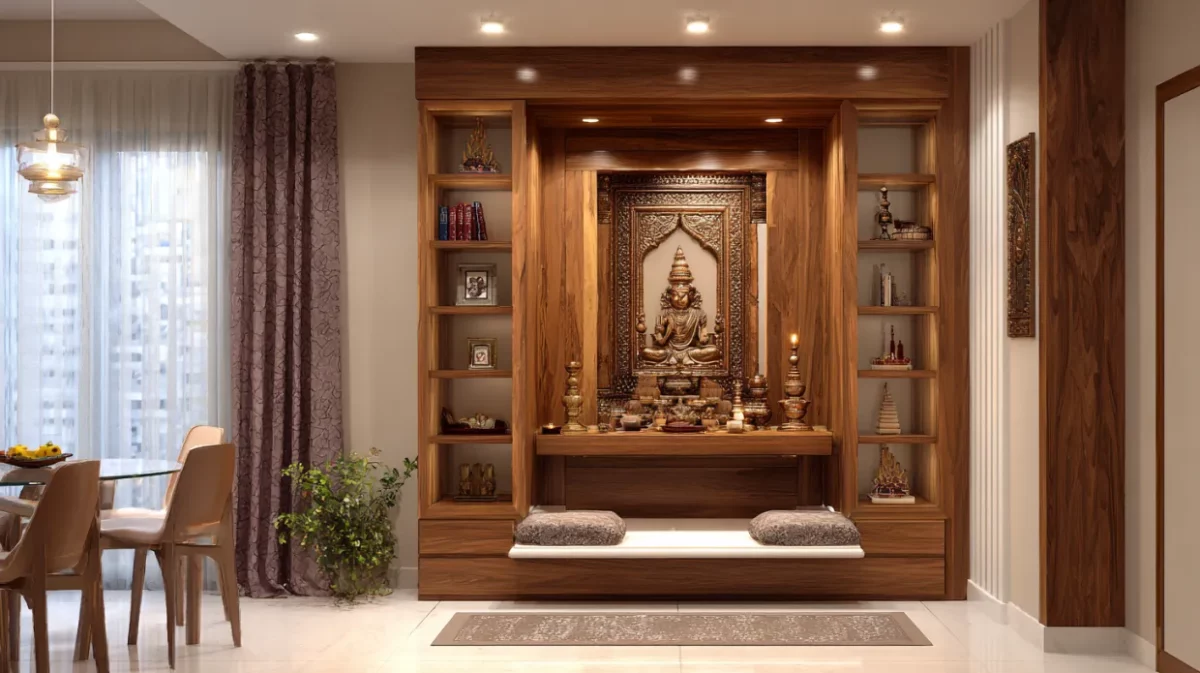
In small flats, you can simply install a wooden cubicle in your dining or living room, according to Vastu Shashtra. Add your touch to this space to make it more appealing, such as adding lights and flowers, painting it in different colours, and so on.
| Parameter | Details |
| Material | Wood, MDF with laminate, or plywood with veneer |
| Color | Wooden tones (walnut, teak) or painted (white, cream, pastel) |
| Size/ Dimensions | Small cubicle: 3–4 ft width, 2–3 ft depth |
| Lighting | Small LED spotlights or focus lights |
| Furniture/Accessories | Compact shelves, framed idols, and flower vases |
| Estimated Price | Basic: ₹15,000–₹30,000Mid-range: ₹30,000–₹70,000Premium: ₹70,000+ |
9. Puja Unit Adorned by CNC Decorations

Do you have the luxury of having ample space in your home? If yes, then you can add elegance to your prayer room with CNC patterns. CNC is the process of cutting designs or jali designs. These lend a more luxurious feel to your space. You can install them as a backdrop or fill the whole prayer room. This simple pooja room design can elevate your worship experience.
| Parameter | Details |
| Material | CNC-cut MDF, wood, or metal with polish/laminate |
| Color | Gold, bronze, white, or dual-tone finish |
| Size/ Dimensions | CNC panels: 6–8 ft height, 3–6 ft width |
| Lighting | Backlit CNC panels, warm focus lights |
| Furniture/Accessories | Wooden/marble base unit, brass idols, decorative diyas |
| Estimated Price | Basic: ₹15,000–₹30,000Mid-range: ₹30,000–₹70,000Premium: ₹70,000+ |
10. Puja Unit Under False Ceilings

A false ceiling is a very innovative choice for decorating your puja rooms. You can customise it by carving out varied patterns or by introducing multiple textures to create the right ambience.
| Parameter | Details |
| Material | POP, gypsum, or wooden false ceiling with integrated pooja unit |
| Color | White, beige, golden highlights, or pastel tones |
| Size/ Dimensions | Ceiling patterns 6–10 ft area, with integrated puja cabinet |
| Lighting | Cove lighting, spotlights, and LED strips in the ceiling design |
| Furniture/Accessories | Wooden/marble pooja cabinet, idols, diya stands |
| Estimated Price | Basic: ₹20,000–₹40,000Mid-range: ₹40,000–₹80,000Premium: ₹80,000+ |
11. Tile Inlays
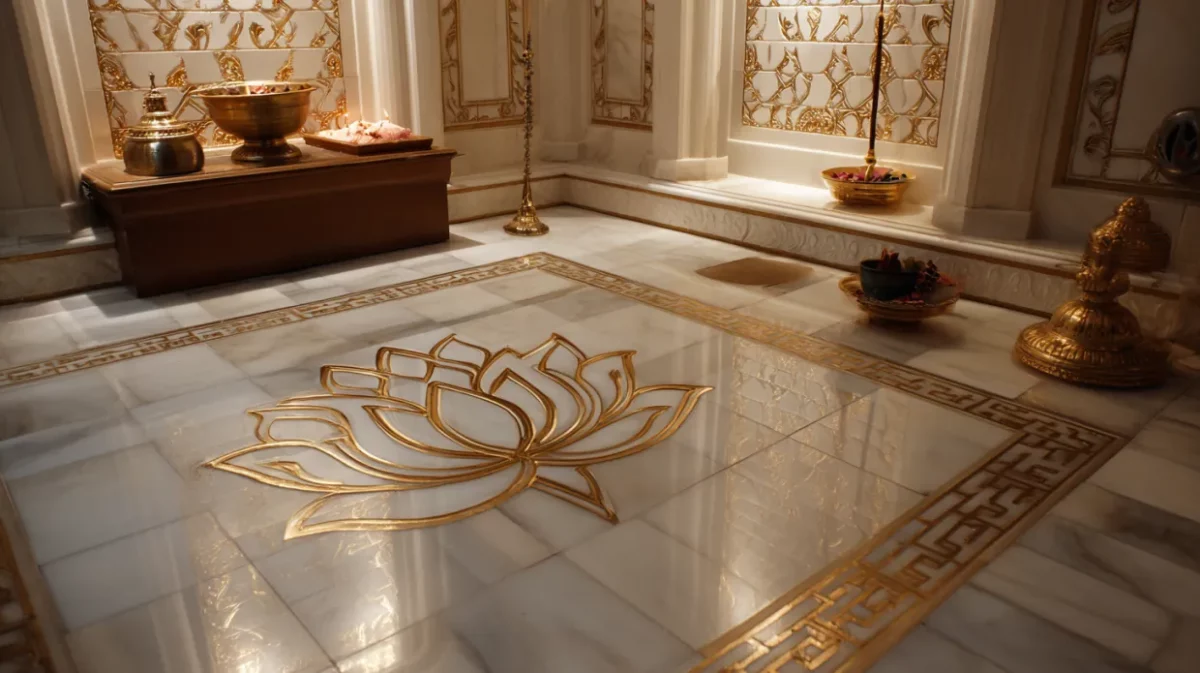
A low-key God room design in your house that is low maintenance and can be cleaned easily. Etch images of gods and religious symbols on the tiles and include soft focus lights if possible.
| Parameter | Details |
| Material | Ceramic, vitrified, or marble tiles with etched images/symbols |
| Color | White, cream, or contrasting tones with gold/silver accents |
| Size/ Dimensions | Can fit in small wall sections (3–6 ft) or larger dedicated walls |
| Lighting | Soft-focus lights, recessed LEDs, or wall-mounted spotlights |
| Furniture/Accessories | Small wooden/marble shelves for idols, a diya stand, and an incense holder |
| Estimated Price | Basic: ₹10,000–₹25,000Mid-range: ₹25,000–₹50,000Premium: ₹50,000+ |
12. Portable Puja Unit Made of Wood

For those who frequently switch homes, a portable wooden puja unit is an ideal choice. These units resemble small cabinets; once you open the doors, you can find ample space for deities and pictures. Opt for a compact and lightweight unit, allowing the cabinet to fit anywhere.
| Parameter | Details |
| Material | Solid wood, engineered wood, or plywood with polish/laminate |
| Color | Natural wood finish, dark walnut, teak, or painted in traditional tones |
| Size/ Dimensions | Compact cabinet design (2–4 ft height, 1.5–3 ft width), lightweight for portability |
| Lighting | Small LED bulbs, concealed strip lights, or battery-operated diya lights |
| Furniture/Accessories | Foldable doors, shelves for idols and photos, a small drawer for puja items |
| Estimated Price | Basic: ₹8,000–₹15,000Mid-range: ₹15,000–₹30,000Premium: ₹30,000+ |
13. Puja Rooms Adorned with Wallpapers
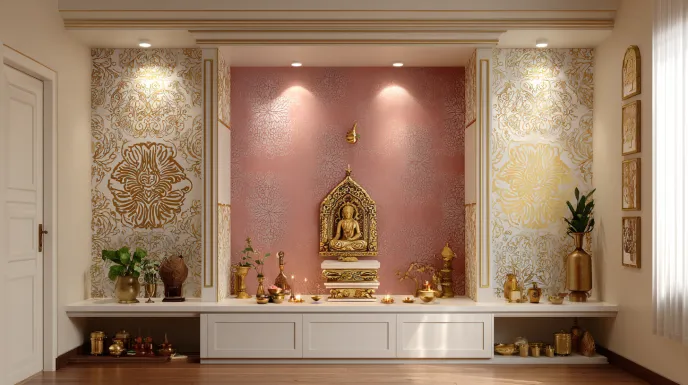
You can place the puja unit against a bare wall and decorate it simply with wallpaper of your choice. Customise your wallpaper to add a more personal touch.
| Parameter | Details |
| Material | Wallpaper (vinyl, textured, fabric-based) with backing wall in plywood/POP |
| Color | Floral, geometric, mandala, or spiritual motifs in gold, white, or pastel tones |
| Size/ Dimensions | Wall panel space of 4–8 ft, depending on room size and puja unit placement |
| Lighting | Wall-mounted spotlights, focus lights, or LED strips to highlight wallpaper |
| Furniture/Accessories | Small wooden/marble puja unit, decorative frames, diya holders |
| Estimated Price | Basic: ₹5,000–₹12,000Mid-range: ₹12,000–₹25,000Premium: ₹25,000+ |
14. Granite Puja Room Design
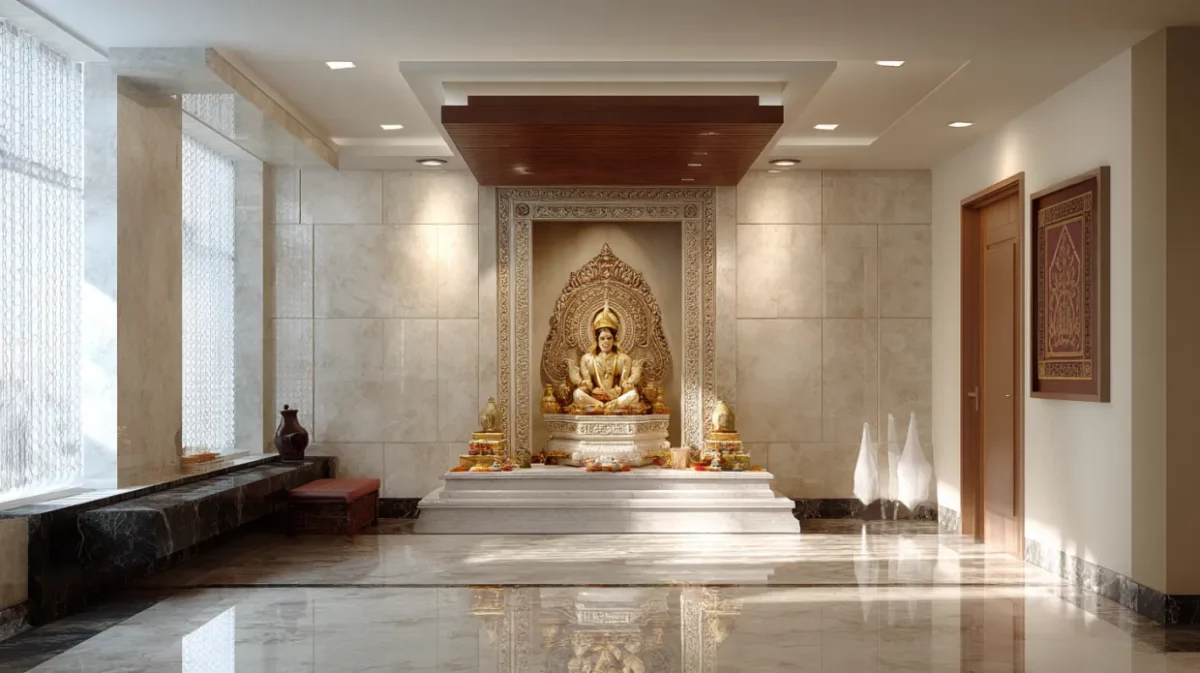
Build your entire puja unit with granite. Durable, water-resistant, and elegant, granite will add that touch of sophistication to your daily prayer time. Re-polish to get it shining like new.
| Parameter | Details |
| Material | Granite (black, white, red, or green granite slabs/panels) |
| Color | Natural granite shades – glossy black, grey, red, or green |
| Size/ Dimensions | Small cabinet unit: 3–4 ft wide; Full puja room: 6–8 ft |
| Lighting | Ceiling spotlights or recessed LED strips to enhance granite shine |
| Furniture/Accessories | Marble idols, brass lamps, silver thali, and wall shelves for accessories |
| Estimated Price | Basic: ₹15,000–₹25,000Mid-range: ₹25,000–₹60,000Premium: ₹60,000+ |
15. Puja Room with a Pinch of Nature
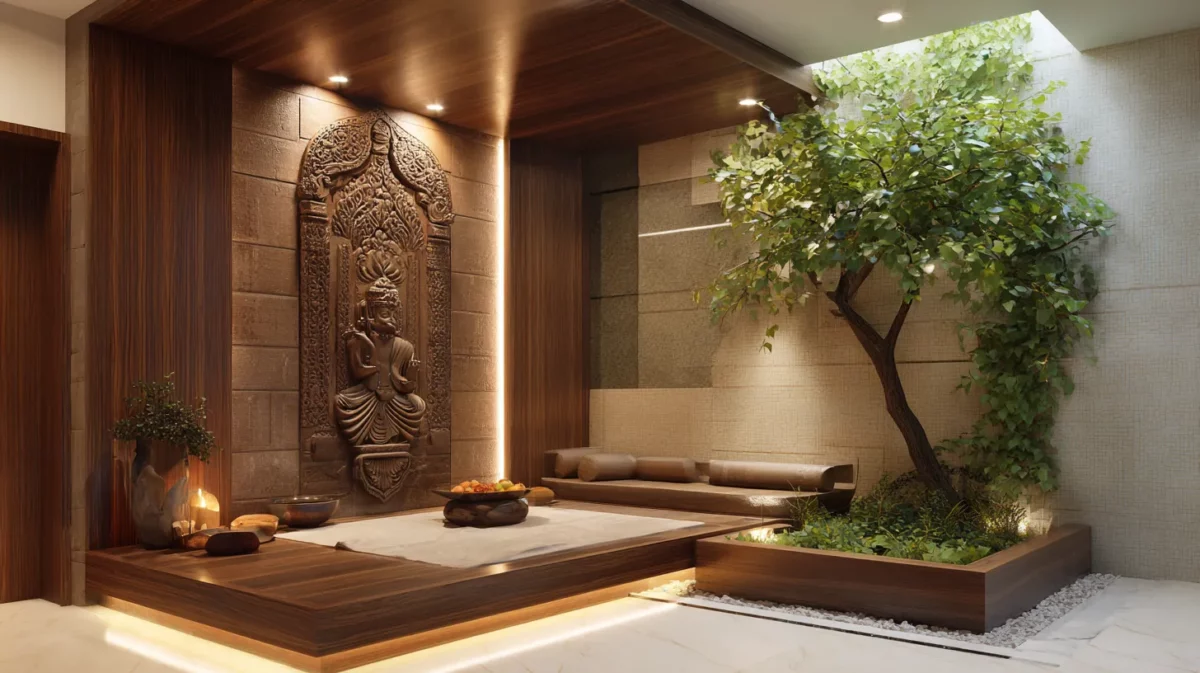
Are you a nature lover? Then you can add some green to your puja space with some potted plants or plant hangers. Ensure there are windows nearby for your green friend to grow.
| Parameter | Details |
| Material | Wooden/stone puja unit + indoor-friendly plants (money plant, tulsi, bamboo, peace lily) |
| Color | Natural green plants with earthy brown or white décor tones |
| Size/ Dimensions | Compact: 3–4 ft space with shelves; Larger rooms: 6–8 ft area with plant corners |
| Lighting | Natural daylight through nearby windows, supplemented with warm LED lights |
| Furniture/Accessories | Clay/ceramic pots, hanging planters, wooden shelves for deities |
| Estimated Price | Basic: ₹5,000–₹12,000Mid-range: ₹12,000–₹25,000Premium: ₹25,000–₹45,000 |
Different Styles of Puja Room Door Designs for an Indian Home
Although open space puja units are in trend nowadays, many people still prefer a separate space for worship. In most cases, this is achieved by adding a door or gate to separate the puja room from the rest of the living space. Here, we will look at some options for puja room doors.
| Door Type | Material/Feature | Description/Benefits |
| Wooden Pooja Room Doors | Wood | Vastu-compliant, traditional, intricate designs are always suitable for puja rooms. |
| Plywood Door Design | Plywood | Contemporary alternative to wood, cost-effective, easy to work with |
| Glass Door | Glass (Clear, Frosted, Etched) | Complements modern mandir designs; frosted or etched glass adds privacy while maintaining a stylish appearance. |
| Pooja Room Door with Jali | Wood/Metal with Jali pattern | Timeless design, offers ventilation and partial visibility; safe for leaving a diya burning. |
Additionally, if you have ample space, you can set up an outside puja unit.
Vastu Tips for Pooja
Setting a sacred place for your spiritual rituals and traditions is not only decorative but also a way to bless every brick, space, and corner with positive energy. The positive energies of the universe, when brought together in the pooja room, are what Vastu Shastra, an ancient Indian system of architecture and space arrangement, is all about. Here are some ideas based on Vastu to help your spiritual practices become more peaceful and powerful:
1. Direction: The ideal pooja room or altar is situated in the north-east of your space. The north-east direction is considered the source of positive energy, supporting peace and prosperity.
2. Door: If you plan to have a door on the pooja space, ensure that it has two shutters. Wood is the best material for doors; avoid any obstructions to door entry.
3. Sacred Shapes: An ‘Om’, ‘Swastik’, or any other auspicious figure can be engraved or painted over the door or wall of the pooja room to create a more substantial sanctity in the pooja room.
4. Elevate Your Deity: The idols or images of deities should be placed on an elevated platform. It's preferable to keep the idols in the east or west direction, ensuring that, while praying, the devotee faces either of these directions.
5. Subtle Lighting: Using soft, warm lights, preferably from ghee or oil lamps, can elevate the aura of the room. Ensure that the lamp stands in the southeast corner of the room.
6. Pure and Clean: Clutter disrupts the flow of positive energy. Always keep the pooja room tidy, well-organised, and free from unnecessary items. This will help in maintaining the purity and sanctity of the space.
7. Natural Elements: Use natural elements like fresh flowers, a tulsi (basil) plant, or water for harmony and balance. Do not keep artificial flowers or broken idols in the area.
8. Space Below: Ideally, the puja area should not be underneath or above a bathroom or bedroom. Try to use space exclusively for worship and keep it totally separate from everyday household duties.
9. Ventilation: It is essential for a puja room to be fully ventilated, to allow for fresh air and daylight to flood into the space, promoting positive energy and dispersing negativity.
10. Enhance acoustically: Hang bells in the pooja space. When bells create harmonious tinkles, it is said to disperse negativity and promote a positive reverberating quality.
With these Vastu principles, your puja room will not only be a serene space to conduct your spiritual rituals but also become a positive energy vortex, which will spread throughout your home's energy. Let divine vibes arise, and let your soul become a part of the Global Order of the Universe at its most fundamental level.
Things to Avoid in a Puja Room
1. Footwear
One of the basic rules is not to keep any footwear in front of the deities or your puja room. This is a big no-no.
2. Leather Bags
According to Hindu beliefs, it is essential to stop any contact with anything impure, and since leather is made of animal skin, it is a sin to keep anything made of leather in your puja room.
3. Stale Flowers
Most of us are busy in our daily lives and might not have time to access fresh flowers every day. That is why we buy them in advance and offer them to God. Offering stale flowers, however, is believed to attract negative energy.
4. Photo Frames of Deceased and Ancestors
Many people often keep framed photos of their deceased loved ones in the puja room. However, Vaastu Shashtra states that placing their pictures beside gods and goddesses can bring bad luck and disrupt the peace and calm in your family.
5. Broken or Chipped Idols
Immediately replace broken or chipped idols with new ones, since it is said to bring bad luck.
6. Type of Idol
According to Hinduism, temples are built to worship God, but for a Pooja room in your home, you need to follow some rules for a peaceful “grihastha Jeevan. One popular belief is that you should not install a Shivling bigger than your thumb in your home.
What to Do if You Do Not Have Enough Space for a Puja Room at Home?
- Identify your home's Ishan Kon (North-east): Vastu Shastra emphasises placing idols in the Ishan Kon to harness maximum positive energy. This direction aligns with the Earth's 23.5-degree tilt, drawing abundant positive energies. Consequently, the northeast becomes an ideal location for auspicious ceremonies.
- It may be challenging to have a puja room in a small space. Nevertheless, a clean and peaceful space with zero disturbance is ideal for worship, even in a small apartment. If possible, try to face the northeast, east, or north while worshipping.
- Hang holy symbols in your living room based on your faith and beliefs. Vastu dictates that this is very beneficial for the landlord. He gains financially in different aspects of his life.
- It is advisable to install a small Tulsi plant on your balcony or near the entrance door. Water it regularly and pray.
- Place a terracotta vessel filled with flower petals, some basil leaves in water. Replace the water and flowers daily for optimal results.
- You can hang a framed photo of Lord Shiva, situated in a yogic mudra, preferably in the northeast direction.
- Offer your prayers to the Surya Devta with water daily. According to Vastu Shashtra, this improves your morale and helps boost self-confidence.
How to Select Pooja Room Designs?
Consider the following factors before selecting a pooja ghar design for your home:
| Factor | Considerations/Guidelines |
| Availability of Space | If no separate pooja room, locate the mandir in a quiet area for concentration and peaceful worship. |
| Budget | Allocate a separate budget for the pooja room design to avoid overspending on unplanned items. |
| Size of the House/Apartment | Choose a mandir proportionate to your home; one that is too big or too small can disrupt the aesthetic balance. |
| Colour Scheme | Ensure the mandir complements your home’s existing colour palette for a cohesive look. |
Tips for decorating a pooja room
1. Clutter-free space:
- Avoid overcrowding it with images or idols, as this will create a visual distraction and disrupt the area's tranquillity.
- It is crucial to maintain a clutter-free and clean space when designing a prayer room.
- The small puja room interior design for South Indian homes is an excellent example of how to utilise floor space effectively.
2. Glass Elements for a Modern Look
- The use of glass in the latest pooja room designs is widespread. It can be used on the pooja room door or even on the shelf where the idols are displayed. You can also opt for coloured glass to complement the decor. Glass is relatively inexpensive, making it a viable option for middle-class Indian-style pooja room designs.
3. Add Traditional Auspicious Items
- A crimson cloth beneath the idols, as well as a bell, a Kalash filled with water, a right-hand Shankh, and a Shree Yantra, are all considered auspicious in traditional Indian-style pooja room designs.
4. Enhance Ambience with Backlit Panels
- Backlit panels are a great way to adorn a pooja room without using feature walls. To add a distinctive aspect to pooja room step designs for homes, you can incorporate designs such as sacred symbols, holy inscriptions, or etchings of gods and goddesses into these panels.
5. Use Crystals and Beads to Reflect Light
- A crystal bead drape in your pooja room would bring a lot of beauty and light. Include crystals in your pooja room ideas, as they reflect the rainbow's colours, making them visually appealing.
Trending pooja room decor ideas
It is beneficial to understand the importance of a pooja room in your house; it is also essential to know all the decor ideas to enhance the ambience of your mandir room. Listed below are some tips that will help you -
| Decor Idea | Details/ Tips |
| Wall Calligraphy & Mantra Decals | Decorate walls with Sanskrit Slokas, mantras, or mantra decals to create a serene and spiritual ambience. |
| Ceramic Tiles & Carved Symbols | Use embossed ceramic tiles or carved images of deities and religious symbols for a divine touch. |
| Custom Wallpaper | Feature symbols like Om, Swastika, Sun deity, or Peacock as a backdrop for the mandir. |
| White Marble Panels | Install carved marble panels on walls and around doorways for an elegant and traditional look. |
| Backlighting | Use backlights to bring warmth and highlight the pooja mandir, creating a serene atmosphere. |
| Ceiling Mirrors | Hang mirrors to enhance the sense of space and volume in the pooja room. |
| Silver Idols & Accessories | Incorporate detailed silver idols and decor items to add lustre and elegance to the mandir. |
Conclusion
A well-planned pooja room can serve as a sacred space for prayer and meditation, and while adding tranquillity, balance, and positive energy to your home. Every design option, from wooden mandirs in a classic, traditional style to contemporary minimalist or modular designs, along with all the details, including lighting design, material selection, the layout of the idols and decorations, is significant in creating a peaceful and decluttered space. Featured elements, such as a backlit panel, glass shelves finished in marble or granite, and auspicious symbols, will help showcase both the spiritual significance and visual interest in your pooja area.
How Nobroker Can Help You?
NoBroker will help you realise your ideal pooja room by connecting you with trusted interior designers, artisans, and service providers that specialise in custom pooja units and décor. Whether you're looking for modular mandirs, wall-mounted shelves, or complete marble installations, NoBroker provides a platform for comparing options, securing accurate quotes, and bringing your vision to life without unnecessary inconveniences. With NoBroker, developing a sacred and elegant pooja room in your home is an effortless process.
FAQ's
Ans. No, they are not necessary per se. But in every Hindu Household, a Puja room is a must.
Ans. Your puja room should be placed in such a way that your idols and deities face the north-east direction. According to Vastu, it ensures good health and prosperity for your family.
Ans. Of course, you can. You can hang your puja unit on the wall, install a floating cabinet for your puja unit or install a small tile inlay on one corner of your living space and spruce it up with collectables and ambient lighting.
Ans. You can install doors made of glass, wood, plywood, or a jaali design in your puja room.
Ans. Ensure that you do not keep footwear, stale flowers, photo frames of ancestors, or broken/chipped idols in your puja room.
Recommended Reading
Top Hanging Light Ideas to Illuminate Your House
January 31, 2025
395619+ views
15 Wall-Mounted Dining Table Design Ideas
January 31, 2025
106314+ views
South Indian Village House Design: Top 15 Trending of 2026
January 31, 2025
30994+ views
20 Trendy Wooden Partition Wall for Living Room in 2026
January 31, 2025
26881+ views
HDHMR vs Plywood: Price, Durability & Best Use Cases 2026
January 31, 2025
25350+ views
NoBroker Interior Design Tips & Ideas Testimonials
Most Viewed Articles
Top Hanging Light Ideas to Illuminate Your House
January 31, 2025
395619+ views
15 Wall-Mounted Dining Table Design Ideas
January 31, 2025
106314+ views
Best 3 Bedroom House Plan: Modern and Space-Efficient Layouts for 2026
January 31, 2025
70522+ views
How to Make a Room Soundproof: 15 Ideas That Work Like a Charm
January 31, 2025
32578+ views
25 Front Gate Designs for Houses: Secure, Stylish and Functional Ideas 2026
January 31, 2025
32125+ views
Author
Loved what you read? Share it with others!
Recent blogs in
Top 9 Interior Designers in Bangalore (2026): Best Experts for Home Interiors
March 25, 2026 by Ananth
The Best Wallpaper Designs for Living Room in India 2026
August 21, 2025 by Ananth
5 Latest Wall Decoration Ideas to Transform Your Home Instantly
August 20, 2025 by NoBroker.com









 Full RM + FRM support


Join the conversation!