- https://www.nobroker.in/lease-agreement/form/land-format
- https://jamabandi.nic.in/DeedTemplatesNew/English/lease-deed%20Agri%20Land.pdf
- https://corpbiz.io/lease-registration
- https://www.indiacode.nic.in/show-data?abv=MH&statehandle=123456789/2517&actid=AC_MH_166_1083_00056_00056_1742198878909&orderno=3&orgactid=AC_MH_166_1083_00056_00056_1742198878909#:~:text=(1)%20Notwithstanding%20anything%20contained%20in,in%20force%20in%20Scheduled%20Areas.
- https://www.hyperstart.com/blog/land-lease-agreement/
- https://www.swasya.com/blog/cost-to-lease-farmland-in-india
- https://vajiramandravi.com/upsc-exam/contract-farming/
- https://www.diligencecertification.com/lease-registration/
- https://www.bajajfinserv.in/registered-lease-agreement
- https://ailawyer.pro/blog/farm-lease-agreement-template-(free-download-ai-generator)
- https://www.nobroker.in/forum/how-to-write-a-leases-agreement-for-land/
- https://www.legalkart.com/legal-blog/step-by-step-guide-to-plot-registry-in-uttar-pradesh
- https://blog.ipleaders.in/45943-2/
Table of Contents
What Is a Lease Agreement for Agricultural Land? Lease Deed for Agricultural Land Key Elements of an Agricultural Land Lease Types of Agricultural Land Lease Agreements Documents Required for Agricultural Land Lease Agreement Step-by-Step Process to Create an Agricultural Land Lease Agreement Duration and Renewal Terms for Agricultural Land Lease Agreement Rent, Crop Share & Payment Terms Rights and Responsibilities of Landowner and Farmer Registration & Legal Compliance for Agricultural Lease Agreement How NoBroker Can Help With Agricultural Lease Agreements Frequently Asked Questions
Loved what you read? Share it with others!


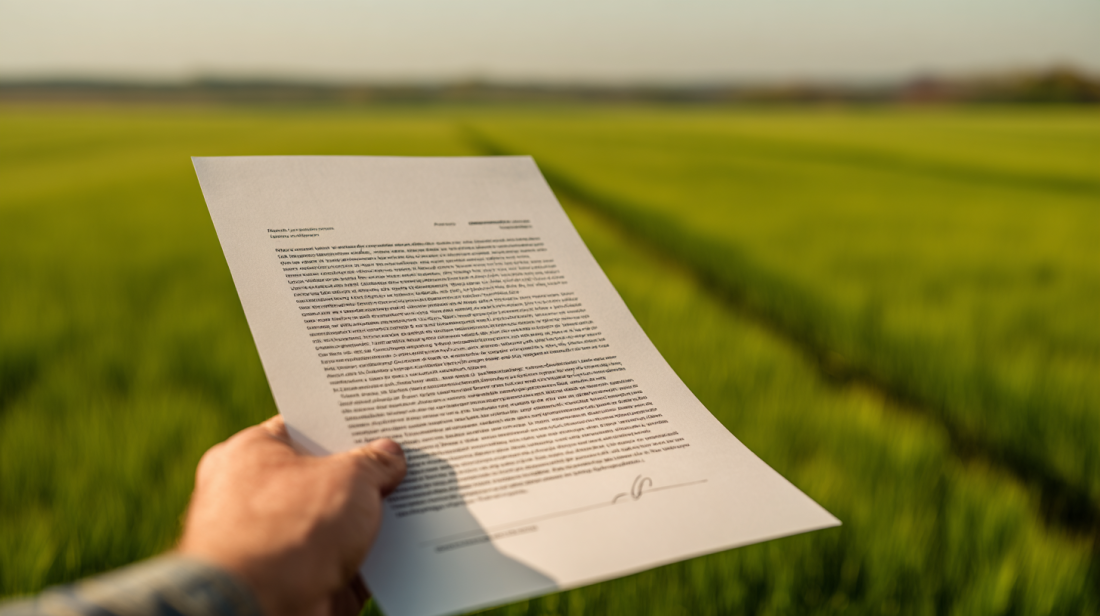
Lease Agreement for Agricultural Land: Complete Guide to Drafting, Registration & Compliance
Updated : March 23, 2026, 4:14 PM
Author :
 Ananth
Table of Contents
What Is a Lease Agreement for Agricultural Land? Lease Deed for Agricultural Land Key Elements of an Agricultural Land Lease Types of Agricultural Land Lease Agreements Documents Required for Agricultural Land Lease Agreement Step-by-Step Process to Create an Agricultural Land Lease Agreement Duration and Renewal Terms for Agricultural Land Lease Agreement Rent, Crop Share & Payment Terms Rights and Responsibilities of Landowner and Farmer Registration & Legal Compliance for Agricultural Lease Agreement How NoBroker Can Help With Agricultural Lease Agreements Frequently Asked Questions
A lease agreement for agricultural land (also known as a farm lease agreement or deed for agricultural land) formalizes the rental of farm property, protects the rights of landowners and cultivators, and clarifies terms for crops, rent, and responsibilities. It serves as a shield against unauthorized use and ensures the farmer has secure tenure to invest in seeds and fertilizers. Understanding what is a lease agreement is the first step toward a successful farm rental.
What Is a Lease Agreement for Agricultural Land?
A lease agreement for agricultural land or an agricultural lease agreement is a legally binding contract where a landowner (Lessor) permits another party (tenant or farmer/Lessee) to use farm land for cultivation. In exchange for this right of use, the tenant provides consideration, typically a fixed cash rent or a pre-agreed share of the produce. This agreement ensures that the farmer has peaceful possession of the land for a specific period while the owner retains absolute legal title to the property. (1)(2)
Lease Deed for Agricultural Land
A lease deed for agricultural land is a more formal version of a rental contract, often used for long-term arrangements. It differs from a simple rental agreement because it is usually a registered document that includes highly detailed descriptions of rights and obligations. While an unregistered lease deed may suffice for very short terms, a formal deed is mandatory for leases exceeding 11 months. It provides stronger legal evidence in court and clearly outlines complex terms like revenue sharing and soil preservation. (3)(4)
Key Elements of an Agricultural Land Lease
To ensure your lease agreement for agricultural land is robust, it must contain specific technical identifiers to avoid future ambiguity. (5)
- Names and addresses: Clearly state the full legal names of both the landowner and the tenant farmer.
- Detailed land description: Include the specific survey number, village name, and physical boundaries on all four sides.
- Lease period: Define the exact start and end dates, ideally aligning them with the Rabi or Kharif crop cycles.
- Rent and payment: Specify the total amount, due dates, and whether the payment is fixed or flexible.
- Crop sharing terms: If produce is being shared, define the exact percentage (e.g., 50:50) and how by-products are handled.
- Rights and duties: List specific rules regarding water usage from wells and the prohibited use of harmful chemicals.
- Termination and renewal: State the notice period required to end the stay and the conditions for renewing the contract.
Types of Agricultural Land Lease Agreements
There are various ways to structure a farm lease agreement based on how the financial risk is distributed between the parties. (6)(7)
Fixed Rent Lease
In this model, the farmer pays a fixed amount of cash annually or per season. It provides a predictable income for the landowner regardless of the actual harvest outcome.
Crop Share Lease
This traditional arrangement involves sharing the actual produce. The landowner and farmer split the harvest based on a pre-agreed percentage, sharing both the profit and the risk of crop failure.
Hybrid Lease Agreement
A modern approach that combines a lower fixed rent with a small percentage of the crop share. It offers the owner stability while allowing them to benefit from high-yield years.
Documents Required for Agricultural Land Lease Agreement
Before drafting the agriculture land rental agreement format, both parties must gather several documents to verify ownership and identity. (8)(9)
- Identity proof: Aadhaar cards or PAN cards of the landowner, the tenant, and at least two witnesses.
- Ownership documents: The original sale deed or title deed proving the lessor has the right to lease the land.
- Land survey details: Latest government land records, like the 7/12 extract, Patta, or Jamabandi, showing the survey number.
- Address proof: Permanent residence proof for all parties involved in the transaction.
- Photographs: Recent passport-sized photos of the landowner and the tenant to be affixed to the deed.
- Witness details: Contact information and signatures of two neutral individuals who observe the signing.
Step-by-Step Process to Create an Agricultural Land Lease Agreement
Creating a lease deed for agricultural land requires a logical sequence of actions to ensure it is valid under the Registration Act, 1908. (10)(11)
Draft the Agreement
Begin by using a farm lease agreement template that includes all specific cultivation terms, payment modes, and prohibited activities on the farm.
Verify Land Ownership
Carefully cross-check the land records at the local revenue office to confirm that the boundaries and survey details match the physical property.
Execute Agreement with Signatures
Both the landowner and the tenant must sign every page of the document in the presence of the chosen witnesses to make it official.
Stamp Duty and Notarisation
Pay the mandatory stamp duty according to your state's laws, and have the document notarized or registered at the Sub-Registrar's office.
Duration and Renewal Terms for Agricultural Land Lease Agreement
The timeframe of an agricultural lease agreement is important for ensuring the farmer can complete their harvest without interruption. (12)
- Typical terms: Most leases range from 1 to 5 years, though horticulture leases can extend up to 30 years.
- Seasonal vs multi-year: Some agreements are strictly for one season (e.g., 6 months), while others cover multiple years of crop rotation.
- Renewal options: A clear clause should state if the tenant has the "first right of refusal" to renew the lease.
- Notice requirements: A 3-to-6-month notice period is standard to allow the farmer to clear standing crops before the lease expires.
Rent, Crop Share & Payment Terms
The financial core of a farm land lease agreement must be transparent to prevent arguments during the harvest season.
- Fixed cash rent: Often paid in two installments—one before the monsoon sowing and one after the winter harvest.
- Percentage of produce: Define if the owner gets the produce in "kind" or the cash equivalent after it is sold in the market.
- Advance payment: Many owners require a small security deposit or the first season's rent in advance.
- Schedule of payment: Clearly state if the payment is due within 15 days of the harvest being sold.
- Adjustments: Include a clause for rent reduction in extreme cases of natural disasters like floods or severe droughts.
Rights and Responsibilities of Landowner and Farmer
A clear division of labor and authority is essential for the long-term health of any leasehold property used for farming. (13)
- Landowner rights: The owner has the right to inspect the property periodically and ensure the soil is not being degraded by improper farming.
- Tenant responsibilities: The farmer is responsible for day-to-day cultivation, pest control, and maintaining the irrigation channels.
- Water and livestock: The agreement should specify if the tenant has access to existing tube wells and if they can graze cattle on the land.
- Equipment storage: Clarify whether the farmer can build temporary sheds for tractors and tools, or must use existing structures.
Registration & Legal Compliance for Agricultural Lease Agreement
In India, any lease agreement for agricultural land that exceeds 11 months must be compulsorily registered under the Registration Act. Failing to register a long-term lease deed makes it inadmissible as primary evidence in a court of law. Registration involves paying a state-specific stamp duty, which typically ranges from 2% to 5% of the annual rent. This process provides a legal shield for both parties, as the document becomes part of the public government record, preventing unauthorized dispossession and protecting the tenant's right to the harvest.
How NoBroker Can Help With Agricultural Lease Agreements
Navigating the complexities of land records and legal drafting can be difficult, but NoBroker simplifies the process. We provide comprehensive support in drafting a lease deed for agricultural land using professional, state-specific formats. Our platform offers customizable templates that cover all essential farming clauses, from crop sharing to water rights. We assist with the documentation and registration process, ensuring that your agricultural lease agreement is legally enforceable and compliant with local laws, all while providing a completely brokerage-free experience for landowners and farmers alike.
Frequently Asked Questions
Q1. What is an agricultural land lease agreement?
Ans: It is a formal contract in which a landowner grants a farmer the right to cultivate their land in exchange for rent or a share of the crops.
Q2. Do agricultural lease deeds need registration?
Ans: Yes, under Indian law, any lease agreement for a period of 12 months or more must be registered at the Sub-Registrar's office to be legally valid.
Q3. How is rent decided for farm leases?
Ans: Rent can be a fixed annual cash amount, a percentage of the total harvest produce, or a combination of both, based on mutual negotiation.
Q4. Can crop sharing be included?
Ans: Absolutely. Many traditional Indian farm leases, known as "Batai," rely exclusively on sharing the harvest between the owner and the cultivator.
Q5. What happens if the tenant abandons the land?
Ans: The agreement should include a "Default" clause that allows the landowner to terminate the lease and reclaim possession if the land remains uncultivated.
Recommended Reading

Society Maintenance Charges : Meaning, Cost, Types and Calculation
January 31, 2025
202804+ views

What are Society Transfer Charges as per the Housing Act and Rules in 2026?
January 31, 2025
88328+ views

What is the Difference Between Movable and Immovable Property?
May 1, 2025
72394+ views

A Comprehensive Guide to Karnataka Rent Control Laws and Tenant Rights
January 31, 2025
62479+ views

Everything You Need to Know About Indemnity Bond
January 31, 2025
50212+ views
ARTICLE SOURCES
Most Viewed Articles

Franking Charges Explained: Meaning and Benefits
January 31, 2025
1117022+ views
Society Maintenance Charges : Meaning, Cost, Types and Calculation
January 31, 2025
202804+ views

Daughter's Right in Fathers' Property - the Law is Finally Equal for both Genders?
June 1, 2025
146894+ views

BBMP E-Khata Registration process for property owners in Bangalore, Karnataka in 2025
March 19, 2025
145603+ views

Rectification Deed Format and Process in India 2026
June 1, 2025
136952+ views
Author
Loved what you read? Share it with others!
Recent blogs in
Difference Between Perpetual Lease Deed and Conveyance Deed: Meaning & Key Features
March 23, 2026 by Ananth
Lease Deed of Immovable Property: Meaning, Legal Requirements & Execution Process
March 23, 2026 by Ananth










 Full RM + FRM support


Join the conversation!