- https://www.nobroker.in/forum/how-to-calculate-electricity-bill-from-meter-reading/
Table of Contents
Key Components of an Electricity BillState-Wise Electricity Rates in IndiaHow to Calculate Electricity Bill: Basic FormulaUnderstanding Electricity Tariff Slabs (Domestic Users)Step-by-Step Electricity Bill CalculationCommon Terms Used for Calculating Electricity BillOther Charges That Affect Your Electricity BillFactors That Influence Electricity BillHow to Pay Electricity Bill Online on NoBroker?Frequently Asked Questions?
Loved what you read? Share it with others!


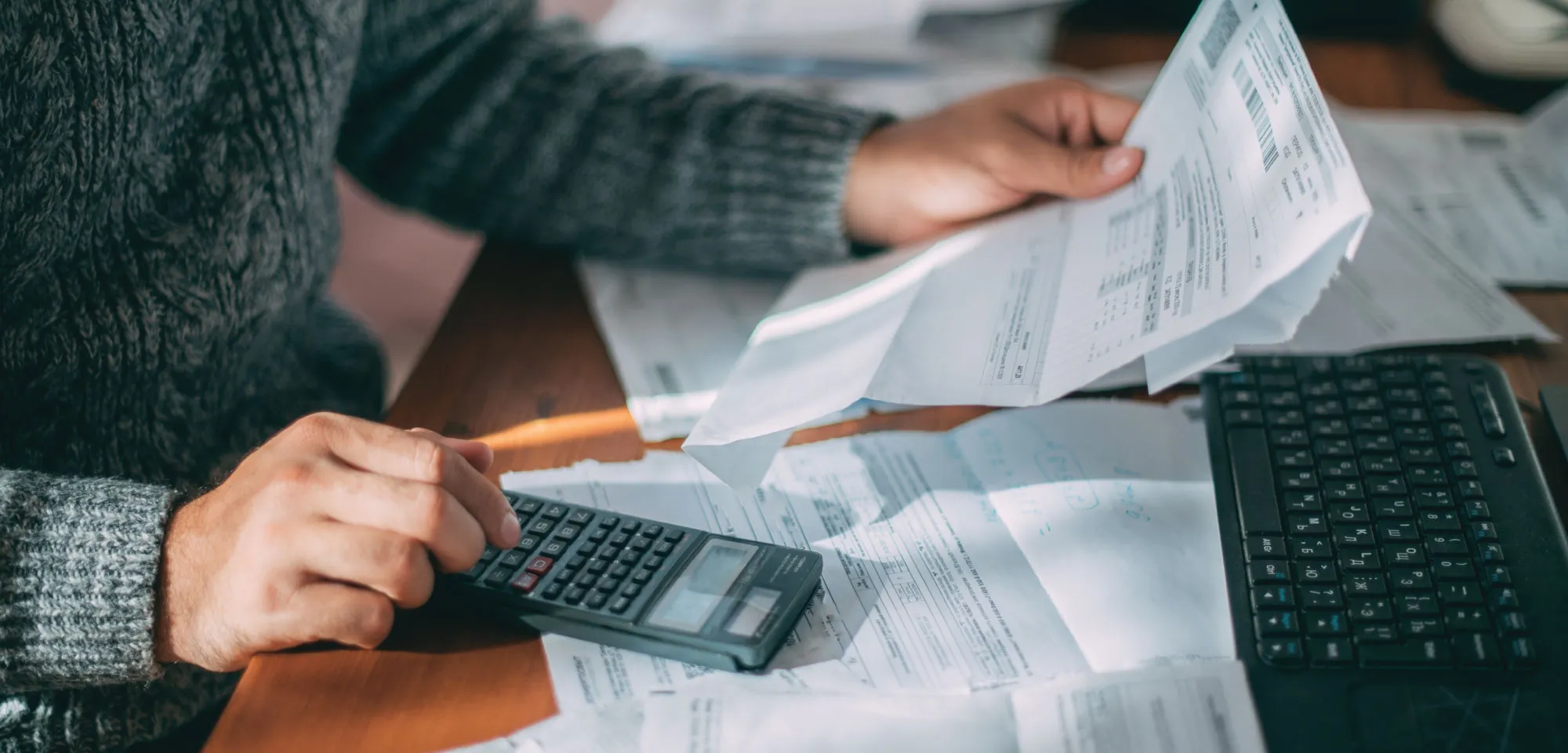
How Electricity Bill is Calculated: Units, Tariffs & Charges in India
Updated : November 20, 2025, 6:51 PM
Author :
 Ananth
Summary
Electricity bills are calculated based on the units you consume, your tariff slab, and extra charges like fixed fees and taxes. Higher usage, inefficient appliances, long operating hours, climate conditions, and poor wiring can all increase your bill. Understanding these charges makes it easier to track and manage electricity costs. For quick and secure bill payments, platforms like NoBroker allow you to check and pay your electricity bill online using your state, board, and Consumer ID.
Table of Contents
Key Components of an Electricity BillState-Wise Electricity Rates in IndiaHow to Calculate Electricity Bill: Basic FormulaUnderstanding Electricity Tariff Slabs (Domestic Users)Step-by-Step Electricity Bill CalculationCommon Terms Used for Calculating Electricity BillOther Charges That Affect Your Electricity BillFactors That Influence Electricity BillHow to Pay Electricity Bill Online on NoBroker?Frequently Asked Questions?
How Electricity Bill is Calculated in India depends mainly on the units you consume, the tariff slab you fall under, and additional charges like fixed fees, fuel adjustment cost, and taxes. As usage increases, slab rates change, which impacts the final bill amount. This guide breaks down units, tariffs, and all bill components so you can clearly understand your monthly charges and manage your electricity consumption better.
Key Components of an Electricity Bill
To understand how the domestic electricity bill is calculated, it is essential to first decode the main components that make up the final amount levied by the electricity board.
| Component | Description |
|---|---|
| Units Consumed (kWh) | Total electrical energy used during the billing cycle, measured in kilowatt-hours. |
| Tariff Rate (₹/unit) | The per-unit price charged based on tariff slabs, which change as consumption increases. |
| Fixed Charges | A monthly fee for metering, billing, and maintaining the electricity connection, independent of usage. |
| Energy Charges | The main variable cost calculated by multiplying units consumed with the applicable tariff rate. |
| Taxes & Surcharges | Government levies such as Electricity Duty, GST, and other surcharges added to the bill. |
State-Wise Electricity Rates in India
Electricity rates differ across states based on tariffs, consumption slabs, and board policies. Here’s a quick snapshot of average per-unit charges.
| State | Approx. Rate (₹/kWh) |
|---|---|
| Delhi | ₹5.50 |
| Punjab | ₹6.00 |
| Uttar Pradesh | ₹7.10 |
| Maharashtra | ₹6.85 |
| Haryana | ₹6.00 |
| Bihar | ₹6.75 |
| Rajasthan | ₹6.29 |
| Tamil Nadu | ₹5.80 |
| Gujarat | ₹6.00 |
For detailed electricity rates per unit in India, check out our article. It covers domestic and commercial tariffs, helping you compare unit prices across every state easily.
How to Calculate Electricity Bill: Basic Formula
The most fundamental formula for determining the core charge on any bill is based on energy consumption. This helps in understanding the total amount you are charged for the energy you used.[1]
- Basic Formula: Total Energy Cost = Total Units Consumed (kWh) × Tariff Rate (₹ per unit)
- Simple Example with Calculation: If your home uses 150 units (kWh) in a month and the electricity board charges ₹7 per unit
- 150 units × ₹7 = ₹1050 (Energy Cost)
- How to Calculate Electricity Units (kWh): Electricity consumption is measured in Kilowatt-hours (kWh), where 1 kWh equals 1 unit. To understand how much energy an appliance uses, you must calculate its consumption.
- Units Calculation Formula: Units Consumed (kWh) = (Appliance Power in Watts × Hours Used) ÷ 1000
- Simple Example: A 1000W geyser used for 2 hours a day: (1000 × 2) ÷ 1000 = 2 kWh, which means it uses 2 units.
| Appliance | Power (W) (Approx.) | Usage (Hours/Day) | Daily Units (kWh) |
|---|---|---|---|
| Fan | 70W | 8 hours | 0.56 kWh |
| Tube Light | 40W | 6 hours | 0.24 kWh |
| AC (1.5 Ton) | 1500W | 6 hours | 9.00 kWh |
| Refrigerator | 150W | 24 hours | 3.60 kWh |
Understanding Electricity Tariff Slabs (Domestic Users)
Electricity bills in India rarely use a single flat rate. Instead, they operate on a tiered or 'slab' system. This system means the price per unit increases as your total monthly consumption rises. This is a progressive structure designed to subsidize basic consumption.
| Consumption Range (Units) | Rate per Unit (Approx.) |
|---|---|
| 0 – 100 units | ₹4.22 (Often subsidized or lowest rate) |
| 101 – 200 units | ₹5.02 (Mid-tier rate) |
| 201 – 400 units | ₹6.50 (Higher rate) |
| Above 400 units | ₹8.00+ (Highest rate) |
Note: Rates vary significantly by state and its electricity board.
Step-by-Step Electricity Bill Calculation
Understanding how the manual calculation of the electricity bill by the government is done involves following a precise five-step procedure, which forms the basis of the final statement you receive.[1]
Step 1: Determine energy consumption
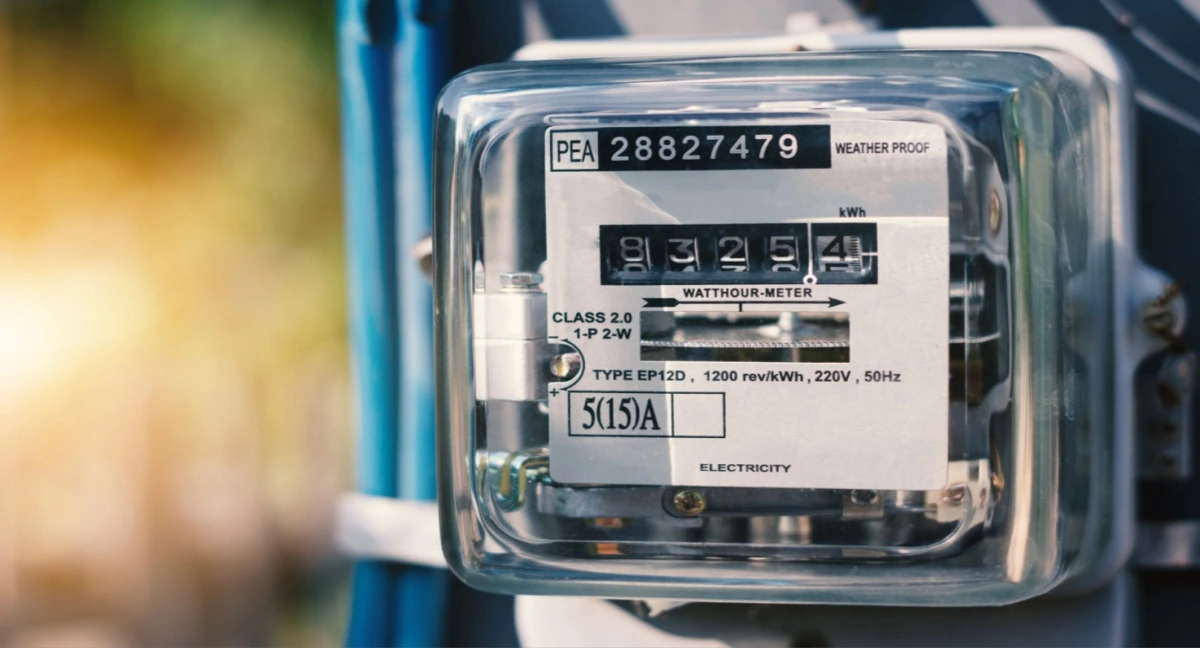
The total units consumed (kWh) is the foundation of your bill. This is calculated by subtracting the previous month's meter reading from the current meter reading.
- Units Used = Current Reading – Previous Reading
- Example: If your current reading is 1,300 units and the previous reading was 1,050 units, the total consumption is 1,300 - 1,050 = 250 units.
Step 2: Calculate energy charges
The energy charges are the core variable cost, calculated by applying the tiered tariff slabs to the total units consumed.
- Slab Cost = Units in Slab × Rate per Unit
- Example for 250 units:
- 100 units × ₹4.22 = ₹422
- 100 units × ₹5.02 = ₹502
- 50 units × ₹6.50 = ₹325
- Total Energy Charges = ₹1,249.00
Step 3: Add fixed charges
These charges are levied regardless of your usage and differ based on the type of connection (single-phase or three-phase) and the approved sanctioned load.
- Example: If the fixed charge is ₹40 per connection and the electricity duty is ₹0.15 per unit, the fixed charge component would be:
- Fixed Charge: ₹40.00
- Electricity Duty: 250 units × ₹0.15 = ₹37.50.
Step 4: Add taxes
The total calculated charges are subject to statutory taxes and surcharges imposed by the central and state governments. The primary tax applied is the Goods and Services Tax (GST) on the energy charges and service fees.
- Example: If the applicable GST rate is 18%, and the Energy Cost is ₹1,249.00, the GST added would be:
- ₹1,249.00 × 0.18 = ₹224.82 (GST).
Step 5: Find the total bill
The final bill amount is the sum of all calculated components.
- Total Bill = Energy Charges (Step 2) + Fixed Charges (Step 3) + Taxes (Step 4)
- Example: The total electricity bill due for 250 units of consumption would be:
- ₹1,249.00 (Energy) +₹40.00 (Fixed) +₹37.50 (Duty) +₹224.82 (GST)= ₹1,551.32.
Common Terms Used for Calculating Electricity Bill
Understanding the specific terminology used by utility boards is key to accurately deciphering your statement.
- Kilowatt-hour (kWh): The unit of measure for electricity consumption. One kWh equals one unit of electricity.
- Tariff Rate: The rate per unit (kWh) charged by the electricity service provider, which varies based on the usage slab.
- Sanctioned Load: The maximum electricity load (measured in Kilowatts or kVA) that the utility provider has agreed to supply to your premises.
- Fixed Charge: The static monthly service charge applied to the connection, regardless of actual power usage.
- Electricity Duty: A specific tax or duty levied by the State Government on the consumption of electricity.
- Power Factor: A technical term measuring the efficiency with which a consumer utilizes the electrical power supplied. A low power factor can result in a penalty charge.
- MD/ML (Meter Reading): The reading taken by the utility provider, which reflects the total cumulative consumption of the meter.
Other Charges That Affect Your Electricity Bill
In addition to the core fixed and energy charges, several other line items may appear on your bill, affecting the total amount due.
- Surcharges: These are usually small fees levied by regulatory bodies or the electricity board for specific purposes.
- Meter Rent: A nominal monthly fee charged by the electricity board if the meter installed at your premises belongs to the utility provider.
- Late Payment Penalties: A financial penalty is imposed if the bill is not paid by the due date.
- Capacitor Surcharge: A penalty levied on commercial or industrial users who fail to maintain an acceptable power factor.
- Fuel Adjustment Charges (FAC): A variable monthly charge added to the bill to account for fluctuations in the cost of fuel used by the utility provider to generate electricity.
Factors That Influence Electricity Bill
Understanding the factors that affect consumption is key to controlling the final bill amount.
- Appliance Efficiency: The energy rating (BEE Star Rating) of the appliances used directly impacts the bill. Higher-rated appliances consume less energy.
- Usage Hours: The number of hours high-wattage appliances, such as air conditioners or geysers, are operated daily is the largest driver of the total units consumed.
- Climate: Local weather dictates the use of heating and cooling appliances, directly influencing monthly consumption patterns.
- Connection Type: Single-phase connections are typically used for residential premises, while three-phase connections are for commercial or industrial premises and have different tariffs and fixed charge structures.
- Quality of Wiring: Older or faulty wiring can lead to electricity wastage and increased consumption, affecting the accuracy of the electricity bill calculation.
How to Pay Electricity Bill Online on NoBroker?
Paying your domestic electricity bill is a fast and simple process using the NoBroker platform, which ensures your payment is processed securely and instantly.
- Step 1: Log in to the NoBroker application or website.
- Step 2: Navigate to the 'Bill Payments' or 'Utility' section.
- Step 3: Select your state and your electricity board (e.g., BESCOM, TANGEDCO).
- Step 4: Enter your Consumer ID or Account Number as it appears on your physical bill.
- Step 5: Review the fetched bill amount and proceed to make the payment using your preferred digital method (UPI, card, or wallet).
Frequently Asked Questions?
Q1. What is 1 unit of electricity equal to?
Ans: One unit of electricity is equal to one Kilowatt-hour (kWh), which is the standard measure of energy consumption used by all utility providers.
Q2. How to calculate electricity bill manually?
Ans: To calculate the bill, subtract the previous meter reading from the current reading to find units used, multiply the units by the applicable slab rate, and then add fixed charges and statutory taxes.
Q3. Why does my electricity bill vary each month?
Ans: Electricity bills vary primarily due to changes in unit consumption driven by seasonal factors (e.g., increased AC usage in summer) and the progressive nature of the tariff slab system.
Q4. Are electricity tariffs different for rural areas?
Ans: Yes, electricity tariffs often differ by consumer category (domestic, commercial, industrial) and by geographical area (urban vs. rural), and may involve different subsidy structures.
Q5. How is solar electricity adjusted in billing?
Ans: Solar electricity is adjusted via a 'net metering' system, where surplus power is exported to the grid, reducing the total units consumed from the utility, resulting in a lower final bill.
Recommended Reading
August 12, 2025
458448+ views
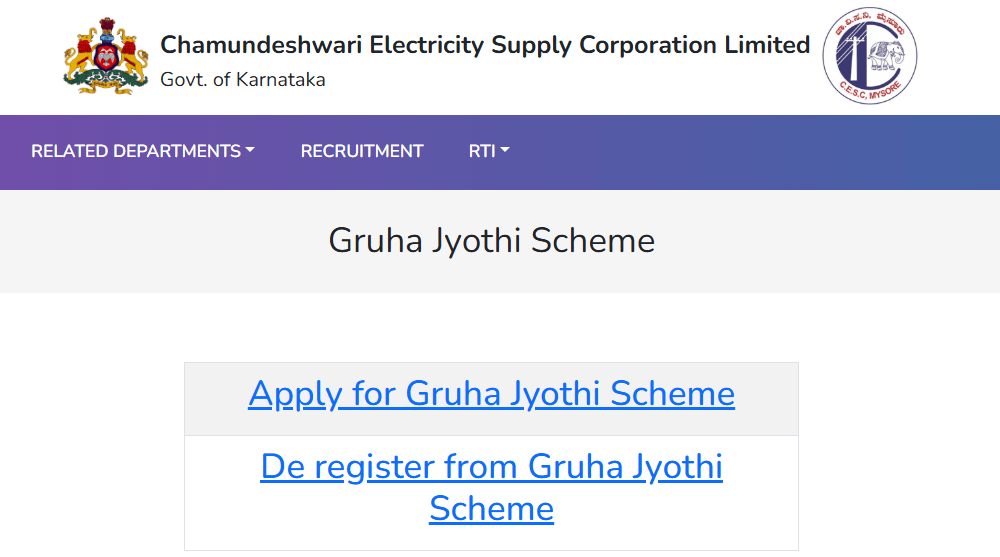
Gruha Jyothi Scheme Karnataka: Application Process, Eligibility and Documentation in 2026
September 12, 2025
70486+ views
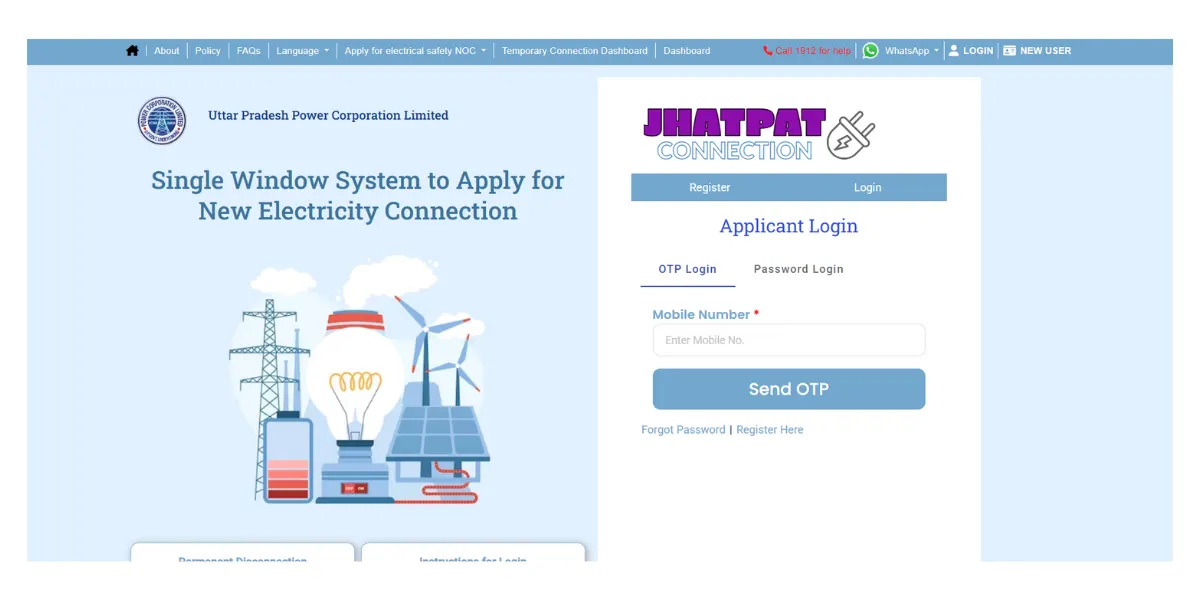
UPPCL Jhatpat Portal for New Electricity Connection: Process, Status Tracking and Charges in 2026
January 31, 2025
50080+ views

May 24, 2025
44972+ views
New BESCOM Connection: Step-by-Step Process 2026
January 31, 2025
42935+ views
ARTICLE SOURCES
Most Viewed Articles
August 12, 2025
458448+ views
Gruha Jyothi Scheme Karnataka: Application Process, Eligibility and Documentation in 2026
September 12, 2025
70486+ views

How to Apply Online LPG Gas Connection: Application Process, Documents and Fees in 2026
June 1, 2025
62585+ views
UPPCL Jhatpat Portal for New Electricity Connection: Process, Status Tracking and Charges in 2026
January 31, 2025
50080+ views
May 24, 2025
44972+ views
Author
Loved what you read? Share it with others!
Recent blogs in
NBPDCL Bill Payment Online: Check, Download & Pay Bihar Electricity Bill in 2026
February 19, 2026 by Manu Mausam
CSPDCL Bill Payment Online: How to Check Bill Status and Download Receipt in 2026
February 18, 2026 by Manu Mausam
MPEB Bill Payment Online: Check, Download & Pay MP Electricity Bill in 2026
February 18, 2026 by Manu Mausam
JBVNL Bill Payment Online: Check Bill Status and Payment Methods in 2026
February 18, 2026 by Ananth









 Full RM + FRM support


Join the conversation!