Table of Contents
Loved what you read? Share it with others!


20 Lakh House Design: Smart, Functional & Budgeted Plans
Updated : March 26, 2026, 12:16 AM
Author :
 Dinakaran
Table of Contents
A house design under 20 lakh supports a well-planned 1BHK or compact 2BHK with practical interiors and durable materials. Smart layout planning, standard finishes, and controlled material selection help prevent overspending while ensuring long-term value. A carefully structured 20 lakh budget house design focuses on space efficiency, simple construction, proper ventilation, and balanced elevation. Whether you choose a compact house design under 20 lakhs or the best house design under 20 lakhs for your family, the right planning and choice of services from professionals turns a limited budget into a modern, functional, and comfortable home.
Things To Consider While Designing A House
A well-planned home starts with financial clarity. Every design decision must align with your 20 lakh house design budget and the corresponding ideas. Cost control depends on disciplined planning, material strategy, and space efficiency. These factors determine whether your project remains practical or exceeds limits.
1. House Size and Built-Up Area
House size directly determines construction cost. Larger built-up areas increase material consumption, labour hours, and finishing expenses. Compact layouts reduce structural load and optimise usable space. Smart space planning ensures every square foot serves a purpose. A 900–1,100 sq. ft. design often fits comfortably within a ₹20 lakh budget, depending on city and finish level.
2. Material Selection and Finish Level
Material choice shapes both durability and cost. Premium tiles, imported fittings, and high-end façades increase overall spend. Standard vitrified tiles, local granite, quality CP fittings, and cost-efficient doors maintain structural quality without inflating the budget. Clear finish-level decisions prevent mid-project upgrades that disrupt financial planning.
3. Location and Labour Cost
Location influences land price, labour rates, and transportation charges. Metro cities demand higher contractor and material costs than tier-2 or tier-3 cities. Remote plots may increase logistics expenses whiich may affect or exceed the house design under 20 lakhs. Local labour availability also affects timelines and daily wage rates. Evaluate regional cost variations before finalising your 20 lakh house design.
4. House Layout and Structural Design
Simple structural grids reduce steel and concrete consumption. Rectangular layouts cost less than complex shapes with multiple projections and cantilevers. Open floor concepts minimise internal walls and improve ventilation. Multi-storey designs require stronger foundations and increase structural cost. Clear structural planning avoids unnecessary expenditure.
5. Interior Scope Definition
Interior design often pushes budgets beyond control. Modular kitchens, wardrobes, false ceilings, and designer lighting add significant cost. Define the interior scope in accordance with your 20 lakh house design plan before construction begins. Prioritise essential storage and functional design first. Add aesthetic upgrades later when finances allow.
6. Design Type: Custom vs Standard
Custom architectural designs increase planning, approval, and execution costs. Standardised floor plans reduce design fees and simplify execution and structure for a compact, best house design under a 20 lakh budget. Architectural complexity, façade detailing, and elevation features directly impact construction expenditure.
20 Lakh House Design Plans
1. 2 Bedroom Small Home Design
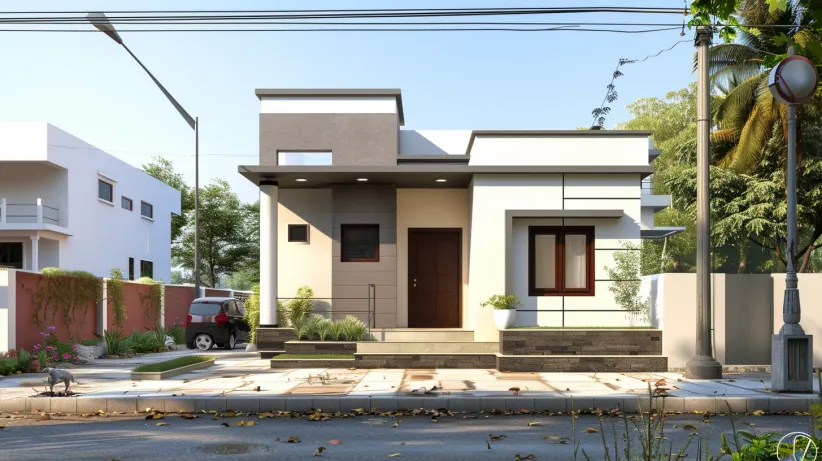
This compact 2BHK layout provides sufficient space while meeting budget norms. It makes the most of the available space, with clear separation between the living and private areas. Its simple design helps lower construction costs while still allowing for good ventilation, practical use, and room to expand in the future.
| Aspect | Details |
| Key Features | Open living-dining, minimal façade, efficient zoning |
| Materials Used | RCC frame, brick/block masonry, vitrified tiles, UPVC windows |
| Area & Layout | 800–1,000 sq. ft., 2 bedrooms, 1–2 bathrooms |
| Estimated Cost | ₹15–22 lakhs |
| Style Elements | Modern minimal, flat roof, neutral tones |
| Best For | Small families, first-time buyers |
2. Single Storey Home Design
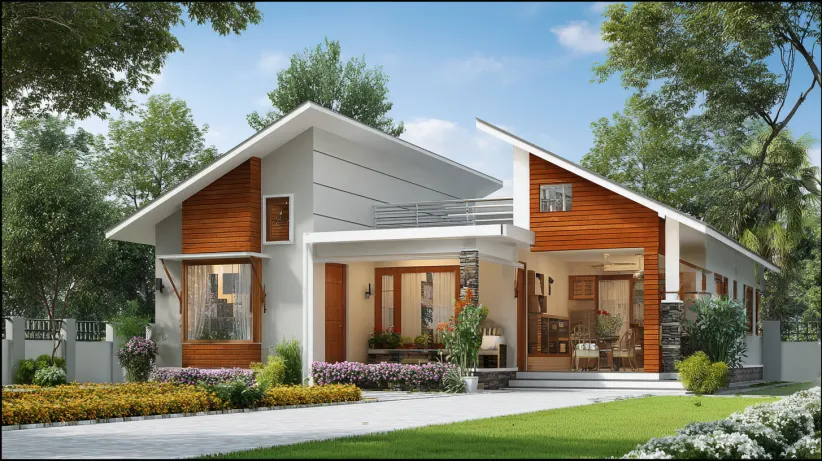
The home's architecture suits modern preferences. The sit-out features double-panel windows and a single-panel door, and the open seating area is well-built, supported by an elegant pillar. These features add style while keeping the design affordable for small families.
| Aspect | Details |
| Key Features | Sit-out with pillar, flat + gable roof mix |
| Materials Used | RCC, brick masonry, tiled flooring, ceramic finishes |
| Area & Layout | 1,000 sq. ft., 2BHK with work area |
| Estimated Cost | ₹18 lakhs |
| Style Elements | Contemporary façade, balanced roof contrast |
| Best For | Nuclear families, compact urban plots |
3. Small Home Design In A 750 Sq Ft Area
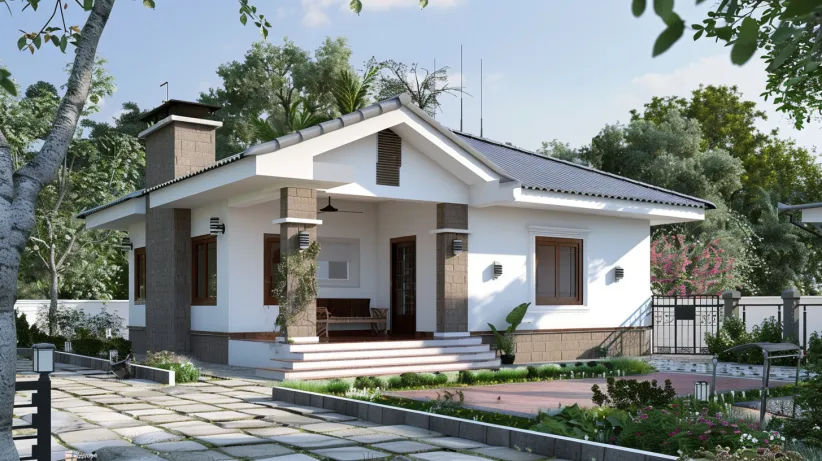
This modern, budget-friendly house spans 950 square feet and features a flat roof, two bedrooms with attached bathrooms, a porch, and an open sit-out. Stylish details like double-panel windows, decorative railings, and brick-patterned walls enhance its appeal, making it ideal for small families.
| Aspect | Details |
| Key Features | Sloped + flat roof, decorative façade |
| Materials Used | RCC, brickwork, tile flooring, LED fixtures |
| Area & Layout | 750 sq. ft., 2 bedrooms with attached baths |
| Estimated Cost | ₹14–17 lakhs |
| Style Elements | White-brown palette, maroon accent wall |
| Best For | Budget-focused homeowners |
4. Classy Elevation Home Design
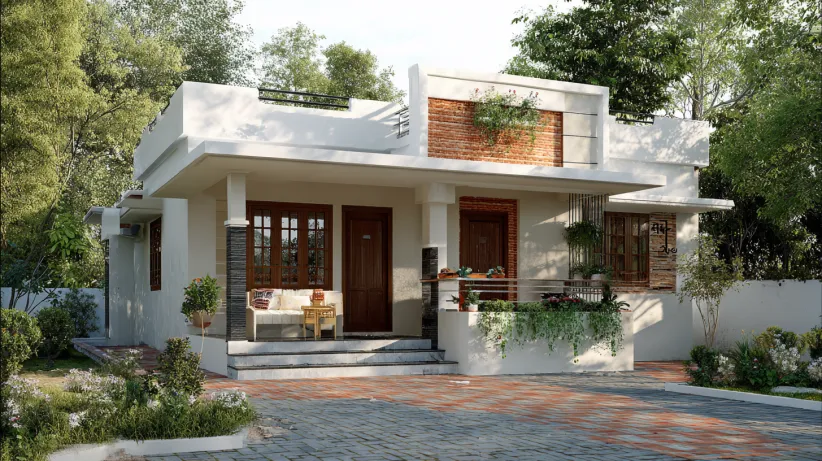
This 950-square-foot, single-story house features a flat roof, two bedrooms with attached bathrooms, a living and dining area, a kitchen, a porch, and an open sit-out. Stylish additions like brick-patterned display walls, decorative railings, and ceramic wall caddies enhance its appeal, making it affordable and ideal for small families. Display walls with brick patterns at both corners and railings around the roof vents are also included for added style
| Aspect | Details |
| Key Features | Central porch at the entrance, open terrace with parapet wall, brick finish on selected exterior walls |
| Materials Used | RCC frame structure, ceramic wall tiles (caddies), standard tiled flooring |
| Area & Layout | 950 sq. ft., 2BHK with living room, kitchen, and two bathrooms |
| Estimated Cost | ₹18 lakhs (approx.) |
| Style Elements | Flat roof design, dark coffee brown groove detailing on exterior walls |
| Best For | Small families who want a simple home with a stylish front look |
5. Single-Storey Home Design Under 1100 Sq Ft
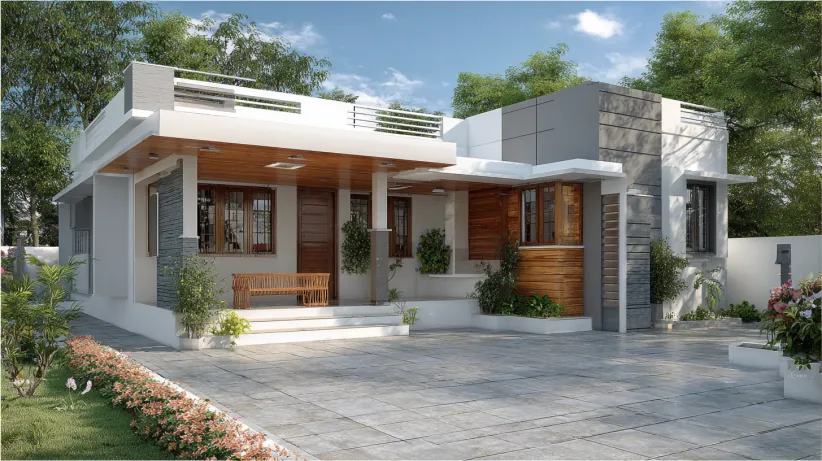
This 1100-square-foot, single-story home design is modern in appearance and provides contemporary amenities with breathtaking views. The design features a porch, sit-out, living and dining space, two bedrooms with associated bathrooms, a kitchen, a work area, and a stair room. The exterior design has been meticulously executed to give it an attractive appeal. The environment is peaceful thanks to the courtyard, painted in wonderful white and grey hues.
| Aspect | Details |
| Key Features | Front porch with sit-out space, simple groove detailing on the outer walls |
| Materials Used | RCC frame structure, brick masonry walls, ceramic wall tiles for exterior finish |
| Area & Layout | 1,100 sq. ft., 2BHK with living room, dining area, kitchen, work area, and two bathrooms |
| Estimated Cost | ₹19 lakhs (approx.) |
| Style Elements | White and grey colour combination, clean box-style projections on the front elevation |
| Best For | Mid-income families looking for a spacious yet budget-friendly home |
6. Double-Storey Home Design
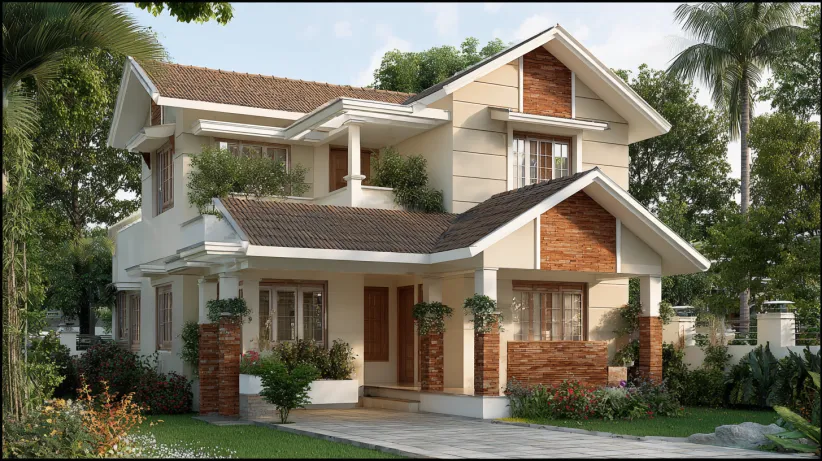
This two-storey home offers a practical 3-bedroom layout within a compact 5-cent plot, combining durability with a simple colonial-inspired elevation. Brick masonry and V-board partitions ensure structural strength, while tiled flooring and truss roofing maintain cost efficiency. A side porch, pillared sit-out, and tastefully detailed living space enhance comfort and visual appeal.
| Aspect | Details |
| Key Features | Three bedrooms, truss roof structure, simple colonial-style layout with a separate porch |
| Materials Used | Brick masonry walls, V-board partitions, tiled flooring, steel truss roofing |
| Area & Layout | Approx. 1,200–1,400 sq. ft., 3BHK with living area, kitchen, and bathrooms |
| Estimated Cost | ₹12–20 lakhs (depends on material quality and finish level) |
| Style Elements | Colonial-style front elevation, blue accent exterior walls, simple parapet detailing |
| Best For | Growing families who need extra bedrooms within a controlled budget |
7. Contemporary Flat Roof House Design
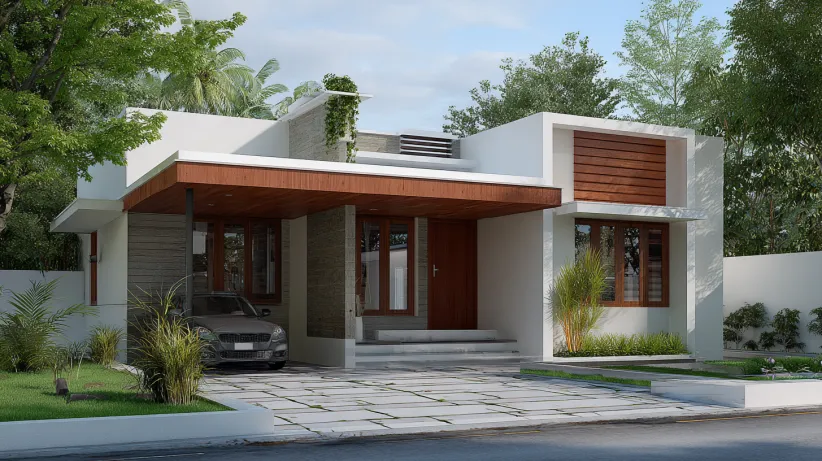
A minimalist design with a clean front elevation often uses a simple, box-like structure to reduce complexity. This contemporary flat roof home highlights clean geometry and structural simplicity through a box-shaped elevation. The compact 2BHK layout promotes efficient space planning with an open living and dining area. RCC construction, minimal projections, and neutral exterior finishes ensure durability, low maintenance, and controlled construction cost.
| Aspect | Details |
| Key Features | Simple box-shaped structure, clean front elevation, flat roof design |
| Materials Used | RCC frame, brick masonry, vitrified tile flooring, exterior emulsion paint |
| Area & Layout | 900–1,100 sq. ft., 2BHK with open living-dining layout |
| Estimated Cost | ₹16–18 lakhs |
| Style Elements | Straight lines, neutral colour palette, minimal wall projections |
| Best For | Small families who prefer a modern and low-maintenance home |
8. Studio-Style Modern Home Design
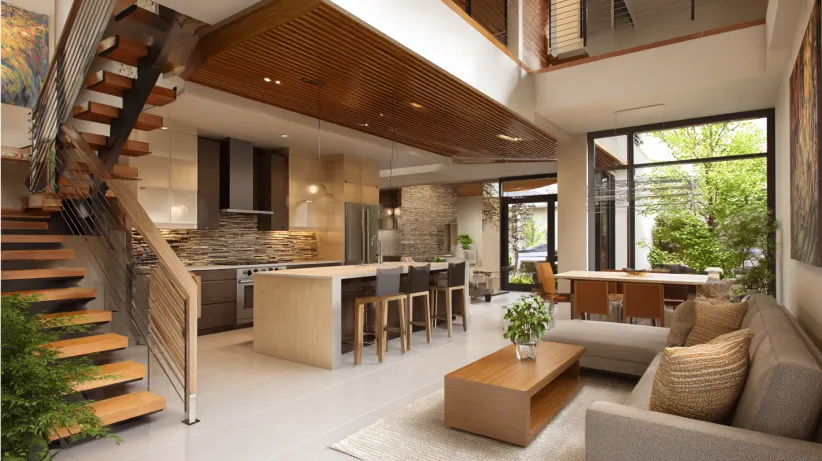
This studio-style modern home creates a spacious ambience within a compact footprint through high ceilings and expansive windows. The open-plan layout reduces internal partitions and improves flexibility. RCC framing with lightweight block walls enhances efficiency while maintaining structural stability and a refined contemporary appearance. Ideal for small families or individuals, with a focus on high ceilings and large windows to create a luxurious feel at a low cost.
| Aspect | Details |
| Key Features | High ceiling in the living area, large windows for natural light, open layout |
| Materials Used | RCC structure, AAC block walls, ceramic tiles, aluminium or UPVC windows |
| Area & Layout | 600–900 sq. ft., studio or compact 1BHK/2BHK |
| Estimated Cost | ₹12–17 lakhs |
| Style Elements | Open floor concept, simple false ceiling, large glass windows |
| Best For | Individuals, couples, or small families wanting a spacious feel in a compact home. |
9. 20x40 Compact 2BHK (800 sq. ft.)
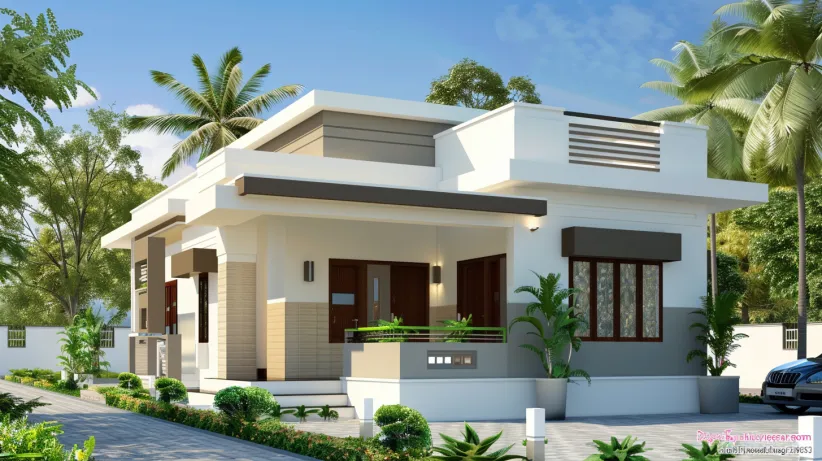
This 20x40 compact 2BHK maximises every square foot through precise room placement and minimal circulation space. The rectangular structural grid simplifies execution and reduces material wastage. A balanced layout with two bedrooms, a functional kitchen, and adequate ventilation supports practical urban living within budget limits. A highly efficient 20x40 layout that maximizes every inch of an 800 sq.ft. plot, fitting comfortably within a ₹16–20 lakh budget.
| Aspect | Details |
| Key Features | Efficient room placement, minimal passage space, compact kitchen layout |
| Materials Used | RCC frame, solid block walls, ceramic flooring, flush doors |
| Area & Layout | 800 sq. ft., 2BHK with living, kitchen, and two bathrooms |
| Estimated Cost | ₹16–20 lakhs |
| Style Elements | Straight elevation, limited exterior detailing, simple parapet |
| Best For | Urban plots with limited frontage |
10. 30x50 North-Facing 3BHK (1500 sq. ft.)
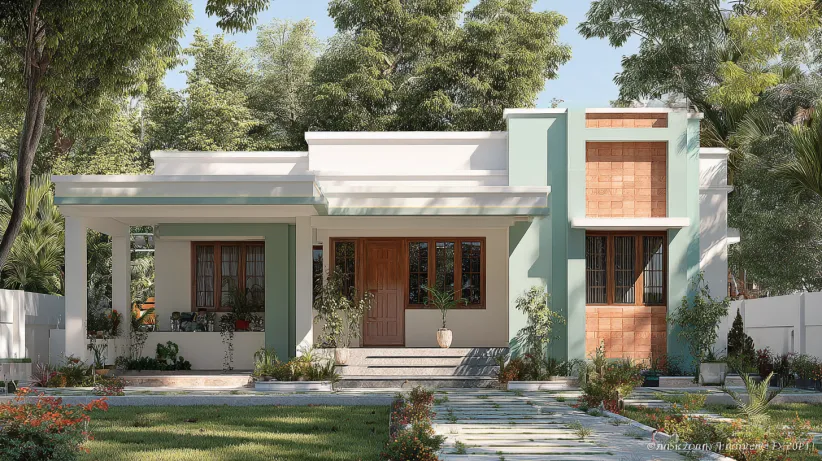
This north-facing 3BHK offers a spacious 1,500 sq. ft. ground-floor layout designed for comfort and privacy. A centrally positioned living area connects three strategically separated bedrooms, ensuring functional zoning and minimal disturbance. The plan supports ample daylight, effective cross ventilation, and a balanced elevation within an estimated ₹19–20 lakh budget.
| Aspect | Details |
| Key Features | Central living space, three well-separated bedrooms, and clear ventilation planning |
| Materials Used | RCC structure, brick masonry, vitrified tiles, UPVC windows |
| Area & Layout | 1,500 sq. ft., 3BHK ground floor |
| Estimated Cost | ₹19–20 lakhs (basic finish) |
| Style Elements | Balanced front elevation, flat roof, light exterior colours |
| Best For | Larger families needing privacy and space |
11. 750 sq.ft. Modern Single-Storey
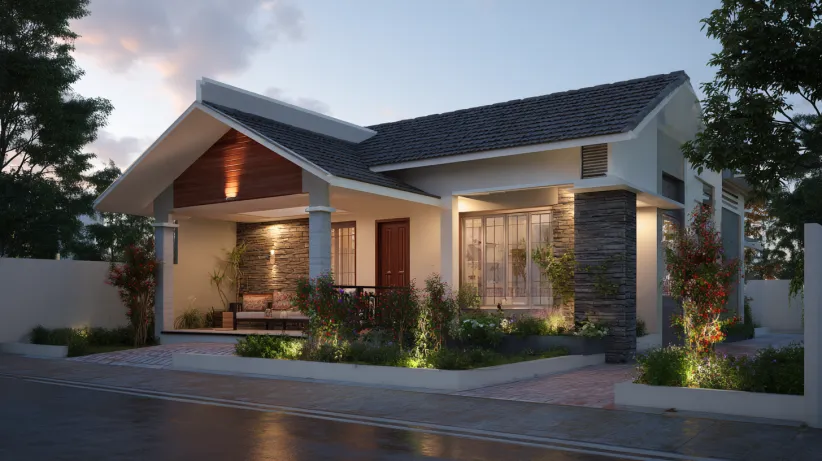
This 2BHK design includes a sit-out and sloping roofs with LED spotlights, combining traditional and regional elements with modern luxury for roughly ₹18 lakh. The compact 2BHK layout promotes efficient zoning and smooth circulation. LED lighting accents and well-planned exterior materials create a neat appearance without increasing structural complexity or construction cost.
| Aspect | Details |
| Key Features | Sit-out with pillars, sloping roof sections, and LED spotlights |
| Materials Used | RCC frame, brick walls, ceramic tiles, metal sheet, sloped roofing |
| Area & Layout | 750 sq. ft., 2BHK with living, kitchen, and two bathrooms |
| Estimated Cost | ₹18 lakhs (approx.) |
| Style Elements | Sloped roof, white and brown exterior tones, simple groove detailing |
| Best For | Small families who prefer a traditional look witha modern layout |
12. Rural Rustic Brick Design
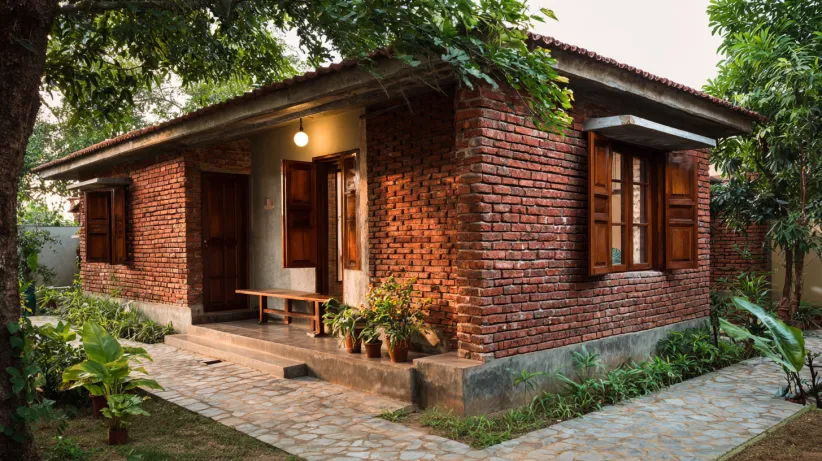
Exposed red brick walls define the character of this rural rustic home. The clean rectangular layout makes construction easier and helps manage costs efficiently. Natural surface textures reduce the need for frequent repainting. Wooden shutters and simple detailing add warmth, making this design ideal for village and semi-urban locations.
| Aspect | Details |
| Key Features | Exposed red brick exterior walls, wooden shutters, and a simple rectangular layout |
| Materials Used | RCC frame, exposed brickwork or brick cladding, wooden doors and shutters, cement or tiled flooring |
| Area & Layout | 800–1,200 sq. ft., 2BHK or compact 3BHK |
| Estimated Cost | ₹15–20 lakhs (depends on brick quality and finish level) |
| Style Elements | Natural red brick finish, minimal plaster, sloped or flat roof option |
| Best For | Rural or semi-urban families who prefer low-maintenance and long-lasting exterior finishes |
How To Plan A Budget To Construct An Rs. 20 Lakh House?
Building a house with a ₹20 lakh budget means you need to be clear, disciplined, and practical from the start. Every choice, like the size of your house and the materials you use, will affect the total cost. Instead of guessing, divide your budget into clear categories and allocate it across land, construction, professional fees, and contingencies. so you can track your spending. This organized method helps you stick to your budget and lowers financial stress during the project.
Step 1: Fix the Built-Up Area First:
Construction costs in India currently range from ₹1,500 to ₹2,200 per sq. ft. for standard-quality construction. At this rate, a ₹20 lakh budget typically supports a 900–1,100 sq. ft. home with mid-range finishes. Define your built-up area before discussing elevation, interiors, or layout upgrades. Size determines cost more than design.
Step 2: Divide the Budget into Clear Allocations
A realistic ₹20 lakh construction budget usually splits as follows:
- Materials: 60–65% (cement, steel, bricks, tiles, doors, windows)
- Labour: 25–30% (masonry, carpentry, plumbing, electrical)
- Professional Fees & Approvals: 5–10%
- Contingency Reserve: 5% minimum
This allocation helps you track overspending early and adjust decisions before costs escalate.
Step 3: Choose the Right Material Grade
Material quality directly influences per sq. ft. cost.
- Basic Finish: ₹1,200–₹1,600 per sq. ft.
- Standard Finish: ₹1,600–₹2,200 per sq. ft.
- Premium Finish: ₹2,500+ per sq. ft.
A ₹20 lakh home typically falls under the standard-finish category, with controlled façade detailing and functional interiors.
Step 4: Control Design Complexity
Simple structures reduce construction waste and labour time. Complex shapes increase material usage and execution time.
- Choose rectangular or square layouts.
- Avoid excessive projections, curves, or decorative structural elements.
- Reduce long hallways or unused circulation areas.
- Keep roof and elevation detailing minimal.
How to Reduce the Cost of Constructing a House?
Construction costs increase when decisions lack planning. Smart cost control does not mean compromising quality. It means making practical choices at the right stage. The following strategies help reduce construction expenses without affecting durability.
Choose the Right Plot: Select a plot with proper road access and proximity to daily infrastructure. A well-connected location reduces long-term transportation expenses and simplifies material delivery during construction.
Ensure Nearby Utility Connections: Confirm electricity and water availability before purchase. Separate applications for new connections increase plumbing work, wiring cost, and approval delays.
Control Material Expenses: Materials form the largest share of construction costs. Cement, steel, bricks, sand, and tiles drive the budget.
- Purchase materials in bulk to negotiate better rates.
- Compare supplier quotes before finalising orders.
- Avoid over-ordering to reduce waste.
Plan Labour Efficiently: Labour costs increase when timelines extend.
- Fix a realistic construction schedule.
- Avoid idle labour days.
- Complete one stage fully before moving to the next.
Optimise Equipment Usage: Construction equipment rentals increase project costs. Schedule tasks effectively to maximise equipment utilisation during the rental period.
Avoid Mid-Construction Changes: Design changes after construction begins increase material waste and rework costs. Finalise floor plans, elevations, and room sizes before starting works
Manage Woodwork Wisely: Woodwork affects the interior cost significantly.
- Use locally available wood where suitable.
- Limit decorative wood elements.
- Prioritise essential fittings over aesthetic additions.
Choose Practical Finishes: Finishing choices influence the final bill.
- Cement flooring offers a cost-effective option.
- Simple paint finishes reduce repaint cycles.
- Standard tiles cost less than premium designer options.
Optimise Wall Thickness: Use 9-inch thickness for outer walls and 5-inch thickness for internal partitions, where structurally suitable. This reduces material use without compromising safety when executed properly.
Building a home requires financial discipline at every stage. Strategic planning controls the budget. Smart execution reduces unnecessary expenses. When you combine both, you build efficiently without compromising structural strength or long-term durability.
How NoBroker Helps You With ₹20 Lakh House Design?
Cost control works only when planning, approvals, documentation, and execution are aligned. NoBroker simplifies the process by connecting you with verified professionals, providing transparent pricing, and offering end-to-end property assistance. From legal checks and approvals to budget-aligned property options, NoBroker helps you make informed decisions without financial surprises. Build smart, plan confidently, and stay within your ₹20 lakh goal with the right guidance at every step.
Frequently Asked Questions
A1: First, you should clearly know what kind of house you want to build. Once you have decided on the type of house, you can start looking for a plan that suits your budget. You should also consider how much space you want to build for the different rooms and how much of the exterior you want to build. Finally, consider the location of your property when looking for a design plan.
A2: Building a 1500 sq. ft. house in India is about 22 lakh rupees. This includes the cost of the land, labour, and materials needed to build the house.
A3: The least expensive kind of house to build is one with a clear and straightforward layout. Ranch homes are simple to build and have many customisation options, so you may select one that suits your needs and price range.
A4: The cost of building a 30x40 house in India ranges greatly, depending on the materials used and the house's location. A rough estimate for a 30x40 house in India can be anywhere from Rs. 12 lahks to Rs. 15 lahks, depending on the size and location.
A5: The three qualities of a good cost-effective house plan are affordability, space, and efficiency. A good inexpensive home plan is reasonable for you, has the room you require, and makes optimal use of the available square footage. If you're in the market for a new house plan, it's important to look at these three qualities.
Recommended Reading
Best 3 Bedroom House Plan: Modern and Space-Efficient Layouts for 2026
January 31, 2025
69986+ views
South Indian Village House Design: Top 15 Trending of 2026
January 31, 2025
30771+ views
Top 20 PVC Wall Panel Design for Bedroom, Living Room, Hall, Kitchen, Lounge, Shop and More in 2026
January 15, 2025
30617+ views
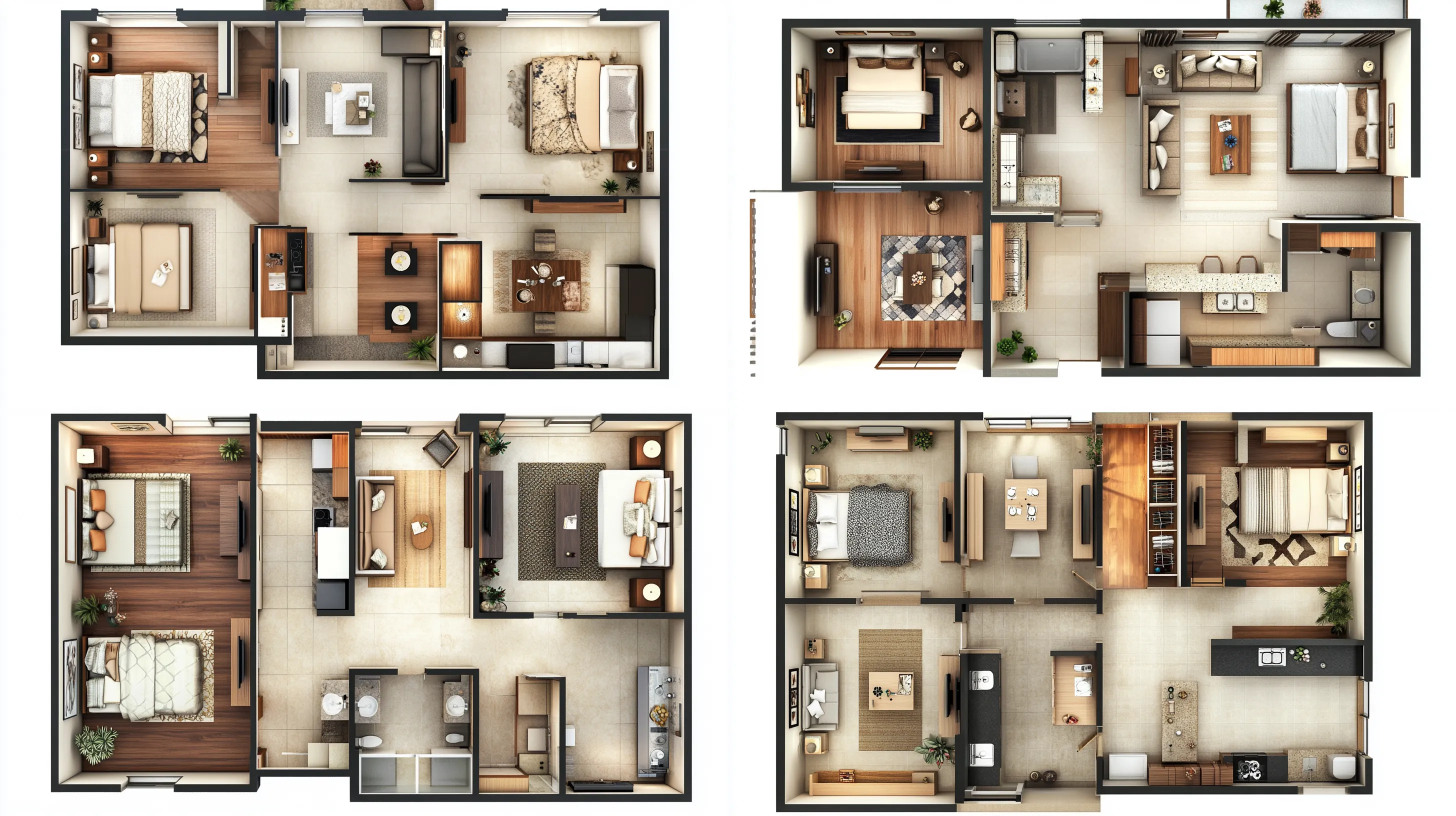
25 Latest 2 BHK House Plans for Your Modern Living Spaces as per Vastu
January 23, 2025
27902+ views
20+ Latest House Designs for 2026
January 31, 2025
22638+ views
NoBroker Interior Design Tips & Ideas Testimonials
Most Viewed Articles
Top Hanging Light Ideas to Illuminate Your House
January 31, 2025
395605+ views
15 Wall-Mounted Dining Table Design Ideas
January 31, 2025
106295+ views
Best 3 Bedroom House Plan: Modern and Space-Efficient Layouts for 2026
January 31, 2025
69986+ views
How to Make a Room Soundproof: 15 Ideas That Work Like a Charm
January 31, 2025
32481+ views
25 Front Gate Designs for Houses: Secure, Stylish and Functional Ideas 2026
January 31, 2025
31165+ views
Author
Loved what you read? Share it with others!
Recent blogs in
Top 9 Interior Designers in Bangalore (2026): Best Experts for Home Interiors
March 25, 2026 by Ananth
The Best Wallpaper Designs for Living Room in India 2026
August 21, 2025 by Ananth
5 Latest Wall Decoration Ideas to Transform Your Home Instantly
August 20, 2025 by NoBroker.com








 Full RM + FRM support


Join the conversation!