Table of Contents
Loved what you read? Share it with others!


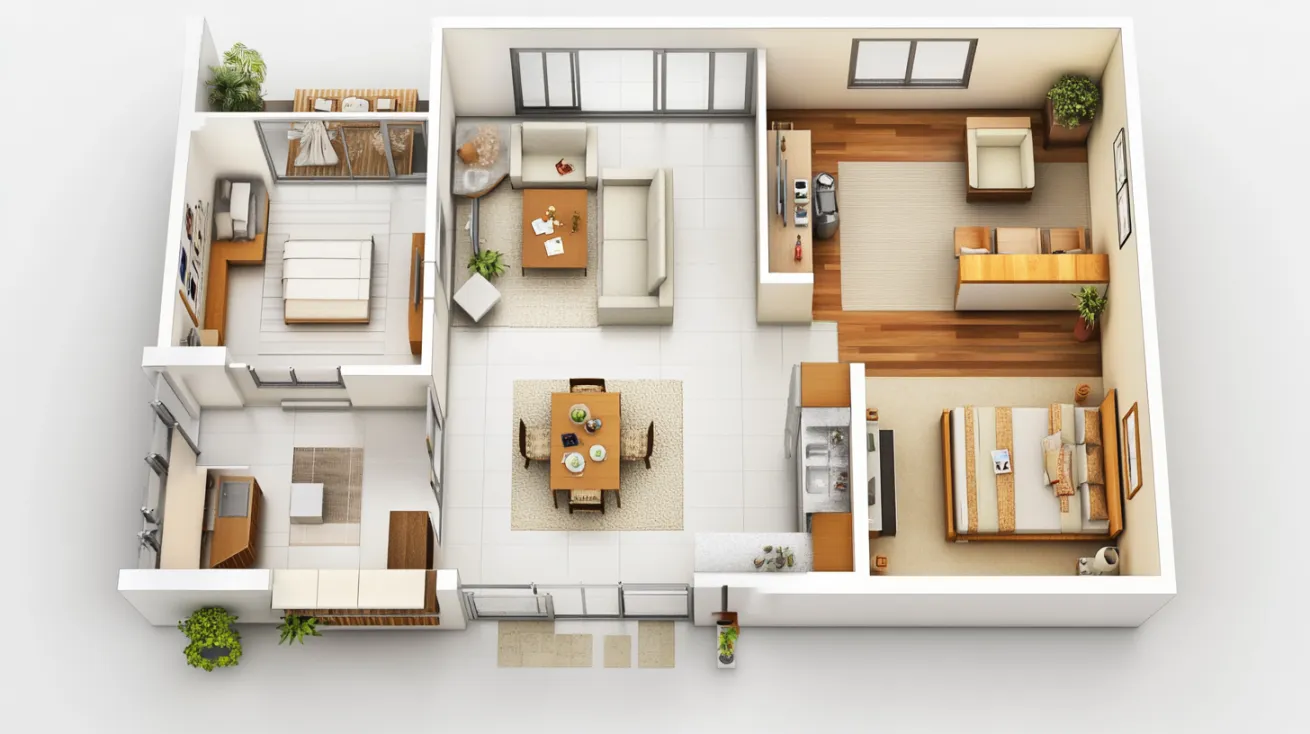
Simple and Modern 15x30 House Plans for Small Plots, Single & Double Floor Homes 2026
Updated : February 23, 2026, 3:50 PM
Author :
 Kruthi
Table of Contents
Creating a beautiful home on a small plot of land is no longer a problem with proper planning and new concepts. A simple and modern 15 * 30 house plans are the best option for a small plot of land, providing comfort, functionality, and aesthetic appeal for single and double-storey homes in 2026. These designs emphasise space efficiency, sunlight, and modern design concepts that meet the needs of modern living. Whether you are constructing your first home or looking to upgrade to a smarter design, these designs will give you confidence and clarity. With the help of experienced architects and construction companies in Noida, you can convert a small plot of land into a fashionable and future-ready home that feels spacious.
Compact Living, Big Possibilities with 15 * 30 House Plans
A 15 * 30 house plan refers to a building design for a rectangular plot of land measuring 15 feet in width and 30 feet in length, resulting in a total area of 450 square feet. This size is particularly prevalent in high-density urban zones where land is scarce and expensive.
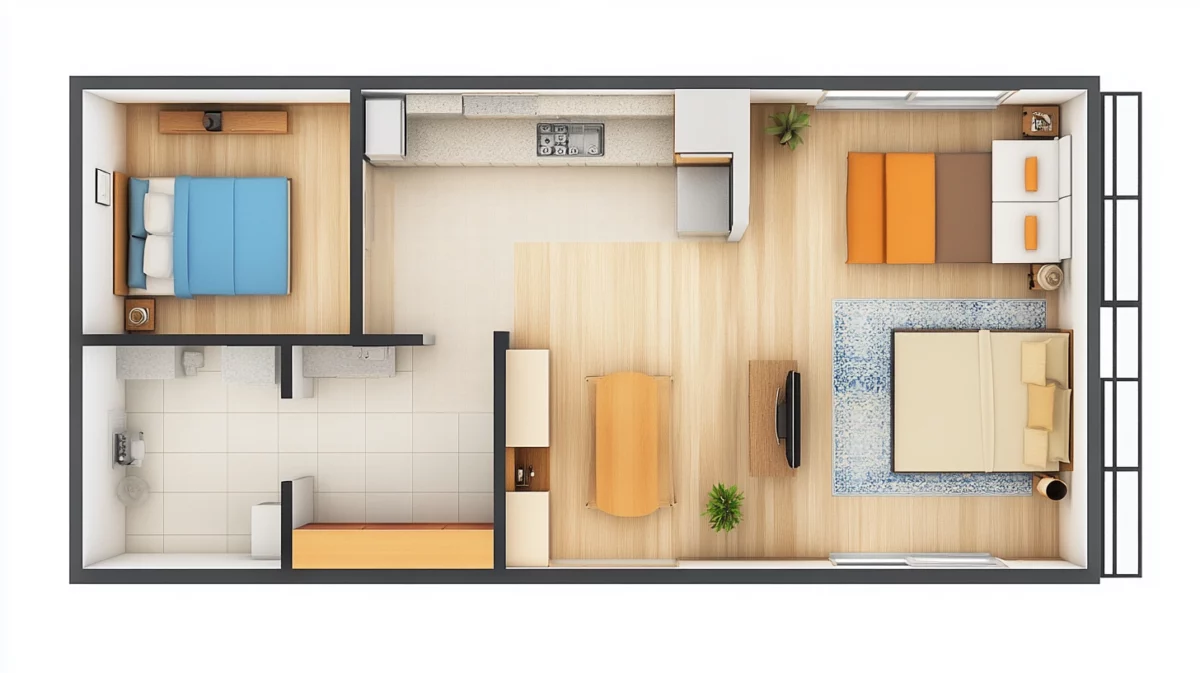
Ground Floor Details (Example):
- Living Area
- Kitchenette
- Staircase
- Common Bathroom
First Floor Details (Example):
- Bedroom 1
- Bedroom 2 (Optional)
- Attached Bathroom
- Small Balcony
Area Details:
- Plot Size: 15 feet x 30 feet = 450 sq ft
- Approximate Built-up Area (Single Floor): 400-420 sq ft (leaving space for walls/setbacks)
- Approximate Built-up Area (Two Floors): 800-840 sq ft
Why 15x30 House Plans are Gaining Popularity?
Here are the key reasons why 15x30 house plans are becoming a preferred choice for modern homeowners, especially in urban areas where space, budget, and functionality matter most:
- Affordable land and construction costs: 15x30 plots require a lower investment, making them ideal for budget-conscious homeowners.
- Efficient space utilisation: Smart layouts ensure every square foot is used effectively without wasted space.
- Ideal for urban living: Perfectly suited for cities where plot sizes are shrinking, and demand is high.
- Lower maintenance: Smaller homes are easier and more economical to maintain over time.
- Flexible design options: Suitable for both single and double-floor homes with future expansion possibilities.
- Faster construction time: Compact designs reduce construction timelines and labour costs.
- Better ventilation and lighting: Modern planning focuses on airflow and natural light, even in small plots.
- High resale and rental demand: Compact homes are in demand among small families and investors.
- Customizable interiors: Designs can be tailored to lifestyle needs without structural complexity.
- Support from professionals: Experienced architects and construction companies in Noida ensure smooth, reliable planning and execution.
Ideal Use Cases for a 15 * 30 House Plan
These compact plans are incredibly versatile and suitable for:
- Individuals or Young Couples: A perfect starter home.
- Small Families: A cosy 2 BHK can be efficiently designed.
- Rental Investments: Excellent potential for generating rental income in urban areas.
- Accessory Dwelling Units (ADUs) or Granny Flats: Can be built on larger existing properties.
- Vacation Homes/Weekend Getaways: Low maintenance.
Orientation Considerations: 15ft vs. 30ft Frontage
The orientation of the plot significantly impacts the 15 * 30 house design:
- 15ft Frontage (Narrow and Deep): This is common. Light and ventilation primarily come from the front and back. The layout tends to be linear, with rooms arranged one behind the other. Staircase placement is crucial.
- 30ft Frontage (Wide and Shallow): This is less common but offers more flexibility. It allows for wider rooms at the front, better cross-ventilation, and more options for facade design (15 * 30 house front design).
Layout Options for 15 * 30 House Plans: Making Every Inch Count
Designing for a 450-square-foot plot requires meticulous planning to maximise utility and create a sense of spaciousness. Smart layout choices are key.
1 BHK 15 * 30 House Plans
A one-bedroom, hall, and kitchen (1BHK) configuration is very practical and common for a 15*30 house plan. It's ideal for individuals or couples seeking a comfortable yet manageable living space.
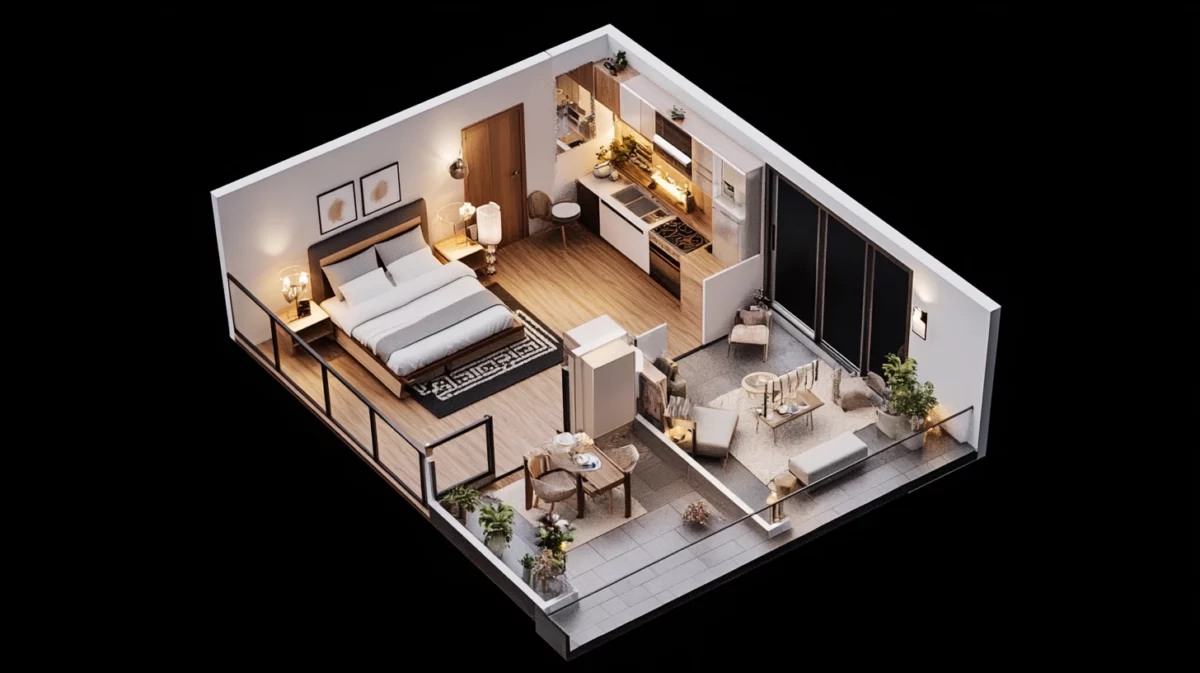
- Ideal For: Singles, couples, or as a high-demand rental unit.
- Key Features:
- Open Concept Living: Combining the living, dining, and kitchen areas creates a visually larger space and improves flow. A kitchenette rather than a full-sized kitchen saves space.
- Compact Bedroom & Bath: A well-proportioned bedroom and a functional bathroom, possibly a common bath accessible from the living area to save space.
- Smart Storage: Integrating built-in wardrobes, under-stair storage (if multi-story), vertical shelving, and multi-functional furniture is essential.
2BHK 15 * 30 House Plans
Fitting two bedrooms into a 450 sq ft footprint, especially on a single floor, is challenging but achievable, particularly with a two-story 15 by 30 house plan design. It requires careful compromises.
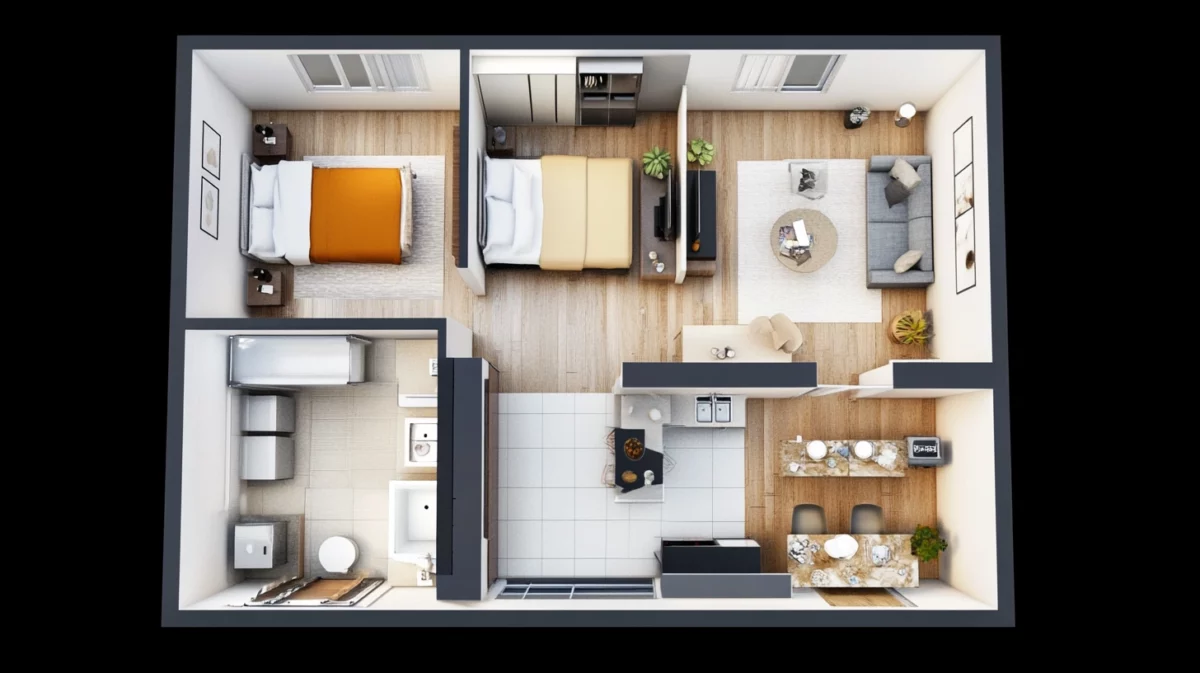
- Ideal For: Small families or homeowners needing a guest room, home office, or study.
- Challenges:
- Room Sizes: Bedrooms and living areas might be smaller than those in larger homes.
- Circulation Space: Minimising corridors and hallways is crucial.
- Layout Adaptation: Often necessitates a vertical (multi-floor) layout to accommodate two bedrooms comfortably. A 15 by 30 house plan design and 2-floor design is common for 2BHKs.
- Design Solutions:
- Shared Wall Bathrooms: Placing bathrooms back-to-back or stacking them vertically reduces plumbing costs and saves space.
- Vertical Stacking: Placing bedrooms on the upper floor (15 * 30 house plan first floor) frees up the ground floor for living spaces.
- Space-Saving Furniture: Using sliding doors instead of hinged doors, foldable tables, sofa beds, and Murphy beds can make rooms multi-functional.
3 Other Configurations for 15x30 House Plans
Beyond standard BHK layouts, other possibilities exist:
- Studio Apartments: An open-plan layout where furniture arrangement or partial dividers define living, sleeping, and kitchen zones.
- Home + Office: One room is designated as a dedicated workspace, vital for remote workers.
- Partitioned Rooms: These create smaller, distinct zones for specific activities, such as a prayer room, study nook, or utility area.
Discover smart 5 lakh budget house plans with modern layouts and cost-effective designs - Read on!
Common Layout Options for 15 * 30 House Plans
Different approaches cater to varying needs and plot orientations, each presenting unique advantages and potential challenges for this compact size.
| Layout Type | Typical Features | Pros | Cons |
| Linear Plan | Rooms arranged sequentially from front to back (common for 15ft frontage). | Simple circulation, clear zoning. | Can feel narrow, potential light/ventilation issues in middle rooms. |
| Open Plan | Combining living, dining, and kitchen into one large space. | Creates a sense of spaciousness, good for entertaining, and flexible use. | Less privacy, kitchen odours might spread. |
| Split Level | Minor level changes are needed to define spaces (possibly in multi-story). | Adds architectural interest, defines zones without full walls. | Can be challenging for accessibility, and complex construction. |
| Vertical Stack | Living areas on the ground floor, private areas (bedrooms) on upper floor(s). | Clear separation of public/private zones maximises ground space. | Requires a staircase (uses space), less accessible for some. |
| Courtyard Plan | A small internal open-to-sky courtyard (challenging but possible). | Improves light and ventilation to internal rooms. | Reduces usable indoor floor area. |
Vertical Expansion of A 15 * 30 House Design: Single-Floor vs. Multi-Floor Homes
Given the limited ground footprint, building vertically is a very popular strategy with 15 * 30 house plans.
Single-Story 15 * 30 House Designs
A 15 * 30 house plan, single floor, offers simplicity and accessibility, making it ideal for certain needs.
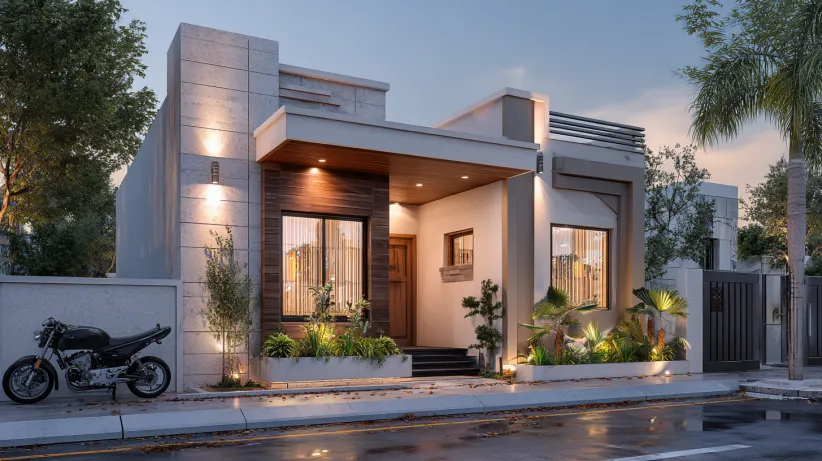
- Advantages:
- Accessibility: No stairs make it perfect for elderly residents or those with mobility challenges.
- Ease of Maintenance: Everything is on one level.
- Lower Construction Cost: Generally cheaper to build than multi-story structures.
- Considerations: Limited to typically a 1 BHK or a very compact 2 BHK layout. Maximising natural light requires careful window placement.
- Popular Search Trend: "Ground floor 15x30 plan" indicates significant interest in single-level living.
Two-Story 15 * 30 House Plan Designs
Building a 15 * 30 house plan, 2 floors effectively doubles the usable living area without needing more land.
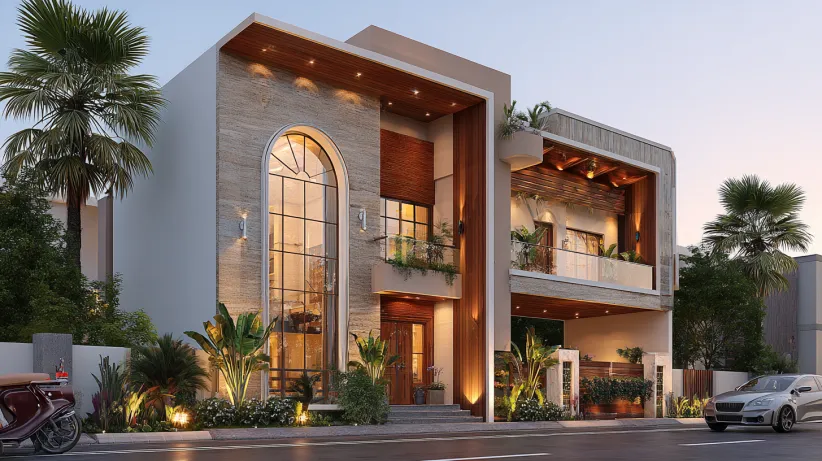
- Advantages:
- Increased Space: This allows for comfortable 2 BHK layouts, a small 3 BHK, or dedicated spaces like a study.
- Better Zoning: You can easily separate noisy living areas from quiet bedrooms.
- Design Focus Areas:
- Staircase Placement: Careful consideration is needed to minimise space wastage. Options include straight-flight, L-shaped, or spiral stairs.
- Light & Ventilation: Upper floors can incorporate balconies or larger windows to improve light and air circulation.
- Structural Considerations: Foundation and structure must support the additional load.
Duplex 15 * 30 House Plan Models
A duplex involves two separate living units within the same building on a 15x30 site. This is often achieved with a two-story structure.
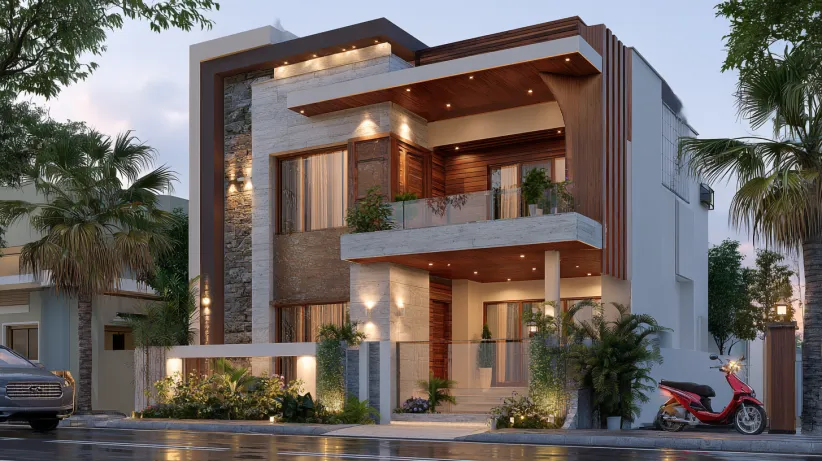
- Ideal For:
- Dual-Family Living: Housing two related families (e.g., parents and children) independently.
- Rental Income: Living in one unit and renting out the other.
- Design Features:
- Separate Entryways: Often designed with independent external access for each unit.
- Shared Utilities: They may share foundational elements, such as the roof and sometimes utility lines (with separate meters).
- Layout: Could be side-by-side (less common on 15ft width) or, more typically, one unit per floor.
Essential Features Users Ask For in The 15 * 30 House Plans
Even with limited space, homeowners have specific needs. Here’s how popular requests are addressed in a 15x30 house design:
Car Parking Solutions in 15 * 30 House Plans
Parking is a major concern in urban areas. Incorporating it into a 450 sq ft plot requires clever design.
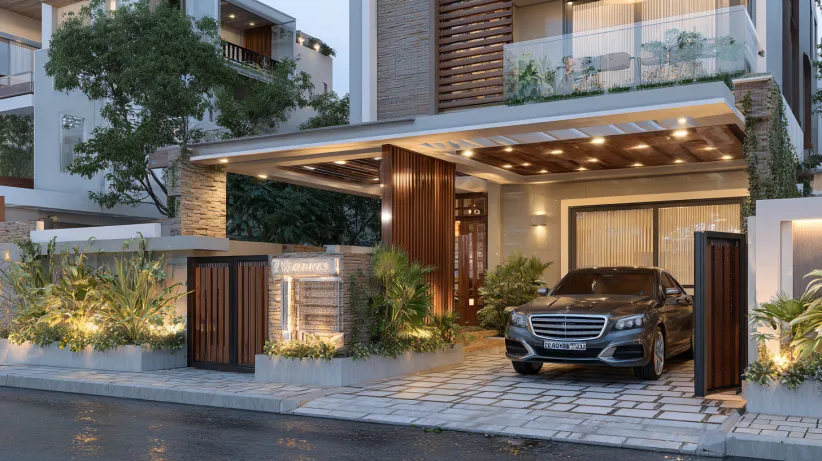
- Common Options:
- Open Parking: Allocating the front setback area (if regulations allow) for parking. This might accommodate a small car or motorcycles.
- Stilt Parking: Raising the ground floor slightly allows for covered parking underneath (requires careful structural design and may impact floor height regulations).
- Cantilevered Portico: A projection from the first floor can create a covered carport below without consuming the built-up area on the ground floor.
- The Trade-off: Providing dedicated car parking often means sacrificing some ground-floor living space or garden area. Finding a “15 * 30 house plan with car parking” that balances living needs and parking is a common challenge.
Commercial Space: 15 * 30 House Plan with Shop
Integrating a small commercial space is possible for entrepreneurs or those looking for mixed-use properties.
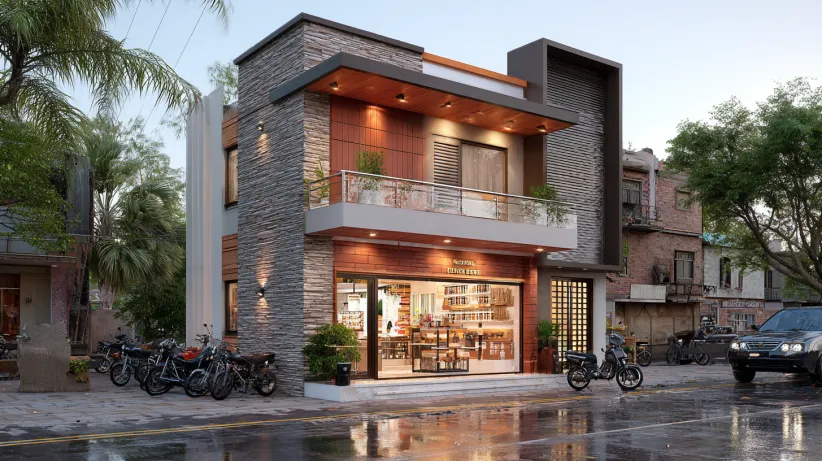
- Concept: A small shop or office occupies part or all of the ground floor, with the residence on the upper floor(s).
- Ideal for: Small retail businesses, clinics, tailoring shops, consultation offices, etc., run by homeowners.
- Design Tips for a 15 * 30 house plan with a shop:
- Separate Access: Crucial to have distinct entrances for the shop and the residence to maintain privacy.
- Sound Insulation: Proper soundproofing between the commercial and residential areas is essential.
- Ventilation and Utilities: Separate considerations for the shop's specific needs.
- Regulations: Check local zoning laws regarding mixed-use properties.
Vastu-based Design: North, South, and East-Facing 15 * 30 House Plans
The direction the plot faces significantly impacts natural light, heat gain, and Vastu compliance. Designing according to orientation enhances comfort and energy efficiency.
North-Facing 15 * 30 House Plans
North-facing plots receive direct sunlight throughout the day, making them desirable in hot climates like India.
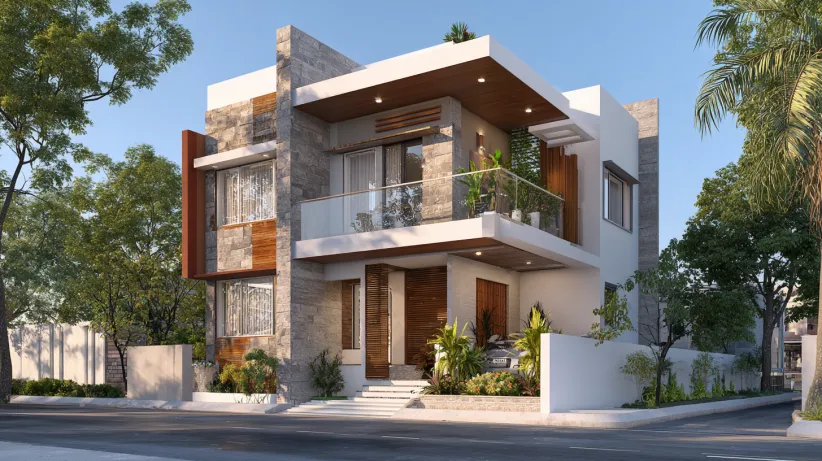
- Design Focus: Maximise pleasant north light, often placing living areas at the front. Minimise openings on the south side to reduce heat gain. The rear (south side) might receive good sunlight, suitable for utility areas or gardens. Consider larger windows at the rear if overlooking a private space. Central courtyards or skylights can bring light deeper into a linear plan. Explore more tips with our guide on North-Facing House Vastu.
- A well-designed 15 * 30 north-facing house plan aims for bright interiors without direct glare.
South-Facing 15 * 30 House Plans
South-facing plots receive intense sunlight, especially in summer. The design needs to focus on cooling strategies.
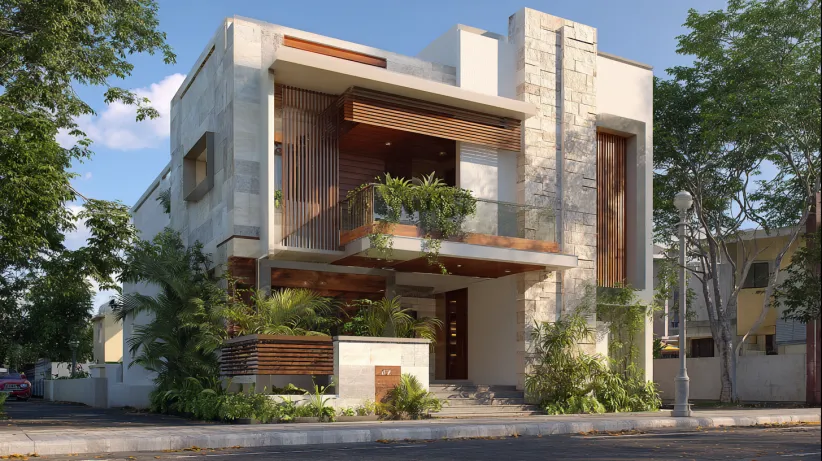
- Design Focus: Mitigate heat gain.
- Shading: Use overhangs (chajjas), balconies, pergolas, or vertical fins on the south facade.
- Ventilation: Plan for effective cross-ventilation to dissipate heat.
- Window Placement: Smaller windows on the south or shaded by projections or trees.
- Materials: Use heat-reflective paints or materials on the roof and south-facing walls.
- Designing effective 15x30 house plans south-facing involves involves blocking harsh sun while allowing for winter warmth, if applicable in the climate.
East-Facing (Vastu-Compliant) 15 * 30 House Plans
According to Vastu Shastra, east-facing plots are highly favoured as they welcome the morning sun.
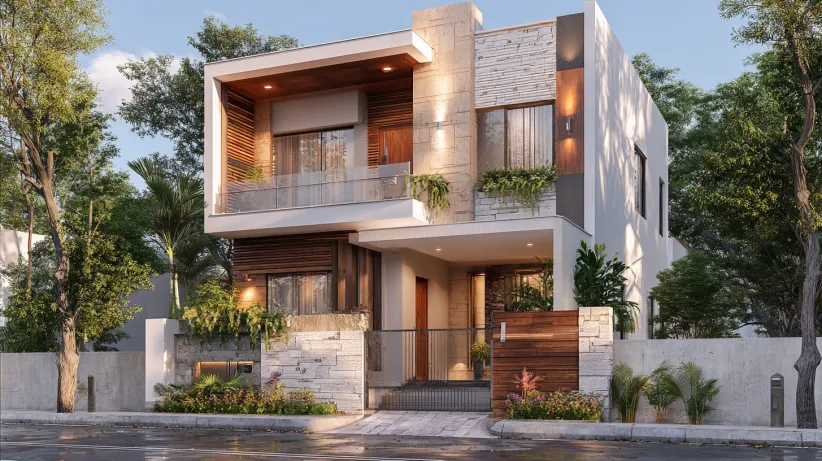
- Vastu Focus: Aligning key elements with Vastu principles is often a priority.
- Main Entrance: Ideally placed in the auspicious 'padas' on the East side.
- Kitchen: Often preferred in the Southeast or Northwest corners.
- Pooja Room/Area: The Northeast corner is considered highly auspicious.
- Master Bedroom: Southwest is generally recommended.
- An east-facing house Vastu plan 15 x 30 tries to incorporate these principles within the spatial constraints. Learn more about East-Facing House Vastu.
Key Vastu Principles for East-Facing 15 * 30 House Plans
Incorporating Vastu Shastra principles is vital for many homeowners. While achieving perfect Vastu in a compact 15 * 30 house plan can be challenging, here are some key guidelines often considered for East-facing plots:
| Vastu Principle | Recommended Direction/Placement (for East-Facing Plot) | Potential Benefits According to Vastu |
| Main Entrance | East (specific auspicious padas/steps preferred) | Welcomes positive energy, prosperity, and health. |
| Kitchen | Southeast (Agni corner) or Northwest (Vayu corner) | Promotes health, digestion (SE); harmony (NW). Avoid the Northeast. |
| Master Bedroom | Southwest | Stability and leadership qualities for the head of the household. |
| Living Room | East, North, or Northeast | Harmonious social interactions, positive ambience. |
| Pooja Room/Area | Northeast (Ishan corner) | Spirituality, peace, divine connection. |
| Toilets/Bathrooms | Northwest or West | Proper waste disposal energy. Avoid the Northeast and Southwest. |
| Staircase | South, West, or Southwest (Clockwise turn preferred) | Avoid the centre (Brahmasthan) and the Northeast. |
| Water Elements (Sump/Tank) | North or Northeast | Financial stability, purity. |
15×30 House Design with 3D Visualisation: From Floor Plan to Reality
It can be difficult to understand a home design from 2D floor plans, particularly in smaller homes such as a 15 × 30 house, where every square inch counts. 3D visualisation bridges the gap between design and reality by transforming 2D floor plans into realistic, easy-to-understand experiences before the home is built.
How 3D Visualisation Helps in 15×30 House Plans?
- Realistic Walk-Through Experience: Enables homeowners to walk through the home virtually to understand room flow, circulation, and functionality.
- Accurate Sense of Space: Assists in visualising room size, ceiling height, and how different areas of the home relate to each other in a small 15×30 floor plan.
- Furniture Planning & Placement: Illustrates how furniture will fit in the home in a realistic manner, avoiding overcrowding.
- Material and Colour Visualisation: Allows homeowners to compare different flooring, wall, and colour options before making a final decision.
- Natural and Artificial Lighting Simulation: Simulates how lighting in the home will change at different times of day.
- Enhanced Design Communication: Facilitates better communication between homeowners, architects, and contractors to avoid misunderstandings and design revisions.
Cost Considerations and Budgeting for Your 15 * 30 House Plan
Estimating the cost of building a 15 * 30 house plan involves several factors: location, material quality, labour costs, and design complexity.
- Estimated Construction Cost: As of early 2026, average construction costs in many Indian cities range from ₹1500 to ₹2500+ per square foot for standard finishes. For a 450 sq ft plot with a single floor (approx. 400 sq ft built-up), the basic construction cost might range from ₹6 Lakhs to ₹10 Lakhs+. A two-story house (approx. 800 sq ft) could range from ₹12 Lakhs to ₹20 Lakhs+. These are rough estimates and can vary significantly. Consider exploring costs for different sizes, like a 1500-square-foot house Design, to understand cost scaling.
- Cost-Saving Tips:
- Simple Design: Avoid complex structural elements or intricate facades.
- Material Choices: Opt for locally sourced, durable, yet cost-effective materials. Prefabricated elements might save time and labour costs.
- Compact Furniture: Choose appropriately scaled furniture; multi-functional pieces save money and space.
- Modular Kitchens/Wardrobes: Often more cost-effective and efficient than custom carpentry.
- Long-Term Savings: Smaller homes typically have lower property taxes and utility bills, contributing to savings over time.
Customisation Tips: Personalising Your 15 * 30 Home
Making a compact house feel like home requires smart personalisation. Here are tips for customising your 15 30 house design:
- Colour Psychology: Light, neutral colours (whites, creams, light greys) on walls and ceilings make spaces feel larger and brighter. Use accent colours sparingly for personality.
- Furniture Scaling: Choose furniture that fits the scale of the rooms. Avoid bulky pieces. Opt for designs with visible legs to create a sense of openness.
- Lighting: Maximise natural light. Use mirrors strategically to reflect light and create an illusion of space. Employ layered artificial lighting (ambient, task, accent) to create mood and functionality.
- Ventilation: Ensure good cross-ventilation through well-placed windows and openings. Consider exhaust fans in kitchens and bathrooms.
- Smart Storage: Use vertical spaces like tall shelves and cabinets for storage. In a double-story home, build under-stair storage. Use wall-mounted or built-in cabinets to save floor space.
- Front Design: Pay attention to the 15 * 30 house front design. Even small details like attractive paint, a well-designed main door, or some vertical greenery can significantly enhance curb appeal. Customisation involves different strategies for larger homes like a 4 BHK House Plan, but the principle of personalisation remains key.
Why 15 * 30 House Plans Are Perfect for Compact Living?
A 15 * 30 house plan, despite its compact 450 sq ft footprint, offers incredible potential for creating comfortable, functional, and stylish homes. Careful planning is the key, whether you envision a cosy 1 BHK, a practical 2 BHK, a smart duplex, or a home integrated with a small shop. You can transform a small plot into a dream living space by considering layout options, vertical expansion, essential features like parking, orientation influences, Vastu principles, and leveraging 3D visualisation. With thoughtful design and innovative customisation, a 15 by 30 house plan proves you don’t need vast land to live large.
How NoBroker Can Help You?
NoBroker assists you in transforming your 15 * 30 house design into a beautifully designed and functional home with professional interior design advice and comprehensive construction services. Whether it is customised designs and 3D designs, material selection, and budgeting, NoBroker helps you connect with professionals to make the entire process of home construction smooth and hassle-free. With NoBroker, you can easily design and build a modern and space-saving home that suits your lifestyle. Design your perfect 15×30 home with NoBroker Interiors' expert end-to-end interior solutions!
Frequently Asked Questions
Ans: Yes, a 2BHK is feasible, especially with a two-story design. Room sizes will be compact, requiring efficient layout planning and space-saving furniture. A single-floor 2BHK is very challenging and would result in tiny rooms.
Ans: Construction cost varies significantly by location, materials, and design complexity. Rough estimates (as of early 2026) could range from ₹6-10 Lakhs for a bare single floor (approx. 400 sq ft built-up) and ₹12-20 Lakhs for a basic two-floor structure (approx. 800 sq ft built-up). Finishing costs are additional.
Ans: Yes, it's often feasible but requires compromise. Options include using the front setback area (if allowed), stilt parking (raising the ground floor), or a cantilevered portico. It usually means less ground-floor living or garden space. Many users specifically search for a "15 * 30 house plan with car parking".
Ans: A 30ft frontage (wide and shallow plot) generally offers more layout flexibility, better potential for cross-ventilation, and more options for front elevation design. However, the 15ft frontage (narrow and deep) is more common and can be efficiently designed with linear layouts and careful planning for light/ventilation.
Ans: Key Vastu tips for an east-facing house vastu plan 15 x 30 include placing the main entrance in the auspicious eastern padas, positioning the kitchen ideally in the Southeast or Northwest, the master bedroom in the Southwest, and the Pooja area in the Northeast. Toilets should ideally be in the Northwest. Consulting a Vastu expert is advised for specific guidance.
Recommended Reading
Best 3 Bedroom House Plan: Modern and Space-Efficient Layouts for 2026
January 31, 2025
69819+ views
25 Latest 2 BHK House Plans for Your Modern Living Spaces as per Vastu
January 23, 2025
27729+ views
Right On Trend and in Style, Gorgeous Contemporary 600 Sq. Foot House Plans
September 1, 2022
14603+ views
30x40 House Plans: Versatile Designs for Dream Homes
January 31, 2025
13286+ views
Ghar Ka Naksha: A Guide to Design Your Dream Home
August 10, 2023
9916+ views
NoBroker Interior Design Tips & Ideas Testimonials
Most Viewed Articles
Top Hanging Light Ideas to Illuminate Your House
January 31, 2025
395603+ views
15 Wall-Mounted Dining Table Design Ideas
January 31, 2025
106291+ views
Best 3 Bedroom House Plan: Modern and Space-Efficient Layouts for 2026
January 31, 2025
69819+ views
How to Make a Room Soundproof: 15 Ideas That Work Like a Charm
January 31, 2025
32454+ views
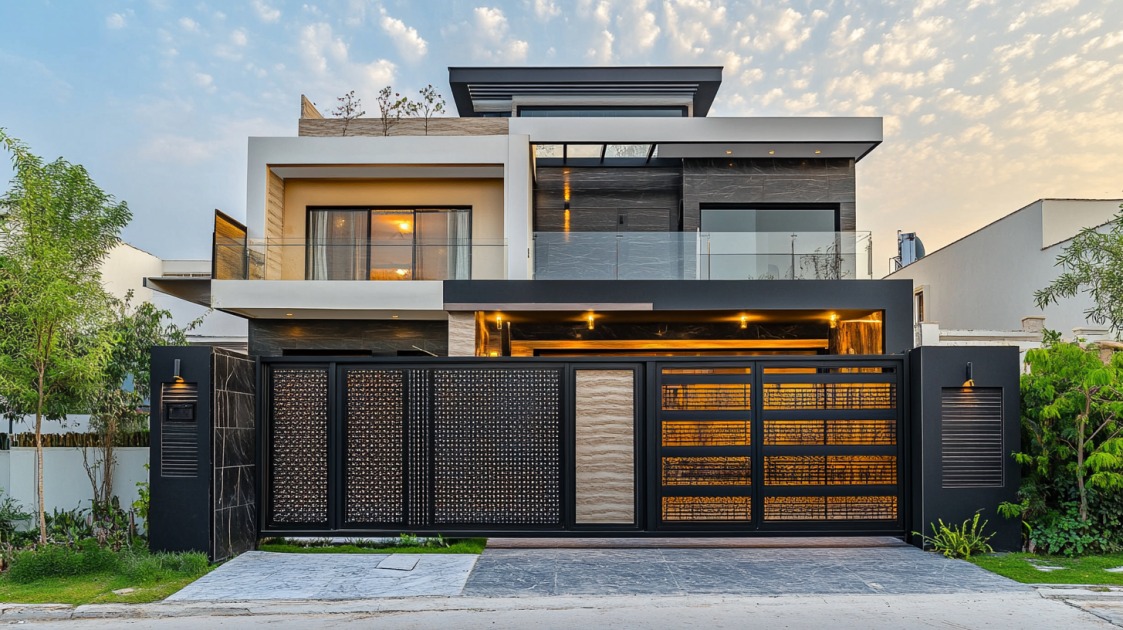
25 Front Gate Designs for Houses: Secure, Stylish and Functional Ideas 2026
January 31, 2025
30891+ views
Author
Loved what you read? Share it with others!
Recent blogs in
The Best Wallpaper Designs for Living Room in India 2026
August 21, 2025 by Ananth
5 Latest Wall Decoration Ideas to Transform Your Home Instantly
August 20, 2025 by NoBroker.com
Modern Luxury Bedroom Interior Design Ideas for Contemporary Indian Homes in 2026
May 15, 2025 by Manu Mausam







 Full RM + FRM support


Join the conversation!