- https://www.arcadia.com/blog/primary-advantages-disadvantages-solar-water-heaters
- https://www.energysage.com/clean-heating-cooling/pros-cons-electric-water-heaters/
- https://www.crompton.co.in/blogs/water-heaters-guide/solar-water-heater-vs-electric-water-heater-7-main-differences-to-note
- https://www.racold.com/blogs/what-is-the-difference-between-electric-water-heaters-and-solar-water-heaters
Table of Contents
Loved what you read? Share it with others!


Home
Blog
Home Services Tips & Ideas
Appliance Tips & Guides
Solar Water Heater vs Electric Water Heater
Solar Water Heater vs Electric Water Heater Which One Should You Buy in 2026
Updated : December 26, 2025, 6:37 PM
Author :
 Krishnanunni
Summary
A solar water heater uses sunlight to heat water, so after installation the running cost is almost zero. It is ideal for independent houses with good rooftop space, sunny climates and medium to large families. It has a higher upfront price and may need a backup in cloudy seasons. An electric water heater is cheaper to buy, easy to install in apartments and works in all weather, but it increases monthly electricity bills. If you want long term savings choose solar. If you want low upfront cost and plug and play convenience choose electric.
Table of Contents
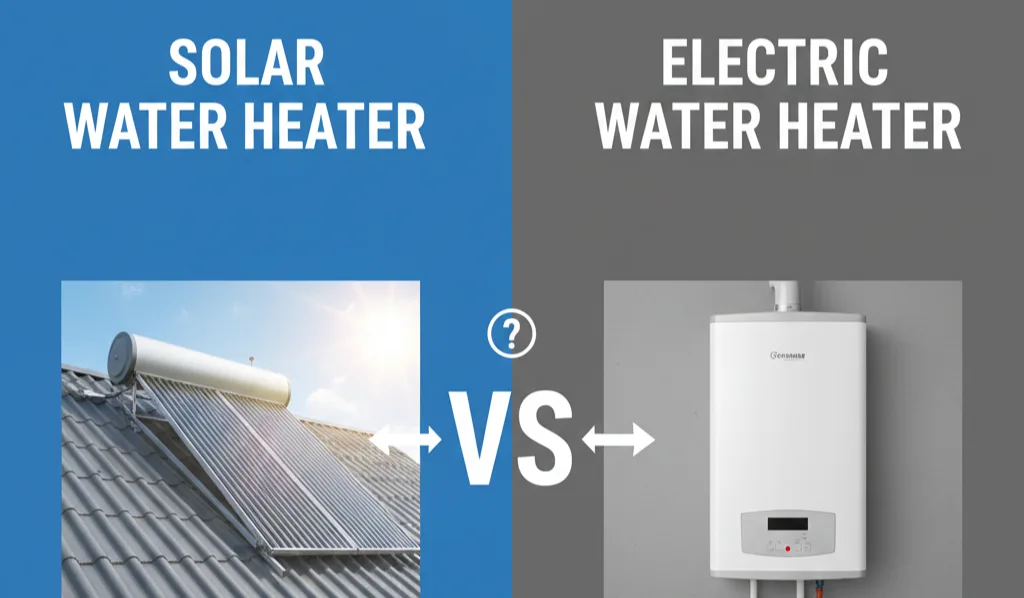
The choice between a solar water heater and an electric water heater is difficult, as it affects everything from your monthly utility bills to your home's environmental footprint. While the electric model offers simplicity and reliable heat regardless of the weather, the solar option provides substantial long-term savings and environmental benefits by harnessing the sun's free energy. This detailed comparison will analyze the performance, cost implications, and requirements of both solar heaters and electric water heaters to help you make the best decision for your household.
Quick Comparison of Key Factors of Solar and Electric Geyser
The fundamental differences between a solar geyser and an electric geyser center on the energy source, initial investment, and ongoing running costs. [1]
| Factors | Solar Water Heater | Electric Water Heater |
|---|---|---|
| Energy Source | Free solar radiation (Renewable) | Grid electricity (Non-renewable resource) |
| Initial Investment | High (Requires collectors and storage tank) | Low (Simple electric unit) |
| Running Costs | Extremely Low (Minimal electricity for pump/booster) | High (Directly related to electricity rates) |
| Space Requirement | Requires adequate roof space for collectors | Minimal (Can be installed indoors or on a wall) |
| Environmental Impact | Very Low Carbon Footprint | Higher Carbon Footprint (Dependent on source power) |
| Weather Dependency | High (Efficiency drops on cloudy days/nights) | None (Consistent, reliable heat) |
| Maintenance | Periodic cleaning and check of the system | Low (Annual flushing recommended) |
| Lifespan | Long (Typically 15 to 20 years) | Moderate (Typically 8 to 12 years) |
Solar Water Heater (SWH)
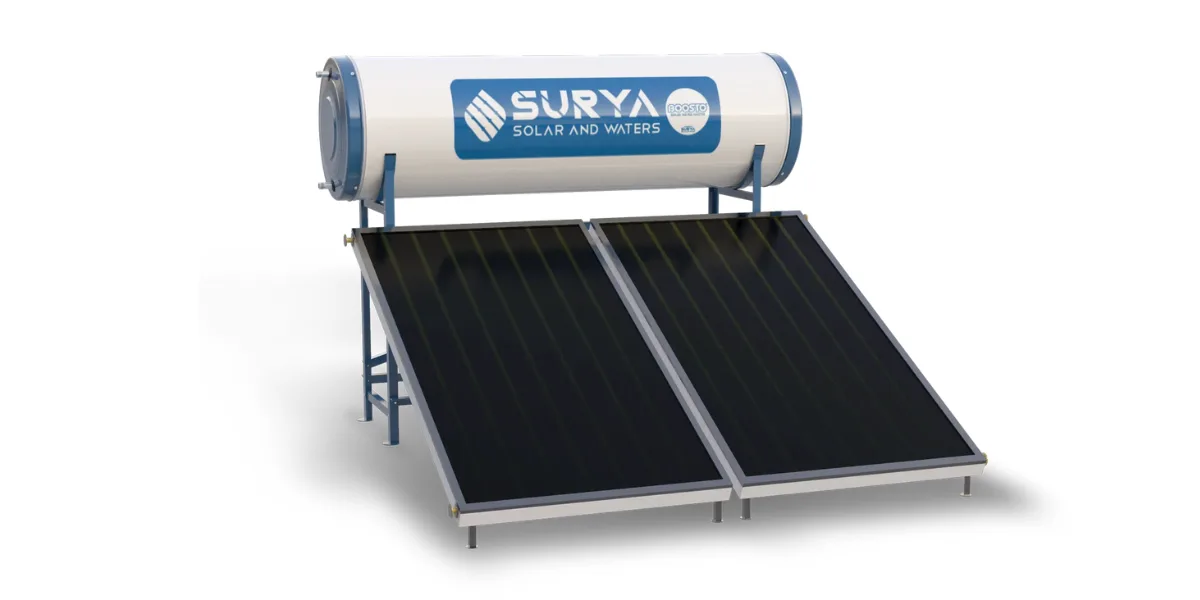
A solar water heater system utilizes thermal energy from the sun to heat water, making it a sustainable and cost-effective long-term solution. [2]
Details of Solar water heater
The system typically consists of solar collectors (panels) mounted on the roof, which absorb sunlight and transfer the heat to a fluid (often water or a heat-transfer fluid). Because the system primarily relies on free, renewable energy, it drastically reduces the household's reliance on electricity for water heating.
Key Features
- Renewable Energy Use: Harnesses sunlight, which is free and inexhaustible.
- Insulated Tank: Designed to retain heat for long periods, often keeping water hot overnight or for a full day.
- Backup Booster: Most systems include a small electric heating element to automatically switch on during extended cloudy periods or high demand, ensuring hot water availability.
- Environmentally Friendly: Significantly lowers greenhouse gas emissions compared to coal-powered electricity generation.
Pros and Cons
Pros:
- Reduces electricity or gas bills by using solar energy.
- Eco-friendly with low carbon impact.
- Long-term savings offset the initial cost.
Cons:
- High upfront installation cost.
- Less effective in low sunlight conditions.
- Needs sufficient, shadow-free roof space.
Electric Water Heater (EWH)
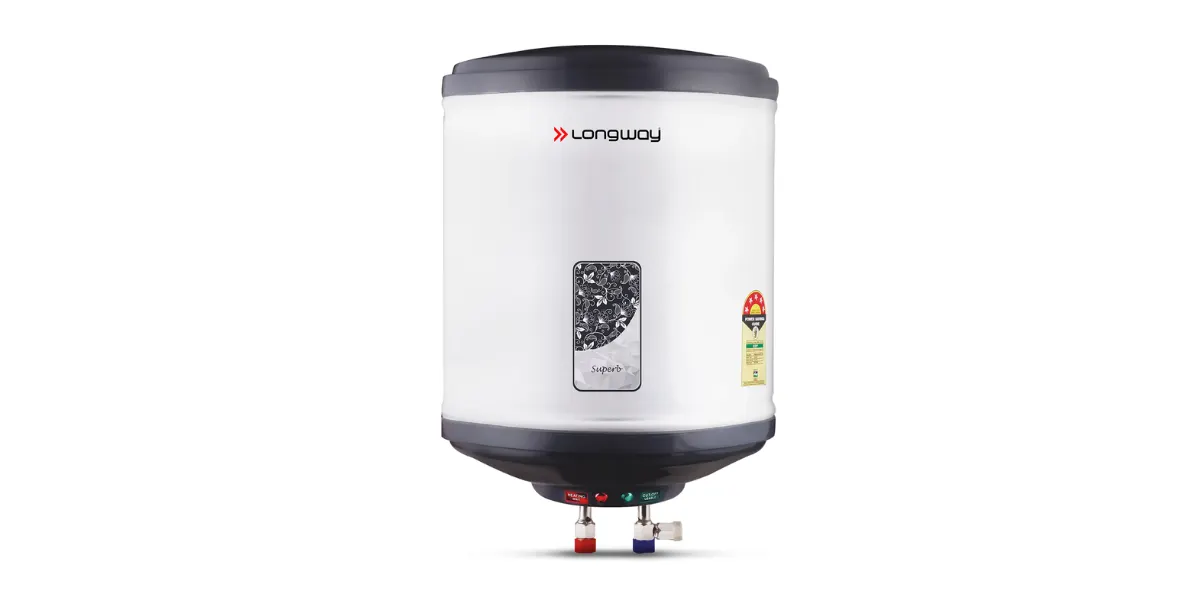
The electric water heater, commonly called a geyser, is the traditional and most widely used water-heating appliance in homes, valued for its simplicity and reliability. [3]
Details of the Electric water heater
Electric geysers operate on a straightforward principle: electric resistance coils are submerged in an insulated tank of water. When the thermostat detects that the water temperature has dropped below a pre-set point, the heating element is activated. It draws power from the household grid and rapidly heats the water to the desired temperature. The water is then stored in the insulated tank until needed.
Key Features
- Offers precise temperature control via a thermostat and the ability to turn on and off instantly.
- Requires minimal space and can be installed indoors or on a wall, making it suitable for apartments and high-rise buildings.
- Provides a reliable supply of hot water independent of weather conditions or time of day.
- The initial purchase price of the unit is significantly lower than a complete solar system.
Pros and Cons
Pros:
- Easy to install with no complex piping or roof access needed.
- Provides consistent and reliable hot water.
- Affordable, widely available, and safe with modern protections.
Cons:
- Higher operating costs due to electricity usage.
- Does not work during power outages without backup power.
- Larger carbon footprint if powered by non-renewable energy.
Decision Guide: Which is Right for You?
The choice between a geyser and a solar water heater requires an honest assessment of your climate, budget, available space, and commitment to environmental goals. [4]
When to Choose a Solar Water Heater?
Opt for a solar system, sometimes compared to a solar vs gas geyser for its efficiency, when your situation aligns with these long-term advantages.
- High Sunlight Availability: If you live in a region that receives ample, consistent sunlight throughout most of the year, maximizing the system’s efficiency.
- Long-Term Home Ownership: If you plan to live in the house for 10 years or more, ensure you have enough time to recover the higher initial installation cost through energy savings.
- Sufficient Roof Space: If you have adequate, shadow-free roof area to mount the required number of solar collectors and the storage tank.
- Commitment to Sustainability: If minimizing your carbon footprint and using renewable energy are primary goals.
- High Hot Water Demand: If your family is large or your usage is high, the overall savings on the energy required to heat a large volume of water will be greater.
When to Choose an Electric Water Heater?
The electric model is the practical choice when immediate cost, space, or reliability in adverse conditions is the priority.
- Limited Initial Budget: An electric model offers an affordable solution for immediate hot water needs if one does not want to pay high solar installation charges.
- Small Living Space: For apartments, high-rise buildings, or homes with limited or shaded roof space, the compact electric geyser is the only viable option.
- Unreliable Sunlight: If you live in a cloudy, rainy, or highly temperate region where sunlight is sporadic, the electric heater provides guaranteed, consistent heat.
- Intermittent Hot Water Needs: If hot water is only needed sporadically or for very short bursts (e.g., small, instant geyser vs solar geyser for a kitchen sink).
- Requirement for High Pressure: Electric storage geysers are generally better suited for handling high water pressure, often found in modern high-rise buildings.
Common Mistakes to Avoid When Choosing a Water Heater
In the debate of water heater vs electric water heater, avoiding these common errors will ensure safety and maximize efficiency. [4]
- Ignoring Capacity Needs: Not choosing the right size leads to either inconvenience or wasted investment.
- Overlook Energy Rating: For electric geysers, prioritize models with a high Bureau of Energy Efficiency (BEE) star rating (4 or 5) to minimize running costs.
- Neglecting Installation Location: Placing an electric geyser far from the point of use (faucet/shower) leads to significant heat loss in the pipes, wasting energy.
- Failing to Budget for Backup: Assuming you will never need the electric booster with a solar water heater is a mistake. Budget for its occasional use to ensure hot water during poor weather.
- Ignoring Water Hardness: In areas with hard water, neglecting to choose a geyser (electric or solar) with a glass-lined tank or anti-corrosion features will lead to premature component failure due to scaling.
Frequently Asked Questions?
Q1. Is a solar water heater cost-effective compared to an electric model?
Ans: A solar water heater has a significantly higher initial cost. Still, because it requires no fuel, it becomes highly cost-effective in the long run, typically recovering the investment within 5 to 8 years, making a solar vs. electric water heater an easy long-term decision.
Q2. Can a gas geyser be compared to a solar geyser in terms of running cost?
Ans: A gas geyser vs solar geyser comparison shows that the gas model has a lower running cost than the electric model. Still, the solar model's running cost is negligible, as its energy source (sunlight) is free.
Q3. Does the solar water heater work at night?
Ans: A solar water heater does not actively heat water at night. Still, the large, well-insulated storage tank is designed to retain the heat collected during the day, providing hot water until the next morning.
Q4. What is the main benefit of choosing a solar water heater?
Ans: The main benefit of choosing a solar water heater vs an electric water heater is the environmental advantage and the operational cost savings, as it uses renewable energy and is not subject to rising electricity tariffs.
Q5. Which is safer, a gas geyser or an electric geyser?
Ans: An electric geyser is generally considered safer than a gas geyser because it eliminates the risk of carbon monoxide leaks or gas line issues. However, both are safe if installed and maintained correctly.
Q6. Do I need a professional to install a solar water heater?
Ans: Yes, professional installation is mandatory for a solar water heater to ensure proper positioning, adequate roof integrity, proper plumbing connections, and an efficient system setup.
ARTICLE SOURCES
Most Viewed Articles

LG Fridge Vs Samsung Fridge: Comparing Features, Price & Performance in 2026
September 12, 2025
9895+ views
LG vs Samsung Washing Machine: Feature Comparision, Price & Performance 2026
August 28, 2025
8801+ views
IFB vs LG Washing Machine: Feature Comparison, Price & Performance 2026
October 30, 2025
7785+ views
10 Best Geyser Brands for Indian Homes - Top Models & Budget Options
December 3, 2025
7048+ views
What is the BEE Star Rating? Meaning, Calculation, Importance, and How It Works
September 30, 2025
6967+ views
Author
Loved what you read? Share it with others!
Recent blogs in
Geyser Not Turning On - Common Reasons, Troubleshooting Tips and Easy Fixes at Home
January 26, 2026 by srivalli susarla
10 Best Geyser for Hard Water in India: Types, Top Brands and Features in 2026
January 6, 2026 by Krishnanunni H M
Why Is Your Geyser Making Noise: Causes and Easy Troubleshooting Tips in 2026
December 31, 2025 by Priyanka Saha









 Full RM + FRM support


Join the conversation!