Table of Contents
Loved what you read? Share it with others!


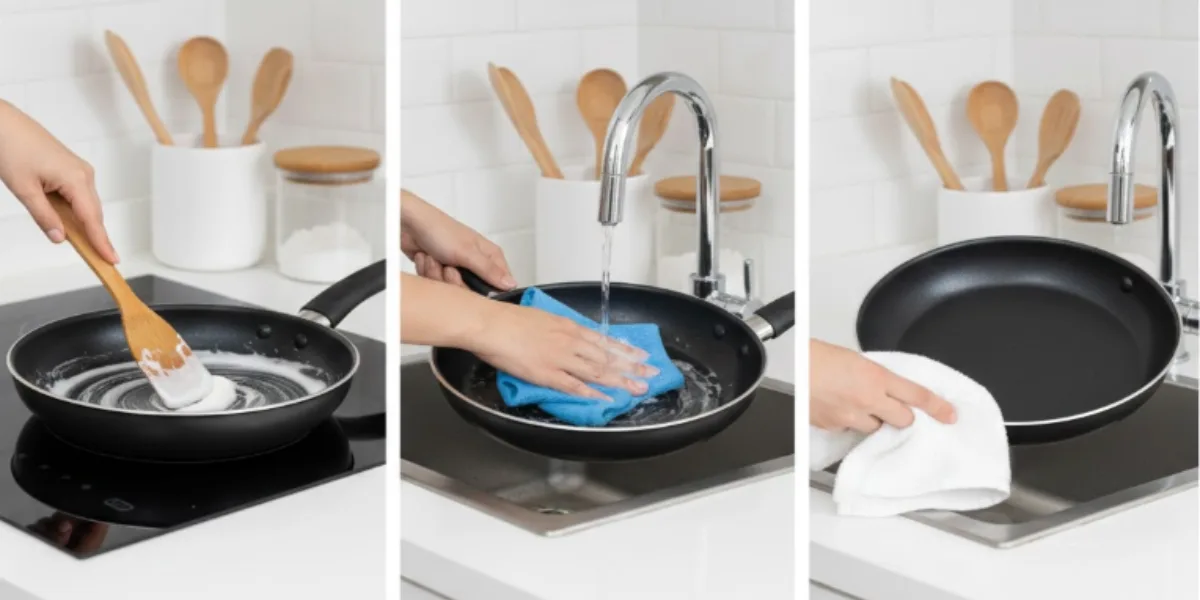
How to Clean Non Stick Cookware Safely Without Damaging the Coating in 2026
Updated : January 7, 2026, 3:38 PM
Author :
 Siri Hegde K
Table of Contents
Your non-stick cookware is an indispensable tool in the modern kitchen, offering the convenience of low-oil cooking and easy clean-up. However, maintaining the delicate coating requires specific, gentle methods to prevent degradation and extend its lifespan. Learning how to clean non-stick cookware safely, including pans, tawas, and pots, is vital because harsh cleaning techniques such as using metal scrubbers or plunging a hot pan into cold water can quickly damage the surface. This guide details step-by-step methods for removing grease and burnt residue while preserving the coating for safe, efficient cooking.
Why Proper Cleaning of Non-Stick Cookware Matters?
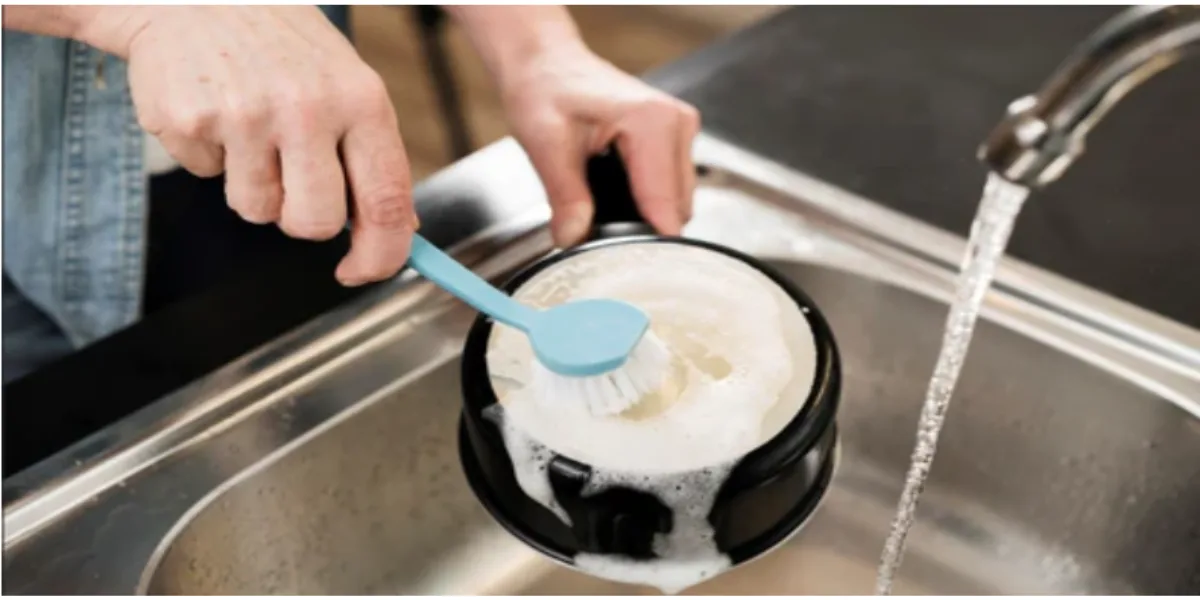
Proper and immediate cleaning of your non-stick cookware is essential not only for hygiene but also for the safety and longevity of the appliance. When the non-stick coating (often Teflon or ceramic) is scratched or damaged, it can degrade and potentially leach materials into your food, compromising healthy cooking. Furthermore, damaged surfaces lose their core non-stick functionality, causing food to stick, leading to increased oil use and more difficult cleaning. Consistent, gentle cleaning, therefore, ensures that the pan performs optimally, remains safe for food contact, and avoids frequent, costly replacements.
Tools & Materials Needed to Clean Non-Stick Cookware
Cleaning non-stick surfaces effectively requires non-abrasive tools to prevent the coating from becoming damaged.
- Mild Dish Soap or Detergent: A non-abrasive, gentle liquid soap is best for lifting grease.
- Warm Water: Essential for dissolving grease and softening food residues.
- Soft Sponge or Dishcloth: The safest scrubbing material for the delicate coating.
- Soft-Bristled Brush: Useful for gently dislodging stubborn food residue from crevices.
- Baking Soda: A natural, gentle abrasive for removing tough, burnt stains.
- White Vinegar: Used for boiling/soaking to break down mineral deposits and residue.
Step-by-Step Guide – How to Clean Non-Stick Cookware Safely?
Following a proper sequence when learning how to clean non-stick cookware is important to prevent thermal shock and physical abrasion, the two main enemies of the coating.
Step 1: Let the Cookware Cool Down
Let the pan cool naturally; putting it under water immediately can cause thermal shock, leading to warping of the pan’s base and eventual cracking or bubbling of the non-stick coating.
Step 2: Use Warm Water & Mild Soap
Once cool, rinse with warm water. Spray or apply a few drops of mild liquid dish soap. Warm water helps dissolve any lingering food particles and liquefy light oil residue faster than cold water.
Step 3: Soak for Tough Grease
Don’t scrub tough spots. Instead, fill the pan with warm, soapy water and soak it for 15 to 30 minutes. Soaking effectively softens the food residue, allowing you to wipe it away easily later with minimal effort and pressure.
Step 4: Avoid Metal Scrubbers
Don’t use metal scrubs, as the non-stick coating on a non-stick pan is easily damaged by metal or abrasive materials. Instead, use only a soft sponge, a dishcloth, or a soft-bristled brush to wipe the surface clean gently.
Step 5: Rinse & Dry Completely
Rinse the pan thoroughly with clean, warm water to remove all traces of soap residue. Either let the pan air dry completely or use a clean, dry towel to wipe it dry before storing. Storing a damp pan can lead to moisture buildup and potential rust, especially on the rim or handle connections.
How to Clean a Non-Stick Pan (With & Without Soap)?
Learning how to clean a non-stick pan requires different strategies for daily cleaning versus removing heavy grease or burnt spots.
1. Method – Daily Cleaning (Soap + Warm Water)
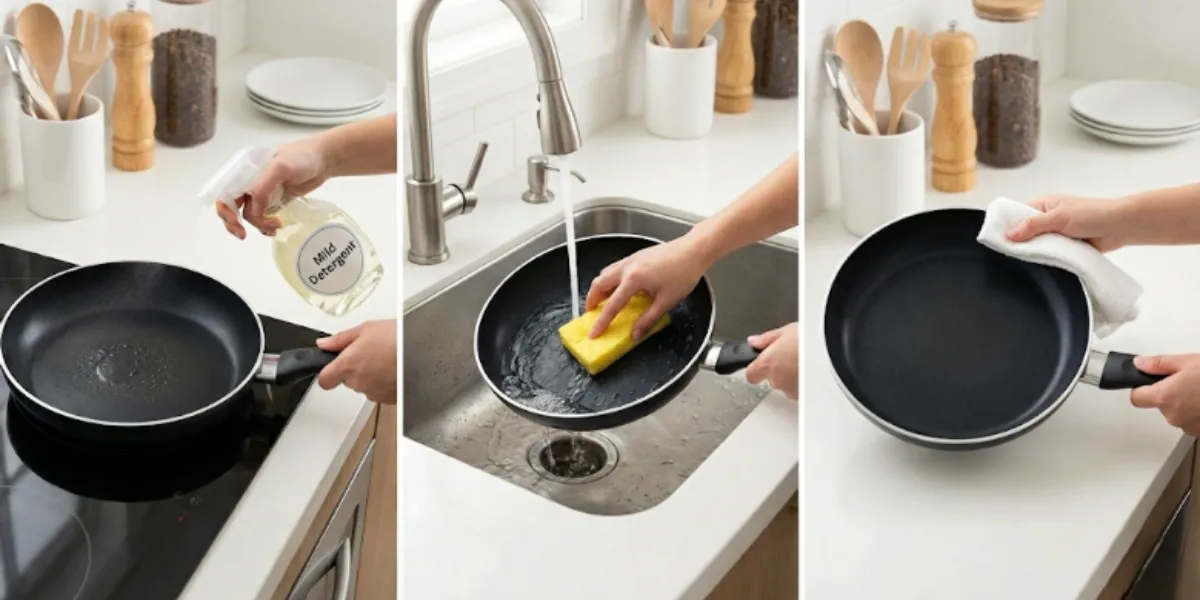
For routine cleaning after light use, spray the cool pan with a mild detergent and, using only a soft sponge or dishcloth, gently wipe the surface. Rinse thoroughly with warm water, then wipe dry with a towel to prevent water spots and moisture retention.
2. Method – Removing Grease & Sticky Coating
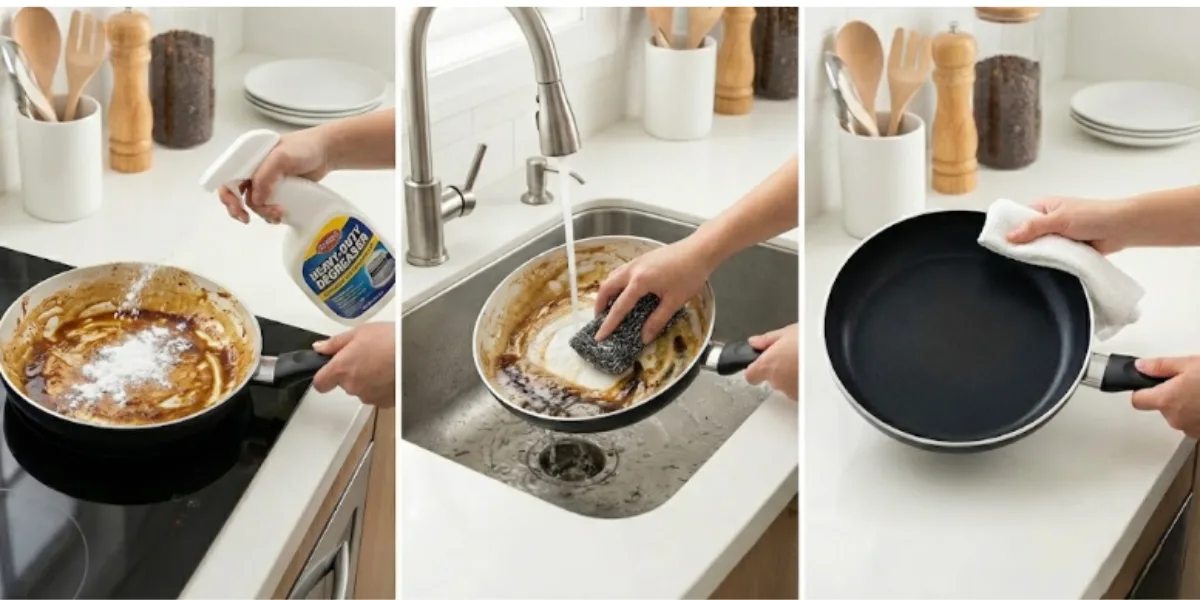
To clean a stick pan, boil a solution of water and 1-2 tablespoons of white vinegar for 5–10 minutes in the same pan. Let the pan cool, then discard the water and clean with mild soap and a soft sponge.
3. Method – How to Clean a Burnt Non-Stick Pan
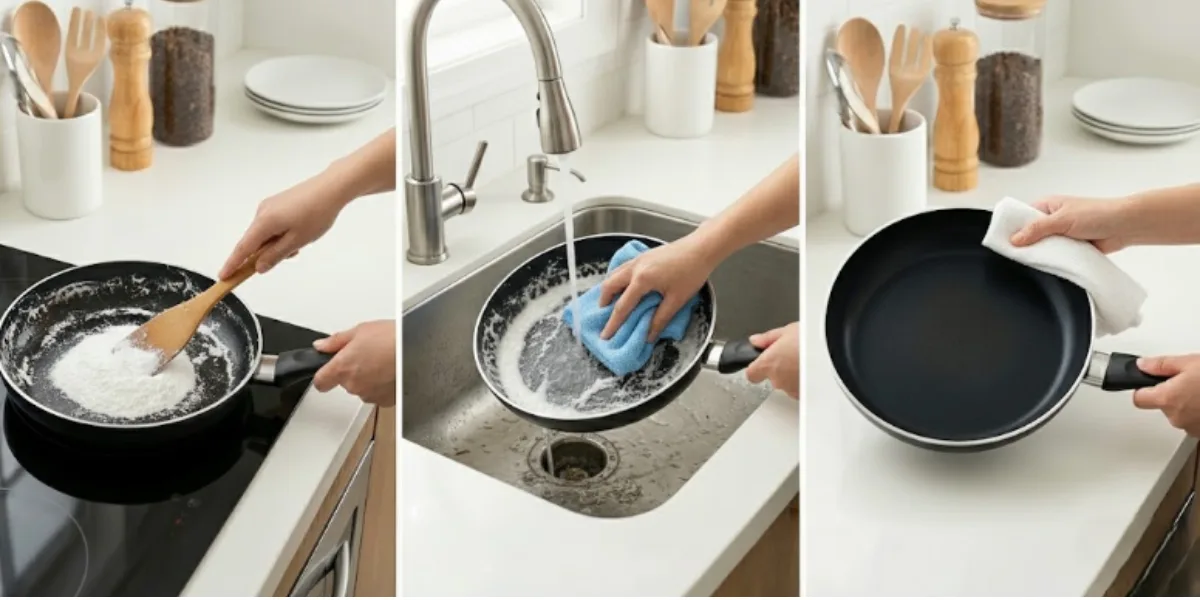
To remove stubborn burnt residue, create a paste of equal parts baking soda and water. Apply the paste directly to the burnt area on the non-stick pan. Allow the paste to sit for 10 to 15 minutes to soften the carbonised food. Then use a soft cloth or sponge to scrub the area until the grime is gently lifted. Rinse well and dry thoroughly.
How to Clean Non-Stick Tawa (Dosa Tawa, Roti Tawa, Chapati Tawa)?
Non-stick tawas, such as dosa tawa or chapati tawa, require special care due to their delicate, wide surface area, which is easily scratched by concentrated scrubbing.
Daily Cleaning Method
Use only warm water and mild soap after daily use. Simple wiping with a soft sponge is usually enough. Focus on quickly rinsing the surface to remove any lingering residue, and ensure the non-stick tawa at home is dry before storing.
Removing Burnt Residue from Non-Stick Tawa
If a non-stick tawa develops burnt residue, place a few drops of dish soap on the spot and fill the tawa with warm water. Allow it to soak for at least 20 minutes to soften the deposit. Gently scrape the residue with a silicone spatula or soft brush before washing with a sponge.
How to Clean Sticky Tawa Surface?
To clean a sticky surface, create a paste of baking soda and some water. Apply the paste, gently scrub with a soft sponge, and then boil a water/vinegar solution in the tawa for a few minutes. This combination effectively removes the stubborn sticky film.
How to Clean Non-Stick Pots & Pans (Kadai, Deep Pots, Sauce Pans)?
Non-stick pots and kadais often accumulate oil stains and burnt bottoms, requiring specific soaking and boiling techniques to clean safely.
Method 1 – Warm Water Soak
For deep pots and kadais, fill the entire vessel with warm, soapy water immediately after cooling. Let it soak for an extended period (up to an hour) to ensure that any food stuck to the sides and bottom is fully softened and can be easily wiped away with a dishcloth.
Method 2 – Vinegar Boil for Burnt Bottom
If the bottom of the pot has burnt residue, add equal parts water and white vinegar to cover the burnt area. Bring the solution to a boil, then simmer for 5–10 minutes. Acidity helps lift the burnt material. After cooling, scrub the area lightly with a soft sponge and mild soap.
Method 3 – Baking Soda Scrub for Stubborn Marks
For stubborn, discolored oil marks on the interior or exterior of a non-stick pot, use the baking soda paste method. Apply the paste directly to the mark, let it sit for a short time, and scrub gently using only a soft sponge. This method is effective for localized discoloration without damaging the surrounding coating.
Natural, Chemical-Free Cleaning Methods
These eco-friendly cleaning methods work exceptionally well without introducing the harsh chemicals that can potentially damage the non-stick coating over time.
- Vinegar and Water Solution: Boiling a 50:50 mixture of white vinegar and water is a highly effective, natural degreaser for the interior of pans and pots.
- Baking Soda Paste: Used as a non-abrasive, gentle scrubbing agent to lift burnt spots and residue without scratching the delicate surface.
- Salt Scrub: For very mild residue, coarse salt mixed with a small amount of water can sometimes be used as a gentle, natural abrasive, but this should be applied with extreme caution and only on fully cooled pans.
- Lemon Juice: The mild acidity of lemon juice and water can be used as a deodorizer and a light stain remover.
Mistakes to Avoid When Cleaning Non-Stick Cookware
Even small technique errors can severely shorten the lifespan and effectiveness of your non-stick coating. Being aware of these common mistakes is essential for proper maintenance, ensuring you preserve the integrity of your cookware for years of smooth, healthy cooking.
- Never use metal utensils, steel wool, or scouring powders, as they will permanently scratch and ruin the non-stick coating instantly.
- Avoid using chemical oven cleaners or bleach, as the harsh chemicals can dissolve the non-stick polymer coating, making the pan unsafe for use.
- Do not put non-stick cookware in the dishwasher, as the high heat and harsh detergents accelerate the breakdown of the coating and can cause warping.
- Never plunge a hot pan into cold water, as the sudden temperature change can cause warping and damage the pan’s structure.
- Avoid stacking pans directly on top of each other; always use a paper towel or soft cloth as a protective barrier between pieces when storing.
How to Maintain Non-Stick Cookware for Longer Life?
Proper maintenance prevents coating damage and ensures smooth cooking, extending the functional life of your non-stick cookware significantly.
- Cook on low or medium heat and use only wooden or silicone utensils; avoid metal spatulas, forks, or spoons during cooking.
- Hand-wash the pans gently with mild soap, even if the label says it is dishwasher-safe.
- Store the pans carefully, placing a soft cloth or paper towel between them if they must be stacked in the cabinet.
- Avoid aerosol cooking sprays, as they can leave a sticky residue that degrades the non-stick surface over time.
When to Replace Non-Stick Cookware?
You should replace your non-stick cookware immediately if you notice significant flaking, peeling, deep scratches, or if the coating is visibly worn down to the bare metal. These signs indicate that the protective non-stick layer is compromised, potentially releasing materials into your food. Additionally, replace any pan that has become severely warped, as it will no longer heat evenly and can become a safety hazard on the stovetop.
How NoBroker Helps You Keep Your Kitchen & Cookware Clean?
While specialized cookware requires gentle care, NoBroker helps simplify the maintenance of your entire kitchen. We offer professional, deep kitchen cleaning services, ensuring that persistent grease, stubborn grime, and dirt are safely and effectively removed from surfaces, tiles, and cabinets. By taking care of the surrounding environment, NoBroker helps you maintain a hygienic cooking space, supporting your efforts to keep all your appliances, including your delicate non-stick cookware, pristine and ready for use.
Frequently Asked Questions?
Ans: Use only warm water, mild liquid dish soap, and a soft sponge or cloth; avoid all abrasive materials and harsh chemical cleaners to protect the coating.
Ans: Yes, baking soda is safe for non-stick pans when mixed into a gentle paste with water and applied with a soft sponge for removing burnt residue.
Ans: To remove burnt stains, soak the area in warm, soapy water, or use a paste of baking soda and water, scrubbing very gently with a soft sponge.
Ans: No, white vinegar, when used diluted or boiled with water, is safe and effective for breaking down oil residue and mineral deposits without damaging the non-stick coating.
Ans: No, it is highly discouraged. The high heat and harsh chemical detergents in dishwashers accelerate the degradation and wear of the non-stick coating.
Ans: A sticky pan usually indicates a buildup of oil that wasn't fully washed away. Boil a water-and-vinegar solution in the pan to dissolve the sticky film.
Ans: Most modern non-stick cookware does not require traditional seasoning like cast iron, but conditioning it lightly with a small amount of oil every few months can help maintain performance.
Ans: The safest cleaning tools are soft sponges, dishcloths, or soft-bristled brushes. Never use the rough, abrasive side of a standard dual-sided sponge.
Ans: No, metal utensils will severely scratch and ruin the non-stick coating. Always use wooden, silicone, or plastic tools when cooking and serving.
Ans: You should replace your non-stick pan immediately when the coating is deeply scratched, visibly flaking, peeling, or worn down to the bare metal.
NoBroker Easy Cleaning Tips Testimonials
Most Viewed Articles
List of the Best Home Cleaning Apps: Book Home Cleaning Services for Daily and Deep Cleaning
January 31, 2025
27567+ views
Deep Clean Your Washing Machine: Step-by-Step Guide & Tips
January 31, 2025
21804+ views
How to Get Rid of Bathroom Flies: 8 Quick Methods
January 31, 2025
21235+ views
Top 10 Tile Cleaner Liquids with Prices in India for 2026
February 23, 2025
19768+ views

Diwali Cleaning Tips and Guide: Make Your Home Shine for the Festival in 2026
January 31, 2025
18308+ views
Author
Loved what you read? Share it with others!
Recent blogs in
Move-In vs Move-Out Cleaning: Key Differences & Complete Checklist in 2026
March 9, 2026 by Krishnanunni H M
Bathroom Steam Cleaning: Process, Benefits, and Professional Tips in 2026
March 9, 2026 by Priyanka Saha










 Full RM + FRM support


Join the conversation!