- https://v.hdfcbank.com/htdocs/common/NetBanking/TnC_Foreign_Outward_Remittance/index.html
- https://www.axisbank.com/progress-with-us-articles/payments/remittance/what-is-inward-remittance
- https://incometaxindia.gov.in/Documents/Provisions%20for%20NR/FEM-%20Borrowings-and-Lending-Regulations-2018.htm
Table of Contents
Who is an NRI?What Changes When You Become an NRI?Core FEMA Rules for Financial ComplianceBanking Solutions for NRIs under FEMAFEMA Guidelines for Outward Remittance and Inward RemittanceNRI Investment Options under FEMAReal Estate Investments and FEMA RegulationsFEMA Rules on Loans & BorrowingsSpecial Provisions for StudentsStaying Compliant with FEMA RulesHow Can NoBroker help with NRI Services?Frequently Asked Questions
Loved what you read? Share it with others!


FEMA Rules for NRI: Banking, Property, And Investment Guidelines
Updated : September 2, 2025, 4:43 PM
Author :
 Priyanka.saha
Summary
The FEMA rules for NRIs (Foreign Exchange Management Act, 1999) regulate how Non-Resident Indians can manage their financial transactions in India. These include rules for holding NRE/NRO accounts, making investments in property, shares, and mutual funds, as well as guidelines for remittances, loans, and borrowings. FEMA ensures that all cross-border financial activities remain legal, transparent, and compliant with RBI regulations.
Table of Contents
Who is an NRI?What Changes When You Become an NRI?Core FEMA Rules for Financial ComplianceBanking Solutions for NRIs under FEMAFEMA Guidelines for Outward Remittance and Inward RemittanceNRI Investment Options under FEMAReal Estate Investments and FEMA RegulationsFEMA Rules on Loans & BorrowingsSpecial Provisions for StudentsStaying Compliant with FEMA RulesHow Can NoBroker help with NRI Services?Frequently Asked Questions
Planning to buy property in India? If you are an NIR, then you need to know about all the key FEMA rules regarding the type of property you can purchase. FEMA, or the Foreign Exchange Management Act, is a regulatory framework instituted by the Indian government to manage and govern foreign exchange in the country. This legislation has a significant impact on NRIs, affecting everything from property transactions to investments and remittances. In this blog, we will explore the FEMA rules that every NRI should be aware of.
Who is an NRI?
The NRI definition as per FEMA refers to an individual residing outside India for employment, business, or vocation, indicating a stay beyond 182 days in a financial year, thereby impacting their tax and financial obligations in India.
What Changes When You Become an NRI?
The moment you become a Non-Resident Indian (NRI), as per FEMA rules, you can no longer operate your regular resident savings accounts. You are required to either close these accounts or convert them into specific NRI accounts. Income earned abroad can be deposited into an NRE account, while revenue from Indian sources, such as rent, dividends, or pension, must be deposited into an NRO account. On the taxation side, your global income is taxable in your country of residence, while only your income from India is taxed in India. Investments, property ownership rules, and even repatriation of funds are regulated under FEMA.
Core FEMA Rules for Financial Compliance
1. Bank Accounts: Once you acquire NRI status, holding a standard savings account is not permitted. Instead, you'll need to set up one or more of the NRI-specific accounts like
- NRE (Non-Resident External),
- NRO (Non-Resident Ordinary), or
- FCNR (Foreign Currency Non-Resident). Each of these accounts serves a distinct purpose, allowing you to manage both your Indian and foreign income efficiently.
2. Investments: NRIs can invest in various financial instruments in India, including mutual funds, corporate bonds, and equities. However, there are some limitations. For example, investments in small savings or Public Provident Funds are off-limits.
3. Property Ownership: As an NRI, you have the option to invest in residential or commercial properties, but purchasing agricultural lands or plantations is restricted. You can also inherit or receive properties as gifts from relatives.
4. Currency Remittance: If you're looking to send money to or from India, you'll need to adhere to remittance limits. FEMA stipulates a ceiling of USD 1 million per financial year for repatriation, subject to certain conditions.
5. Students: If you're a student planning to study abroad, you'll also fall under the NRI category for the duration of your studies. You're allowed to receive remittance up to USD 10 lakh per year for educational purposes.
By understanding these core FEMA rules, NRIs can better navigate their financial activities in India and ensure full compliance with the regulations. It's worth mentioning that these rules can change, so it's essential to stay updated to avoid falling foul of the law.
Banking Solutions for NRIs under FEMA
The Foreign Exchange Management Act (FEMA) regulates Banking Solutions for NRIs, aiming to streamline the process to manage their funds in India. Here are the types of NRI bank accounts that you can open under FEMA guidelines:
1. NRO Account (Non-Resident Ordinary Account)
If you're an NRI with financial commitments in India, an NRO account is your go-to option. This account is ideal for managing income generated within India, such as rent, dividends, or a pension. Although the money in an NRO account is not freely repatriable to your current country of residence, it offers the flexibility to be held jointly with residents or other NRIs.
2. NRE Account (Non-Resident External Rupee Account)
For NRIs looking to maintain their foreign earnings in India, the NRE account serves this purpose effectively. This account is held in Indian Rupees but is completely repatriable, meaning you can transfer the funds back to your current country of residence without any hassle. Plus, the income generated from this account is tax-free in India.
3. FCNR Account (Foreign Currency Non-Resident Account)
Unique to its kind, the FCNR account allows NRIs to maintain a fixed deposit in foreign currencies. This is beneficial if you want to retain your funds in the original currency and avoid exchange rate risks. The maturity period ranges from one to five years, and the principal and interest are entirely repatriable.
Understanding these banking solutions is not only compliant with FEMA guidelines but also optimises your financial management across borders.
FEMA Guidelines for Outward Remittance and Inward Remittance
The FEMA guidelines for outward remittance and inward remittance regulate the legal transfer of money abroad or its receipt in India by NRIs, residents, and businesses.
1. Outward Remittance
Outward remittance refers to the transfer of money from India to a foreign country, subject to limits and conditions under FEMA and RBI’s Liberalised Remittance Scheme (LRS). Below are the FEMA guidelines for outward remittance:
- Permitted purposes include education, medical expenses, investments, gifts, and family maintenance abroad.
- Certain remittances, such as for lottery winnings, margin trading, or prohibited investments, are not allowed.
- Banks require Form A2 and PAN details for processing outward remittances.
- TCS (Tax Collected at Source) may apply depending on the nature and amount of remittance.
2. Inward Remittance
Inward remittance refers to the transfer of funds from abroad to India by NRIs, PIOs, or foreign entities, which must abide by FEMA and RBI guidelines.
- Funds can be received into NRE, NRO, or FCNR accounts depending on the source of income.
- Repatriation is allowed in NRE/FCNR accounts, while NRO accounts have restricted repatriation limits.
- Inward remittances for business, investment, or personal purposes must be routed through authorised banks.
- Banks may seek KYC documents, purpose codes, and declarations to process inward remittances.
NRI Investment Options under FEMA
As a Non-Resident Indian (NRI), your investment options in India are both numerous and varied, thanks to the Foreign Exchange Management Act (FEMA). While earlier acts like FERA were restrictive, FEMA provides a friendlier environment for NRIs looking to invest their hard-earned money in India.
1. Bank Accounts for Investment
Firstly, NRIs must open specific bank accounts to manage their investments. These accounts include the Non-Resident Ordinary (NRO), Non-Resident External (NRE), and Foreign Currency Non-Resident (FCNR) accounts. Each account serves a different purpose, such as managing income generated in India or keeping foreign income without currency conversion.
2. Equity Funds and Mutual Funds
If you're keen on the stock market, you can invest in equity funds. Mutual funds are another solid choice, offering diversification across various asset classes.
3. Government and Corporate Securities
You can also invest in government securities and corporate bonds. These are stable, low-risk options compared to equity markets, offering steady returns over the long term.
4. Real Estate
Real estate is a sector that has always been attractive to NRIs. Under FEMA guidelines, you can invest in both residential and commercial properties in India. However, there are restrictions when it comes to buying agricultural land, plantations, and farmhouses.
5. Note on Exclusions
It's worth noting that some investment avenues like the Public Provident Fund (PPF) and National Savings Certificates (NSC) are not accessible for NRIs, as per FEMA rules. By understanding and abiding by FEMA regulations, NRIs can make informed decisions and benefit from various investment options available in India.
Real Estate Investments and FEMA Regulations
Understanding the guidelines is crucial for making informed investment decisions and avoiding any legal complications.
1. Property Ownership Rules for NRIs
NRIs have the flexibility to invest in both residential and commercial properties in India. However, there are certain limitations imposed by FEMA that you should be aware of. The act prohibits NRIs from purchasing agricultural land, plantations, and farmhouses. These restrictions are in place to control the flow of foreign investments in sectors deemed sensitive by the government.
2. Exception: Gift by NRI to Resident Indian
One area that requires special attention is the act of gifting property. An NRI can gift residential or commercial property to a resident Indian without much hassle, but the gifting of agricultural land or farmhouses is not permitted under FEMA regulations. Make sure you consult legal experts to fully understand the implications and procedures involved in gifting property across borders.
While the Indian real estate market offers numerous investment opportunities for NRIs, it's essential to be aware of the FEMA regulations that govern these transactions. These rules provide a framework that both protects your investment and ensures compliance with the law.
3. Remittance and Foreign Currency Rules
When you become an NRI (Non-Resident Indian), sending money back to India or bringing it along when you visit involves adhering to certain guidelines laid out by FEMA (Foreign Exchange Management Act). This framework is essential for controlling the flow of foreign currency and helps the government monitor activities like money laundering.
4. Sending Money to India
NRIs can remit funds to India through various types of accounts, such as Non-Resident External (NRE) or Foreign Currency Non-Resident (FCNR) accounts. These accounts allow you to transfer money from your overseas account to India easily. The cap on such remittances is up to USD 1 million per financial year, as stated by FEMA regulations.
5. Bringing Money to India
If you prefer to bring foreign currency into India physically, there are rules to follow. For amounts exceeding USD 5,000 in foreign currency or USD 10,000 in total currency and trade certificates combined, you must declare the sum using a Currency Declaration Form (CDF). This declaration is submitted to designated Customs authorities upon your arrival in India.
6. A Word of Caution
It's crucial to be aware that these rules can undergo revisions, so it's wise to stay updated with the latest FEMA guidelines. Non-compliance can result in significant penalties and legal repercussions. By being informed about these remittance and foreign currency rules, NRIs can manage their finances more effectively while staying within the legal framework set by FEMA.
FEMA Rules on Loans & Borrowings
The RBI establishes the rules governing loans and borrowings under the FEMA Act, which specifies who can lend or borrow, the types of currency allowed, limits, repayment methods, and reporting requirements.
- Loans from residents to NRIs are permitted under certain limits, provided the loan is interest-free, given to close relatives, and adheres to the prescribed tenure.
- Borrowings from NRIs must comply with FEMA, where loans can be taken on a repatriable or non-repatriable basis, depending on the source account (NRE/NRO).
- ECB (External Commercial Borrowings) allows Indian companies to raise loans from overseas lenders, subject to end-use restrictions and maturity guidelines.
- Foreign currency loans in India are permitted under FEMA’s defined routes and require approval under the automatic route.
- Resident individuals are restricted from borrowing in foreign currency, except under specified conditions laid down by the RBI.
- Documentation and reporting to RBI/authorised banks are mandatory for cross-border loans, including loan agreements, KYC, and compliance certificates.
- Repayment rules must be strictly followed, including the channelling of repayments through authorised banking routes in India.
Special Provisions for Students
If you're an Indian student planning to study abroad, it's crucial to understand how FEMA (Foreign Exchange Management Act) regulations apply to you. Essentially, the moment you relocate overseas for educational purposes, you are categorised as a Non-Resident Indian (NRI) under FEMA guidelines.
- First and foremost, this change in your residential status impacts your banking options in India. Existing savings accounts must be converted into NRI-specific accounts like Non-Resident Ordinary (NRO) or Non-Resident External (NRE) accounts. These accounts enable you to receive funds from India to cover your educational and living expenses abroad.
- Secondly, under the Liberalised Remittance Scheme, you are allowed to receive up to USD 10 lakh per financial year from your NRE or NRO accounts or profits on property. This provision offers a comfortable financial cushion, letting you focus on your academic pursuits without worrying about currency-related restrictions.
Staying Compliant with FEMA Rules
Staying compliant with FEMA (Foreign Exchange Management Act) rules as a Non-Resident Indian (NRI) involves multiple factors, particularly in the realms of banking, property investment, and financial transactions. Understanding and following these regulations not only keeps you on the right side of the law but also makes your financial planning more effective.
1. Banking Guidelines for NRIs
Once you attain NRI status, it's imperative to update your banking arrangements in India. FEMA rules specify that NRIs cannot maintain regular savings accounts. Instead, you have the option of converting your existing account into an NRI-friendly account type: either a Non-Resident Ordinary (NRO), Non-Resident External (NRE), or Foreign Currency Non-Resident (FCNR) account. These accounts serve different purposes and offer various benefits, including tax exemptions and repatriability of funds.
2. Property Investments
When it comes to real estate, FEMA allows NRIs to invest in both residential and commercial properties in India. However, investments in agricultural land, plantations, or farmhouses are off-limits. This is crucial to know to avoid any legal pitfalls while purchasing property in India.
3. Investment Avenues
NRIs have the liberty to invest in a wide array of financial instruments, such as Equity Funds, Mutual Funds, Government Securities, and Corporate Bonds. That said, investments in small savings schemes like the Public Provident Fund (PPF) and National Savings Certificate (NSC) are not permitted.
4. Special Considerations for Students and Remittances
If you're an NRI student, FEMA rules allow you to receive remittances up to USD 1 million per year from your NRO or NRE accounts. Additionally, it's possible to remit a maximum of USD 1 million per financial year to India under FEMA guidelines.
Staying compliant with FEMA as an NRI involves careful attention to your banking arrangements, a nuanced understanding of investment opportunities and limitations, and adhering to stipulated remittance limits. Regularly reviewing these guidelines is advised, as they can be subject to change.
FEMA compliance rules for NRI is more than just a legal obligation; it's a crucial step in effective financial planning for Non-Resident Indians. Not only do these regulations dictate how you manage your banking and investments, but they also influence property ownership and remittances. While navigating these rules can present challenges, it's wise to seek professional assistance to ensure you're on the right track. NoBroker NRI Services offer the expertise to guide you through this complex landscape, making compliance a less daunting task.
How Can NoBroker help with NRI Services?
FEMA rules for NRI are more than just a legal obligation; it's a crucial step in effective financial planning for Non-Resident Indians. These regulations govern the management of your banking and investments, as well as property ownership and remittances. NoBroker provides end-to-end solutions without the need for middlemen. We offer assistance with property management, rental agreements, tenant search, and legal services, including khata transfer, utility bill transfers, and registration support. Download the NoBroker app now!

Frequently Asked Questions
1. How does the RBI contribute to the management of foreign exchange through FEMA regulations in India?
Ans: FEMA regulations RBI plays a pivotal role in overseeing and regulating foreign exchange transactions in India. It ensures compliance with foreign exchange laws, contributing to the country's economic stability and financial integrity.
2. How can Non-Resident Indians (NRIs) stay updated with the latest FEMA India regulations?
Ans: NRIs can stay informed about the latest FEMA India regulations by regularly checking the official website of the Reserve Bank of India (RBI) or seeking guidance from financial advisors and experts who specialize in NRI financial matters. Keeping up-to-date ensures compliance and effective financial matters.
3. Can an NRI make a gift to a resident Indian under FEMA regulations?
Ans: Yes, under FEMA regulations, an NRI can make gifts to resident Indians. However, there are specific rules and limits to be followed, so it's advisable to consult with legal experts.
4. Are there any restrictions on NRI property ownership in India?
Ans: NRIs can invest in residential and commercial properties, but buying agricultural land or farmhouses is restricted under FEMA rules.
5. Can an NRI student receive funds from India for educational purposes?
Ans: Yes, under the Liberalised Remittance Scheme, an NRI student can receive up to USD 10 lakh per year from NRE or NRO accounts or profits on property for educational expenses.
6. What is the maximum amount allowed for repatriation under FEMA guidelines?
Ans: FEMA stipulates a ceiling of USD 1 million per financial year for repatriation, subject to certain conditions.
7. Are there any restrictions on NRI property ownership in India?
Ans: NRIs can invest in residential and commercial properties, but buying agricultural land or farmhouses is restricted under FEMA rules.
8. Can NRIs buy agricultural land under FEMA?
Ans: No, NRIs cannot buy agricultural land under the FEMA Act of 1999.
9. Can NRIs take a loan in India under FEMA?
Ans: Yes, NRIs can take loans in India under FIMA for business, personal use, or housing purposes.
10. What is the FEMA Act in India?
Ans: The FEMA Act, 1999, regulates foreign exchange transactions in India, including remittances, investments, loans, and borrowings to ensure legal cross-border dealings.
ARTICLE SOURCES
Most Viewed Articles

NRI Power of Attorney for Property in India: How to Apply, Documents Required and Format
June 1, 2025
31641+ views

Know About ICICI NRI Account: Document Required, Eligibility and Application Process in 2026
January 31, 2025
27275+ views

NRI Accounts in India: List of Best NRE, NRO & FCNR Accounts in 2026
June 1, 2025
18318+ views

TDS on Sale of Property by NRI: 2026 Tax Rates, Rules & Process
June 1, 2025
10229+ views
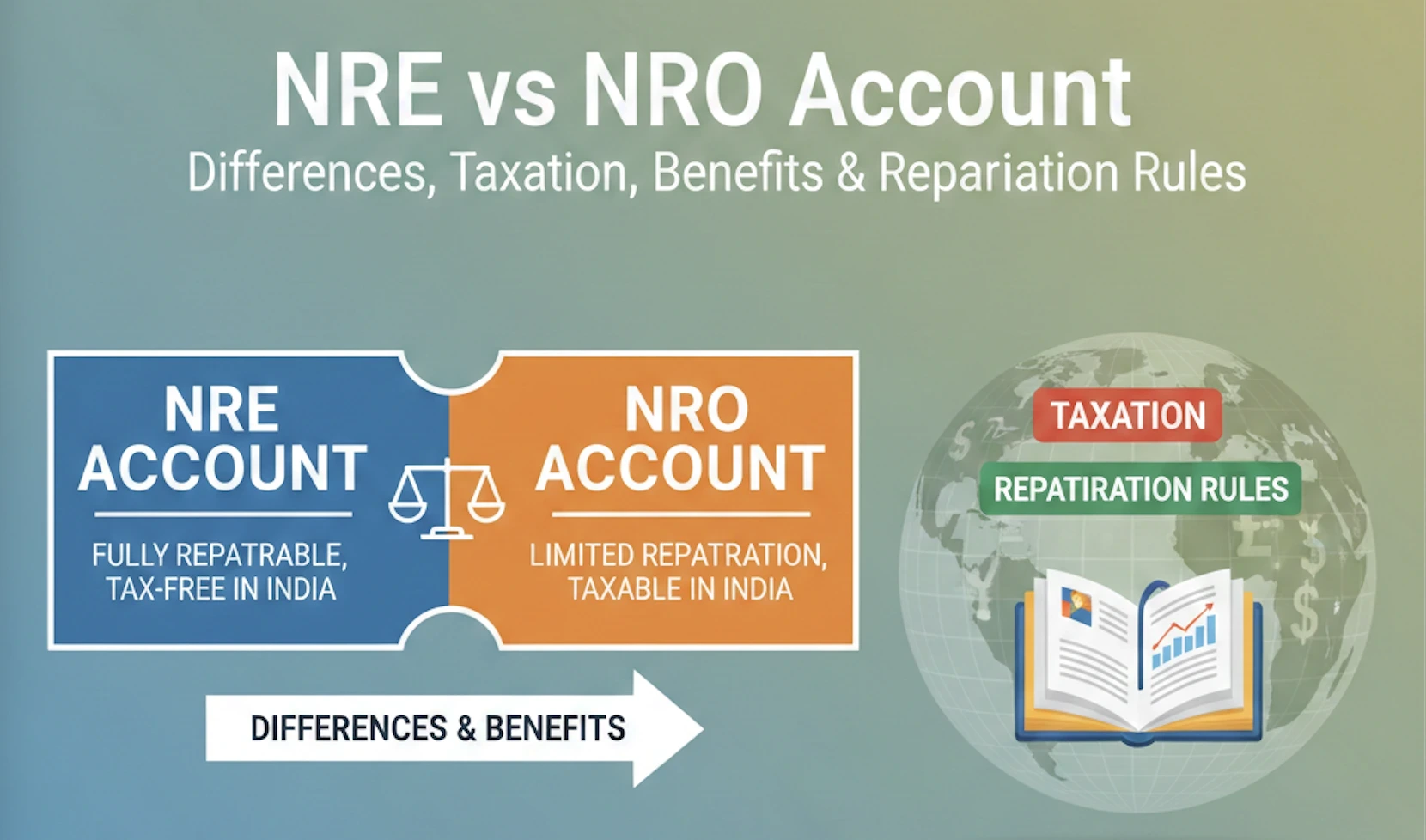
NRE vs NRO Account: Differences, Taxation, Benefits & Repatriation Rules
January 31, 2025
10084+ views
Author
Loved what you read? Share it with others!
Recent blogs in
NRI Rights in India for Property: Ownership, Inheritance & Legal Rules for 2026
November 21, 2025 by Vivek Mishra
What is NRI Certificate: Meaning, Uses, Documents Required & Procedure in India
August 25, 2025 by Vivek Mishra
Power of Attorney from UAE to India: Format, Documents & Legal Process in 2026
August 25, 2025 by Vivek Mishra
Power of Attorney for India Property from UK: Format, Documents & Legal Process in 2026
August 25, 2025 by Vivek Mishra
DTAA Between India And France: Tax Relief, TDS Rules & Benefits in 2026
August 22, 2025 by Kruthi










 Full RM + FRM support


Join the conversation!