- https://iyenterprise.com/whats-the-difference-between-a-notarization-and-attestation
- https://attestglobal.com/blog/what-is-the-difference-between-notarization-and-attestation/
Table of Contents
Loved what you read? Share it with others!


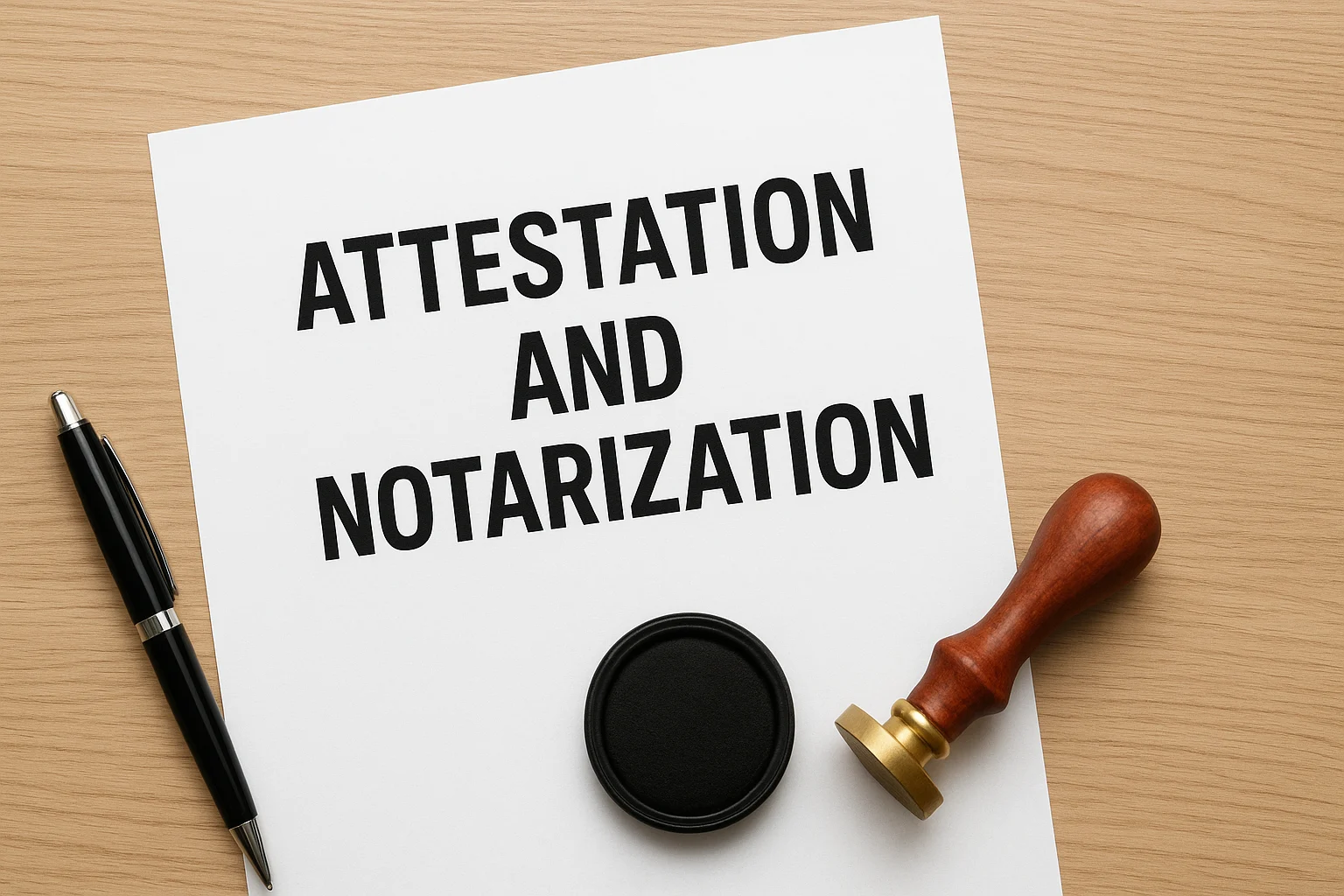
Difference Between Attestation And Notarization: Definition, Purpose and Cost in India 2026
Updated : February 5, 2026, 12:28 PM
Author :
 Kruthi
Summary
Attestation and notarization validate documents but serve different purposes. Notarization, performed by a Notary Public, verifies a signer’s identity and intent for domestic use. Attestation certifies a document’s authenticity, often for international purposes, and may involve multiple authorities. Understanding the distinction is crucial for property, visa, or educational matters. Services like NoBroker simplify notarization, ensuring efficiency and legal compliance.
Table of Contents
In legal and official procedures, attestation and notarization are often used but commonly misunderstood. Both authenticate documents, yet they serve distinct purposes: notarization verifies the identity of a signer, while attestation certifies the overall legitimacy of a document. Understanding this difference is essential for handling legal contracts, educational certificates, or business documents, ensuring compliance, validity, and recognition across official and legal channels.
What is Attestation?
The attestation meaning in law refers to the act of affirming that a document and its contents are genuine and authentic. It is a more comprehensive validation than notarization. What is meant by attestation is that a designated authority has examined the document and certified its legitimacy. This process is often multi-layered, especially for documents intended for international use, where it may start with a notary and proceed to government departments (like the Ministry of External Affairs) and finally to an embassy. [2]
What is Notarization?
It is the specific legal act performed by a state-appointed official known as a Notary Public. The primary role and duties of the notary are to act as an impartial witness to the signing of the document. The notary verifies the identity of the person signing and confirms that they signed the document willingly and without coercion. The notary then affixes their official stamp and signature, which legally validates the signature. [2]
Key Differences Between Attestation and Notarization
To clarify the attestation vs notarization debate, it is helpful to compare their core functions and legal standing. This table highlights the primary distinctions. [1]
| Aspect | Attestation | Notarization |
|---|---|---|
| Definition | A broad process of certifying the genuineness of a document's content and origin. | A specific act of verifying the identity of a signatory and the authenticity of their signature. |
| Authority Involved | Can be done by various authorities: Gazetted Officers, government departments (e.g., MEA), Embassies, and also Notaries. | Can only be performed by a government-appointed Notary Public. |
| Purpose | To confirm that the document itself is a true and valid instrument, often for use in another country or for high-stakes legal matters. | To deter fraud by ensuring the person who signed the document is who they claim to be and did so willingly. |
| Scope of Use | Primarily for educational certificates, personal documents (birth/marriage certificates) for visa or immigration purposes, and commercial documents for international trade. | Primarily for affidavits, Power of Attorney documents, property deeds, rental agreements, and simple contracts for domestic use. |
| Legal Standing | It can be expensive and time-consuming, especially if multiple levels of government and embassy attestation are required. | A foundational level of validation, confirming the act of signing. It is often the first step before further attestation is required. |
| International Acceptance | High. Embassy attestation is the standard for international document acceptance. | Limited. A notarised document may require further attestation or an Apostille to be valid abroad. For more on this, see the difference between an Apostille and a Notary. |
| Cost | Generally, a quick and affordable process with a fixed fee for the notarial act. | Generally a quick and affordable process with a fixed fee for the notarial act. |
| When Required | When you need to prove the authenticity of the document's content to a foreign or high-level authority. | When you need to prove that you were the one who signed a document in front of an official witness. |
When Do You Need Attestation and Notarization
Understanding when to choose one process over the other is crucial for ensuring your documents are legally compliant for their intended purpose. [1]
- You typically need an Attestation when:
- Applying for a student or work visa for a foreign country.
- Submitting educational degrees or transcripts to a foreign university.
- Authenticating personal documents like birth or marriage certificates for immigration purposes.
- Presenting commercial documents like an invoice or certificate of origin for international business.
- You typically need Notarization when:
- Creating a sworn statement or an e-affidavit.
- Executing a Power of Attorney for property or financial matters.
- Signing a rental agreement or a business contract for domestic use.
- Making a self-declaration for various official applications within India.
Which One Do You Need?
The choice between attest vs notarised depends entirely on the purpose and the recipient of your document. For most domestic legal formalities, such as creating a rental agreement or an affidavit for education gap year, notarization is sufficient. However, suppose your document is intended for use in a foreign country, for education, employment, or residency. In that case, you will likely require the more comprehensive process of attestation, which often begins with notarization and then proceeds to higher levels of government and embassy validation.
Common Mistakes People Make
Navigating these legal formalities can be confusing. Here are some common mistakes to avoid to ensure your process is smooth and valid. [1]
- Getting only a notary for international documents: A simple notarization is usually not enough for documents needed abroad; they typically require further attestation by the Ministry of External Affairs and the relevant embassy.
- Not verifying the attesting authority: Ensuring that the person attesting your document (e.g., a Gazetted Officer) is authorised to do so is crucial for its validity.
- Using photocopies instead of originals for attestation: Many attestation processes require the original document to be presented for verification.
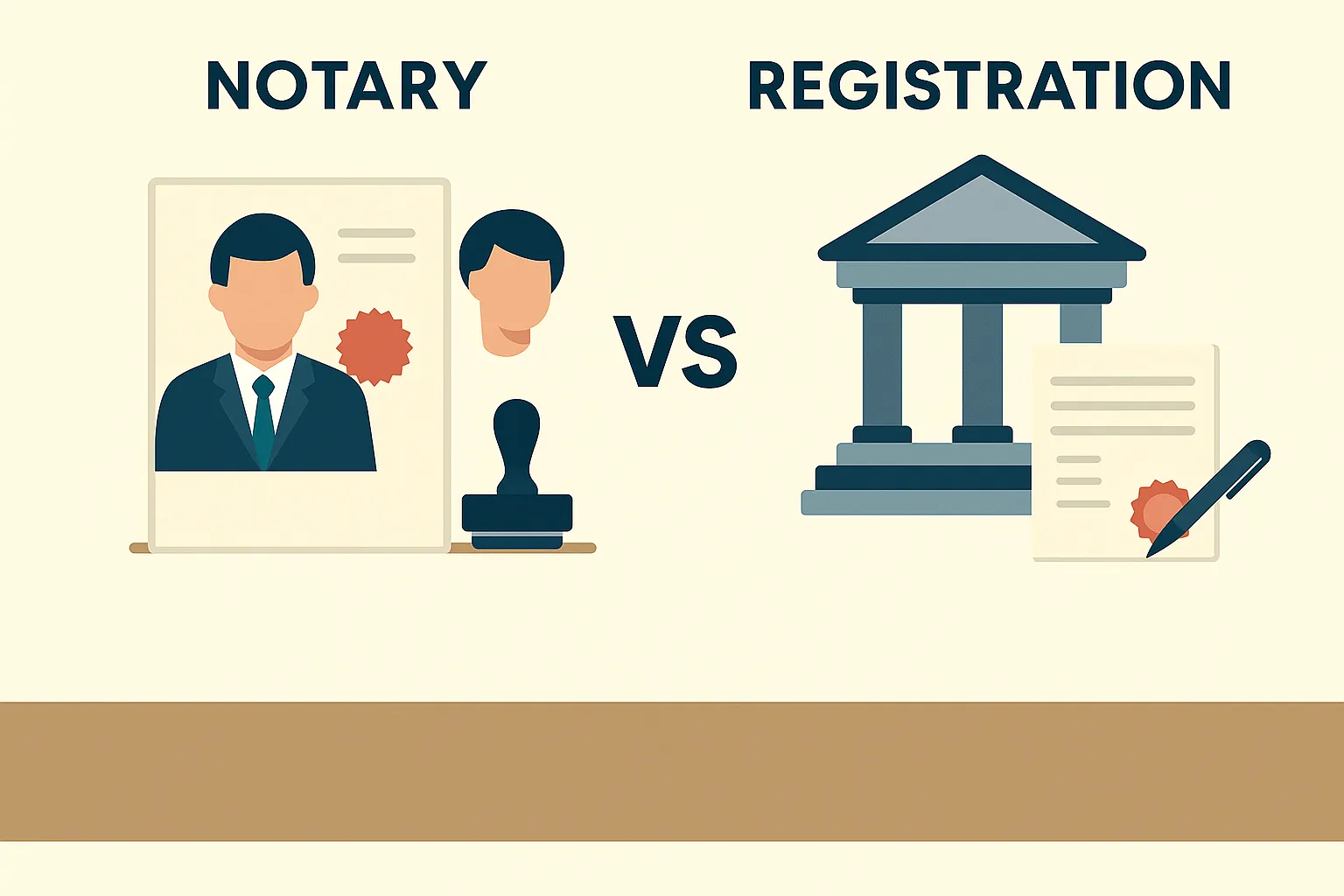
- Confusing attestation with registration: These are different legal processes. Attestation validates a document's authenticity, while registration (as explained in the difference between notary and registration) officially records it in government records.
How Can NoBroker’s Notary Services Help?
Understanding the difference between attestation and notarization is the first step, but executing the process can be time-consuming. NoBroker simplifies this with its professional online notary services. We can assist in drafting legally sound documents like affidavits and rental agreements and facilitate their notarization by qualified professionals, all through a streamlined and convenient process. This ensures your documents are compliant and authenticated correctly without any hassle.
Frequently Asked Questions
Q1. What is the main difference between attestation and notarization?
Ans. Notarization verifies the identity of the person signing a document, while attestation verifies that the document's content and origin are genuine and authentic.
Q2. Is notarization the same as attestation in India?
Ans. No. Notarization is a specific act performed by a Notary Public. Attestation is a broader term for certification that various authorities can do.
Q3. Who can attest to documents in India?
Ans. Documents can be attested by various authorities, including a Notary Public, a Gazetted Officer, or officials at government departments and embassies, depending on the requirement.
Q4. Is a notarised document legally valid abroad?
Ans. Not always. A notarised document typically requires further attestation by the Ministry of External Affairs (MEA) and the relevant country's embassy to be legally valid abroad.
Q5. Do educational certificates require attestation or notarization?
Ans. For use within India, notarised copies are often sufficient. For use abroad (e.g., for higher education or a work visa), they require a comprehensive attestation.
Recommended Reading

Different Types of Notary Stamps in India 2026: Meaning, Uses & Legal Importance
October 22, 2025
3231+ views
Passport Annexure Formats: Notary Attestation Rules and Format for Indian Passport (2026)
August 3, 2025
2219+ views

Apostille vs Notary in India: Meaning, Purpose, Documents and Validity
August 3, 2025
1057+ views

Duties of a Notary Public in India: Roles, Powers, Legal Responsibilities and Fees Charges in 2026
July 30, 2025
920+ views

Notary vs Lawyer: Differences, Duties, Legal Powers and Cost Comparison in India 2026
September 22, 2025
568+ views
ARTICLE SOURCES
Most Viewed Articles
Different Types of Notary Stamps in India 2026: Meaning, Uses & Legal Importance
October 22, 2025
3231+ views
Passport Annexure Formats: Notary Attestation Rules and Format for Indian Passport (2026)
August 3, 2025
2219+ views
Apostille vs Notary in India: Meaning, Purpose, Documents and Validity
August 3, 2025
1057+ views
Duties of a Notary Public in India: Roles, Powers, Legal Responsibilities and Fees Charges in 2026
July 30, 2025
920+ views
Difference Between Notary and Registration of Documents in India
August 25, 2025
651+ views
Author
Loved what you read? Share it with others!
Recent blogs in
Different Types of Notary Stamps in India 2026: Meaning, Uses & Legal Importance
October 22, 2025 by Kruthi
Difference Between Attestation And Notarization: Definition, Purpose and Cost in India 2026
September 23, 2025 by Kruthi
Notary vs Lawyer: Differences, Duties, Legal Powers and Cost Comparison in India 2026
September 22, 2025 by Siri Hegde K
Difference Between Notary and Registration of Documents in India
August 25, 2025 by Vivek Mishra










 Full RM + FRM support


Join the conversation!