Table of Contents
Loved what you read? Share it with others!


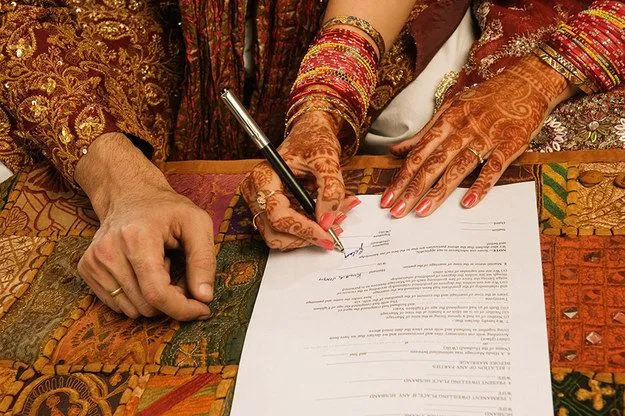
Court Marriage Procedure In India: Process Eligibility , Documents and Fees in 2026
Updated : February 3, 2026, 1:31 PM
Author :
 Ananth
Table of Contents
The court marriage procedure in India offers a simple, legally recognised way for two individuals to get married, regardless of their religion, caste, or creed. Governed by the Special Marriage Act of 1954, this process ensures that the marriage is valid across the country. It involves submitting a formal notice, providing specific documents, and having the marriage solemnised by a Marriage Officer. This approach is particularly beneficial for interfaith couples and those who prefer a secular, straightforward wedding ceremony.[1]
Court Marriage - Quick Information
Here is a brief overview of the key elements involved in the court marriage process in India, providing a clear snapshot of the entire journey.
| Feature | Details |
|---|---|
| Legal Age | 21 years for the groom and 18 years for the bride.[1] [2] |
| Applicable Act | The Special Marriage Act, 1954.[1] [2] |
| Affidavit Needed | Separate affidavits from both partners. |
| Notarization Required | Yes, affidavits and certain other documents must be notarised. |
| Minimum Notice Period | 30 days from the date the notice of intended marriage is published. |
| Witnesses Needed | Three witnesses are required. |
| Marriage Certificate Issued | A legally binding certificate is issued immediately after the ceremony. For NRIs, this is crucial. |
| Total Duration | Approximately 35 to 45 days, including the mandatory notice period. |
Eligibility for Court Marriage in India
To be eligible for a court marriage, couples must meet specific conditions outlined in the Special Marriage Act. Here are the essential criteria for a valid marriage.
- No Existing Marriage: Neither partner should have a living spouse at the time of the marriage.
- Valid Consent: Both individuals must be of sound mind and capable of giving valid consent to the marriage. They should not be suffering from any mental disorder that would make them unfit for marriage.
- Legal Age: The groom must be at least 21 years of age, and the bride must be at least 18 years of age. [1] [2]
- Prohibited Relationships: The partners must not be related to each other within the degrees of prohibited relationship defined by the law.
Documents Required for Court Marriage in India
Having the correct documentation ready is crucial for a smooth process. Here is a list of the documents required for a court marriage in India.
For Both Partners:
- Application Form: The prescribed form for the notice of intended marriage, duly filled and signed. [2]
- Proof of Date of Birth: A birth certificate, Class 10th marksheet, or passport.[2]
- Proof of Residence: Aadhaar card, voter ID, passport, or a recent utility bill.[2]
- Passport-sized Photographs: Four to six recent photographs for each partner.[2]
- Affidavits: Separate, notarised affidavits from each partner confirming their date of birth, marital status (unmarried/divorced/widowed), and that they are not in a prohibited relationship.[2]
- Proof of Previous Marriage Dissolution (if applicable): A certified copy of the divorce decree if either partner is a divorcee, or the death certificate of the former spouse if either partner is a widow or widower.[2]
For Witnesses:
- Passport-sized Photographs: One recent photograph for each of the three witnesses.[2]
- Proof of Identity: Aadhaar card or passport.[2]
- Proof of Residence: Any valid government-issued address proof.[2]
Affidavit Requirements (By Both Parties)
An affidavit is a sworn statement and a critical part of the court marriage process. It must be prepared on non-judicial stamp paper and notarised. You can find the correct way to ensure it meets legal standards. It should clearly state the name, age, address, current marital status, and nationality of the individual, along with a declaration of their willingness to marry and confirmation that they are not related within any prohibited degree.
Notarization of Documents
Notarization is the process of having a document certified by a Notary Public for legitimacy. For a court marriage, affidavits must be notarised to be legally valid. In some states, you may also need to get photocopies of your ID and address proofs notarised. This is done on a non-judicial stamp paper, typically of ₹10 or ₹20 denomination, to ensure the Marriage Registrar accepts it. [2]
What is the Procedure for Court Marriage in India?
The court marriage process in India is systematic and follows a clear timeline. Here is a step-by-step guide to what is the procedure of court marriage.
- Step 1: File a "Notice of Intended Marriage" with the Marriage Registrar of the district where at least one of the partners has resided for a minimum of 30 days before filing. [4]
- Step 2: Once the notice is received, the Marriage Officer will display it on a public notice board at their office for the next 30 days. This is done to invite any objections to the marriage.
- Step 3: During this 30-day period, any person can object to the marriage, but only based on legal grounds that violate the eligibility criteria outlined in the Special Marriage Act. If an objection is raised, the Marriage Officer will conduct an inquiry. If no objection is received, the process moves forward.[1]
- Step 4: After the 30-day notice period ends with no objections, the couple and three witnesses must appear before the Marriage Officer, sign a declaration, and affirm their consent in the officer’s presence.
- Step 5: The marriage itself is a simple ceremony. The couple can exchange vows in any form they choose in front of the Marriage Officer and their witnesses. The officer will then officially declare them married.
- Step 6: Immediately after the ceremony, the Marriage Officer will enter the details into the official register and issue a Marriage Certificate. The couple signs this certificate, the three witnesses, and the officer. This document is conclusive proof of your marriage.
Process for Tatkal Court Marriage in India
Agents often use the term tatkal court marriage in India. Still, it's essential to understand that there is no official "tatkal" or instant procedure under the Special Marriage Act, 1954, as the 30-day notice period is mandatory. Often, this "tatkal" service involves an Arya Samaj wedding, which is then registered with the authorities, thereby bypassing the 30-day notice requirement. While faster, it's a different process from a direct court marriage. [1] [6]
Fees and Timeline for Court Marriage in India
The court marriage cost in India is highly affordable and varies slightly from state to state. Here is a general breakdown of the expenses involved. [5]
1. If both (boy & girl) are already married.
- Total fee Rs. 10000
- Booking amount Rs. 3000
- Balance amount Rs. 10000-3000=7000 to be paid on the decided date.
2. If both (boy & girl) are Hindu & Indian.
- Total fee Rs. 20000
- Booking amount Rs. 3000
- Balance amount Rs. 20000-3000=17000 to be paid on the decided date.
3. If both (boy & girl) are Christian/Muslim/Inter-religion.
- Total fee Rs. 25000
- Booking amount Rs. 5000
- Balance amount Rs. 25000-5000=20000 to be paid on the decided date.
4. If anyone (boy or girl) is a Foreigner.
- Total fee Rs.30000
- Booking amount Rs. 5000
- Balance amount Rs. 30000-5000=25000 to be paid on the decided date.
Benefits of Court Marriage
Choosing a court marriage comes with several distinct advantages that appeal to modern couples.
- Legally Secure: It provides a legally binding marriage certificate that is recognised throughout India and internationally.
- Cost-Effective: It eliminates the need for expensive traditional ceremonies and rituals, making it a very economical option.
- Equality and Simplicity: It is free from religious and caste-based customs, placing both partners on an equal footing. There is a clear Difference Between Court Marriage and Registered Marriage, which highlights its simplicity.
- Privacy: It is a private affair, involving only the couple and their chosen witnesses.
Know About Court Marriage Procedure Across Major Cities:
How NoBroker Can Help With Affidavit Services?
The court marriage procedure in India heavily relies on accurate legal documents, especially notarized affidavits. NoBroker’s legal services can simplify this for you. We offer expert assistance in drafting the correct affidavit formats required by the Marriage Registrar, help with notarization on the appropriate stamp paper, and ensure all your documents are prepared correctly, saving you time and preventing potential delays in your marriage process.
Frequently Asked Questions
Ans: Yes, a separate notarized affidavit from both partners is a mandatory document. It confirms your personal details, marital status, and willingness to marry under the Special Marriage Act.
Ans: You need to get the affidavit drafted by a legal professional, print it on non-judicial stamp paper, and then sign it in front of a Notary Public, who will then attest it with their seal and signature.
Ans: Yes, if both partners meet the legal age requirement (21 for men, 18 for women), parental consent is not required for a court marriage under the Special Marriage Act, 1954.
Ans: The entire process takes a minimum of 30 to 40 days. This includes the mandatory 30-day notice period after which the marriage ceremony can take place.
Ans: Yes, the marriage certificate issued after a court marriage is a legally valid document and is accepted by all government authorities for purposes like applying for a passport, visa, or changing your marital status.
Recommended Reading
How to Get a Marriage Certificate in India: Role of Affidavit, Format and Documents in 2026
July 31, 2025
3478+ views
Get a Marriage Certificate in Tamil Nadu: Online and Offline Procedure and Affidavit Format
August 2, 2025
3092+ views
How To Get Marriage Certificate In Karnataka: Affidavit Format, Eligibilty and Documents
July 31, 2025
2815+ views
How to Get a Marriage Certificate in Maharashtra Online: Eligibility, Documents and Affidavit
August 2, 2025
2576+ views
Court Marriage Procedure In India: Process Eligibility , Documents and Fees in 2026
August 25, 2025
2346+ views
Most Viewed Articles
How to Get a Marriage Certificate in India: Role of Affidavit, Format and Documents in 2026
July 31, 2025
3478+ views
Name Change After Marriage in India: Procedure, Documents & Benefits in 2026
September 22, 2025
3299+ views
Get a Marriage Certificate in Tamil Nadu: Online and Offline Procedure and Affidavit Format
August 2, 2025
3092+ views
How To Get Marriage Certificate In Karnataka: Affidavit Format, Eligibilty and Documents
July 31, 2025
2815+ views
How to Get a Marriage Certificate in Maharashtra Online: Eligibility, Documents and Affidavit
August 2, 2025
2576+ views
Author
Loved what you read? Share it with others!
Recent blogs in
Name Change Process In Tamil Nadu: Documentation, Legal Procedure and Timeline in 2026
October 30, 2025 by Aditya Mishra
Name Change Procedure In Delhi: Documentation, Legal Procedure and Benefits in 2026
October 30, 2025 by Krishnanunni H M
Name Change in Maharashtra: Documentation, Legal Procedure and Timeline in 2026
October 30, 2025 by Vivek Mishra










 Full RM + FRM support


Join the conversation!