- https://www.crompton.co.in/blogs/fans-guide/bldc-fans-vs-normal-fans
- https://www.goldmedalindia.com/blog/bldc-fans-vs-normal-fans-a-detailed-comparison/
- https://lntsufin.com/blog/bldc-fans-vs-normal-fans/
- https://orientelectric.com/blogs/fans/bldc-fans-vs-normal-fans
- https://www.bajajfinserv.in/bldc-vs-normal-fan
- https://great-white.in/bldc-vs-normal-fans-difference.php
- https://www.croma.com/unboxed/bldc-fans-vs-normal-fans
- https://colorbot.in/blog-info/BLDC-Fans-vs.-Normal-Fans
Table of Contents
What Is a BLDC Fan?Key Differences Between BLDC Fans and Normal FansAre BLDC Fans Good? Pros and ConsAre Normal Fans Still Relevant?Is a BLDC Fan Worth It? (Cost-Benefit Analysis)Which One Should You Choose? â Decision GuideSpecial ConsiderationsHow Can Nobroker Help With Electrician Services?Frequently Asked Questions?
Loved what you read? Share it with others!


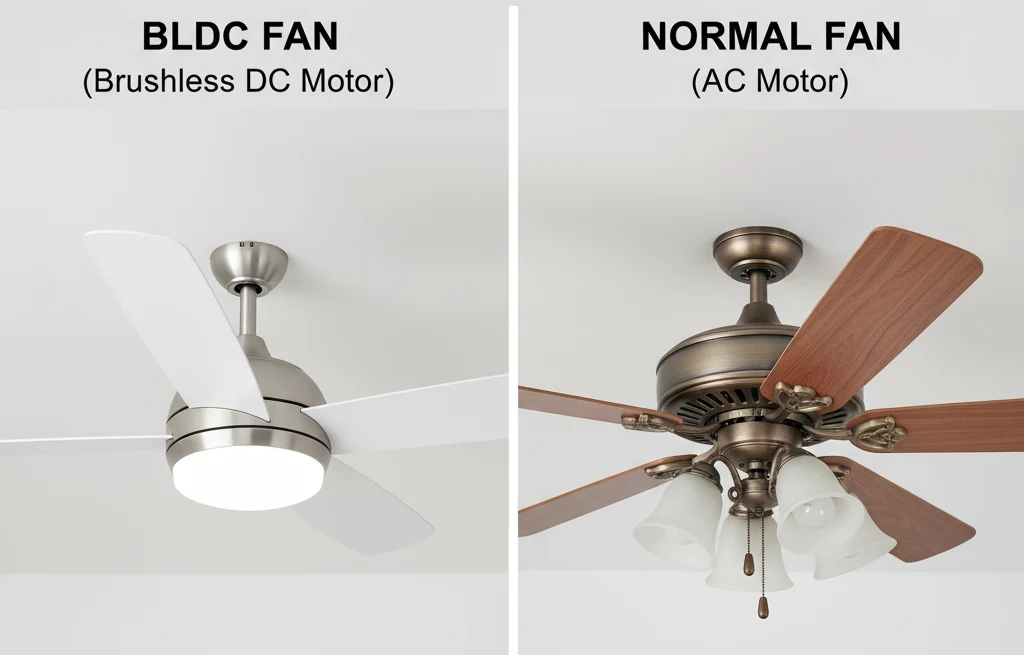
BLDC Fans vs Normal Fans: Meaning, Key Difference, Performance and Cost in 2026
Updated : December 23, 2025, 1:33 PM
Author :
 Siri Hegde K
Summary
BLDC Fans vs Normal Fans is a common comparison for energy-conscious buyers. BLDC fans use Brushless Direct Current motors that consume 50–60% less electricity, offer silent operation, and last longer. Normal fans are cheaper but less efficient and noisier. While initial cost is higher for BLDC fans, the long-term savings on electricity bills and durability make them a smarter choice for modern homes.
Table of Contents
What Is a BLDC Fan?Key Differences Between BLDC Fans and Normal FansAre BLDC Fans Good? Pros and ConsAre Normal Fans Still Relevant?Is a BLDC Fan Worth It? (Cost-Benefit Analysis)Which One Should You Choose? â Decision GuideSpecial ConsiderationsHow Can Nobroker Help With Electrician Services?Frequently Asked Questions?
When selecting a new ceiling fan, the debate between BLDC fans and traditional fans is an important consideration for modern homeowners. While conventional fans have served households for decades, the advent of BLDC technology marks a significant improvement in efficiency and performance. A traditional fan uses a standard induction motor, whereas a BLDC fan employs a more advanced brushless direct current motor. This detailed guide will compare their technology, power consumption, performance, and long-term value to help you make an informed choice. [1][2]
What Is a BLDC Fan?
A BLDC fan is a ceiling fan powered by a Brushless Direct Current (BLDC) motor. This modern motor technology is fundamentally different from traditional AC induction motors found in conventional fans. By using permanent magnets and an electronic circuit to drive the motor, BLDC fans eliminate the need for mechanical "brushes," resulting in significantly higher efficiency, quieter operation, and a longer lifespan. [1][3]
Meaning of BLDC Technology
BLDC stands for Brushless Direct Current. This technology describes a type of motor that employs an electronic controller instead of physical brushes to switch the direction of the electric current in the motor's windings. This electronic commutation is much more efficient and precise than the friction-based mechanical commutation used in older motor designs, resulting in less energy wasted as heat and noise. [1][2][4]
How BLDC Fans Work vs Normal Fans?
The main difference between a regular fan and a BLDC fan lies in their motors.
- A standard fan's AC induction motor utilises electromagnets and brushes, which generate friction and result in energy loss.
- A BLDC motor features permanent magnets on the rotor that are spun by an electronically controlled magnetic field, making it frictionless and highly efficient in operation. [2][3][5]
Key Differences Between BLDC Fans and Normal Fans
To make an informed choice, it is essential to understand the direct comparisons between these two technologies across several key performance metrics. [2]
1. Power Consumption & Energy Efficiency
This is the most significant area of difference and the primary reason for the growing popularity of BLDC technology. [1][2][5]
| Aspect | BLDC Fan | Normal Fan (Induction Motor) |
|---|---|---|
| Average Power Consumption | 28W - 35W | 75W - 90W |
| Energy Savings | Up to 65% more energy-efficient. | Standard efficiency: consumes significantly more power. |
| Impact on Bills | Leads to substantial savings on monthly electricity bills. | A major contributor to household electricity costs. |
2. Speed, Performance & Air Delivery
While both fans can move air, the control and consistency of their performance differ significantly. [2][6]
| Aspect | BLDC Fan | Normal Fan (Induction Motor) |
|---|---|---|
| Speed Control | Precise and smooth speed regulation through an electronic controller (remote control). | Limited speed steps controlled by a wall-mounted capacitive regulator. |
| Air Delivery (CFM/CMM) | High and consistent air delivery across all speed settings. | Air delivery is good at top speed but can be inconsistent at lower speeds. |
| Performance | Maintains high torque and consistent speed even during voltage fluctuations. | Speed and performance decline during voltage fluctuations. |
3. Noise & Heat Generation
The operational noise and heat produced by the motor are significant factors affecting comfort, particularly in bedrooms. [3][6]
| Aspect | BLDC Fan | Normal Fan (Induction Motor) |
|---|---|---|
| Operational Noise | Amazingly quiet (whisper-quiet) because it lacks mechanical brushes and friction. | Produces a noticeable humming sound from motor operation and brush friction. |
| Heat Generation | Generates minimal heat, which boosts its efficiency and extends its lifespan. | The motor gets hot during extended use, indicating energy waste. |
4. Durability, Maintenance & Lifespan
The construction of the motor has a direct impact on the fan's long-term durability and maintenance requirements. [2][5][8]
| Aspect | BLDC Fan | Normal Fan (Induction Motor) |
|---|---|---|
| Key Components | No brushes, uses permanent magnets and an electronic circuit. | Uses mechanical carbon brushes and electromagnets. |
| Wear and Tear | Minimal wear and tear due to fewer moving parts and no friction. | Brushes wear down over time and may need replacement. Prone to winding issues. |
| Lifespan | Generally has a much longer operational lifespan. | Has a shorter lifespan due to higher heat and mechanical wear. |
| Maintenance | Virtually maintenance-free. | May require periodic maintenance or replacement of parts like capacitors or brushes. |
5. Initial Cost vs Long-Term Savings
The financial aspect involves balancing the upfront purchase price with the operational savings over the fan's life. [2][6]
| Aspect | BLDC Fan | Normal Fan (Induction Motor) |
|---|---|---|
| Initial Purchase Cost | Higher, due to the advanced motor and electronic controller. | Lower and more budget-friendly upfront. |
| Operating Cost | Significantly lower due to high energy efficiency. | Higher, due to greater electricity consumption. |
| Return on Investment (ROI) | The higher initial cost is typically recovered through electricity savings within 2-3 years. | No long-term savings; the cost is purely the purchase price plus higher running costs. |
6. Voltage Fluctuations & Inverter Compatibility
Performance during power fluctuations and compatibility with inverters a key considerations in many parts of India. [1][2][5]
| Aspect | BLDC Fan | Normal Fan (Induction Motor) |
|---|---|---|
| Voltage Fluctuation | Performs consistently and maintains speed even at lower voltages. | Speed drops noticeably during voltage fluctuations. |
| Inverter Performance | Highly efficient on inverter power, running up to 3 times longer on the same battery backup. | Drains inverter batteries faster due to higher power use. |
Are BLDC Fans Good? Pros and Cons
To answer the question, are BLDC fans good, it is best to weigh their distinct advantages against their few disadvantages. [3][6]
Advantages of BLDC Fans
The benefits of choosing a BLDC fan are significant and primarily focus on efficiency and modern convenience. [1][2][4]
- They consume up to 65% less power, which directly translates to lower electricity bills.
- The brushless design eliminates friction, making them exceptionally quiet and ideal for bedrooms and offices.
- With less heat generation and minimal wear and tear, BLDC motors are more durable and last longer.
- They maintain a stable speed even during voltage fluctuations, ensuring consistent comfort.
- Most BLDC fans come with a remote control, and many offer smart features like sleep mode and timers.
Disadvantages of BLDC Fans
While superior in many ways, there are a few considerations to keep in mind.
- The upfront purchase price of a BLDC fan is significantly higher than that of a traditional fan. [2]
- The electronic driver can be a point of failure, and repairs may be more complicated and expensive.[3]
- Many models can only be operated via the remote control, which can be an inconvenience if it is lost or damaged. [8]
Are Normal Fans Still Relevant?
Yes, despite the technological superiority of BLDC fans, conventional induction motor fans remain relevant in certain scenarios. Their primary advantage is the very low upfront cost. For areas with infrequent use, such as a guest room or a warehouse, or for rental properties where the initial investment is a key concern, a normal fan can still be a practical and budget-friendly choice. [5][6]
Is a BLDC Fan Worth It? (Cost-Benefit Analysis)
To determine is BLDC fan worth it, a simple cost-benefit analysis shows a clear long-term advantage. [2][4]
Let's assume a residential power rate of ₹7 per unit and daily usage of 10 hours.
- Normal Fan (80W): Consumes 0.8 units/day. Annual cost = 0.8 x 365 x ₹7 = ₹2,044.
- BLDC Fan (32W): Consumes 0.32 units/day. Annual cost = 0.32 x 365 x ₹7 = ₹817.
- Annual Savings: ₹2,044 - ₹817 = ₹1,227 per fan. If the price difference between the two fans is ₹1,500, the extra cost is recovered in a little over one year.
Which One Should You Choose? — Decision Guide
The final choice in the BLDC fans vs normal fans debate depends on your priorities and usage.
- Choose a BLDC Fan if: Your primary concern is long-term energy savings, you use the fan frequently (e.g., in a bedroom or living room), and you appreciate modern features like remote control and quiet operation.
- Choose a Normal Fan if: Your upfront budget is the main constraint, the fan will be used infrequently, or it is for a short-term installation like a rental property.
Special Considerations
Beyond the core technology, a few other factors can influence your decision.
1. Speed Control & Features
Normal fans use a wall regulator with limited speed steps. BLDC fans are controlled by a remote, offering multiple speed settings, timers, and special modes like 'sleep' or 'boost'.
2. Ratings & Certifications
Always look for a high BEE star rating. Modern BLDC fans can easily achieve a 5-star rating, which is a government-backed assurance of their high energy efficiency.
3. Electronic Controller Noise
In some lower-quality BLDC fans, the electronic controller can produce a faint, high-pitched noise. It is advisable to choose a reputable brand to avoid this issue.
How Can Nobroker Help With Electrician Services?
Choosing between BLDC and regular fans depends on your needs. BLDC fans are more energy-efficient, quieter, and durable, saving money in the long run and making them making them ideal for eco-conscious homes. Despite higher initial costs, lower electricity bills make it worthwhile. Regular fans are more affordable and readily available. For future-ready, cost-effective comfort, BLDC fans are the better choice. However, for budget-conscious households, standard fans are sufficient. NoBroker offers hassle-free installation and maintenance.
Frequently Asked Questions?
Q1: What is the main difference between a BLDC fan and a normal fan?
Ans: The main difference is the motor. A BLDC fan utilises a highly efficient brushless DC motor with permanent magnets, whereas a standard fan employs a conventional AC induction motor.
Q2: How much power does a BLDC fan consume compared to a normal fan?
Ans: The BLDC fan vs the normal fan power consumption is significant. A BLDC fan consumes around 28-35 watts, whereas a normal fan consumes about 75-90 watts.
Q3: Are BLDC fans really silent?
Ans: While no fan is entirely silent, BLDC fans are significantly quieter than regular fans because their brushless motor design eliminates the humming noise caused by friction.
Q4: Is a BLDC fan good for inverters?
Ans: Yes, they are excellent for inverters. Due to their low power consumption, they can run up to three times longer on the same inverter battery backup compared to a normal fan.
Q5: Which is better, a BLDC fan or a normal fan?
Ans: For long-term use and energy savings, the BLDC fan vs normal fan which is better, debate is clearly won by the BLDC fan due to its superior efficiency, durability, and quiet operation.
Recommended Reading

Top 10 MCB Brands In India: Key Features, Types and Price Range in 2026
September 23, 2025
7647+ views

Top 5 Modular Switches Brands in India: Design, Safety, Durability and Prices
November 18, 2025
5426+ views

Top 10 Smart Touch Switches Brands in India: Types, Price Range and Warranty
November 18, 2025
4241+ views

Light Flickering: Causes, Solutions and Safety Tips for Your Home in 2026
August 25, 2025
3515+ views

How Power Fluctuations Damage Appliances & What You Can Do to Prevent It in 2026
July 27, 2025
3507+ views
ARTICLE SOURCES
Most Viewed Articles
Best 10 Switch Brands in India 2026: Top Picks for Smart, Stylish, & Safe Homes
August 25, 2025
106684+ views
Top 10 Wire Companies in India: Founding Year, Valuation, Share Value and More Details in 2026
September 26, 2025
83240+ views

Wire Colour Code in India: Electrical Safety Simplified
January 31, 2025
44996+ views

10+ Best Electrical Wire For Home: Top Brands, Safety, Prices, Pros and Cons in 2026
September 5, 2025
20724+ views
10 Best Ceiling Fan Brands in India: Features, Price & Warranty in 2026
July 29, 2025
19046+ views
Author
Loved what you read? Share it with others!
Recent blogs in
V-Guard Vs Polycab Wires: Compare Quality, Safety, Price and Durability
December 18, 2025 by Vivek Mishra
Anchor Vs Havells Wire: Copper Purity, Insulation, Durability & Safety
December 17, 2025 by Ananth
Finolex vs RR Kabel: Safety, Durability, Copper Quality and Price Range
December 17, 2025 by Vivek Mishra
Top 10 Smart Touch Switches Brands in India: Types, Price Range and Warranty
November 18, 2025 by Priyanka Saha
Types of Wiring in a House: Importance, Comparison, Costs and Safety Tips
November 18, 2025 by Priyanka Saha










 Full RM + FRM support


Join the conversation!