Table of Contents
Loved what you read? Share it with others!


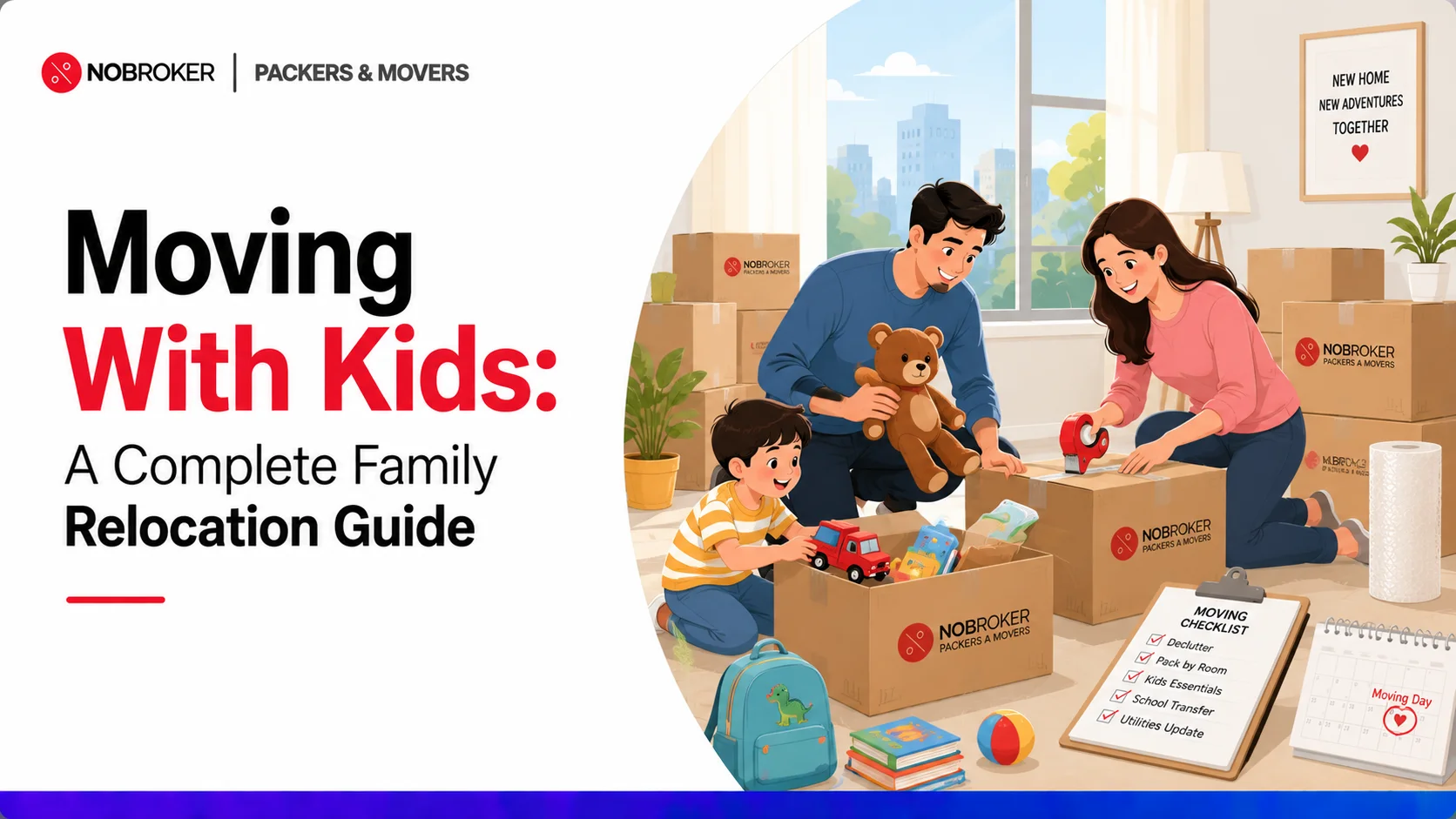
Moving With Kids: A Complete Family Relocation Guide
Updated : June 23, 2026, 7:48 PM

Relocating to a new city or neighborhood is a complex logistical task for any household. When you add children into the equation, the process shifts from managing cardboard boxes to navigating deep emotional transitions. Moving with kids requires careful preparation, transparent communication, and strict routines to ensure their sense of security remains intact. This complete family relocation guide provides expert, age-wise strategies to help your children adjust, practical packing hacks to organize your home efficiently, and a comprehensive timeline to make your upcoming move smoother and less stressful for everyone involved.
Table of Contents
Whether you are shifting a few suburbs away or managing an interstate family relocation, leaving a familiar home is emotionally taxing for children. The secret to a successful transition lies in balancing logistical execution with psychological support. By involving your kids in the packing process, maintaining their daily routines amidst the chaos, and prioritizing their bedroom setup upon arrival, you can mitigate their anxiety. The checklist below outlines what parents must prioritize during the weeks leading up to moving day to ensure a smooth transition.
Quick Family Moving Checklist
A well-planned family moving checklist helps parents stay organized, reduces last-minute stress, and makes moving with kids much easier by keeping every stage of the relocation process on track.
| Stage | Key Tasks |
|---|---|
| Before the Move | Request school transfer records and schedule a virtual tour of the new campus. |
| 2-3 Weeks Before | Finalize movers, start deep packing, and host a farewell playdate for friends. |
| Moving Day | Arrange separate childcare, keep essentials bags handy, and maintain regular meal schedules. |
| First Week After Move | Set up the kids' bedrooms first, unpack the kitchen, and explore local parks. |
| First Month | Establish strict daily routines, schedule playdates, and register for neighborhood activities. |
Why Moving Can Be Difficult for Children
Moving with children often brings emotional challenges because children rely on familiar surroundings, routines, and relationships.
- Fear of the unknown: Children struggle to visualize abstract concepts like new houses or unfamiliar cities.
- Leaving friends and teachers behind: The loss of established peer groups feels like intense, irreversible grief.
- Changes in routines: Packing boxes and empty rooms disrupt comforting daily schedules, causing sensory overload.
- Anxiety about a new school: Facing new academic standards and attempting to fit into established social hierarchies.
- Emotional attachment to the old home: The physical house represents safety; leaving it triggers acute separation anxiety.
Reactions differ wildly by age and personality; toddlers may exhibit behavioral regression, while teenagers may withdraw in anger.
How to Prepare Kids for a Move
Preparing children well in advance can significantly reduce relocation anxiety. Open communication, reassurance, and involvement help children feel secure and more confident about the upcoming change.
Tell Them Early
Inform your children about the move as soon as plans are confirmed. Early communication gives them enough time to process their feelings, ask questions, and gradually become comfortable with the idea of relocating to a new place.
Encourage Questions
Create a supportive environment where children can openly discuss their concerns about the move. Listening patiently and answering honestly help build trust, reduce uncertainty, and make children feel valued throughout the transition.
Involve Them in the Process
Giving children small responsibilities helps them feel included and in control. Allow them to pack their favorite belongings, explore the new neighborhood online, and participate in decisions related to their future room setup.
Age-Wise Tips for Moving With Kids
Every age group experiences relocation differently. Understanding your child's developmental stage helps you provide the right support and make the transition smoother for the entire family.
Babies and Toddlers (0–3 Years)
Young children depend on familiar routines and surroundings. Maintain regular sleeping, feeding, and play schedules as much as possible, and keep favorite toys, blankets, and comfort items easily available during the move.
Preschoolers (4–6 Years)
Preschoolers benefit from simple explanations and visual reassurance. Use stories, pictures, and conversations to explain the move, and involve them in small decisions to help them feel excited and included.
School-Age Children (7–12 Years)
Children in this age group often worry about friendships and changes at school. Encourage them to stay connected with old friends, discuss their concerns openly, and familiarize them with their new school before classes begin.
Teenagers (13–18 Years)
Teenagers may find relocation challenging because of established friendships and social routines. Respect their feelings, involve them in important decisions, and encourage them to maintain existing friendships while building new connections.
Family Moving Checklist Before the Move
A comprehensive pre-move checklist ensures your family stays organized, on schedule, and emotionally connected from two months out, right up until moving day.
Housing and Logistics
Securing your physical transition elements early prevents cascading delays during the final week.
- Finalize accommodation: Sign your rental agreement or close the property purchase.
- Research the neighbourhood: Map out local libraries, playgrounds, and family-friendly community centers.
- Book packers and movers: Reserve a licensed moving company and secure written estimates.
School Preparation
Academic transitions require heavy administrative paperwork that cannot be left until the final week.
- Transfer records: Contact current schools to secure official transcripts and immunization histories.
- Collect report cards: Gather recent performance evaluations to aid proper classroom placement.
- Arrange admission documents: Submit registration paperwork and schedule an in-person campus tour.
Medical Preparation
Ensuring health continuity is essential, especially when relocating across state lines.
- Obtain medical records: Request physical and dental histories from your current local providers.
- Refill prescriptions: Secure at least a one-month supply of necessary daily family medications.
- Identify healthcare providers in the new city: Research and vet new pediatricians and local emergency clinics.
Packing Tips When Moving With Kids
Packing with children requires a strategic balance between maintaining household order and actively involving your kids to reduce transition anxiety.
Pack an Essentials Bag for Each Child
Pack a dedicated suitcase that travels in your personal vehicle, avoiding the main moving truck.
- Extra clothes
- Snacks
- Water bottles
- Medicines
- Favourite toys
- Chargers
- Toiletries
Let Kids Pack Their Special Items
Give children a sense of agency by providing a small backpack or plastic bin designated as their "Treasure Box." Let them choose their absolute favorite toys or comfort blankets to travel safely with them in the family car.
Label Children's Boxes Clearly
Use specific colored packing tape or large bold markers to identify boxes containing children's items. Clearly marking them as "OPEN FIRST" ensures movers prioritize unloading these boxes, allowing you to set up the kids' rooms immediately upon arrival.
How to Make Moving Day Easier for Kids
The physical act of loading a truck is loud, chaotic, and stressful for younger family members. Managing their environment carefully is essential.
- Stick to normal meal and nap times: Maintain their biological rhythm regardless of moving truck delays.
- Keep younger children supervised: Hire a babysitter or relative to watch toddlers away from hectic loading zones.
- Assign simple tasks to older kids: Let them log numbered boxes into a master inventory spreadsheet.
- Carry entertainment items: Keep tablets, coloring books, and card games easily accessible.
- Avoid exposing children to stressful discussions: Shield them from arguments regarding logistical delays or damaged items.
- Keep emergency contacts handy: Maintain a physical list of new pediatricians and local hospitals.
Helping Kids Adjust After the Move
Settling into the new house requires psychological anchoring. You must rebuild their physical and emotional comfort zones.
Set Up Their Room First
Prioritize unloading the boxes from the children's bedroom. Set up their familiar bedding, nightlights, and wall art immediately on day one so they sleep in a comforting, recognizable environment.
Establish Familiar Routines
Re-establish standard family rhythms instantly. Unpack the kitchen next so you can resume normal family dinners, maintaining strict bedtimes and morning wake-up schedules.
Explore the New Neighborhood Together
Take a low-pressure, exploratory walk around the block. Visit local parks, ice cream shops, or libraries to help them map out their new surroundings and build positive initial memories.
Encourage New Friendships
Facilitate social connections by registering them for local sports teams, neighborhood clubs, or community youth organizations. Host playdates early on to integrate them into the local peer group.
Managing Emotional Challenges During Relocation
Children often suppress their difficult feelings during the busy packing phase, only to experience severe behavioral regression months after settling into the new home. Understand that these reactions are normal developmental responses to massive environmental disruption. You must remain vigilant for specific psychological indicators.
Explain the signs that children may struggle:
- Irritability: Frequent, uncharacteristic outbursts over minor inconveniences.
- Withdrawal: Refusing to leave their bedroom or engage in previously loved hobbies.
- Sleep disturbances: Developing sudden insomnia, nightmares, or frequent bedwetting.
- Mood swings: Shifting between extreme anger, crying, and deep sadness.
How Parents Can Help:
- Validate emotions: Acknowledge their grief without attempting to force toxic positivity.
- Be patient: Understand that behavioral regression is temporary and requires gentle correction.
- Spend quality time together: Reassure them through dedicated, distraction-free family activities.
- Seek professional support if needed: Consult a child psychologist if withdrawal or anxiety persists for months.
School Transition Tips for Children
Navigating a new academic environment is often the most terrifying aspect of moving with children. Proactive engagement with the institution is important.
- Schedule an orientation tour: Walk the campus hallways before the first official day of classes.
- Meet the homeroom teacher: Establish a direct line of communication regarding your child's transition anxiety.
- Review the academic curriculum: Identify if your child is ahead or frustratingly behind their new classmates.
- Identify a buddy system: Ask the school counselor to pair your child with a welcoming peer guide.
- Maintain old connections: Practice keeping in touch with old classmates via scheduled video calls.
Common Mistakes Parents Make When Moving With Kids
Rushing the relocation logistics often leads parents to overlook the severe psychological impact the transition has on their children.
- Breaking routines completely: Abandoning nap times and family dinners causes severe sensory and emotional overload.
- Packing children's essentials too early: Boxing up favorite comfort blankets weeks in advance triggers deep separation anxiety.
- Ignoring emotional reactions: Dismissing a teenager's anger as typical rebellion rather than recognizing it as profound social grief.
- Overpromising about the new city: Unrealistic hype about the new location leads to massive disappointment upon arrival.
- Leaving school preparations until the last minute: Forgetting to request official transcripts stalls the admission process, forcing kids to miss essential orientation days.
Essential Services Families Should Arrange After Moving
Ensuring the new house is safe and functionally operational is important before the children spend their first night there.
- Activate utilities: Ensure electricity, water, and internet services are active before the moving truck arrives.
- Deep clean the property: Hire professional cleaners to sanitize floors and bathrooms for crawling toddlers.
- Secure the perimeter: Change the external door locks and install safety gates on staircases immediately.
- Update official addresses: Notify banks, postal services, and employers of your new geographical location.
- Locate emergency services: Map the fastest driving route to the nearest 24-hour pediatric hospital.
How NoBroker Can Help Families Relocate Smoothly
Managing the emotional toll of moving with kids is exhausting enough without the added burden of heavy lifting and logistics. NoBroker assists families with verified packers and movers, home search assistance, professional deep cleaning services, painting services, and end-to-end relocation support. By trusting our verified professionals to execute the physical transition, parents can focus entirely on supporting their children's emotional needs. NoBroker is here to handle the packing, loading, and transit, ensuring your household items arrive, reducing the overwhelming stress for families moving with children.
Frequently Asked questions:
Communicate early, be transparent about the reasons for the move, validate their fears, and actively involve them in decisions such as choosing their new bedroom color.
Moving is typically hardest for early adolescents (ages 12-14) because their identities and emotional support systems are deeply tied to their established local peer groups.
Maintain strict daily routines for meals and bedtimes, pack their essential comfort items in a separate bag, and ensure their bedroom is the first room to be unpacked.
Yes, involving them provides a sense of control. Let them sort their toys for donation and decorate the outside of their specific moving boxes with markers.
The adjustment period varies, but it generally takes most children between three to six months to feel fully settled, form new friendships, and overcome behavioral regressions.
Enroll them in local sports teams or clubs that match their hobbies, host casual neighborhood playdates, and ask their new teacher to assign them a peer buddy.
Pack three days of comfortable clothes, toothbrushes, daily medications, non-perishable snacks, a tablet with chargers, and their absolute favorite comfort blanket or stuffed animal.
You should contact both the current and future schools at least 4 to 8 weeks before the move to secure official transcripts, immunization records, and schedule admission interviews.
Recommended Reading

15 Best Local Packers and Movers in Bangalore: Quick Home and Office Relocation Services 2026
February 25, 2025
550130+ views


2026 में गृह प्रवेश के लिए शुभ दिन, तिथियां, नक्षत्र और सही मुहूर्त
January 12, 2026
38452+ views
How to Transport Goods by Train in India: Services, Charges and Required Documents in 2026
April 30, 2025
35955+ views

15 Best Packers and Movers in India for Home and Office Shifting in 2026
May 19, 2025
31715+ views
NoBroker Packers and Movers Tips Testimonials
Loved what you read? Share it with others!
Recent blogs in
Intercity Packers and Movers in Hyderabad
June 23, 2026 by shahnas
Intercity Packers and Movers in Bangalore
June 23, 2026 by Sourabh










 Full RM + FRM support


Join the conversation!