


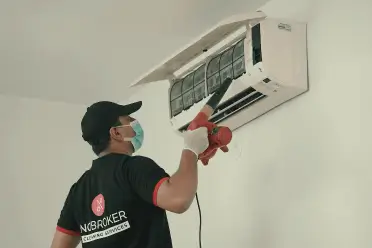
Voltas AC Problem: Common Issues, Troubleshooting Tips and Easy Fixes
Voltas air conditioners are a popular choice for Indian homes because they offer reliable cooling at an affordable price. However, like any appliance that runs for long hours during summer, they can occasionally develop issues. Whether it’s poor cooling, a remote that suddenly stops responding, unusual noises, or an AC that refuses to start, identifying the problem early can help prevent expensive repairs.
The good news is that many Voltas AC problems can be resolved with simple troubleshooting. Something as basic as cleaning the filters, checking the remote batteries, or clearing the outdoor unit may restore normal performance. In this guide, we’ll walk you through the most common Voltas AC problems, explain why they happen, and help you decide when professional servicing is necessary.
What Can Cause a Voltas AC Problem?
An air conditioner doesn’t always stop working because of a major fault. In many situations, small maintenance issues gradually affect its performance until cooling becomes noticeably weaker.
Some of the most common reasons include:
- Dirty air filters
- Incorrect operating mode
- Refrigerant leakage
- Blocked outdoor unit
- Faulty compressor
- Electrical power issues
- Sensor malfunction
- Drainage blockage
- Remote control faults
- PCB or display problems
Checking these areas first often helps identify the source of the problem without immediately calling a technician.
Quick Voltas AC Troubleshooting Checklist
Before assuming your AC needs a repair, spend a few minutes checking these basic areas. Many common issues can be resolved with simple inspections and routine maintenance.
| Problem | First Thing to Check | Possible Fix |
| Voltas AC not starting | Power supply | Restore power or reset breaker |
| Voltas AC cooling problem | Air filters | Clean and reinstall filters |
| Voltas AC water leakage | Drain pipe | Remove blockage |
| Remote not responding | Batteries | Replace batteries |
| Display not working | Restart unit | Switch power off for five minutes |
| Outdoor unit not running | Airflow | Remove dust and debris |
Voltas AC Not Starting
If your Voltas AC is not starting, don’t immediately assume there’s a major fault. In many cases, the issue can be resolved with a few simple checks.
Verify the Electrical Supply
Start by checking:
- Circuit breaker
- Wall socket
- Main power switch
- Voltage stabilizer (if installed)
Power interruptions are one of the most common reasons an AC fails to start.
Inspect the Remote
A faulty remote can make it appear as though the air conditioner isn’t responding.
Try the following:
- Install fresh batteries.
- Use the manual power button on the indoor unit.
- Reset the remote if your model supports it.
If the AC starts manually, the remote is likely the problem.
Voltas AC Cooling Problem
One of the most common complaints homeowners face is a Voltas AC cooling problem. Sometimes the AC keeps running, but the room never feels cool enough.
The cause may be as simple as dirty filters or as serious as a compressor issue.
Clogged Filters Restrict Airflow
Air filters trap dust and airborne particles to keep the indoor air clean. Over time, this dust builds up and restricts airflow, making the AC work harder than necessary.
You may notice:
- Weak airflow
- Longer cooling time
- Dust around the vents
- Higher electricity bills
Cleaning the filters regularly can make a noticeable difference in cooling performance.
Low Refrigerant Levels
Refrigerant is essential for removing heat from the room. If the gas level drops because of a leak, cooling efficiency decreases significantly.
Common signs include:
- Warm air blowing from the indoor unit
- Ice forming on refrigerant pipes
- Continuous compressor operation
- Poor cooling despite clean filters
A refrigerant leak should always be repaired by a qualified technician before refilling the gas.
Blocked Outdoor Unit
The outdoor unit needs adequate airflow to release heat efficiently. Dust, leaves, and other obstructions can reduce its performance and affect overall cooling.
Keeping the area around the outdoor unit clean can often improve cooling without requiring any repairs.
Incorrect Temperature Settings
Sometimes the AC is functioning perfectly, but the selected settings aren’t suitable for cooling.
Check whether your AC is operating in:
- Fan Mode
- Dry Mode
- Energy Saving Mode
For better cooling, select:
- Cool Mode
- Temperature between 22°C and 24°C
- Medium or High fan speed
Voltas AC 1.5 Ton Not Cooling
If your Voltas AC 1.5 ton is not cooling, the issue isn’t always related to the AC’s capacity. Several factors can reduce cooling performance even in a properly sized room.
Possible reasons include:
- Dirty air filters
- Refrigerant leakage
- Dirty condenser coils
- Oversized room
- Frequent door opening
- Compressor performance issues
If the AC previously cooled the same room without difficulty, the problem is likely related to maintenance or a developing fault rather than the tonnage itself.
Voltas 1.5 Ton Split AC Cooling Problem
Many users report a Voltas 1.5 ton split AC cooling problem after extended use, especially during peak summer months.
Some of the most common causes are:
- Dirty indoor unit
- Outdoor unit blocked by dust
- Low refrigerant pressure
- Thermostat sensor malfunction
- Restricted airflow
Routine servicing before the summer season helps prevent most of these issues.
Voltas AC On/Off Problem
If your Voltas AC on/off problem involves the unit switching off unexpectedly or refusing to stay on, several factors could be responsible.
Possible Reasons
- Voltage fluctuations
- Overheating protection
- Faulty thermostat
- PCB malfunction
- Loose electrical connections
If the AC repeatedly turns itself off after a few minutes, avoid restarting it continuously and have it inspected.
Voltas AC Not Turning On With Remote
If the Voltas AC is not turning on with the remote, the air conditioner itself may still be working properly.
Check the following:
- Battery condition
- Remote sensor alignment
- Infrared signal
- Obstructions between the remote and indoor unit
Testing the remote through a smartphone camera can confirm whether it’s transmitting an infrared signal.
Voltas AC Remote On/Off Button Not Working
Sometimes every button on the remote functions except the power button. If the Voltas AC remote on/off button is not working, the issue may be limited to the remote itself.
Possible causes include:
- Worn-out button contacts
- Moisture damage
- Internal circuit failure
- Physical wear from regular use
Replacing the remote is often more practical than repairing individual buttons.
Voltas AC Remote Display Not Working
If the Voltas AC remote display is not working, it usually points to a problem with the remote rather than the air conditioner.
Things to Check
- Replace the batteries.
- Clean the battery terminals.
- Inspect the LCD screen for cracks.
- Reset the remote if possible.
If the display remains blank but the infrared signal still works, replacing the remote is usually the simplest solution.
Voltas AC Remote Sensor Not Working
Even when the remote works perfectly, the indoor unit won’t respond if the receiver sensor is faulty.
Signs of a sensor issue include:
- Remote only works from a very short distance.
- Commands are received inconsistently.
- AC doesn’t respond despite a working remote.
Cleaning the sensor area may help, but persistent problems usually require servicing.
Voltas AC Display Problem
A display that suddenly goes blank or shows incomplete information can make it difficult to understand what the AC is doing.
Possible causes include:
- Loose display connection
- PCB fault
- Power fluctuation
- Display board failure
Restarting the AC may restore the display temporarily, but recurring issues should be inspected professionally.
Voltas AC Light Not Working
If the indicator light isn’t turning on, the issue doesn’t always mean the AC has failed completely.
The problem could be caused by:
- LED failure
- Display board issue
- Loose wiring
- PCB malfunction
- Power interruption
If the AC cools normally despite the light remaining off, only the indicator system may need attention.
Voltas AC Types and Their Common Issues
Different Voltas air conditioners are built for different applications, so the type of issues they develop can vary. The table below provides a quick comparison to help you understand what to expect.
| Voltas AC Type | Common Issues | Maintenance Level |
| Split AC | Refrigerant leakage, drainage issues, dirty filters | Moderate |
| Inverter Split AC | Sensor faults, PCB issues, compressor protection mode | Low |
| Window AC | Noise, vibration, airflow restriction | Moderate |
| Cassette AC | Drain blockage, ceiling leakage | High |
| Tower AC | Dust buildup, fan motor wear | Moderate |
This comparison helps readers understand how maintenance needs and common faults differ across various Voltas AC models while improving the blog’s overall usefulness and SEO.
Voltas AC Outdoor Unit Is Not Working
The outdoor unit is responsible for releasing the heat removed from your room. If the Voltas AC outdoor unit is not working, the indoor unit may continue running, but cooling performance will drop significantly or stop altogether.
Possible Reasons
The outdoor unit may stop working due to:
- Power supply issues
- Faulty capacitor
- Loose electrical wiring
- Damaged fan motor
- Compressor protection mode
- Contactor failure
- PCB communication problems
Simple Checks Before Calling a Technician
Before arranging a repair, try these basic inspections:
- Check whether the outdoor unit is receiving power.
- Remove dust, leaves, or debris around the unit.
- Make sure nothing is blocking airflow.
- Turn the AC off for five minutes before switching it back on.
If the outdoor fan doesn’t rotate or only produces a humming sound, professional servicing is recommended.
Voltas AC Compressor Not Starting
The compressor circulates refrigerant throughout the cooling system. If the Voltas AC compressor is not starting, your AC may blow normal air instead of cool air.
The same troubleshooting also applies to a Voltas AC compressor not working.
What Could Be Causing the Problem?
Common reasons include:
- Low refrigerant pressure
- Faulty capacitor
- Electrical connection issues
- Compressor overheating
- Overload protection activated
- PCB malfunction
- Internal compressor damage
Signs of a Compressor Issue
Watch for these symptoms:
- Warm air from the indoor unit
- Clicking or buzzing noises
- Compressor starts briefly and stops
- Poor cooling despite clean filters
- Higher electricity consumption
Because compressor repairs involve refrigerant and high-voltage components, they should always be handled by a qualified technician.
Voltas Window AC Compressor Not Starting
If your Voltas window AC compressor is not starting, the cause may differ slightly from a split AC because all major components are housed in a single unit.
Possible causes include:
- Faulty start relay
- Weak capacitor
- Voltage fluctuations
- Dirty condenser coil
- Compressor overheating
Routine cleaning and timely servicing can help prevent these issues.
Voltas AC Gas Leakage Problem
Refrigerant gas is essential for cooling. A Voltas AC gas leakage problem reduces the AC’s ability to absorb heat, resulting in poor cooling and higher energy consumption.
Common Signs of Gas Leakage
- Cooling becomes weaker over time.
- Ice forms on refrigerant pipes.
- Hissing sounds near copper tubing.
- The compressor runs continuously.
- Electricity bills increase.
If you suspect a refrigerant leak, avoid topping up the gas without first repairing the leak. Otherwise, the problem will return.
Voltas AC Water Leakage
Water dripping from an air conditioner is never normal. Whether it’s a few drops or a steady flow, identifying the cause early can help prevent damage to nearby walls and furniture.
The same solutions apply if you’re facing a Voltas AC water leakage, Voltas AC water leakage problem, or Voltas AC is leaking water.
Why Is Water Leaking?
Some of the most common reasons are:
- Blocked drain pipe
- Dirty air filters
- Frozen evaporator coil
- Incorrect installation angle
- Damaged drain tray
- High indoor humidity
What You Can Try
- Wash the air filters.
- Check the drain pipe for blockages.
- Ensure the indoor unit is properly aligned.
- Turn the AC off if excessive leakage continues.
If water continues leaking after these checks, professional servicing is the safest option.
Voltas AC Sound Problem
While every air conditioner makes some operating noise, loud or unusual sounds usually indicate that something isn’t working correctly.
Different Sounds and What They Mean
Listening carefully to the type of noise your AC produces can often provide valuable clues about the underlying issue before a technician arrives.
| Sound | Possible Cause | Suggested Action |
| Buzzing | Loose electrical component | Schedule inspection |
| Clicking | Relay operation or electrical issue | Normal if occasional |
| Grinding | Fan motor wear | Professional repair |
| Rattling | Loose screws or panels | Tighten fittings |
| Hissing | Refrigerant leak | Leak inspection |
| Whistling | Restricted airflow | Clean filters |
Voltas AC Beep Sound Not Working
A short beep usually confirms that the indoor unit has received a command from the remote. If the Voltas AC beep sound is not working, the AC may still function normally.
Possible Causes
- Speaker malfunction
- PCB issue
- Wiring fault
- Software glitch
- Beep setting disabled (on supported models)
Things to Try
- Restart the AC.
- Test different buttons on the remote.
- Check whether the AC responds without producing a beep.
- Refer to the user manual if your model supports sound settings.
Voltas AC E1 Problem
Some Voltas models display an E1 error code when the system detects an internal fault.
Although the exact meaning varies by model, it is commonly associated with:
- Temperature sensor issues
- Communication errors
- PCB malfunction
Restart the AC once. If the Voltas AC E1 problem reappears, professional diagnosis is recommended.
E2 Problem in Voltas AC
The E2 problem in Voltas AC generally points to a sensor or system-related fault, although the exact definition depends on the model.
You should:
- Turn off the AC.
- Wait five minutes.
- Restart the unit.
- Observe whether the error returns.
Persistent E2 errors usually require professional inspection.
Voltas AC E6 Problem
A Voltas AC E6 problem often indicates a communication issue between the indoor and outdoor units or another internal system fault.
If this error appears:
- Switch off the power supply.
- Restart the AC after a few minutes.
- Avoid repeatedly resetting the unit if the error continues.
A technician should inspect the AC if the E6 code doesn’t clear after restarting.
Voltas Inverter vs Split vs Window vs Cassette AC Comparison
Each type of Voltas air conditioner offers different advantages depending on the room size, usage pattern, and installation requirements. Understanding these differences can also help you anticipate the type of maintenance each system may need.
| Feature | Inverter AC | Split AC | Window AC | Cassette AC |
| Cooling Efficiency | Excellent | Excellent | Good | Excellent |
| Power Consumption | Lowest | Low | Moderate | Moderate |
| Noise Level | Very Low | Low | Moderate | Low |
| Common Issues | PCB, sensor faults | Refrigerant leakage, drainage | Noise, vibration | Drain blockage |
| Maintenance | Low | Moderate | Moderate | High |
| Best For | Daily home use | Bedrooms & living rooms | Small rooms | Offices & commercial spaces |
This comparison highlights the maintenance needs and common issues across different Voltas AC types, making it easier to choose the right system.
Tips to Reduce Common Voltas AC Problems
Regular maintenance goes a long way in preventing unexpected breakdowns and maintaining efficient cooling throughout the year.
Follow these simple practices:
- Clean the air filters every two weeks during heavy usage.
- Schedule professional servicing once a year.
- Keep the outdoor unit clean and well-ventilated.
- Check the drain line regularly.
- Avoid running the AC continuously at extremely low temperatures.
- Replace remote batteries before they are fully discharged.
- Have the refrigerant level checked if cooling performance decreases.
- Protect the unit from frequent voltage fluctuations with a stabilizer if required.
A little preventive maintenance today can help you avoid expensive repairs later.
When Is It Time to Call a Professional?
While basic Voltas AC troubleshooting can solve many everyday issues, certain problems require expert attention.
Contact a technician if:
- The compressor doesn’t start.
- The outdoor unit remains inactive.
- Cooling doesn’t improve after cleaning the filters.
- Water leakage continues.
- Error codes appear repeatedly.
- The breaker trips frequently.
- You notice burning smells or electrical sparks.
- The AC develops the same issue repeatedly after resetting.
Ignoring these warning signs can lead to more extensive damage over time.
Final Verdict
The majority of the Voltas AC problems such as cooling, water leakage, remote problems, faulty compressor or errors can actually be determined by just doing some simple tests. Regular filter cleaning, yearly service, and maintenance can avoid a lot of potential problems. But when the problem persists despite testing and troubleshooting, especially in case of Voltas AC not working or displaying error codes, then a professional is the better choice.
Frequently Asked Questions
1. Why is my Voltas AC not cooling properly?
Dirty filters, refrigerant leakage, blocked outdoor airflow, incorrect settings, or compressor problems are some of the most common reasons behind a Voltas AC cooling problem.
2. Why is my Voltas AC not starting?
Power supply interruptions, faulty remote controls, electrical issues, or PCB faults can prevent your Voltas AC not starting.
3. Why is my Voltas AC leaking water?
A blocked drain pipe, frozen evaporator coil, dirty filters, improper installation, or a damaged drain tray can cause Voltas AC water leakage.
4. Why is my Voltas AC outdoor unit not working?
Power issues, faulty capacitors, damaged fan motors, wiring faults, or PCB communication problems can stop the outdoor unit from operating.
5. What causes a Voltas AC gas leakage problem?
Corroded copper tubing, damaged joints, or worn refrigerant lines are common causes of a Voltas AC gas leakage problem.
6. Why is my Voltas AC remote not working?
Weak batteries, damaged buttons, a faulty display, or receiver sensor problems may prevent the remote from operating the AC correctly.
7. What does the E1 problem in Voltas AC mean?
The Voltas AC E1 problem usually indicates a sensor or communication fault, although the exact meaning varies depending on the model.
8. What is the E2 problem in Voltas AC?
The E2 problem in Voltas AC is generally related to sensor or internal system faults and should be inspected if it continues after restarting the unit.
9. What does the Voltas AC E6 problem indicate?
A Voltas AC E6 problem often points to communication issues between the indoor and outdoor units or another internal electrical fault.
10. How can I prevent common Voltas AC problems?
Cleaning filters regularly, scheduling annual servicing, maintaining the outdoor unit, checking the drain line, and using appropriate cooling settings can help prevent most Voltas AC problems.