


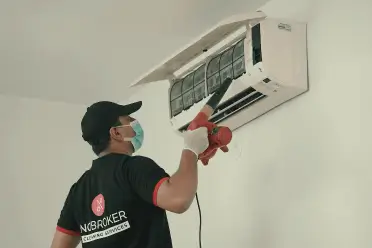
Blue Star AC Problem: Common Causes, Troubleshooting Tips and Easy Solutions
Blue Star air conditioners are known for their efficient cooling and dependable performance, making them a popular choice for homes and offices. However, like any appliance that operates for long hours, they can occasionally develop issues. Whether your AC isn’t cooling properly, refuses to start, displays a blank screen, or the remote suddenly stops responding, identifying the cause early can help prevent costly repairs.
Fortunately, not every Blue Star AC problem is serious. In many cases, cleaning the filters, checking the power supply, or resetting the unit can restore normal operation. This guide explains the most common Blue Star AC problems, why they occur, practical troubleshooting steps you can try, and when it’s time to call a professional.
Understanding Common Blue Star AC Problems
Your air conditioner relies on several electrical and mechanical components working together. If even one part isn’t functioning correctly, the AC may stop cooling efficiently or fail to operate altogether.
Some of the most common reasons behind a Blue Star AC problem include:
- Dirty or clogged air filters
- Incorrect operating mode
- Low refrigerant level
- Faulty compressor
- Power supply interruptions
- Remote control issues
- Sensor malfunction
- PCB or display faults
- Blocked airflow around the outdoor unit
- Drainage problems
The good news is that many of these issues can be identified through basic Blue Star AC troubleshooting before scheduling a repair.
Quick Blue Star AC Troubleshooting Checklist
Before assuming your air conditioner has developed a major fault, carry out a few simple checks. These basic steps often resolve common issues and help you identify the actual problem.
| Issue | What You Should Check | Recommended Action |
| Blue Star AC not starting | Power supply | Check the breaker and power socket |
| Cooling problem | Air filters | Clean and reinstall filters |
| Remote not responding | Batteries | Replace with fresh batteries |
| Display not working | Restart the AC | Turn off the power for 5 minutes |
| Fan not working | Fan settings | Reset the AC and inspect airflow |
| Water leakage | Drain pipe | Remove any blockage |
Blue Star AC Not Starting
If your Blue Star AC is not starting, don’t assume the unit has failed. In many situations, the issue is caused by a minor electrical interruption or an incorrect setting.
Check the Power Supply First
Begin with the basics:
- Confirm that the wall socket is working.
- Check whether the circuit breaker has tripped.
- Inspect the power cable for any visible damage.
- If you’re using a stabiliser, make sure it’s functioning properly.
A temporary power fluctuation can sometimes prevent the AC from starting until the power supply is restored.
Is the Remote the Problem?
Sometimes the air conditioner is perfectly fine, but the remote isn’t sending commands.
Try these simple steps:
- Replace the batteries.
- Use the manual power button on the indoor unit.
- Reset the remote if your model supports it.
If the AC turns on manually, the problem is likely with the remote rather than the unit itself.
Could It Be a Timer or Protection Mode?
Certain Blue Star models include built-in protection features that may delay operation after a power interruption.
Also check whether:
- Timer Mode is enabled.
- Sleep Mode is active.
- The AC has entered compressor protection mode after a restart.
Waiting a few minutes before switching the unit on again often resolves this issue.
Blue Star AC Remote Problems
When your remote stops working, it doesn’t always mean the air conditioner has developed a fault. Most remote-related issues are easy to identify and, in many cases, equally easy to fix.
Blue Star AC Not Turning On With Remote
If your Blue Star AC is not turning on with the remote, first determine whether the problem lies with the remote or the indoor unit.
Check the following:
- Replace the batteries.
- Remove anything blocking the infrared sensor.
- Point the remote directly at the indoor unit.
- Test the AC using the manual power button.
If the AC starts manually, the remote or its signal is likely causing the issue.
Blue Star AC Remote Display Not Working
A blank screen makes it difficult to adjust temperature or operating modes.
Possible reasons include:
- Weak batteries
- LCD screen damage
- Loose battery contacts
- Internal remote fault
Installing fresh batteries is the first and simplest solution.
Blue Star AC Remote Temp Button Not Working
If only the temperature button isn’t responding, the problem is usually limited to the remote.
This may happen because of:
- Worn-out button contacts
- Dirt trapped beneath the buttons
- Moisture damage
- Internal circuit wear
If cleaning doesn’t help, replacing the remote is generally more cost-effective than repairing it.
Blue Star AC Remote Is Not Working
If the Blue Star AC remote is not working, check whether it is transmitting signals.
You can test this by pointing the remote at your smartphone camera while pressing a button. If the infrared light appears on your phone screen but the AC still doesn’t respond, the receiver inside the indoor unit may require servicing.
My Blue Star AC Remote Is Not Working
If you’re thinking, “My Blue Star AC remote is not working,” don’t rush to replace it immediately.
Before buying a new remote:
- Install fresh batteries.
- Clean the battery terminals.
- Check for physical damage.
- Test the manual controls on the indoor unit.
These simple checks can help you determine whether the issue is with the remote or the AC itself.
Blue Star AC Display Not Working
The indoor display provides useful information about temperature, operating mode, and system status. If it suddenly goes blank, the problem may not be as serious as it appears.
Blue Star AC Display Not Showing
If your Blue Star AC display is not showing, the issue could be related to:
- Temporary power interruption
- Loose display connection
- PCB malfunction
- Faulty display board
Restart the AC after switching off the power for five minutes. If the display remains blank, professional inspection may be required.
Blue Star AC Cooling Problem
Poor cooling is one of the most common complaints among AC users. If you’re facing a Blue Star AC cooling problem, the cause may be something simple that can be resolved without replacing expensive components.
My Blue Star AC Is Not Cooling
If you’re wondering, “My Blue Star AC is not cooling,” begin by checking the most common causes before assuming a major fault.
Blue Star AC Cooling Not Working
When the Blue Star AC cooling is not working, the issue is often linked to airflow restrictions, refrigerant levels, or incorrect settings.
Dirty Filters Restrict Cooling
Dust-filled filters reduce airflow, making it difficult for the AC to circulate cool air throughout the room.
Signs include:
- Weak airflow
- Slow cooling
- Higher electricity bills
- Dust around the air vents
Cleaning the filters every two weeks during heavy usage helps maintain efficient performance.
Low Refrigerant Can Reduce Cooling Efficiency
If the refrigerant level drops due to a leak, the AC cannot remove heat effectively.
Typical signs include:
- Warm air from the vents
- Ice forming on copper pipes
- Compressor running continuously
- Cooling performance gradually declining
Only a qualified technician should repair refrigerant leaks and refill the gas.
Incorrect Cooling Settings
Sometimes the problem is simply an incorrect operating mode.
For effective cooling:
- Select Cool Mode.
- Set the temperature between 22°C and 24°C.
- Keep the fan speed on Auto or High.
Avoid using Fan Mode if you expect cold air.
Outdoor Airflow Restriction
The outdoor unit needs enough space to release heat efficiently.
Cooling may become weaker if:
- Dust covers the condenser.
- Leaves block ventilation.
- Objects are placed too close to the outdoor unit.
Cleaning the surrounding area can improve airflow and restore cooling performance.
Blue Star AC Fan Not Working
If the indoor fan stops rotating, the AC won’t circulate cool air properly even if the compressor is running.
Some common reasons include:
- Faulty fan motor
- Capacitor issues
- Electrical wiring problems
- Fan blade obstruction
- PCB malfunction
If the fan doesn’t start after restarting the AC, avoid forcing it to operate and arrange professional servicing.
Blue Star AC Types and Their Common Problems
Different Blue Star AC models are designed for different cooling requirements, so the issues they commonly experience can also vary. Understanding these differences makes troubleshooting much easier.
| Blue Star AC Type | Common Problems | Maintenance Requirement |
| Split AC | Refrigerant leakage, water leakage, dirty filters | Moderate |
| Inverter Split AC | Sensor faults, PCB issues, compressor protection mode | Low |
| Window AC | Noise, vibration, restricted airflow | Moderate |
| Cassette AC | Drain blockage, ceiling water leakage | High |
| Tower AC | Dust accumulation, fan motor wear | Moderate |
This comparison helps readers understand which problems are more common across different Blue Star AC models while making the guide more informative and SEO-friendly.
Blue Star AC Compressor Not Working
The compressor is often called the heart of an air conditioner because it circulates refrigerant throughout the cooling system. If the Blue Star AC compressor is not working, the indoor unit may continue to blow air, but the room won’t cool effectively.
Why Does the Compressor Stop Running?
A compressor may fail to operate for several reasons, such as:
- Low refrigerant pressure
- Faulty capacitor
- Compressor overheating
- Electrical wiring issues
- PCB malfunction
- Overload protection activation
- Internal compressor failure
Common Warning Signs
Before the compressor stops completely, you may notice:
- Warm air coming from the indoor unit
- Clicking or humming sounds from the outdoor unit
- The compressor starts and stops repeatedly
- Longer cooling cycles
- Higher electricity consumption
Since compressor repairs involve electrical components and refrigerant systems, they should always be handled by a trained technician.
Blue Star AC Compressor Not Starting
Sometimes the compressor doesn’t start at all, even though the indoor unit appears to be working normally.
If your Blue Star AC compressor is not starting, begin by checking whether the outdoor unit is operating. A faulty capacitor, unstable voltage, or protection mode may prevent the compressor from starting immediately.
If restarting the AC doesn’t solve the issue, professional diagnosis is recommended.
Blue Star AC Gas Leakage
A refrigerant leak is one of the most common reasons behind poor cooling performance. Since refrigerant circulates inside sealed copper pipes, any leakage can gradually reduce the AC’s cooling efficiency.
Signs of Refrigerant Leakage
Look out for these symptoms:
- Cooling becomes weaker over time.
- Ice develops on the refrigerant pipes.
- Hissing sounds near the indoor or outdoor unit.
- The compressor runs continuously without cooling the room.
- Electricity bills increase unexpectedly.
If you suspect a Blue Star AC gas leakage, don’t simply refill the gas. The leak should be repaired first to prevent the same problem from returning.
What Should You Do?
- Switch the AC off if cooling drops significantly.
- Avoid repeatedly restarting the system.
- Arrange a refrigerant leak inspection.
- Only refill refrigerant after the leak has been fixed.
Blue Star AC Water Leakage
Water dripping from the indoor unit is a common complaint, especially during peak summer when the AC runs for long hours. While a few drops during maintenance may be normal, continuous leakage should not be ignored.
Why Is Water Dripping From the Indoor Unit?
The most common causes of Blue Star AC water leakage include:
- Blocked drain pipe
- Dirty air filters
- Frozen evaporator coil
- Improper installation angle
- Damaged drain tray
- Excess indoor humidity
Easy Checks You Can Perform
Before requesting a service visit, try these simple steps:
- Clean the air filters.
- Inspect the drain pipe for blockages.
- Check whether the indoor unit is properly aligned.
- Turn the AC off if excessive leakage continues.
If water keeps leaking after these checks, professional servicing is recommended.
Blue Star AC Sound Problem
Air conditioners naturally produce a low operating sound, but unusual noises often indicate that a component needs attention. Identifying the type of sound can help narrow down the possible cause.
The table below explains what different noises may indicate and whether immediate action is required.
| Sound | Possible Cause | Recommended Action |
| Buzzing | Loose electrical connection | Schedule inspection |
| Clicking | Relay operation or electrical issue | Normal if occasional |
| Grinding | Fan motor wear | Professional repair |
| Rattling | Loose panel or screws | Tighten fittings |
| Hissing | Refrigerant leakage | Leak inspection |
| Whistling | Restricted airflow | Clean filters |
Blue Star AC H3 Problem
If your AC displays the Blue Star AC H3 problem, it generally indicates that the system has entered a protective mode. On many models, this happens when the compressor becomes excessively hot or requires time to cool down.
To troubleshoot:
- Turn the AC off.
- Wait for 10–15 minutes.
- Restart the unit.
- Ensure the outdoor unit has proper airflow.
If the H3 code keeps returning, professional inspection is recommended.
Blue Star AC H6 Problem
The Blue Star AC H6 problem is commonly associated with fan motor or communication-related faults, although the exact meaning varies by model.
You should:
- Restart the AC.
- Check whether the indoor fan is operating.
- Listen for unusual noises.
- Arrange servicing if the error reappears.
Repeated H6 errors usually require technical diagnosis.
Blue Star AC F2 Problem
A Blue Star AC F2 problem often points to a temperature sensor issue or another internal system fault. The exact definition depends on the AC model.
If you see the F2 code:
- Switch off the AC.
- Disconnect the power for five minutes.
- Restart the unit.
- Observe whether the error appears again.
Persistent F2 errors should be checked by a qualified technician.
Blue Star AC Troubleshooting
Before scheduling repairs, it’s worth carrying out a few basic troubleshooting steps. Many everyday problems can be resolved without replacing any parts.
Simple Steps Before Calling a Technician
Follow this checklist:
- Confirm the AC is receiving power.
- Replace the remote batteries.
- Clean the air filters.
- Ensure Cool Mode is selected.
- Keep the outdoor unit free from dust and obstructions.
- Restart the AC after switching off the power for five minutes.
- Observe whether any error codes or unusual sounds appear.
These simple checks often resolve minor Blue Star AC problems and help identify issues that require professional attention.
Blue Star Inverter vs Split vs Window vs Cassette AC Comparison
Different Blue Star AC models are designed for different spaces and cooling requirements. Understanding their strengths and common maintenance needs can help you choose the right option and troubleshoot problems more effectively.
| Feature | Inverter AC | Split AC | Window AC | Cassette AC |
| Cooling Performance | Excellent | Excellent | Good | Excellent |
| Energy Efficiency | Highest | High | Moderate | High |
| Noise Level | Very Low | Low | Moderate | Low |
| Common Issues | Sensor faults, PCB issues | Gas leakage, drainage | Noise, vibration | Drain blockage |
| Maintenance | Low | Moderate | Moderate | High |
| Best For | Daily home use | Homes & apartments | Small rooms | Offices & commercial spaces
|
This comparison highlights the maintenance requirements and common issues across different Blue Star AC types, making it easier to understand which model best suits your needs.
Tips to Prevent Common Blue Star AC Problems
A little routine maintenance can go a long way in keeping your air conditioner working efficiently throughout the year.
Follow these preventive tips:
- Clean the air filters every two weeks during heavy use.
- Schedule professional servicing once a year.
- Keep the outdoor unit free from dust and debris.
- Check the drain pipe regularly for blockages.
- Avoid operating the AC continuously at extremely low temperatures.
- Replace remote batteries when they become weak.
- Have the refrigerant level checked if cooling performance declines.
- Use a voltage stabiliser if your area experiences frequent voltage fluctuations.
Regular maintenance not only improves cooling efficiency but also helps extend the lifespan of your AC.
When Should You Call a Professional?
While many minor issues can be resolved through basic Blue Star AC troubleshooting, some faults should never be ignored.
It’s time to contact a technician if:
- The compressor doesn’t start.
- Cooling remains poor after cleaning the filters.
- Water leakage continues.
- Error codes keep appearing.
- The indoor fan stops working.
- The AC makes loud grinding or buzzing noises.
- You notice a burning smell or repeated breaker trips.
Addressing these issues promptly can prevent further damage and reduce repair costs.
Final Verdict
Blue Star AC problems, ranging from cooling to compressor problems, water leakages, remote issues, or other types of errors, can be found by applying some basic troubleshooting methods. Cleaning, annual servicing, and maintenance will ensure that there will not be any problems from the list of possible troubles. If you notice that, despite restarting your Blue Star AC, there is still a cooling problem or error, you need to turn to professionals.
Frequently Asked Questions
1. Why is my Blue Star AC not cooling properly?
Dirty air filters, low refrigerant, incorrect settings, blocked outdoor airflow, or compressor issues are among the most common reasons why my Blue Star AC is not cooling.
2. Why is my Blue Star AC not turning on?
Power supply interruptions, remote issues, timer settings, or internal electrical faults can prevent a Blue Star AC from turning on.
3. Why is my Blue Star AC remote not working?
Weak batteries, damaged buttons, a faulty display, or receiver sensor issues are common causes of a Blue Star AC remote problem.
4. Why is my Blue Star AC display not working?
A blank display may result from a loose connection, power interruption, display board failure, or PCB malfunction.
5. What causes Blue Star AC gas leakage?
Damaged copper pipes, loose joints, corrosion, or worn refrigerant lines are common causes of Blue Star AC gas leakage.
6. Why is my Blue Star AC leaking water?
A blocked drain pipe, frozen evaporator coil, dirty filters, improper installation, or a damaged drain tray can cause Blue Star AC water leakage.
7. What does the H3 problem in Blue Star AC mean?
The Blue Star AC H3 problem usually indicates that the compressor has entered a protection mode due to high operating temperature.
8. What is the H6 problem in Blue Star AC?
The Blue Star AC H6 problem is generally related to fan motor operation or communication issues, although the exact meaning varies by model.
9. What does the F2 problem in Blue Star AC indicate?
A Blue Star AC F2 problem commonly points to a temperature sensor fault or another internal system issue that requires inspection if it persists.
10. How can I prevent common Blue Star AC problems?
Cleaning filters regularly, scheduling annual servicing, maintaining proper airflow around the outdoor unit, checking the drain line, and using appropriate cooling settings can help prevent most Blue Star AC problems.