Engineered Wood: Types, Prices & Best Options in 2026

Interior Design Tips & Ideas

12.2K Views
Table of Contents
Summary
Engineered Wood has become a popular choice for modern homes, furniture, and interior projects because it offers a balance of durability, affordability, and versatility. Made by combining wood fibres, particles, strands, or veneers under controlled manufacturing processes, engineered wood is designed to deliver consistent quality and performance. This article explains the different types of engineered wood, their benefits, quality factors, manufacturing methods, and common applications in furniture, flooring, cabinetry, and construction. You'll also learn how engineered wood compares to solid wood, helping you choose the right material for your budget, design preferences, and long-term requirements.
Natural wood has always been valued for its appearance and strength, but modern interiors demand materials that are easier to work with, more affordable, and consistently high quality. That is where engineered wood has become the preferred choice. From modular kitchens and wardrobes to flooring and furniture, it is now used in almost every part of residential and commercial interiors. Instead of using one solid piece of timber, engineered wood is manufactured by bonding wood veneers, fibres, strands, or wood particles under pressure. The result is a board that offers better dimensional stability, predictable quality, and lower material waste. Different products are made for different jobs. Plywood handles heavy loads, MDF creates smooth painted surfaces, HDF works well for flooring, while particle board keeps furniture costs affordable. Knowing these differences makes it easier to choose the right board for your project, rather than paying for features you may never need. This guide explains the different types of engineered wood, their prices, quality grades, applications, advantages, disadvantages, and how they compare with plywood, MDF, and solid wood.
What is Engineered Wood?
Engineered wood refers to man-made wood products created by bonding wood veneers, fibres, strands, or particles using strong adhesives under heat and pressure. Manufacturers design these boards to deliver consistent strength, uniform thickness, and better resistance to warping than natural timber. When you compare engineered wood with solid wood, engineered wood offers better dimensional stability and more consistent quality. Unlike solid wood, they resist cracks caused by moisture changes. These are not cut directly from a tree trunk; engineered wood is assembled to achieve specific strengths and sizes that nature doesn't always provide on its own.
Recommended Reading
30+ Front Gate Design Ideas for Houses: ...
52.4K Views

HDHMR vs Plywood: Price, Durability &...
27.6K Views
Wooden Partition Walls for Living Room -...
27.5K Views
![20+Beautiful Bed Back Design Ideas for Your Bedroom in [full-year]](https://www.nobroker.in/blog/wp-content/uploads/2025/01/Bed-Back-Design.webp)
20+Beautiful Bed Back Design Ideas for Y...
23.3K Views
Top 25 Small House Design With Budget: S...
22.8K Views
Common applications include MDF for furniture and finishes, plywood for structural and load-bearing applications, and particleboard for budget interiors. Depending on type and application, engineered wood prices in India typically range from ₹30 to ₹1,000+ per sq. ft.
Types of Engineered Wood –Quick Comparison Table
| Type | Construction Method | Key Features | Best Applications | Price Range (₹/sq.ft) |
| Plywood | Cross-laminated veneer sheets | Strong, moisture-resistant, versatile | Furniture, panelling, roofing | ₹90–220 |
| Blockboard | Softwood strip core with veneer | Lightweight, stable, strong screw holding | Doors, tables, partitions | ₹80–210 |
| Particle Board | Recycled wood particles | Low cost, eco-friendly | Cabinets, office furniture | ₹20–50 |
| MDF | Fine wood fibres bonded with resin | Smooth finish, paint-friendly | Cabinets, mouldings | ₹45–190 |
| HDF | High-density fibre construction | Durable, water-resistant | Flooring, premium furniture | ₹50–170 |
| LVL | Veneers with aligned grains | Structural strength | Beams, scaffolding | ₹150–300 |
| CLT | Cross-layered wood panels | High structural performance | Buildings, architecture |
What are the Different Types of Engineered Wood?
Just like solid wood varies by tree species, engineered wood comes in multiple types, each designed for specific uses and budgets. These materials offer strength, stability, and durability similar to natural wood at a lower cost. Understanding the different types of engineered wood helps you choose the right option for furniture, flooring, and interior applications.
Each type offers unique characteristics, benefits, and ideal use cases.
1. Plywood: The Original Engineered Wood
Plywood remains the most popular and widely recognised form of engineered wood in India, known for its versatility and proven performance.

- How is it made- Manufacturers bond multiple thin wood veneers with alternating grain directions using heat, pressure, and moisture-resistant adhesives.
- Key Characteristics:
- Exceptional Versatility: Suitable for interior and exterior applications
- High Strength-to-Weight Ratio: Strong yet relatively lightweight
- Moisture Resistance: Quality grades withstand humidity
- Easy Workability: Simple to cut, drill, and shape
- Best Used For:
- Furniture Construction: Bed sets, wardrobes, storage units
- Interior Panelling: Wall coverings and decorative elements
- Structural Uses: Subflooring, roof decking, wall sheathing
- Commercial Spaces: Display units, office furniture
- Quality Grades Available:
- Marine Grade: Maximum moisture resistance for bathrooms, kitchens
- Commercial Grade: Balanced quality and affordability
- Interior Grade: Standard residential applications
- Structural Grade: Load-bearing applications
- Plywood Price Range: ₹90-220 per square foot
2. Blockboard: Urban Premium Choice
Blockboard has become the preferred engineered wood choice in high-scale urban areas, particularly for furniture requiring strength and stability.

- How it’s made- A core of softwood strips sandwiched between veneer sheets and bonded under high pressure.
- Key features:
- Lightweight Design: 25-30% lighter than comparable plywood
- Superior Screw Holding: Excellent for hardware attachment
- Minimal Warping: Stable core prevents deformation
- Smooth Surface: Ideal for paint and laminate finishes
- Best Used For:
- Doors: Interior and exterior door construction
- Large Furniture: Dining tables, study desks, conference tables
- Partitions: Room dividers and office cubicles
- Shelving Systems: Heavy-duty storage solutions
- Quality Considerations:
- Core Wood Species: Softwood cores offer better stability
- Face Veneer Thickness: Thicker faces allow refinishing
- Adhesive Quality: Moisture-resistant bonding prevents delamination
- Edge Treatment: Quality edges prevent moisture ingress
- Blockboard Price Range: ₹80-210 per square foot
3. Particle Board: Eco-Friendly Choice
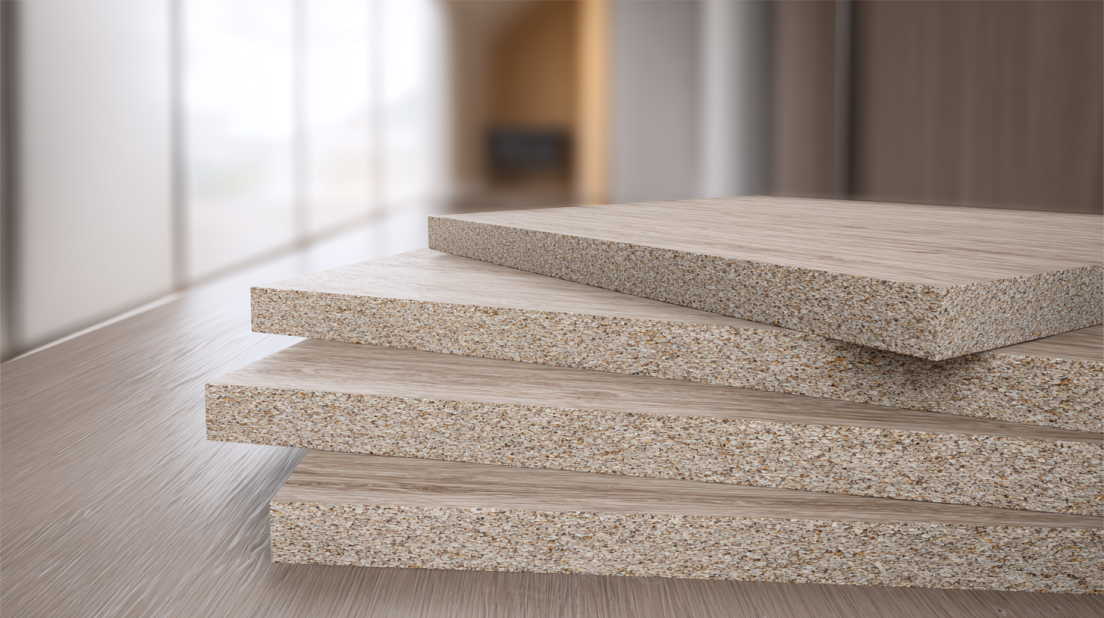
Particle Board is the most environmentally conscious engineered wood option, made entirely from recycled wood waste.
Environmental Benefits:
- 100% Recycled Content: Made from sawdust, shavings, and wood chips
- Waste Reduction: Diverts wood waste from landfills
- Lower Carbon Footprint: Minimal energy requirements for production
- Sustainable Manufacturing: Utilises wood industry byproducts
- How it’s made- Wood chips and sawdust are mixed with resin and compressed into boards.
- Quality Considerations:
- Uniform Density: Consistent strength throughout
- Smooth Surface: Excellent for paint and laminate finishes
- Cost-Effective: Most affordable engineered wood option
- Good Screw Holding: Adequate for most furniture applications
- Limitations to Consider:
- Moisture Sensitivity: Requires proper sealing in humid conditions
- Expansion Potential: May swell if exposed to water
- Limited Refinishing: Cannot be sanded multiple times
- Edge Sealing Required: Exposed edges need protection
- Best Used For:
- Kitchen Cabinets: With proper moisture protection
- Office Furniture: Desks, filing cabinets, shelving
- Temporary Structures: Exhibition displays, temporary partitions
- Budget Furniture: Affordable furniture solutions
- Particle Board Price Range: ₹20-50 per square foot
4. Medium-Density Fiberboard (MDF): Versatile Premium Option
MDF has become one of the most preferred engineered wood types for high-quality interior applications, offering exceptional versatility and finish quality.

- How it’s made- Fine wood fibres are bonded with resin and pressed into dense, smooth boards.
- Key features:
- Ultra-Smooth Surface: Perfect for paint and decorative finishes
- Excellent Machinability: Easy to cut, route, and shape
- Consistent Density: No grain patterns or weak spots
- Superior Paint Adhesion: Accepts all finish types beautifully
- Best Used For:
- Kitchen Cabinets: High-end cabinet construction
- Decorative Mouldings: Intricate trim and architectural details
- Furniture Components: Drawer fronts, cabinet doors
- Flooring: Engineered hardwood flooring substrate
- Quality Grades:
- Standard MDF: General-purpose applications
- Moisture-Resistant MDF: Bathroom and kitchen use
- Fire-Retardant MDF: Commercial applications requiring fire safety
- Ultra-Light MDF: Reduced weight for specific applications
- Quality Considerations:
- Dimensional Stability: Minimal expansion and contraction
- No Grain Splitting: Can be machined in any direction
- Consistent Thickness: Uniform quality throughout
- Excellent Finishing: Professional-quality surface preparation.
- MDF Price Range: ₹45-190 per square foot
5. High-Density Fibreboard (HDF): Premium Flooring Choice
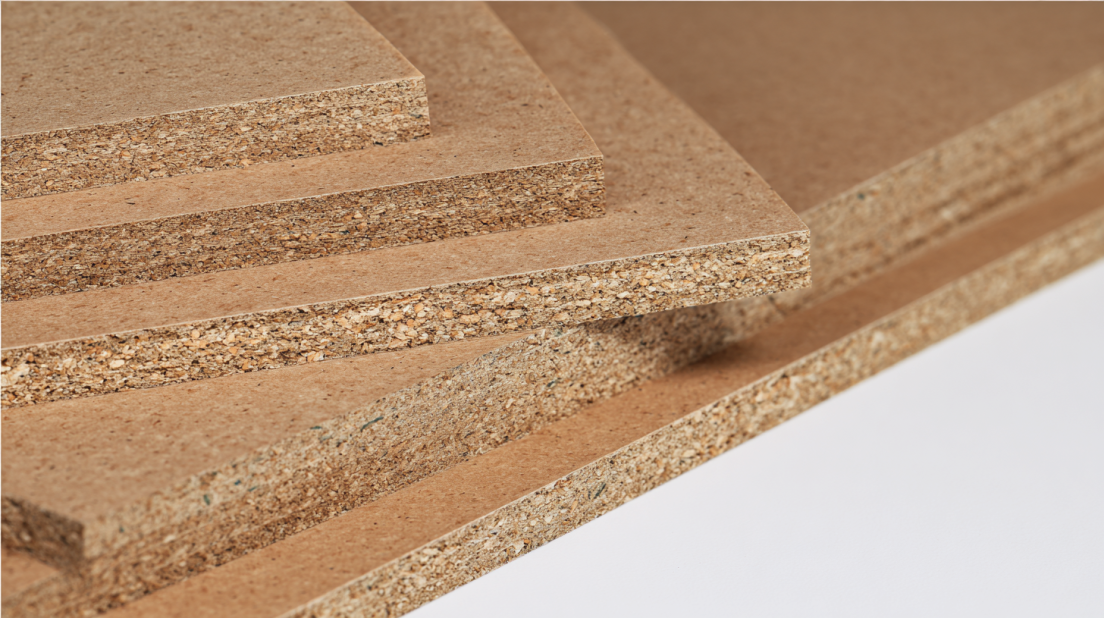
HDF represents the premium end of fibre-based engineered wood, specifically designed for demanding applications requiring maximum durability.
- How It’s Made: HDF uses extremely fine wood fibres, blended with synthetic and oil-based polymers, and pressed at higher heat and pressure than MDF.
- Key Features:
- Maximum Density: Highest strength-to-weight ratio
- Excellent Water Resistance: Superior moisture protection
- Exceptional Durability: Long-lasting performance
- Smooth, Glossy Finish: Professional appearance
- Best Used For:
- Premium Flooring: High-traffic commercial and residential floors
- Laminate Flooring Core: Substrate for laminate systems
- High-End Furniture: Premium furniture components
- Architectural Millwork: Detailed decorative elements
- Quality Advantages:
- Superior Stability: Minimal expansion and contraction
- High Impact Resistance: Withstands heavy use
- Excellent Screw Holding: Strong hardware attachment
- Professional Finish: Ready for high-end applications
- HDF Price Range: ₹50-170 per square foot
6. Laminated Veneer Lumber (LVL): Structural Excellence
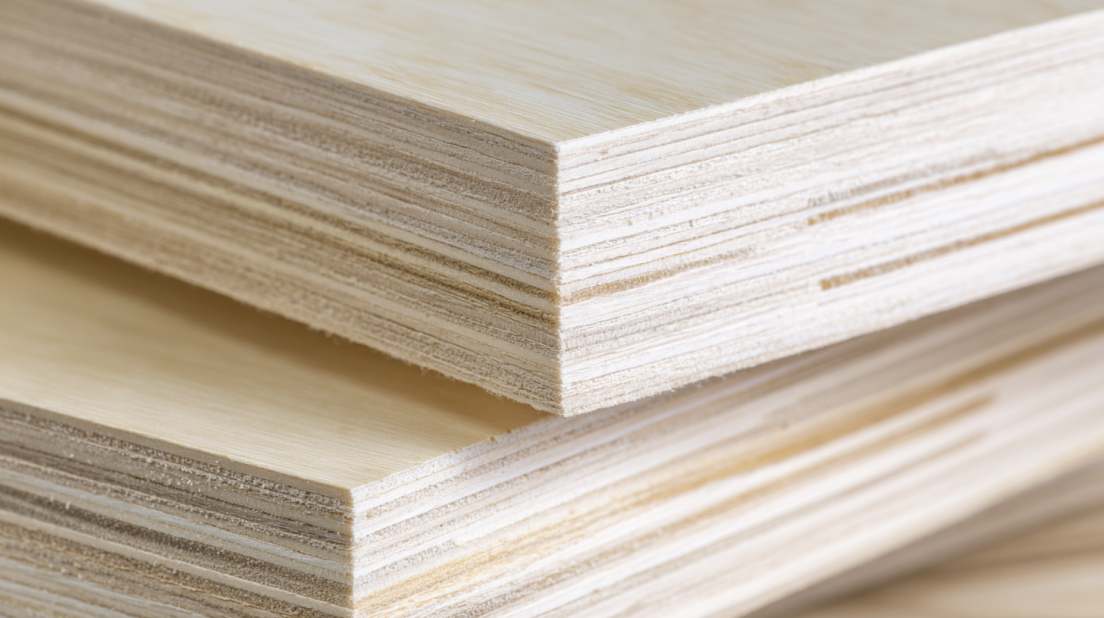
Laminated Veneer Lumber represents engineered wood technology at its finest, designed for structural applications requiring maximum strength.
- How It’s made- Constructed from multiple thin wood veneers with grains aligned in one direction, bonded using high-strength structural adhesives under pressure to deliver exceptional, beam-like strength and stability.
- Best Used For:
- Rim Boards: Perimeter framing support
- Beams and Headers: Load-bearing structural elements
- Scaffolding Planks: Construction industry applications
- Furniture Frames: High-strength furniture construction
- Engineering Advantages:
- Predictable Strength: Engineered performance characteristics
- Dimensional Stability: Minimal shrinkage and warping
- Long Spans: Supports longer unsupported distances
- Quality Consistency: Uniform strength throughout
- LVL Price Range: ₹150-300 per square foot
7. Cross-Laminated Timber (CLT): Innovation Leader
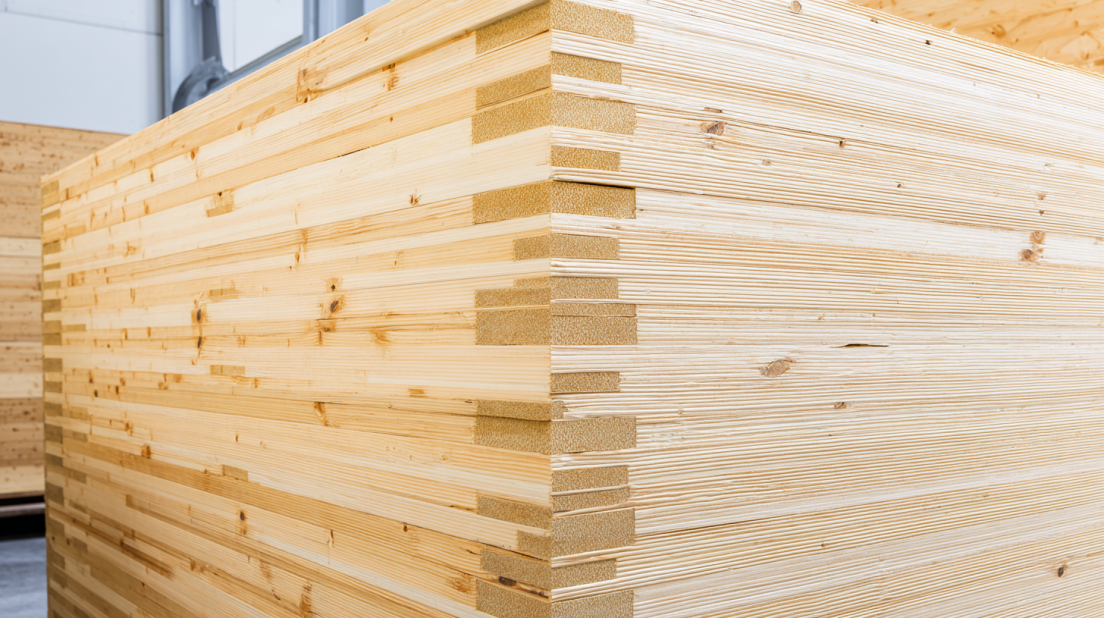
Cross-Laminated Timber represents the cutting-edge of engineered wood technology, offering exceptional strength and sustainability.
- How It’s Made: CLT is manufactured by glueing wood panels in perpendicular layers, forming a criss-cross structure that delivers exceptional load-bearing capacity and engineered stability.
- Exceptional Characteristics:
- Superior Strength: Comparable to steel and concrete
- Fire Resistance: The char layer protects the inner wood
- Seismic Performance: Excellent earthquake resistance
- Carbon Storage: Sustainable building material
- Best Used For:
- Multi-Story Construction: High-rise building construction
- Large Span Structures: Minimal support requirements
- Architectural Features: Exposed structural elements
- Sustainable Building: Green construction projects
Engineered Wood Price in India in 2026
The price of engineered wood varies with the material, thickness, grade, moisture resistance, surface finish, and brand. Premium moisture-resistant boards cost more than standard interior grades, while imported products and structural engineered wood carry the highest prices.
| Material Type | Thickness Range | Estimated Price (Per Sq. Ft.) | Best Budget Application |
| Particle Board | 11mm – 18mm | ₹30 – ₹55 | Office furniture, budget wardrobes, partitions |
| MDF | 6mm – 25mm | ₹40 – ₹80 | TV units, wall panels, and painted furniture |
| HDF | 6mm – 12mm | ₹55 – ₹110 | Engineered wood flooring, doors, and wall panelling |
| Blockboard | 19mm – 25mm | ₹70 – ₹130 | Doors, shelves, study tables |
| MR Plywood | 6mm – 19mm | ₹70 – ₹150 | Wardrobes, furniture, TV units |
| BWR Plywood | 6mm – 19mm | ₹90 – ₹180 | Kitchen cabinets, bathroom furniture |
| BWP / Marine Plywood | 6mm – 19mm | ₹120 – ₹250 | Kitchens, utility areas, moisture-prone spaces |
| Laminated Veneer Lumber (LVL) | 25mm – 75mm | ₹180 – ₹350 | Structural framing, beams, heavy-duty doors |
| Cross-Laminated Timber (CLT) | 60mm – 200mm | ₹350 – ₹700+ | Commercial and structural construction |
Note: Prices are indicative 2026 retail estimates and vary by thickness, city, manufacturer, certification, and moisture-resistant grade.
Factors Affecting the Engineered Wood Price
Several factors influence the price of engineered wood, even when two boards appear similar. Understanding these differences helps you choose the right material without overspending.
- Material Type: MDF, HDF, particleboard, blockboard, and plywood are priced differently due to their composition and performance.
- Thickness: Thicker boards require more raw material and generally cost more per square foot.
- Grade: Moisture-resistant grades such as BWR, BWP, and marine plywood are more expensive than standard interior grades.
- Surface Finish: Pre-laminated, veneered, or textured boards usually cost more than plain boards.
- Brand: Established manufacturers often charge more because of better quality control, warranties, and certifications.
- Certifications: FSC-certified boards and products with low-formaldehyde standards, such as E1 or CARB Phase 2, may carry a higher price.
- Application: Structural engineered wood products, such as LVL and CLT, are significantly more expensive than furniture-grade boards.
- Location and Availability: Prices vary by city, local demand, transportation costs, and dealer margins.
How to Identify Good Quality Engineered Wood?
A few simple checks can help you choose engineered wood that lasts longer and suits your project.
- Compare the warranty and specifications before buying. Product labels should clearly mention grade, thickness, moisture resistance, and manufacturing standards so you know exactly what you're paying for.
- Pick the right type first. Use plywood for heavy furniture, MDF for painted finishes, HDF for flooring, particle board for budget furniture, and blockboard for doors and long shelves.
- Check the grade. Ask whether the board is MR, BWR, or BWP/Marine grade. Kitchens and bathrooms need better moisture resistance than bedrooms or living rooms.
- Look at the edges. The layers should be tightly bonded without gaps, cracks, or loose wood particles. Poor edges usually indicate lower-quality manufacturing.
- Inspect the surface. A good board has a flat, smooth finish without bubbles, swelling, dents, or uneven patches.
- Ask about certifications. FSC certification indicates responsibly sourced wood, while CARB Phase 2 or E1 compliance means lower formaldehyde emissions for healthier indoor air.
- Check the thickness. The actual thickness should match the specification, especially for wardrobes, kitchen cabinets, and engineered wood furniture, where strength matters.
- Know the core material. High-density cores generally provide better screw holding, stability, and long-term performance than loosely bonded boards.
- Buy from recognised manufacturers. Reputed brands usually adhere to higher quality standards, offer warranties, and maintain consistent board quality.
- Match the board to the application. Don't use particle board in wet areas or choose MDF where heavy structural strength is required. Every engineered wood product has a suitable use.
How to Choose the Best Engineered Wood for Different Applications?
Selecting the best engineered wood depends on your specific application, budget, and performance requirements. Here's a comprehensive guide to help you choose optimal materials:
Best Engineered Wood for Kitchen Cabinets
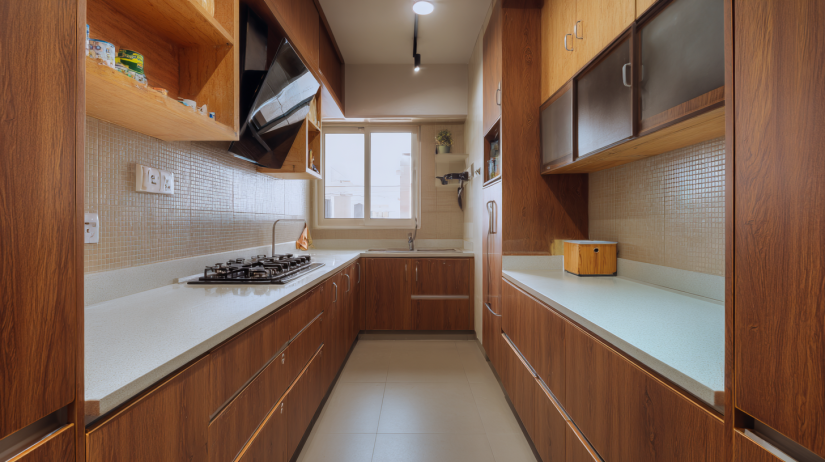
Top Choice: Moisture-Resistant MDF
- Why: Superior finish quality, moisture resistance, smooth surface
- Quality Grade: Marine-grade or moisture-resistant varieties
- Price Range: ₹80-150 per sq ft
- Benefits: Excellent paint adhesion, no grain patterns, easy to clean
Alternative: Marine-Grade Plywood
- Why: Proven moisture resistance, structural strength
- Quality Grade: BWR (Boil Water Resistant) or higher
- Price Range: ₹150-220 per sq ft
- Benefits: Long-term durability, refinishing capability
Best Engineered Wood for Flooring
Top Choice: HDF (High-Density Fibreboard)
- Why: Maximum durability, moisture resistance, smooth finish
- Quality Grade: Flooring-specific grades with proper underlayment
- Price Range: ₹100-170 per sq ft
- Benefits: Professional appearance, high traffic capability
Alternative: Premium Plywood
- Why: Traditional choice, refinishing capability
- Quality Grade: Marine or commercial grade
- Price Range: ₹180-220 per sq ft
- Benefits: Natural wood appearance, multiple refinishing cycles
Best Engineered Wood for Furniture
Top Choice: Blockboard
- Why: Lightweight, strong, excellent screw holding
- Quality Grade: Commercial grade with quality veneer faces
- Price Range: ₹120-180 per sq ft
- Benefits: Minimal warping, suitable for large panels
Alternative: High-Quality MDF
- Why: Smooth finish, consistent quality, versatile
- Quality Grade: Premium density grades
- Price Range: ₹100-150 per sq ft
- Benefits: Perfect for painted finishes, detailed machining
Best Engineered Wood for Doors

Top Choice: Blockboard
- Why: Lightweight, stable, strong construction
- Quality Grade: Premium grade with hardwood faces
- Price Range: ₹150-210 per sq ft
- Benefits: Minimal sagging, good insulation properties
Alternative: Solid Core MDF
- Why: Smooth surfaces, consistent quality
- Quality Grade: High-density, moisture-resistant
- Price Range: ₹120-190 per sq ft
- Benefits: No grain patterns, excellent paint finish
Best Engineered Wood for Outdoor Applications

Top Choice: Marine-Grade Plywood
- Why: Maximum weather resistance, proven durability
- Quality Grade: BWP (Boil Water Proof) certified
- Price Range: ₹180-220 per sq ft
- Benefits: Weather resistance, structural strength
Alternative: Treated Particle Board
- Why: Cost-effective, adequate weather resistance with treatment
- Quality Grade: Exterior-grade with proper sealing
- Price Range: ₹40-80 per sq ft
- Benefits: Budget-friendly, recyclable
Best Engineered Wood for Budget Projects
Top Choice: Particle Board
- Why: Most affordable option, adequate performance
- Quality Grade: Standard commercial grade
- Price Range: ₹20-40 per sq ft
- Benefits: Eco-friendly, uniform consistency
Alternative: Basic MDF
- Why: Better finish quality than particle board
- Quality Grade: Standard density grades
- Price Range: ₹45-80 per sq ft
- Benefits: Smooth surface, good machinability
Pros and Cons of Engineered Wood
Understanding the advantages and limitations of engineered wood helps you make informed decisions for your projects.
| Aspect | Advantages of Engineered Wood | Disadvantages of Engineered Wood |
| Cost | More affordable than solid wood with stable pricing | Premium grades can still be costly |
| Availability | Available in large, uniform sheets | Limited custom grain patterns |
| Strength & Stability | High-dimensional stability, resists warping and cracking | Lower load-bearing capacity than solid wood |
| Moisture Resistance | Performs well in humid conditions (grade dependent) | Some types swell or weaken with water exposure |
| Finish & Appearance | Smooth surface, ideal for paint and laminates | Veneer layers limit refinishing |
| Workability | Easy to cut, drill, and customise | Edges require sealing for durability |
| Durability | Consistent quality across boards | Prone to dents and surface scratches |
| Maintenance | Simple routine maintenance | Repairs often cost more than replacement |
| Environmental Impact | Uses recycled wood and reduces material waste | A composite structure makes recycling difficult |
| Health Considerations | Low-VOC options available | Cheaper boards may release formaldehyde |
| Applications | Suitable for furniture, flooring, interiors | Not ideal for heavy structural loads |
Engineered Wood vs Plywood
Although plywood is also an engineered wood product, it differs from boards like MDF, HDF, and particleboard in how it is made and where it performs best. Understanding the difference between engineered wood and plywood helps you choose the right material based on strength, moisture exposure, finish, and budget.
| Feature | Engineered Wood | Plywood |
| Composition | Wood fibres, wood chips, veneers, or strands bonded with resin under pressure | Thin layers of natural wood veneers glued crosswise |
| Common Types | MDF, HDF, Particle Board, Blockboard, LVL, CLT | MR Plywood, BWR Plywood, BWP/Marine Plywood |
| Strength & Load Capacity | Varies by type; MDF and particle board suit light to medium loads | High strength with excellent load-bearing capacity |
| Moisture Resistance | Depends on the board; standard MDF and particle board are moisture-sensitive | Better moisture resistance, especially BWR and Marine plywood |
| Dimensional Stability | Uniform thickness with minimal expansion under normal indoor conditions | Stable but may expand slightly in high humidity if not properly sealed |
| Screw Holding Ability | Moderate; HDF and blockboard perform better than particle board | Excellent screw and nail holding strength |
| Surface Finish | Smooth, making it ideal for laminate, veneer, acrylic, and paint finishes | Natural wood grain suitable for laminates, veneers, and polishing |
| Workability | Easy to machine, cut, and shape for modular furniture | Easy to cut and join, but requires more woodworking effort |
| Lifespan | Around 10–20 years depending on board type and application | Typically 20–40 years with proper installation and maintenance |
| Weight | Generally lighter, depending on the material | Slightly heavier because of solid wood veneer layers |
| Best Applications | Modular furniture, wardrobes, TV units, wall panels, office furniture | Kitchen cabinets, beds, doors, wardrobes, shelves, structural furniture |
| Suitable for Wet Areas | Only moisture-resistant grades are recommended | BWR and Marine plywood are well-suited for kitchens and utility areas |
| Maintenance | Low when used in recommended indoor conditions | Low; occasional polishing or laminate care extends life |
| Price Range | ₹30–₹180 per sq. ft., depending on the board type | ₹70–₹250 per sq. ft., depending on grade and thickness |
| Overall Cost | More economical for budget furniture and modular interiors | Higher upfront cost but better long-term durability |
Quick takeaway: If the priority is affordability and a smooth finish for modular furniture, engineered wood is a practical choice. For furniture that requires greater strength, improved moisture resistance, and a longer lifespan, plywood remains the preferred option.
Solid Vs Engineered Wood Flooring
The choice between solid wood and engineered wood flooring shapes not just the look of a home, but its long-term performance. While solid wood promises heritage durability, engineered wood delivers modern stability, moisture resistance, and cost efficiency suited to today’s living spaces.
| Factor | Solid Wood Flooring | Engineered Wood Flooring |
| Material Construction | Made from a single, solid piece of natural wood | Real wood veneer bonded over multiple plywood layers |
| Durability | Extremely durable due to full wood thickness | Durable but depends on veneer thickness |
| Lifespan | 30–100 years with proper care | 20–30 years on average |
| Refinishing Ability | Can be sanded and refinished 5–10 times | Limited to 1–3 refinishing cycles |
| Stability | Prone to expansion and contraction | High-dimensional stability |
| Moisture Resistance | Low; sensitive to humidity and moisture | Better resistance to moisture and humidity |
| Installation Surface | Cannot be installed over concrete slabs | Can be installed over concrete |
| Installation Complexity | Requires professional installation | DIY-friendly options available (click-lock) |
| Suitability for Basements | Not suitable | Suitable in most cases |
| Performance in High Traffic | Excellent; can be restored multiple times | Good; limited long-term restoration |
| Initial Cost | ₹300–800 per sq. ft (material + installation) | ₹150–400 per sq. ft (material + installation) |
| Long-Term Cost | Higher upfront, lower cost per year | Lower upfront, possible replacement cost |
| Maintenance Needs | Periodic refinishing every 7–10 years | Limited refinishing, easier routine care |
| Property Value Impact | High; boosts long-term property value | Moderate to high, depending on quality |
| Best Use Areas | Living rooms, bedrooms, dry interiors | Apartments, kitchens, varied climates |
Key Note:
- Choose solid wood for legacy homes and long-term value.
- Choose engineered wood for modern interiors, budget control, and climate stability.
How Can NoBroker help?
Engineered wood has become a preferred alternative to solid wood for modern interiors, thanks to its versatility, durability, and eco-friendly construction. It is widely used for kitchen cabinets, wardrobes, doors, furniture, and flooring. If you feel unsure about material selection, layout planning, or interior design decisions, NoBroker connects you with experienced interior experts who guide you at every step from finding the right home to designing functional, well-finished spaces that suit your budget and lifestyle.

Frequently Asked Questions
What is the price of engineered wood in 2026?
Is engineered wood better than plywood?
Is engineered wood 100% wood?
Which is better, MDF or engineered wood?
How long does engineered wood last?
Is engineered hardwood waterproof?


Our Recent Projects


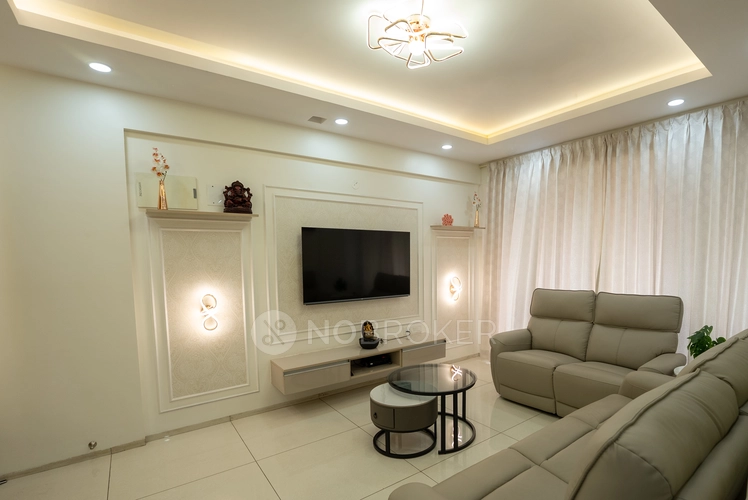
Reviews

Sanskriti Banka

My experience at Nobroker interiors has been the most exceptional as they personalised the interior of my whole flat with utmost detail... Read more

Bahar Uddin
I visited the experience centre and the vibes where very friendly they introduced me to their materials and gave me space planning idea... Read more

Pritisha Bora
I usually rely on online reviews and local recommendations, so I searched for interior designers near me and found NoBroker Interiors w... Read more

Nishant Singh
I found NoBroker Interiors when I was looking for house designers near me. They were the perfect choice for my home renovation project.... Read more

krishnan mullai
Very proactive and helpful from planning to execution. Thanks to the whole team. Mr. Tarun Kumar at the site was so helpful in coordina... Read more

Sayantani Gupta
The mindfulness to details and the desire to take care of the customers inputs and pain points is what sets them apart. One of the very... Read more

Sanjana K
I am very happy with the interior work done. The quality and finishing were really good ,and the entire process was smooth. A special t... Read more

Dr. SIPI SINHA
I am highly satisfied with the service provided by the No Broker team. The entire process was seamless and efficient. The level of coop... Read more

Anshumaan Arya “Vibhu”
I was in search of a design team that could deliver a modern, stylish look for my apartment. NoBroker Interiors was the perfect choice.... Read more

kavita vig
We had a very good initial experience at no brokers. The entire team including Mr. shantanu, Nukul, Amit and Mr. Ranganath gave a good ... Read more

Mehul Kumar
My home renovation project with NoBroker Interiors was a wonderful experience. Their team was professional, efficient, and extremely ta... Read more

Piyush GUPTA
Patient explanation and inserted all the requirements

Shweta Kapoor
Shweta has always been supportive and understands our requirements

Hyper gamer
My wife and I had been saving up for years to renovate our home, and we wanted to make sure we got it right. We did extensive research ... Read more

Tejaswini Banakar
Nice experience, got the full picture of materials used, finishing and project management

Mohd Shahzad
My experience with NoBroker Interiors was truly exceptional. From the very first consultation, I knew I was in good hands. Their design... Read more

Aseem Malhotra
Good service by Tabrez. Very professional and helpful.

Pavan Bhat
Mr.Ruben and Rahul sir have been very helpful in explaining a first time buyer like me with pros and cons of all kinds of interior prod... Read more

rashmika mazumder
Amit and Ali have taken us through the process and design very well. We were happy with the experience we had at their experience center.

Shristi Kedia
I took No broker interior services and the team is very helpful as well as cooperative

BOOKS KNOWLEDGE
I was in a real hurry to get my home interiors done because I had guests coming over from abroad. I simply searched for an interior com... Read more

mohammed asif hussain
I usually don't write reviews, but my experience with NoBroker Interiors was so positive that I felt compelled to share it. I found the... Read more

Aniket Katte
I had a very good experience with NoBroker Interiors for my home interior project. The designer Ms. Akanksha provided an excellent sup... Read more

Sagar Shingade
Selected Nobroker for my house interior after reviewing many other interior brands. They understand your need and provide best design c... Read more

naresh ramola
I would like to sincerely appreciate @Charudatta for outstanding effort in completing our home interior project. Your commitment to ti... Read more

Akanksha Damkondwar
> Excellent experience with NoBroker Interiors Pune! Designer understood my requirements perfectly and gave smart storage ideas for ki... Read more

DISHA RAI M
I had a great experience with NoBroker Interiors. Their team was professional, efficient, and highly talented. The designer they assign... Read more

Aditya Bhandari
If you are considering NoBroker Interiors, my overall experience was good, though it came with a significant caveat right at the start.... Read more

Faiz Uddin
NoBroker Interiors was a great choice for my home renovation project. Their team was professional, creative, and very easy to work with... Read more

Sravan Kumar
Smooth and hassle-free interior experience with NoBroker Interiors at Inspira by Primark Projects (Miyapur)! Project Manager Abhishek d... Read more

J Sri
Had good experience with team in completing the interior work

kranthi kumar
Great work by NoBroker, especially when it comes to the design. Prasanna, the designer assigned to us, did an excellent job. We really ... Read more

Pavan Ch
Overall, I am very happy and satisfied with the interior work. The entire project was completed well ahead of the planned schedule, and... Read more

pudi ramya
We had a wonderful experience working with Shravani, our interior designer. She understood our requirements and preferences very well a... Read more

Shery Samuel
We had a great experience working with our interior designer Abida Anjum. She was very cooperative, understanding, and patient througho... Read more

Venu Thota
Good experience with the interior work. Prashant and team understood our requirements and completed the work properly. The finishing is... Read more

Mohan Sai
Manoj was very proactive and all the work was completed in very short amount of time, overall very satisfied with the output
Testimonials
View All
NoBroker Interiors Review | Happy Customer Testimonial by Rajani
NoBroker Interiors | Customer Testimonial by Prinyakar Polley

NoBroker Interiors | Hyderabad Customer Testimonial by Prashant Choudhary

NoBroker Home Interiors | Hyderabad 4BHK Customer Review

NoBroker Interiors Customer Testimonial | Jatan's Story
NoBroker Interiors Review | Hyderabad Customer Testimonial

NoBroker Interiors Review | Modern Dream Home Customer Testimonial

NoBroker Interiors Customer Testimonial | Fast & Quality Home Interiors

NoBroker Interiors Customer Testimonial | Pune Dream Home

NoBroker Interiors| Bangalore Customer Testimonial
NoBroker Interiors: Sports Theme Interiors by NoBroker #interiordesign #nobrokerinteriors #nobroker

NoBroker Interiors - Customer Testimonials

That 3 PM meeting where ideas turn into floor plans, materials, and magic. 💫

Your 2026 list is here.

Smart wardrobe design that fits your life, beautifully.
POV: You gave your home a holiday hug.🥰

Blink and you’ll miss the makeover.👀

When your home finally gets its own weekend mood, this bar unit does the job beautifully.

A calm pooja corner every home needs.

NoBroker Home Interior Service | Saurabh & Prachi Share Their Story #interiordesign #shorts
About the Author

Shwetha Reddy
Author
Shwetha Reddy is a senior interior designer in Hyderabad with over 4+ years of experience designing thoughtful, functional liv...










Recent Blogs
Subscribe to our Newsletter
Get latest news delivered straight to your inbox