Whirlpool Washing Machine Power Consumption – Units, Wattage & Electricity Cost Guide

200 Views
Table of Contents
Summary
Whirlpool washing machine power consumption varies based on machine type, capacity, and wash settings. This blog covers the Whirlpool washing machine's power consumption per hour, per cycle, and monthly consumption. Front-load machines are more efficient, while top-load models offer convenience with moderate energy use. Features like 6th Sense and inverter technology help optimize Whirlpool washing machine energy consumption. By using Eco Wash, cold water cycles, and proper load management, users can reduce
Whirlpool Washing Machine Power Usage at a Glance
Whirlpool washing machine power consumption varies by load type and settings. This power consumption remains efficient thanks to inverter motors and smart sensing technology in both front-load and top-load machines.
| Feature | Front Load | Top Load | Semi-Automatic |
|---|---|---|---|
| Avg Power (Watt) | 350W – 2000W | 360W – 770W | 340W – 420W |
| Energy per Cycle | 0.4 – 1.0 kWh | 0.2 – 0.6 kWh | 0.1 – 0.2 kWh |
| Whirlpool washing machine power consumption per hour | Moderate to High | Moderate | Low |
| Monthly Consumption | 10 – 20 units | 6 – 15 units | 4 – 10 units |
| Efficiency | High (Inverter) | Balanced | Basic Efficiency |
About Whirlpool Washing Machine
Whirlpool washing machine power consumption is built for efficiency with smart sensors and inverter technology. These machines balance performance and energy savings, keeping the electricity consumption low for daily use.
| Feature | Details |
|---|---|
| Technology | 6th Sense Intelligence |
| Types | Front Load, Top Load, Semi-Automatic |
| Energy Rating | 5-Star Models Available |
| Benefit | Reduced Whirlpool washer power consumption |
Understanding Whirlpool Washing Machine Power Consumption
Whirlpool washing machine motor uses moderate electricity, but the heater increases consumption significantly during hot washes. Whirlpool washing machine energy consumption varies based on load size, wash mode, and temperature settings. Advanced features like 6th Sense technology automatically adjust water and power usage. This helps reduce unnecessary electricity usage while maintaining strong cleaning performance for everyday laundry needs.
Whirlpool Washing Machine Power Consumption per Hour
A Whirlpool washing machine's power consumption per hour usually ranges from 350 to 2000 watts. During normal cold washes, the motor runs at lower power, keeping electricity usage minimal. When hot-water cycles are selected, the internal heater significantly increases the power draw. Whirlpool front-load washing machine power consumption is lower compared to top-load models due to efficient water usage and optimized motor performance.
Whirlpool Washing Machine Electricity Usage per Cycle
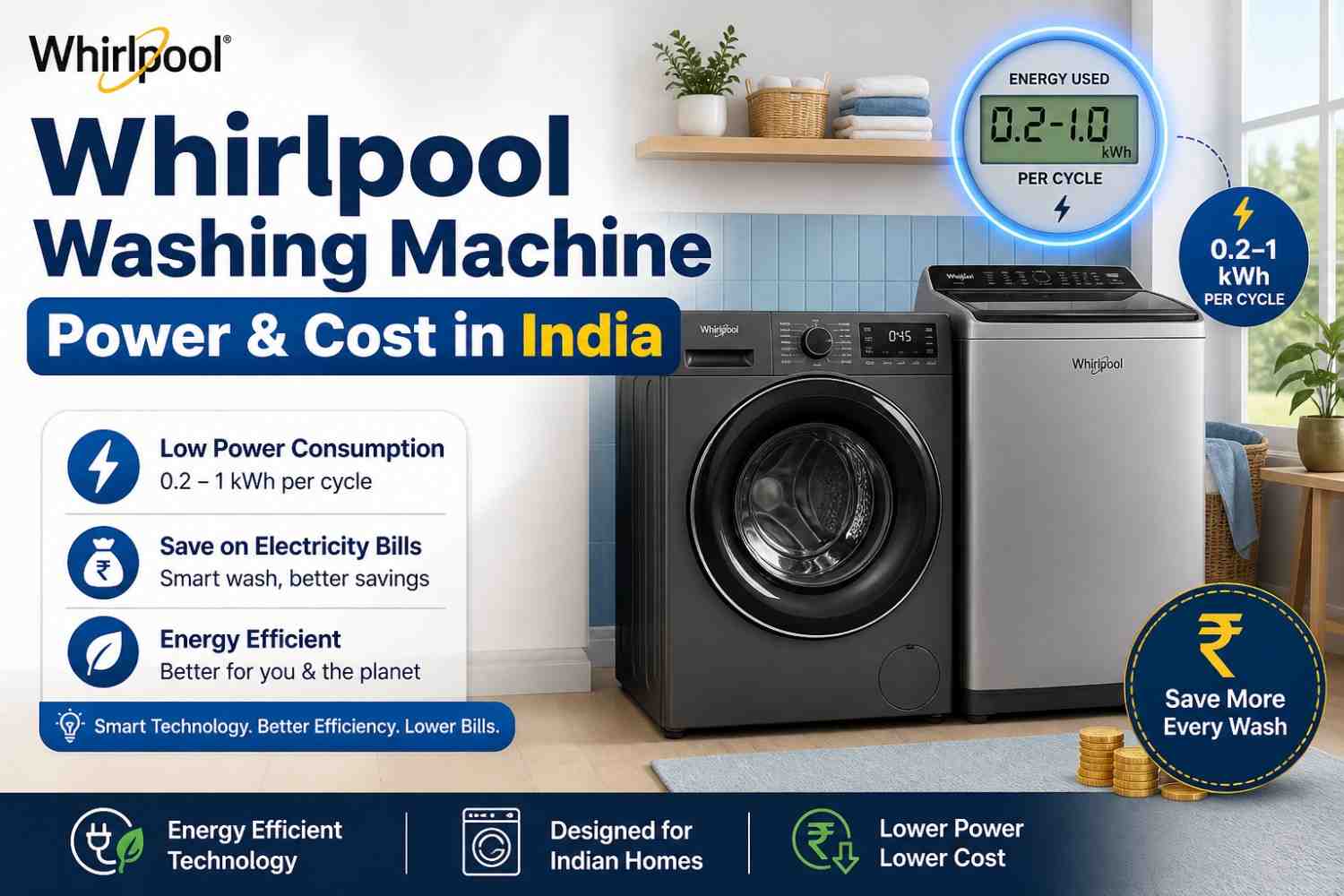
Whirlpool washing machine electricity consumption per cycle typically ranges from 0.2 kWh to 1.0 kWh. Short and cold wash programs consume less electricity, while longer hot wash cycles increase usage. Whirlpool 7kg washing machine power consumption remains efficient for daily laundry. Choosing eco mode or quick wash settings helps reduce overall energy use, making Whirlpool washing machines a practical option for managing electricity costs.
Monthly Electricity Consumption of Whirlpool Washing Machine
The Whirlpool washing machine's monthly power consumption depends on how often you use it. For average usage of 15–20 washes, electricity consumption can range from 6 to 15 units. Whirlpool washing machine electricity consumption increases when hot-water cycles are used frequently. Using cold water, full loads, and eco modes can help keep monthly power usage low and manageable for most households.
How Much Electricity Does a Washing Machine Consume?
Washing machine power consumption in India generally ranges between 0.2 to 1.0 units per cycle. Heating water uses the most electricity, while spinning and washing require less power. Selecting proper wash settings and avoiding unnecessary hot cycles can help lower overall electricity consumption.
Average Power Consumption in a Whirlpool Washing Machine
The average power consumption of Whirlpool washing machines is typically 400-500 watts during motor operation. When the heater is in use, it can reach up to 2000 watts.
Power Usage of Washing Machine Based on Load Type
Whirlpool washing machine power consumption changes depending on the type of clothes you wash. Heavy loads like bedsheets and towels require more energy because they use longer cycles and stronger spin cycles. Smaller loads use less electricity but may reduce efficiency if done frequently.
Understanding Washing Machine Power Requirements
Whirlpool washing machines require a 220–240V power supply and a proper 15A socket. The power consumption of a Whirlpool washing machine per hour increases during heating cycles. The rated wattage indicates the maximum power the machine can draw, but actual consumption is lower during regular washes.
How to Calculate Whirlpool Washing Machine Power Consumption and Cost
You can easily calculate how much electricity your Whirlpool washing machine uses and the cost of running it using a simple formula:
1. Calculate Total Power ConsumptionTotal Units Consumed (kWh)=Power Used per Cycle (kWh)×Number of Cycles per Month
Example:
- Power per cycle = 0.5 kWh (average for a 7kg Whirlpool washer)
- Number of washes per month = 20
Total Units=0.5×20=10 kWh (units)
2. Calculate Monthly CostCost (₹)=Total Units×Electricity Rate (₹/unit)
Example:
- Total units = 10
- Electricity rate in India ≈ ₹7/unit
Cost=10×7=₹70
Tip: Tracking your washing machine’s monthly consumption can help you save electricity and reduce bills by choosing energy-efficient cycles or washing larger loads at once.
Whirlpool Top-Load Washing Machine Power Consumption
Whirlpool Top Load washing machine power consumption is designed for balanced performance and convenience.
- Whirlpool Top Load washing machines' power consumption ranges from 360W to 770W, depending on the model and capacity. Advanced inverter technology helps regulate power usage efficiently during different wash cycles.
- Whirlpool washing machines use more electricity with heater-based wash programs, especially in premium models. Cold wash cycles remain the most energy-efficient option for daily laundry.
- Whirlpool 7kg washing machine's power consumption is suitable for regular home use. Smart sensors automatically adjust water and energy usage, ensuring efficient washing without unnecessary electricity consumption.
Whirlpool Front-Load Washing Machine Power Consumption
Whirlpool front-loading washing machine is designed for efficiency with inverter motors and 6th Sense technology, helping reduce electricity consumption during regular laundry cycles.
- Whirlpool front-load washing machines typically consume 350W to 2000W, depending on wash settings. Cold cycles use minimal electricity, while heater-based cycles significantly increase power usage.
- Whirlpool 7kg front load washing machine power consumption remains efficient per cycle, usually around 0.4 to 1.0 kWh. Eco and quick wash programs help further reduce the Whirlpool washing machine's energy consumption.
- The Whirlpool washing machine's power consumption per hour is controlled by inverter technology, which adjusts the motor speed based on the load size. This prevents excess electricity use and improves long-term efficiency.
Whirlpool Washing Machine Power Consumption in Different Settings
A Whirlpool washing machine's power consumption depends on the program type and water temperature. Whirlpool washing machine energy consumption remains low in eco modes but increases with heater-based wash settings.
| Setting Type | Avg Power Consumption | Cost per Cycle |
|---|---|---|
| Eco Wash | 0.15 – 0.3 kWh | ₹1 – ₹2 |
| Daily Wash | 0.4 – 0.6 kWh | ₹3 – ₹5 |
| Quick Wash | 0.2 – 0.4 kWh | ₹2 – ₹3 |
| Hot Wash (60°C) | 1.2 – 1.8 kWh | ₹8 – ₹13 |
| Sanitize (90°C) | 2.0 – 2.5 kWh | ₹14 – ₹18 |
Whirlpool Washing Machine Power Consumption by Capacity
A Whirlpool washing machine's power consumption depends on its capacity and technology. Whirlpool washing machine power consumption per hour and per cycle increases with size but inverter models keep energy usage controlled.
| Capacity | Avg Consumption (Per Cycle) | Wattage Range | Key Insight |
|---|---|---|---|
| 6 – 6.5 kg | 0.06 – 0.08 kWh | 350W | Budget-friendly and efficient |
| 7 – 7.5 kg | 0.08 – 0.12 kWh | 400–450W | Ideal for daily usage |
| 8 – 8.5 kg | 0.10 – 0.15 kWh | 450–550W | Common for family use |
| 9 – 10.5 kg | 0.15 – 0.20 kWh | 580–770W | Higher capacity, better per kg efficiency |
| Semi-Automatic | 0.10 – 0.20 kWh | 340–420W | Lowest Whirlpool washer power consumption |
Factors Affecting Whirlpool Washing Machine Energy Consumption
Whirlpool washing machine energy consumption varies depending on usage patterns and features. Whirlpool washing machine power consumption per hour and per cycle depends mainly on temperature, load size, and machine technology.
- Heating water is the largest contributor to the Whirlpool washing machine's electricity consumption. Hot wash cycles can use up to 90% more energy than cold washes, significantly increasing per-cycle power consumption.
- Load weight affects Whirlpool washer power consumption, as heavier loads require more motor effort. However, using full loads is more efficient than running multiple smaller loads, reducing total monthly electricity usage.
- Wash settings like Eco mode, Daily wash, and Stainwash impact power usage. Eco settings lower Whirlpool washing machine power consumption per hour, while hot wash programs increase energy demand due to heater usage.
- Inverter and 6th Sense technology automatically adjust motor speed and water levels. This helps reduce energy consumption of Whirlpool washing machines by preventing unnecessary power use during smaller or lighter loads.
- Spin speed and cycle duration also influence electricity use. Higher RPM uses slightly more power per cycle but reduces drying time, thereby indirectly lowering total household energy consumption.
How to Reduce Power Consumption in Whirlpool Washing Machines
The power consumption of a Whirlpool washing machine can be reduced with simple adjustments. Managing the electricity consumption of a Whirlpool washing machine helps improve efficiency and keep long-term energy costs under control.
- Prefer cold wash or Eco mode instead of hot cycles. This significantly reduces the power consumption of Whirlpool washing machines per cycle, since the heater is the main source of high electricity use.
- Use the 6th Sense or inverter features efficiently. These technologies automatically adjust power based on load, helping reduce Whirlpool washer power consumption and avoid energy wastage.
- Avoid overloading or underloading the machine. Balanced loads improve washing efficiency and ensure optimal power consumption per hour for your Whirlpool washing machine during each cycle.
- Select shorter or Quick Wash programs for lightly soiled clothes. This reduces cycle duration and lowers Whirlpool washing machine energy consumption without affecting daily cleaning needs.
- Regular maintenance like cleaning filters and checking water flow ensures the machine runs smoothly, preventing excess electricity usage and improving overall performance.
Conclusion
Whirlpool washing machines are built to deliver a strong balance of efficiency and performance, especially with advanced features like Inverter and 6th Sense technology. By understanding Whirlpool washing machine power consumption per cycle and per month, you can make smarter choices to reduce unnecessary energy use through settings like Eco wash and cold-water cycles. Along with proper usage habits, regular maintenance can also help improve efficiency and lower electricity bills. If your appliance needs servicing or isn’t performing at its best, NoBroker Whirlpool Washing Machine Repair Services offer quick, reliable, and hassle-free support to keep it running smoothly.
Other Popular Washing Machine Brands Power Consumption Guides
From energy-efficient models to feature-rich smart washers, different brands cater to different needs. Explore these brand-wise guides to compare electricity usage, performance, and convenience before making your choice.
- Samsung Washing Machine Power Consumption
- Bosch Washing Machine Power Consumption
- Godrej Washing Machine Power Consumption
- IFB Washing Machine Power Consumption
- LG Washing Machine Power Consumption
Cities We Serve for Washing Machine Repair & Services
Get trusted washing machine repair with NoBroker in Bangalore, Chennai, Hyderabad, Delhi, Mumbai, Pune, Gurgaon, Noida, Ghaziabad, Greater Noida, and Faridabad with transparent pricing and hassle-free service.
What Brands Do We Cover For Washing Machine Repair Services?
Get professional washing machine repair for brands like LG, Samsung, Whirlpool, IFB, Bosch, and Haier with NoBroker. Our experts service all models, including top-load, front-load, and automatic variants, with 100% genuine spare parts and a 180-day warranty.
Frequently Asked Questions
1. What is the Whirlpool washing machine power consumption per hour?
2. How much electricity does a Whirlpool washing machine use per cycle?
3. Does a Whirlpool front-load washing machine consume more electricity?
4. What is the Whirlpool 7kg washing machine power consumption?
5. How to reduce the Whirlpool washing machine's electricity consumption?

Login / Sign up
Zero Brokerage.
Thousands of new listings daily.
100 Cr+ Brokerage saved monthly.
About the Author

krishnanunni
Senior Editor


Recent Blogs

Subscribe to our Newsletter
Get latest news delivered straight to your inbox