IFB Washing Machine Power Consumption – Units, Wattage & Electricity Cost Guide

390 Views
Table of Contents
Summary
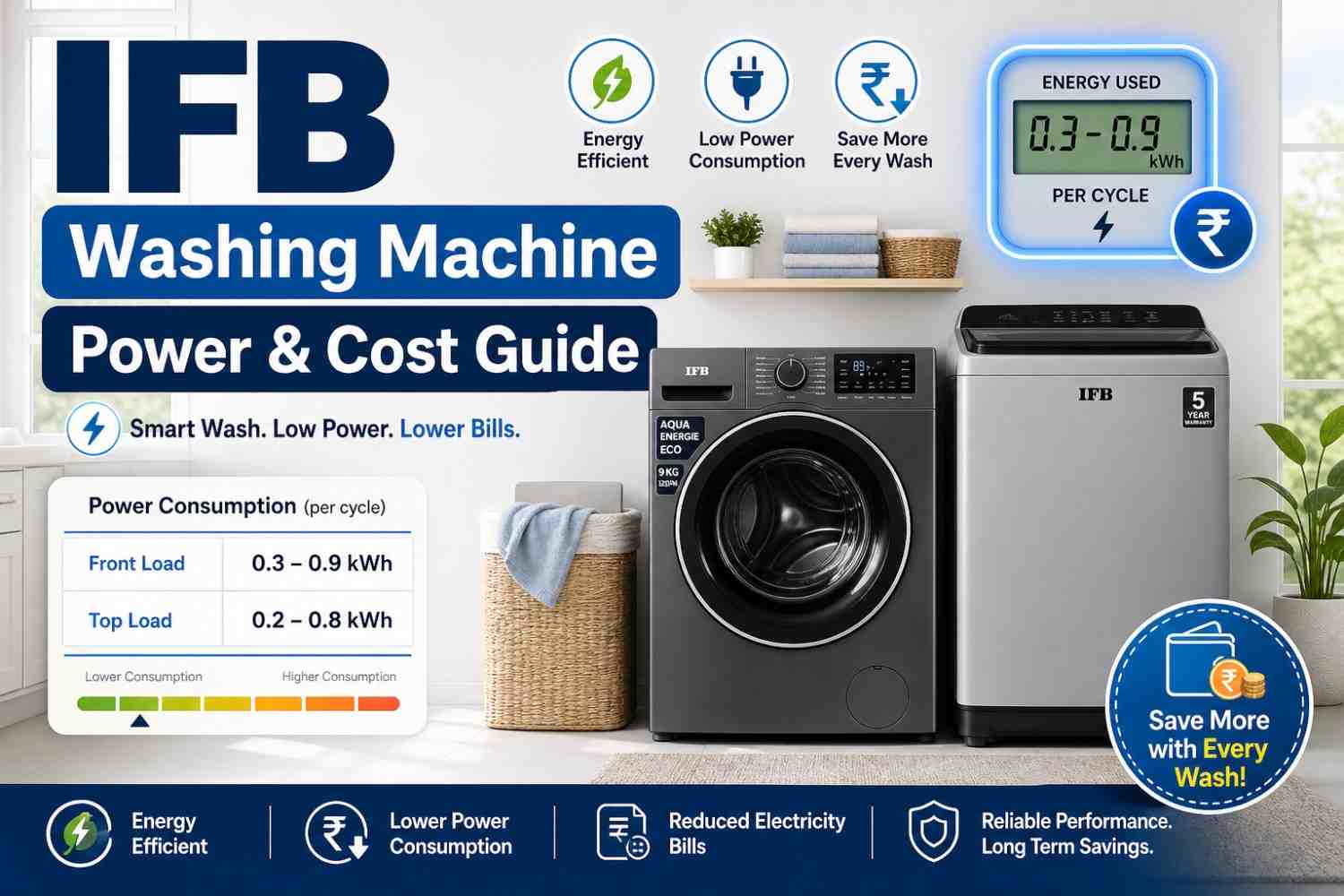
This guide explains IFB washing machine power consumption per hour, per cycle, and monthly usage in simple terms. Front-loading machines consume more power during hot washes, while top-loading machines are more energy-efficient for daily use. Using Eco mode, cold water, and full loads can significantly reduce electricity consumption in an IFB washing machine. Overall, IFB washer power consumption remains efficient due to inverter technology and 5-star ratings, making it a reliable choice for Indian households looking to save energy and reduce electricity bills.
Quick Info Table – IFB Washing Machine Power Usage at a Glance
An IFB washing machine power consumption depends on the model type, load capacity, and heater usage. Modern IFB washer power consumption is optimized with inverter technology for better efficiency and lower electricity bills.
| Feature | Front Load (With Heater) | Front Load (Cold Wash) | Top Load |
|---|---|---|---|
| Avg Power (Watt) | 2000W – 2250W | 300W – 500W | 360W – 500W |
| Energy per Cycle | 0.6 – 1.2 kWh | 0.2 – 0.5 kWh | 0.07 – 0.13 kWh |
| IFB washing machine power consumption per hour | High (heater active) | Low (motor only) | Moderate |
| Monthly Consumption | 15 – 30 units | 10 – 18 units | 5 – 12 units |
| Efficiency | 5 Star BEE Rated | Highly Efficient | Energy Saving |
About the IFB Washing Machine
IFB washing machines are designed for high efficiency, featuring advanced inverter motors and 5-star ratings, ensuring low electricity consumption while delivering strong cleaning performance.
Understanding Average IFB Washing Machine Power Consumption Factors
An IFB washing machine power consumption depends on the wash temperature, machine type, and load size. Front-load models use more power when the heater is active, while top-load machines generally consume less electricity. The IFB washing machine energy consumption is optimized through Eco Inverter technology, which adjusts motor speed based on laundry weight. This helps reduce unnecessary electricity use and improves efficiency during both regular and heavy wash cycles.
IFB Washing Machine Power Consumption per Hour
IFB washing machine power consumption per hour varies between 300W and 2200W, depending on the cycle. During cold washes, the motor uses minimal power, keeping IFB washer power consumption low. However, when hot-water settings are used, the internal heater significantly increases power consumption.
IFB Washing Machine Electricity Usage per Cycle
IFB washing machine electricity consumption per cycle typically ranges from 0.5 kWh to 1.2 kWh for front load machines. IFB 7kg washing machine power consumption remains efficient for standard household use.
Monthly Electricity Consumption of IFB Washing Machine
IFB washing machine power consumption monthly depends on usage frequency and wash settings. For around 15–20 cycles, monthly consumption can range from 12 to 25 units. This can go higher if the machine is used on a hot-water setting.
How Much Electricity Does a Washing Machine Consume?
Washing machine electricity consumption varies depending on machine type, capacity, and wash settings. The IFB washing machine power consumption India ranges between 0.3 kWh and 2.0 kWh per cycle.
Power Usage of Washing Machine Based on Load Type
The IFB washing machine power consumption changes based on the type and weight of clothes. Heavy loads like blankets require more power due to longer wash times and higher spin speeds. Smaller loads use less electricity but may be less efficient if used frequently. IFB washer power consumption is balanced through smart load detection, ensuring the machine uses only the energy required for each wash.
Understanding Washing Machine Power Requirements
The IFB washing machines require a 220–240V power supply and a 15A socket to handle peak load. The rated wattage shows maximum power usage, but actual consumption is lower during normal washes. Proper installation and a stable voltage supply help maintain efficient electricity consumption of the IFB washing machine and ensure long-term appliance performance.
How to Calculate IFB Washing Machine Power Consumption and Cost
You can estimate IFB washing machine electricity usage and running cost using simple formulas based on energy consumption per cycle.
1. Power Consumption Formula
Total Energy Consumption (kWh)=Energy per Cycle (kWh)×Number of Cycles
Example:
If an IFB washing machine uses 0.8 kWh per cycle and you run 20 cycles in a month:0.8×20=16 kWh (units)
So, total monthly consumption = 16 units
2. Electricity Cost Formula
Monthly Cost=(kWh per cycle ×Number of washes) × Electricity rate
Example:
If electricity rate is ₹7 per unit:16×7=₹112
3. Combined Shortcut Formula
Tip:
- Cold wash cycles use less energy
- Hot wash cycles increase consumption due to heater usage
- Eco mode helps reduce total electricity cost
IFB Top Load Washing Machine Power Consumption
The IFB washer power consumption is optimized for everyday use.
- The IFB Top Load washing machine power consumption stays between 360W to 500W for normal cycles, making it energy-efficient for regular use. Without using a heater, electricity consumption remains minimal compared to front-loading machines.
- The IFB washing machine electricity consumption increases only when hot water settings are used. However, most top-load models rely on cold water, which helps reduce overall energy usage and monthly electricity costs.
- A 7kg washing machine power consumption in top-load models is ideal for small families. These machines balance performance and efficiency by adjusting power based on load size using inverter technology.
IFB Front-Load Washing Machine Power Consumption
The IFB front-load washing machine power consumption is higher during heating cycles, but remains efficient overall due to inverter motors and optimized wash programs for Indian households.
- IFB front-load washing machine power consumption ranges between 2000W to 2250W when the heater is active. During cold washes, electricity consumption drops significantly, making it more energy-efficient for daily use.
- IFB 7kg front-load washing machine power consumption is calculated per kg, typically around 0.07 to 0.089 kWh/kg/cycle.
- IFB washing machine energy consumption increases during hot-wash programs, such as 60°C or 95°C cycles. Using eco mode or lower temperature settings helps reduce electricity usage without affecting cleaning performance.
IFB Washing Machine Power Consumption in Different Settings
The IFB washing machine power consumption changes based on wash programs and temperature.
| Setting Type | Avg Power Consumption | Cost per Cycle |
|---|---|---|
| Cold Wash | 0.2 – 0.4 kWh | ₹2 – ₹3 |
| Eco Mode | 0.5 – 0.8 kWh | ₹3 – ₹6 |
| Quick Wash | 0.3 – 0.5 kWh | ₹2 – ₹4 |
| Cotton Hot (60–95°C) | 1.5 – 2.2 kWh | ₹10 – ₹15 |
| Steam / Allergy Care | 1.8 – 2.5 kWh | ₹12 – ₹18 |
IFB Washing Machine Power Consumption by Capacity
IFB washing machine power consumption varies by drum size and heater usage as well.
| Capacity | Avg Consumption (Per Cycle) | Wattage Range | Key Insight |
|---|---|---|---|
| 6 – 6.5 kg | 0.50 – 0.60 kWh | 2000W | Best for small families, lower IFB washer power consumption |
| 7 kg | 0.60 – 0.75 kWh | 2100W | Balanced efficiency and performance |
| 8 kg | 0.70 – 0.85 kWh | 2150W | Popular choice for medium households |
| 9 kg+ | 0.80 – 1.00 kWh | 2250W | Higher load but efficient per kg |
| Top Load (7–8 kg) | 0.07 – 0.10 kWh | 360–500W | Lowest IFB top load washing machine power consumption |
Factors Affecting IFB Washing Machine Energy Consumption
The IFB washing machine energy consumption depends on multiple usage and technical factors.
- Water temperature plays the biggest role in IFB washing machine electricity consumption, as using hot water activates the internal heater, increasing power usage to 2000–2250W compared to lower consumption during cold washes.
- Load size directly affects the IFB washer's power consumption. Running full loads improves efficiency per kilogram, while multiple small loads increase total energy usage and raise the IFB washing machine's monthly power consumption.
- Wash programs like Eco, Quick Wash, and Cotton cycles affect energy use differently. Eco mode reduces energy consumption in an IFB washing machine, while hot or steam programs increase electricity consumption per cycle.
- Spin speed also affects the IFB washing machine's power consumption. Higher RPMs consume more electricity while spinning but reduce drying time, helping balance overall energy usage throughout the laundry process.
- Motor technology such as Eco Inverter motors, helps reduce IFB washing machine power consumption in India by adjusting power based on load, minimizing energy wastage compared to traditional fixed-speed motors.
How to Reduce Power Consumption in IFB Washing Machines
Reducing IFB washing machine power consumption is easy with smart usage habits. By optimizing IFB washing machine's electricity consumption, you can lower monthly bills without affecting wash quality or performance.
- Use cold water or low-temperature settings whenever possible, as heating water drastically increases IFB washing machine power consumption per hour and can consume up to 90% more electricity during a wash cycle.
- Always run full loads instead of multiple small loads. This improves IFB washer power consumption efficiency per kg and helps reduce overall IFB washing machine power consumption per month.
- Choose Eco or Quick Wash programs for daily laundry. These modes reduce wash time and energy use, lowering the IFB washing machine's energy consumption without compromising cleaning performance.
- Maintain the machine regularly by cleaning filters and descaling the heater. A clean system ensures efficient operation and prevents unnecessary increases in electricity consumption of IFB washing machines.
- Use appropriate spin speed settings. Higher RPM removes more water, reducing drying time and indirectly lowering total electricity usage throughout the laundry process.
Conclusion
Understanding the power consumption of an IFB washing machine helps you manage electricity usage efficiently while still getting effective wash performance. From IFB washing machine power consumption per hour to monthly usage, factors such as load size, water temperature, and wash mode significantly impact overall electricity consumption. Choosing Eco modes, running full loads, and opting for cold washes can help reduce energy usage and lower your utility bills. To keep your appliance running efficiently and avoid unexpected breakdowns, you can also rely on NoBroker Washing Machine Repair Services for quick, professional, and hassle-free assistance.
Explore Power Consumption of Other Trusted Washing Machine Brands
Each washing machine brand offers different levels of energy savings, power usage, and smart functionality. Use these detailed comparison guides to evaluate features, improve efficiency, and find the right machine for your home.
- Samsung Washing Machine Power Consumption
- Bosch Washing Machine Power Consumption
- Godrej Washing Machine Power Consumption
- LG Washing Machine Power Consumption
- Whirlpool Washing Machine Power Consumption
Cities We Serve for Washing Machine Repair & Services
NoBroker provides convenient washing machine repair services across Bangalore, Chennai, Hyderabad, Delhi, Mumbai, Pune, Gurgaon, Noida, Ghaziabad, Greater Noida, and Faridabad with flexible scheduling and quality doorstep assistance.
Brands We Serve for Washing Machine Repair Services
Book washing machine repair with NoBroker for Samsung, LG, Whirlpool, IFB, Bosch, Haier, and other brands. Our experts repair all variants with reliable service and a 180-day warranty.
Frequently Asked Questions
1. What is the IFB washing machine's power consumption per hour?
2. How much electricity does an IFB washing machine use per cycle?
3. Does an IFB front-load washing machine consume more power?
4. What is the IFB 7kg washing machine's power consumption?
5. How to reduce the IFB washing machine's electricity consumption?

Login / Sign up
Zero Brokerage.
Thousands of new listings daily.
100 Cr+ Brokerage saved monthly.
About the Author

krishnanunni
Senior Editor


Recent Blogs

Subscribe to our Newsletter
Get latest news delivered straight to your inbox