Microwave Power Consumption Explained: Usage, Cost, Electricity Calculation & Energy-Saving Tips

63 Views
Table of Contents
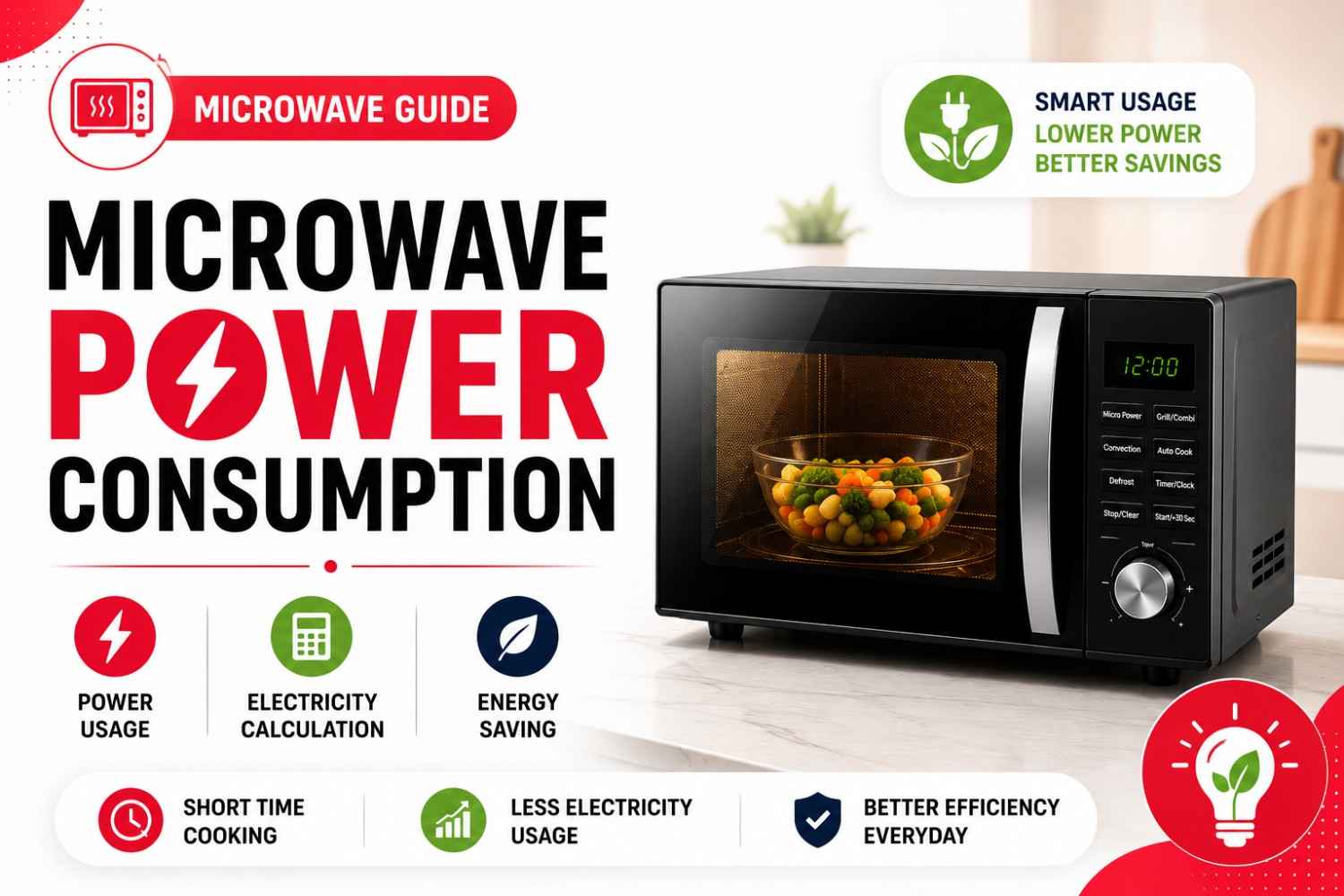
Microwave ovens have become one of the most convenient kitchen appliances, helping users heat, cook, and defrost food within minutes. Despite their high wattage, many people worry about microwave power consumption and how much it adds to their monthly electricity bill. The good news is that microwaves run for short durations, making their overall electricity usage much lower than many people expect.
Most household microwave ovens consume between 700 and 1500 watts, but since they typically operate for only a few minutes each day, they generally use 4 to 15 units of electricity per month, depending on usage habits. This guide explains microwave electricity consumption, how to calculate running costs, factors affecting power usage, and practical tips to save energy while using your microwave efficiently.
What is Microwave Power Consumption?
Microwave power consumption refers to the amount of electricity a microwave oven uses while heating, cooking, or defrosting food. The actual electricity usage depends on the microwave's wattage, cooking duration, power settings, and how frequently it is used.
Understanding microwave oven power consumption helps homeowners estimate monthly electricity costs and choose an energy-efficient appliance that suits their cooking needs.
What Uses Electricity in a Microwave?
A microwave contains several electrical components that work together during cooking. Some consume power continuously during operation, while others are used only in specific cooking modes.
Magnetron
- Generates microwave energy to heat food.
- Consumes the majority of the appliance's electricity.
- Higher power settings require more energy.
Cooling Fan
- Prevents internal components from overheating.
- Runs during and shortly after cooking.
- Uses relatively little electricity.
Turntable Motor
- Rotates food for even heating.
- Consumes minimal power.
- Operates only while the microwave is running.
Grill Heater (Grill Microwaves)
- Uses electric heating elements for grilling.
- Consumes more electricity than the standard microwave mode.
- Suitable for browning and crisping food.
Convection Heating Element (Convection Microwaves)
- Uses heating elements and a fan to bake and roast.
- Higher electricity consumption than the microwave-only mode.
- Ideal for baking cakes, pizzas, and roasted dishes.
Display Panel and Control Board
- Operate digital controls, timer, and display.
- Consume very little electricity.
- Small standby power usage when plugged in.
Why Tracking Your Microwave Power Consumption Matters
Monitoring microwave power consumption helps you understand how much electricity the appliance actually uses. It also enables better energy management, reduces unnecessary power usage, and helps you compare different microwave models before purchasing.
Key Benefits of Managing Your Microwave's Electricity Usage
- Reduces monthly electricity bills.
- Helps choose an energy-efficient microwave.
- Improves overall appliance efficiency.
- Extends microwave lifespan.
- Prevents unnecessary electricity wastage.
- Supports better household energy planning.
Power Consumption of Different Types of Microwave Ovens
The electricity consumption of microwave ovens varies depending on their size, features, and cooking technology. Solo microwaves generally consume the least electricity, while convection models use the most due to additional heating elements.
| Type of Microwave | Usage Pattern | How It Works | Power Consumption (Watts) |
| Solo Microwave | Reheating and basic cooking | Uses microwave energy only | 700–1200 W |
| Grill Microwave | Grilling and reheating | Uses microwave energy with a grill heater | 900–1400 W |
| Convection Microwave | Baking, roasting, grilling | Uses microwave energy with a heating element and fan | 1200–1500 W |
| Commercial Microwave | Heavy-duty cooking | High-power microwave heating | 1500–3000 W |
How to Calculate Microwave Power Consumption and Electricity Cost
Calculating microwave power consumption allows you to estimate monthly electricity usage and operating costs. You only need the microwave's wattage, average daily usage time, and your electricity tariff.
Example Calculation
- Microwave power rating: 1000 W
- Daily operating time: 15 minutes (0.25 hours)
- Monthly usage: 30 days
- Electricity tariff: ₹8 per unit
Step 1: Calculate Monthly Power Consumption
Formula:
Power Consumption (kWh) = (Wattage × Operating Hours × Days) ÷ 1000
Monthly Consumption =
(1000 × 0.25 × 30) ÷ 1000
Monthly Consumption = 7.5 kWh
Step 2: Calculate Monthly Electricity Cost
Formula:
Electricity Cost = Power Consumption (kWh) × Electricity Tariff (₹/Unit)
Monthly Cost =
7.5 × ₹8
Monthly Cost = ₹60
This means a 1000 W microwave used for 15 minutes daily consumes approximately 7.5 units of electricity per month and costs around ₹60 per month to operate.
How Much Does a Microwave Cost in Electricity per Month?
The monthly electricity cost depends on microwave wattage, cooking duration, and local electricity rates. Although microwave ovens have high power ratings, their short operating time keeps overall electricity consumption relatively low.
| Usage Level | Units per Month | Estimated Cost (₹) |
| Low Usage | 4–6 Units | ₹30–₹50 |
| Moderate Usage | 6–10 Units | ₹50–₹80 |
| Heavy Usage | 10–15 Units | ₹80–₹120 |
Smart Features That Reduce Microwave Electricity Consumption
Modern microwave ovens include several energy-saving technologies that improve cooking efficiency while reducing electricity usage.
| Smart Feature | What It Does | Impact on Electricity Usage |
| Auto Cook Programs | Automatically adjusts cooking time and power | Prevents overcooking and saves energy |
| Inverter Technology | Delivers consistent power instead of repeated cycling | Improves energy efficiency |
| Eco Mode | Reduces standby power consumption | Saves electricity when not in use |
| Sensor Cooking | Detects moisture levels and adjusts cooking automatically | Prevents unnecessary cooking time |
| Auto Shut-Off | Turns off after cooking is complete | Eliminates unnecessary power usage |
Signs Your Microwave Is Wasting Electricity
- Cooking takes longer than usual.
- Food heats unevenly.
- The microwave continues running after the cooking is finished.
- The door seal is damaged or leaking heat.
- Unusual noises occur during operation.
- The standby display remains active unnecessarily.
- The appliance frequently requires repairs.
- Ventilation openings are blocked, causing overheating.
How to Reduce the Power Consumption of a Microwave?
- Use microwave-safe containers for faster heating.
- Avoid running the microwave empty.
- Clean the interior regularly for efficient performance.
- Use appropriate power settings instead of always selecting maximum power.
- Heat only the required quantity of food.
- Keep the door seal clean and in good condition.
- Switch to Eco Mode when available.
- Unplug the microwave during extended periods of non-use.
- Choose an inverter microwave for improved efficiency.
- Replace ageing microwaves with energy-efficient models if performance declines.
Conclusion
Microwave power consumption is often much lower than people assume because the appliance operates for only a few minutes at a time. While microwave ovens have relatively high wattage ratings, their monthly electricity usage remains modest under normal household use. By selecting an energy-efficient model, using smart cooking features, maintaining the appliance properly, and avoiding unnecessary operation, you can keep electricity costs low while enjoying quick and convenient cooking every day.
Frequently Asked Questions
How much electricity does a microwave consume per day?
What is the average microwave power consumption?
Does a convection microwave consume more electricity than a solo microwave?
Does microwave wattage affect electricity consumption?
How can I reduce microwave electricity consumption?
Does leaving a microwave plugged in consume electricity?
Which type of microwave is the most energy efficient?
Do inverter microwaves save electricity?
How do I calculate my microwave's monthly electricity cost?
Does frequent microwave use significantly increase electricity bills?

Login / Sign up
Zero Brokerage.
Thousands of new listings daily.
100 Cr+ Brokerage saved monthly.
About the Author

avneen kaur
Senior Editor


Recent Blogs

Subscribe to our Newsletter
Get latest news delivered straight to your inbox