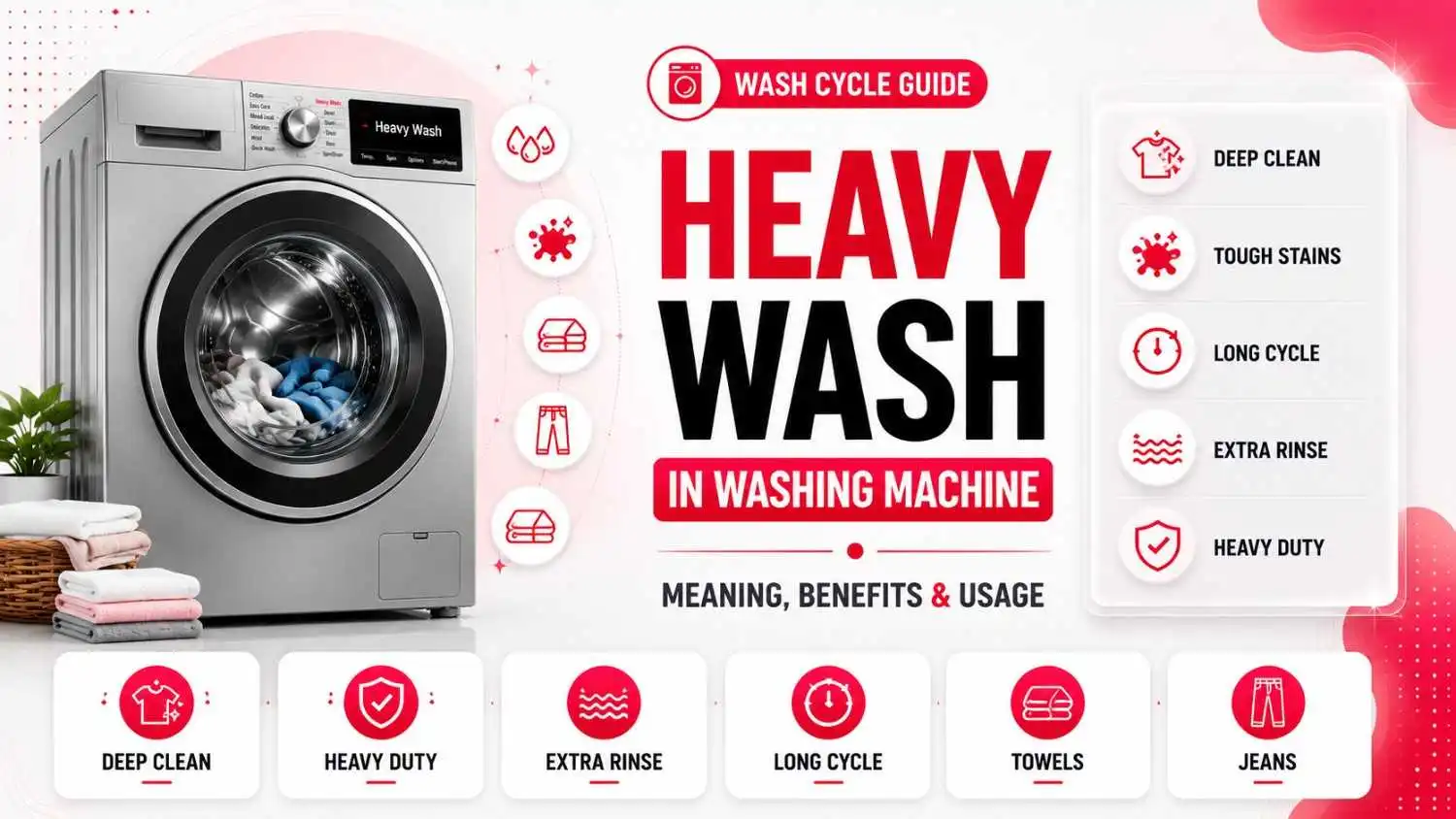
Heavy Wash in Washing Machine: Meaning, Benefits, Duration & When to Use It

41 Views
Table of Contents
Most users of washing machines recognise that their machines have a Heavy Wash function on the console, but often do not understand what it means. The function is consistent regardless of the brand used, but it may have different names across brands. The function of Heavy Wash is mainly geared towards dealing with stained clothes, those that are muddy, sweaty, or heavily dirty. This function has different names depending on the brand, such as Heavy Duty or Intensive Wash/Plus.
What Is Heavy Wash in a Washing Machine?
Heavy Wash is a type of wash cycle of the washing machine meant for clothes that need intensive washing. Unlike other types of wash cycles, Heavy Wash features longer washing duration, higher drum activity, more soaking and an increased number of rinses. The Heavy Wash cycle suits clothes that are extremely dirty, such as workwear, towels, bed sheets, jeans, and sporting wear.
Key Features of the Heavy Wash Cycle
- Increased wash cycle duration
- More powerful agitation
- Soaking period extended
- Multiple rinse cycles
- Stain removal enhanced
- Improved cleaning action on very dirty laundry
The main reason behind the Heavy Wash function is that it delivers more thorough cleaning than the normal washing processes.
How Does the Heavy Wash Cycle Work?
The heavy wash cycle uses an advanced method of cleansing compared to normal washing cycles. It is designed to tackle heavily soiled clothes by combining longer wash times, stronger drum movements, and additional rinsing.
Stage 1: Water Filling
The washing machine fills the drum with water and detergent, creating the ideal environment for loosening dirt and stains.
Stage 2: Soaking
Many machines include a soaking phase that helps soften stubborn dirt, mud, and dried stains before washing begins.
Stage 3: Intensive Agitation
The drum rotates more vigorously than in a Normal Wash cycle, helping remove deeply embedded dirt from fabrics.
Stage 4: Extended Washing
The machine continues washing for a longer period, giving detergent more time to break down stains and grime.
Stage 5: Additional Rinsing
Extra rinse cycles help remove detergent residue and any loosened dirt from the clothes.
Stage 6: Final Spin
The cycle ends with a high-speed spin that removes excess water and reduces drying time.
Together, these stages provide deeper cleaning, making Heavy Wash ideal for towels, bedsheets, workwear, sportswear, and other heavily soiled garments.
Is Heavy Wash Effective at Cleaning Clothes?
Yes, Heavy Wash is actually created to give you more efficient cleaning than just an ordinary wash.
Yes, the Heavy Wash has indeed been formulated in such a way that its cleaning ability is far superior to the regular wash cycle. This is because it has been made with increased time for washing and spinning of the drum, along with added rinsing capabilities.
Heavy Wash is very good at removing such things as:
- Mud stains
- Food stains
- Sweat stains
- Grease
- Dirt
- Stains from outside
But using it on everything you wash isn’t necessarily always a good idea.
What Happens If You Use Heavy Wash for Every Load?
Though Heavy Wash works wonders at eliminating tough spots and grime from your laundry, its use may not always be ideal for each load. The heavy wash program takes a lot of time in the wash and gives your clothes a thorough scrubbing in the drum, making it unnecessary for every load of laundry you have.
Negative Aspects of Overusing the Heavy Wash Cycle
- More electricity use
- High water use
- Increased wash time
- Inappropriate washing of delicate garments
- Inefficient washes on lightly dirty clothes
Clothes for everyday wear and office clothes will be adequately cleaned using the normal wash cycle.
When Should You Use or Avoid the Heavy Wash Cycle?
Heavy Wash is ideal for garments that require extra cleaning power. It is best used for clothes with stubborn stains, heavy dirt, sweat, or grease that cannot be effectively cleaned using a Normal or Quick Wash cycle. However, it should be avoided for delicate fabrics that require gentle handling.
Use Heavy Wash For
- Work uniforms– Heavy Wash helps remove stubborn dirt, grease, dust, and stains commonly found on workwear.
- Gym clothes – It effectively cleans sweat, odours, and bacteria that build up after intense workouts.
- Children's outdoor clothing – Ideal for removing mud, grass stains, food spills, and everyday outdoor dirt.
- Towels – Provide deep cleaning by removing body oils, detergent residue, and trapped moisture from thick fabrics.
- Bedsheets – Help eliminate sweat, dust, allergens, and everyday dirt for a fresher and more hygienic wash.
- Blankets – Suitable for washing heavy fabrics by removing accumulated dust, dirt, and odours more effectively.
- Denim garments – The intensive wash action helps clean thick denim fabrics without compromising overall cleanliness.
- Cotton trousers – Removes embedded dirt and stains from durable cotton fabrics after regular or outdoor use.
- Kitchen cloths – Effectively cleans food stains, grease, and cooking residue for improved kitchen hygiene.
Avoid Using Heavy Wash For
- Silk garments – Heavy agitation can weaken delicate silk fibres and affect their smooth texture and shine.
- Wool items – Intensive washing may cause wool fabrics to shrink, stretch, or lose their natural softness.
- Lace clothing – Strong drum movements can snag delicate lace, leading to tears or damaged embroidery.
- Satin fabrics – Heavy Wash may dull the fabric's sheen and increase the risk of wrinkles or damage.
- Delicate garments – Choose a Gentle or Delicate cycle to protect lightweight fabrics from excessive wear and tear.
Using Heavy Wash on delicate fabrics may reduce their lifespan and affect fabric quality.
How Long Does the Heavy Wash Cycle Take?
The duration of a Heavy Wash cycle varies depending on the washing machine model and selected settings. Factors such as the washing machine brand, load size, water temperature, soil level, and machine type all influence the total wash time. In general, Heavy Wash cycles run longer than standard programs to ensure a deeper and more thorough clean.
Average Heavy Wash Duration
| Washing Machine Type | Duration |
| Top Load Machine | 90–120 Minutes |
| Front Load Machine | 120–180 Minutes |
| High-Efficiency Models | 100–150 Minutes |
| Smart Washing Machines | Sensor-Based |
Most Heavy Wash cycles take significantly longer than Quick Wash or Normal Wash programs because they include extended washing, soaking, and additional rinse cycles for improved cleaning performance.
Heavy Wash Cycle in Different Washing Machine Brands
Though the Heaviest Wash Cycle is similar among various washing machine brands, the designation may not necessarily be consistent. The term Heaviest Wash might also be referred to as Heavy Duty Wash, Intensive Wash, or Intensive Plus by other washing machines.
However, despite the name difference, both cycles aim to accomplish the same goal: providing a better laundry-cleaning experience through increased agitation and extra rinse time.
| Brand | Cycle Name | Best For | Typical Features | Approximate Duration* |
| IFB | Heavy Wash | Uniforms, towels, cotton garments | Intensive drum action, extra rinsing | 120–180 mins |
| Whirlpool | Heavy Wash / Heavy Duty | Jeans, bedding, workwear | Enhanced agitation and deeper cleaning | 100–160 mins |
| LG | Intensive Wash | Daily heavy laundry and stains | Stronger wash action and extended cleaning | 110–170 mins |
| Samsung | Heavy Duty | Thick fabrics and heavily used garments | Increased agitation and additional rinsing | 100–180 mins |
| Bosch | Intensive Plus | Towels, bedsheets, durable fabrics | Extended soaking and stain-focused cleaning | 120–180 mins |
| Haier | Heavy Wash | Cotton garments and soiled loads | Longer wash time and improved dirt removal | 90–150 mins |
| Panasonic | Heavy Duty | Tough stains and bulky laundry | Multiple rinses and intensive cleaning | 100–170 mins |
| Godrej | Heavy Wash | Everyday heavy laundry | Enhanced cleaning performance | 90–150 mins |
| Electrolux | Heavy Duty | Workwear, sportswear, towels | Deep-cleaning cycle with prolonged wash duration | 100–180 mins |
| Kenmore | Heavy Duty | Large loads and heavily soiled clothes | Strong cleaning action and extended wash time | 90–180 mins |
Note: Approximate duration may vary depending on the model, load size, water temperature, and selected settings.
Does the Heavy Wash Cycle Use More Electricity?
A common concern for washing machine users is whether a heavy wash consumes more electricity. This usually depends on the program being used, as the cycle tends to take longer and may incorporate soaking or vigorous drum movement.
Energy Usage of Different Wash Cycles
| Wash Program | Power Consumption |
| Express Wash | Low |
| Quick Wash | Low |
| Normal Wash | Moderate |
| Heavy Wash | High |
| Heavy Wash with Hot Water | Highest |
On the other hand, consumption of electricity depends upon the machine's capacity, washing time, and water temperature. If you focus on energy efficiency, then save Heavy Wash mode for dirty clothes only, rather than for all loads.
Heavy Wash vs Normal Wash: Key Differences
Many users wonder whether Heavy Wash is worth using instead of Normal Wash. While both cycles clean clothes effectively, they are designed for different laundry needs. Heavy Wash focuses on stubborn stains and heavily soiled garments, whereas Normal Wash is better suited for everyday clothes with light to moderate dirt.
| Feature | Heavy Wash | Normal Wash |
| Cleaning Strength | High | Moderate |
| Wash Duration | Longer | Shorter |
| Water Usage | Higher | Lower |
| Electricity Usage | Higher | Lower |
| Stain Removal | Excellent | Good |
| Suitable For | Heavily Soiled Clothes | Daily Laundry |
| Fabric Wear | Slightly Higher | Lower |
For everyday clothing, Normal Wash is usually sufficient. Heavy Wash should be used when clothes require deeper cleaning.
Related Washing Machine Programs
If you're exploring different washing machine programs, you may also want to learn about Express Wash, Delicate Wash, Auto Tub Clean, Cradle Wash, and other specialised cycles that help optimise cleaning performance for different fabric types and laundry requirements.
Heavy Wash vs Quick Wash vs Delicate Wash: Complete Comparison
Modern washing machines offer several specialised wash programs. Understanding the differences can help you choose the most suitable cycle for your laundry.
| Feature | Heavy Wash | Quick Wash | Delicate Wash |
| Cleaning Intensity | High | Low to Moderate | Gentle |
| Wash Duration | Long | Short | Medium |
| Water Usage | Higher | Lower | Moderate |
| Best For | Heavily Soiled Clothes | Lightly Soiled Clothes | Delicate Fabrics |
| Stain Removal | Excellent | Limited | Mild |
| Fabric Protection | Moderate | Moderate | High |
Choose Heavy Wash When:
- Stains are very tough
- Mud, dirt, grease, and sweat on clothes
- Cleaning of towels, bed sheets, and workwear
Choose Quick Wash When:
- Lightly used clothes
- Need for speedy cleaning of clothes
- No presence of difficult-to-clean stains
Choose Delicate Wash When:
- Washing silk, lace, chiffon, or delicate fabrics
- Protecting garments from excessive agitation
- Maintaining fabric quality
Understanding these differences ensures better cleaning performance while extending the life of your clothes.
Tips for Getting the Best Results from Heavy Wash
- Avoid Overloading the Machine: Overloading will hinder the spinning movement of the drum.
- Select an Appropriate Detergent: Choose a good-quality detergent that is appropriate for your washing machine.
- Apply Stain Remover First: It is more effective to apply the stain remover before the wash.
- Group Fabrics by Type: It will be more efficient to group similar fabrics together.
- Read Fabric Care Labels: Follow all the instructions on garment labels before using Heavy Wash.
Mistakes to Avoid While Washing With Heavy Wash
Users often make the mistake of using Heavy Wash for all their loads of laundry. However, this practice will lower the longevity of fabrics in the long run.
Here are some mistakes to avoid:
- Applying Heavy Wash to delicate clothing – Strong agitation may damage delicate fabrics and reduce their lifespan over time.
- Loading too much fabric – An overloaded drum restricts movement, resulting in less effective cleaning and rinsing.
- Using too much detergent – Excess detergent can leave residue on clothes and reduce washing performance.
- Applying Heavy Wash to lightly soiled garments – It wastes water, electricity, and time without providing any additional cleaning benefits.
- Ignoring clothing labels – Always follow the care label instructions to prevent fabric damage and maintain garment quality.
Using the right cycle for the right load helps maintain both cleaning performance and fabric quality.
Conclusion
The Heavy Wash is one of the most effective cycles of the washing machine for washing heavily soiled clothes. Be it working uniforms, towels, bedsheets, jeans, or sports clothes, the Heavy Wash provides an increased wash action, extended washing times, and improved stain removal compared to usual washing cycles. Rather than running Heavy Wash for every load, apply the cycle only when your clothes need intensive cleaning. It will improve the washing process and also protect the quality and longevity of your clothes. Gaining information on heavy wash in washing machines, heavy wash meaning in different brands of washing machines, and the duration of heavy wash washing machines will make it easier to utilise your washing machine more effectively.
Frequently Asked Questions
What is Heavy Wash in a washing machine?
Is Heavy Wash Better at Cleaning Clothes Than Normal Wash?
How Much Time Does a Heavy Wash Take on a Washing Machine?
What does Heavy Wash mean in an IFB Washing Machine?
Should I Use Heavy Wash Every Day?
Is Heavy Wash effective in removing hard stains?
Is Heavy Wash gentle on my jeans?
How long is Heavy Wash in the Kenmore washing machine?
What does Heavy Wash mean in a Whirlpool washing machine?
Will the Heavy Wash shrink my clothes?

Login / Sign up
Zero Brokerage.
Thousands of new listings daily.
100 Cr+ Brokerage saved monthly.
About the Author
avneen kaur
Senior Editor


Recent Blogs

Subscribe to our Newsletter
Get latest news delivered straight to your inbox