How to Drain Water from a Washing Machine: Easy Step-by-Step Guide for Every User

156 Views
Table of Contents
A washing machine that won't drain can quickly turn laundry day into a frustrating experience. Whether your machine has stopped mid-cycle, left clothes soaking wet, or you're preparing it for moving or repairs, knowing how to drain water from a washing machine safely can save you time and prevent water damage.
The good news is that draining a washing machine is usually a simple task. In many cases, you don't need professional help. This guide explains different methods to drain water manually, common reasons why water gets trapped inside, troubleshooting tips, and when it's best to call an expert. You'll also learn how to prevent drainage problems in the future and keep your washing machine working efficiently.
Why Do You Need to Drain Water from a Washing Machine?
There are several situations where you may need to manually remove water from your washing machine.
- The machine stops during a wash cycle.
- A power cut interrupts the wash.
- The drain pump is blocked.
- The drain hose is clogged or bent.
- You're shifting the washing machine to a new location.
- The machine displays a drain-related error code.
- You need to clean the drain filter or pump.
Whatever the reason, learning how to drain water from a washing machine helps prevent unpleasant odours, mould growth, and water leakage.
Signs Your Washing Machine Needs Draining
If you notice any of these symptoms, it's time to remove the trapped water.
- Water remains inside the drum after the cycle ends.
- Clothes come out dripping wet.
- The machine refuses to start the spin cycle.
- You hear the drain pump running without removing water.
- An error code related to draining appears on the display.
- Water starts producing a foul smell after sitting inside the drum.
Things You'll Need Before Draining the Water
Before starting, gather a few basic items to make the process cleaner and easier.
- Towels or old cloths
- A shallow tray or baking pan
- Bucket
- Gloves (optional)
- Screwdriver (for some machine models)
- Small cup or jug
Having these ready helps minimise spills while draining the washing machine.
Safety Precautions Before Draining a Washing Machine
Always follow these safety steps before opening any drain filter or hose.
- Switch off the washing machine.
- Unplug it from the power socket.
- Turn off the water supply.
- Allow hot water inside the drum to cool if the machine recently completed a hot wash.
- Keep children and pets away while working.
These simple precautions reduce the risk of electric shock and accidental flooding.
How to Drain Water from a Washing Machine Manually
If your machine isn't draining automatically, follow these methods one by one.
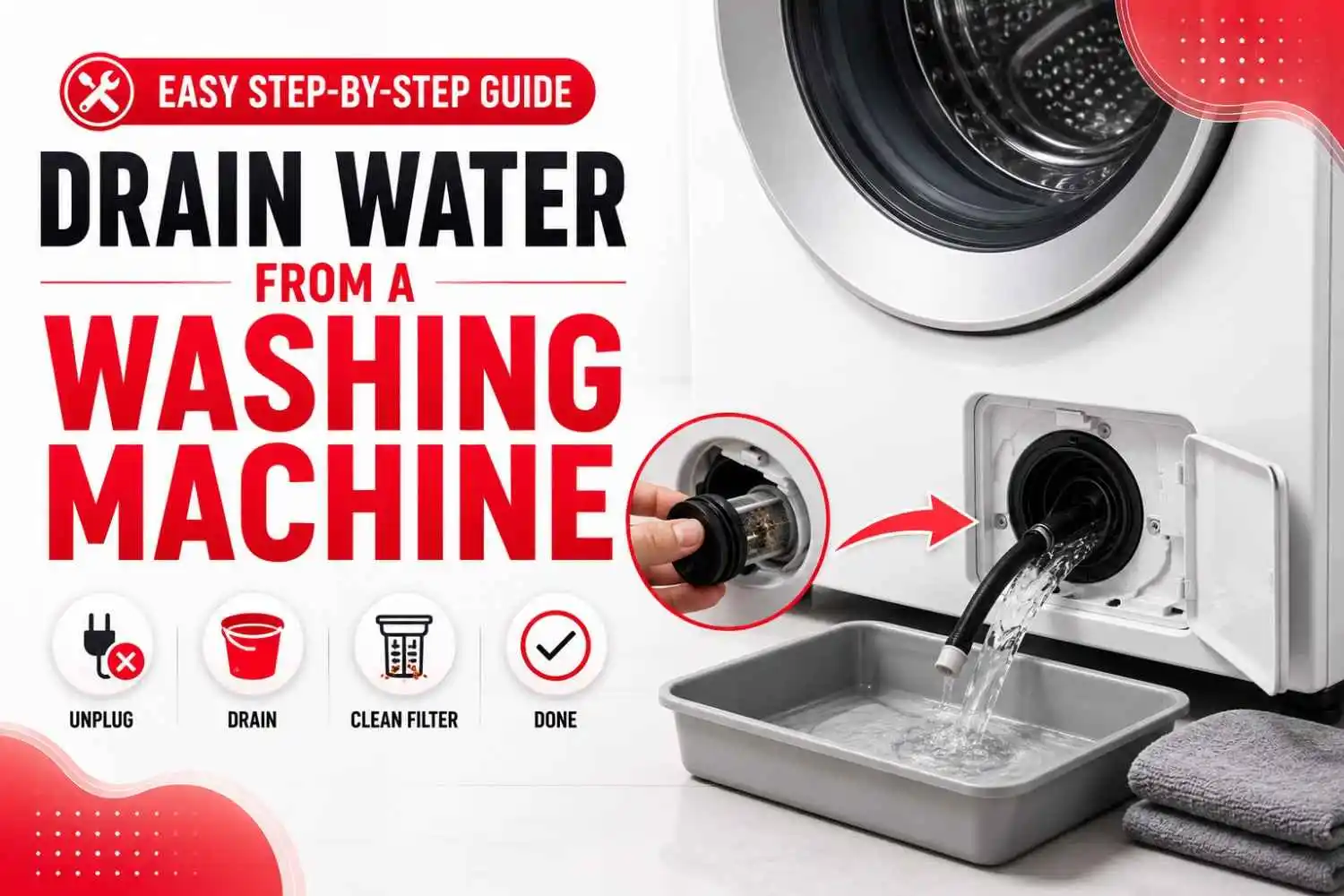
Method 1: Use the Emergency Drain Hose
Many front-load washing machines include a small emergency drain hose behind the lower access panel.
Steps:
- Turn off and unplug the machine.
- Open the small service panel near the bottom.
- Place a shallow tray underneath.
- Pull out the emergency drain hose.
- Remove the cap slowly.
- Let the water flow into the tray or bucket.
- Empty the tray whenever it fills.
- Replace the cap securely once all water is drained.
This is the cleanest way to manually drain water from a washing machine.
Method 2: Drain Through the Pump Filter
If your machine doesn't have an emergency hose, use the drain filter.
Steps:
- Place towels around the machine.
- Keep a shallow container underneath the filter.
- Turn the filter cap slowly.
- Allow water to flow out gradually.
- Remove the filter completely.
- Clean lint, coins, buttons, hair, or other debris.
- Reinstall the filter securely.
Cleaning the filter often solves drainage problems immediately.
Method 3: Drain Using the Drain Hose
Sometimes the drain hose itself can help empty the machine.
Steps:
- Disconnect the drain hose from the wall drain.
- Lower the hose into a bucket placed on the floor.
- Gravity will allow water to flow out.
- Once empty, reconnect the hose properly.
Ensure the hose isn't twisted or blocked before reconnecting it.
How to Drain Water from a Top Load Washing Machine
Top-load washing machines are usually easier to empty manually.
- Turn off the machine.
- Disconnect power.
- Lower the drain hose below drum level.
- Allow gravity to drain the water.
- If needed, use a small container to scoop out any remaining water.
Some newer top-load models also have removable drain filters that should be cleaned regularly.
How to Drain Water from a Front Load Washing Machine
Front-load washing machines usually require a little more care because water stays below the drum.
- Locate the lower service panel.
- Open the emergency drain hose if available.
- Drain water slowly into a tray.
- Remove and clean the pump filter.
- Refit everything securely before restarting the machine.
Avoid opening the main door until all water has been removed.
Common Reasons Why a Washing Machine Won't Drain
Understanding the cause makes it easier to prevent the problem from happening again.
The following table explains the most common reasons behind drainage issues and the simplest solutions you can try before calling a technician.
| Problem | Possible Cause | Solution |
| Water remains inside | Blocked drain filter | Clean the filter |
| No draining | Clogged drain hose | Remove blockage |
| Machine stops mid-cycle | Faulty drain pump | Inspect or replace pump |
| Slow draining | Kinked hose | Straighten the hose |
| Spin cycle not working | Lid or door lock issue | Check door lock |
| Error code appears | Drainage system fault | Reset and inspect components |
How to Check if the Drain Pump is Blocked
A blocked drain pump is one of the most common reasons water stays inside.
Signs of a Blocked Pump
- Humming sound without draining
- Water remains after every wash
- Clothes stay wet after spinning
- Drain cycle takes unusually long
How to Clean the Pump
- Remove the drain filter.
- Shine a torch inside.
- Remove lint, hair, coins, or small objects.
- Rotate the impeller gently.
- Reinstall the filter.
If the impeller doesn't rotate or feels broken, the pump may need replacement.
How to Prevent Washing Machine Drain Problems
Regular maintenance keeps your washing machine draining properly.
- Clean the drain filter every month.
- Empty pockets before washing clothes.
- Avoid overloading the machine.
- Use the recommended amount of detergent.
- Inspect the drain hose every few months.
- Run a drum cleaning cycle regularly.
- Wash heavily soiled clothes separately.
These habits reduce blockages and extend your washing machine's lifespan.
Mistakes to Avoid While Draining a Washing Machine
Many users accidentally create bigger problems while trying to remove water.
- Opening the filter too quickly.
- Forgetting to unplug the machine.
- Pulling the drain hose forcefully.
- Ignoring small leaks.
- Using excessive force on plastic components.
- Skipping filter cleaning after draining.
Avoiding these mistakes makes the process safer and easier.
When Should You Call a Professional?
Manual draining solves many issues, but some problems require expert attention.
Call a technician if:
- Water keeps returning after draining.
- The drain pump has failed.
- The washing machine leaks continuously.
- The motor isn't spinning.
- Electrical burning smells are present.
- Multiple drain error codes keep appearing.
Professional inspection helps prevent further damage to internal components.
Manual Draining vs Automatic Draining
Both manual and automatic draining methods remove water effectively, but each serves a different purpose depending on whether the machine is functioning normally or has developed a fault.
| Feature | Manual Draining | Automatic Draining |
| Effort | Higher | Minimal |
| Time Required | 10–30 minutes | Few minutes |
| Best Used For | Blocked machines | Normal wash cycles |
| Requires Power | No | Yes |
| Risk of Water Spill | Moderate | Very Low |
Quick Maintenance Checklist
Following this simple maintenance schedule helps reduce drainage issues, improves washing performance, and extends the life of your washing machine with very little effort.
| Maintenance Task | Frequency |
| Clean drain filter | Monthly |
| Check drain hose | Every 3 months |
| Clean detergent drawer | Monthly |
| Run drum clean cycle | Monthly |
| Inspect pump area | Every 6 months |
| Check for leaks | Monthly |
Final Verdict
Knowing how to drain water from a washing machine is a useful skill that every washing machine owner should have. Whether you're dealing with a blocked drain filter, clogged hose, power outage, or pump issue, manually removing the water can prevent bigger problems and keep your appliance in good condition. Regular cleaning, proper maintenance, and timely inspections can also reduce future drainage issues. If basic troubleshooting doesn't solve the problem, seeking professional assistance is the safest option.
Frequently Asked Questions
How do I drain water from my washing machine if it won't start?
Why is there still water inside my washing machine after the wash cycle?
Can I drain my washing machine without electricity?
Is it safe to open the washing machine door when water is inside?
How often should I clean my washing machine drain filter?
What should I do if water keeps coming back after draining?
Can a clogged drain hose stop my washing machine from spinning?
Why does my washing machine smell bad after draining?
Should I call a technician if my washing machine still won't drain?
How can I stop my washing machine from having drainage problems again?

Login / Sign up
Zero Brokerage.
Thousands of new listings daily.
100 Cr+ Brokerage saved monthly.
About the Author

avneen kaur
Senior Editor


Recent Blogs

Subscribe to our Newsletter
Get latest news delivered straight to your inbox