Quartz vs Granite Countertops: Which Is Better for Indian Homes in 2026?
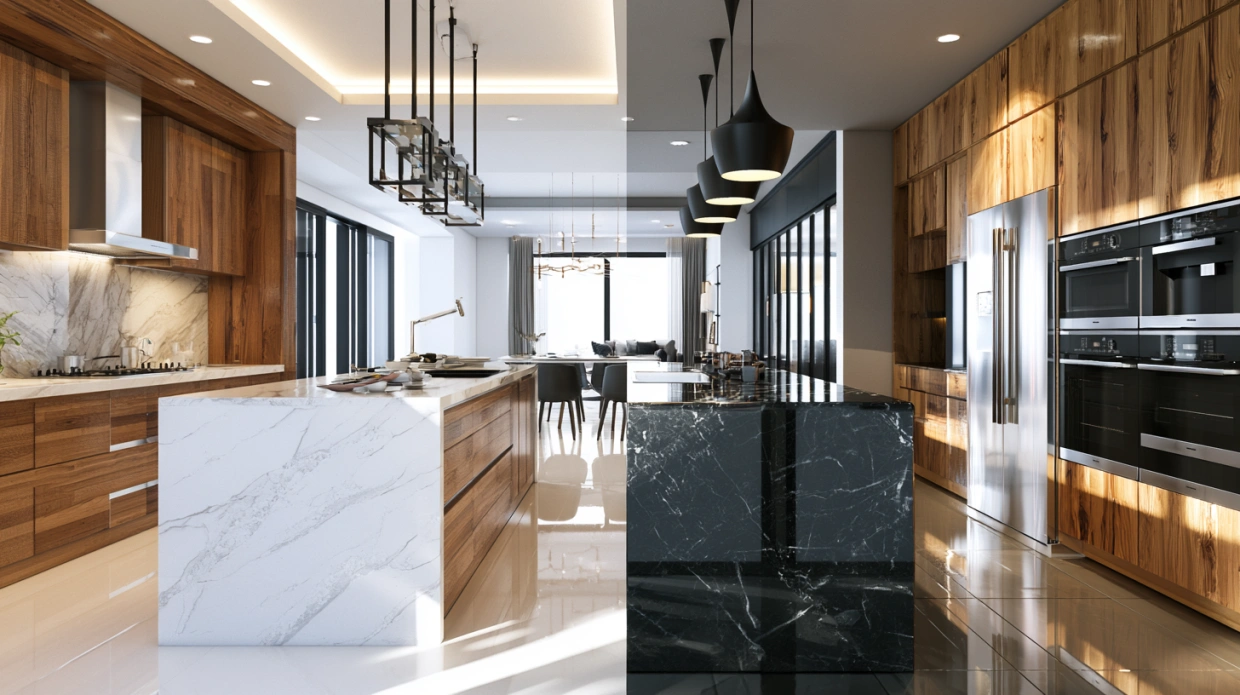

147 Views
Table of Contents
The kitchen countertop is one of the hardest-working surfaces in any Indian home. It handles hot pressure cookers, turmeric-stained hands, oil splashes, heavy chopping, and daily scrubbing, sometimes all before 9 AM. When it comes to countertop materials, the quartz vs granite debate is one that most Indian homeowners eventually face. Both are premium surfaces, both are durable, and widely available across India. Kitchen countertops quartz vs granite across every factor that matters: material composition, durability, heat resistance, stain resistance, maintenance, design, and cost. By the end, you will know exactly which is better quartz or granite, for your home, your kitchen, and your daily life.
What Is Quartz and What Is Granite?
Before diving into countertop materials quartz vs granite, it helps to understand what each one actually is because the difference in composition explains almost every difference in performance.
Granite
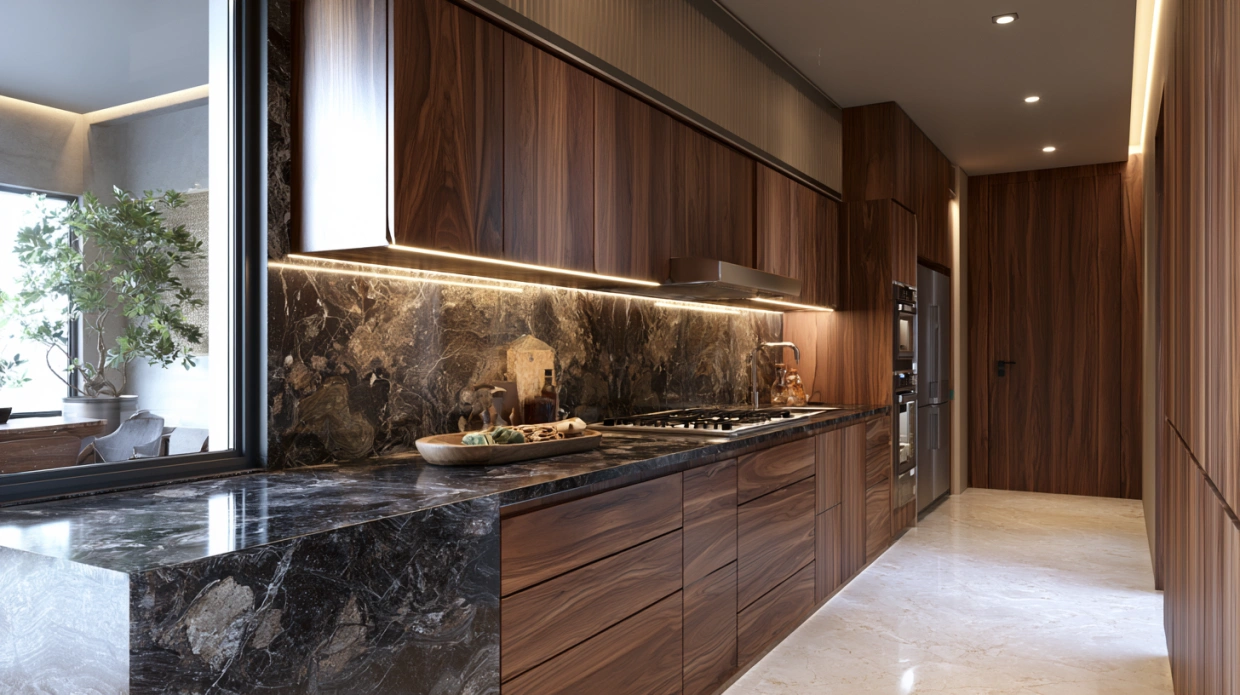
Granite is a 100% natural igneous rock, formed deep within the earth from slowly cooled magma. It is quarried in large blocks, cut into slabs, and polished for use as kitchen countertop design. Every granite slab is unique; the pattern, veining, and color are determined entirely by the minerals present at the quarry. No two slabs are ever identical.
Recommended Reading
Top 20+ Modern PVC Wall Panel Designs fo...
13.3K Views

Trending L-Shaped False Ceiling Design I...
11.4K Views

20+ POP Light Design Ideas for Kitchen, ...
10.3K Views

Wallpaper Designs for Bedroom: Modern &a...
9.9K Views
Folding Gate Design: Enhancing Security ...
9.3K Views
Quartz
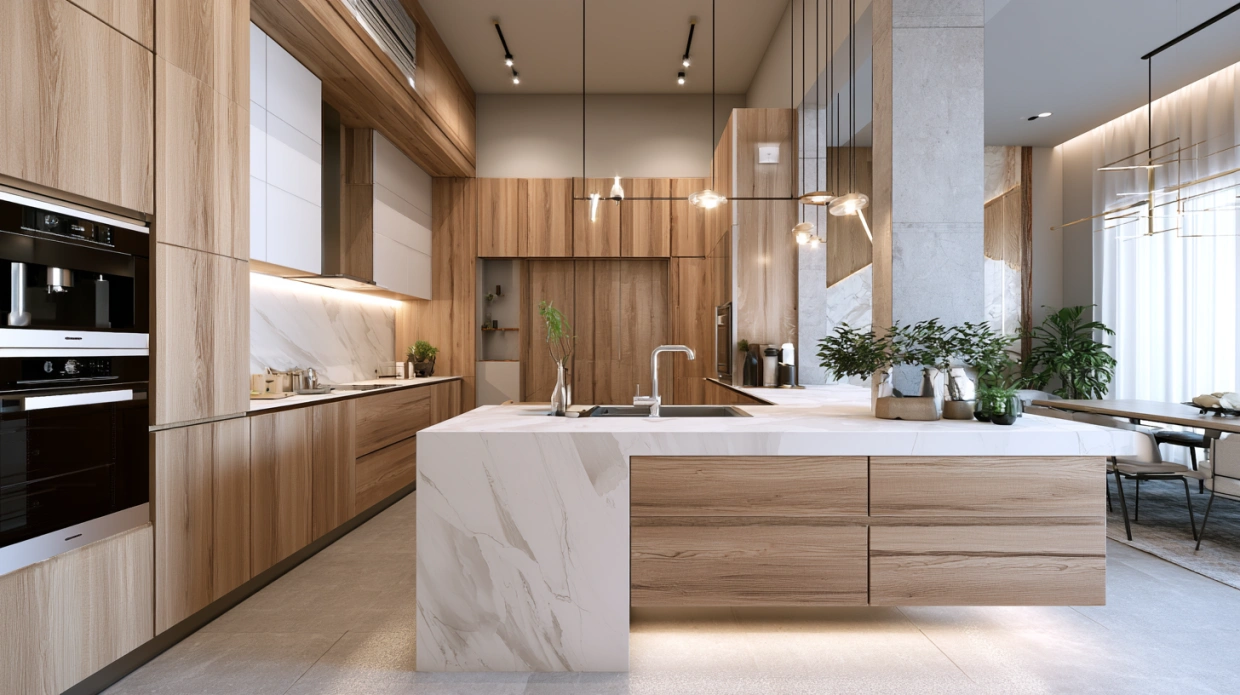
Quartz countertops are engineered stone surfaces, not purely natural. They are manufactured from 90–95% crushed natural quartz crystals combined with resins, polymers, and pigments. The result is a controlled, consistent surface with uniform colour and pattern, produced to specification in a factory rather than quarried from the earth.
This fundamental difference, natural vs engineered, determines how each material performs in your kitchen, and sits at the heart of every quartz vs granite decision.
Quartz vs Granite: Head-to-Head Comparison
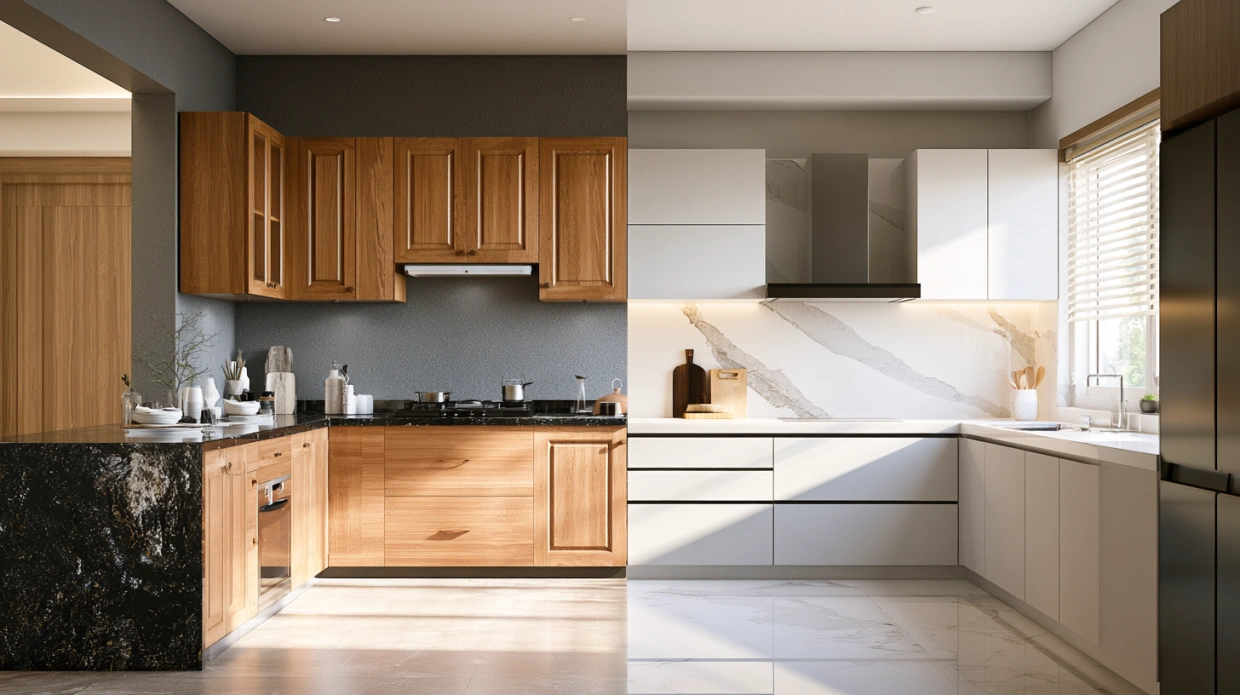
Quartz vs granite countertops is one of the most common debates among homeowners planning a new kitchen design. From appearance and durability to maintenance and cost, quartz and granite each have their own advantages and drawbacks.
| Feature | Granite | Quartz |
| Appearance & Design | Natural stone with unique veining, speckles, and earthy tones; every slab is different. | Engineered surface with consistent patterns and a wide variety of colours and finishes. |
| Pattern | Unique, natural, and variable | Consistent, engineered, and repeatable |
| Colour Range | Earth tones and natural palette | Full spectrum, including pure whites and marble-look finishes |
| Best Style Match | Traditional, rustic, and natural interiors | Modern, minimalist, and contemporary interiors |
| Slab Uniqueness | Every slab is different | Uniform across slabs |
| Durability & Scratch Resistance | Extremely hard (Mohs 6–7) and highly scratch-resistant. | Slightly harder (Mohs 7–8) and better at resisting minor edge impacts. |
| Heat Resistance | Excellent; can handle hot cookware directly. | Moderate; resins can discolor or crack under intense heat. |
| Stain Resistance | Porous and can stain if not sealed properly. | Non-porous and highly resistant to stains from oil, coffee, and spices. |
| Maintenance | Requires sealing every 1–2 years and periodic upkeep. | Virtually maintenance-free; only soap and water needed. |
| Hygiene | Hygienic when sealed, but it can harbor bacteria if sealing is neglected. | A non-porous surface prevents the penetration of bacteria and mould. |
| Sunlight & Outdoor Use | Suitable for outdoor kitchens and direct sunlight. | Not recommended for prolonged UV exposure due to resin degradation. |
| Environmental Consideration | Natural material with no synthetic additives; locally sourced Indian granite is more sustainable. | Manufactured using natural stone and chemical resins, resulting in a higher production footprint. |
| Best For | Heavy Indian cooking, outdoor kitchens, and homeowners who prefer natural stone. | Low-maintenance, modern kitchens and households that prioritize stain resistance and hygiene. |
Granite vs Quartz Countertops Pros and Cons at a Glance

A quick-reference summary of granite vs quartz countertops pros and cons for Indian homeowners.
| Feature | Granite | Quartz |
| Material origin | 100% natural stone | Engineered 90–95% quartz + resins |
| Appearance | Unique, natural variation | Consistent, wide colour range |
| Heat resistance | Excellent handles direct heat | Moderate use of trivets near the hob |
| Stain resistance | Moderate needs sealing | Excellent non-porous surface |
| Maintenance | Sealing every 1–2 years | No sealing; wipe clean |
| Hygiene | Good when sealed | Excellent non-porous |
| Scratch resistance | Very good | Excellent |
| Outdoor use | Suitable | Not suitable for UV-sensitive |
| Longevity | Decades with proper care | Decades with minimal care |
Cost of Quartz vs Granite Countertops in India
The cost of quartz vs granite varies significantly based on grade, origin, thickness, and brand. Below is a realistic breakdown for Indian homes in 2026.
| Material | Entry-Level | Mid-Range | Premium |
| Indian Granite | ₹150–₹200 per sq ft | ₹200–₹350 per sq ft | ₹350–₹500 per sq ft |
| Imported Granite | ₹400–₹600 per sq ft | ₹600–₹900 per sq ft | ₹900–₹1,500+ per sq ft |
| Standard Quartz | ₹250–₹400 per sq ft | ₹400–₹700 per sq ft | ₹700–₹1,200 per sq ft |
| Premium Quartz (Calacatta, Carrara) | ₹800–₹1,200 per sq ft | ₹1,200–₹2,000 per sq ft | ₹2,000–₹5,000+ per sq ft |
Note: Prices include material only. Fabrication and installation add ₹150–₹400 per sq ft, depending on edge profile, cutouts, and city. Prices vary based on slab grade, vendor, and prevailing market rates.
Total installed cost for a standard Indian kitchen (approx. 25–35 sq ft):
- Indian granite: ₹8,000–₹25,000
- Standard quartz: ₹15,000–₹45,000
- Premium quartz: ₹40,000–₹1,50,000+
Which is better, quartz or granite?
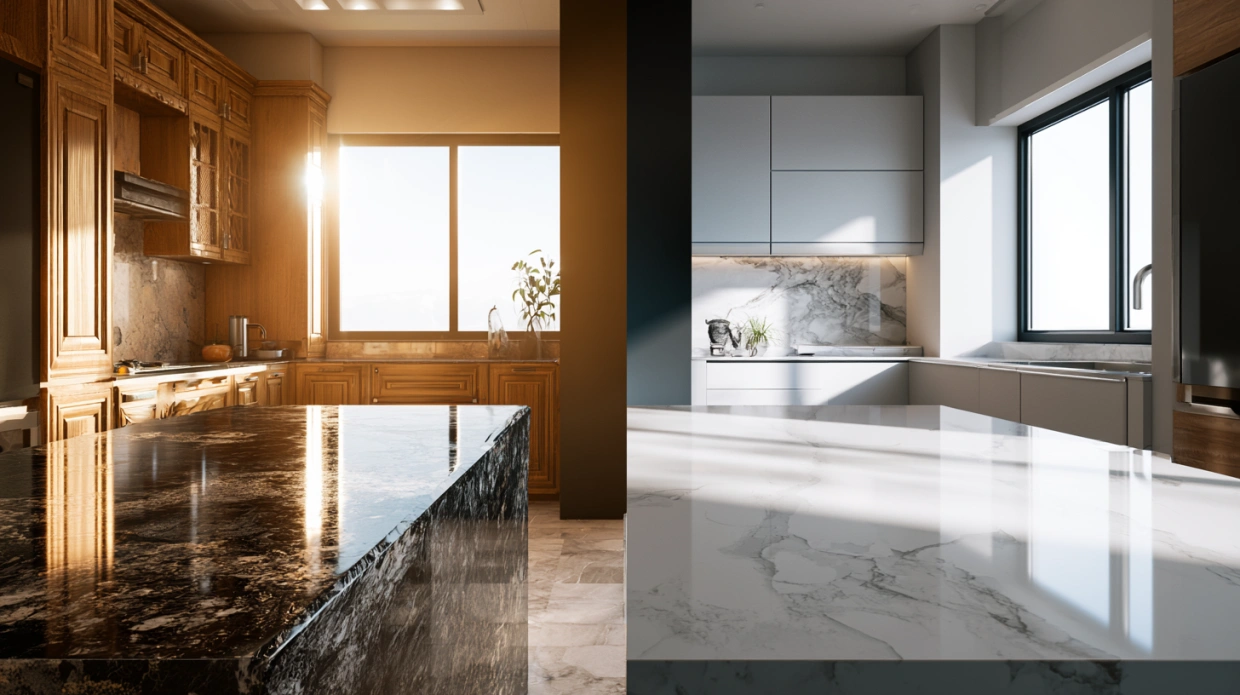
There is no single correct answer to the question of which is better, quartz or granite. The right choice depends entirely on how your kitchen is used and what you value most.
Choose granite if:
- Hot pans go directly on the counter. Daily Granite's heat resistance is a genuine functional advantage
- You love the look of natural, unique stone that no engineered surface can replicate
- Budget is a priority. Indian granite is the most affordable quality countertop option available
- You have an outdoor kitchen or a sun-exposed counter area
- You are comfortable sealing the surface every 1–2 years
Choose quartz if:
- Your kitchen sees heavy spice-based Indian cooking, and you want a stain-proof surface
- Low maintenance is the priority, no sealing, no periodic treatment, ever
- You are designing a modern modular kitchen and need consistent color matching across slabs
- Hygiene is a top priority, and you want a non-porous surface for food preparation
- You need pure whites, marble-look finishes, or colors that natural granite cannot provide
Lighting to Complement Your Countertop Choice
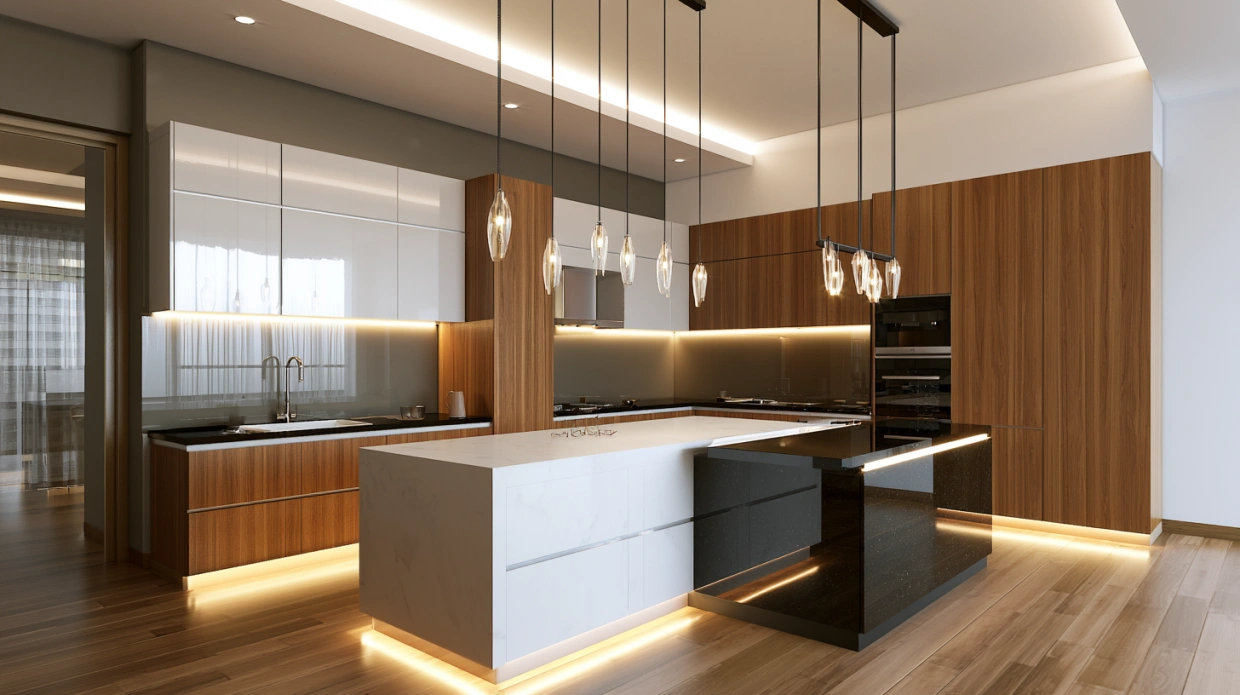
The countertop materials quartz vs granite, you choose affects how lighting should be planned. The right light makes both materials look significantly better in daily use.
- For white or light quartz: Use 3000K–3500K neutral white under-cabinet LEDs; warm white makes white quartz look cream; neutral white keeps it crisp and accurate
- For dark granite: Use 2700K–3000K warm white, which draws out the depth and natural warmth of dark stone finishes beautifully
- Under-cabinet LED strips: Essential for any countertop, direct task lighting eliminates shadows on the work surface and shows both granite and quartz at their best
- Pendants above an island: Hang 28–32 inches above the counter surface; they frame the countertop and add design drama to the kitchen space
- Avoid cool white (4000K+) above natural stone: Cool white strips granite of its warm, earthy character. Always specify warm or neutral white in kitchens with natural stone countertops
How to Choose the Right Kitchen Countertop?
- Assess cooking intensity first: If hot pans go on the counter instinctively, granite's heat resistance is a functional necessity, not just a specification on paper
- Consider your city's climate: In humid coastal cities, unsealed granite is vulnerable; either commit to regular sealing or choose quartz for long-term peace of mind
- Match countertop to cabinet finish: Dark wood cabinets pair best with lighter countertops, such as Kashmir White granite or light grey quartz. White cabinets support darker surfaces like Absolute Black granite or charcoal quartz
- Factor in lifetime cost: The cost of quartz vs granite looks closer when sealing expenses over 10+ years are included, quartz often delivers better total value despite the higher upfront price
- Always take samples home: Kitchen countertops, quartz vs granite, look different under showroom lighting versus actual kitchen lighting. Always view samples against your cabinet and wall colors before deciding.
Common Mistakes to Avoid
- Choosing light granite without checking porosity: Light-colored granite is more porous than dark varieties and stains more easily. Always confirm the porosity grade and sealing requirement before purchasing
- Placing hot pans directly on quartz: The resins in quartz are not heat-proof. A single incident with a hot tawa or kadai without a trivet can cause permanent discoloration
- Skipping the sealing schedule on granite: A single missed sealing cycle leaves granite vulnerable for months. Treat it as a non-negotiable maintenance task, not an optional upgrade
- Buying quartz for an outdoor kitchen: UV exposure degrades quartz resins over time, causing the surface to fade and eventually delaminate. Granite is the only sensible choice outdoors
- Choosing based on price alone: When comparing quartz vs granite, the decision should always be based on performance requirements and lifestyle, not cost per sq ft alone.
How NoBroker Interiors Can Help You Choose the Right Countertop
Deciding between quartz vs granite countertops is only half the challenge; getting the material correctly specified, fabricated, and installed is where most homeowners run into problems with ill-fitting edges, poor sealing, or wrong thickness choices.
NoBroker Interiors offers complete kitchen design and execution from countertop material selection and slab sourcing to fabrication, edge profiling, and installation, backed by a flat 10-year warranty on all modular work. Whether it is a kitchen countertops quartz vs granite decision for a new modular kitchen or a countertop replacement in an existing one, professional guidance ensures the right material is chosen, correctly installed, and built to last.
Frequently Asked Questions
1. Which is better for Indian cooking, quartz or granite?
2. Does quartz require sealing like granite?
3. Can I place hot pans directly on a quartz countertop?
4. What is the cost of quartz vs granite countertops in India?
5. Which countertop is more hygienic, quartz or granite?
6. Is granite or quartz better for a white kitchen countertop?
7. Which lasts longer, granite or quartz?


Our Recent Projects



Reviews

Asma Ul Husna

Overall, I found the design process helpful and appreciated the attention given to my preferences. The finished space has a clean and c... Read more

Tapas Ghosh
NoBroker Interior offered some nice ideas for improving the look and functionaliity of my living space & genuine , team

Dharohar Interiors
Costing is really good compared with others and consultant was really good experience

yuvraj srivastava
The showroom is amazing,and the consultant are really helpful with the query,happily on-boarded here today

Uma Maheswara Reddy
Experience centre was nice, they explained about each every material very well.

Varun Thammaiah
Tharun Kumar has done an excellent job as the Project Manager. He is professional, supportive, and ensures everything is handled smooth... Read more

Sriya
The designs are very unique I am really impressed by the teamwork overall it's a very affordable they deliver the work in good budget thanks

Rakesh raj Chauhan
Good center

Uday Kiran
Great experience with Kundhana We got our 3BHK interiors in Bangalore done by Kundhana Team and we are very happy with the final outco... Read more

Sarala Buduru
The interior transformation made the space feel brighter and more welcoming. The design choiices were simmple, tasteful, and suited my needs.

Hanma
The team was responsive to my queriies and explained the interior work process clearly. Truly amazing 🤗

Anshita Shrivastava
I liked the focus on storage, layout, and small details that made the rooms feel more organised without compromisiing on stylee. The ov... Read more

Punam Nath
The interior team was professional and understood our requirements well. The overall experiience was smooth and satisfactory.

Divya N Raj
Whitefield Experience centre is very good

Trina chatterji
I was pleased with the overall interior planning. The suggestions were useful, and the final setup felt comfortable and well organized.

Anshika Yadav
The interior work turned out really well and the overall finish gave my space a fresh and modern look the team was helpful throughout the process

Shiva Mathuriya
Team is very nice & interior planning ideas offered a nice balance between functionaility and aesthetics. The suggestions helped make ... Read more

Anamika Banik
Good interior service with clear communication and helpful suggestions. The work was completed neatlyyyy

Deepak Ridlan
I liked how the team approached the design process. They considered my requirements and helpeed me explore different styles and layouts.

Riya Shukla
Good service and creative ideas. The team helped me chooose suitable coloours, furniture and layouts. I liked how the design matched my... Read more

Nitin Kumar Mandilwar
Good work done by project manager Manoj. Completed the work in time.

Divyanshu Mehta
Great work done by designer Divya and Govardhan. Hassle free work snd best part is they will customise everything as per need exactly. ... Read more

Jason Fernandes
I had a great experience here. When it comes to planning, delivery and execution, great work was done by the team members. Suhail Khan... Read more

Swathi Warker
Manoj is very responsive, finds solutions for all obstacles and provides ork around. He provides timely updates on work status. Manages... Read more

Nitin Prabhakar
Excellent Interior Design and Execution Experience . Thanks to manoj and Rakshitha for the kind support and cooperation

Priya Sardar
Overalll, the interior planning experience was smooth, and I liked the practical approach to the design. GOOD DESIGN 👍🏻

Abhilash Tomar
Good experience

Rahber Khan
The interior work turned out well, and I liked how the team focused on making the space both stylish and functional. They were responsi... Read more

Khushi Wani
A smooth experience overall. From discussing ideass to finalizing the design, communication was helpful and the process was easy to follow.

yogesh
Recently did interior for 2BHK with NoBroker Interiors, and the overall experience has been great. Everyone has been extremely supporti... Read more

ashish jain
Great thanks to Riddhi & Sakshi for being so accommodating and flexible with all the requests and changes. They were able to complete d... Read more

DEEPAK MISHRA
*Disclaimer* for review This review is only for Project Manager Divyadeep and not for Nobrokers interior company, neither design team n... Read more

SAURABH KURADE
I am writing to recommend nobroker interior. Yes the initial stages of the project faced severe delays and communication challeng... Read more

Manav Chhabria
Working with this Nobroker interior team has been an absolute pleasure from start to finish! Every single member brought immense expert... Read more

Vikas Agrawal
I appreciate the attention to detail and the effort put into makiing the interiors look neat and functional.

Shiva Shankar
We had a wonderful experience with NoBroker Interiors for our new home at Primark Inspira. A special thanks to Abhishek for managing th... Read more

abhijit dey
Just wrapped up our home interiors with NoBroker Interiors here at Royal Orchids Apartments! A special shout-out to Project Manager Abh... Read more

T R Rao
We have done interior design and execution work in our 3 bhk flat in Hyderabad. We had a very pleasant experience with the entire proce... Read more

Adi Lakshmi Turlapati
We are extremely thankful to the TEAM NoBroker Interiors fir their wonderful work. Right from the designing stage to the execution stag... Read more

Chaitalee Vaidya
We had a very good experience with No broker The designer Sathvika was very good and patience in dealing and giving multiple options of... Read more

sri kiran
Got a satisfactory service from No broker interiors big Kudos to My project manager Abhishek on timely delivery and being patient with ... Read more

Chanikya Mamindlapalli
The service is good, Rizwan has actively responded to the issues we identified and rectified them in no time.

Savita Verma
We had a good experience working with Sapna for our home interiors. She understood our requirements well and was always open to our sug... Read more
Testimonials
View All
NoBroker Interiors Review | Happy Customer Testimonial by Rajani
NoBroker Interiors | Customer Testimonial by Prinyakar Polley

NoBroker Interiors | Hyderabad Customer Testimonial by Prashant Choudhary

NoBroker Home Interiors | Hyderabad 4BHK Customer Review

NoBroker Interiors Customer Testimonial | Jatan's Story
NoBroker Interiors Review | Hyderabad Customer Testimonial

NoBroker Interiors Review | Modern Dream Home Customer Testimonial

NoBroker Interiors Customer Testimonial | Fast & Quality Home Interiors

NoBroker Interiors Customer Testimonial | Pune Dream Home

NoBroker Interiors| Bangalore Customer Testimonial
NoBroker Interiors: Sports Theme Interiors by NoBroker #interiordesign #nobrokerinteriors #nobroker

NoBroker Interiors - Customer Testimonials

That 3 PM meeting where ideas turn into floor plans, materials, and magic. 💫

Your 2026 list is here.

Smart wardrobe design that fits your life, beautifully.
POV: You gave your home a holiday hug.🥰

Blink and you’ll miss the makeover.👀

When your home finally gets its own weekend mood, this bar unit does the job beautifully.

A calm pooja corner every home needs.

NoBroker Home Interior Service | Saurabh & Prachi Share Their Story #interiordesign #shorts
About the Author

Dileep
Author
Dileep is a passionate interior designer with a civil engineering background, bringing strong technical knowledge into the world of creative interior design. His engineering foundation help










Recent Blogs
Subscribe to our Newsletter
Get latest news delivered straight to your inbox