POP vs PVC Ceiling: Which Is Better for Your Home in 2026?

367 Views
Table of Contents
Summary
A POP vs PVC ceiling comparison helps homeowners choose the right false ceiling based on design, durability, and maintenance needs. POP ceilings suit living rooms and bedrooms with decorative and premium finishes, while PVC ceilings are ideal for kitchens and bathrooms due to their waterproof and low-maintenance properties. POP ceiling costs range from ₹65–₹140 per sq ft, while PVC ceiling costs range from ₹60–₹95 per sq ft. Both materials offer 10–15 years of durability when installed properly in suitable spaces.
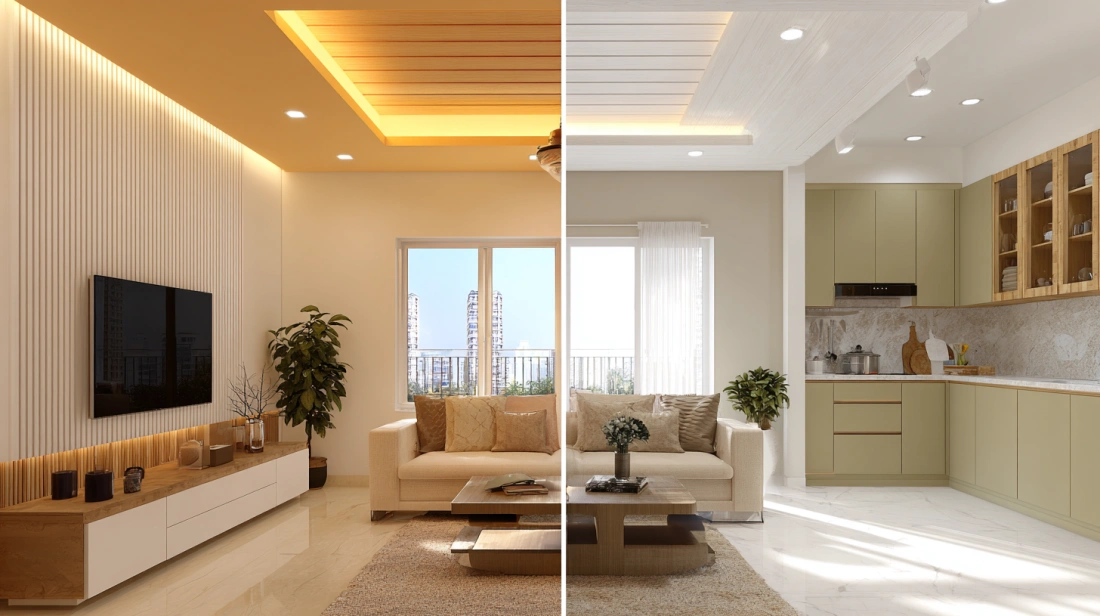
When it comes to false ceilings, you will often find two materials in Indian homes – POP (Plaster of Paris) and PVC (Polyvinyl Chloride). They're both Popular and inexpensive compared to wood or glass options, and they can turn a plain, flat structural ceiling slab into a polished, finished ceiling. However, aside from those factors, POP and PVC differ distinctly in performance, appearance, and lifetime cost. The first step to understanding the POP vs PVC ceiling debate is to see beyond the surface. The right option will depend on the room you want to design, your budget, your lifestyle, and the amount of maintenance you are prepared to do.
What is a POP Ceiling?
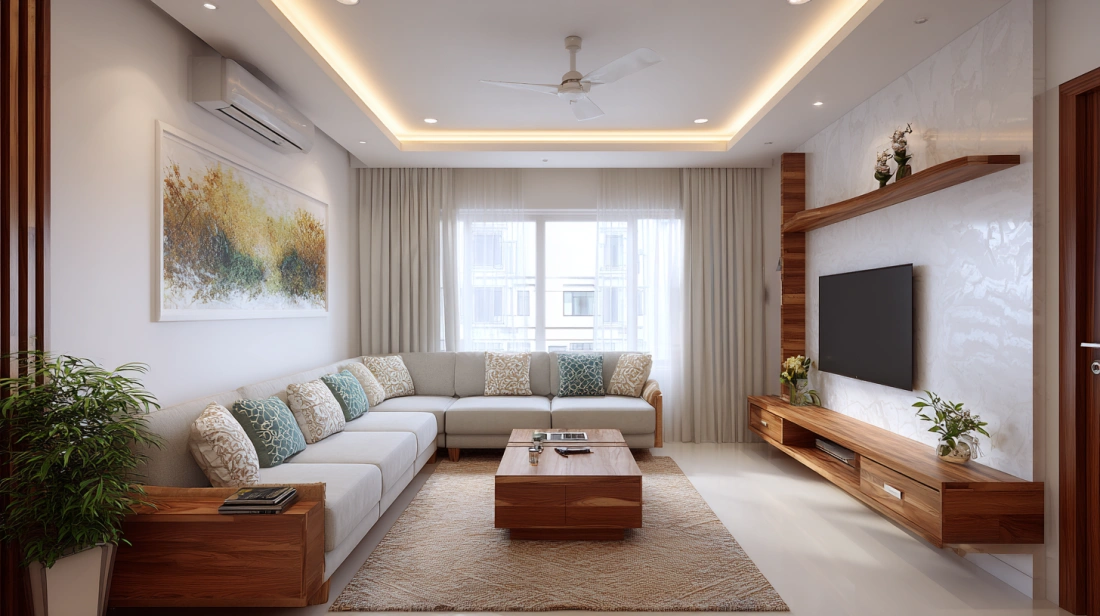
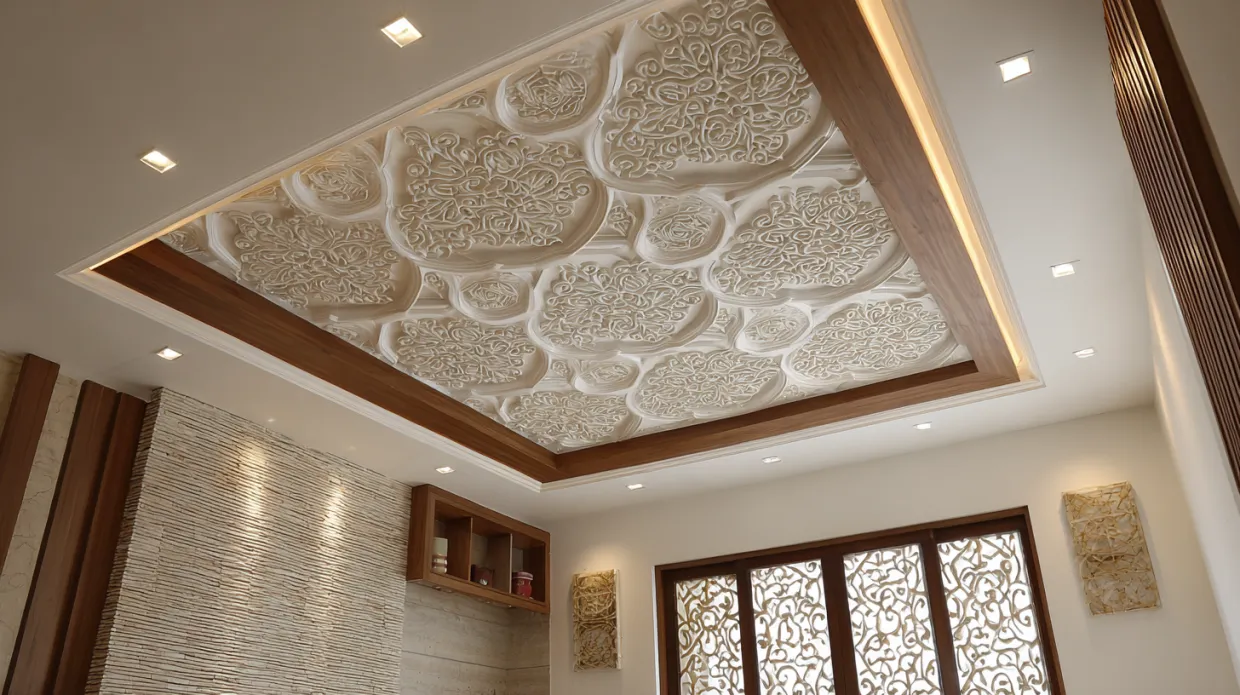
A POP (Plaster of Paris) ceiling is a false ceiling made from calcium sulfate hemihydrate powder mixed with water to form a paste, which is applied and molded into desired shapes and designs. It is one of the oldest and most widely used ceiling finishing materials in interior design. POP false ceiling design is highly popular for its seamless, smooth finish, ability to create intricate decorative profiles, cornices, and cove designs, and its relatively low material cost. Once dried, it is painted over to give a clean, polished look. It is best suited for dry interior spaces, such as living rooms and bedrooms, where moisture is not a concern.
What is a PVC Ceiling?
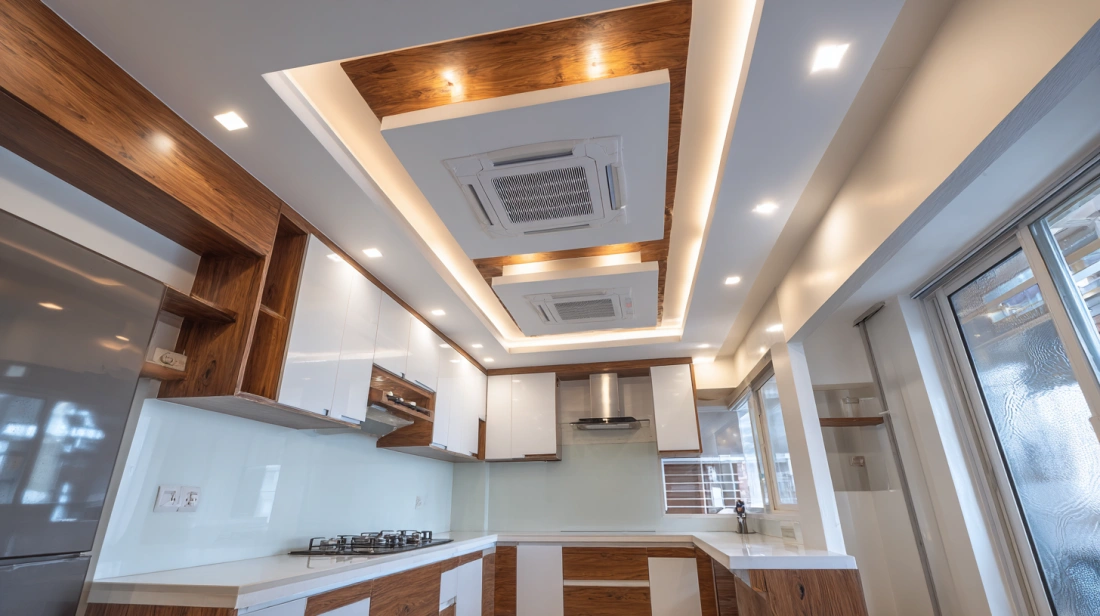
A PVC (Polyvinyl Chloride) ceiling is a false ceiling made from lightweight plastic panels or planks that are snapped or clipped onto a metal or wooden framework. It is a modern, low-maintenance ceiling solution widely used in kitchens, bathrooms, commercial spaces, and utility areas. PVC false ceiling design come in a variety of colors, textures, and finishes, including wood-look and glossy options, making them reasonably versatile in design. They are 100% waterproof, termite-proof, and moisture- and humidity-resistant, making them highly durable in wet conditions. Installation is fast and clean, with no drying time required, and damaged panels can be replaced individually without having to redo the entire ceiling.
Recommended Reading
Top 20+ Modern PVC Wall Panel Designs fo...
13.4K Views

Trending L-Shaped False Ceiling Design I...
11.4K Views

20+ POP Light Design Ideas for Kitchen, ...
10.3K Views

Wallpaper Designs for Bedroom: Modern &a...
9.9K Views

Folding Gate Design: Enhancing Security ...
9.4K Views
POP vs PVC Ceiling: Head-to-Head Comparison
Here is a detailed side-by-side look at PVC vs POP false ceiling across every key parameter:
| Parameter | POP Ceiling | PVC Ceiling |
| Material | Plaster of Paris (gypsum-based) | Polyvinyl Chloride (plastic panels) |
| Water Resistance | Poor - absorbs moisture; prone to staining and sagging | Excellent - fully waterproof and humidity-proof |
| Durability | Moderate - prone to cracking over time | High - does not crack, warp, or bend |
| Design Flexibility | Excellent - mouldable into any shape or pattern | Moderate - pre-made textures and prints only |
| Aesthetic Appeal | Rich, seamless, premium look | Modern, clean, functional look |
| Installation Time | Slow - 7–10 days (wet process + curing) | Fast - 1–2 days (dry installation) |
| Maintenance | Moderate - may need repainting; cracks require patching | Very low - wipe clean with a damp cloth |
| Fire Resistance | Good - gypsum-based; naturally fire-retardant | Moderate - can release fumes if burnt |
| Eco-Friendliness | Better - natural mineral-based material | Lower - synthetic plastic; lead-free variants available |
| Best Rooms | Living room, bedroom, dining room, lobby | Kitchen, bathroom, balcony, utility areas |
| Cost per Sq Ft | ₹65–140 | ₹60–90 |
| Lifespan | 10–15 years (if maintained well) | 10–15 years (minimal maintenance needed) |
POP vs PVC Ceiling Price: Full Cost Breakdown
When comparing POP vs PVC ceiling price, you need to account for material cost, labour, finishing, and long-term maintenance. Here is a comprehensive cost table for 2026:
| Cost Factor | POP Ceiling | PVC Ceiling |
| Material Cost (per sq ft) | ₹45–90 | ₹40–65 |
| Labor Cost (per sq ft) | ₹20–50 | ₹20–30 |
| Total Cost (per sq ft) | ₹65–140 | ₹60–95 |
| Estimated Cost: 100 sq ft | ₹6,500–14,000 | ₹6,000–9,500 |
| Estimated Cost: 150 sq ft | ₹9,750–21,000 | ₹9,000–14,250 |
| Estimated Cost: 200 sq ft | ₹13,000–28,000 | ₹12,000–19,000 |
| Painting / Finishing Cost | ₹8–15 per sq ft (mandatory) | Nil (no painting required) |
| Maintenance Cost (per year) | ₹500–2,000 (touch-up, repainting) | Near zero |
| Installation Time | 7–10 days | 1–2 days |
| Long-Term Cost (10 years) | Higher (maintenance + repainting) | Lower (minimal upkeep) |
Note: Prices are indicative for 2026 and vary by city, contractor, and design complexity. Metro cities like Mumbai, Bengaluru, and Delhi NCR attract 10–20% higher labor charges. For a custom quote, visit NoBroker Interiors.
POP vs PVC Ceiling: Which Is Better Room by Room?
The question of which is better, POP or PVC, does not have a single universal answer because every room has different functional and design requirements. In the overall POP vs PVC ceiling comparison, POP is preferred for bedrooms, living rooms, and dining areas where decorative aesthetics matter most. Understanding the price, moisture resistance, and design flexibility of PVC and POP ceilings helps homeowners choose the right ceiling material for every space in their home.
Bedroom

POP is the better choice for a bedroom. It allows for decorative tray ceilings, cove light ceiling, layered borders, and custom designs that elevate the room's aesthetics. The bedroom is a dry, low-humidity space, so POP's moisture sensitivity is not a concern. A flat POP ceiling with perimeter cove lighting delivers a premium, boutique-hotel feel that PVC simply cannot match in terms of design richness.
| Feature | POP Ceiling | PVC Ceiling |
| Best Use | Decorative bedroom ceilings | Simple modern bedroom ceilings |
| Design Flexibility | Excellent for tray and cove lighting | Limited pre-made designs |
| Moisture Resistance | Moderate | High |
| POP vs PVC Ceiling Price | ₹75–₹140/sq ft | ₹60–₹95/sq ft |
| Final Verdict | Best for premium aesthetics | Best for low maintenance |
Living Room

The living room is where design matters most because it creates the first impression of your home. POP's design flexibility makes it ideal for coffered ceilings, geometric borders, decorative medallions, and layered profiles that add architectural character. PVC can work in compact or utility-style living spaces, but for a premium look in a central living area, POP remains the preferred option in the PVC vs POP false ceiling comparison.
| Feature | POP Ceiling | PVC Ceiling |
| Best Use | Luxury living room interiors | Budget-friendly living spaces |
| Design Style | Geometric, layered, decorative | Simple panel-based finish |
| Lighting Integration | Excellent | Moderate |
| PVC Ceiling vs POP Ceiling Price | ₹80–₹140/sq ft | ₹60–₹90/sq ft |
| Final Verdict | POP wins for design richness | PVC suits utility-style spaces |
Kitchen

Kitchen design is the clearest win for PVC. Steam, grease, moisture, and cooking fumes make it a difficult environment for POP ceilings, which can absorb moisture and develop stains or cracks over time. PVC ceilings are waterproof, easy to clean, termite-proof, and require almost no maintenance. In the PVC vs POP ceiling debate for kitchens, PVC is the most practical and long-lasting solution.
| Feature | POP Ceiling | PVC Ceiling |
| Moisture Resistance | Low | Excellent |
| Maintenance | Requires repainting | Easy to clean |
| Durability in Humid Areas | Moderate | High |
| POP vs PVC False Ceiling Price | ₹70–₹120/sq ft | ₹60–₹95/sq ft |
| Final Verdict | Not ideal for kitchens | PVC wins clearly |
Bathroom

Bathroom designs require maximum moisture protection, making PVC the ideal ceiling material. POP ceilings in bathrooms can eventually sag, peel, or stain due to constant exposure to humidity. PVC panels are completely waterproof, mold-resistant, and easy to maintain for years without repainting. In the PVC ceiling vs POP ceiling comparison for bathrooms, PVC clearly outperforms POP.
| Feature | POP Ceiling | PVC Ceiling |
| Waterproof Performance | Poor | Excellent |
| Mould Resistance | Low | High |
| Maintenance Needs | High | Very low |
| PVC vs POP False Ceiling Price | ₹75–₹130/sq ft | ₹60–₹90/sq ft |
| Final Verdict | Avoid POP in bathrooms | PVC is the best choice |
Dining Room

Dining room designs benefit greatly from decorative ceilings, as lighting and ambiance play an important role in the space. POP ceilings allow elegant drop panels, cove lighting, and layered ceiling designs centered above the dining table. PVC ceilings are practical, but they cannot match the warmth and sophistication of POP in dining interiors.
| Feature | POP Ceiling | PVC Ceiling |
| Decorative Appeal | Premium and elegant | Basic modern finish |
| Best Feature | Pendant light ceiling drops | Quick installation |
| Design Flexibility | Excellent | Moderate |
| POP Ceiling vs PVC Ceiling Price | ₹75–₹135/sq ft | ₹60–₹90/sq ft |
| Final Verdict | POP preferred for dining spaces | PVC for budget interiors |
Lobby and Hallway
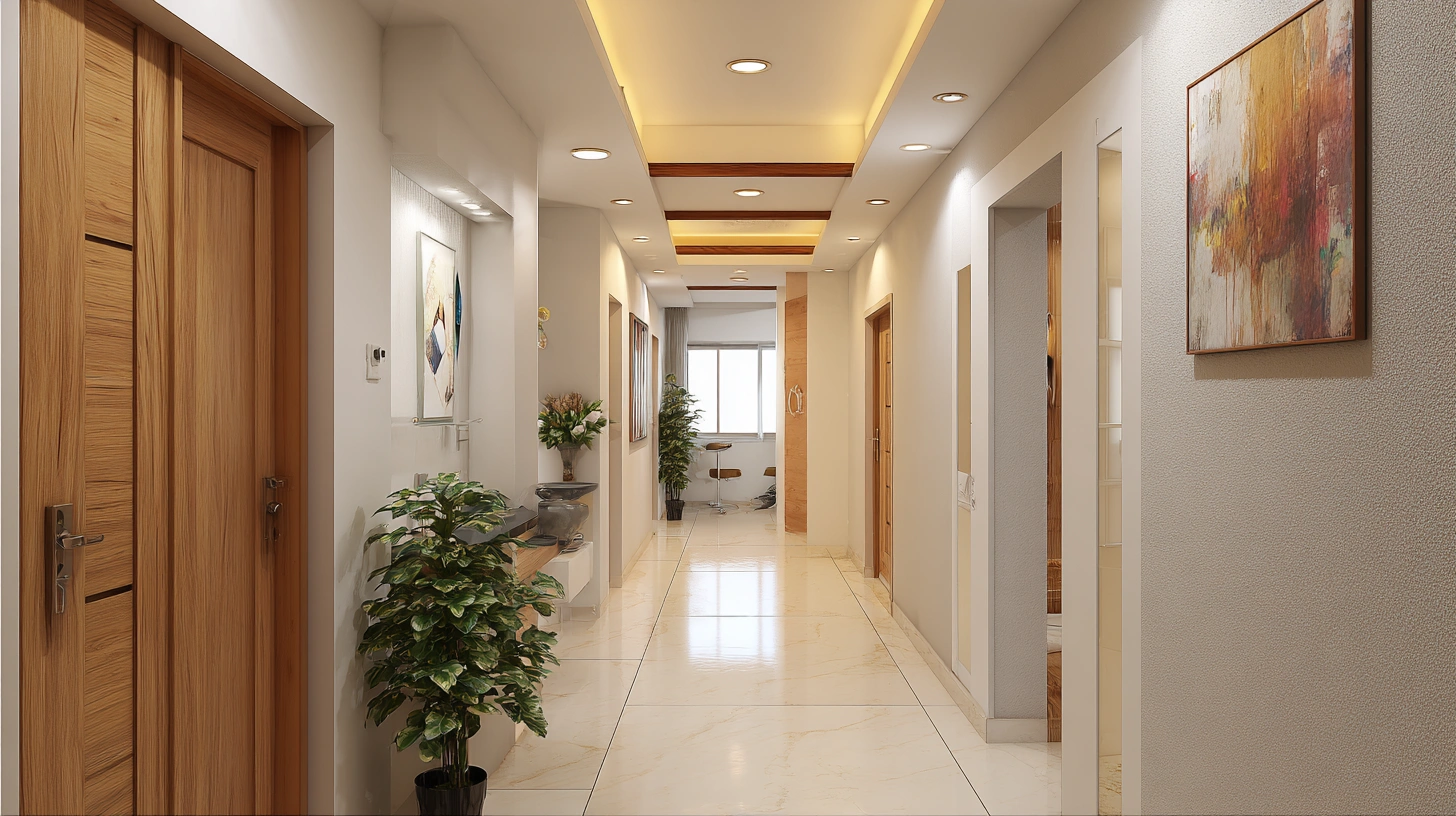
For lobbies, corridors, and hallways, both POP and PVC have advantages, depending on the space's purpose. POP is preferred in formal entrance areas where decorative aesthetics and layered lighting are important. PVC is better for narrow corridors and utility hallways where low maintenance and quick installation matter more.
| Feature | POP Ceiling | PVC Ceiling |
| Best Use | Premium entrance lobbies | Utility corridors |
| Appearance | Rich and decorative | Clean and practical |
| Maintenance | Moderate | Low |
| POP vs PVC Ceiling Price | ₹70–₹130/sq ft | ₹60–₹90/sq ft |
| Final Verdict | POP for aesthetics | PVC for practicality |
Advantages and Disadvantages: POP vs PVC False Ceiling
POP false ceilings offer a smooth, premium finish with great design flexibility, making them ideal for living rooms and bedrooms, but they are moisture-sensitive, heavier, and prone to cracking over time. PVC ceilings, on the other hand, are lightweight, fully waterproof, and low-maintenance, making them the practical choice for kitchens, bathrooms, and humid spaces, though they lack the aesthetic appeal and design versatility of POP. In short, choose POP for looks in dry interiors and PVC for durability in wet or utility areas.
POP Ceiling
Advantages:
- Unmatched design flexibility - any shape, curve, or pattern is possible
- Seamless, smooth finish that looks premium when painted
- Naturally fire-retardant due to the gypsum base
- Better sound absorption compared to PVC panels
- Easy to touch up small cracks or chips with fresh POP
Disadvantages:
- Absorbs moisture - not suitable for kitchens, bathrooms, or high-humidity areas
- Slow installation - wet process requires 7–10 days, including curing
- Prone to cracking over time, especially in buildings with structural movement
- Requires periodic repainting to maintain appearance
- Skilled labour is essential - poor workmanship leads to visible defects
PVC Ceiling
Advantages:
- Fully waterproof - ideal for kitchens, bathrooms, and balconies
- Fast installation - most rooms done in 1–2 days
- Zero maintenance - no painting, no patching, just wipe clean
- Termite-proof and resistant to mould and mildew
- Panels can be individually replaced if one is damaged
Disadvantages:
- Limited design flexibility - pre-made patterns only; no custom sculpting
- Can release fumes if exposed to fire - avoid in areas near open flames
- Looks less premium than POP in formal living and bedroom spaces
- Not eco-friendly - synthetic plastic material with a higher carbon footprint
- Can feel hollow or plastic-like if lower-quality panels are used
Which Is Better - PVC or POP Ceiling? The Final Verdict

When the question is simply which is better, PVC or POP ceiling, the honest answer is: it depends on your room and your priorities.
- Choose POP when design, aesthetics, and visual richness are the priority - living rooms, bedrooms, dining rooms, and formal lobbies.
- Choose PVC when practicality, waterproofing, and low maintenance are the priority - kitchens, bathrooms, balconies, and utility areas.
- Choose both - many modern Indian homes use POP in dry living spaces and PVC in wet utility areas, getting the best of both materials across the home.
The POP vs PVC false ceiling debate is not about which material is objectively better - it is about which material is better for your specific room, your lifestyle, and your budget.
Conclusion
The POP vs PVC ceiling comparison comes down to one simple principle: use the right material in the right room. POP remains the gold standard for design-rich, aesthetic spaces like living rooms, bedrooms, and dining areas - where its mouldability and seamless finish are unmatched. PVC is the practical champion for moisture-prone spaces like kitchens and bathrooms - where its waterproofing, durability, and near-zero maintenance make it the only sensible choice. Choosing between a POP vs PVC ceiling is only the first step; proper planning and installation are equally important for a durable and stylish result. NoBroker Interiors helps homeowners select the right ceiling material based on room type, budget, and interior style.
Frequently Asked Questions
1. Which is better in the POP vs PVC ceiling comparison for Indian homes?
2. What is the difference between a POP and a PVC false ceiling?
3. What is the POP vs PVC ceiling price in India in 2026?
4. Which is better, PVC or POP ceiling for kitchens?
5. Is POP or PVC which is better for bedroom ceilings?
6. Which ceiling lasts longer in the PVC ceiling vs the POP ceiling comparison?
7. Is PVC ceiling cheaper than POP ceiling?
8. Can I combine POP and PVC ceilings in the same house?
9. Which is better, POP or PVC, for low-maintenance homes?
10. Does the POP ceiling look more premium than the PVC ceiling?


Our Recent Projects



Reviews

Sanoj Kumar

Good center

Archi Dubey
Truly More Organized Living Space I wanted interiors that looked attractive but were also practical for daily use. Crew professional ... Read more

Ganesh Bawaskar
Excellent work done by NoBroker team for my new flat. Best part is quality and cost both were good. No delay in work which showcase pro... Read more

Swathi Vs
Amazing experience given by NOBROKERS interiors... preferable...Tharun performance was ultimate...thanq so much tharun and team

Adhi HL
Amazing consultations by the designer they helped me finalise the designs I was looking for

Anchal Singh
Amazing center

Local Guide
Excellent service, great quality within promised budget and time. Special thanks to Subhash for end to end management and coordination ... Read more

Bindu Rai
I approached No Broker Interiors for designing my home and it was a smooth process overall. The modular kitchen has smart storage, and ... Read more

Tapas Ghosh
NoBroker Interior offered some nice ideas for improving the look and functionaliity of my living space & genuine , team

Vinodhkumar
I had a wonderful experience with Vishal V, the interior designer at NoBroker. His way of explaining things, point-by-point detailing, ... Read more

Dipti
Great Space Planning,,, I wanted to make better use of the space in my home, and the design suggestions were quite helpfull. I liked th... Read more

Divya Pendem
We are done our 3BHK flat interior work from No Broker. It was exlent and as we expected they done. Thank you all who involved in this ... Read more

Asha Kashyap
"Great interior design service by NoBroker Interiors - Whitefield! Had a wonderful experience working with their team for our home inte... Read more

Rising Soft
We trusted No Broker Interiors with our interior work and the final look of our home is lovely. At the experience centre they showed us... Read more

Sarala Buduru
The interior transformation made the space feel brighter and more welcoming. The design choiices were simmple, tasteful, and suited my needs.

Hanma
The team was responsive to my queriies and explained the interior work process clearly. Truly amazing 🤗

Honey Verma
Better Use of Natural Light I wanted my home to feel brighter and more open. The designn choices helped create an airy apppearance, and... Read more

S K.K
Helpful Design Guidance team bhot suggestive hai & As someone with limited knowledge of interior design, I appreciated having different... Read more

Muskan kataria
Amazing interior work! The design is elegant, modern, and beautifully finished. Every detail is thoughtfully crafted, with excellent qu... Read more

Guncreator Studio
The design suggestions were creatiive and suited the style I wanteed for my home.

Anamika Banik
Good interior service with clear communication and helpful suggestions. The work was completed neatlyyyy

Nitin Kumar Mandilwar
Good work done by project manager Manoj. Completed the work in time.

Divyanshu Mehta
Great work done by designer Divya and Govardhan. Hassle free work snd best part is they will customise everything as per need exactly. ... Read more

Jason Fernandes
I had a great experience here. When it comes to planning, delivery and execution, great work was done by the team members. Suhail Khan... Read more

Swathi Warker
Manoj is very responsive, finds solutions for all obstacles and provides ork around. He provides timely updates on work status. Manages... Read more

Vineeta Dalai
A big thank you to Mr. Ashwin Jaiswal, Sr. Project Manager, for turning my dream home into reality and making the entire interior journ... Read more

Riya Roy
Ideas for a Compact Home Making a smaller home look spacious was my maiin concern. The desiign concepts helped me explore better furnit... Read more

Rinki Jain
Modern Home Ideas the staff provided & I was looking for a modern yet practical look for my home. The design options I exploreed throug... Read more

Deepika Khilar
Quality work done by NoBroker. Zaki as a project manager was very sincere and good in getting things done. Few improvement suggestions... Read more

AKSHATHA S
I am writing this after using NoBroker Cleaning Services for my house and the difference is easy to see. Our chimney was greasy for mon... Read more

Priya Sardar
Overalll, the interior planning experience was smooth, and I liked the practical approach to the design. GOOD DESIGN 👍🏻

Abhilash Tomar
Good experience

Rahber Khan
The interior work turned out well, and I liked how the team focused on making the space both stylish and functional. They were responsi... Read more

yogesh
Recently did interior for 2BHK with NoBroker Interiors, and the overall experience has been great. Everyone has been extremely supporti... Read more

Rasheed khan
Overall excellent services by Nobroker. I am glad to have their interiors installed in my apartment.

Sai kiran tharala
I recently got my home interiors completed by NoBroker, and I’m extremely happy with the outcome. Initially, I was unsure about frame... Read more

Mohammed Moizuddin
We recently got our home interiors done through NoBroker Interiors, and we are very happy with the final output. The overall finish and... Read more

Dev Roy
I prefer simple interiors rather than too many decorative elements. The ideas I exxplored throughh NoBroker Interior matched that prefe... Read more

Sree Harsha Yandamuri
Project finished on time, quality was top-notch. The associate caught issues we'd have missed -> that's what you want in a quality chec... Read more

Ajay Murumkar
Truly amazing team, Budget-Friendly Planning I wanted to plan my home interiors without overspending. Compariing the available options ... Read more

Adi M
We had a wonderful experience with NoBroker while planning the interiors for our new flat. A special thanks to Sathvika for her profess... Read more

Kandagatla Laxman
We just finished our home interiors at Praneeth Pranav Solitaire NoBroker. A big thanks to our Project Manager, Abhishek! He managed th... Read more

Ananya Sharma
Our flat interiors were handled by No Broker Interiors and our time with them was pleasant. They planned the modular kitchen around how... Read more

Shiva Shankar
We had a wonderful experience with NoBroker Interiors for our new home at Primark Inspira. A special thanks to Abhishek for managing th... Read more
Testimonials
View All
NoBroker Interiors Review | Happy Customer Testimonial by Rajani
NoBroker Interiors | Customer Testimonial by Prinyakar Polley

NoBroker Interiors | Hyderabad Customer Testimonial by Prashant Choudhary

NoBroker Home Interiors | Hyderabad 4BHK Customer Review

NoBroker Interiors Customer Testimonial | Jatan's Story

NoBroker Interiors Review | Hyderabad Customer Testimonial

NoBroker Interiors Review | Modern Dream Home Customer Testimonial

NoBroker Interiors Customer Testimonial | Fast & Quality Home Interiors

NoBroker Interiors Customer Testimonial | Pune Dream Home

NoBroker Interiors| Bangalore Customer Testimonial
NoBroker Interiors: Sports Theme Interiors by NoBroker #interiordesign #nobrokerinteriors #nobroker

NoBroker Interiors - Customer Testimonials

That 3 PM meeting where ideas turn into floor plans, materials, and magic. 💫

Your 2026 list is here.

Smart wardrobe design that fits your life, beautifully.
POV: You gave your home a holiday hug.🥰

Blink and you’ll miss the makeover.👀

When your home finally gets its own weekend mood, this bar unit does the job beautifully.

A calm pooja corner every home needs.

NoBroker Home Interior Service | Saurabh & Prachi Share Their Story #interiordesign #shorts
About the Author

Dileep
Author
Dileep is a passionate interior designer with a civil engineering background, bringing strong technical knowledge into the world of creative interior design. His engineering foundation help










Recent Blogs
Subscribe to our Newsletter
Get latest news delivered straight to your inbox