Let's Get Creative: How to make your kitchen windows stand out and shine!

Interior Design Tips & Ideas

2.9K Views
Table of Contents
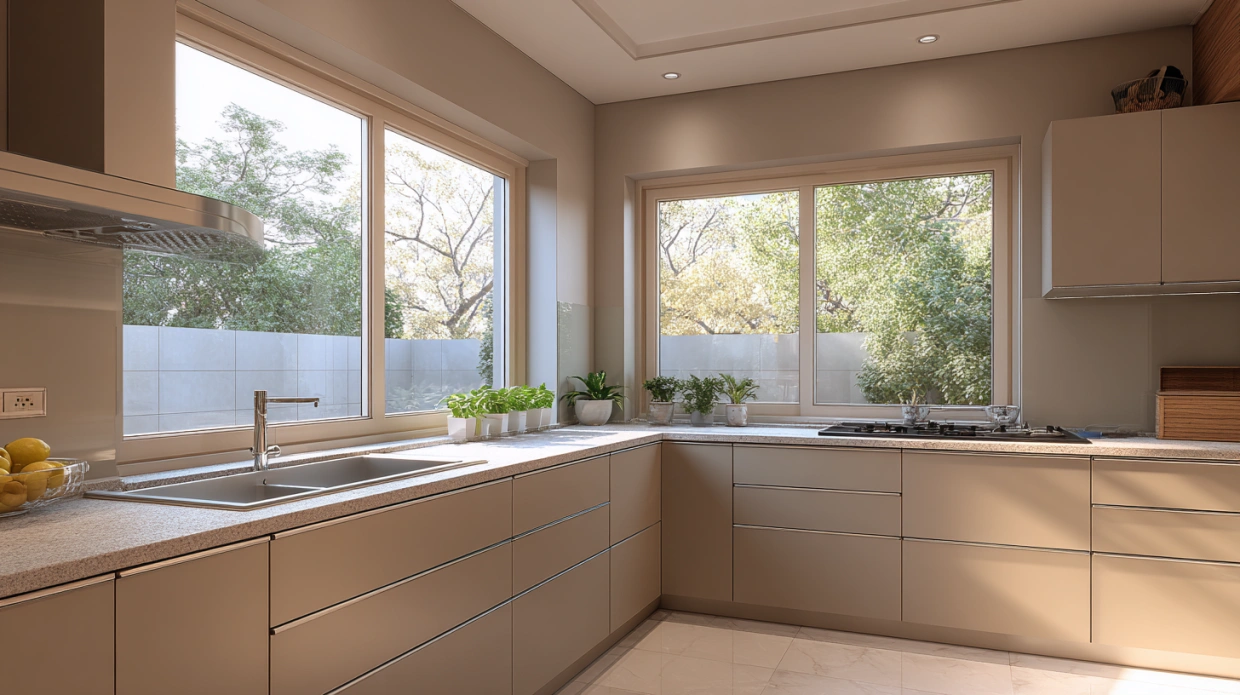
Kitchen window design affects how a kitchen feels and functions every day. Good ventilation keeps heat and smoke under control, while natural light improves visibility during cooking. Modern kitchen window designs are now more practical, focusing on ease of use, improved airflow, and clean, low-maintenance materials. This guide covers different kitchen window design ideas, types, materials, and cost insights to help you plan a setup that works well in Indian homes.
Types of Kitchen Window Designs
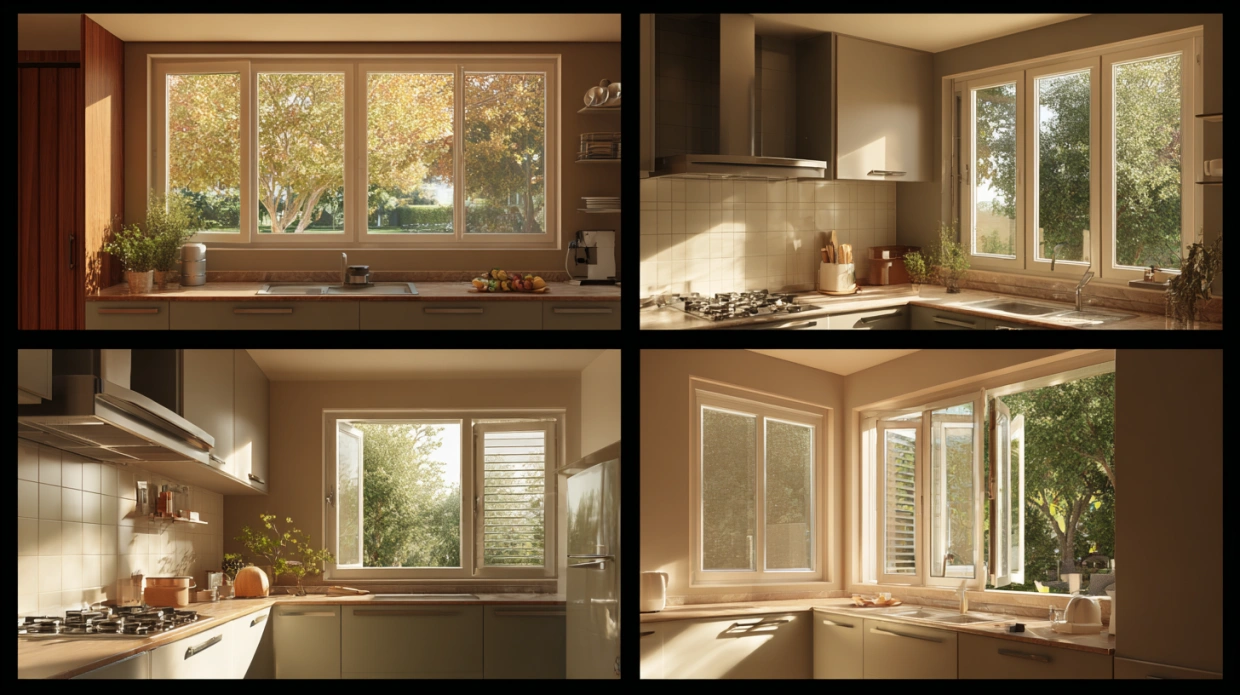
Kitchen window design shapes how air moves and how light enters during daily use. From space-saving sliding windows to casement and louvre styles that improve airflow, each type offers a different approach to ventilation, light, and ease of use in the kitchen.
Recommended Reading

Paper Wall Hanging Ideas: Easy Wall Hang...
15.4K Views

Transform Your Ceilings with Beautiful P...
15.2K Views
Standard Kitchen Dimensions: Essential G...
13.8K Views
Transform Your Home With Stunning 22 Wal...
12.5K Views
15+ Awe-Inspiring Small Bedroom Ceiling ...
11K Views
- Sliding Window: Opens by moving panels sideways on a track. Does not take extra space to open. Airflow depends on how much of the panel is slid open.
- Casement Window: Opens fully on side hinges like a door. Allows maximum airflow and can catch the outside breeze directly.
- Fixed Window: Does not open at all. Used only for bringing in natural light or outside view, where ventilation is managed through other windows or exhaust.
- Louvre Window: Made of horizontal slats that tilt open or closed. Lets you control airflow without fully opening the window.
- Awning Window: Hinged at the top and opens outward from the bottom. Allows air to enter while blocking light rain from coming inside.
Latest Kitchen Window Design Ideas (2026 Trends)
Latest kitchen window design ideas in 2026 include sliding windows above sinks, long horizontal windows along countertops, and aluminium frames with mixed glass finishes. These modern kitchen window design choices fit compact urban kitchens and support everyday use in Indian homes.
1.Modern Kitchen Window Design Above Sink for Indian Homes
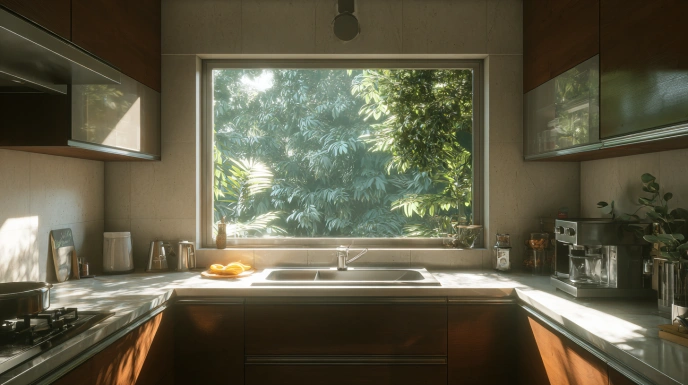
A modern kitchen window design above the sink improves daily use by bringing focused light and steady airflow to the cleaning area. This window style works well in small and L-shaped kitchen designs, as well as in compact Indian homes.
- Best For: 1BHK and 2BHK apartments with compact kitchens, L-shaped kitchens where the sink sits along an outer wall, homes with limited daylight, urban flats with restricted ventilation
- Benefits: Clear visibility while cleaning, better ventilation, efficient use of wall space
- Pro Tip for Indian Kitchen: Choose an aluminium kitchen window design with sliding panels to handle moisture, heat, and frequent cleaning with minimal maintenance
- When to Avoid: Avoid if the window faces a service shaft or a blocked external wall
- Cost Insight: ₹4,000 to ₹12,000, depending on size, frame material, and glass design for a kitchen window
2. Small Kitchen Sliding Window Design for Compact Spaces
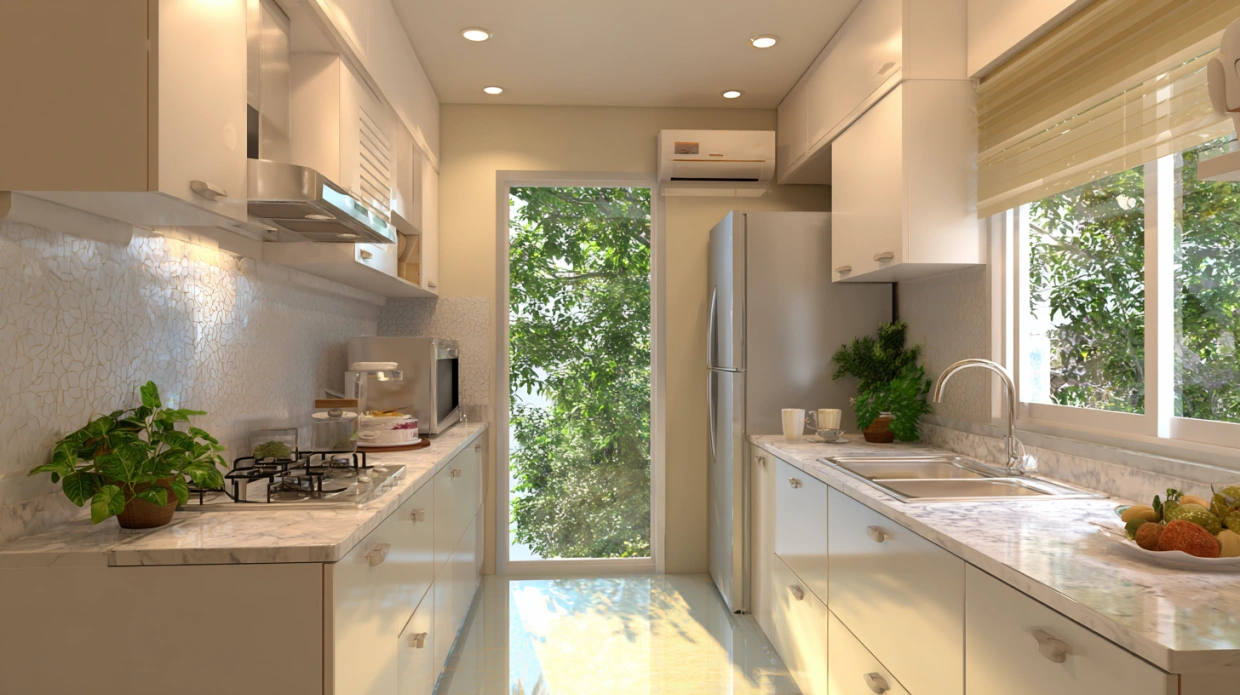
A small kitchen window design with sliding panels improves usability in tight layouts by saving space and maintaining airflow. This window style for the kitchen suits compact urban homes where movement and ventilation need careful planning.
- Best For: 1BHK and 2BHK apartments with compact kitchens, narrow layouts with limited wall space, modular kitchen window design in urban flats, homes with restricted ventilation
- Benefits: Space-saving operation, steady airflow, easy maintenance in daily use
- Pro Tip for Indian Kitchen: Use aluminum sliding windows with mesh to manage dust and allow ventilation during cooking
- When to Avoid: Avoid in kitchens that need full opening for heavy ventilation
- Cost Insight: ₹3,500 to ₹10,000 depending on size, track quality, and frame material
3.Aluminium Kitchen Window Design for Modular Kitchens
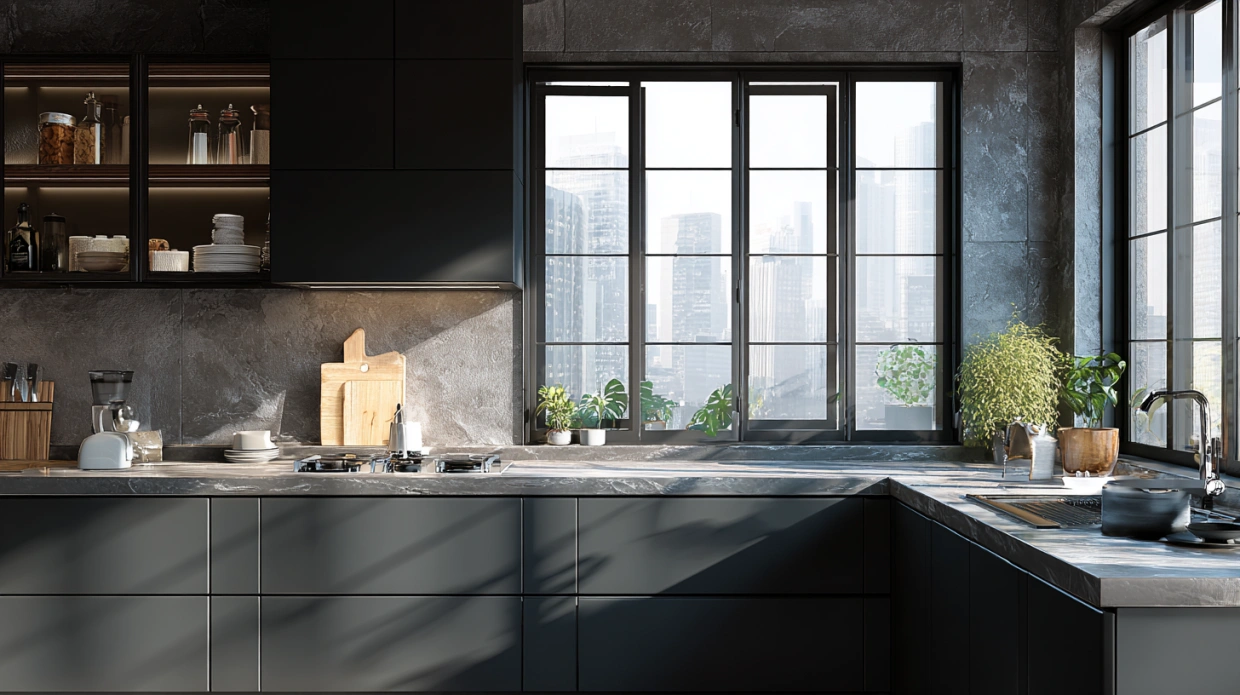
An aluminium kitchen window design supports modern kitchen window design with durable framing and clean profiles. It works well in modular kitchens where frequent cleaning, heat exposure, and long-term maintenance matter.
- Best For: Modular kitchens in 2BHK and 3BHK homes, high-use cooking spaces, urban flats with regular exposure to heat and moisture, layouts needing long-lasting window solutions
- Benefits: Strong frame structure, low maintenance, resists rust and moisture damage
- Pro Tip for Indian Kitchen: Choose powder-coated aluminum frames to handle oil residue and frequent cleaning without wear
- When to Avoid: Avoid if the design requirement is a traditional or wooden finish
- Cost Insight: ₹5,000 to ₹15,000, depending on finish, thickness, and glass design for a kitchen window
4.Glass Design for Kitchen Window Decoration Ideas
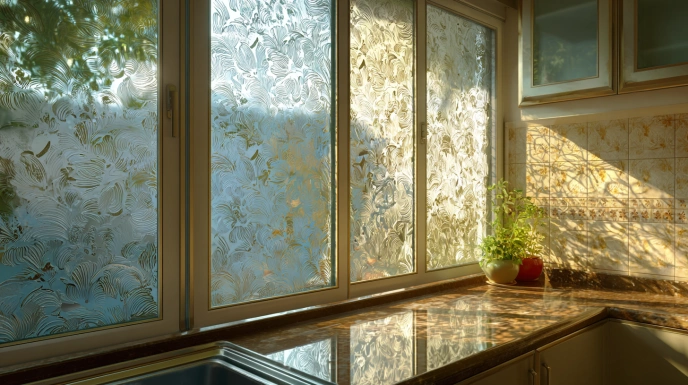
Glass design for a kitchen window enhances the aesthetic while allowing light and air to flow, especially in small or compact urban kitchens. Frosted or textured glass works well in tightly packed apartments, while clear glass suits kitchens facing open areas or balconies. Tinted glass helps cut glare and heat in west-facing kitchens.
- Best For: Apartments facing neighboring buildings, kitchens requiring privacy near cooking zones, homes with direct external exposure.
- Benefits: Controls visibility, improves daylight quality, supports clean visual appearance
- Pro Tip for Indian Kitchen: Use frosted or textured glass in lower panels and clear glass above for balanced light and privacy
- When to Avoid: Avoid fully clear glass in tightly packed residential areas
- Cost Insight: ₹250 to ₹800 per sq ft, depending on glass type, finish, and thickness
Kitchen Designs Based on Kitchen Size
Kitchen design today depends on space efficiency, ventilation, and layout planning. In Indian homes, compact and modular layouts dominate, with L-shaped and parallel kitchens preferred for improved movement, storage, and airflow in small- to medium-sized spaces.
5. Small Kitchen Design for Compact Urban Homes
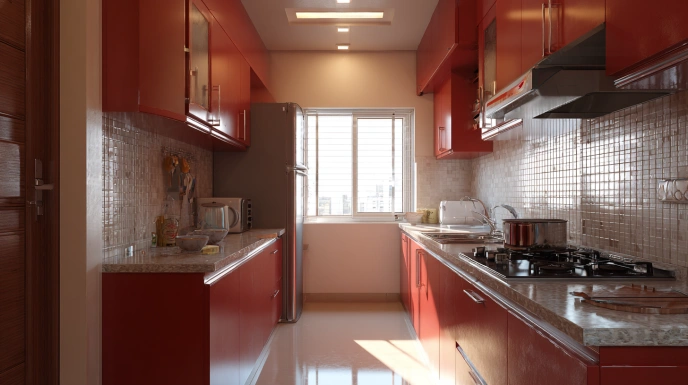
A small kitchen design focuses on making daily tasks easier within a limited space. Thoughtful storage, clear counter areas, and proper window placement help maintain airflow and light without making the kitchen feel tight or overcrowded.
- Best For: 1BHK and 2BHK apartments with compact kitchens, urban flats with limited space, homes with restricted ventilation
- Pro Tip for Indian Kitchen: Use a sliding kitchen window design and open shelves to keep the space easy to use and visually light
- When to Avoid: Avoid if the kitchen needs heavy storage or multiple cooking zones
- Cost Insight: ₹1.5 lakh to ₹4 lakh depending on fittings, finishes, and storage units
6. L-Shaped Kitchen Design with a Window
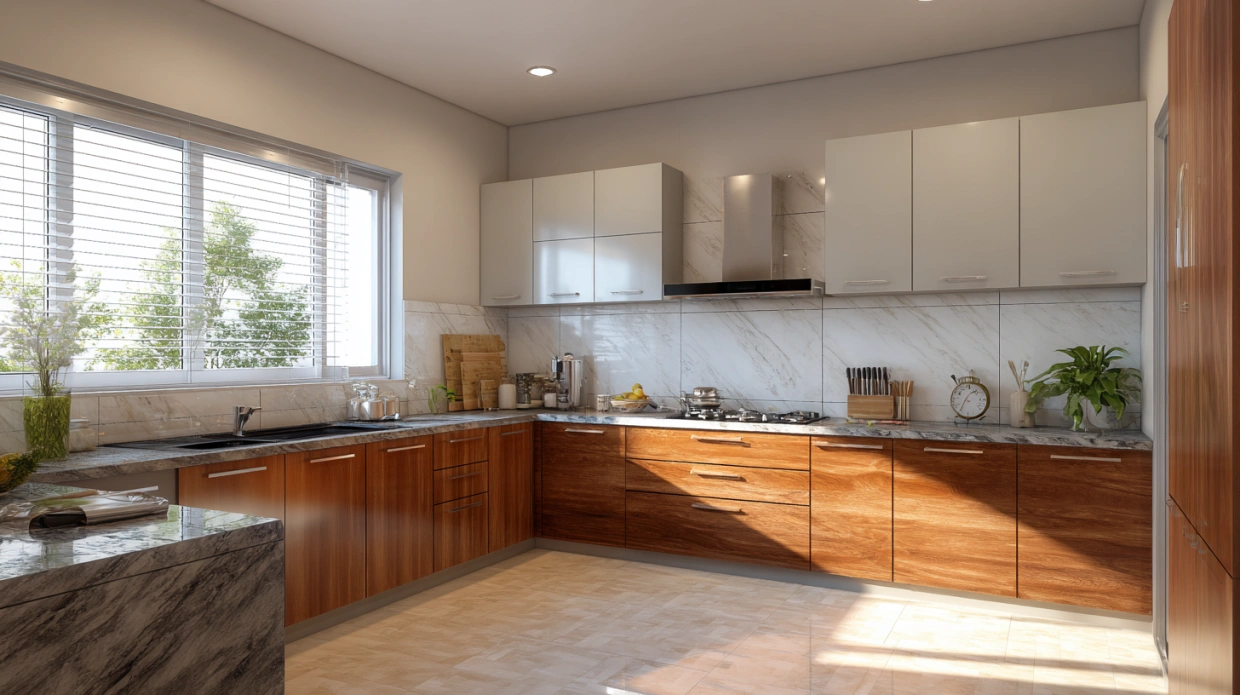
An L-shaped kitchen design with a window improves workflow by organising cooking and cleaning areas across two walls. This layout creates better movement within the space, while the window placement along the outer wall brings in natural light and supports ventilation where it is most needed.
- Best For: L-shaped kitchens where the sink sits along an outer wall, 2BHK homes with corner layouts, kitchens needing defined cooking and cleaning zones, homes with moderate space
- Benefits: Better workflow between sink and stove, improved ventilation, effective use of corner space
- Pro Tip for Indian Kitchen: Position the window near the sink to improve light and airflow during daily cleaning tasks
- When to Avoid: Avoid in very small kitchens where corner movement becomes restricted
- Cost Insight: ₹2 lakh to ₹6 lakh depending on layout, cabinetry, and materials
7. Parallel Kitchen Design for Narrow Spaces
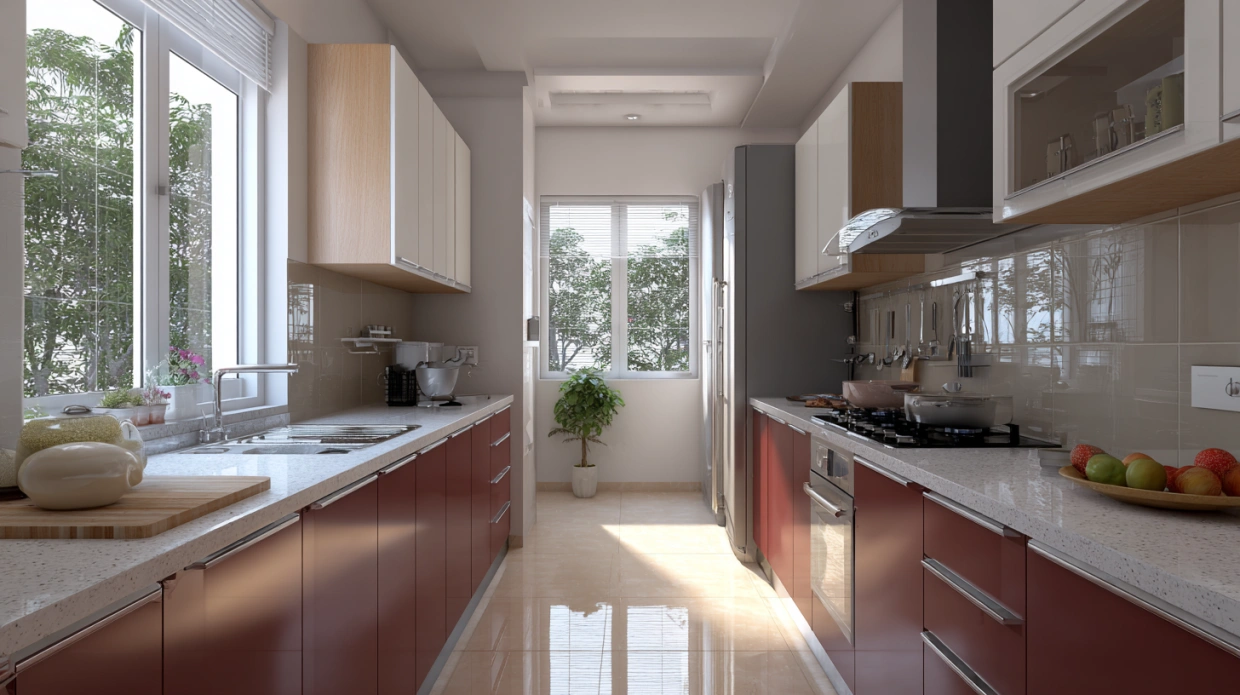
A parallel kitchen design uses two opposite counters to organize cooking and storage efficiently within a narrow space. Adding a window on one side brings in natural light and ventilation, making the layout feel more open and comfortable for daily use in Indian homes.
- Best For: Narrow kitchens in apartments, 1BHK and 2BHK homes, kitchens needing both storage and clear walking space
- Pro Tip for Indian Kitchen: Use one counter for cooking and the other for prep or cleaning to avoid overlap during use
- When to Avoid: Avoid if the gap between counters is too narrow for comfortable movement
- Cost Insight: ₹2 lakh to ₹5 lakh, depending on storage units and material
8. Open Kitchen Design for Modern Homes
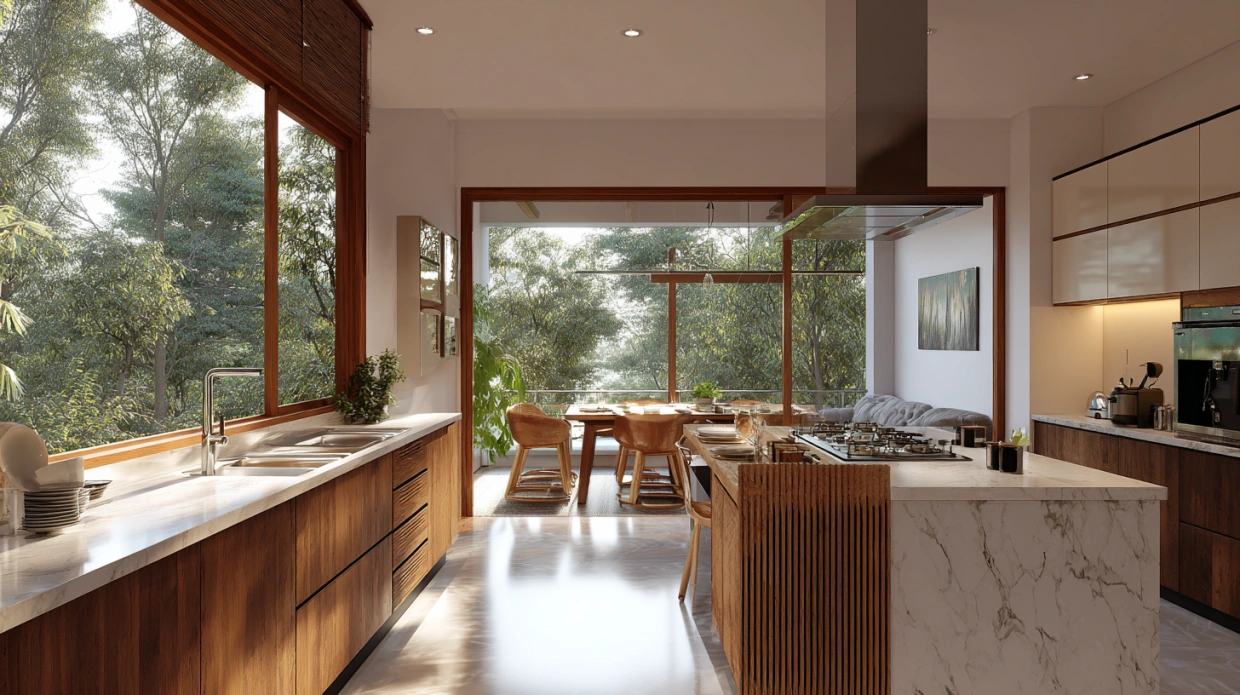
An open kitchen design connects with the living or dining area, making the space feel larger and more social. This modern kitchen window design works well with large windows, enhancing light and openness.
- Best For: 2BHK and 3BHK homes with open layouts, families using combined living and dining spaces, homes needing better light flow
- Benefits: Better light distribution, improved airflow and more connected everyday use
- Pro Tip for Indian Kitchen: Combine a large sliding window with a strong chimney to manage smoke and maintain air movement
- When to Avoid: Avoid in heavy cooking setups without proper ventilation or separation
- Cost Insight: ₹3 lakh to ₹8 lakh depending on layout, finishes, and window integration
Kitchen Designs Based on Direction as Per Vastu
Kitchen direction as per Vastu focuses on how fire, water, light, and airflow interact within the space. In Indian homes, these principles are often balanced with practical needs such as ventilation, window placement, and daily cooking routines to create a kitchen that feels functional, well-lit, and comfortable to use.
9. East-Facing Kitchen Window Design for Natural Light
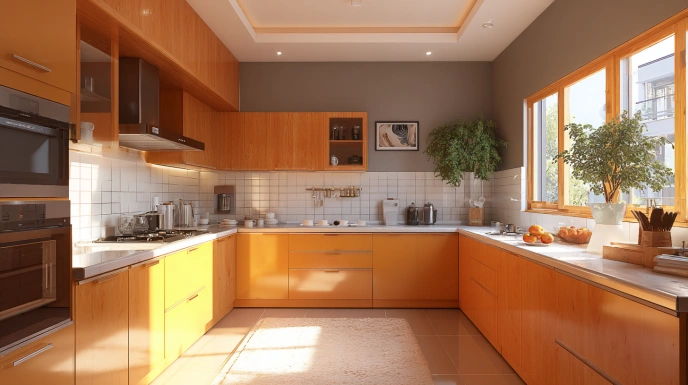
An east-facing kitchen window design brings in early morning sunlight, making the space brighter during active cooking hours. This helps improve visibility near the counter and keeps the kitchen naturally lit without depending fully on artificial lighting.
- Best For: Homes where the kitchen is used more in the morning, apartments needing better daylight near the sink or cooking area
- Benefits: Clear natural light, better visibility while cooking, improved airflow during early hours
- Pro Tip for Indian Kitchen: Use a clear or lightly frosted glass design for the kitchen window to allow light while managing glare
- When to Avoid: Avoid if direct sunlight creates strong glare on the cooking surface
- Cost Insight: ₹3,000 to ₹10,000 depending on window size and glass type
10. South-East Kitchen Design as per Vastu
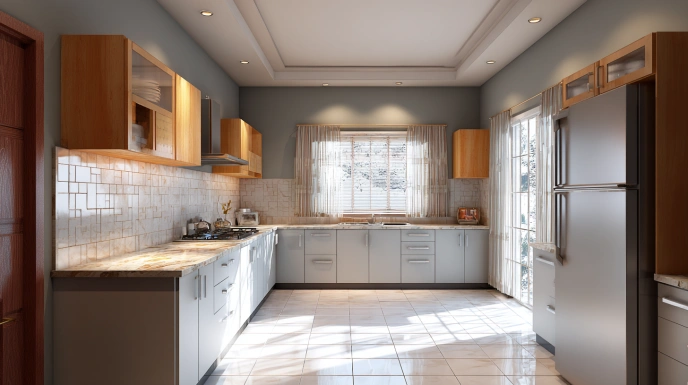
South-east kitchen design aligns with the fire element, making it ideal for cooking zones. This layout supports functional planning and works well with modern kitchen window designs to improve airflow.
- Best For: Homes planning a new kitchen setup, layouts where the cooking zone can be placed along an outer wall, kitchens with regular heavy cooking
- Benefits: Better heat management, improved airflow near the stove, more comfortable cooking conditions
- Pro Tip for Indian Kitchen: Keep the stove in the south-east corner and place a sliding or openable window close to it for ventilation
- When to Avoid: Avoid if the wall does not allow a window or proper exhaust
- Cost Insight: ₹2 lakh to ₹6 lakh depending on layout, fittings, and materials
11. North-Facing Kitchen Window for Ventilation
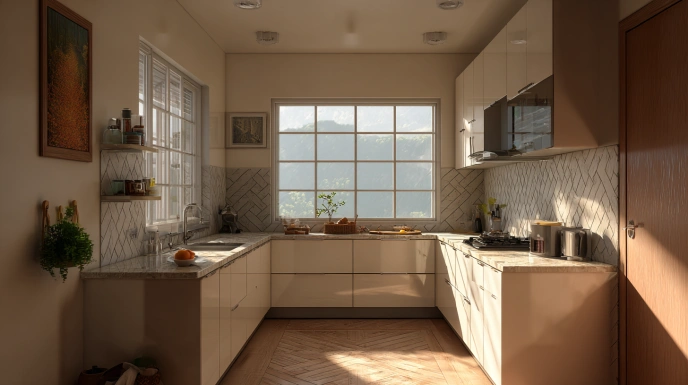
A north-facing kitchen window ensures consistent light without excessive heat. This window style for the kitchen works well in urban homes where controlled lighting and ventilation are important.
- Best For: Apartments with limited cross ventilation, kitchens exposed to strong sunlight from other sides, and small kitchen window designs in urban homes.
- Benefits: Even daylight, reduced heat buildup, and more comfortable working conditions
- Pro Tip for Indian Kitchen: Use a sliding or louvre window design to control airflow based on cooking needs
- When to Avoid: Avoid if there are no other openings to support airflow
- Cost Insight: ₹3,000 to ₹9,000 depending on size and frame type
12. West-Facing Kitchen Design with Heat Control
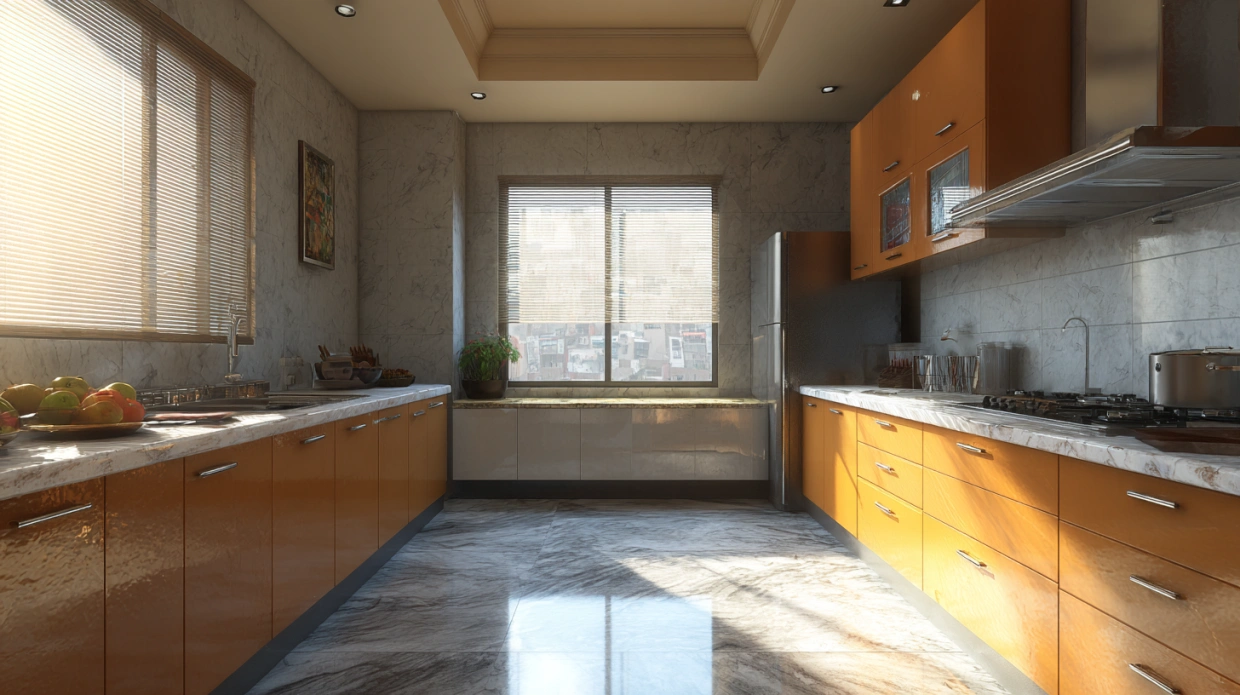
A west-facing kitchen design receives strong afternoon sunlight, making heat control important. Proper kitchen window decoration ideas, such as tinted glass or blinds, help regulate temperature and comfort.
- Best For: Urban homes with a fixed kitchen orientation, apartments with west-facing exterior walls, and kitchens used more in the evening.
- Benefits: Good natural light later in the day, improved visibility during evening cooking
- Pro Tip for Indian Kitchen: Use tinted or reflective glass design for the kitchen window, along with blinds, to reduce heat
- When to Avoid: Avoid if there is no shading or ventilation to control rising temperature
- Cost Insight: ₹4,000 to ₹12,000 depending on glass type and frame material
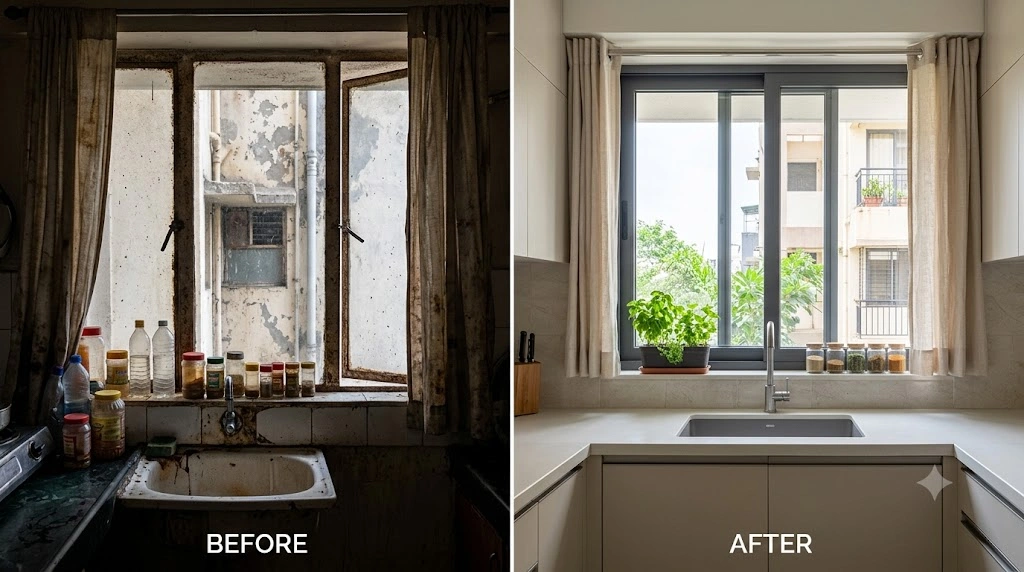
Before & After: The Power of a Kitchen Window Makeover
A well-planned kitchen window design makes all the difference in airflow, daylight, and ease of maintenance. Upgrade dirty, worn-out frames to durable, modern sliding or casement windows to make cooking and cleaning a far more pleasant experience.
Best Placement for Kitchen Windows
Kitchen window design depends on where light and airflow are needed during daily use. Placing the window in the right spot improves visibility and reduces heat buildup. Positioning the window where light and airflow are needed most makes cooking, cleaning, and movement more comfortable. Natural light can significantly enhance a kitchen's aesthetics, making it look bright and airy. Here are some tips for adequate natural light in your kitchen:
- Above the Kitchen Sink
A window above the sink brings direct light to the cleaning area and allows fresh air to circulate while washing dishes. Choose sliding or casement windows that are easy to open in a slightly wet zone. - Near a Dining Area or Breakfast Space
A larger window near a dining corner brings in more daylight and makes the space feel open during meals. It also improves overall brightness in kitchens connected to living or dining areas. - Along Countertops or as Part of the Backsplash
A long horizontal window above the counter lets light in without blocking storage space. It works well in kitchens where wall cabinets are needed, but daylight is still important.
Where to Avoid Placement?
- Too Close to Adjacent Buildings: Limits privacy and reduces effective light entry
- Directly Behind the Stove: Heat, oil, and smoke can affect the window surface and make cleaning difficult
- Facing a Closed Shaft or Wall: Blocks airflow and reduces the purpose of having a window
Materials Used in Kitchen Window Design
Kitchen window design materials affect durability, heat resistance, and ease of cleaning. The right choice depends on daily cooking conditions, moisture exposure, and how often the window needs maintenance.
| Material | Key Features | Maintenance | Durability | Cost Range (₹) | Where It Works Best |
| Aluminium | Strong, does not rust, handles heat and moisture | Low | High | 5,000 to 15,000 | Modular kitchens, high-use areas |
| uPVC | Moisture-resistant, good insulation | Low | Medium | 4,000 to12,000 | Apartments, budget setups |
| Wood | Natural finish, solid look | High | Medium | 8,000 to 25,000 | Traditional kitchens |
| Steel | Very strong, long-lasting | Medium | High | 6,000 to 18,000 | Utility-heavy kitchens |
| Glass (Type) | Controls light and privacy (clear/frosted/tinted) | Low | Varies | 250 to 800/sq ft | All kitchen window types |
Kitchen Window Design Cost in India
Kitchen window design cost in India depends on size, material, glass type, and installation. Basic designs remain budget-friendly, while larger windows with premium finishes and glass increase the overall cost.
| Window Type / Material | Average Cost (₹) | What Affects Cost |
| Sliding Aluminium Window | 4,000 – 12,000 | Size, track quality, frame thickness |
| Casement Window | 5,000 – 15,000 | Hardware, opening size, and material |
| uPVC Window | 4,000 – 10,000 | Frame quality, insulation type |
| Fixed Glass Window | 3,000 – 8,000 | Glass thickness, size |
| Louvre Window | 6,000 – 15,000 | Blade material, mechanism |
| Large / Custom Window | 10,000 – 30,000+ | Size, design complexity, glass type |
Benefits of Proper Kitchen Window Design
A well-planned kitchen window design improves how the space feels and functions every day. Natural light makes the kitchen brighter and easier to work in, while proper ventilation helps remove heat, smoke, and moisture during cooking.
- Better Visibility While Cooking
Natural light reduces strain on the eyes and makes food preparation and cleaning easier - Improved Airflow
Helps release heat, smoke, and odours, keeping the kitchen comfortable during use - Health and Comfort
Daylight exposure supports mood and keeps the space feeling fresh and active - Efficient Use of Space
Well-placed windows free up wall areas for storage without blocking light
Tips for choosing the right window placement and design for your kitchen size and layout.
Choosing the right kitchen window design depends on the space, usage, and kitchen layout. The window should support daily tasks without affecting storage or movement.
- Match Window Size to Kitchen Size: Small kitchens work better with a single window near the sink or counter, while larger kitchens can accommodate wider windows or multiple windows.
- Place Windows Where Light Is Needed the Most: Focus on areas like the sink or prep counter to improve visibility during daily use.
- Keep Storage in Mind: Avoid placing windows where wall cabinets or essential storage units are required.
- Maintain Proper Ventilation: Ensure the window opens easily and allows enough airflow, especially in kitchens with heavy cooking
- Align with Overall Design: Window size, frame, and glass should match the kitchen’s materials and finishes for a balanced look
How to Choose the Best Kitchen Window Design?
The right kitchen window should work with your daily routine without getting in the way. It should be easy to open, simple to clean, and placed where you actually need it during cooking or cleaning.
- Check Ventilation Needs: Pick a window that lets enough air pass through, especially if you cook often.
- Choose the Right Opening Style: Sliding windows save space, while casement or awning windows open wider for more airflow
- Consider Window Size and Placement: Keep the window near areas like the sink or counter where you spend more time.
- Think About Maintenance: Choose materials that handle heat, oil, and regular cleaning without damage.
- Match with Kitchen Setup: Make sure the window does not block cabinets or reduce usable wall space.
Affordable Kitchen Window Design Ideas: What are some cost-effective ways to upgrade kitchen windows?
When it comes to upgrading your kitchen windows, it doesn't have to break the bank. There are plenty of cost-effective ways to give your kitchen a new look and feel without sacrificing style or functionality. Here are some affordable kitchen window design ideas to consider:
Simple DIY window treatment ideas to add style and functionality
If you're on a budget but want to give your kitchen windows a fresh look, consider some simple DIY window treatment ideas. Adding curtains or blinds can add a touch of colour and texture to your kitchen while providing privacy and light control. Installing a tension rod and hanging some inexpensive curtains can instantly transform your kitchen's ambience.
Another budget-friendly window treatment option is using frosted glass films. This is an affordable, easy-to-install way to add privacy to your kitchen window without blocking natural light. Additionally, it can give your kitchen a modern, sleek look.
Using plants and greenery to enhance window design
Another affordable way to upgrade your kitchen window design is by adding some greenery. Plants are an easy way to add colour, texture, and interest to your kitchen window. They not only enhance the aesthetic appeal of your kitchen window but also provide some much-needed natural freshness and air quality control in the room.
Some great options for plants in the kitchen include herbs, succulents, and small flowering plants. These can be easily accommodated in a small pot or planter on your windowsill.
Incorporating unique window films for added privacy and design
For homeowners looking for an affordable, unique way to enhance their kitchen windows, window films are a great option. There are a variety of designs available in the market, such as geometric, floral, or abstract patterns, that can add a touch of personality to your kitchen window. Not only do they add an aesthetic appeal, but they also help to maintain your privacy.
Tips for achieving a high-end look on a budget
If you're looking to upgrade your kitchen window design and get a high-end look without spending too much, here are some tips to consider:
- Choose a neutral colour palette for your kitchen window treatments. Neutral colours can give your kitchen an elegant and modern look.
- Opt for sheer curtains to give your kitchen window a breezy and airy feel.
- Consider using valances or swags to add an extra layer of sophistication to your kitchen window.
- Invest in quality hardware to elevate your kitchen window design. High-end hardware can make even simple curtains look more luxurious.
Why Choose NoBroker Interior Services?
Planning a kitchen involves multiple decisions, from layout and materials to window placement and execution. NoBroker Interior Services brings these elements together with a structured process, helping you plan and execute your kitchen without dealing with multiple vendors.
- End-to-End Support
Covers design, material selection, and execution in one place - Clear Costing
Upfront pricing helps avoid unexpected changes during the project - Design That Works in Real Homes
Focus on practical layouts, storage, and ventilation based on everyday use - Professional Execution
Managed installation process with defined timelines
Frequently Asked Questions
Q1: What are some modern kitchen window design ideas for small kitchens?
How can I add privacy to my kitchen window without compromising on natural light?
What are the benefits of incorporating an exhaust fan in my kitchen window design?
How can I create a seamless indoor-outdoor flow with my kitchen window design?
What are some tips for selecting the right size of window for my kitchen?
How can I incorporate planters in my kitchen window design for added greenery?
What are some cost-effective ways to upgrade my kitchen window design?
How can I make sure my kitchen window design is both functional and aesthetically pleasing?
Can I customize my kitchen window design to fit a specific interior design style?
How important is proper ventilation in the kitchen, and how can I achieve it through my window design?


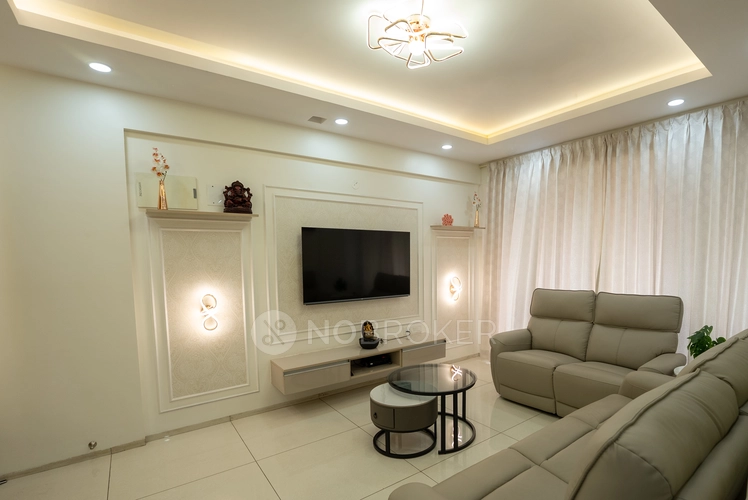
Our Recent Projects



Reviews

Nisha nisha

The interior design process was smooth, and the team was helpful throughout. They listened to my requiirements and suggested practical ... Read more

Technovation 24x7
The interior design turneed out really well. The team understood the requirements and suggessted ideas that suited our home and budget.

G Venkatesh
"Outstanding experience! The final design and finish perfectly matched our expectations. A special shoutout to Manager Vishal for his e... Read more

S Sourav
Happy with the work done by the interior team led by Vishal. They completed the entire project within just two weeks, which was really ... Read more

Vijay Raj K
Had a really good experience working with project manager Bandesh from NoBroker. He has been very polite and approachable throughout th... Read more

Sufi Yana
Had a good experience with NoBroker Interior. The team understood our requirementss properly and suggested practical design ideas. The ... Read more

Paramita Dutta
These are for customers to adapt to their own genuine experiences, rather than post as fictional testimonials. Gud overall 👍🏻

Shilpi Khatun
Had a good experience with NoBroker Interior. The process was smooth, and the team was helpful throughout. Gud teamm

Monika V
Good service and ontime handover of the work The staffs are friendly and helpful The products delivered are of good quality and finishi... Read more

kishore.R advocate
We recently done our interior from Nobroker they did fantastic job, design and implementation both phase went well Mohammad Vali Basha ... Read more

The Stylemaniac Guy
The communication was good, and the interior team was approachable. It was helpful to have guidance at eacch stage of planning.

Neymar Aich
Really liked the interior planning and execution. The team was responsiveeee, and the work was completed neatly. The final look of the ... Read more

Sheetal Chawrai
(Translated by Google) Highly appreciated and a great experience. Interior planning and design suggestions were very useful. The team u... Read more

Murali Bmm
Hi NoBroker Interior Team, I wanted to take a moment to sincerely thank the entire team for the fantastic work done on our office sp... Read more

Megha Lucky
The consultation helped me get a clearer idea of how I wanted my home to look. The team listened to my preferences and shared suggestio... Read more

Shanti Suraj
The interior design process was easy to understand. The team was professional, cooperative, and responsive.

Shanti'Mehndi artist “Shanti Suraj” Bookings & class available
The interior design process was easy to understand. The team was professional, cooperative, and responsive.

Gaurav Sikka
Excellent details and presentation of the exact materials and designs to be used. Special mention Ms Pratibha Sindhe who made and expl... Read more

Deepak Ridlan
I liked how the team approached the design process. They considered my requirements and helpeed me explore different styles and layouts.

Riya Shukla
Good service and creative ideas. The team helped me chooose suitable coloours, furniture and layouts. I liked how the design matched my... Read more

Nitin Kumar Mandilwar
Good work done by project manager Manoj. Completed the work in time.

Divyanshu Mehta
Great work done by designer Divya and Govardhan. Hassle free work snd best part is they will customise everything as per need exactly. ... Read more

Jason Fernandes
I had a great experience here. When it comes to planning, delivery and execution, great work was done by the team members. Suhail Khan... Read more

Swathi Warker
Manoj is very responsive, finds solutions for all obstacles and provides ork around. He provides timely updates on work status. Manages... Read more

Nitin Prabhakar
Excellent Interior Design and Execution Experience . Thanks to manoj and Rakshitha for the kind support and cooperation

Mobi Apps
I am extremely happy with my home interior journey with NoBroker. The entire process was smooth, well-coordinated, and completed right ... Read more

Sakshi Wature
Good service and coordination. The interior team was helpful throughout the planning process and made it easier to understand the avail... Read more

Sristy Jha
Interior team is so good I am so happy with the work the room design and wardrobe are amazing according to my expectations so good

Cutie Pie
I wanted a simple and modern look for my home, and the design discussions gave me some useful ideas. Happy with the overall interaction.

Khushi Wani
A smooth experience overall. From discussing ideass to finalizing the design, communication was helpful and the process was easy to follow.

yogesh
Recently did interior for 2BHK with NoBroker Interiors, and the overall experience has been great. Everyone has been extremely supporti... Read more

ashish jain
Great thanks to Riddhi & Sakshi for being so accommodating and flexible with all the requests and changes. They were able to complete d... Read more

DEEPAK MISHRA
*Disclaimer* for review This review is only for Project Manager Divyadeep and not for Nobrokers interior company, neither design team n... Read more

Barakha Kalita
We were looking for a simple and modern interior, and the team understood our requirements well. The designn was practical and looked g... Read more

Prince Kumar
The design suggestions were interesting, and the team was open to discussing my ideas. High luy recommend

Shree
Happyyy with the design consultation. The team listened to my preferences and explained different ways to achieve the look I wanted.

SAURABH KURADE
I am writing to recommend nobroker interior. Yes the initial stages of the project faced severe delays and communication challeng... Read more

Priya
From discussing the design to planning the interiors, the process was quite straightforward and I appreciated the team's suggestionss a... Read more

Sahasra Mahesh
Had a really good experience with NoBroker for our 2BHK interiors. The team gave clear explanations at every stage, maintained good coo... Read more

Nandan Babu
We have just completed our Interiors and overall, we are satisfied with the final outcome of our project. The execution team remained c... Read more

V. J. Prajwal Kumar
A lovely transformation for my home. The final desiign feels more organiized, welcoming and personal. I especially liked the attention ... Read more

Ronit Naik
Had a great experience with NoBroker Interiors. The overall execution was well planned, and the team was very supportive throughout the... Read more

Ehtesham farooqui
We had a fantastic experience partnering with NoBroker Interiors for our new 3BHK. The entire process, from initial design to final exe... Read more

Mahidhar Babu
I had an excellent experience with NoBroker Interiors throughout the entire project journey. From the initial design discussions to the... Read more

ranjithk8188@gmail.com Ranjith
Really happy with my home interiors experience with NoBroker The entire process was smooth, well-coordinated, and the final outcome was... Read more

gautam kurmapu
Very well explained, with practical and relevant suggestions tailored to the given requirements.

Pallavi Sahu
Overall the experience was good, the new broker team handheld the entire project to finish with a great professional attitude. Shout-ou... Read more

Barsha Kalita
Goood experience with the NoBroker Interior team. They helped us make better use of the available space and gave us some really useful ideas
Testimonials
View All
NoBroker Interiors Review | Happy Customer Testimonial by Rajani
NoBroker Interiors | Customer Testimonial by Prinyakar Polley

NoBroker Interiors | Hyderabad Customer Testimonial by Prashant Choudhary

NoBroker Home Interiors | Hyderabad 4BHK Customer Review

NoBroker Interiors Customer Testimonial | Jatan's Story
NoBroker Interiors Review | Hyderabad Customer Testimonial

NoBroker Interiors Review | Modern Dream Home Customer Testimonial

NoBroker Interiors Customer Testimonial | Fast & Quality Home Interiors

NoBroker Interiors Customer Testimonial | Pune Dream Home

NoBroker Interiors| Bangalore Customer Testimonial
NoBroker Interiors: Sports Theme Interiors by NoBroker #interiordesign #nobrokerinteriors #nobroker

NoBroker Interiors - Customer Testimonials

That 3 PM meeting where ideas turn into floor plans, materials, and magic. 💫

Your 2026 list is here.

Smart wardrobe design that fits your life, beautifully.
POV: You gave your home a holiday hug.🥰

Blink and you’ll miss the makeover.👀

When your home finally gets its own weekend mood, this bar unit does the job beautifully.

A calm pooja corner every home needs.

NoBroker Home Interior Service | Saurabh & Prachi Share Their Story #interiordesign #shorts
About the Author

Sujendra Shetty
Author
Sujendra Shetty is a passionate civil engineer and interior designer specialising in creating functional, aesthetically pleasing, and well-planned spaces. With a strong foundation in civil










Recent Blogs
Subscribe to our Newsletter
Get latest news delivered straight to your inbox