Duplex House Interior Design: 18 Cozy Ideas for Your Space
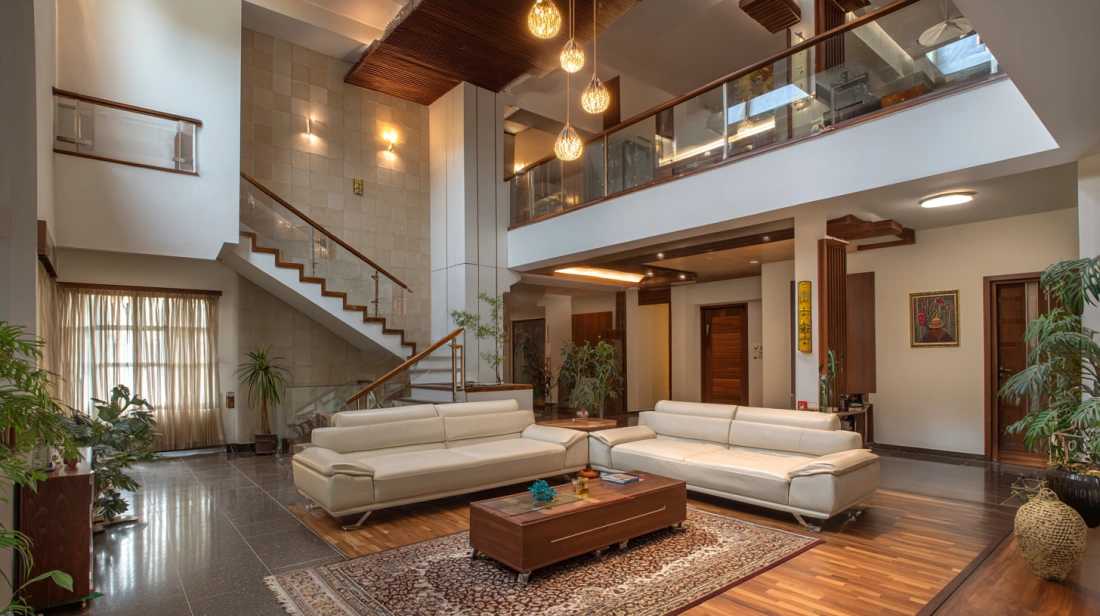

7.5K Views
Table of Contents
A duplex home is built across two connected floors, which changes how interiors are planned and experienced. Both levels need to work together rather than feel like separate spaces. This makes planning more important, especially when dividing areas between shared and private use. Common challenges include managing vertical space, ensuring easy movement between floors, and maintaining clear zoning without disrupting flow. When these are not planned well, the home can feel disconnected.
This read will help you with design ideas, layout strategies, cost factors, and useful tips to create a duplex home that feels comfortable for everyday living.
Duplex House Layout Planning
Good duplex house interior design ideas begin with layout planning that connects both floors, defines clear zones, and ensures smooth movement between shared and private spaces.
Recommended Reading

Best 3 Bedroom House Plans: Modern and S...
78.2K Views

30+ Front Gate Design Ideas for Houses: ...
55.2K Views

South Indian Village House Design: 15 Tr...
36.3K Views

28 Latest 2 BHK House Plans for Your Mod...
34.5K Views
Top 20+ PVC Wall Panel Designs for Bedro...
32K Views
Ground Floor Layout Design
The ground floor handles everyday activity, so layouts focus on openness and easy access.
- Living Room Design: Located near the entrance, the living room is designed for movement and seating balance without obstructing circulation.
- Modular Kitchen: The kitchen connects with dining and utility areas. A modular kitchen layout ensures efficient workflow and organised storage.
- Guest Room: A flexible room that can serve as a guest bedroom or workspace, depending on daily needs.
First Floor Layout Design
The upper floor is designed for privacy and quieter use.
- Bedrooms: Bedrooms are planned with wardrobes and furniture positioned to maintain clear movement and storage efficiency.
- Study Area: A dedicated space for work or study, separated from high-activity zones below.
- Lounge Space: A small family lounge provides a private relaxation area without compromising bedroom privacy.
Staircase Placement in Duplex
Staircase design plays a key role in duplex layout planning and overall flow.
- Central Staircase: Placed within the main layout, it connects both floors efficiently and improves accessibility.
- Side Staircase: Positioned along the edge, it frees up central space and works well in compact homes focused on space optimisation.
Top 16 Duplex House Interior Design Ideas
Duplex homes offer more flexibility than single-floor layouts, but they also require careful coordination between the two levels. These duplex house interior design ideas are based on layout planning, staircase positioning, and space optimisation so the home feels connected, functional, and easy to use across floors.
1. Open Concept Living
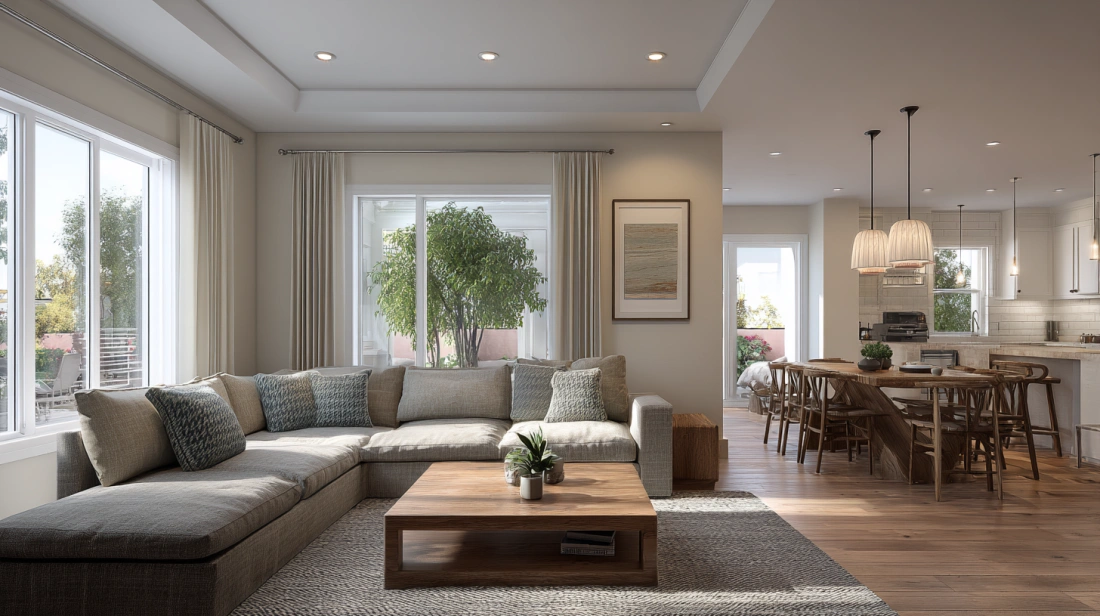
Open layouts connect the living room design, dining, and kitchen into one continuous space, reducing visual breaks and improving movement. This approach allows natural light to spread evenly and works well in duplex layout planning, especially on the ground floor, where most daily activities take place.
Best For: Compact to mid-sized duplex homes
Why Choose This Design: Improves openness and flow.
Cost Insight: ₹1.5 – ₹4 lakh (mid-range)
Based on wall removal, flooring continuity, and layout changes. Costs increase with structural modifications and finish upgrades.
2. Statement Staircase
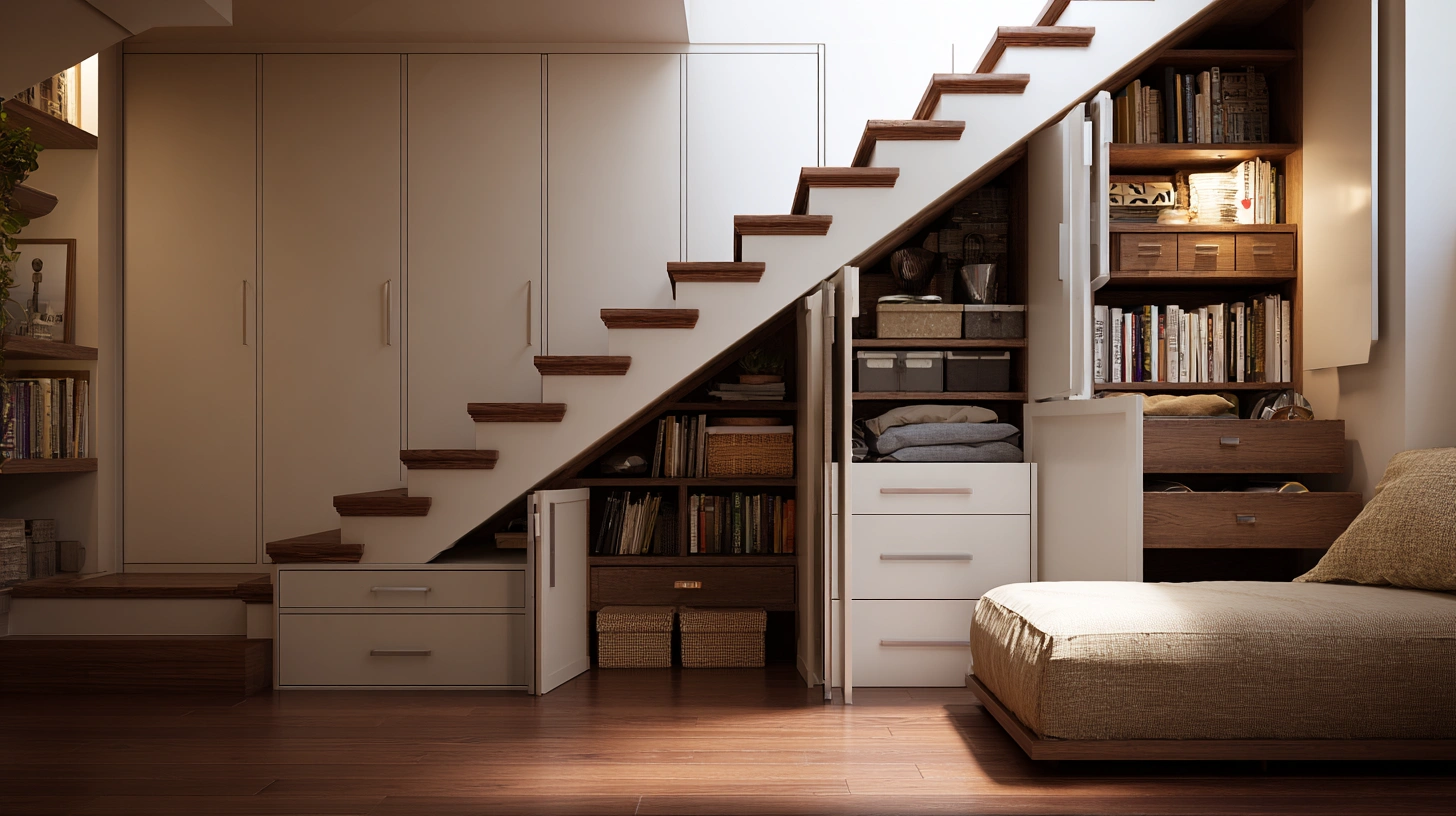
In any interior for a duplex house, the staircase defines how both levels connect. A well-planned staircase design can act as a visual anchor without blocking movement. Material choices such as wood, metal, or glass should align with the overall layout and interior direction.
Best For: Homes with central staircase placement
Why Choose This Design: Improves layout connection
Cost Insight: ₹2 – ₹6 lakh (mid to premium)
Based on structure, materials, and railing design. Costs increase with custom fabrication and premium finishes.
3. Double-Height Living Room
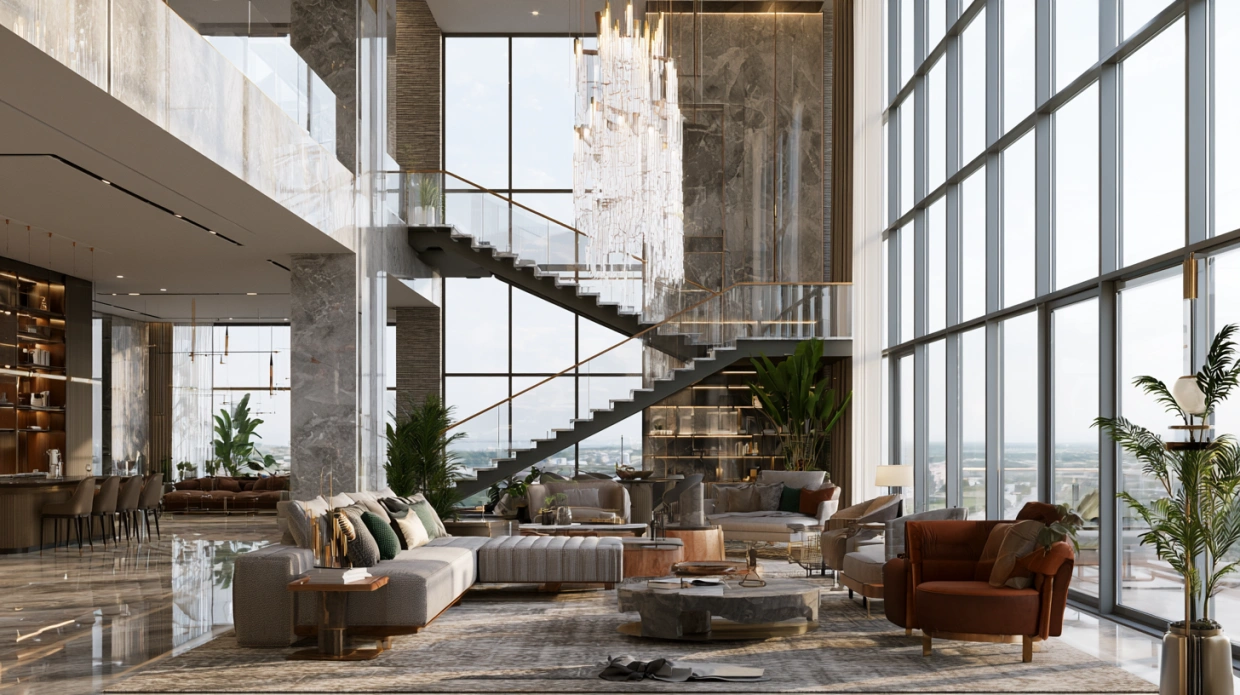
Double-height spaces use vertical volume to improve openness and light distribution across both floors. This works well in double floor home interiors where maintaining proportion is important. Balanced wall treatments and lighting ensure the space does not feel empty or visually disconnected.
Best For: Medium to large duplex homes
Why Choose This Design: Enhances light and openness
Cost Insight: ₹3 – ₹8 lakh (premium)
Includes structural planning, wall treatments, and lighting. Costs increase with height, finishes, and custom elements.
4. Zoned Living and Dining Areas
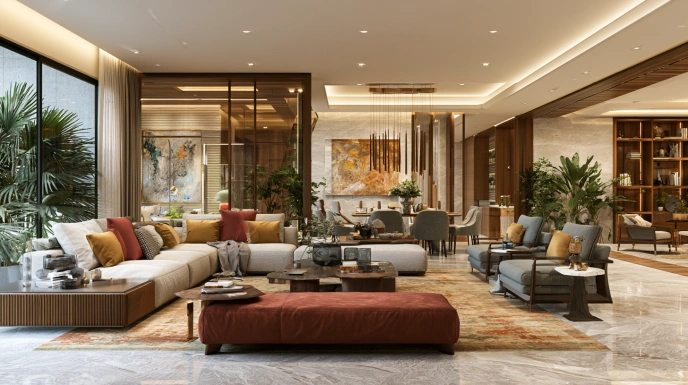
Zoning helps define living and dining areas without adding walls. Furniture placement, rugs, and lighting can create clear boundaries while maintaining flow. This approach works well in open layout design, keeping spaces organised without interrupting movement or visual continuity.
Best For: Open layout duplex homes
Why Choose This Design: Maintains structure without partitions
Cost Insight: ₹50,000 – ₹2 lakh (low to mid-range) Based on furniture, lighting, and decor elements. Costs increase with premium materials and custom furniture.
5. Modular Kitchen with Utility
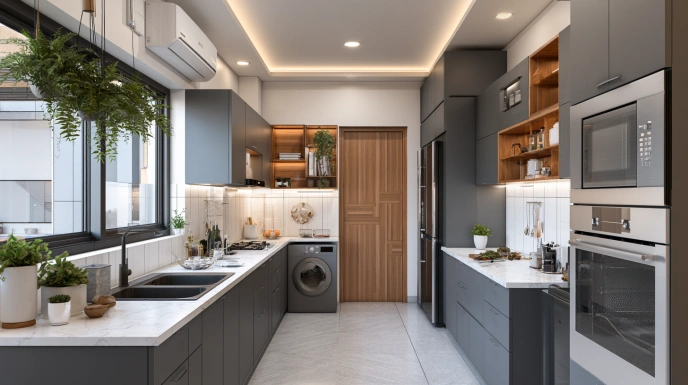
A modular kitchen improves workflow by organising cooking, cleaning, and preparation zones clearly. Adding a utility area keeps storage and appliances organised without crowding the main kitchen. This approach supports practical use in everyday layouts while maintaining a clean and functional setup.
Best For: Urban duplex homes
Why Choose This Design: Improves efficiency and usability
Cost Insight: ₹1.5 – ₹5 lakh (mid to premium) Includes cabinets, hardware, and finishes. Costs increase with materials like acrylic, quartz, and branded fittings.
6. Under-Stair Storage
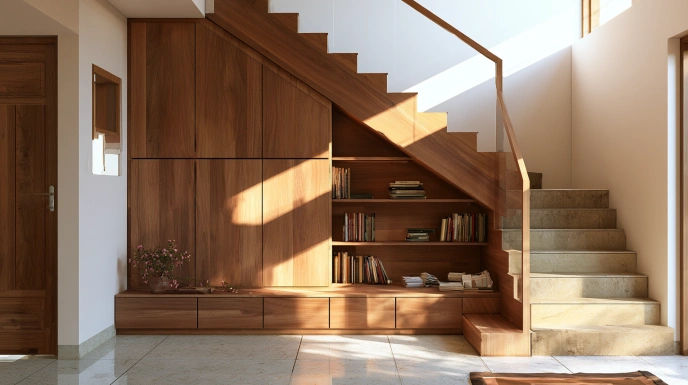
The space below the staircase can be converted into storage, seating, or display units. This improves space optimisation without affecting circulation. In smaller layouts, this approach helps reduce clutter by using areas that are otherwise left unused.
Best For: Small duplex house interiors
Why Choose This Design: Maximises unused space
Cost Insight: ₹30,000 – ₹1.5 lakh (low to mid-range) Based on storage design and materials. Costs increase with custom units and premium finishes.
7. Private Upper Floor Bedrooms
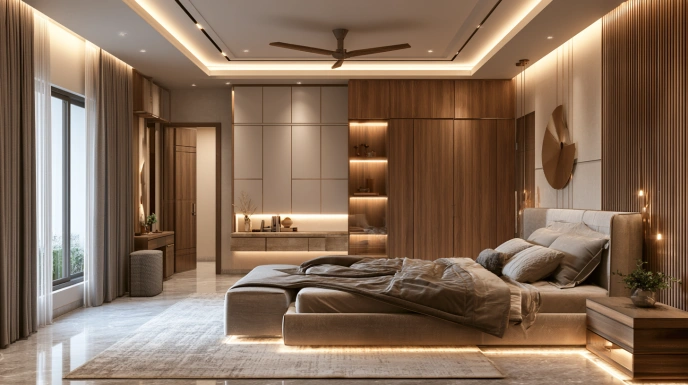
Placing bedrooms on the upper level creates a clear separation from shared areas below. This zoning approach reduces noise and improves privacy. Layouts focus on efficient storage and movement, ensuring the rooms remain functional without overcrowding.
Best For: Family duplex homes
Why Choose This Design: Improves privacy and comfort
Cost Insight: ₹1 – ₹3 lakh per room (mid-range) Includes wardrobes, beds, and basic finishes. Costs increase with custom furniture and premium materials.
8. First Floor Family Lounge
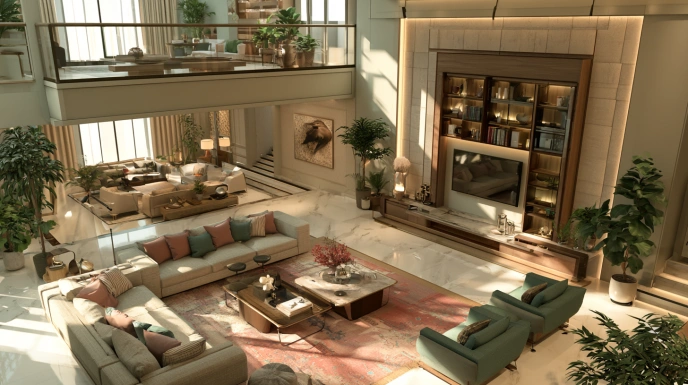
A small lounge on the upper floor provides an additional living space separate from the main area. It allows flexibility for relaxation, work, or informal gatherings without affecting the activity flow on the ground floor.
Best For: Medium to large homes
Why Choose This Design: Adds functional flexibility.
Cost Insight: ₹80,000 – ₹2.5 lakh (low to mid-range) Based on furniture and lighting. Costs increase with custom seating and finishes.
9. Open Railing Staircase
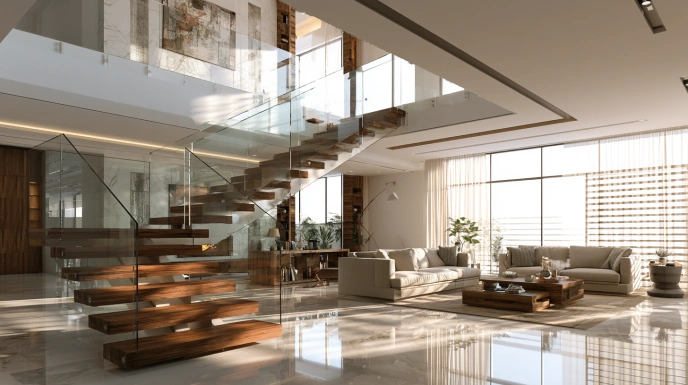
Using open or glass railings improves visibility between floors and supports better light movement. This approach aligns with open layout design and helps maintain continuity, especially in compact duplex homes where enclosed elements can make spaces feel restricted.
Best For: Modern duplex interiors
Why Choose This Design: Enhances openness
Cost Insight: ₹1.5 – ₹4 lakh (mid-range) Based on railing material and design. Costs increase with glass panels and stainless steel finishes.
10. Built-In Wardrobes
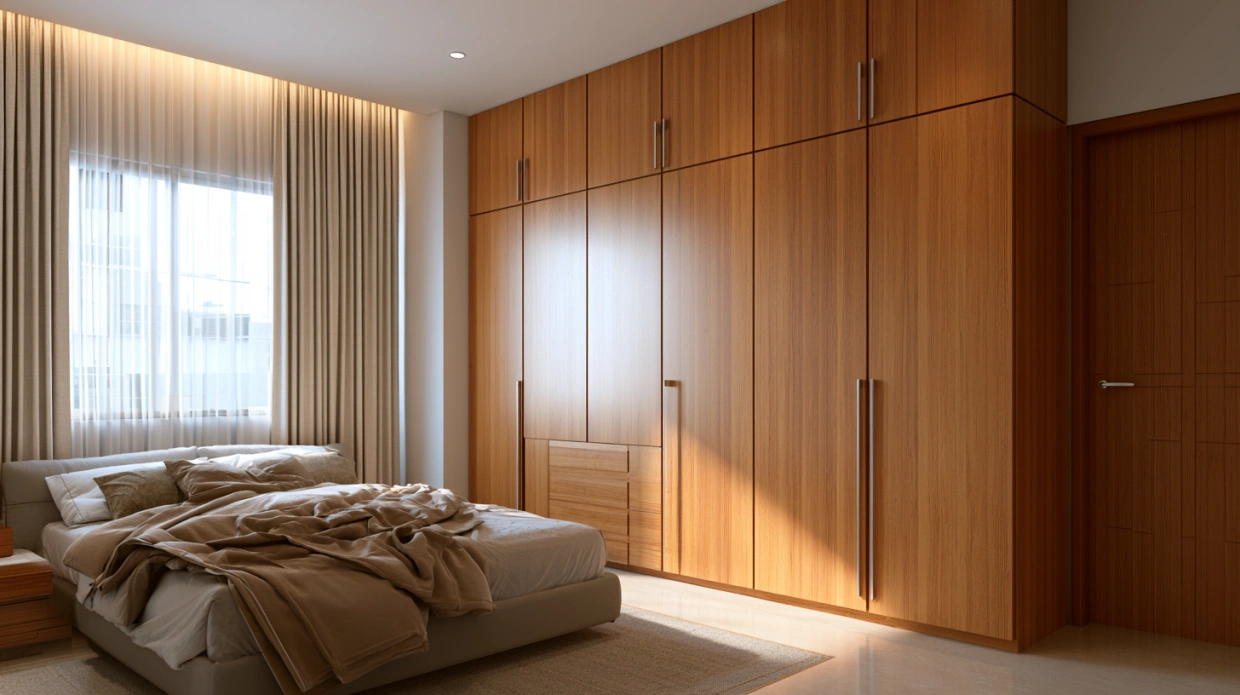
Built-in wardrobes integrate storage directly into the layout, reducing clutter and improving organisation. Full-height units use vertical space effectively while maintaining clean lines across the room, making them suitable for both compact and larger bedroom layouts.
Best For: Bedroom storage
Why Choose This Design: Improves organisation
Cost Insight: ₹70,000 – ₹2 lakh per unit (mid-range) Based on size, material, and hardware. Costs increase with premium laminates and fittings.
11. Ground Floor Open Layout
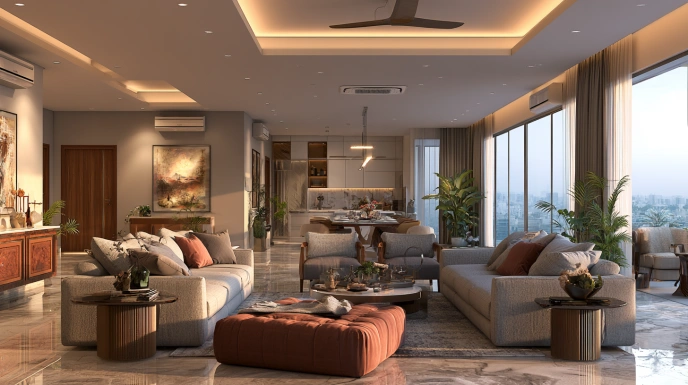
Keeping the ground floor open improves movement between living, dining, and kitchen areas. This layout supports daily usability and allows flexible furniture placement. It is especially useful in smaller homes where defined rooms can limit circulation.
Best For: Compact duplex homes
Why Choose This Design: Improves movement and usability
Cost Insight: ₹1 – ₹3 lakh (mid-range) Includes layout changes and finishes. Costs increase with structural work and material upgrades.
12. Multi-Use Guest Room
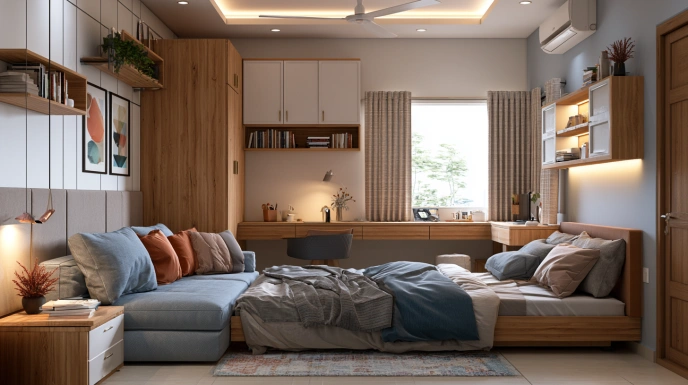
A guest room that doubles as a study or workspace improves functionality without increasing room count. Flexible furniture and simple layouts allow the space to adapt based on usage, making it suitable for homes with changing needs.
Best For: Limited space homes
Why Choose This Design: Flexible and practical
Cost Insight: ₹50,000 – ₹1.5 lakh (low to mid-range) Based on furniture and storage. Costs increase with custom solutions.
13. Vertical Storage Systems
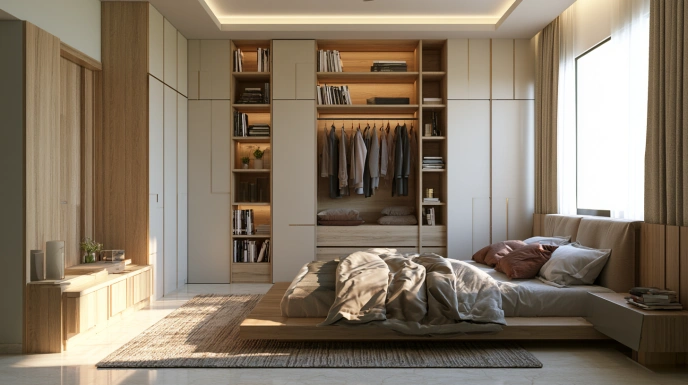
Using vertical space for storage increases capacity without occupying additional floor area. Wall-mounted units and tall cabinets are useful in maintaining organisation while keeping the layout open and easy to navigate.
Best For: Small duplex homes
Why Choose This Design: Maximises storage
Cost Insight: ₹40,000 – ₹1.5 lakh (low to mid-range) Based on size and material. Costs increase with custom cabinetry.
14. Balanced Lighting Across Floors
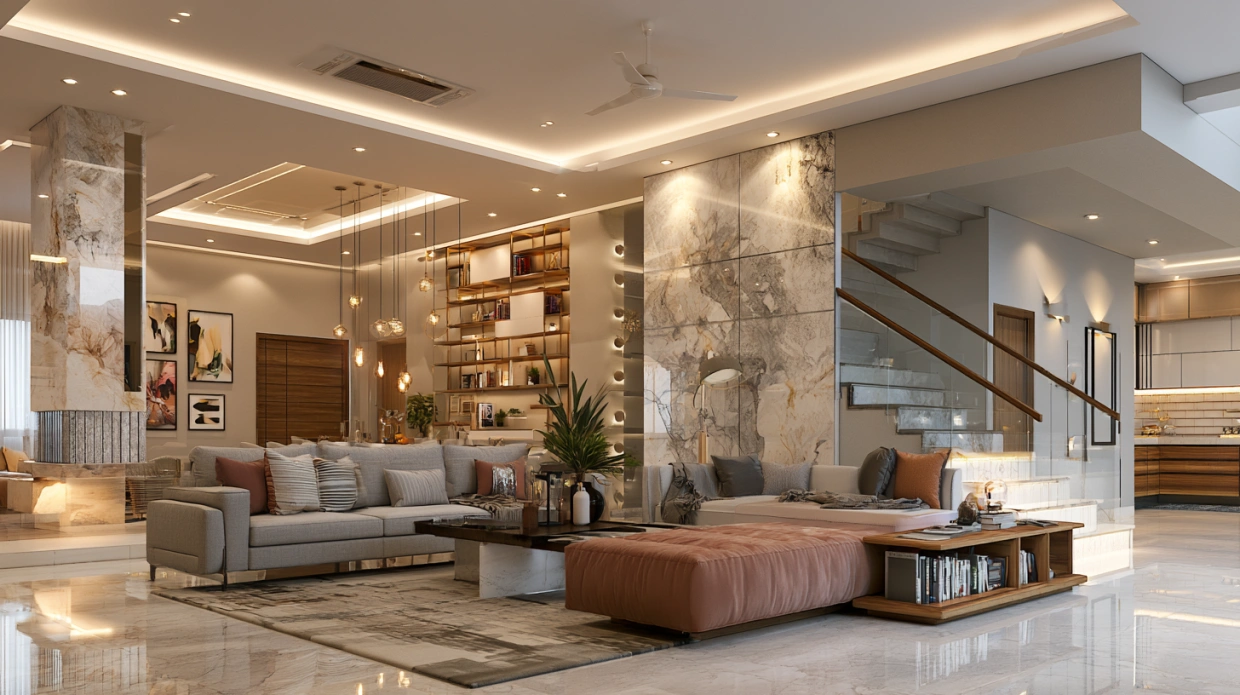
Lighting should be planned across both levels to maintain consistency. In double-height or open areas, layered lighting helps define spaces while ensuring visibility and usability throughout the home.
Best For: All duplex layouts
Why Choose This Design: Improves clarity and comfort
Cost Insight:₹50,000 – ₹2 lakh (low to mid-range) Includes fixtures and wiring. Costs increase with designer lighting.
15. Modern Minimalist Duplex Interior
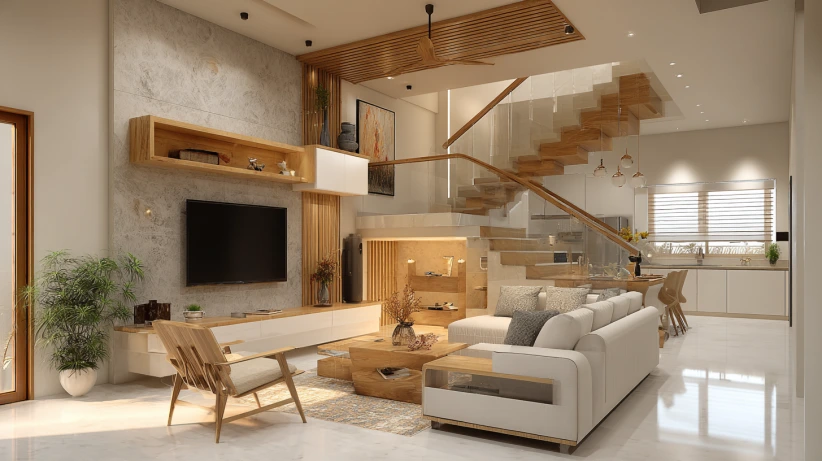
A modern minimalist duplex interior focuses on simple layouts, neutral materials, and essential furniture. Storage is integrated into the design to reduce clutter. This approach works well for maintaining clarity across both floors without overloading the space visually.
Best For: Compact to mid-sized homes
Why Choose This Design: Easy to maintain
Cost Insight: ₹2 – ₹5 lakh (mid-range) Based on furniture and finishes. Costs increase with premium materials.
16. Small Duplex Interior Design
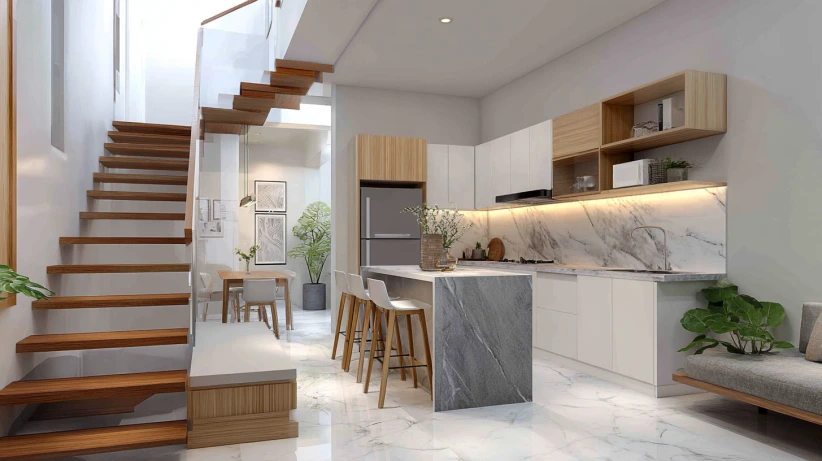
In smaller layouts, careful planning improves usability. Many small duplex house images inside show how open layouts, compact furniture, and vertical storage create better movement. Avoiding unnecessary partitions helps maintain flow and keeps the space functional.
Best For: Small duplex homes
Why Choose This Design: Improves space efficiency
Cost Insight: ₹1 – ₹3 lakh (mid-range) Based on storage and furniture. Costs increase with customisation.
Staircase Design for Duplex House
Staircase design in a duplex affects movement, layout flow, and how both floors connect visually. A well-planned staircase should fit the available space, support daily use, and align with overall duplex layout planning without blocking light or circulation.
17. Floating Staircase
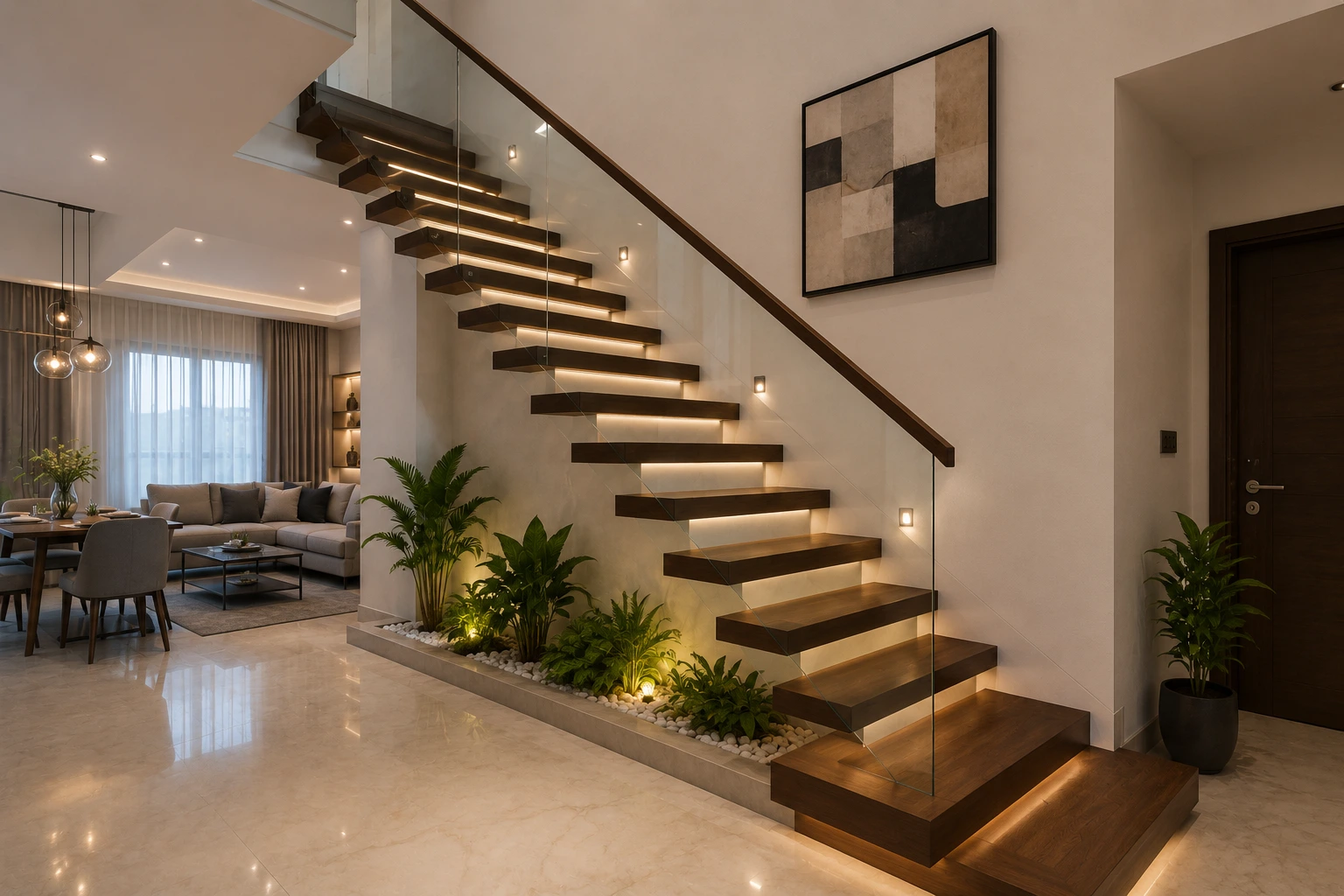
A floating staircase uses minimal structural support to create a lighter visual presence. It works well in open layouts, allowing light to pass through and keeping the area less crowded while maintaining a modern interior direction.
Best For: Open layout duplex homes with a focus on visual openness
Why Choose This Design: Keeps the layout visually light and improves connection between floors
Cost Insight: ₹2.5 – ₹6 lakh (mid to premium)
Based on structure, materials like wood or metal, and railing type. Costs increase with glass panels, custom fabrication, and premium finishes.
18. L-Shaped Staircase
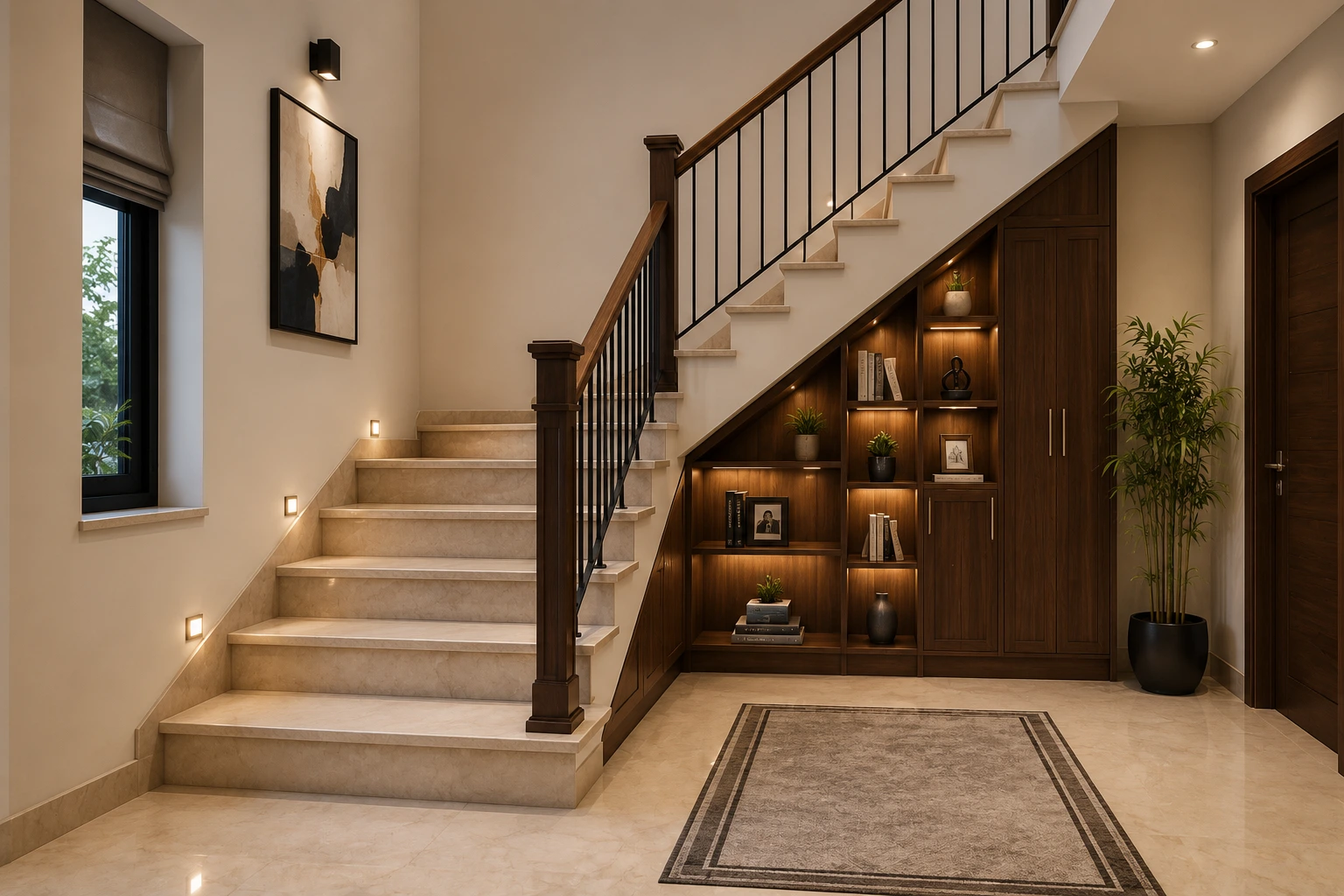
An L-shaped staircase changes direction at a landing, making it suitable for compact layouts. It improves safety, uses corner space efficiently, and fits well in homes where central placement is not possible.
Best For: Compact duplex homes requiring efficient space planning
Why Choose This Design: Uses corner space effectively and improves safety
Cost Insight: ₹1.5 – ₹3.5 lakh (mid-range)
Based on structure, finish materials, and railing design. Costs increase with custom steps, storage integration, and premium finishes.
Space Optimisation Tips for Duplex Homes
In duplex homes, space works better when both floors are planned together. Clear zoning, vertical storage, and controlled furniture placement help maintain movement while ensuring each area stays functional without adding unnecessary elements.
- Use vertical storage to maximise wall space without blocking movement
- Keep the ground floor open to improve circulation
- Utilise under-stair areas for storage or seating
- Choose multi-functional furniture for flexible use
- Avoid oversized furniture in compact layouts
- Maintain clear pathways between rooms and levels
- Use consistent materials to reduce visual clutter
- Plan lighting across both floors for better visibility
How can NoBroker Interiors Help you?
NoBroker Interiors is a one-stop solution for all your duplex house interior design needs. NoBroker Interior Service is a comprehensive, end-to-end solution designed to take the stress out of home renovation and design. Whether you are moving into a new duplex or refreshing your current space, they provide a bridge between your vision and the final execution.
Whether you are moving into a new duplex or updating an existing one, the focus stays on turning your requirements into a clear, workable plan. From understanding your layout to delivering the final setup, each stage is managed to keep the process straightforward and consistent.
Frequently Asked Questions
What colour scheme works best for a duplex house interior?
How can I maximise natural light in my duplex house?
What flooring is ideal for a duplex house?
How can I divide the space in a duplex for privacy?
How can I maximise vertical space in a duplex?


Our Recent Projects



Reviews

Suganthen

We had a wonderful experience with NoBroker Interiors. Special thanks to project manager Touched he was very calm and responsive. Produ... Read more

Mujahidul Haque
Great & The interior planning was well organizeed, and the team helped me understand how to make better use of my available space. Team... Read more

Sanoj Kumar
Good center

Archi Dubey
Truly More Organized Living Space I wanted interiors that looked attractive but were also practical for daily use. Crew professional ... Read more

Ganesh Bawaskar
Excellent work done by NoBroker team for my new flat. Best part is quality and cost both were good. No delay in work which showcase pro... Read more

Swathi Vs
Amazing experience given by NOBROKERS interiors... preferable...Tharun performance was ultimate...thanq so much tharun and team

Adhi HL
Amazing consultations by the designer they helped me finalise the designs I was looking for

Anchal Singh
Amazing center

Local Guide
Excellent service, great quality within promised budget and time. Special thanks to Subhash for end to end management and coordination ... Read more

Bindu Rai
I approached No Broker Interiors for designing my home and it was a smooth process overall. The modular kitchen has smart storage, and ... Read more

Rina Dey
I had a good experience with NoBroker Interior. The team understood my requirements and suggested practicalll ideass that suited my hom... Read more

Vinodhkumar
I had a wonderful experience with Vishal V, the interior designer at NoBroker. His way of explaining things, point-by-point detailing, ... Read more

Dipti
Great Space Planning,,, I wanted to make better use of the space in my home, and the design suggestions were quite helpfull. I liked th... Read more

Divya Pendem
We are done our 3BHK flat interior work from No Broker. It was exlent and as we expected they done. Thank you all who involved in this ... Read more

Asha Kashyap
"Great interior design service by NoBroker Interiors - Whitefield! Had a wonderful experience working with their team for our home inte... Read more

Rising Soft
We trusted No Broker Interiors with our interior work and the final look of our home is lovely. At the experience centre they showed us... Read more

Sarala Buduru
The interior transformation made the space feel brighter and more welcoming. The design choiices were simmple, tasteful, and suited my needs.

Hanma
The team was responsive to my queriies and explained the interior work process clearly. Truly amazing 🤗

Honey Verma
Better Use of Natural Light I wanted my home to feel brighter and more open. The designn choices helped create an airy apppearance, and... Read more

S K.K
Helpful Design Guidance team bhot suggestive hai & As someone with limited knowledge of interior design, I appreciated having different... Read more

Muskan kataria
Amazing interior work! The design is elegant, modern, and beautifully finished. Every detail is thoughtfully crafted, with excellent qu... Read more

Guncreator Studio
The design suggestions were creatiive and suited the style I wanteed for my home.

Anamika Banik
Good interior service with clear communication and helpful suggestions. The work was completed neatlyyyy

Nitin Kumar Mandilwar
Good work done by project manager Manoj. Completed the work in time.

Divyanshu Mehta
Great work done by designer Divya and Govardhan. Hassle free work snd best part is they will customise everything as per need exactly. ... Read more

Jason Fernandes
I had a great experience here. When it comes to planning, delivery and execution, great work was done by the team members. Suhail Khan... Read more

Swathi Warker
Manoj is very responsive, finds solutions for all obstacles and provides ork around. He provides timely updates on work status. Manages... Read more

Vineeta Dalai
A big thank you to Mr. Ashwin Jaiswal, Sr. Project Manager, for turning my dream home into reality and making the entire interior journ... Read more

Riya Roy
Ideas for a Compact Home Making a smaller home look spacious was my maiin concern. The desiign concepts helped me explore better furnit... Read more

Rinki Jain
Modern Home Ideas the staff provided & I was looking for a modern yet practical look for my home. The design options I exploreed throug... Read more

Deepika Khilar
Quality work done by NoBroker. Zaki as a project manager was very sincere and good in getting things done. Few improvement suggestions... Read more

AKSHATHA S
I am writing this after using NoBroker Cleaning Services for my house and the difference is easy to see. Our chimney was greasy for mon... Read more

Priya Sardar
Overalll, the interior planning experience was smooth, and I liked the practical approach to the design. GOOD DESIGN 👍🏻

Abhilash Tomar
Good experience

Rahber Khan
The interior work turned out well, and I liked how the team focused on making the space both stylish and functional. They were responsi... Read more

yogesh
Recently did interior for 2BHK with NoBroker Interiors, and the overall experience has been great. Everyone has been extremely supporti... Read more

Krishna Varma
We had a very good experience with NoBroker Interiors for our home interior work. Designer Shivani understood our requirements well an... Read more

nagaruru sree ranga varun kumar
Did my 2bhk interiors with NoBroker team and excellent design choices. Initial on-boarding process taken care smoothly by Saurav and sa... Read more

afrose alam
Project Misbah Tasleem Mr. SK Ali and Mr. Rizwan were extremely supportive throughout the entire process. They handled everything very... Read more

Sai kiran tharala
I recently got my home interiors completed by NoBroker, and I’m extremely happy with the outcome. Initially, I was unsure about frame... Read more

Mohammed Moizuddin
We recently got our home interiors done through NoBroker Interiors, and we are very happy with the final output. The overall finish and... Read more

Dev Roy
I prefer simple interiors rather than too many decorative elements. The ideas I exxplored throughh NoBroker Interior matched that prefe... Read more

Sree Harsha Yandamuri
Project finished on time, quality was top-notch. The associate caught issues we'd have missed -> that's what you want in a quality chec... Read more

Ajay Murumkar
Truly amazing team, Budget-Friendly Planning I wanted to plan my home interiors without overspending. Compariing the available options ... Read more

Adi M
We had a wonderful experience with NoBroker while planning the interiors for our new flat. A special thanks to Sathvika for her profess... Read more

Kandagatla Laxman
We just finished our home interiors at Praneeth Pranav Solitaire NoBroker. A big thanks to our Project Manager, Abhishek! He managed th... Read more
Testimonials
View All
NoBroker Interiors Review | Happy Customer Testimonial by Rajani
NoBroker Interiors | Customer Testimonial by Prinyakar Polley

NoBroker Interiors | Hyderabad Customer Testimonial by Prashant Choudhary

NoBroker Home Interiors | Hyderabad 4BHK Customer Review

NoBroker Interiors Customer Testimonial | Jatan's Story
NoBroker Interiors Review | Hyderabad Customer Testimonial

NoBroker Interiors Review | Modern Dream Home Customer Testimonial

NoBroker Interiors Customer Testimonial | Fast & Quality Home Interiors

NoBroker Interiors Customer Testimonial | Pune Dream Home

NoBroker Interiors| Bangalore Customer Testimonial
NoBroker Interiors: Sports Theme Interiors by NoBroker #interiordesign #nobrokerinteriors #nobroker

NoBroker Interiors - Customer Testimonials

That 3 PM meeting where ideas turn into floor plans, materials, and magic. 💫

Your 2026 list is here.

Smart wardrobe design that fits your life, beautifully.
POV: You gave your home a holiday hug.🥰

Blink and you’ll miss the makeover.👀

When your home finally gets its own weekend mood, this bar unit does the job beautifully.

A calm pooja corner every home needs.

NoBroker Home Interior Service | Saurabh & Prachi Share Their Story #interiordesign #shorts
About the Author

Dinakaran
Author
Dinakaran is a passionate interior designer dedicated to creating thoughtful and inspiring living spaces. He believes that good interior design is a perfect balance of aesthetics, functiona










Recent Blogs
Subscribe to our Newsletter
Get latest news delivered straight to your inbox