Corner Pooja Room Design Ideas for Indian Homes in 2026
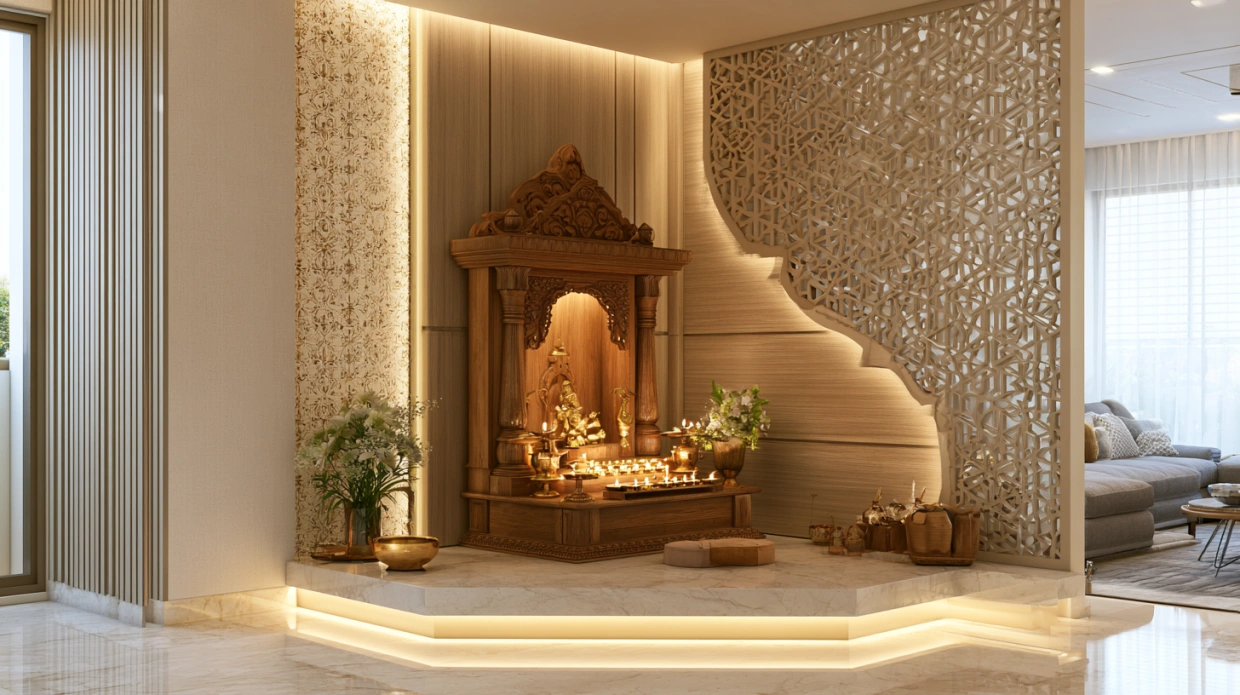

124 Views
Table of Contents
Summary
A corner pooja room design is the smartest solution for modern Indian homes where space is precious, but devotion is not. Whether it is a simple wall-mounted corner pooja unit in a compact 1 BHK or a carved teak floor-to-ceiling mandir in a luxury villa, a well-planned pooja room corner design brings spiritual warmth to any home. Costs range from ₹8,000 for a basic plywood shelf unit to ₹2 lakh and beyond for a fully executed corner pooja mandir for the home.
In most Indian homes, the pooja space is the first thing planned and the last thing compromised. Yet, as homes grow more compact and open-plan, finding room for a dedicated mandir can be a genuine challenge. The corner pooja room design elegantly solves this. It occupies the junction of two walls, a space that would otherwise go unused, and transforms it into a sacred, beautiful focal point. From a minimalist open shelf to a grand floor-to-ceiling teak mandir, the corner pooja unit adapts to every home style, every budget, and every family's devotional tradition. This guide covers the 10 best corner pooja room designs for Indian homes in 2026, with materials, cost breakdowns, Vastu guidance, and styling tips.
Why Choose a Corner Pooja Room Design?
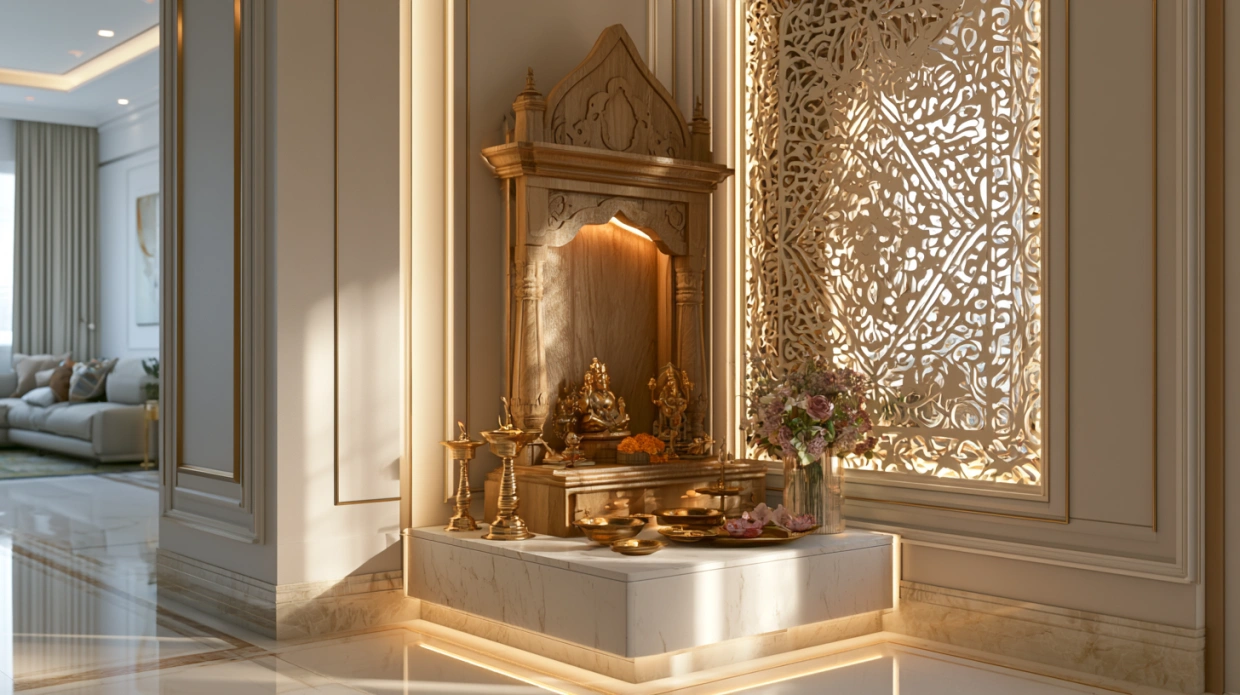
Corner placements are Vastu-compliant, space-efficient, and visually distinct, making them the preferred choice for modern Indian homes across all budgets.
- Vastu-aligned: The north-east corner (Ishaan Kona) is the most auspicious direction for a pooja space as per Vastu Shastra
- Space-efficient: The corner where two walls meet is typically underutilized. A corner pooja unit makes it purposeful without eating into the floor area
- Naturally framed: A corner visually separates the mandir from the rest of the room, creating a sacred zone without physical walls or partitions
- Versatile: Corner pooja room ideas work across 1 BHK flats, large villas, living rooms, bedrooms, and foyers
- Design continuity: A well-designed corner pooja mandir for the home can be integrated into existing furniture, saving both space and budget
10 Corner Pooja Room Designs for Indian Homes
Each design below is described consistently in terms of material, colour palette, ideal use, and approximate cost for easy comparison.
Recommended Reading
Interior Design Cost in Bangalore
20.5K Views


PVC TV Unit Design: 10+ Designs to Maxim...
18.3K Views

Jewellery Showroom Interior Design: Top ...
13.8K Views
17 Simple Village Single-Floor Home Fron...
13.7K Views
Top 30 Window Design for Home: Combining...
13.6K Views
1. Wall-Mounted Corner Pooja Unit
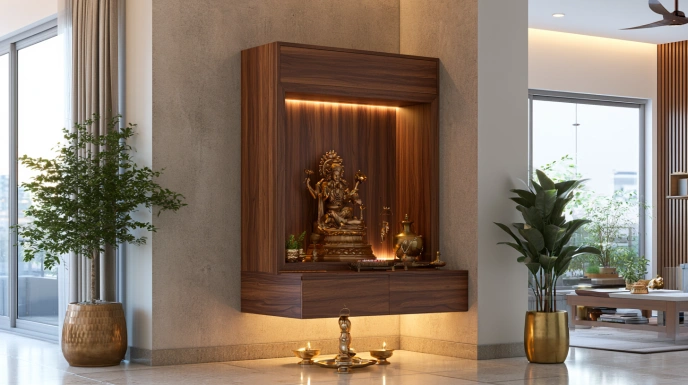
The most popular corner pooja room design in Indian urban homes in 2026. The unit is fixed directly to the two corner walls at eye level, creating a floating mandir that completely frees up floor space. LED strip lighting behind the idol shelf adds a warm, divine glow.
| Feature | Details |
| Best Materials | Plywood with veneer, MDF, engineered wood |
| Colour Palette | Warm walnut, honey oak, ivory, warm white |
| Ideal For | 1 BHK and 2 BHK apartments, rental homes |
| Key Highlight | Floor-free design; easy to install and relocate |
| Approx. Cost | ₹8,000–₹20,000 |
2. Floor-to-Ceiling Corner Pooja Mandir
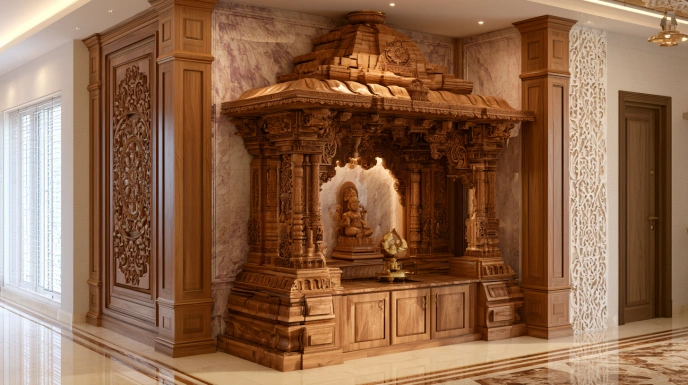
A commanding, temple-inspired corner pooja room design that runs the full height of the wall. The lower section provides enclosed storage for pooja essentials, agarbattis, diyas, and prasad boxes, while the upper section houses idols and decorative elements. A shikhara (dome) on top completes the traditional look.
| Feature | Details |
| Best Materials | Teak wood, sheesham wood, and marble panels |
| Colour Palette | Natural teak, ivory white, warm gold accents |
| Ideal For | Villas, independent houses, large master suites |
| Key Highlight | Full-height temple presence; maximum storage beneath |
| Approx. Cost | ₹40,000–₹1,20,000 |
3. Open-Shelf Minimalist Corner Mandir
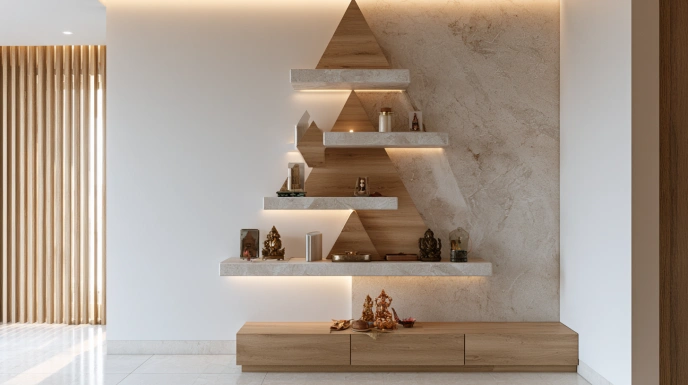
A minimalist corner pooja unit using simple wooden or marble shelves arranged in a staggered, triangular layout to fit the corner angle. Keeps the space airy, visually light, and easy to clean, ideal for contemporary interiors that want a sacred touch without architectural weight.
| Feature | Details |
| Best Materials | Plywood, marble slabs, glass shelves |
| Colour Palette | White marble, light oak, ivory walls |
| Ideal For | Minimalist homes, Scandinavian-style interiors, rentals |
| Key Highlight | Airy and open; no carpentry; easy to style and update |
| Approx. Cost | ₹12,000–₹35,000 |
4. Cabinet-Style Corner Pooja Unit with Jaali Doors
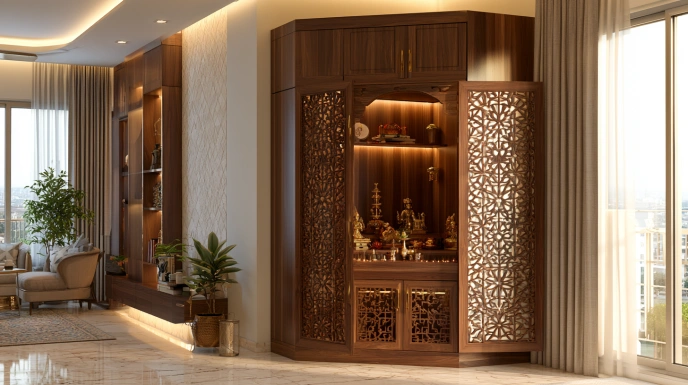
A pooja room corner design with hinged or sliding doors, plain, louvred, or adorned with intricate CNC-cutting design jaali patterns that conceal the mandir during non-prayer hours. Ideal for open-plan living rooms where the pooja space needs to remain private and contained when not in active use.
| Feature | Details |
| Best Materials | Plywood with veneer, MDF, and glass-fronted wood |
| Colour Palette | Warm walnut, light ash, soft white |
| Ideal For | Open-plan living rooms, studio apartments |
| Key Highlight | Concealed when closed, jaali doors allow incense airflow |
| Approx. Cost | ₹20,000–₹50,000 |
5. Marble Corner Pooja Mandir
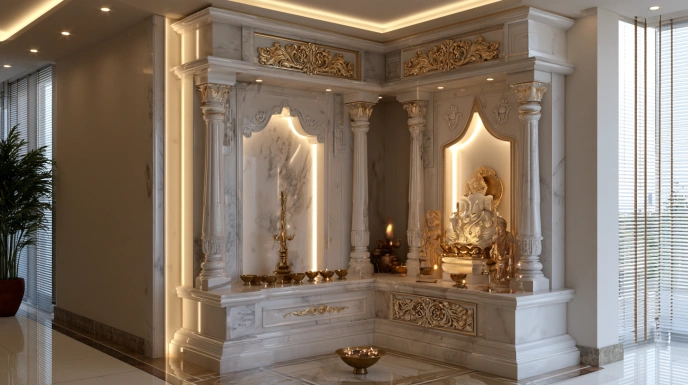
An elevated, luxury corner pooja mandir for the home, featuring white or veined marble for the shelf surfaces, back panel, and base platform. Marble's natural lustre and reflective quality make the idol placement look radiant. Paired with brass fittings and a warm LED wash, this is the most aspirational corner pooja room idea for premium homes.
| Feature | Details |
| Best Materials | Makrana marble, Italian white marble, engineered stone |
| Colour Palette | Pure white, cream veining, warm gold, brass |
| Ideal For | Luxury apartments, villas, and premium master bedrooms |
| Key Highlight | Timeless elegance; easy to clean; reflects divine light beautifully |
| Approx. Cost | ₹30,000–₹2,00,000 |
6. Traditional Carved Wood Corner Mandir
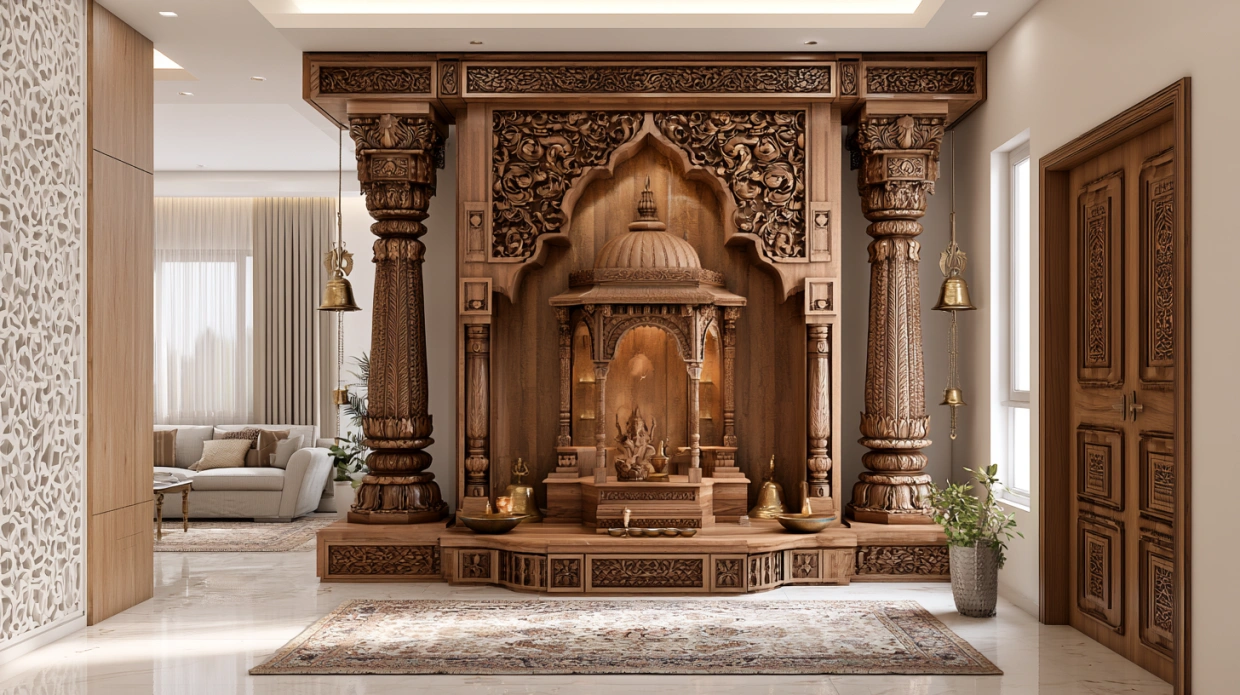
A corner pooja room design rooted in Indian craft heritage, a carved sheesham or teak mandir with ornate pillars, a decorative arch, and brass fittings. This design gains character with age and works beautifully in traditional Indian homes, joint families, and heritage-style interiors. No modern finishes, no laminates, just solid, hand-crafted wood.
| Feature | Details |
| Best Materials | Sheesham wood, carved teak, brass hardware |
| Colour Palette | Ivory, deep red, turmeric yellow, terracotta |
| Ideal For | Traditional households, joint families, heritage-style homes |
| Key Highlight | Handcrafted depth; culturally rich; ages beautifully over decades |
| Approx. Cost | ₹25,000–₹80,000 |
7. Integrated Corner Pooja Unit within a TV or Wardrobe Wall
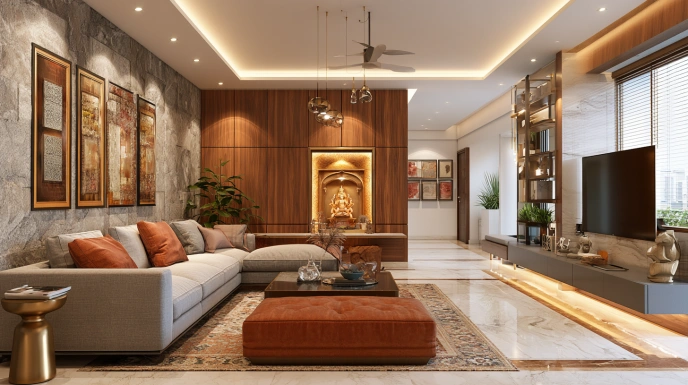
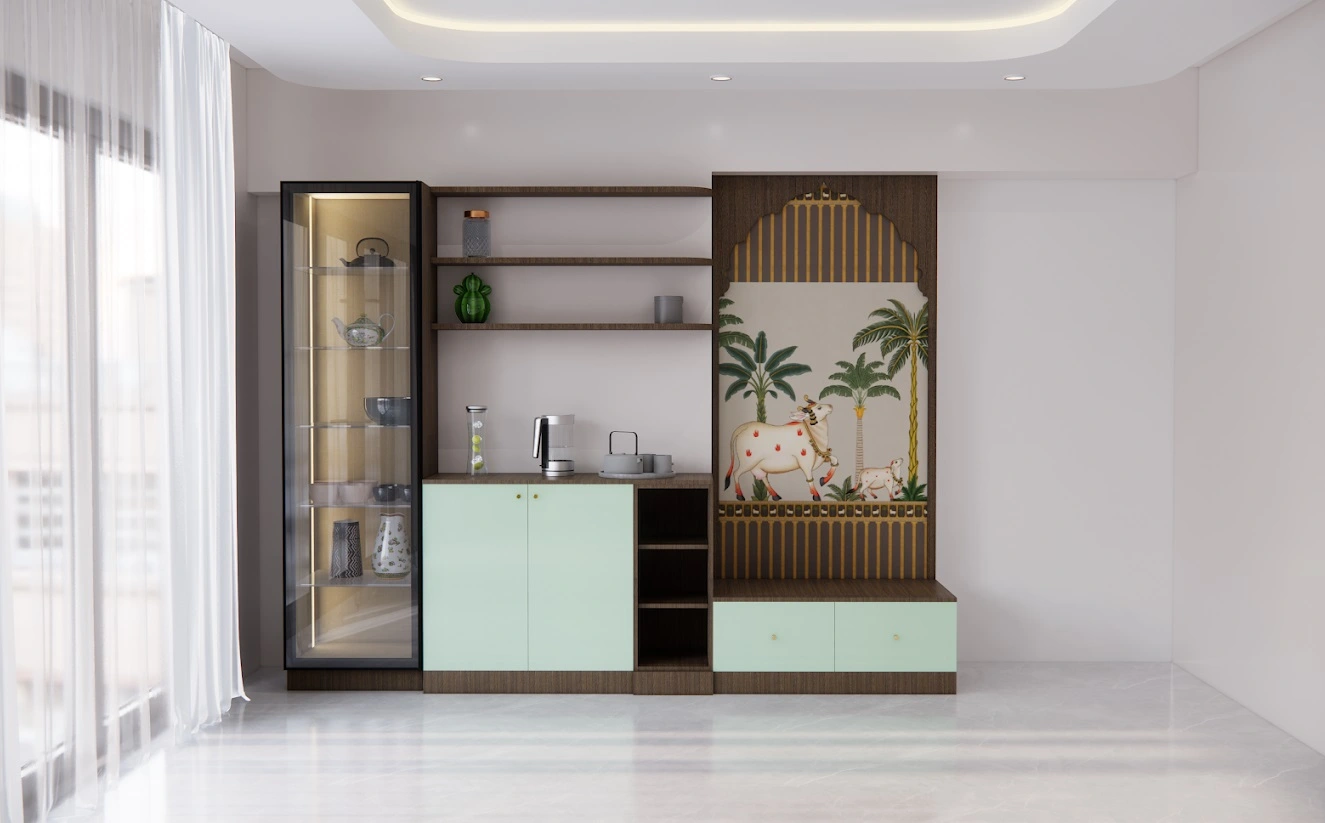
One of the most practical corner pooja room ideas for modern homes, the mandir occupies one corner bay of a larger TV unit design or wardrobe, maintaining design continuity across the room. The pooja section uses a contrasting finish, a natural wood veneer or marble panel, to distinguish it clearly from the rest of the furniture unit.
| Feature | Details |
| Best Materials | Laminate-finished plywood, wood veneer, MDF |
| Colour Palette | Warm walnut bay with lighter oak wardrobe sections |
| Ideal For | Living room with TV units, bedroom corner integration |
| Key Highlight | Seamless furniture continuity; no additional floor footprint |
| Approx. Cost | ₹35,000–₹90,000 (priced as part of full unit) |
8. Backlit Niche Corner Pooja Design
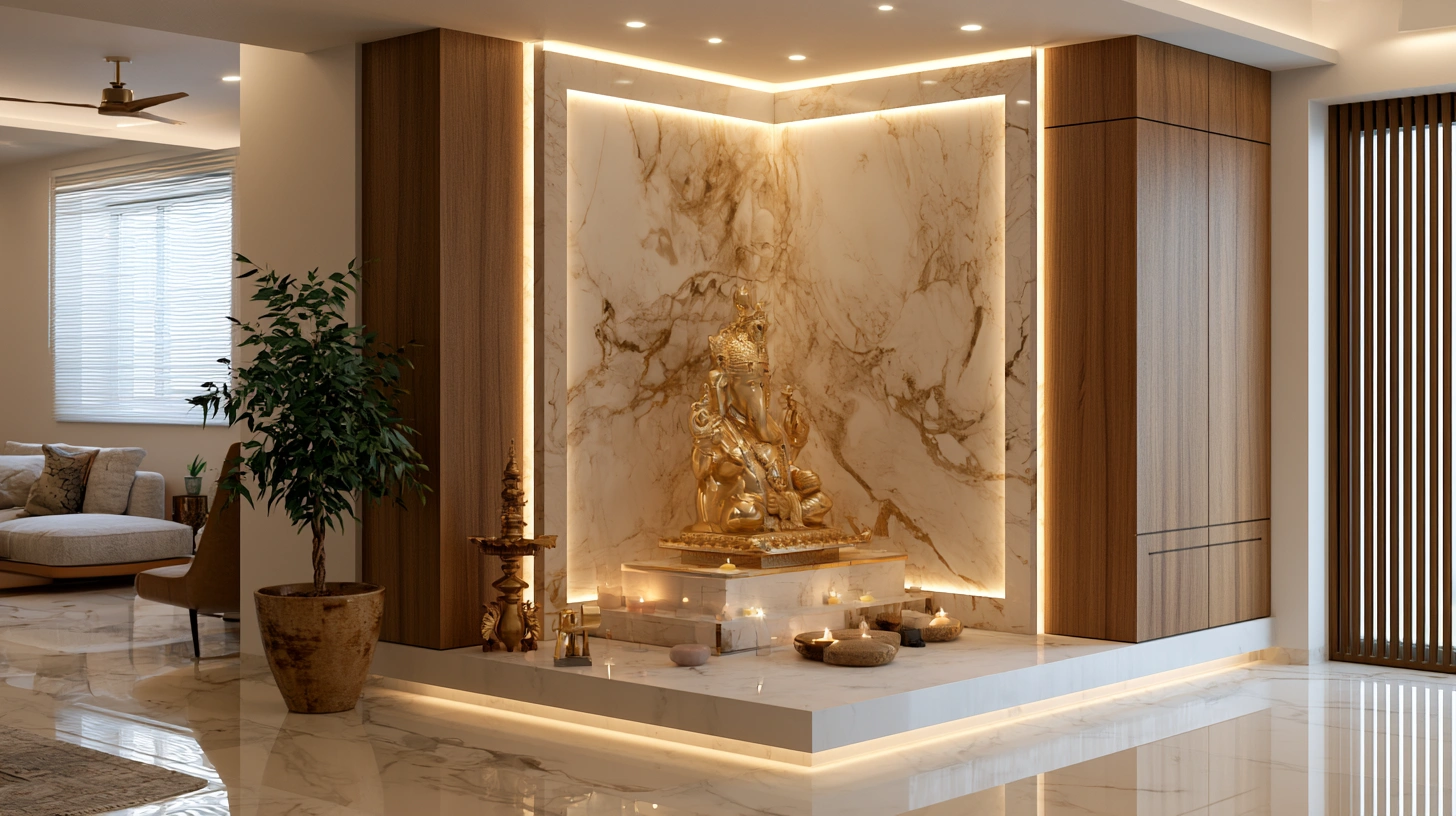
A recessed niche carved into the corner wall, finished with marble, stone cladding, or a wood-veneer back panel with concealed LED lighting around the perimeter. The backlit niche creates a glowing, altar-like effect that looks architecturally intentional and deeply sacred. Best planned during the construction or renovation phase.
| Feature | Details |
| Best Materials | Marble back panel, stone cladding, wood veneer niche |
| Colour Palette | Warm white light wash, natural stone, cream marble |
| Ideal For | New constructions, full renovations, and premium apartments |
| Key Highlight | Architectural depth; glowing, altar-like presence at all hours |
| Approx. Cost | ₹30,000–₹75,000 |
9. Freestanding Portable Corner Mandir
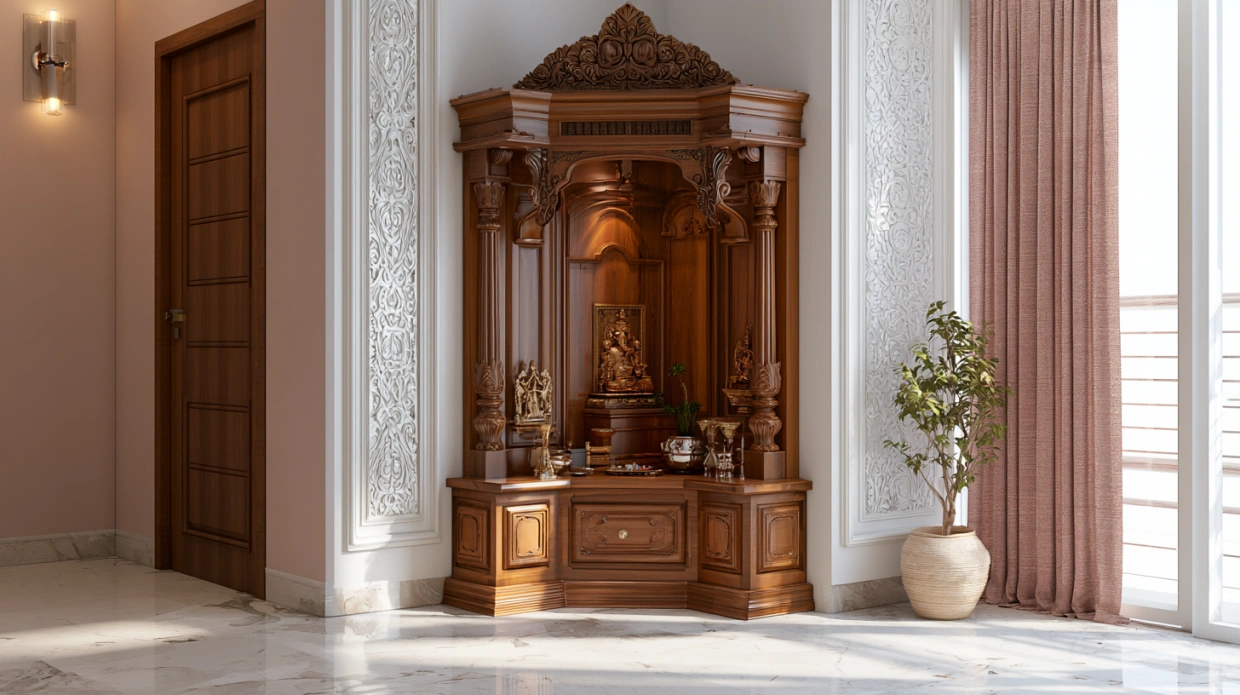
A freestanding, floor-rested corner pooja mandir for home that requires no installation, no drilling, and no permanent fixtures. Available in solid wood, engineered wood, and MDF with a variety of carved and laser-cut finishes. The portability makes it ideal for renters, frequent movers, and those who want Vastu flexibility without any construction.
| Feature | Details |
| Best Materials | Sheesham wood, engineered wood, MDF with duco finish |
| Colour Palette | Natural teak, walnut brown, white duco, ivory |
| Ideal For | Renters, frequent movers, small apartments |
| Key Highlight | Zero installation; fully portable; Vastu-repositionable anytime |
| Approx. Cost | ₹5,000–₹30,000 |
10. Scandinavian-Style Corner Pooja Unit
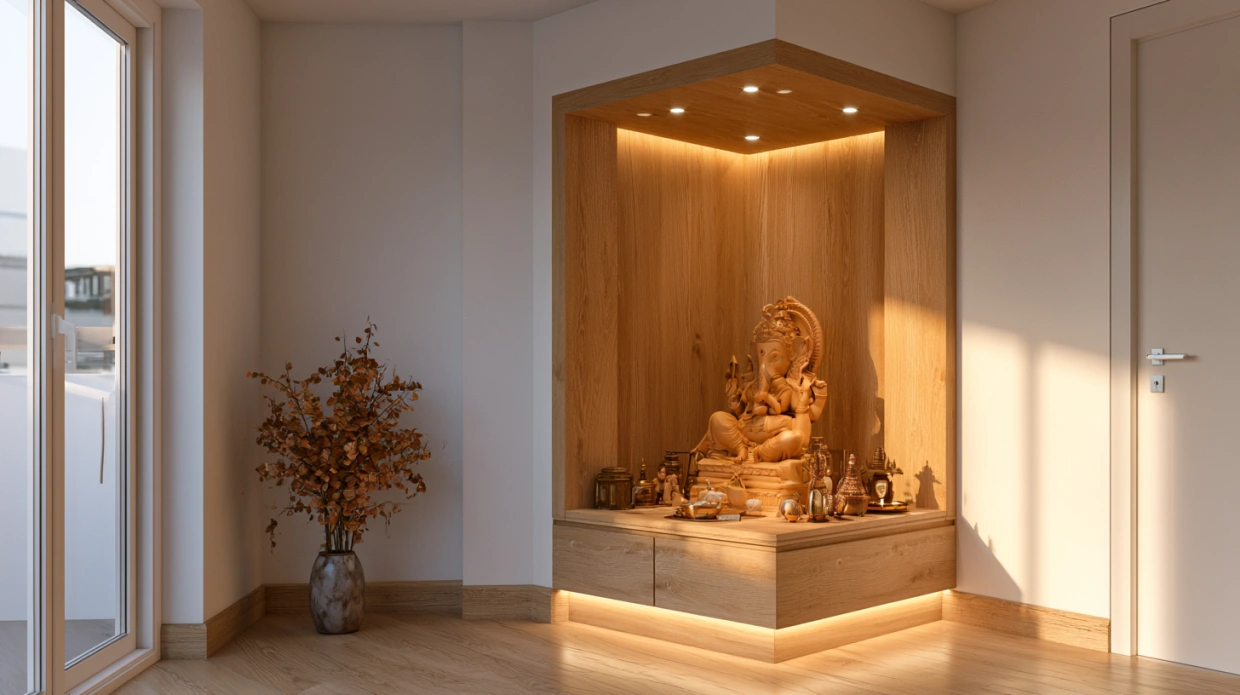
A clean, contemporary corner pooja room design inspired by Scandinavian interiors, with light oak or birch veneer, white or sage walls, minimal ornamentation, and warm LED lighting. This style strips the mandir of heavy carving and decorative excess, letting the idol and the light do all the sacred work. Increasingly popular with younger urban Indian families.
| Feature | Details |
| Best Materials | Light oak veneer, birch plywood, MDF with white duco |
| Colour Palette | White, warm wood tone, sage green, warm beige |
| Ideal For | Urban couples, first-time homeowners, compact apartments |
| Key Highlight | Clean and restful; it suits modern Indian apartment proportions perfectly |
| Approx. Cost | ₹15,000–₹45,000 |
Corner Pooja Room Design: Cost Breakdown
Costs vary based on material, size, customisation level, and city. Below is a realistic breakdown for Indian homes in 2026.
| Scope of Work | Standard Finish | Premium Finish | Luxury Finish |
| Wall-mounted corner unit | ₹8,000–₹20,000 | ₹20,000–₹45,000 | ₹45,000–₹80,000 |
| Open-shelf minimalist unit | ₹12,000–₹35,000 | ₹35,000–₹60,000 | ₹60,000–₹1,20,000 |
| Cabinet with jaali doors | ₹20,000–₹50,000 | ₹50,000–₹90,000 | ₹90,000–₹1,60,000 |
| Floor-to-ceiling mandir | ₹40,000–₹80,000 | ₹80,000–₹1,20,000 | ₹1,20,000–₹2,50,000 |
| Marble corner mandir | ₹30,000–₹70,000 | ₹70,000–₹1,20,000 | ₹1,20,000–₹2,00,000+ |
| Integrated with TV/wardrobe | ₹35,000–₹65,000 | ₹65,000–₹90,000 | ₹90,000–₹1,50,000 |
| Backlit niche design | ₹30,000–₹55,000 | ₹55,000–₹90,000 | ₹90,000–₹1,50,000 |
| Freestanding portable unit | ₹5,000–₹15,000 | ₹15,000–₹30,000 | ₹30,000–₹60,000 |
Note: Prices are indicative and may vary based on city, carpenter rates, design complexity, and prevailing market rates. Installation charges of ₹3,000–₹8,000 may apply separately.
Best Materials for a Corner Pooja Unit
| Material | Appearance | Durability | Best For |
| Teak Wood | Rich warm grain | Excellent | Traditional, heirloom mandirs |
| Sheesham Wood | Dark natural grain | Very Good | Budget-friendly traditional look |
| Plywood / MDF | Smooth | Good | Modern compact designs |
| Marble | Elegant, white, or veined | Excellent | Premium and luxury mandirs |
| Engineered Wood | Uniform finish | Good | Affordable lightweight units |
| Glass | Sleek, reflective | Good | Contemporary minimalist designs |
Vastu Tips for Corner Pooja Room Design
- Direction: Place the corner pooja unit in the north-east corner (Ishaan Kona), which is considered the most auspicious as per Vastu Shastra. East or north are acceptable alternatives
- Idol placement: Idols should face east or west; the worshipper should ideally face east while praying
- Avoid south and south-west: These directions are considered inauspicious for any pooja room corner design
- Height: The idol must be placed at eye level or slightly above, never on the floor
- Lighting: Use warm diyas, brass lamps, or warm-white LEDs (2700K–3000K), never cool white fluorescent light
- No toilet proximity: The corner pooja unit must not share a wall with a bathroom or toilet
- Clutter-free: Store all pooja essentials in closed compartments; the visible surface should carry only the idol, a diya, and fresh flowers
Lighting Ideas to Complement Your Corner Pooja Room Design
Lighting makes or breaks a corner pooja room design. The wrong light flattens the sacred space; the right light makes the idol glow, and the entire corner feels divine. These are the most effective lighting ideas for a corner pooja unit in Indian homes.
- Always use 2700K–3000K warm white LEDs: Warm lighting creates a calm and inviting atmosphere, while cool white lighting can make the pooja space feel harsh and less welcoming.
- LED strip behind the idol shelf: A concealed LED strip behind the idol shelf adds a soft glow that beautifully highlights the deity and enhances the overall ambiance.
- Cove lighting above the mandir: Hidden cove lighting at the top of the unit provides gentle illumination, making the mandir stand out as the focal point.
- Traditional brass diyas and oil lamps: They add warmth, tradition, and spiritual significance that electric lighting alone cannot achieve.
- Pendant lights or hanging lanterns: A decorative pendant or lantern above the mandir adds visual interest and helps define the sacred space.
- Avoid direct spotlights: Soft, diffused lighting is preferable, as harsh spotlights can create strong shadows and an uncomfortable visual effect.
- Dimmers on every circuit: Adjustable lighting levels help create a peaceful, devotional atmosphere suited to different times of day and prayer rituals.
How to Choose the Right Corner Pooja Room Design
Choosing the right corner pooja room design depends on your home's layout, your budget, your family's devotional traditions, and the level of ongoing maintenance you are willing to commit to.
- Start with the Vastu corner: Identify the north-east corner first, as it helps determine the ideal placement and overall layout of the pooja unit.
- Fix the budget first: Set a realistic budget early to choose a design that can be completed comfortably without unexpected changes.
- Match the design to the room style: The pooja unit should blend naturally with the room's overall décor and design theme.
- Choose materials based on your city's climate: Select materials suited to local weather conditions to improve durability and long-term performance.
- Consider access and daily use: Choose a design that aligns with your family's prayer habits and everyday convenience.
- Plan lighting at the design stage: Finalise lighting requirements before installation to avoid costly modifications later.
- Think about storage honestly: Include adequate storage for pooja essentials to keep the space organised, functional, and clutter-free over time.
Common Mistakes to Avoid in Corner Pooja Room Design
Even well-intentioned corner pooja room designs can go wrong during execution. These are the most common mistakes Indian homeowners make and how to avoid each one.
- Placing the mandir in the wrong direction: Avoid placing the pooja unit in the south or south-west corner. Always check the room's orientation before finalizing the location.
- Using cool white LEDs: Cool lighting can make the space feel harsh and less inviting. Warm white LEDs create a more peaceful and traditional ambiance.
- Ignoring storage: Without proper storage, Pooja's essentials can quickly create clutter. Include a drawer or cabinet to keep the space neat and organized.
- Over-decorating the space: Too many decorative elements can make the pooja area look crowded. Keep the design simple and focused to maintain a calm atmosphere.
- Skipping termite treatment on solid wood: Untreated wood can deteriorate over time, especially in humid conditions. Using treated wood helps improve durability and longevity.
- Choosing a unit that is too small for the corner: A pooja unit should be proportionate to the available corner space. The right size creates a more balanced and visually appealing look.
- No separation from adjacent spaces: The pooja area should have a clear visual distinction from nearby spaces. Simple design elements can help preserve its sacred and dedicated feel.
How NoBroker Interiors Can Help You Design Your Corner Pooja Room
A well-executed corner pooja room design requires precise coordination between space planning, material selection, carpentry, and lighting, all of which are far easier to get right with professional guidance from the start.
NoBroker Interiors offers complete corner pooja room design and execution, from 3D visualization and material selection to in-house carpentry and installation, with a flat 10-year warranty on all modular work. Whether it is a simple corner pooja unit refresh or a fully custom floor-to-ceiling mandir, professional guidance ensures the result is both beautiful and built to last.
Frequently Asked Questions
1. Which corner is best for a pooja room as per Vastu?
2. What is the ideal size for a corner pooja unit in a flat?
3. What material is best for a corner pooja mandir for the home?
4. Can I install a corner pooja unit in a rented apartment?
5. How much does a corner pooja room design cost in India?
6. Should the idol face east or west in a corner pooja room?
7. Can a corner pooja room be integrated into a TV unit?


Our Recent Projects



Reviews

Sanoj Kumar

Good center

Archi Dubey
Truly More Organized Living Space I wanted interiors that looked attractive but were also practical for daily use. Crew professional ... Read more

Ganesh Bawaskar
Excellent work done by NoBroker team for my new flat. Best part is quality and cost both were good. No delay in work which showcase pro... Read more

Swathi Vs
Amazing experience given by NOBROKERS interiors... preferable...Tharun performance was ultimate...thanq so much tharun and team

Adhi HL
Amazing consultations by the designer they helped me finalise the designs I was looking for

Anchal Singh
Amazing center

Local Guide
Excellent service, great quality within promised budget and time. Special thanks to Subhash for end to end management and coordination ... Read more

Bindu Rai
I approached No Broker Interiors for designing my home and it was a smooth process overall. The modular kitchen has smart storage, and ... Read more

Tapas Ghosh
NoBroker Interior offered some nice ideas for improving the look and functionaliity of my living space & genuine , team

Vinodhkumar
I had a wonderful experience with Vishal V, the interior designer at NoBroker. His way of explaining things, point-by-point detailing, ... Read more

Dipti
Great Space Planning,,, I wanted to make better use of the space in my home, and the design suggestions were quite helpfull. I liked th... Read more

Divya Pendem
We are done our 3BHK flat interior work from No Broker. It was exlent and as we expected they done. Thank you all who involved in this ... Read more

Asha Kashyap
"Great interior design service by NoBroker Interiors - Whitefield! Had a wonderful experience working with their team for our home inte... Read more

Rising Soft
We trusted No Broker Interiors with our interior work and the final look of our home is lovely. At the experience centre they showed us... Read more

Sarala Buduru
The interior transformation made the space feel brighter and more welcoming. The design choiices were simmple, tasteful, and suited my needs.

Hanma
The team was responsive to my queriies and explained the interior work process clearly. Truly amazing 🤗

Honey Verma
Better Use of Natural Light I wanted my home to feel brighter and more open. The designn choices helped create an airy apppearance, and... Read more

S K.K
Helpful Design Guidance team bhot suggestive hai & As someone with limited knowledge of interior design, I appreciated having different... Read more

Muskan kataria
Amazing interior work! The design is elegant, modern, and beautifully finished. Every detail is thoughtfully crafted, with excellent qu... Read more

Guncreator Studio
The design suggestions were creatiive and suited the style I wanteed for my home.

Anamika Banik
Good interior service with clear communication and helpful suggestions. The work was completed neatlyyyy

Nitin Kumar Mandilwar
Good work done by project manager Manoj. Completed the work in time.

Divyanshu Mehta
Great work done by designer Divya and Govardhan. Hassle free work snd best part is they will customise everything as per need exactly. ... Read more

Jason Fernandes
I had a great experience here. When it comes to planning, delivery and execution, great work was done by the team members. Suhail Khan... Read more

Swathi Warker
Manoj is very responsive, finds solutions for all obstacles and provides ork around. He provides timely updates on work status. Manages... Read more

Vineeta Dalai
A big thank you to Mr. Ashwin Jaiswal, Sr. Project Manager, for turning my dream home into reality and making the entire interior journ... Read more

Riya Roy
Ideas for a Compact Home Making a smaller home look spacious was my maiin concern. The desiign concepts helped me explore better furnit... Read more

Rinki Jain
Modern Home Ideas the staff provided & I was looking for a modern yet practical look for my home. The design options I exploreed throug... Read more

Deepika Khilar
Quality work done by NoBroker. Zaki as a project manager was very sincere and good in getting things done. Few improvement suggestions... Read more

AKSHATHA S
I am writing this after using NoBroker Cleaning Services for my house and the difference is easy to see. Our chimney was greasy for mon... Read more

Priya Sardar
Overalll, the interior planning experience was smooth, and I liked the practical approach to the design. GOOD DESIGN 👍🏻

Abhilash Tomar
Good experience

Rahber Khan
The interior work turned out well, and I liked how the team focused on making the space both stylish and functional. They were responsi... Read more

yogesh
Recently did interior for 2BHK with NoBroker Interiors, and the overall experience has been great. Everyone has been extremely supporti... Read more

Rasheed khan
Overall excellent services by Nobroker. I am glad to have their interiors installed in my apartment.

Sai kiran tharala
I recently got my home interiors completed by NoBroker, and I’m extremely happy with the outcome. Initially, I was unsure about frame... Read more

Mohammed Moizuddin
We recently got our home interiors done through NoBroker Interiors, and we are very happy with the final output. The overall finish and... Read more

Dev Roy
I prefer simple interiors rather than too many decorative elements. The ideas I exxplored throughh NoBroker Interior matched that prefe... Read more

Sree Harsha Yandamuri
Project finished on time, quality was top-notch. The associate caught issues we'd have missed -> that's what you want in a quality chec... Read more

Ajay Murumkar
Truly amazing team, Budget-Friendly Planning I wanted to plan my home interiors without overspending. Compariing the available options ... Read more

Adi M
We had a wonderful experience with NoBroker while planning the interiors for our new flat. A special thanks to Sathvika for her profess... Read more

Kandagatla Laxman
We just finished our home interiors at Praneeth Pranav Solitaire NoBroker. A big thanks to our Project Manager, Abhishek! He managed th... Read more

Ananya Sharma
Our flat interiors were handled by No Broker Interiors and our time with them was pleasant. They planned the modular kitchen around how... Read more

Shiva Shankar
We had a wonderful experience with NoBroker Interiors for our new home at Primark Inspira. A special thanks to Abhishek for managing th... Read more
Testimonials
View All
NoBroker Interiors Review | Happy Customer Testimonial by Rajani
NoBroker Interiors | Customer Testimonial by Prinyakar Polley

NoBroker Interiors | Hyderabad Customer Testimonial by Prashant Choudhary

NoBroker Home Interiors | Hyderabad 4BHK Customer Review

NoBroker Interiors Customer Testimonial | Jatan's Story
NoBroker Interiors Review | Hyderabad Customer Testimonial

NoBroker Interiors Review | Modern Dream Home Customer Testimonial
NoBroker Interiors Customer Testimonial | Fast & Quality Home Interiors

NoBroker Interiors Customer Testimonial | Pune Dream Home

NoBroker Interiors| Bangalore Customer Testimonial
NoBroker Interiors: Sports Theme Interiors by NoBroker #interiordesign #nobrokerinteriors #nobroker

NoBroker Interiors - Customer Testimonials

That 3 PM meeting where ideas turn into floor plans, materials, and magic. 💫

Your 2026 list is here.

Smart wardrobe design that fits your life, beautifully.
POV: You gave your home a holiday hug.🥰

Blink and you’ll miss the makeover.👀

When your home finally gets its own weekend mood, this bar unit does the job beautifully.

A calm pooja corner every home needs.

NoBroker Home Interior Service | Saurabh & Prachi Share Their Story #interiordesign #shorts
About the Author

Rakshitha
Author
Rakshitha is an experienced interior designer in Bangalore, known for transforming living spaces into beautiful, functional dream homes. She believes every home tells a story, and thoughtfu










Recent Blogs
Subscribe to our Newsletter
Get latest news delivered straight to your inbox