Best Material for Modular Kitchen: A Complete Guide for Indian Homes

234 Views
Table of Contents
Summary
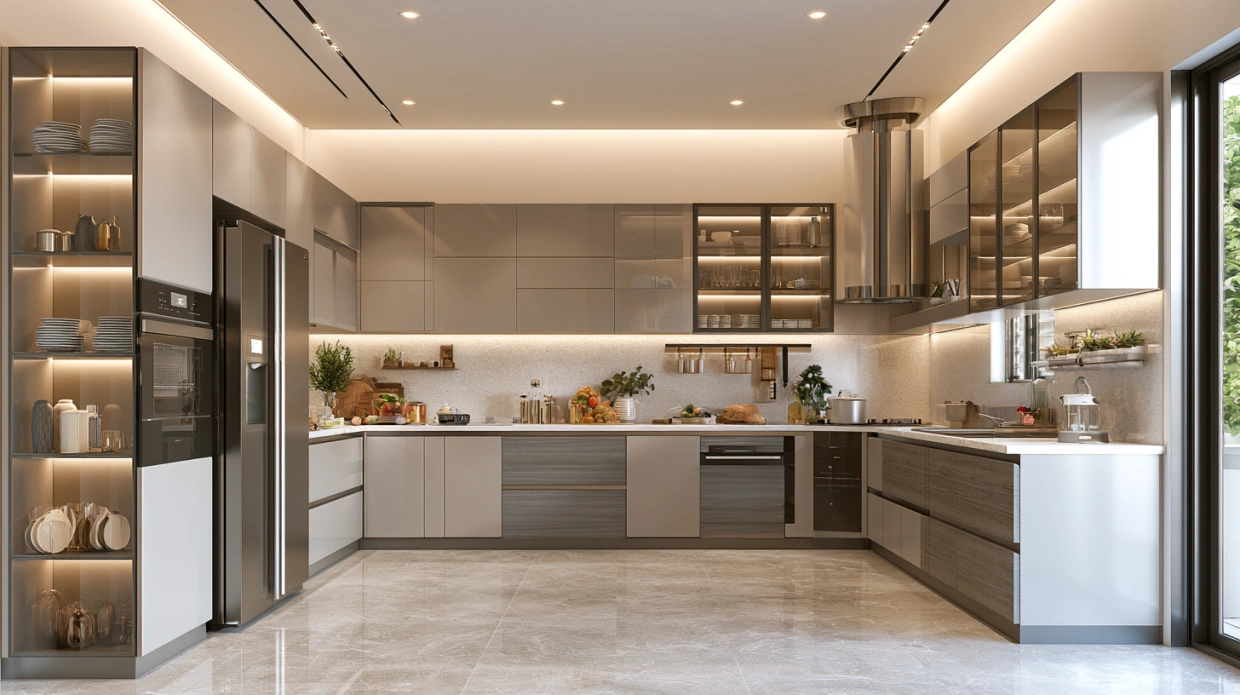
Choosing the best material for a modular kitchen can make or break your cooking space. From sturdy plywood and moisture-resistant PVC to the premium appeal of acrylic sheet for a modular kitchen, every material has its strengths. All major materials for modular kitchens, including costs, pros, cons, and what suits Indian homes best, so you can make a confident, budget-smart decision. The cost of a full modular kitchen in India typically ranges from ₹1.5 lakh to ₹5 lakh+, depending on the materials, finishes, and fittings chosen.
The kitchen is the busiest room in any Indian home. Between daily oil splashes, steam from pressure cookers, and the constant opening and closing of cabinet doors, your kitchen takes a serious beating. That is exactly why the material used in modular kitchen construction matters far more than its appearance alone. A modular kitchen is built from multiple independent units, base cabinets, wall cabinets, countertops, shutters, and fittings, all of which can use different materials depending on the zone and budget. The right combination determines how long your kitchen lasts, how easy it is to maintain, and how good it looks five years from now.
Why Choosing the Right Modular Kitchen Material Matters?
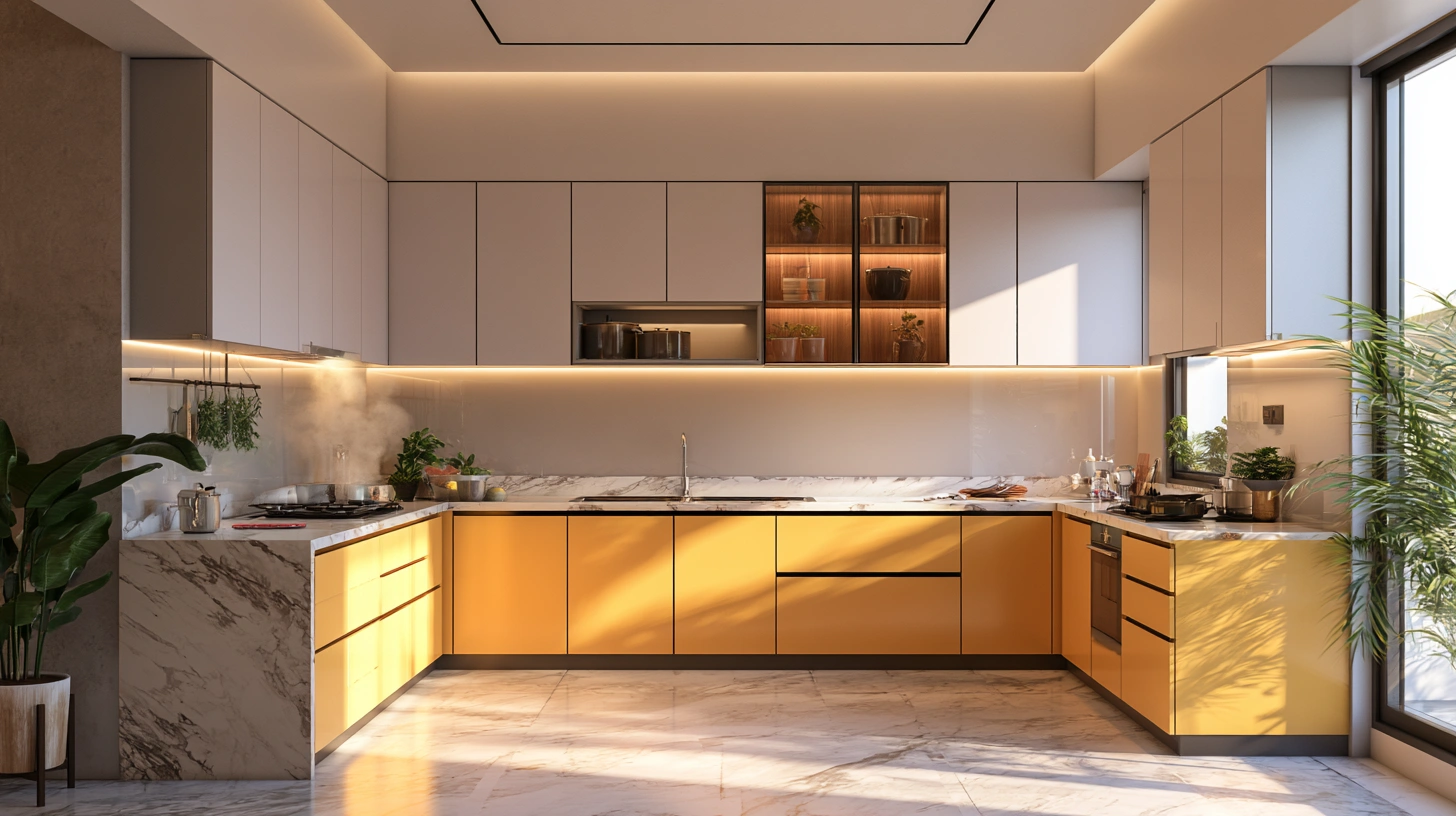
Selecting the right materials for a modular kitchen is not just about aesthetics; it directly impacts durability, maintenance effort, and long-term value. Indian kitchens face unique challenges that most global kitchen guides overlook.
- High humidity and steam from pressure cooking can warp wood-based materials
- Cooking oil fumes and grease accumulate on every surface daily
- Termite infestation is a real concern in many Indian cities
- Monsoon weather increases moisture levels, stressing cabinet cores
- Heavy utensils and appliances put a constant load on base cabinets
Choosing inferior materials for modular kitchen cabinets leads to swelling, laminate peeling, and costly replacements within a few years. Investing in the right material upfront saves both money and hassle in the long run.
Recommended Reading
Interior Design Cost in Bangalore
20.5K Views


PVC TV Unit Design: 10+ Designs to Maxim...
18.3K Views

Jewellery Showroom Interior Design: Top ...
13.8K Views
17 Simple Village Single-Floor Home Fron...
13.7K Views
Top 30 Window Design for Home: Combining...
13.6K Views
Complete List: Materials for Modular Kitchen
Here is a breakdown of all the major materials required for modular kitchen construction in India, covering the carcass (body), shutters (doors), and finishes.
1. Plywood
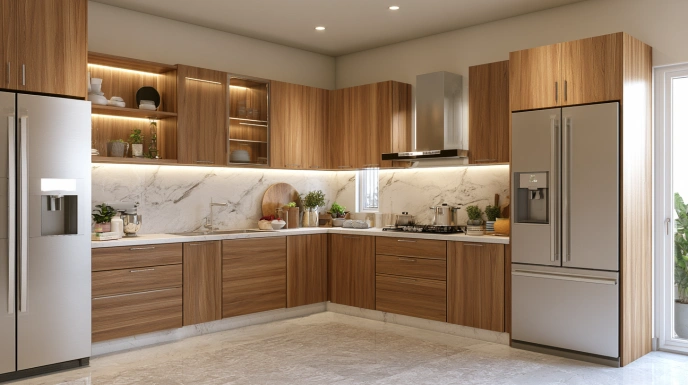
Plywood is consistently rated the best material for modular kitchen design carcasses in India. It is manufactured by bonding multiple thin layers of wood veneer with strong adhesives, making it far stronger and more stable than solid wood planks of the same thickness.
- Pros: Strong structural base, long lifespan (15–20 years), holds screws well, termite-resistant when treated, ideal for heavy-load shelves.
- Cons: Slightly more expensive than MDF or particle board; needs proper edge banding to prevent moisture from entering cut edges.
- Best For: Base cabinets, wall cabinets, under-sink storage, and any area exposed to moisture.
2. MDF (Medium-Density Fibreboard)
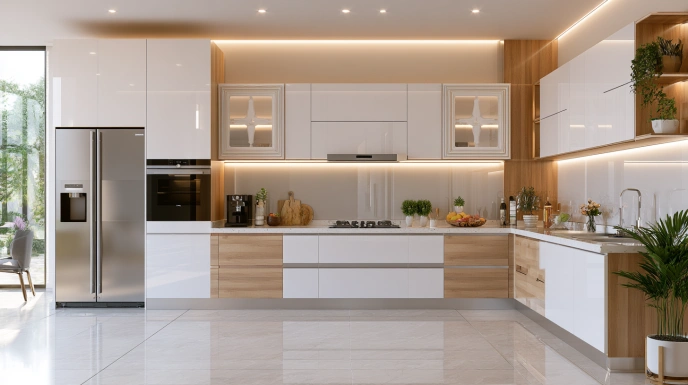
MDF is an engineered wood made by compressing wood fibres with resin under high pressure. Its surface is exceptionally smooth, making it ideal for painted or lacquered finishes. It is one of the most widely used materials for modular kitchen shutters and decorative panels.
- Pros: Affordable, smooth surface perfect for acrylic and paint finishes, uniform texture with no grain, easy to cut into intricate CNC-routed profiles.
- Cons: Swells significantly when exposed to water; not recommended as a carcass material in high-humidity zones. Heavy loads can cause sagging over time.
- Best For: Shutter doors, interior panels, and decorative elements, combined with a BWP plywood carcass for best results.
3. HDHMR (High-Density High-Moisture-Resistant Board)
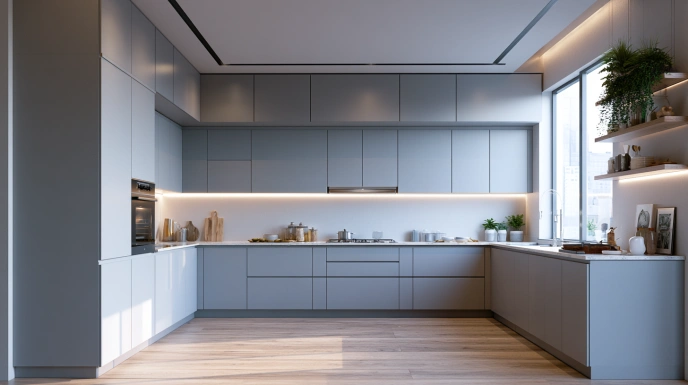
HDHMR boards are a relatively newer entrant in modular kitchen design materials and are rapidly gaining popularity as an upgrade over standard MDF. They are denser, harder, and far more moisture-resistant.
- Pros: Combines the smooth surface of MDF with improved moisture resistance, stronger screw-holding capacity, and is suitable for both carcass and shutters.
- Cons: Slightly more expensive than standard MDF; not as widely available from all vendors.
- Best For: Full kitchen carcass and shutters in mid-range budgets where BWP plywood feels expensive.
4. Particle Board
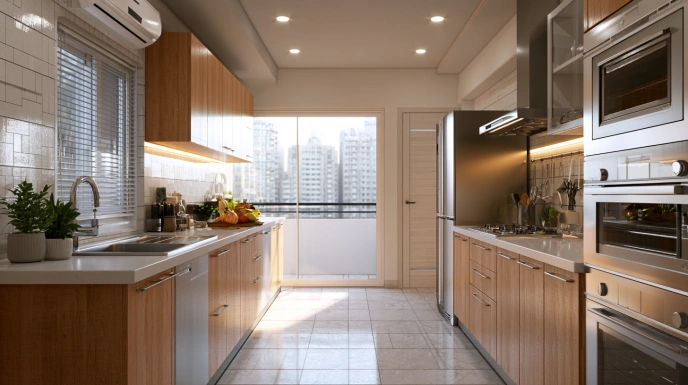
Particle board is made from compressed wood chips, sawdust, and resin. It is the most affordable engineered wood but also the weakest. While popular globally, it struggles in Indian kitchen conditions.
- Pros: Very low cost, lightweight, readily available.
- Cons: Extremely poor moisture resistance; swells and disintegrates when exposed to water; cannot hold screws well over time; not suitable for Indian kitchens near sinks or hobs.
- Best For: Budget projects in dry zones only, such as loft units far from steam or moisture sources.
5. Stainless Steel
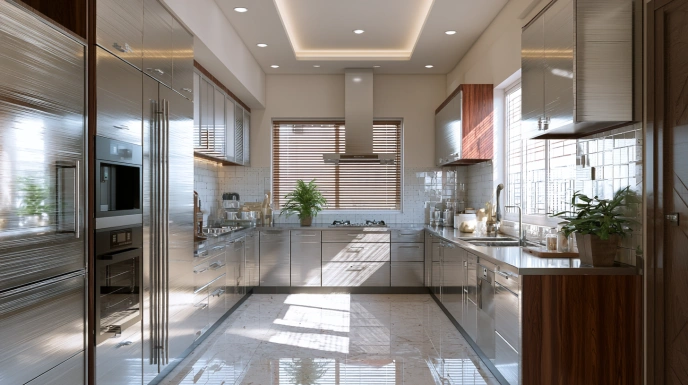
Stainless steel modular kitchens are growing rapidly in India, driven by their unmatched durability and hygiene. The stainless steel modular kitchen segment in India is projected to grow significantly over the next five years, reflecting strong demand from health-conscious homeowners.
- Pros: Completely termite-proof, rust-resistant, does not warp or swell, antimicrobial surface, extremely easy to clean, fire-resistant, and eco-friendly.
- Cons: Higher upfront cost, can look cold or industrial if not paired with warm accessories, requires specialist installation, and fingerprints show more easily.
- Best For: Countertops, sink areas, and full kitchen builds for those who prioritise hygiene and longevity over budget.
6. PVC (Polyvinyl Chloride)
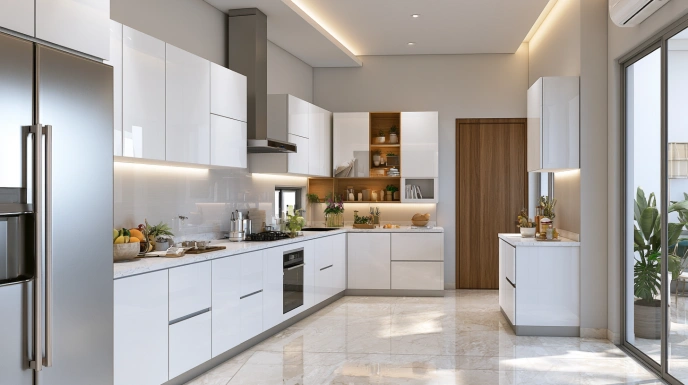
PVC is an excellent material for modular kitchen cabinets in areas with very high humidity. PVC foam boards and PVC-wrapped shutters are both widely used across India, especially in coastal cities.
- Pros: 100% waterproof, termite-proof, easy to maintain, affordable, lightweight, and available in a wide range of colours and textures.
- Cons: Not fire-resistant; can release fumes when exposed to very high heat. Joints may loosen over the years. Limited structural strength for heavy loads.
- Best For: Full kitchen builds in the budget segment, especially in coastal or high-humidity cities like Mumbai, Kochi, or Chennai.
7. Solid Wood
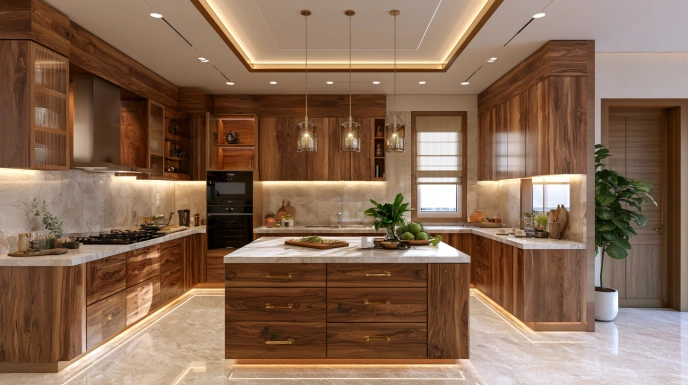
Solid-wood kitchens made from teak, oak, maple, or sheesham remain the most aspirational choice for Indian homeowners. These offer timeless beauty and excellent durability when properly maintained.
- Pros: Aesthetically stunning, extremely strong, can be refinished and repaired, and adds significant resale value to the home.
- Cons: Expensive, heavy, requires regular sealing and polishing, susceptible to termites without treatment, and can warp in very humid conditions.
- Best For: Premium kitchen builds, especially for shutters and decorative elements paired with a plywood carcass.
Shutter Finishes: Acrylic Sheet for Modular Kitchen and Other Options
The shutter finish is what defines the visual character of your kitchen. Even with the same plywood carcass, different finishes create completely different looks and require very different maintenance.
8. Acrylic Sheet for Modular Kitchen
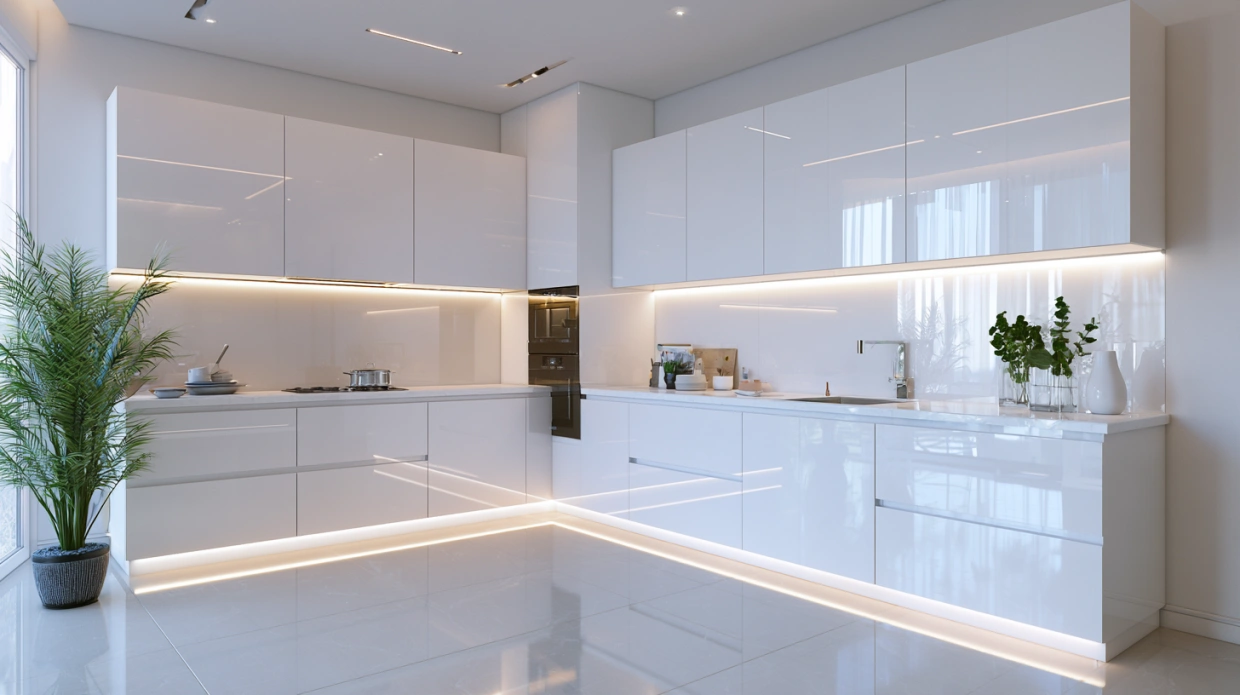
The acrylic sheet for modular kitchens has become one of the most popular finish options in India over the past decade. Acrylic is a synthetic polymer sheet pressed onto an MDF or plywood base to create a mirror-like high-gloss finish.
- Pros: Offers a luxurious, high-gloss appearance with excellent colour saturation and UV resistance, helping prevent fading over time. It is also moisture-resistant and easy to clean, making it a practical choice for modern kitchens.
- Cons: Fingerprints and scratches are more visible, especially on dark shades. Premium pricing compared to laminates. Colour matching can be tricky if individual shutters need to be replaced later.
- Best For: Modern, high-gloss kitchen aesthetics; ideal for small kitchens as the reflective surface amplifies the sense of space.
9. Laminates
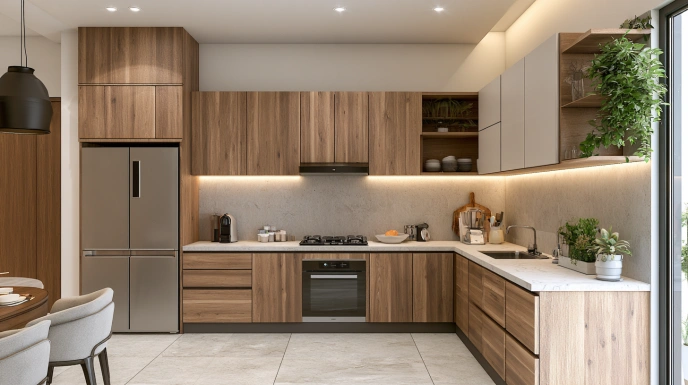
Laminates (also called Sun Mica in India) are the most widely used and most affordable shutter finish. They are available in thousands of designs, wood grain, stone, solid colour, matte, and glossy, and are applied over plywood or MDF shutters.
- Pros: Budget-friendly, scratch-resistant, heat-resistant, easy to maintain, and a huge variety of designs.
- Cons: Can peel at edges over time if not properly sealed; lower-end laminates fade with UV exposure.
- Best For: Budget-conscious homeowners, high-usage family kitchens, and those seeking a wide range of design options without compromising durability or ease of maintenance.
10. PU (Polyurethane) Paint Finish
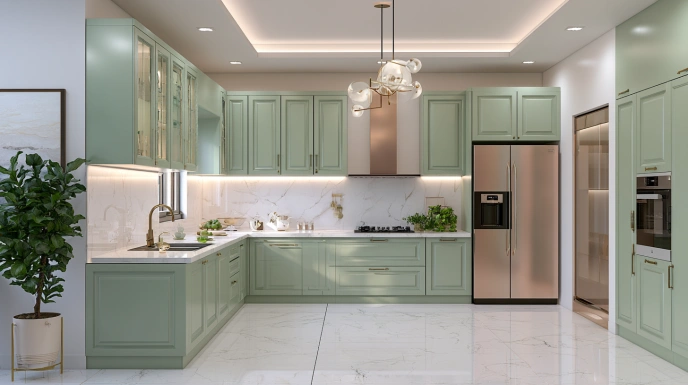
PU finish involves spraying polyurethane paint directly onto the shutter, allowing for fully custom colours from any paint catalogue. It gives a smoother finish than laminates and enables intricate moulding or routing designs.
- Pros: Fully customizable colours, smooth finish, suits classical and transitional kitchen styles.
- Cons: More expensive than laminates; requires skilled application.
- Best For: Homeowners seeking customised colours, premium aesthetics, and classic, transitional, or luxury kitchen designs featuring detailed shutter patterns.
11. Back-Painted Glass
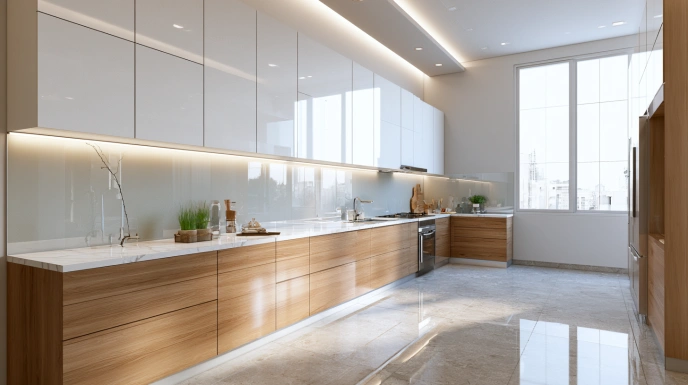
Glass shutters with paint applied to the reverse side create a sleek, sophisticated look. Particularly popular for wall cabinets in contemporary designs.
- Pros: Premium appearance, easy to clean, non-porous.
- Cons: Fragile; installation must be done carefully to avoid chips and cracks.
- Best For: Modern and luxury kitchens, especially wall cabinets, and homeowners seeking a sleek, high-gloss, contemporary aesthetic.
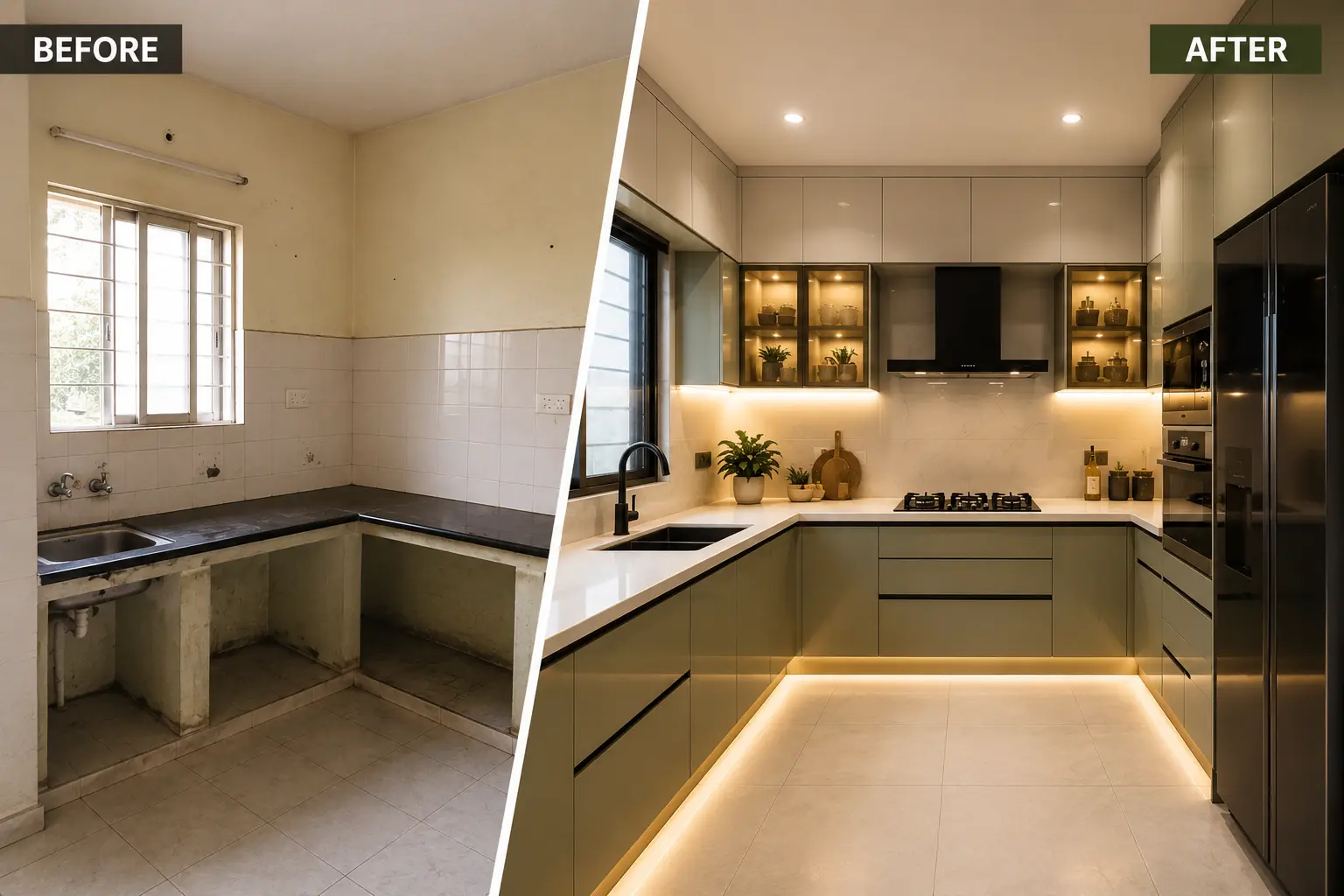
Countertop Materials for Modular Kitchen
The countertop is the most heavily used surface in any kitchen. It must withstand heat, water, and heavy appliances. Here are the main options:
| Countertop Material | Key Feature | Approx. Cost (per sq ft) | Best For |
| Granite | Natural stone, heat-resistant, durable | ₹150 – ₹600 | Heavy Indian cooking |
| Quartz (Engineered) | Non-porous, stain-resistant, uniform | ₹350 – ₹1,200 | Modern, premium kitchens |
| Marble | Elegant look, classic appeal | ₹200 – ₹800 | Aesthetic-first kitchens |
| Solid Surface (Corian) | Seamless joints, smooth finish | ₹500 – ₹1,500 | Minimalist designs |
| Stainless Steel | Hygienic, rust-proof, industrial look | ₹300 – ₹800 | Wet zones, under sink |
| Tiles designs (Ceramic/Vitrified) | Affordable, easy to replace | ₹60 – ₹250 | Budget kitchens |
Modular Kitchen Fittings Price and Overall Cost Breakdown
One of the most common questions homeowners ask is about the total price of modular kitchen fittings and the project cost. Below is a realistic reference table based on current Indian market rates.
| Component | Budget Range | Mid-Range | Premium |
| Carcass (Particle Board) | ₹400–₹600/sq ft | — | — |
| Carcass (MDF/HDHMR) | ₹600–₹900/sq ft | ₹700–₹1,000/sq ft | — |
| Carcass (BWP Marine Ply) | — | ₹900–₹1,400/sq ft | ₹1,200–₹2,000/sq ft |
| Shutter Finish (Laminate) | ₹700–₹900/sq ft | ₹900–₹1,200/sq ft | — |
| Shutter Finish (Acrylic Sheet) | — | ₹1,000–₹1,300/sq ft | ₹1,800–₹3,500/sq ft |
| Shutter Finish (PU Paint) | — | ₹1,200–₹1,800/sq ft | ₹2,000–₹3,000/sq ft |
| Granite Countertop | ₹150–₹300/sq ft | ₹300–₹500/sq ft | ₹500–₹800/sq ft |
| Quartz Countertop | — | ₹400–₹700/sq ft | ₹700–₹1,200/sq ft |
| Kitchen Hob | ₹5,000–₹15,000 | ₹15,000–₹35,000 | ₹35,000–₹80,000 |
| Kitchen Chimney | ₹12,000–₹25,000 | ₹25,000–₹50,000 | ₹50,000–₹1,00,000+ |
| Kitchen Sink (SS) | ₹3,000–₹8,000 | ₹8,000–₹20,000 | ₹20,000–₹1,00,000 |
| Hettich/Hafele Hardware | ₹20,000–₹40,000 | ₹40,000–₹80,000 | ₹80,000+ |
| Full Modular Kitchen (10 sq ft) | ₹1,50,000–₹2,50,000 | ₹2,50,000–₹5,00,000 | ₹5,00,000+ |
Note: All prices are approximate and vary based on brand, city, and specific product selection. Acrylic modular kitchen cabinets typically range from ₹30,000 to ₹60,000 for a standard kitchen.
Why Acrylic Sheet for Modular Kitchen is So Popular in India
Among all the finish options, the acrylic sheet for modular kitchens deserves special attention due to its rapid adoption in Indian homes. Here is why it has become the preferred choice for mid-range to premium kitchen builds.
- High-Gloss Mirror Effect: Reflects light and makes kitchens appear larger, particularly valuable in compact urban flats
- UV Resistance: Unlike laminates that can fade over years of sunlight exposure, acrylic retains its colour in India's intense tropical climate
- Moisture-Proof: The non-porous surface means cooking steam and water splashes do not penetrate or stain
- Easy Cleaning: A quick wipe with a damp cloth removes oil, grease, and food residue effortlessly
- Eco-Friendly: Non-toxic and does not release harmful chemicals into the kitchen environment
- Design Flexibility: Available in 200+ colours and can be used alongside laminates or PU finishes for two-tone kitchen aesthetics
The most common application is on shutter doors, where an acrylic sheet is pressed onto MDF or HDHMR boards as the base. Thicker acrylic sheets (2mm+) are more durable and offer a more luxurious feel than thinner variants.
How to Choose the Right Material for Your Modular Kitchen: Step-by-Step
With so many options available, here is a practical framework to narrow down the material required for a modular kitchen in your specific situation.
- Define Your Budget First: Set a clear budget before exploring materials. The carcass and fittings account for 60–70% of the total cost.
- Assess Your Kitchen's Humidity Level: Coastal cities or older buildings with poor ventilation often require more moisture-resistant options, such as Marine Plywood or PVC.
- Consider Your Cooking Habits: Heavy daily Indian cooking generates more steam and heat. Opt for heat-resistant countertops and moisture-resistant carcasses.
- Match the Aesthetic to Your Home: Modern interiors pair well with acrylic or back-painted glass; traditional homes suit laminates or PU finishes.
- Think Long-Term Maintenance: If you have limited time for upkeep, choose acrylic or quartz, both of which require less maintenance than solid wood or marble.
- Mix Materials Wisely: BWP plywood carcass + acrylic shutters + granite countertop balances strength, looks, and budget perfectly.
How NoBroker Interiors Can Help You
Designing a modular kitchen goes far beyond choosing the best material for modular kitchen cabinets. A well-executed kitchen requires precise coordination between carcass materials, shutter finishes, countertops, storage planning, lighting, and hardware selection, all of which are far easier to get right with professional guidance from the start.
NoBroker Interiors offers complete modular kitchen design and execution, from 3D visualisation and material selection to installation, backed by a flat 10-year warranty on all modular work. With expert guidance, premium materials, transparent pricing, and end-to-end project management, we help create a kitchen that is beautiful, durable, and perfectly suited to your home.
Frequently Asked Questions
Q1. Which is the best material for modular kitchen cabinets in India?
Q2. What is the material used in modular kitchen shutters?
Q3. How much does an acrylic sheet for a modular kitchen cost?
Q4. What is the price range for modular kitchen fittings?
Q5. What is the material required for a modular kitchen in coastal cities?
Q6. Is PVC or plywood better for a modular kitchen?
Q7. Which materials for modular kitchens require the least maintenance?


Our Recent Projects



Reviews

Sanoj Kumar

Good center

Archi Dubey
Truly More Organized Living Space I wanted interiors that looked attractive but were also practical for daily use. Crew professional ... Read more

Ganesh Bawaskar
Excellent work done by NoBroker team for my new flat. Best part is quality and cost both were good. No delay in work which showcase pro... Read more

Swathi Vs
Amazing experience given by NOBROKERS interiors... preferable...Tharun performance was ultimate...thanq so much tharun and team

Adhi HL
Amazing consultations by the designer they helped me finalise the designs I was looking for

Anchal Singh
Amazing center

Local Guide
Excellent service, great quality within promised budget and time. Special thanks to Subhash for end to end management and coordination ... Read more

Bindu Rai
I approached No Broker Interiors for designing my home and it was a smooth process overall. The modular kitchen has smart storage, and ... Read more

Tapas Ghosh
NoBroker Interior offered some nice ideas for improving the look and functionaliity of my living space & genuine , team

Vinodhkumar
I had a wonderful experience with Vishal V, the interior designer at NoBroker. His way of explaining things, point-by-point detailing, ... Read more

Dipti
Great Space Planning,,, I wanted to make better use of the space in my home, and the design suggestions were quite helpfull. I liked th... Read more

Divya Pendem
We are done our 3BHK flat interior work from No Broker. It was exlent and as we expected they done. Thank you all who involved in this ... Read more

Asha Kashyap
"Great interior design service by NoBroker Interiors - Whitefield! Had a wonderful experience working with their team for our home inte... Read more

Rising Soft
We trusted No Broker Interiors with our interior work and the final look of our home is lovely. At the experience centre they showed us... Read more

Sarala Buduru
The interior transformation made the space feel brighter and more welcoming. The design choiices were simmple, tasteful, and suited my needs.

Hanma
The team was responsive to my queriies and explained the interior work process clearly. Truly amazing 🤗

Honey Verma
Better Use of Natural Light I wanted my home to feel brighter and more open. The designn choices helped create an airy apppearance, and... Read more

S K.K
Helpful Design Guidance team bhot suggestive hai & As someone with limited knowledge of interior design, I appreciated having different... Read more

Muskan kataria
Amazing interior work! The design is elegant, modern, and beautifully finished. Every detail is thoughtfully crafted, with excellent qu... Read more

Guncreator Studio
The design suggestions were creatiive and suited the style I wanteed for my home.

Anamika Banik
Good interior service with clear communication and helpful suggestions. The work was completed neatlyyyy

Nitin Kumar Mandilwar
Good work done by project manager Manoj. Completed the work in time.

Divyanshu Mehta
Great work done by designer Divya and Govardhan. Hassle free work snd best part is they will customise everything as per need exactly. ... Read more

Jason Fernandes
I had a great experience here. When it comes to planning, delivery and execution, great work was done by the team members. Suhail Khan... Read more

Swathi Warker
Manoj is very responsive, finds solutions for all obstacles and provides ork around. He provides timely updates on work status. Manages... Read more

Vineeta Dalai
A big thank you to Mr. Ashwin Jaiswal, Sr. Project Manager, for turning my dream home into reality and making the entire interior journ... Read more

Riya Roy
Ideas for a Compact Home Making a smaller home look spacious was my maiin concern. The desiign concepts helped me explore better furnit... Read more

Rinki Jain
Modern Home Ideas the staff provided & I was looking for a modern yet practical look for my home. The design options I exploreed throug... Read more

Deepika Khilar
Quality work done by NoBroker. Zaki as a project manager was very sincere and good in getting things done. Few improvement suggestions... Read more

AKSHATHA S
I am writing this after using NoBroker Cleaning Services for my house and the difference is easy to see. Our chimney was greasy for mon... Read more

Priya Sardar
Overalll, the interior planning experience was smooth, and I liked the practical approach to the design. GOOD DESIGN 👍🏻

Abhilash Tomar
Good experience

Rahber Khan
The interior work turned out well, and I liked how the team focused on making the space both stylish and functional. They were responsi... Read more

yogesh
Recently did interior for 2BHK with NoBroker Interiors, and the overall experience has been great. Everyone has been extremely supporti... Read more

Rasheed khan
Overall excellent services by Nobroker. I am glad to have their interiors installed in my apartment.

Sai kiran tharala
I recently got my home interiors completed by NoBroker, and I’m extremely happy with the outcome. Initially, I was unsure about frame... Read more

Mohammed Moizuddin
We recently got our home interiors done through NoBroker Interiors, and we are very happy with the final output. The overall finish and... Read more

Dev Roy
I prefer simple interiors rather than too many decorative elements. The ideas I exxplored throughh NoBroker Interior matched that prefe... Read more

Sree Harsha Yandamuri
Project finished on time, quality was top-notch. The associate caught issues we'd have missed -> that's what you want in a quality chec... Read more

Ajay Murumkar
Truly amazing team, Budget-Friendly Planning I wanted to plan my home interiors without overspending. Compariing the available options ... Read more

Adi M
We had a wonderful experience with NoBroker while planning the interiors for our new flat. A special thanks to Sathvika for her profess... Read more

Kandagatla Laxman
We just finished our home interiors at Praneeth Pranav Solitaire NoBroker. A big thanks to our Project Manager, Abhishek! He managed th... Read more

Ananya Sharma
Our flat interiors were handled by No Broker Interiors and our time with them was pleasant. They planned the modular kitchen around how... Read more

Shiva Shankar
We had a wonderful experience with NoBroker Interiors for our new home at Primark Inspira. A special thanks to Abhishek for managing th... Read more
Testimonials
View All
NoBroker Interiors Review | Happy Customer Testimonial by Rajani
NoBroker Interiors | Customer Testimonial by Prinyakar Polley

NoBroker Interiors | Hyderabad Customer Testimonial by Prashant Choudhary

NoBroker Home Interiors | Hyderabad 4BHK Customer Review

NoBroker Interiors Customer Testimonial | Jatan's Story
NoBroker Interiors Review | Hyderabad Customer Testimonial

NoBroker Interiors Review | Modern Dream Home Customer Testimonial

NoBroker Interiors Customer Testimonial | Fast & Quality Home Interiors

NoBroker Interiors Customer Testimonial | Pune Dream Home

NoBroker Interiors| Bangalore Customer Testimonial
NoBroker Interiors: Sports Theme Interiors by NoBroker #interiordesign #nobrokerinteriors #nobroker

NoBroker Interiors - Customer Testimonials

That 3 PM meeting where ideas turn into floor plans, materials, and magic. 💫

Your 2026 list is here.

Smart wardrobe design that fits your life, beautifully.
POV: You gave your home a holiday hug.🥰

Blink and you’ll miss the makeover.👀

When your home finally gets its own weekend mood, this bar unit does the job beautifully.

A calm pooja corner every home needs.

NoBroker Home Interior Service | Saurabh & Prachi Share Their Story #interiordesign #shorts
About the Author

Rakshitha
Author
Rakshitha is an experienced interior designer in Bangalore, known for transforming living spaces into beautiful, functional dream homes. She believes every home tells a story, and thoughtfu










Recent Blogs
Subscribe to our Newsletter
Get latest news delivered straight to your inbox