Cost-Effective and Easy Small Bathroom Ideas
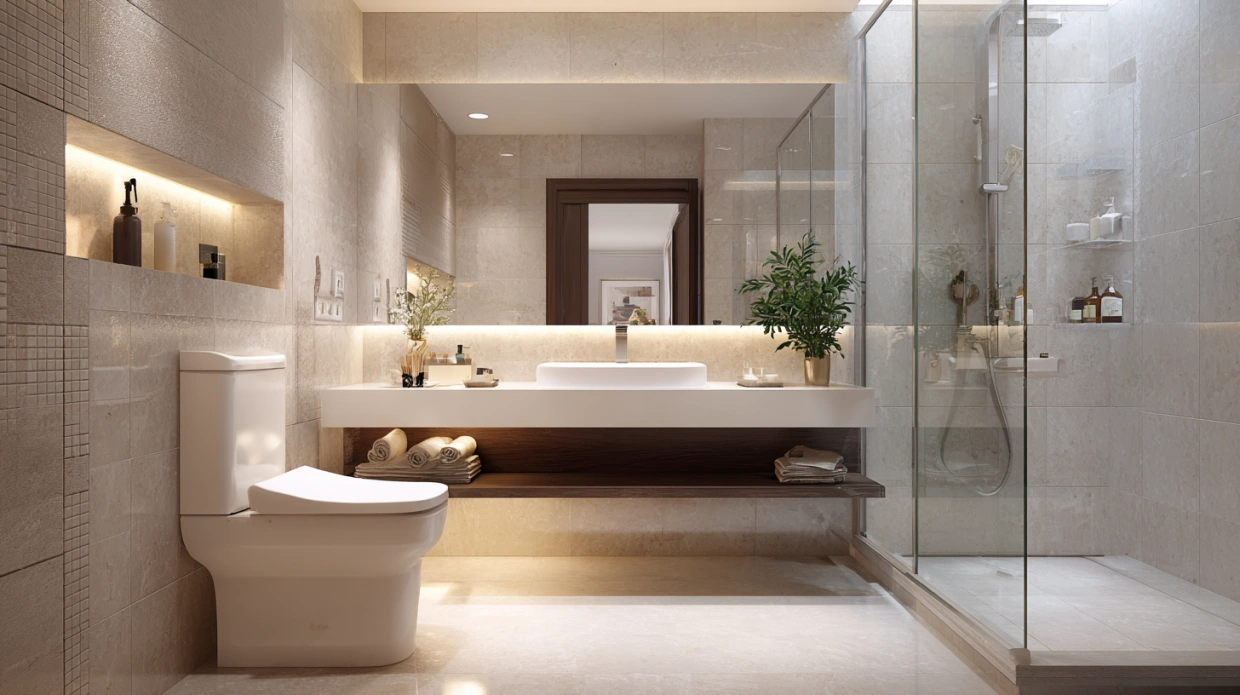

7.4K Views
Table of Contents
Small bathroom ideas focus on making the most of limited space without restricting movement or daily use. The design approach prioritises space-saving layouts, compact fixtures, and structured storage that fits within tight floor areas. Wall-mounted fittings, light colour palettes, and large mirrors help reduce visual density and improve openness. Most small bathroom design ideas rely on vertical storage, glass partitions, and minimal surface variation to maintain clarity. Whether planning tiny bathroom ideas for apartments or very small bathroom ideas in India, the goal is to create a clear layout, usable storage, and a visually open environment.
Quick Overview of Small Bathroom Design
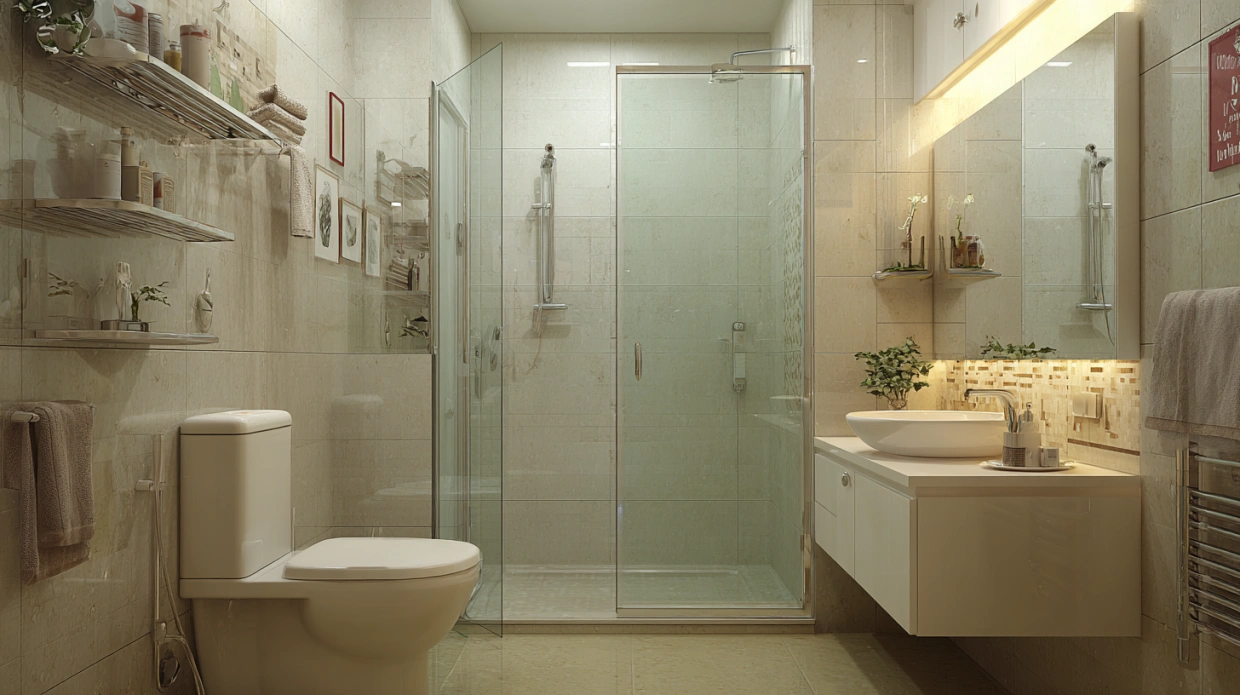
Small bathroom planning depends on key factors such as size, fixture selection, storage approach, and lighting. These elements together determine how efficiently the space functions on a daily basis. Smart bathroom design ideas can also help improve both functionality and visual appeal in compact spaces.
| Feature | Details |
| Ideal Size | Usually under 50 sq ft, where compact layouts are required to fit essential fixtures without restricting movement |
| Best Colours | Light tones such as white, beige, and pastels help improve brightness and reduce visual heaviness |
| Storage Options | Recessed niches, mirror cabinets, and wall-mounted units keep essentials organised without blocking floor space |
| Fixtures | Compact WC, wall-mounted basin, and corner or linear shower setups suited for tight layouts |
| Lighting | Layered lighting using ceiling LEDs and mirror lights ensures even illumination across all zones. |
10 Small Bathroom Design Ideas for Modern Homes
Small bathroom design ideas focus on space-saving layouts, efficient fixture placement, and light-enhancing finishes. The right combination improves movement, maintains openness, and ensures the bathroom remains practical for daily use.
Recommended Reading
18 Modern Hanging Light Ideas to Transfo...
396K Views


23 Modern Wall-Mounted Dining Table Desi...
107.3K Views

Wooden Partition Walls for Living Room -...
27.6K Views
35 Bedroom POP Ceiling Design Ideas for ...
26.4K Views
Best 15 Stylish and Secure Iron Window G...
25K Views
1. Wall-Mounted Sink Bathroom

A wall-mounted sink is fixed directly onto the wall, leaving the floor below open. This creates a visible floor area right from the entrance, making narrow bathrooms feel less restricted. The plumbing is concealed within the wall, and a slim ledge or mirror cabinet above the basin handles basic storage without crowding the layout.
| Parameter | Details |
| Space Suitability | Works well in narrow bathrooms and powder rooms, where keeping the floor visually open improves movement |
| Key Feature | The basin is fixed to the wall with concealed plumbing, leaving the floor area below completely free |
| Storage | Limited to mirror cabinets or small side ledges to avoid adding bulk below the basin |
| Layout Impact | Creates immediate openness at entry by removing base units and visual obstruction |
| Practical Use | Simplifies cleaning and keeps the layout uncluttered for everyday use |
2. Floating Vanity Bathroom
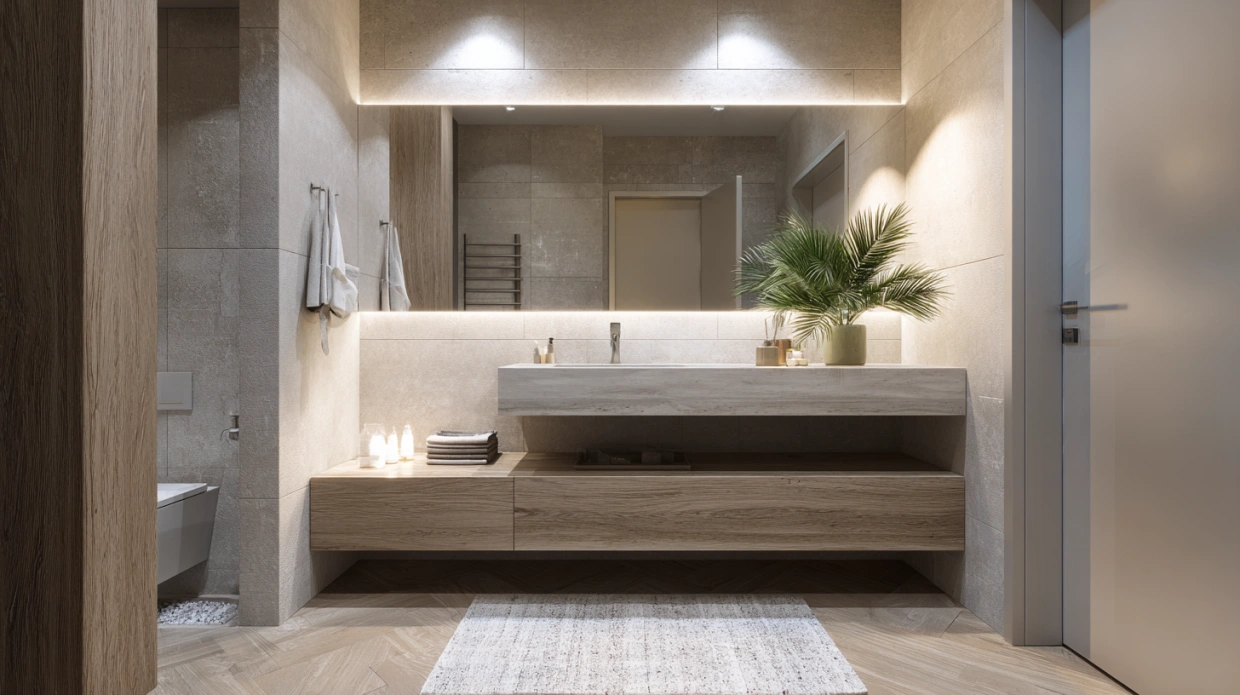
A floating vanity runs along one wall with storage built into drawers or shutters, but without touching the floor. This keeps storage accessible while allowing the eye line to continue underneath, which helps the bathroom feel wider. The countertop integrates the basin, and the area below stays clear for cleaning.
| Parameter | Details |
| Space Suitability | Suitable for small rectangular bathrooms where both storage and openness are required |
| Key Feature | Wall-mounted vanity unit with integrated basin and concealed storage within |
| Storage | Provides organised storage through drawers or cabinets without occupying floor space |
| Layout Impact | Maintains visual continuity across the floor, making the bathroom appear wider |
| Practical Use | Balances storage needs with easy maintenance and accessible counter space |
3. Corner Shower Bathroom
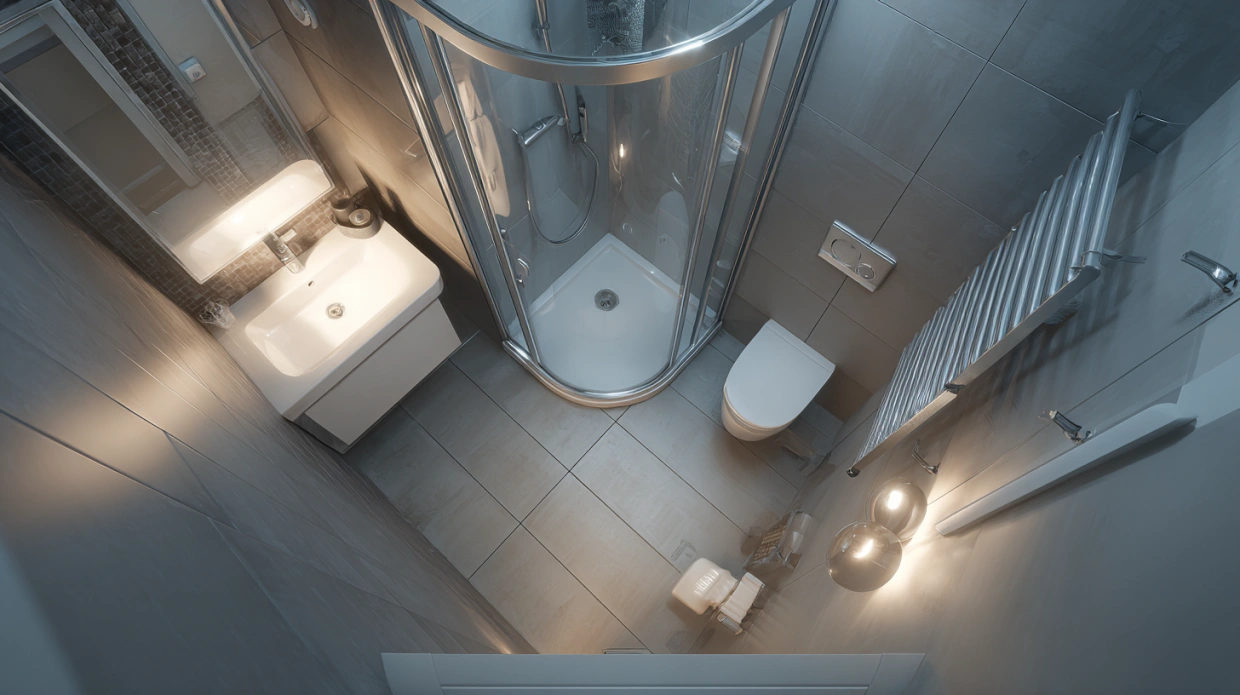
The shower is positioned in one corner, usually enclosed with two glass panels or a curved partition. This keeps water contained within a defined zone while leaving the rest of the bathroom dry. The remaining walls can then be used for the sink and WC without overlap.
| Parameter | Details |
| Space Suitability | Ideal for compact square layouts where corner space can be efficiently utilised |
| Key Feature | Shower enclosure positioned in a corner using glass or curved partitions |
| Storage | Shower niches can be integrated within the wall for essentials without protrusion |
| Layout Impact | Clearly separates wet and dry zones while preserving central movement space |
| Practical Use | Keeps the rest of the bathroom dry and usable during and after showers |
4. Glass Partition Bathroom
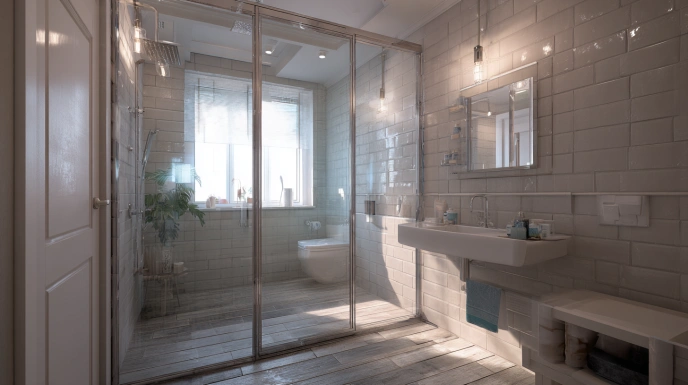
A straight glass panel divides the shower area from the rest of the bathroom without visually blocking the space. Unlike solid partitions, it allows light to pass through, so even a small bathroom retains depth from one end to the other.
| Parameter | Details |
| Space Suitability | Works in small to medium bathrooms where zoning is needed without closing off space |
| Key Feature | Transparent glass partition used to separate the shower area from the rest |
| Storage | Storage planning remains independent of the partition and can be wall-mounted |
| Layout Impact | Maintains full visual depth across the bathroom while defining functional zones |
| Practical Use | Prevents water spread while keeping the space visually open |
5 Mirror Wall Bathroom
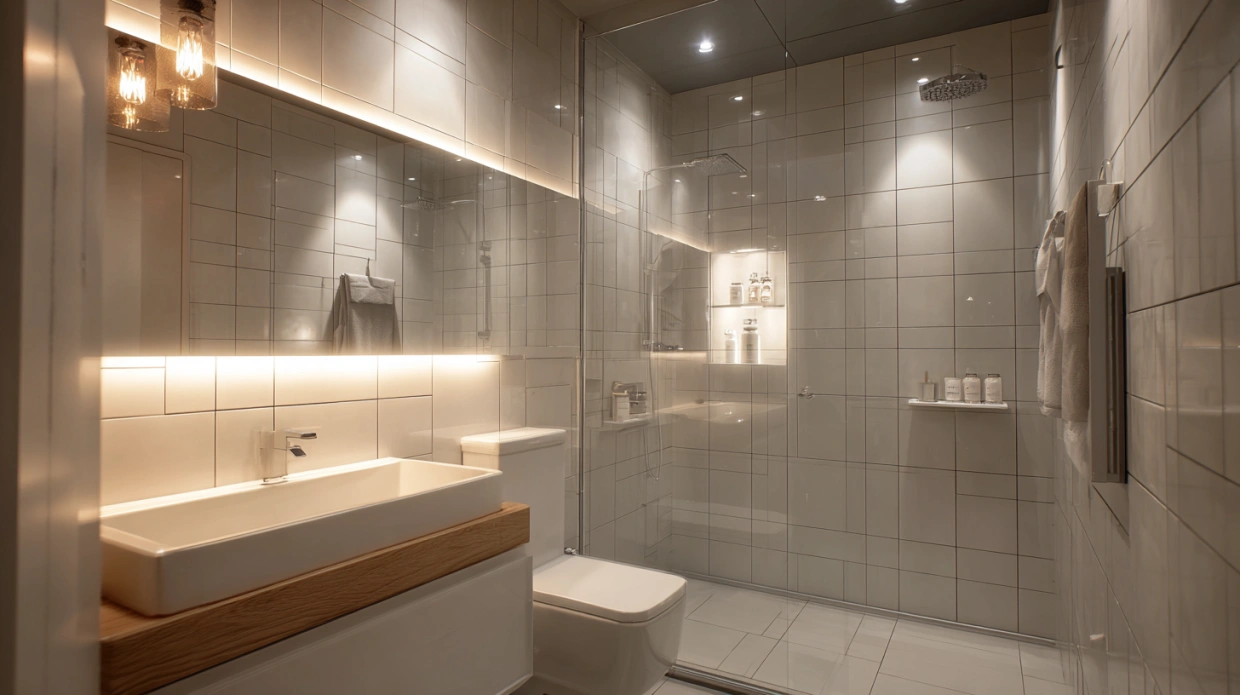
A large mirror spans the width of the wall above the vanity, reflecting both light and the wall opposite. This visually doubles the bathroom's depth, especially when paired with neutral tiles and good lighting. Storage is often hidden behind the mirror.
| Parameter | Details |
| Space Suitability | Best suited for enclosed small bathrooms that lack natural depth |
| Key Feature | Full-width mirror or mirrored cabinet installed above the vanity |
| Storage | Can integrate concealed storage behind mirror panels without adding visible bulk |
| Layout Impact | Expands perceived depth by reflecting light and opposite surfaces |
| Practical Use | Improves brightness and adds functional storage without clutter |
6. Compact Storage Bathroom Design
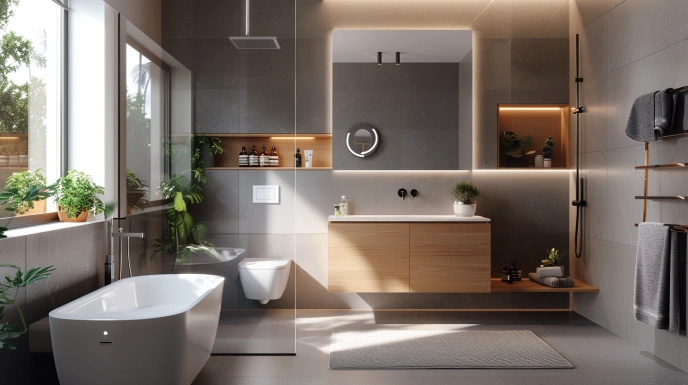
This design focuses on using vertical wall space and built-in sections to organise essentials without occupying the floor. Storage is integrated into walls through recessed niches near the shower, tall cabinets along unused corners, and mirror cabinets above the basin, making it a practical feature often used in compact bathroom design ideas.
| Parameter | Details |
| Space Suitability | Works well in small bathrooms where floor space is limited but storage needs are high |
| Key Feature | Built-in niches, vertical cabinets, and mirror storage integrated into walls |
| Storage | High, with multiple levels of concealed and open storage options |
| Layout Impact | Keeps central floor area free by shifting storage to vertical surfaces |
| Practical Use | Helps organise toiletries and utilities without creating visual or physical clutter |
7. Bath Cum Powder Room Design
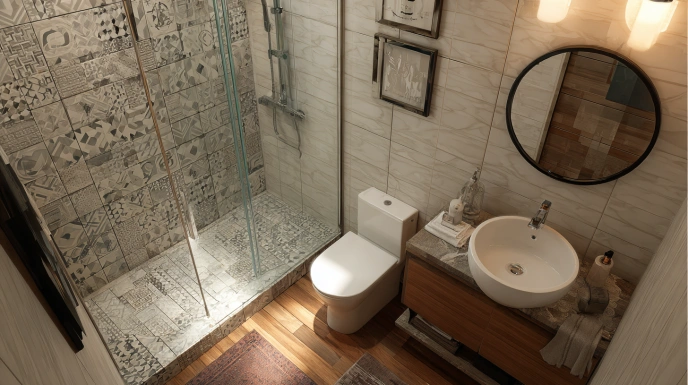
This layout combines a WC, a compact basin, and a shower within a tight footprint, often placed along two adjacent walls. Fixtures are aligned to avoid overlap, with the shower placed at one end and the basin positioned closer to the entrance for easy access.
| Parameter | Details |
| Space Suitability | Suitable for small homes where one bathroom serves multiple functions |
| Key Feature | Combined layout integrating basin, WC, and shower within limited space |
| Storage | Minimal storage through small wall-mounted cabinets or shelves |
| Layout Impact | Requires careful alignment of fixtures to maintain usability |
| Practical Use | Supports both daily use and guest access within a single compact space |
8. White Powder Room Design
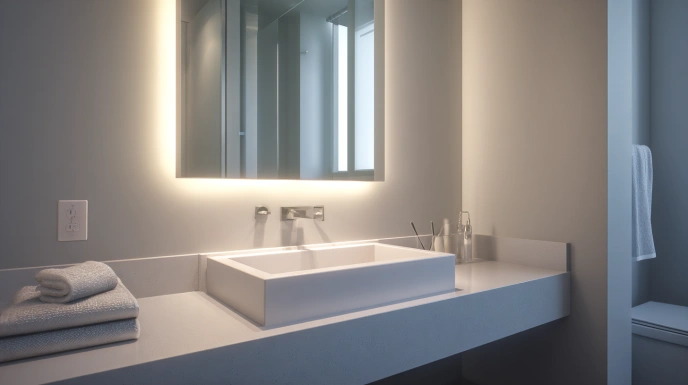
The entire space uses light-toned tiles, usually white or off-white, across walls and floor. This reflects light evenly, reducing shadows and making edges less prominent. Fixtures are kept minimal, often with a compact basin and a simple mirror, following the clean and functional approach seen in minimalist bathroom design ideas.
| Parameter | Details |
| Space Suitability | Ideal for very small powder rooms where brightness improves perception of space |
| Key Feature | Consistent use of white or light finishes across walls and flooring |
| Storage | Limited and often concealed to maintain a clean visual surface |
| Layout Impact | Softens boundaries and reduces visual breaks within the space |
| Practical Use | Keeps the bathroom visually clean and easy to maintain |
9. Multipurpose Small Bathroom Design
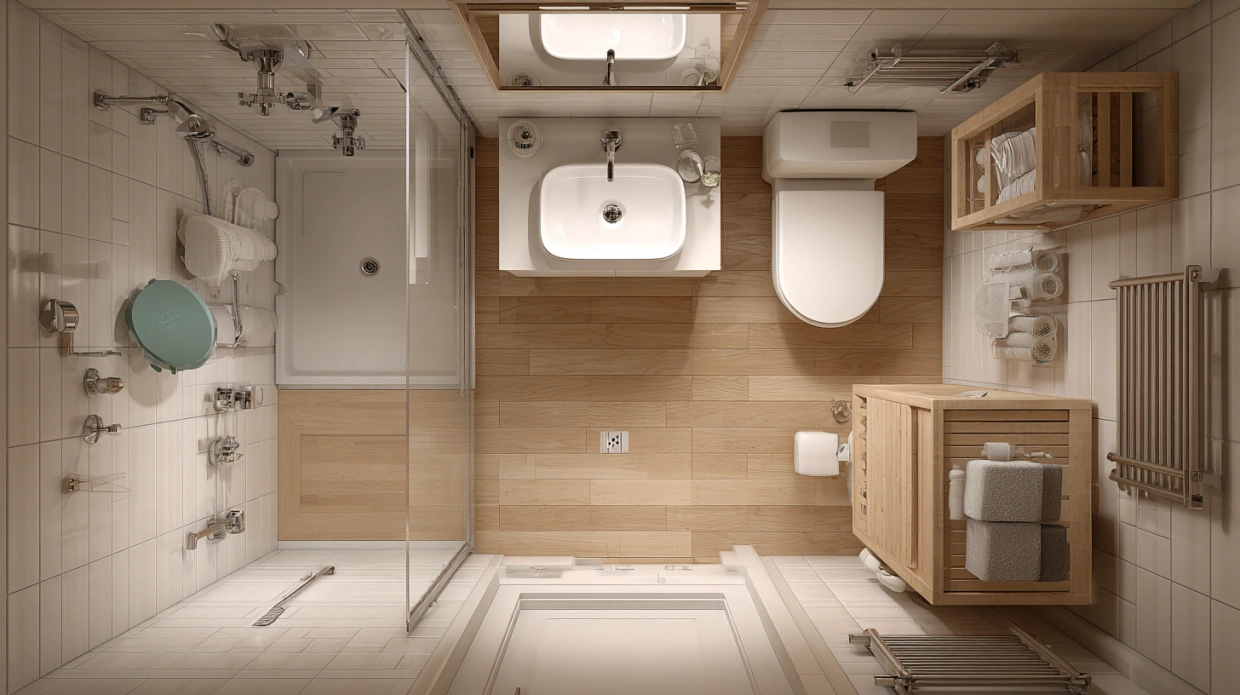
This layout integrates storage along vertical walls, sometimes including a tall unit for toiletries, cleaning supplies, or utility use. Fixtures are arranged along one or two walls to leave the centre clear, allowing multiple functions within a compact space.
| Parameter | Details |
| Space Suitability | Works in compact homes where bathrooms also handle storage or utility needs |
| Key Feature | Vertical storage units integrated alongside essential fixtures |
| Storage | High storage capacity through tall units and wall-mounted cabinets |
| Layout Impact | Keeps the central floor area free for movement despite added storage |
| Practical Use | Supports multiple uses without overcrowding the layout |
10. Small Yet Luxurious Bathroom Design
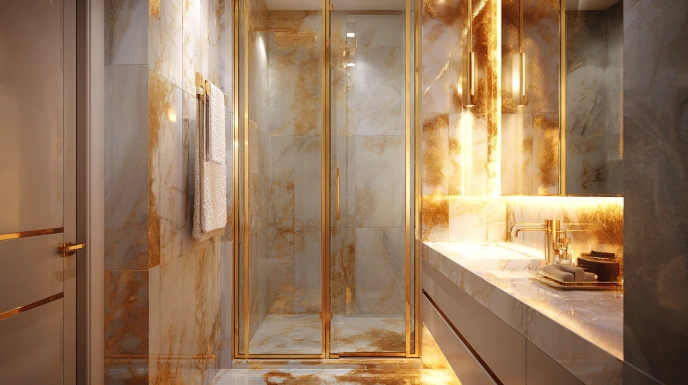
The layout remains compact, but materials such as textured tiles, stone counters, and concealed lighting add depth. Fixtures are placed with tighter spacing, and lighting highlights specific areas, such as the mirror or shower wall, creating a more refined look often seen in luxury bathroom design concepts without increasing space.
| Parameter | Details |
| Space Suitability | Suitable for compact bathrooms where finish quality is prioritised |
| Key Feature | Use of premium materials and layered lighting within a small layout |
| Storage | Integrated storage designed to blend with overall finishes |
| Layout Impact | Enhances depth and detailing without altering the layout size |
| Practical Use | Focuses on long-term material performance along with refined aesthetics |
Key Elements of Small Bathroom Design
A small bathroom works well when the layout, fixtures, and finishes are planned together. Decisions around placement, storage, and materials directly affect how the space functions, how easy it is to maintain, and how much the renovation will cost.
The following elements are typically considered while planning a compact bathroom layout:
- Layout and fixture placement:The basin, WC, and shower are usually arranged along one wall or two adjacent walls to keep the centre area clear and usable.
- Right-sized sanitaryware: Compact WCs, smaller basins, and corner showers help fit all essentials without restricting movement.
- Storage planning: Wall niches, mirror cabinets, and slim units are used to store daily items without occupying floor space.
- Floor slope and drainage: Proper slope towards the drain ensures water flows out easily and does not spread across the bathroom.
- Material selection: Floor tiles need to be anti-skid, while wall finishes should handle moisture and regular cleaning.
- Lighting and ventilation: Good lighting near the mirror and proper ventilation keep the bathroom usable and reduce dampness.
Small Bathroom Renovation Cost in India
Once these basics are decided, the renovation cost depends on how each element is executed. Choices around tiles, fittings, and plumbing changes directly influence the overall budget, especially in smaller spaces where every component is closely placed.
| Category | Estimated Cost Range | What It Covers |
| Basic Renovation | ₹50,000 to ₹1,00,000 | Standard tiles, basic WC and basin, minimal plumbing work |
| Mid-Range Renovation | ₹1,00,000 to ₹2,50,000 | Branded fittings, better tiles, partial plumbing adjustments |
| Premium Renovation | ₹2,50,000 to ₹5,00,000+ | Premium tiles, glass partitions, concealed plumbing, upgraded fixtures |
Cost By Bathroom size:
| Bathroom Size | Estimated Cost |
| 25–35 sq ft | ₹30,000 to ₹70,000 |
| 35–55 sq ft | ₹70,000 to ₹1,50,000 |
| 55–80 sq ft | ₹1,50,000 to ₹3,30,000 |
Best Colours for Small Bathrooms
Light, neutral colours such as white, beige, and soft grey reflect light evenly, reduce visual boundaries, and make small bathrooms appear more open and continuous. Colour directly affects how a small bathroom feels in terms of space, comfort, and usability. Light shades like white and off-white reflect more light, making the room feel open and less confined. Soft greys and beiges add warmth without reducing brightness, helping the space feel balanced rather than stark.
Cool tones such as light blue or pale green create a sense of calm and cleanliness, which works well in bathrooms used frequently. Dark colours, when used across all surfaces, tend to absorb light and visually reduce space, but they can still be applied in controlled areas like accent walls or lower sections to add depth without closing in the layout.
Tips to Make a Small Bathroom Look Bigger
Small bathrooms appear larger when surfaces remain visually continuous, and light is evenly distributed. Reducing clutter and keeping fixture placement simple helps maintain usable space.
Key Tips
- Align fixtures along one wall where possible: A linear layout reduces visual complexity and improves movement within a limited space.
- Maintain a consistent colour palette: Use similar tones across walls and flooring to avoid visual breaks and create a continuous surface.
- Use large-format tiles: Larger tiles reduce grout lines, making the bathroom feel less fragmented and easier to scan visually.
- Install a wide mirror above the basin: A full-width mirror reflects both light and surfaces, increasing perceived depth.
- Choose wall-mounted fixtures: Wall-mounted basins and vanities keep the floor visible, improving the sense of openness.
- Use glass partitions for wet areas: Glass allows light to pass through while separating zones without closing off the space.
- Limit contrast in materials and finishes: Too many contrasting elements divide the space visually. Keep finishes within a similar range.
- Incorporate built-in storage: Recessed niches and slim cabinets reduce projection into the layout and keep movement areas clear.
- Ensure even lighting across the bathroom: Proper lighting reduces shadows, making corners and edges feel less enclosed.
4 Things to Consider While Designing a Small Bathroom
Planning a small bathroom requires clarity in layout, fixtures, and overall use of space. The right decisions at the start help avoid clutter, improve movement, and ensure the bathroom remains practical for daily use without feeling restricted.
1. Plan the Layout Based on Daily Use: Start with how the bathroom will be used rather than how it should look. Shower type, storage needs, and user habits should guide the layout. Use the space accordingly for bathing, movement, and ventilation, ensuring the arrangement supports daily routines without overcrowding the available area.
2. Plan Lighting with Purpose: Lighting should support both visibility and comfort. Use bright white light near the mirror for grooming and softer tones near the bathing area. Combine ceiling lighting with mirror lighting to avoid shadows. Plan electrical points early to ensure proper placement without last-minute adjustments.
3. Choose Fixtures That Fit the Space: Select fittings based on available space instead of trends. Large vanities or bulky fixtures can restrict movement in smaller bathrooms. Use wall-mounted units, built-in storage, and compact fittings to maintain a clear layout while ensuring all essential functions remain accessible.
4. Maintain Consistency with Interior Style: The bathroom should align with the overall design of the home. Use similar colours, finishes, or materials to maintain continuity across spaces. Avoid mixing unrelated styles, as this can break visual flow and make the bathroom feel disconnected from the rest of the home.
Why Planning Matters in Small Bathroom Design?
Bathrooms often get less attention during design, yet they require careful planning, especially in smaller homes. A well-designed layout improves usability and prevents clutter. Professional guidance helps align layout, materials, and fittings to make the best use of available space without unnecessary adjustments later.
Why Choose NoBroker Interior Design Services?
Designing a small bathroom requires careful planning of layout, fixtures, and finishes to make the most of limited space. The right design approach ensures that movement remains comfortable, storage is sufficient, and the space feels open despite its size. NoBroker Interior Design Services supports this process end to end, from layout planning and 3D design to material selection and installation. With a single team managing the project, homeowners can move forward with clear plans, defined costs, and interiors that are built to match everyday needs.

Frequently Asked Questions
How do you design a small bathroom?
Which colour is best for small bathrooms?
How can I make a small bathroom look bigger?
What is the best layout for a small bathroom?


Our Recent Projects



Reviews

Tapas Ghosh

NoBroker Interior offered some nice ideas for improving the look and functionaliity of my living space & genuine , team

Dharohar Interiors
Costing is really good compared with others and consultant was really good experience

yuvraj srivastava
The showroom is amazing,and the consultant are really helpful with the query,happily on-boarded here today

Uma Maheswara Reddy
Experience centre was nice, they explained about each every material very well.

Varun Thammaiah
Tharun Kumar has done an excellent job as the Project Manager. He is professional, supportive, and ensures everything is handled smooth... Read more

Dimpal Sharma
Really happy with the interior service. The team was professional, understood our requirements well, and completed the work neatly. The... Read more

Sriya
The designs are very unique I am really impressed by the teamwork overall it's a very affordable they deliver the work in good budget thanks

Sathish Kumar G
Interior installation & executions feel good.

Rakesh raj Chauhan
Good center

Hanma
The team was responsive to my queriies and explained the interior work process clearly. Truly amazing 🤗

Anshita Shrivastava
I liked the focus on storage, layout, and small details that made the rooms feel more organised without compromisiing on stylee. The ov... Read more

Punam Nath
The interior team was professional and understood our requirements well. The overall experiience was smooth and satisfactory.

Divya N Raj
Whitefield Experience centre is very good

Trina chatterji
I was pleased with the overall interior planning. The suggestions were useful, and the final setup felt comfortable and well organized.

Akshay Bogar
It was an amazing experience with Nobroker interiors. They understood what we wanted and delivered better than I had anticipated. Uday ... Read more

Shiva Mathuriya
Team is very nice & interior planning ideas offered a nice balance between functionaility and aesthetics. The suggestions helped make ... Read more

Anamika Banik
Good interior service with clear communication and helpful suggestions. The work was completed neatlyyyy

Deepak Ridlan
I liked how the team approached the design process. They considered my requirements and helpeed me explore different styles and layouts.

Riya Shukla
Good service and creative ideas. The team helped me chooose suitable coloours, furniture and layouts. I liked how the design matched my... Read more

Nitin Kumar Mandilwar
Good work done by project manager Manoj. Completed the work in time.

Divyanshu Mehta
Great work done by designer Divya and Govardhan. Hassle free work snd best part is they will customise everything as per need exactly. ... Read more

Jason Fernandes
I had a great experience here. When it comes to planning, delivery and execution, great work was done by the team members. Suhail Khan... Read more

Swathi Warker
Manoj is very responsive, finds solutions for all obstacles and provides ork around. He provides timely updates on work status. Manages... Read more

Nitin Prabhakar
Excellent Interior Design and Execution Experience . Thanks to manoj and Rakshitha for the kind support and cooperation

Mobi Apps
I am extremely happy with my home interior journey with NoBroker. The entire process was smooth, well-coordinated, and completed right ... Read more

Priya Sardar
Overalll, the interior planning experience was smooth, and I liked the practical approach to the design. GOOD DESIGN 👍🏻

Abhilash Tomar
Good experience

Rahber Khan
The interior work turned out well, and I liked how the team focused on making the space both stylish and functional. They were responsi... Read more

Khushi Wani
A smooth experience overall. From discussing ideass to finalizing the design, communication was helpful and the process was easy to follow.

yogesh
Recently did interior for 2BHK with NoBroker Interiors, and the overall experience has been great. Everyone has been extremely supporti... Read more

ashish jain
Great thanks to Riddhi & Sakshi for being so accommodating and flexible with all the requests and changes. They were able to complete d... Read more

DEEPAK MISHRA
*Disclaimer* for review This review is only for Project Manager Divyadeep and not for Nobrokers interior company, neither design team n... Read more

SAURABH KURADE
I am writing to recommend nobroker interior. Yes the initial stages of the project faced severe delays and communication challeng... Read more

Manav Chhabria
Working with this Nobroker interior team has been an absolute pleasure from start to finish! Every single member brought immense expert... Read more

Vikas Agrawal
I appreciate the attention to detail and the effort put into makiing the interiors look neat and functional.

Shiva Shankar
We had a wonderful experience with NoBroker Interiors for our new home at Primark Inspira. A special thanks to Abhishek for managing th... Read more

abhijit dey
Just wrapped up our home interiors with NoBroker Interiors here at Royal Orchids Apartments! A special shout-out to Project Manager Abh... Read more

T R Rao
We have done interior design and execution work in our 3 bhk flat in Hyderabad. We had a very pleasant experience with the entire proce... Read more

Adi Lakshmi Turlapati
We are extremely thankful to the TEAM NoBroker Interiors fir their wonderful work. Right from the designing stage to the execution stag... Read more

Chaitalee Vaidya
We had a very good experience with No broker The designer Sathvika was very good and patience in dealing and giving multiple options of... Read more

sri kiran
Got a satisfactory service from No broker interiors big Kudos to My project manager Abhishek on timely delivery and being patient with ... Read more

Chanikya Mamindlapalli
The service is good, Rizwan has actively responded to the issues we identified and rectified them in no time.

Savita Verma
We had a good experience working with Sapna for our home interiors. She understood our requirements well and was always open to our sug... Read more
Testimonials
View All
NoBroker Interiors Review | Happy Customer Testimonial by Rajani
NoBroker Interiors | Customer Testimonial by Prinyakar Polley

NoBroker Interiors | Hyderabad Customer Testimonial by Prashant Choudhary

NoBroker Home Interiors | Hyderabad 4BHK Customer Review

NoBroker Interiors Customer Testimonial | Jatan's Story
NoBroker Interiors Review | Hyderabad Customer Testimonial

NoBroker Interiors Review | Modern Dream Home Customer Testimonial
NoBroker Interiors Customer Testimonial | Fast & Quality Home Interiors

NoBroker Interiors Customer Testimonial | Pune Dream Home

NoBroker Interiors| Bangalore Customer Testimonial
NoBroker Interiors: Sports Theme Interiors by NoBroker #interiordesign #nobrokerinteriors #nobroker

NoBroker Interiors - Customer Testimonials

That 3 PM meeting where ideas turn into floor plans, materials, and magic. 💫

Your 2026 list is here.

Smart wardrobe design that fits your life, beautifully.
POV: You gave your home a holiday hug.🥰

Blink and you’ll miss the makeover.👀

When your home finally gets its own weekend mood, this bar unit does the job beautifully.

A calm pooja corner every home needs.

NoBroker Home Interior Service | Saurabh & Prachi Share Their Story #interiordesign #shorts
About the Author

Priyanka Jha
Author
Priyanka Jha is an architect with over 3+ years of professional experience designing functional, aesthetically pleasing spaces. With a strong academic background in Architecture, she has de





Recent Blogs
Subscribe to our Newsletter
Get latest news delivered straight to your inbox