Filters in Microwave Explained: Types, Uses, How to Clean and Replace with Maintenance Tips

31 Views
Table of Contents
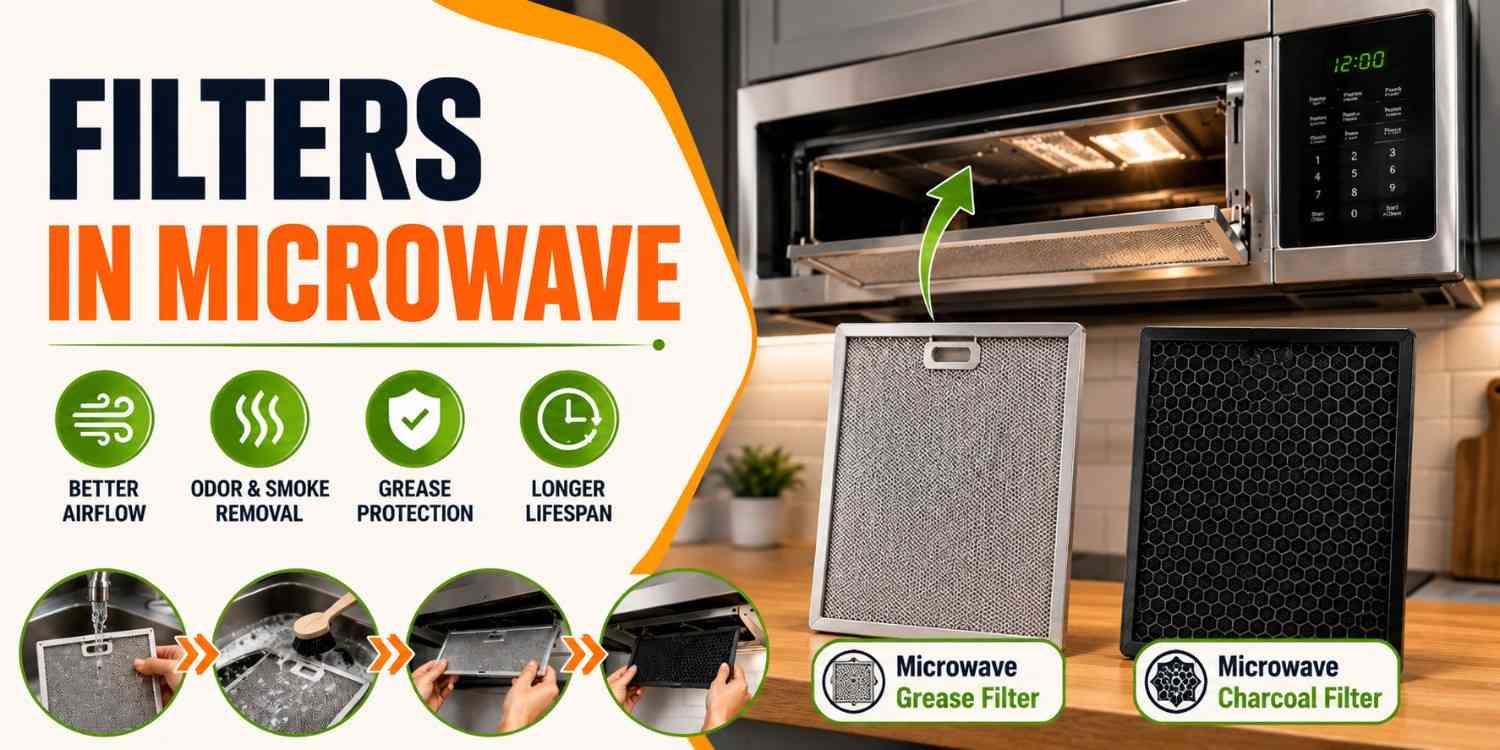
Microwave oven filters have an important part to play in ensuring that your microwave is kept clean and odorless. Regardless of whether you have a microwave charcoal filter, or a microwave grease filter, the truth is that each filter is designed for one purpose: to enhance air flow while at the same time capturing all smoke, grease, and odors. Different types of microwave filters can go a long way in extending the life of your appliance.
What Are Filters in a Microwave?
Filters for microwave systems are integrated parts meant to catch grease, smoke, oil droplets, and fumes from cooking. Since a microwave oven works by circulating heat and air around the cavity, these filters sit directly in that airflow path to trap particles before they spread.
Why Microwave Filters Are Important
Remove grease buildup and enhance microwave performance. Cleaning the filters can also help prevent any dust and oil from accumulating inside the microwave's interior parts.
- Increase ventilation efficiency
- Decrease the smoke and smell
- Prevent grease accumulation
- Ensure better air quality in the kitchen
- Extend microwave life span
- Enhance microwave cooking performance
Types of Microwave Filters – Quick Comparison Table
Various types of microwave filters are used for different functions, such as eliminating odors, grease collection, and regulating air flow. Knowing how to choose the appropriate microwave filter ensures efficient functionality of the device.
| Filter Type | What It Does | Can It Be Washed? | Where It Is Located | How Often to Replace |
| Microwave Grease Filter | Captures grease and oil particles | Yes | Bottom or underside of the microwave | Every 6–12 months |
| Microwave Charcoal Filter | Removes smoke and cooking odors | No | Behind the microwave vent panel | Every 6 months |
Different Types of Microwave Filters Explained in Detail
Different types of filters in microwave units serve diverse purposes. Some types are designed specifically for eliminating odors, while some have grease traps. Selecting an appropriate type of microwave exhaust filter will enhance the cooking experience.
1. Microwave Grease Filter
The microwave grease filter collects grease and oil continuously, so regular cleaning is necessary to maintain proper ventilation and reduce sticky buildup inside the microwave vent area. Filter washing works best when done alongside cleaning the microwave interior, since grease settles in both places at the same rate.
How It Works
- Uses fine metallic meshes
- Traps grease before air circulation
- Prevents oil accumulation inside vents
- Enhances the performance of air movement
Ideal For
- Families that cook frequently
- Frying and greasy foods
- Over-the-range microwave ovens
- Kitchen daily usage
2. Microwave Charcoal Filter
This type of filter is most commonly used in the filters installed in recirculating microwave ovens, especially since grilling and baking in convection mode produce far more smoke and lingering odours than simple reheating.
How It Works
- Activates charcoal material
- Removes odor particles from the air
- Cleanses smoke when cooking
- Enhances kitchen atmosphere
Ideal For
- Compact kitchens
- No-vent apartments
- Heavy grilling or reheating
- Highly odor-sensitive places
How to Know If Your Microwave Filter Needs Cleaning or Replacement
Over time, microwave filters tend to accumulate grease, dust, smoke, and food particles. Early warning signs will help you avoid bad ventilation, bad odors, and decreased microwave efficiency.
| Condition | What It Means | What You Should Do | Filter Type |
| Weak airflow | Blocked grease buildup | Clean or replace filter | Grease (Vent) filter |
| Strong cooking smells | Charcoal saturated | Replace filter | Charcoal (Carbon) filter |
| Visible grease layer | Filter clogged | Clean immediately | Grease (Vent) filter |
| Discoloration or damage | Filter worn out | Replace filter | Grease or Charcoal filter |
| Smoke lingering after cooking | Reduced filtration efficiency | Replace filter | Charcoal (Carbon) filter |
How to Clean Microwave Filters: Complete Step-by-Step Process
Microwave Grease Filter
The microwave grease filter collects grease and oil continuously, so regular cleaning is necessary to maintain proper ventilation and reduce sticky buildup inside the microwave vent area. It is best to pair filter cleaning with a full interior wash see our guide on how to clean a microwave for the complete routine.
Tools & Supplies Needed
- Warm water
- Dishwashing liquid
- Soft scrub brush
- Sponge
- Dry cloth
Step-by-Step Process to Clean
- Turn off and unplug the microwave
- Remove the grease filter carefully
- Soak the filter in warm, soapy water
- Scrub grease gently using a brush
- Rinse thoroughly with clean water
- Let the filter dry completely
- Reinstall the filter properly
Tips
- Avoid using harsh chemicals
- Clean monthly for best results
- Do not bend the metal mesh
- Dry fully before reinstalling
Microwave Charcoal Filter
A microwave charcoal filter cannot usually be washed because the charcoal material loses effectiveness after moisture exposure and heavy odor absorption over time.
Tools & Supplies Needed
- Soft dry cloth
- Screwdriver if needed
- Vacuum cleaner brush attachment
- Replacement filter if damaged
Step-by-Step Process to Clean
- Disconnect the microwave power supply
- Open vent or access panel
- Remove the charcoal filter carefully
- Lightly vacuum surface dust
- Wipe the surrounding vent area
- Reinstall the filter securely
Tips
- Do not soak charcoal filters
- Replace if odor remains strong
- Handle gently to avoid breakage
- Check manufacturer instructions
How to Replace Microwave Filters Safely and Correctly
Replacing microwave filters on time helps maintain proper airflow, odor control, and cooking efficiency. Always use compatible microwave filters or brand-specific replacements for the best results.
Microwave Grease Filter
Replacing a microwave grease filter becomes necessary when the mesh becomes damaged, excessively greasy, or difficult to clean properly after repeated washing cycles.
Tools & Supplies Needed
- New grease filter
- Soft gloves
- Cleaning cloth
Step-by-Step Process to Replace
- Turn off microwave power
- Remove the old grease filter
- Clean filter slot area
- Insert the new filter carefully
- Secure the filter into position
- Test microwave ventilation
Tips
- Match filter size correctly
- Use genuine replacement parts
- Avoid forcing the filter
- Replace damaged mesh immediately
Microwave Charcoal Filter
A microwave charcoal filter should be replaced regularly because charcoal loses odor-absorbing ability over time and cannot be fully restored through cleaning.
Tools & Supplies Needed
- Replacement charcoal filter
- Screwdriver
- Soft cloth
Step-by-Step Process to Replace
- Disconnect the microwave power supply
- Open filter access panel
- Remove the old charcoal filter
- Wipe dust from the compartment
- Insert a new charcoal filter
- Close the panel securely
Tips
- Replace every six months
- Install in the correct direction
- Buy compatible filter models
- Avoid touching the charcoal surface
What Are the Benefits of Well-Maintained Microwave Filters
Microwave filter maintenance leads to better kitchen hygiene, enhanced air circulation, and efficient microwave operation for food preparation and reheating. Clogged filters are also one of the few genuine reasons a microwave oven can be harmful to health, as trapped smoke and stale grease keep recirculating into your kitchen air.
- Better smell management
- Increased efficiency in airflow performance
- Fewer grease accumulations
- Cleaner kitchen surroundings
- Enhanced longevity of the microwave oven
- Low maintenance needs
Common Mistakes to Avoid When Using Microwave Filters
Microwave filtering problems arise due to ineffective cleaning, late replacement, and poor installation procedures that result in reduced airflow and ventilation capacity.
- Overlooking routine cleaning
- Cleaning non-cleanable charcoal filters
- Installing the wrong filter sizes
- Recycling used filters
- Using strong cleaning materials
- Failure to replace on time
Tips to Maintain Microwave Filters for Better Performance
Maintenance is necessary for microwave oven filter systems to operate effectively by minimizing grease buildup, smoke circulation, and offensive cooking smells.
- Clean grease filters every month
- Change charcoal filters regularly
- Check vent flow often
- Install factory replacement filters
- Clean around vent areas
- Refer to manufacturer guidelines brand manuals such as the Samsung microwave guide specify exact filter locations and replacement intervals
Conclusion
In a microwave system, filters play a vital role in ensuring that air quality is preserved by removing odors and enhancing ventilation in the kitchen. Using the right kind of microwave grease filter, or microwave charcoal filter, and performing routine cleaning and replacement ensures that there is better functionality in addition to prolonging the lifespan of the appliance.
Cities We Serve for Microwave Repair & Services
NoBroker delivers microwave repair services in Hyderabad, Bangalore, Chennai, Delhi, Mumbai, Ghaziabad, Noida, Faridabad, and more cities with a 180-day warranty and quick 15-minute technician support.
Brands We Cover for Microwave Repair Services
NoBroker provides microwave repair services for Samsung, LG, Whirlpool, IFB, Panasonic, Godrej, and Bosch, covering solo, grill, and convection models using 100% genuine spare parts for long-lasting performance.
Frequently Asked Questions
1. What is the purpose of microwave oven filters?
2. How frequently should you clean the microwave grease filter?
3. Are microwave charcoal filters washable?
4. Where is the microwave grease filter placed?
5. When does the microwave filter require changing?
6. Is it easy to find LG microwave filter replacements?
7. What is the difference between charcoal and carbon microwave filters?
8. Does having dirty filters impact the performance of microwaves?
9. Do all over-the-range microwaves come with filters?
10. How long do microwave oven filters last?

Login / Sign up
Zero Brokerage.
Thousands of new listings daily.
100 Cr+ Brokerage saved monthly.
About the Author

Siri Hegde K
Senior Editor


Recent Blogs

Subscribe to our Newsletter
Get latest news delivered straight to your inbox