Convection Mode in a Microwave: How It Works, When to Use It & Cooking Tips

46 Views
Table of Contents
The convection mode in a microwave is a game-changer for modern kitchens, combining speed with versatility. No matter whether you are going to bake, roast, or grill anything, the convection mode of a microwave will guarantee uniform heating and good results. Starting from Samsung microwave convection mode to convection mode in LG microwave, Whirlpool microwave, Bosch, and Godrej microwaves, there are many microwaves where you can find convection mode, which will help you achieve perfect oven-like cooking at home.
What is Convection Mode in a Microwave?
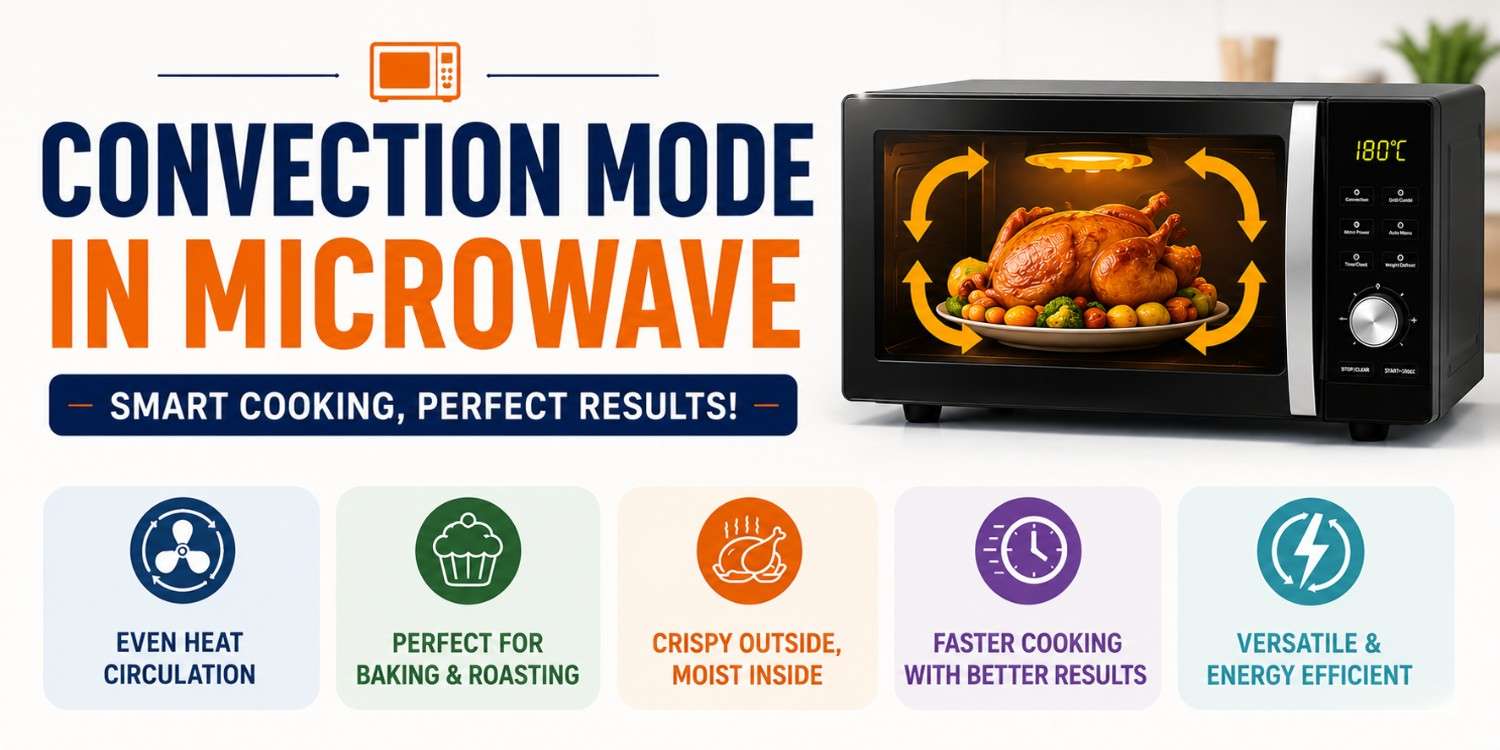
The convection mode in a microwave is an operating feature of a microwave oven that uses a fan and heating coil to distribute hot air within the oven. In contrast to conventional heating methods, the convection mode in a microwave oven guarantees even cooking, which is ideal for baking, roasting, and grilling.
How Convection Mode in a Microwave Actually Works
While using convection mode, the hot air is produced by the heating element and circulated inside the oven with the help of an internal fan to make the food warm. In other words, there will be an even temperature distribution inside the oven when using convection mode rather than conventional mode in the microwave.
Step-by-Step Working of Convection Mode
- Hot air is produced by the heating element
- Internal fan circulates heat evenly
- Temperature distribution is even throughout the oven
- Food warms up uniformly on all sides
- Outer layer becomes crisp while inside stays moist
How to Use Convection Mode in a Microwave
Convection mode usage in microwaves becomes quite easy when you know the basics. Regardless of whether you have an IFB microwave convection mode or a Whirlpool microwave convection mode, there is not much difference in their operation. Correct settings and preheating will provide you with the best results possible.
Steps:
- Choose convection mode
- Set desired temperature
- Preheat your microwave
- Insert food in appropriate cookware
- Set the cooking duration and start
Tip: Preheat for 5-10 minutes to get optimal results
When Should You Use Convection Mode?
- Baking cakes, cookies, and bread
- Roasting vegetables and chicken
- Preparing pizza and other baked foods
- Grilling paneer and meats
- Dishes that require dry heat
When Should You Avoid Convection Mode?
- Heating up leftover food
- Thawing/Defrosting frozen food
- Preparing easy liquid-based dishes
- When quick heating is required
- Where moisture retention is important
What Is the Ideal Cooking Time and Temperature for Convection Mode?
The cooking period and temperature while using a convection setting are based on the kind of meal. Convection cooking involves using lower temperatures compared to conventional cooking while ensuring an even cooking process.
| Food Item | Temperature | Cooking Time | Notes |
| Cake | 160–180°C | 25–35 mins | Preheat required |
| Pizza | 180–200°C | 15–20 mins | Use a baking tray |
| Chicken | 180°C | 30–45 mins | Turn halfway |
| Cookies | 160–170°C | 10–15 mins | Even spacing |
| Vegetables | 180°C | 20–30 mins | Toss with oil |
| Bread | 180–200°C | 25–30 mins | Use the middle rack |
| Paneer Tikka | 200°C | 15–20 mins | Brush with oil for a grilling effect |
Difference Between Convection, Microwave, and Grill Modes
The convection setting is designed for heating up using warm air, while the microwave setting involves heating up using electromagnetic waves. The grill setting is intended to provide heating at the top for making foods crispy.
| Feature | Convection Mode | Microwave Mode | Grill Mode |
| Heating Type | Hot air circulation | Radiation waves | Direct heat |
| Best For | Baking & roasting | Reheating & cooking | Grilling |
| Texture | Crispy outside | Soft | Brown & crisp |
| Time | Moderate | Fast | Moderate |
| Preheating Required | Yes | No | Sometimes |
| Utensils Used | Metal, glass | Microwave-safe only | Grill-safe utensils |
Pros and Cons of Using Convection Mode in a Microwave
This mode helps to enhance the food preparation process in that the heat will be evenly distributed throughout. Convection mode is best suited for baking and roasting, but not ideal for heating purposes.
Pros:
- Uniform food preparation without having any cold or hot spots
- Ideal for baking cookies, pastries, and bread
- Provides a crunchy exterior and a soft interior for the food
- Effective for roasting meat and vegetables
Cons:
- Not as fast as the regular microwave mode
- It requires pre-heating before the food is cooked
- More energy consumption during its use
- Proper equipment is needed during usage
Common Mistakes to Avoid When Using Convection Mode
Correct use of convection mode is key to ensuring even cooking and perfect texture. Common errors include:
- No preheating, resulting in uneven cooking and texture problems
- Wrong cookware, interfering with heat circulation, and damaging the appliance
- Too many items inside the oven, leading to reduced air circulation and thus poor cooking
- Improper temperature settings resulting in overcooked or undercooked food
- Opening the door too often results in heat loss
Tips for Using Convection Mode in a Microwave Effectively
To get the most out of convection cooking, there are some basic guidelines you should follow, which will help increase efficiency and make sure that every dish is cooked perfectly in terms of flavor and texture.
- Preheat your oven before use to make sure it achieves the required temperature.
- Use only metal pans or those designed for convection ovens.
- Keep an appropriate distance between food items to allow for even air flow.
- Follow the cooking times recommended by recipes to ensure proper cooking.
Final Thoughts
Convection mode in microwave ovens combines the functions of an ordinary oven in one handy device. If you want to know how to use Samsung microwave convection mode, convection mode in LG microwave, IFB, Whirlpool, Bosch, or Godrej microwave convection mode, then it is time to learn about this innovative way of cooking. You can easily prepare your food through baking, roasting, and grilling in your kitchen without any problem.
NoBroker Microwave Repair & Services Across Major Cities in India
NoBroker provides microwave repair services across Delhi, Noida, Mumbai, Pune, Bangalore, Chennai, Hyderabad, and many more cities with 15-minute technician assistance for quick doorstep support.
Brands We Serve for Microwave Repair Services
NoBroker provides microwave repair services for Samsung, LG, IFB, Whirlpool, Panasonic, Godrej, Bosch, and more, covering solo, grill, and convection models with expert technicians and reliable service support.
Frequently Asked Questions
1. What is the micro plus convection mode in a microwave?
2. What is the purpose of using the convection mode in a microwave?
3. Can I bake a cake in convection mode in the microwave oven?
4. Is it necessary to preheat for convection mode?
5. What utensils can be used in the convection mode?
6. What is the difference between the convection mode and the microwave mode?
7. Is it possible to employ the convection mode to reheat foods?
8. Does the convection mode use more power?
9. What does conventional mean in the microwave mode?
10. Can I cook multiple dishes at the same time in convection mode?

Login / Sign up
Zero Brokerage.
Thousands of new listings daily.
100 Cr+ Brokerage saved monthly.
About the Author

Siri Hegde K
Senior Editor


Recent Blogs

Subscribe to our Newsletter
Get latest news delivered straight to your inbox