The 5 lakh budget house plan offers an affordable way to build a functional home in 2026, especially in rural and emerging urban areas. With construction costs typically ranging from ₹1,000 to ₹ 1,500 per sq ft, this budget can accommodate a compact 300-500 sq ft layout with essential living spaces. A 5 lakh budget home can be built using economical materials such as fly bricks, prefabricated components, and basic flooring. Eligible families may also benefit from PMAY Gramin assistance of up to ₹1.5 lakh, helping reduce cost and improve the overall quality and size of the home.
5 Lakh Budget House Plan - Quick Info
A 5 lakh budget house can be a practical choice for families seeking affordable homeownership in 2026. With smart planning, compact layouts, and cost-effective materials, this budget can support a comfortable home while also qualifying for government housing assistance schemes.
| Feature | Details |
|---|
| Total Budget | ₹ 5,00,000 |
| Approximate Area | 300–500 sq f* |
| Structure Type | Single-floor compact house or expandable starter home |
| Construction Time | Approximately 3-6 months |
| Ideal For | Small families / First-time homeowners |
| Possible Construction Cost / sq ft* | ₹1,000-₹1,500/sq ft in rural/Tier-3 areas; ₹1,500-₹2,500/sq ft in Tier-2/Tier-1 cities |
| Alternate Cost Estimate (urban mid-range) | Eligible beneficiaries may receive PMAY Gramin support of up to ₹1.5 lakh |
What Does ₹5 Lakh Actually Build in India?
A ₹5 lakh budget can build a small but functional home, depending on the location and construction costs. Simple 5 lakh budget house plans are most practical in rural and Tier-3 areas, where lower labour and material costs allow for larger living spaces within the same budget.
| Area Type | Realistic Size at ₹5 Lakh | Construction cost per sq ft | Land cost included |
|---|
| Rural / Tier-3 Areas | 350–500 sq ft | ₹1,200-₹1,800 | No |
| Tier-2 Cities | 250–350 sq ft | ₹1,600-₹2,500 | No |
| Tier-1 Cities | Generally not feasible without subsidies such as PMAY | ₹2,000-₹4,500+ | No |
Note: Estimates are for basic construction only and may vary based on location, materials, labour rates, and design requirements.
Understanding The Basics Of Building A House
Building a house starts with understanding your budget, plot size, construction costs, and space requirements. Careful planning helps avoid unexpected expenses and ensures every square foot is used efficiently. Whether you're exploring the best home design under 5 lakhs or planning a larger project, choosing the right layout, materials, and construction method is key to creating a durable and comfortable home.
- Establish A Budget: A realistic budget must be in mind before you start building a house. First, decide how much you can afford to spend on the project comfortably. Include all necessary expenses, such as those for land, licences, materials, and labour. Creating a budget can prevent overspending and keep the project on schedule.
- Select The Appropriate Location: Your house's location is crucial. Therefore, you should take care when selecting it. Think of how close the property is to retail malls, medical facilities, schools, and your workplace. Consider the neighbourhood's safety and the accessibility of services like gas, water, and electricity.
- Employ A Builder Or Architect: It's time to employ an architect or builder to design and plan the construction of your house after you have a budget and a site in mind. They will collaborate with you to design a blueprint that suits your requirements and tastes. Select a skilled architect or builder who can realise your vision and guarantee the project is finished on time and within your budget.
- Obtain Licences: The local authority must issue the required permits before the building can start. These licences guarantee that your home is constructed following regional construction standards. Permits may be required for excavation, building, plumbing, and electrical work.
- Select The Supplies: It's important to pick the right materials for your home because they'll affect its quality and durability over time. When choosing materials, keep things like price, toughness, and sustainability in mind. In addition, you should use energy- and environmentally-conscious materials to lower energy costs and the environmental impact.
- Control The Building Project: It's crucial to remain involved and efficiently manage the project throughout construction. This entails maintaining constant contact with your architect or builder, frequently going to the construction site, and ensuring the work moves as planned. To avoid delays or additional charges, you should also ensure that any issues or problems are resolved immediately.
- Complete The Specifics: After the construction ends, focus on finishing details like decor, flooring, furniture, and fittings. Work closely with your architect or builder to ensure everything meets expectations before moving in. Home building can feel complex, but with smart planning and management, understanding the basics can help you complete your house affordably and with satisfaction.
5 Lakh Budget House Plans for 2026
Building a small house becomes easier when guided step by step with practical ideas, honest budgeting, and simple design choices. With low-cost 5 lakh budget house plans, families can confidently plan, save money, and create comfortable spaces together happily.
1. Three-Bedroom, Two-Story House Plan
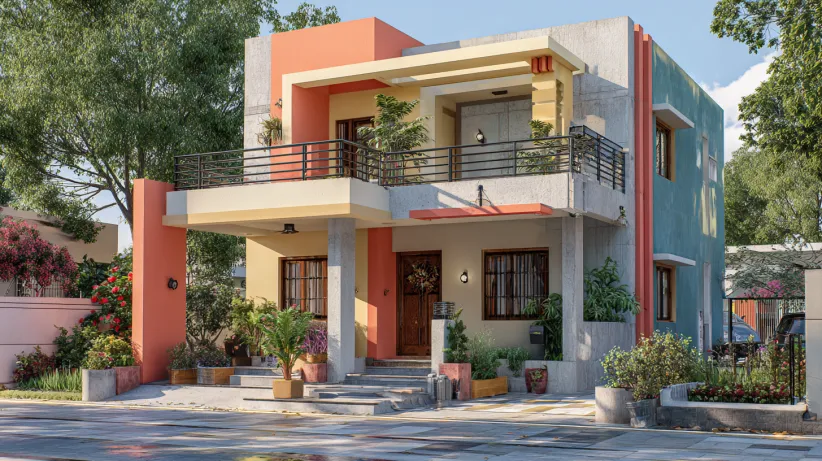 Three Bedroom 5 Lakh Budget House plans
This design is ideal for small to medium families who want more living space without spending beyond their means. Covering around 1,300 square feet, it includes a living room, dining area, and kitchen on the ground floor, while three bedrooms and two bathrooms sit privately on the upper level. The layout feels spacious yet practical, making it a smart choice for a family of four.
Plan Details for a Three-Bedroom, Two-Story House:
- Layouts: 18’0” x 30’0”
- Rooms: Ground floor include sit-out, a living room, a dining area, a compact kitchen, one bedroom and a common bathroom. The first floor has two bedrooms, one attached bathroom, a family lounge and a balcony.
- Efficiency: Inside staircase, saves space, stacked rooms reduce cost, and simple slab roofing ensures maximum usable area.
- Budget Realty: Building this 1,080 sq ft 3BHK house typically costs between ₹11 lakh and ₹16 lakh, depending on location and construction quality. Eligible PMAY Gramin beneficiaries may receive up to ₹1.5 lakh in assistance, helping reduce overall expenses, though the plan exceeds a ₹5 lakh budget.
2. Two-Bedroom, One-Story House Plan
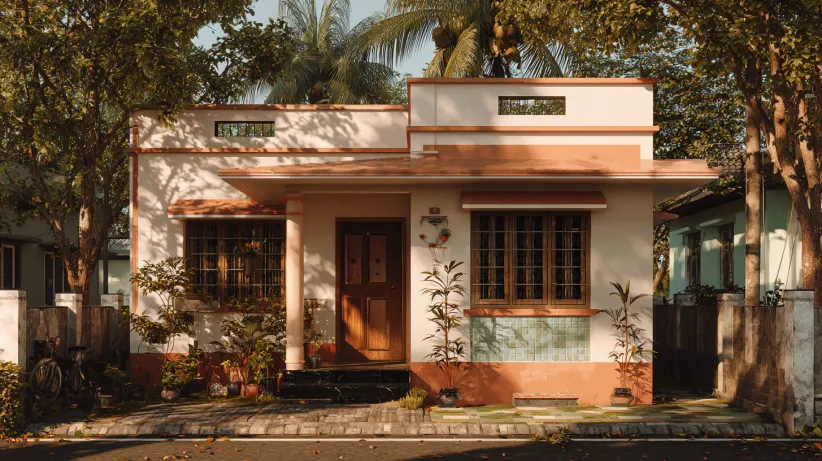 Two Bedroom 5 Lahk Budget house Plan
A 500 sq ft two-bedroom house is a practical option for small families seeking affordable homeownership. Despite its compact size, thoughtful space planning can accommodate two bedrooms, a living area, a kitchen, and a bathroom while maintaining comfort, functionality, and efficient use of every square foot.
Plan Details for a Two-Bedroom, One-Story House:
- Layout: 20' × 25' (Approx. 500 sq ft)
- Rooms: Living and dining area, compact kitchen, two bedrooms, one common bathroom, and a small front porch. This 5-lakh home design focuses on essential spaces without wasting square footage.
- Efficiency: Open-plan living spaces, minimal corridors, and compact room sizes maximise usable area. The single-floor structure also helps reduce construction complexity and maintenance costs.
- Budget Reality: A 500 sq ft 2BHK home may cost approximately ₹5-7.5 lakh to build, depending on location and material quality. Eligible PMAY Gramin beneficiaries may receive up to ₹1.5 lakh in assistance, making this plan one of the most achievable options near a ₹5 lakh budget.
3. One-Bedroom Cottage-Style House Plan
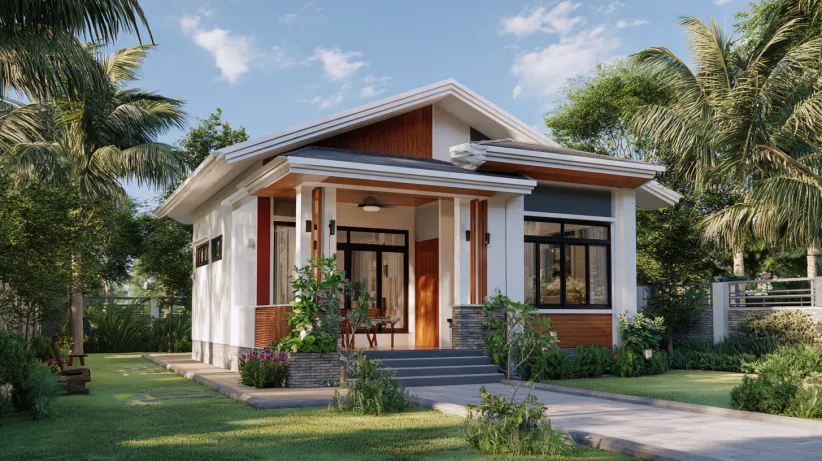 One Bedroom 5 Lakh Budget House Plans
This cottage-style, one-bedroom house plan can be ideal if you're searching for a cosy and charming home design. With a total square footage of about 700 square feet, the concept is perfect for a single person or a couple.
Furthermore, the house plan is a useful and practical choice for those who desire a compact yet comfortable living space because it comprises a living area, kitchen, and one bedroom. Finally, this plan is affordable and useful for individuals who want to construct a tiny but cosy house because the estimated cost falls within the 5 lakh budget limit.
Plan Details for a One-Bedroom Cottage-Style House:
- Layouts: 24’0” x 27’0”
- Rooms: Open living room with corner fireplace, compact kitchen, one bedroom, one full bathroom, small laundry/closet, and a welcoming deck/veranda.
- Efficiency: A single floor keeps the build cost low, uses a straightforward roof design, and places shared areas and bedrooms for easy flow and ventilation.
- Budget Reality: A 650-700 sq ft cottage-style home would typically cost around ₹6.5-10.5 lakh to build, depending on location and material quality. Eligible PMAY Gramin beneficiaries may receive up to ₹1.5 lakh in assistance, but this design generally exceeds a standalone ₹5 lakh construction budget.
4. Plan For A Two-Story, Two-Bedroom Home
This compact two-story, two-bedroom house is a practical home design under 5 lakh for small families seeking more living space on a limited plot. By building vertically, the design maximises usable area while keeping the footprint small and construction costs relatively affordable.
Plan Details for a Two-Story, Two-Bedroom Home:
- Layout: 15' × 16' (Approx. 480 sq ft built-up area across two floors)
- Rooms: The ground floor includes a living room, a compact kitchen, a dining corner, and a bathroom. The first floor features two small bedrooms and a shared bathroom.
- Efficiency: An internal staircase saves space, stacked plumbing reduces construction costs, and the two-story design provides additional rooms without requiring a larger plot.
- Budget Reality: A 480 sq ft two-story home may cost approximately ₹4.8-7 lakh to build in rural or Tier-3 areas. Eligible PMAY Gramin beneficiaries may receive up to ₹1.5 lakh in assistance, making this design one of the closest options to a ₹5 lakh budget.
5. Three-Bedroom, One-Story House Plan
This three-bedroom, one-story house design is ideal for those seeking a large, comfortable home that is both beautiful and practical. The concept is perfect for a medium-sized family with a total square footage of roughly 1,500 500 square feet.
The ground floor of the house plan features a living room, dining room, and kitchen, while the three bedrooms and bathrooms are also found there. This plan is cost-effective and feasible because the expected price is within the 5 lakh budget limit.
Plan Details for a Three-Bedroom, One-Story House:
- Layouts: 20' × 25' (Approx. 500 sq ft)
- Rooms: Open living and dining area, kitchen with utility space, three bedrooms (including one master), and two bedrooms designed for family comfort.
- Efficiency: A single-floor setup eliminates stairs, improves accessibility, and places common areas centrally with bedrooms on either side for privacy and easy flow.
- Budget Reality: A 500 sq ft 3BHK home may cost approximately ₹5-7.5 lakh to build in rural or Tier-3 areas. Eligible PMAY Gramin beneficiaries may receive up to ₹1.5 lakh in assistance, making this one of the few three-bedroom layouts that can come close to a ₹5 lakh budget.
6. Two-Bedroom Contemporary House Plan
This 5 lakh budget house design offers a smart blend of modern aesthetics and practicality for small families. With efficient space planning, open interiors, and minimal construction complexity, the design provides comfortable everyday living while keeping overall building costs within an affordable budget.
Plan Details for a Two-Bedroom Contemporary House:
- Layout: 20' × 25' (Approx. 500 sq ft)
- Rooms: Open living and dining area, L-shaped kitchen, two bedrooms with storage space, one common bathroom, and a small front porch that creates a welcoming entrance.
- Efficiency: The contemporary layout features an open-plan design, making the home feel larger than it is. Fewer internal walls, smart storage solutions, and well-placed windows improve ventilation, natural light, and space utilisation.
- Budget Reality: A 500 sq ft contemporary 2BHK home may cost approximately ₹5-7.5 lakh to construct in rural or Tier-3 areas. Eligible PMAY Gramin beneficiaries may receive up to ₹1.5 lakh in assistance, making this design a realistic option for buyers targeting a budget near ₹5 lakh.
Construction Cost and Budget Breakdown
Understanding where your money goes is essential when planning a low-cost home. A ₹5 lakh budget is usually enough for a compact 300-450 sq ft house when costs are carefully controlled. The table below shows how construction expenses are typically distributed across major building components.
| Items | Approx Cost |
|---|
| Foundation and Structure | ₹1.2 lakh-₹1.5 lakh |
| Walls (Fly Ash Bricks) | ₹1.0 lakh-₹1.2 lakh |
| Roofing (Flat RCC Slab) | ₹0.8 lakh-₹1.0 lakh |
| Plumbing Work | ₹0.25 lakh-₹0.4 lakh |
| Electrical Work | ₹0.25 lakh-₹0.4 lakh |
| Doors, Windows and Finishing | ₹0.5 lakh-₹0.8 lakh |
| Total Estimated Cost | ₹4.0 lakh-₹5.3 lakh |
Most ₹5 lakh houses built in India today fall within the 300-450 sq ft range. They commonly use fly ash bricks, simple flat RCC or single-slope roofs, and cost-saving finishes such as direct paint on brickwork instead of full interior plastering. These are proven budget-building strategies, not compromises.
Best Materials for a 5 Lakh House Construction
Choosing the right materials is crucial for keeping construction costs within budget. Durable and affordable options such as fly ash bricks, RCC roofing, basic flooring, and standard doors and windows help reduce expenses while ensuring strength, safety, and long-term usability.
| Category | Cost-Saving Options | Approx Cost |
|---|
| Bricks/Blocks | Fly-ash bricks or locally made bricks instead of premium AAC blocks | ₹5,000-₹8,000 per 1,000 bricks (≈ ₹25-₹40 per sq ft of wall) |
| Flooring | Basic tiles or polished concrete instead of imported tiles | ₹50-₹120 per sq feet |
| Doors & Windows | Standard aluminium or pre-fabricated frames rather than custom wood | ₹2,500-₹10,000 per door/window unit |
| Reinforcement | Use locally available steel / TMT bars; keep structural spans minimal | ₹55-₹85 per kg |
| Finishes & Paints | Use cost-effective paint coatings; avoid expensive claddings | ₹20-₹40 per sq foot |
| Plumbing/Fixtures | Use standard faucets & fixtures; avoid designer fittings | ₹1,500-₹8,000 per unit set |
Government Schemes for Affordable Homes
Government housing schemes like PMAY 2.0 help EWS and LIG families build or buy homes by offering subsicies and financial support. These programs significantly reduce construction costs in both rural and urban areas across India.
| Scheme | What it offers | Subsidy Amount |
|---|
| Pradhan Mantri Awas Yojana -Urban (PMAY 2.0) | Interest subsidy on home loans for EWS/LIG households in cities under CLSS and affordable housing support | Up to ₹2.67 lakh interest subsidy (as per eligibility) |
| Pradhan Mantri Awas Yojana – Gramin (PMAY 2.0) | Financial assistance for rural house construction for eligible beneficiaries to support pucca housing | Up to ₹1.2-₹1.5 lakh direct assistance |
| State Housing Boards / RGRHCL (example Karnataka) | State-level housing support including grants, plots, and low-cost housing schemes | ₹50,000-₹2 lakh (varies by state scheme) |
PMAY Gramin assistance of ₹1.2–₹1.5 lakh means your personal construction contribution for a basic house could be as low as ₹3.5 to ₹4 lakh.
1. Pradhan Mantri Awas Yojana (PMAY)
Launched in 2015 under the Housing for All by 2022 initiative, PMAY remains one of the most popular schemes in India. It provides financial assistance through interest subsidies on home loans, helping first-time buyers own a house with ease.
- Key Highlights:
- Provides interest subsidy under the Credit Linked Subsidy Scheme (CLSS), up to ₹2.67 lakh for eligible beneficiaries.
- Available to Economically Weaker Sections (EWS), Low-Income Groups (LIG), and Middle-Income Groups (MIG I & II).
- Encourages eco-friendly and sustainable construction practices.
- Eligibility Criteria:
- The applicant or their family must not own a pucca house in India.
- Must be a first-time homebuyer.
- Income eligibility varies by category (EWS, LIG, MIG-I, MIG-II), generally up to ₹18 lakh for MIG-II as per scheme classification.
- How to Apply:
- Visit the official PMAY website and apply online.
- Alternatively, apply through participating banks and housing finance companies that assist with PMAY-linked loans.
2. State Government Housing Schemes
Apart from PMAY, several state governments have launched their own affordable housing programs to support local populations. Housing boards and development authorities generally run these schemes and aim to provide homes at subsidised rates through lotteries or direct allotment.
- Popular State Schemes Include:
- DDA Housing Scheme (Delhi): Affordable flats in Delhi’s developing zones.
- MHADA (Maharashtra): Subsidised homes for LIG and MIG groups across Mumbai and Pune.
- KHB and RERA Homes (Karnataka): Budget-friendly housing projects in major cities.
- TNHB (Tamil Nadu): Flats and plots available at concessional prices in Chennai and nearby areas.
These projects are typically well-connected to public transport, schools, and healthcare facilities, ensuring comfort and convenience for residents.
3. Credit-Linked Subsidy via Banks and NBFCs
Many banks and Non-Banking Financial Companies (NBFCs) offer affordable housing loans beyond PMAY benefits. These often include reduced interest rates, flexible repayment options, and even pre-approved developer tie-ups for first-time buyers.
- What to Look For:
- Interest subsidies under PMAY (where applicable) are directly adjusted in the loan amount.
- Reduced interest rates for eligible first-time buyers.
- Tie-ups with approved developers for affordable housing projects.
- Simple documentation and structured repayment plans for borrowers.
Design Tips to Maximise Space & Minimise Costs
Making the most of a small budget starts with smart planning. Open living spaces, fewer hallways, simple layouts, and plenty of natural light can make your home feel bigger, more comfortable, and less expensive to build.
Here are a few practical design tips to make the most of your budget:
- Choose an open floor layout to save on wall construction and create a sense of openness.
- Keep the building footprint compact to lower foundation and roofing expenses.
- Align rooms smartly so plumbing and electrical lines can be shared, reducing installation costs.
- Stick to standard door and window sizes to avoid expensive custom fittings.
- Use natural light and ventilation to make your home airy and reduce long-term energy use.
- Opt for a simple roof or slab design that’s easy to build and maintain.
- Hire skilled local labour who understand cost-effective techniques and materials.
- Avoid building a basement, as it is usually the most expensive structural addition and can significantly increase construction costs.
- Choose a rectangular or square footprint for your home. It reduces material waste, simplifies construction, and helps lower foundation, roofing, and labour costs.
With thoughtful planning and simple design choices, your 5 lakh house design can be both practical and inviting, proving that affordability and good design can go hand in hand.
Lakh Budget House vs 10 Lakh Budget House: What Changes?
A ₹5 lakh house focuses on essential living spaces and basic finishes, while a ₹10 lakh house offers more room, better materials, additional features, and greater flexibility in design. Understanding the differences can help you choose a budget that matches your family's needs and long-term plans.
| Feature | ₹ 5 Lakh Budget House | ₹ 10 lakh budget house |
| Feasible Size | 300-500 sq ft | 600-900 sq ft |
| Finish Level | Cement flooring or basic tiles, economy paint | Tiled floors, plastered walls, improved paint finishes |
| Number of Rooms | Studio, 1RK, 1BHK, or compact 2BHK | 1BHK, 2BHK, or spacious compact 3BHK |
| Bathroom Configuration | Usually 1 common bathroom | 1-2 bathrooms, including attached options |
| Roofing | Simple RCC slab or single-slope roof | RCC slab with more design flexibility |
| Material Choices | Fly ash bricks, standard fittings, basic fixtures | Better-quality tiles, doors, windows, and fixtures |
| Suitable Region | Rural and Tier-3 locations | Rural, Tier-3, and many Tier-2 cities |
How NoBroker Makes Affordable Homes Possible?
NoBroker has made affordable homes possible by eliminating brokerage fees and connecting people directly with verified owners and builders. With expert advice, budget planning, legal help, and home services, buyers save money and time. Their support for low-cost house plans helps families confidently choose designs, locations, and services, making homeownership simpler, safer, and truly affordable for everyone today.
Frequently Asked Questions
Q 1. With a budget of 5 lakhs, what kind of houses can I reasonably hope to find? Ans. You can anticipate locating little, straightforward homes that are intended to be cost-effective if you have a budget of 5 lakhs. Depending on your needs and choices, these homes range from modest but cosy residences to substantial but vast homes.
Q 2. Despite being inexpensive, are these dwellings constructed with high-quality materials? Ans. Yes, these homes are constructed with high-quality materials that adhere to all necessary standards and regulations, even though they are intended to be affordable. In addition, many of these homes are built with sustainable building materials, which keeps their costs low.
Q 3. How can I alter a straightforward 5 lakh budget house plan to suit my unique requirements? Ans. Most house designs are adaptable, so you can alter them to suit your requirements and tastes. Working with a qualified architect or builder will enable you to make the required adjustments and guarantee that your house plan satisfies all your criteria.
Q 4. How long does constructing a basic house on a 5 lakh budget take? Ans. The complexity of the design, the accessibility of construction supplies, and the availability of labourers will all affect how long it takes to build a modest 5 lakh budget house. However, most of these homes can be constructed in months, making them a fantastic choice for those who need a house immediately.
Q 5. Are any unforeseen expenditures involved in constructing a basic 5 lakh budget house? Ans. No, all of the building costs are upfront and transparent because these house plans are intended to be inexpensive. However, working with a trustworthy builder or contractor who can thoroughly analyse all the expenditures related to building your home is always a smart option.
Q 6. What is the best 5 lakh budget house plan for small families? Ans. A compact two-bedroom one-story plan (≈ 800 sq ft) is often ideal for a small family under tight budget constraints.
Q 7. How to choose a perfect 5 lakh house design in India? Ans. Start with local cost per square foot, determine your size limit, list priority rooms, and see if you qualify for government subsidy schemes.
Q 8. Can we build a house for five lakhs with modern design features? Ans. Yes, it is possible to build a modern house within a five lakh budget with smart planning. Using locally sourced materials, compact layouts, and energy-efficient designs can help achieve a stylish, functional, and affordable home.
Q 9. What are the key steps in the 5 lakh house construction process? Ans. Planning → Design drawings & approvals → Procurement of low-cost materials → Monitoring construction → Finishing wisely.
Q 10. Can a house really be built for ₹5 lakh? Ans: Yes. A basic house can be built for around ₹5 lakh in rural areas using cost-effective materials and simple designs.
Q 11. How many rooms can I get? Ans: Usually one of two bedrooms, a living area, a kitchen, and a bathroom, depending on layout efficiency and plot size.
Q 12. Is RCC possible in ₹5 lakh? Ans: Yes, RCC is possible for small, single-floor houses using minimal spans, basic finishes, and cost-controlled materials.
Q 13. Can I get a loan or subsidy? Ans: Yes, government housing schemes and banks offer subsidies and loans for eligible applicants building affordable houses.
Q 14: What size house can I build in ₹5 lakh? (answer: 300 to 500 sq ft in rural/Tier-3) Ans: Typically, a ₹5 lakh budget can build a 300–500 sq ft house in rural and Tier-3 locations.
Q 15: Does the ₹5 lakh budget include land cost? (answer: no, construction only) Ans: No. The ₹5 lakh estimate usually covers construction expenses only and does not include land purchase costs.
Q 16: How does PMAY Gramin help with a 5 lakh house plan? Ans: PMAY Gramin provides up to ₹1.5 lakh assistance, reducing the amount eligible families need to spend themselves.
Q 17: Which materials keep construction cost under ₹5 lakh? Ans: Fly ash bricks, basic tiles, standard fittings, economy paint, and simple RCC roofs help keep costs affordable.
Builder Projects
NoBroker VIP Plan Brand V1
NoBroker VIP Plan Brand V2
NoBroker VIP Plan Corporate V1
NoBroker VIP Plan Corporate V2
NoBroker Property Carnival Pune
Codename Elite Hinjewadi/ Lodha Hinjewadi Phase 3
Codename Sarjapura / Lodha Codename Sarjapura
Codename Elite Devanahalli / Embassy Springs New Phase
Codename Mittaganahalli / Godrej Thanisandra
Codename Marathahalli / Century Silicon City
Codename Elite Kharadi / Lodha Codename-Kharadi Luxury
Pacifica Aurum Pride Tower
Most Viewed Articles
NoBroker.com is a disruptive real-estate platform that makes it possible to buy/sell/rent a house without paying any brokerage.
Following are service along with Rent / Sell / Buy of Properties
- Rental Agreement
- Packers And Movers
- Click And Earn
- Life Score
- Rent Receipts
- NoBroker for NRIs
Loved what you read? Share it with others!




 ✕
✕


 Full RM + FRM support