Refrigerator Not Cooling? Causes, Step-by-Step Fixes, & Complete Troubleshooting Guide

612 Views
Table of Contents
A refrigerator not cooling effectively is one problem that can easily become very annoying and expensive. If you have a sudden failure of your fridge cooling effectively or your refrigerator's cooling problem has occurred gradually, determining the cause early on will help avoid food spoilage and expensive repairs. There are numerous causes of refrigerator cooling problems, from faulty condenser coils to a malfunctioning compressor, among others.
Common Signs of Refrigerator Cooling Problems
The problem of the fridge not cooling will usually have some signs or warnings before it completely fails. Identifying these signs early enough will allow you to fix your fridge before it spoils any food.
- Food spoiling faster than normal
- Fridge feels too warm
- Freezer doesn’t freeze well
- Too much frost in the fridge
- Strange noise from fridge
- Water leakage around the fridge
- Compressor runs continuously
- Fridge is constantly turning itself off and on
Quick Refrigerator Fixes You Can Try First
Don’t immediately assume that your refrigerator isn’t functioning properly until you do a few checks first. A lot of issues with refrigerators can actually be solved by yourself rather than calling in professionals.
- Whether or not the appliance is plugged into the socket
- Temperature settings
- Overloaded shelves with food
- Presence of dust on the condenser coils
- Blocked vents
- Proper sealing of doors
- Closed doors
- Restarting the appliance
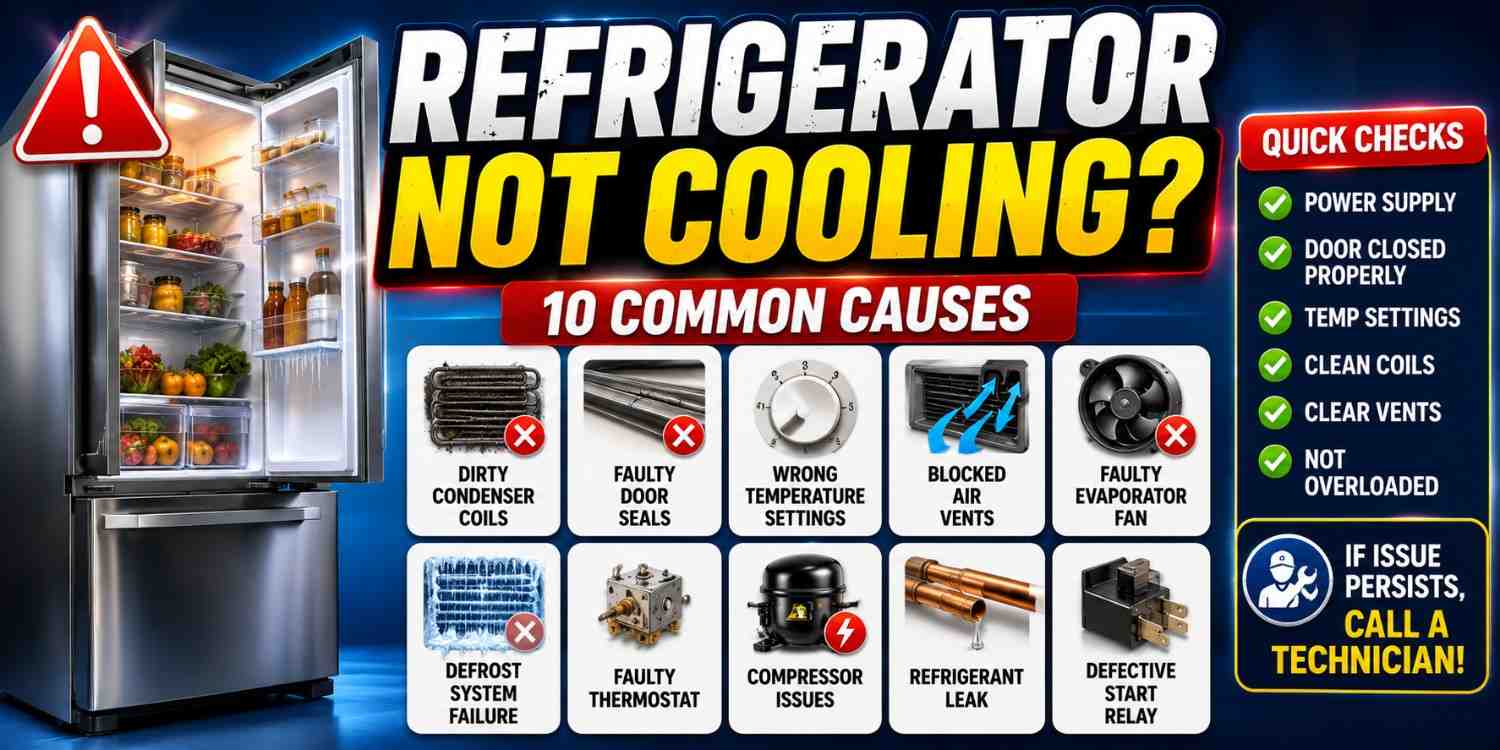
Why Your Refrigerator Is Not Cooling Properly: 10 Common Causes and Fixes
A refrigerator that isn’t cooling might be attributed to electrical problems, restricted air flow, broken parts, or even improper maintenance. The following is a list of the ten most common causes, symptoms, and solutions.
1. Dirty Condenser Coils
When the condenser coils are dirty, the heat cannot be dissipated, and the compressor will have to work much harder. Eventually, it can lead to refrigerators not cooling properly.
Signs:
- Fridge feels warm
- Constantly running the compressor
- High energy bills
- Poor cooling performance
How to Fix It:
- Unplug the fridge
- Find the condenser coils
- Brush or vacuum out the coils
- Get rid of dust buildup
- Do the cleaning monthly
2. Faulty Door Seals
A damaged or loose door gasket allows cold air to escape and warm air to enter, making the refrigerator not cooling efficiently.
Signs:
- Poor sealing of the door
- Moisture in the door area
- Continuous operation of the fridge
- Temperature swings
How to Fix It:
- Cleaning of the door seals
- Checking for any tears or cracks
- Replacement of damaged door seals
- Alignment of the doors
3. Wrong Refrigerator Temperature Settings
Occasionally, "my refrigerator does not cool" just because of incorrect temperature settings.
Signs:
- Refrigerator is warmer than usual
- No malfunction of any components
- Fluctuations of cooling capacity during the day
How to Fix It:
- Adjust refrigerator temperature at 3 to 5 degrees centigrade.
- Adjust freezer temperature to -18 degrees centigrade.
- Wait for 24 hours after adjustment.
4. Blocked Air Vents
Airflow is impeded by blocked vents between the freezer and the refrigerator compartment, leading to poor temperature distribution.
Signs:
- Working freezer while fridge is not cooling
- Items located around vents are freezing
- Temperatures vary
How to Fix It:
- Redistribute contents
- Clear vents of blockage
- Avoid overcrowding shelves
- Ensure adequate internal airflow
5. Faulty Evaporator Fan Motor
The job of the evaporator fan is to move cold air within the fridge. Its failure may lead to a refrigerator not cooling problem.
Signs:
- Poor airflow in the refrigerator
- Noises coming from the freezer
- Warm refrigerator and cold freezer
How to Fix It:
- Inspect fan activity
- Defrost the freezer if there is ice
- Repair the faulty evaporator fan motor
6. Defrost System Failure
The failure of the defrost system leads to frosting in the refrigerator, thus leading to blockage of airflow and poor cooling performance.
Signs:
- Frosting in freezer compartment
- Poor cooling performance
- Warming up of the refrigerator part
How to Fix It:
- Defrost the refrigerator manually
- Test defrost heater
- Test defrost thermostat
- Replace parts
7. Faulty Thermostat
This will make the refrigeration cycle ineffective because the thermostat will fail to trigger the correct function in the system.
Signs:
- Changes in temperatures
- No compressor operation
- Interruptions in the cooling process
How to Fix It:
- Test the operation of the thermostat
- Replace the defective thermostat
- Set temperature levels correctly
8. Compressor Issues
This is the main component of the refrigerator since it controls the cooling process. Any fault here means that the refrigerator will cease operations.
Signs:
- No cooling performance in the fridge
- Compressor clicking noise
- Overheating of the compressor
How to Fix It:
- Check electrical connections
- Test the compressor relay
- Test compressor performance
9. Refrigerant Leak
Insufficient amounts of refrigerants impair cooling performance and eventually lead to the fridge not cooling properly.
Signs:
- Poor cooling performance
- Oil stains on pipes
- Constantly operating a compressor
How to Fix It:
- Identify the refrigerant leak
- Fix cracked tubes
- Refill refrigerant
- Seek help from a licensed technician
10. Defective Start Relay
A start relay plays an important role in ensuring the proper functioning of the compressor. A defect in the start relay leads to poor cooling performance.
Signs:
- Clicking noises at the rear panel
- Non-operating compressor
- Overheating refrigerator
How to Fix It:
- Check for continuity in the start relay
- Install a new start relay
- Confirm compressor operation
Different Refrigerator Types and Their Most Common Cooling Problems
Various refrigerator models suffer from different cooling problems because of their own designs and components.
| Refrigerator Type | Common Cooling Problem |
| Single Door Refrigerator | Frost buildup is blocking airflow |
| Double Door Refrigerator | Defective evaporator fan or blocked vents |
| Side-by-Side Refrigerator | Air damper control issues |
| French Door Refrigerator | Temperature imbalance between compartments |
| Mini Refrigerator | Thermostat malfunction |
| Inverter Refrigerator | Control board faults |
| Commercial Refrigerator | Compressor overload |
| Deep Freezer Refrigerator | Excessive frost accumulation |
Brand-Wise Refrigerator Cooling Problems You Should Know
A number of refrigerator models encounter common cooling problems due to the presence of particular component designs and usage habits.
| Refrigerator Brand | Common Cooling Problem |
| Samsung | Defrost system malfunction |
| LG | Linear compressor issues |
| Whirlpool | Faulty start relay |
| Godrej | Thermostat problems |
| Bosch | Airflow restrictions |
| Electrolux | Evaporator fan failure |
| Danby | Temperature control faults |
| Avanti | Condenser coil blockage |
| Winia | Sensor malfunction |
| Beko | Defrost heater issues |
| Monogram | Compressor-related faults |
| Galanz | Fan motor failure |
| True | Commercial compressor overload |
When You Should Call a Technician for Refrigerator Cooling Problems
If initial troubleshooting cannot fix the problem with the refrigerator cooling, a professional assessment may be needed to avoid additional damage.
- No cooling even after troubleshooting
- Noticed compressor failure
- Suspected refrigerant leakage
- Failure of electrical components
- Smell of burning detected
- Persistent cooling problems
- Defective control board
However, in the case that the above tips do not solve your refrigerator’s cooling problems, then it would be wise to schedule professional services from a reputable company such as NoBroker Services. The professional will accurately diagnose the cause of the problem, fix the broken part, and ensure that it starts cooling again.
How Much Does It Cost to Fix a Refrigerator Not Cooling?
There are many factors that affect repair charges; these include what part needs to be fixed and the price of labor in your locality.
| Cooling Issue | Estimated Cost (₹) |
| Condenser Coil Cleaning | ₹500 – ₹1,500 |
| Door Gasket Replacement | ₹800 – ₹2,500 |
| Thermostat Replacement | ₹1,000 – ₹3,000 |
| Start Relay Replacement | ₹800 – ₹2,000 |
| Evaporator Fan Replacement | ₹1,500 – ₹4,500 |
| Defrost Heater Repair | ₹1,500 – ₹5,000 |
| Refrigerant Recharge | ₹2,500 – ₹7,000 |
| Compressor Repair | ₹3,000 – ₹8,000 |
| Compressor Replacement | ₹6,000 – ₹15,000 |
| Control Board Replacement | ₹3,000 – ₹10,000 |
How to Prevent Refrigerator Cooling Problems
Routine maintenance may prevent a refrigerator from failing to cool and increase the longevity of the device.
- Cleaning of condenser coils
- Not overloading the fridge
- Ensuring air vents are clear
- Inspecting the seal on doors
- Setting the appropriate temperatures
- Routine maintenance
- Defrosting the fridge when required
- Proper ventilation of the appliance
Conclusion
An uncooling refrigerator may be attributed to something as basic as clogged vents or something more technical, such as a breakdown of the compressor. Early identification of these warning signals and their causes will allow you to take appropriate action that will improve the efficiency of the appliance and reduce costly repairs.
Cities We Serve for Refrigerator Repair Services
From Bangalore, Chennai, Hyderabad, Delhi, Mumbai, Pune, Gurgaon, Noida, Ghaziabad, Greater Noida, and Faridabad, NoBroker provides reliable refrigerator repair services right at your doorstep. Benefit from expert diagnosis, genuine spare parts, and professional repairs that restore your appliance quickly and efficiently.
Brands We Serve for Refrigerator Repair Services
NoBroker offers professional washing machine repair services for a wide range of leading brands, including Samsung, LG, Whirlpool, IFB, Bosch, Siemens, Haier, Godrej, Panasonic, and more. Our trained technicians handle brand-specific issues with precision, delivering reliable repairs and ensuring efficient appliance performance.
Frequently Asked Questions
1. Why is my refrigerator not cooling, although the light works?
2. What should I do when my refrigerator stops cooling abruptly?
3. My freezer is freezing, but my refrigerator does not cool - why is that?
4. How often must I clean my refrigerator condenser coils?
5. Will my refrigerator's cooling fail if there is no refrigerant?
6. Why is there a problem with my new refrigerator failing to cool?
7. What are the costs of fixing a fridge that doesn’t cool?
8. What are some reasons why my fridge doesn’t cool anymore?
9. Is it reasonable to repair a refrigerator that stopped functioning?
10. When should I choose replacement rather than repair of my refrigerator?

Login / Sign up
Zero Brokerage.
Thousands of new listings daily.
100 Cr+ Brokerage saved monthly.
About the Author

Siri Hegde K
Senior Editor


Recent Blogs

Subscribe to our Newsletter
Get latest news delivered straight to your inbox