Ideal Fridge Temperature: What It Should Be, How to Check It & Why It Matters

42 Views
Table of Contents
It is vital to keep your fridge at the right temperature in order to preserve your food. This is not known by most people, which ends up costing them their food or even wasting energy unnecessarily. No matter whether you want to know the best fridge temperature in summer or the best freezer temperature settings, the ideal temperature in the fridge will help you out.
What Is the Ideal Fridge Temperature?
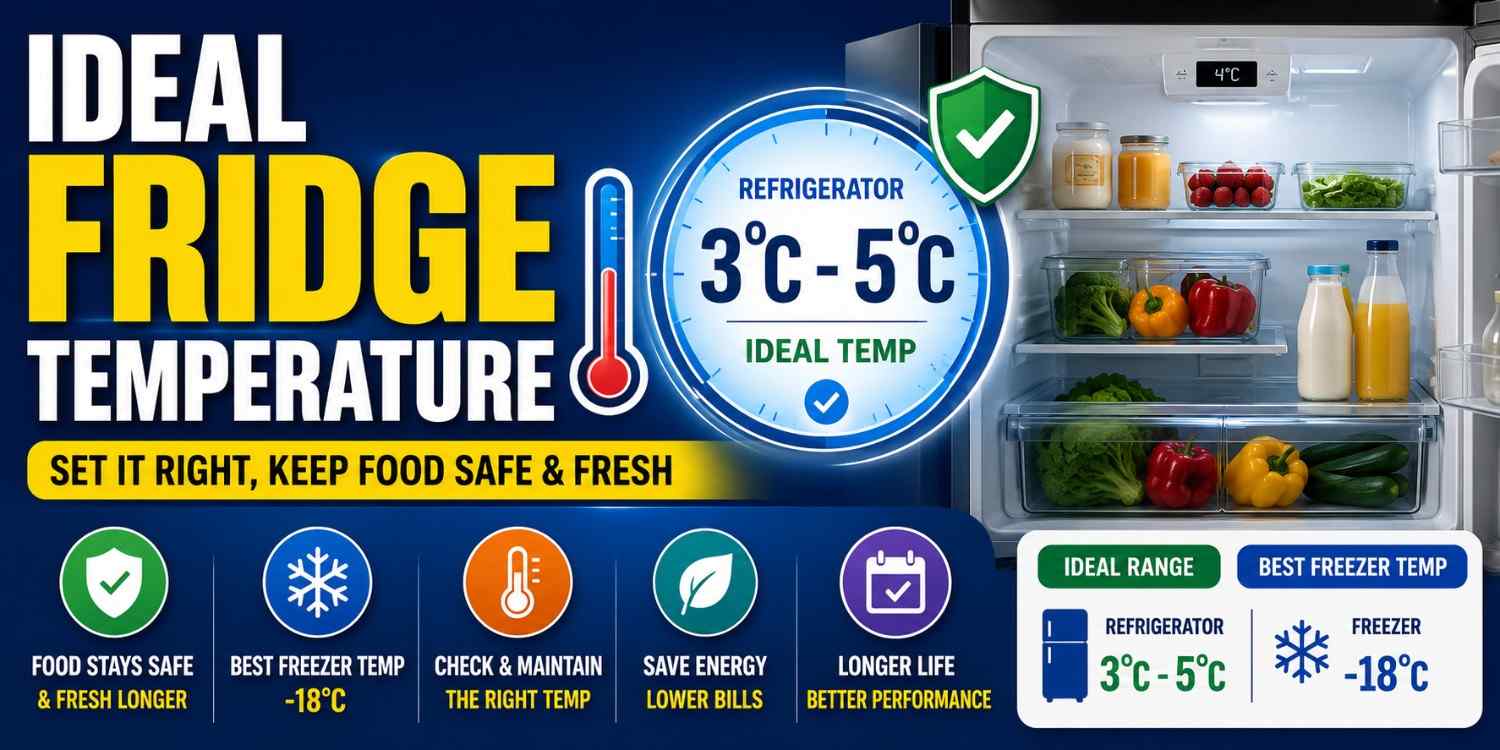
The best temperature for the fridge is usually 4°C, and this is the optimum temperature that allows you to preserve food without freezing it. There are differences in the optimal temperature of the fridge and freezer, but setting the standard temperature for the fridge within 3°C and 5°C helps you to ensure food safety.
Why 4°C Is Considered Ideal
- It slows down bacterial growth
- Food is preserved without being frozen
- Nutritional value is preserved
- Moisture in produce is preserved
- Ideal air temperature in the fridge is ensured
Ideal Refrigerator Temperature Chart
| Section | Recommended Temperature | Note |
| Refrigerator | 3°C to 5°C | Best temp for fridge storage |
| Freezer | -18°C | Best freezer temperature setting |
What Happens When Your Refrigerator Temperature Is Incorrect?
Improper settings for the fridge may lead to premature spoilage or even freezing of food, which could have an effect on its taste and safety. It is important to ensure that the right temperatures are kept in the fridge and freezer to avoid food wastage.
| Fridge Too Warm | Fridge Too Cold |
| Food spoils quickly | Food may freeze |
| Bacteria grow faster | Texture gets damaged |
| Bad odour develops | Increased energy use |
How to Check if Your Fridge Temperature Is Correct
Verifying your fridge temperature helps you know whether your fridge is working effectively or not. With the help of a thermometer or your fridge’s built-in display, you can be able to verify the normal temperature of your fridge freezer.
Follow These Steps to Check Your Fridge Temperature
- Put a thermometer in your fridge
- Wait for 6-8 hours
- Read the thermometer
- Make necessary adjustments
- Check again after the adjustment
Common Mistakes To Avoid When Checking Fridge Temperature
These are some of the mistakes that you should avoid when verifying your fridge temperature. Doing so will lead to wrong verification results.
- Putting your thermometer close to the fridge’s door
- Making the check immediately after making an adjustment
- Not considering overloading problems
Tip: Always check the temperature under normal operating conditions.
Ideal Refrigerator Temperature for Different Types of Food
Various types of foods have various storage needs. Proper maintenance of the appropriate fridge temperature range helps ensure that the food is preserved for longer periods of time.
| Food Type | Ideal Temperature Range | Best Fridge Area |
| Dairy | 3°C to 4°C | Middle shelf |
| Meat | 0°C to 2°C | Lower shelf |
| Vegetables | 4°C to 5°C | Crisper drawer |
Tip: Store raw meat separately to avoid contamination.
Best Fridge Temperature Settings in Summer and Winter
The effect of seasonal changes is highly influential in terms of the cooling capacity of your refrigerator, particularly during harsh climatic conditions. Making the correct adjustment of temperatures in accordance with summer and winter seasons will help ensure effective cooling, prolong the freshness of foods, and avoid putting too much pressure on the machine.
| Season | Ideal Fridge Temperature | Adjustment Needed |
| Summer | 3°C | Lower temperature slightly |
| Winter | 4°C to 5°C | Slightly higher setting |
Tip: Do not overload during summer for improved cooling.
How Fridge Temperature Affects Power Consumption
Setting the optimal temperature in a refrigerator is essential for ensuring the total energy consumption of the appliance. The lower the temperature set, the more the compressor will work, resulting in more energy consumption, but by keeping the optimal temperature in a refrigerator, we ensure less energy consumption and its longevity.
| Temperature Setting | Power Usage | Impact |
| Too Low | High | Increased electricity bills |
| Ideal (3–5°C) | Moderate | Efficient cooling |
| Too High | Low | Risk of food spoilage |
Why Maintaining the Right Refrigerator Temperature Matters
Temperature management in your fridge is important not only for food safety but also for its performance and efficiency. This way, you will keep your fridge working at its best without wasting energy and causing any damage to your appliance.
- Prevents bacterial growth
- Increases the shelf life of food
- Keeps food tasting and looking good
- Saves energy
- Guarantees safe food storage conditions
Common Fridge Temperature Mistakes to Avoid
Any slight miscalculation in the regulation or maintenance of the fridge's temperature may have adverse effects on its efficiency. Avoiding these common mistakes helps maintain proper cooling and better refrigerator performance.
- Overloading the refrigerator
- Setting the temperature too low
- Neglecting the door seals
- Opening the door frequently
- Not checking the temperature
Expert Tips to Keep Food Fresher for Longer
Incorporating a few basic tips can really make a difference in enhancing your refrigerator’s efficiency and ensure your food stays fresh for a longer period of time. Proper storage techniques and maintenance will ensure that your refrigerator operates at an optimal temperature always.
- Food should be stored in air-tight containers
- Regular cleaning of the fridge
- Proper airflow in the fridge
- Temperature checked weekly
- Do not store hot food in the fridge
Conclusion
The preservation of the right temperature in your fridge is not only concerned with making sure that everything inside is cool; it is also about making sure that your food is safe, less wasted, and efficiently stored. With regular temperature checks and season-specific adjustments, you will not only make sure that your food lasts longer but also save money on electricity bills. Avoiding typical mistakes in fridge temperature maintenance will help you keep your fridge and freezer in top shape.
Cities We Cover for Refrigerator Repair Services
NoBroker offers trusted refrigerator repair services across major cities, including Bangalore, Chennai, Hyderabad, Delhi, Mumbai, Pune, Gurgaon, Noida, Ghaziabad, Greater Noida, and Faridabad. Enjoy reliable repairs backed by a 180-day service warranty.
Brands We Serve for Refrigerator Repair Services
NoBroker covers leading brands such as Samsung, LG, Whirlpool, Godrej, Bosch, IFB, Haier, Hitachi, and more, ensuring quality repairs with 100% genuine spare parts whenever replacements are required.
Frequently Asked Questions
1. What is the ideal fridge temperature in Celsius?
2. What is the ideal freezer temperature setting?
3. What will happen if the fridge is too cold?
4. What is the standard temperature for a refrigerator freezer?
5. How often should I check my fridge temperature?
6. What is the ideal fridge temperature in summer?
7. Can an inappropriate temperature spoil food quickly?
8. What is the standard fridge temperature?
9. Is the fridge temperature related to the electricity bill?
10. What is the ideal temperature of air in the fridge to keep food safe?

Login / Sign up
Zero Brokerage.
Thousands of new listings daily.
100 Cr+ Brokerage saved monthly.
About the Author

Siri Hegde K
Senior Editor


Recent Blogs

Subscribe to our Newsletter
Get latest news delivered straight to your inbox