What is an Inverter Refrigerator? Complete Guide to How It Works, Power Consumption & Is It Worth Buying

36 Views
Table of Contents
The refrigerators that we have nowadays are not only limited to cooling purposes. The high cost of electricity and the necessity of quieter houses have made inverter refrigerators more popular among consumers. But what is inverter refrigerator technology? Is inverter technology in the refrigerator worth the extra cost? In this article, you will get information about inverter technology in refrigerators, their working, power consumption, advantages and disadvantages, and whether to buy an inverter or a non-inverter refrigerator for your house.
What Is an Inverter Refrigerator?
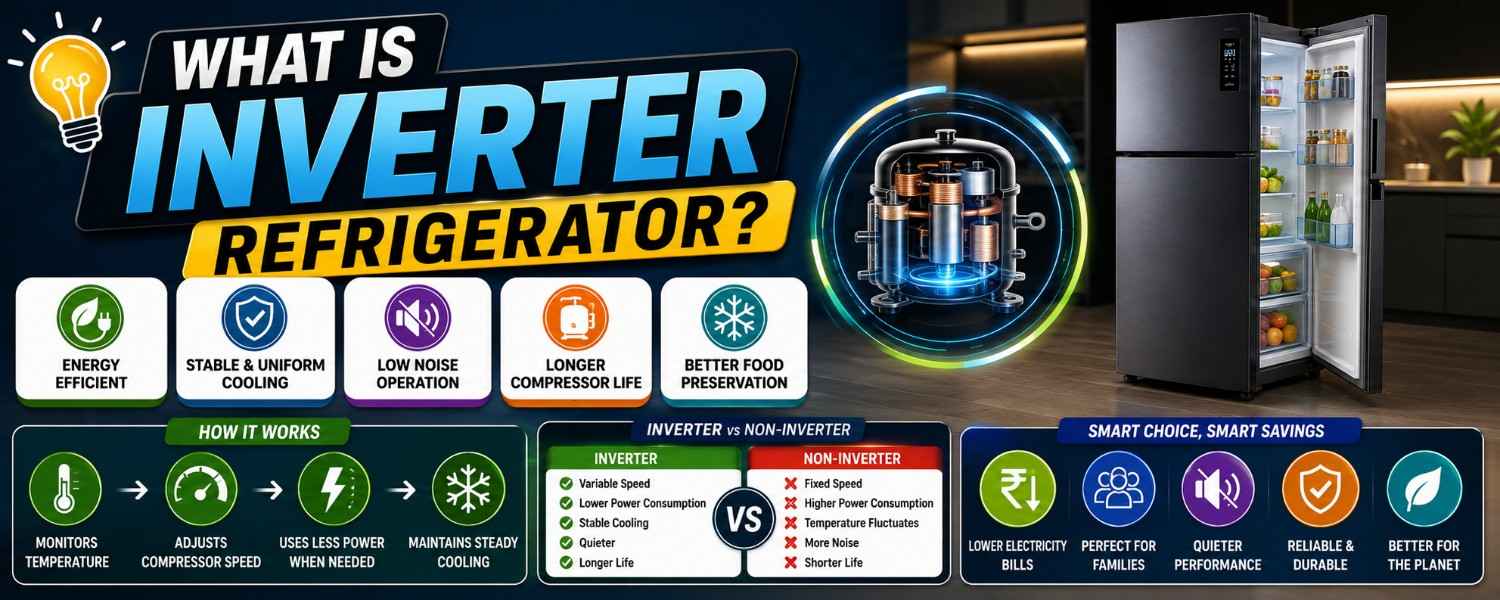
An inverter refrigerator is a refrigerator that has an inverter compressor to regulate the speed of cooling depending on the cooling requirements. Unlike ordinary refrigerators that turn the compressor on and off, inverter compressors regulate themselves based on the cooling needs. This helps in maintaining steady cooling, conserving energy, decreasing noise, and increasing the life of the refrigerator.
How Does an Inverter Refrigerator Work?
An inverter refrigerator operates through the use of a variable-speed compressor, which varies its functioning according to the temperature inside the refrigerator. Unlike other refrigerators, the compressor does not stop operating after the set temperature is achieved, but reduces its speed in order to maintain a constant temperature.
- Continuous monitoring of temperature changes inside the fridge
- Compressor speed varies according to cooling needs
- Uses less energy when there is minimal cooling need
- Provides uniform temperature for improved food quality
- Operates quietly than ordinary refrigerators
Inverter Refrigerator Power Consumption: How Much Electricity Does It Use
Inverter refrigerators are normally energy efficient compared to normal refrigerators, as the compressor doesn’t have to be turned off and on again and again. The consumption of power will depend on various factors such as the size of the fridge, star rating, frequency of use, and cooling technique employed by the manufacturer.
| Refrigerator Type | Capacity Range | Annual Power Consumption | Approx. Monthly Cost | Energy Efficiency |
| Single Door Inverter Refrigerator | 180–250 Litres | 120–180 kWh | ₹120–₹220 | High |
| Double Door Inverter Refrigerator | 240–350 Litres | 180–300 kWh | ₹220–₹400 | Very High |
| Side-by-Side Inverter Refrigerator | 500–700 Litres | 350–550 kWh | ₹450–₹750 | Moderate to High |
| Non-Inverter Refrigerator | 180–350 Litres | 250–450 kWh | ₹300–₹650 | Moderate |
Inverter refrigerators help reduce long-term electricity bills, especially in homes where the refrigerator runs continuously throughout the day.
What’s the Difference Between Inverter and Non-Inverter Refrigerators?
The major distinction between inverter and non-inverter refrigerators lies in the compressor mechanism. Inverter refrigerators control compressor speed automatically, whereas non-inverter refrigerators use fixed-speed compressors, which turn on and off repeatedly, thereby consuming more energy.
| Feature | Inverter Refrigerator | Non-Inverter Refrigerator |
| Compressor Operation | Variable speed | Fixed speed |
| Electricity Consumption | Lower | Higher |
| Cooling Consistency | Stable | Fluctuates |
| Noise Level | Quieter | Slightly noisy |
| Initial Cost | Higher | Lower |
| Compressor Lifespan | Longer | Comparatively shorter |
What is Digital Inverter Technology in Refrigerators?
Digital inverter technology refers to an enhanced form of inverter technology that is utilized in today’s refrigerators. The technology adjusts the speed of the compressor at various levels based on the cooling requirement and environmental factors. The technology ensures higher energy efficiency, reduced temperature variations, low noise generation, and extended compressor life span. Most high-end refrigerator models incorporate digital inverter technology to deliver optimal cooling performance coupled with reduced power consumption.
Key Features of Digital Inverter Technology:
- Automatically controls the cooling speed based on usage
- Ensures consistent internal temperature
- Decreases unnecessary power consumption
- Generates low noise while functioning
- Extends the life of the compressor
- Preserves food freshness for a longer period of time
- Increases cooling speed during high usage periods
How Digital Inverter Technology Is Different From Normal Inverter Technology
| Feature | Normal Inverter Technology | Digital Inverter Technology |
| Compressor Adjustment | Basic speed adjustment | Multiple intelligent speed levels |
| Temperature Control | Moderate precision | More accurate precision |
| Energy Efficiency | High | Higher |
| Noise Reduction | Good | Better |
| Cooling Performance | Consistent | More stable and faster |
| Smart Sensors | Limited | Advanced sensors included |
Inverter Refrigerator: Benefits and Drawbacks You Should Know Before Buying
Inverter refrigerators are famous for their energy efficiency and superior cooling capability, although they do have an increased buying price. Both strengths and weaknesses of inverter refrigerators will assist in determining whether you need this type of appliance in your home.
Benefits of an Inverter Refrigerator
- Uses less electricity than conventional refrigerators
- Provides constant cooling inside the entire fridge
- Operates quietly
- Extends the life span of the compressor because of minimal pressure
- Helps preserve food for a longer time period
- Efficient at varying cooling loads
Drawbacks of an Inverter Refrigerator
- High purchase cost
- Expensive repair
- Complex parts that need professional maintenance
- No savings if the fridge is not used often
Is an Inverter Refrigerator Worth Buying?
An inverter refrigerator is highly recommended for all homes since it performs better when it comes to energy efficiency, noise reduction, and constant cooling than a regular refrigerator. Though the initial price of such equipment is a bit higher, you might be able to save some money thanks to its reduced electricity consumption and the longevity of the compressor.
- Perfect choice for electricity savings in the long term
- Good choice for big and medium-sized families
- Great option for frequent usage of a refrigerator
- Improves performance in terms of food preservation
- Best suited for people who prefer quiet operation
Inverter vs Non-Inverter: Which Refrigerator Should You Buy?
Deciding whether to go for an inverter or non-inverter refrigerator is influenced by the following factors: one's financial situation, electricity consumption, and future plans. While inverter refrigerators offer efficiency and constant cooling, non-inverter refrigerators will be appropriate for those who desire affordability and simple refrigeration.
Which One Should You Buy?
Choose an inverter refrigerator if:
- Require reduced electricity costs
- Need to operate your refrigerator round-the-clock everyday
- Desire more silent appliance performance
- Need enhanced cooling efficiency
- Are searching for quality and longevity
Choose a non-inverter refrigerator if:
- Have a restricted budget
- Operate your refrigerator occasionally
- Require a basic refrigerator for your needs
- Are not bothered about power consumption
- Require cheaper upfront costs
Conclusion
In order to make wise decisions about purchasing appliances for your home, it is important to know what an inverter in the fridge is. The inverter refrigerator works more effectively, consumes less energy, operates quietly, and is more durable than regular refrigerators. Though the cost of the inverter refrigerator may be somewhat higher, its advantages outweigh this drawback.
Our Refrigerator Repair Services Across Major Cities
NoBroker delivers trusted refrigerator repair services in major cities, including Bangalore, Chennai, Hyderabad, Delhi, Mumbai, Pune, Gurgaon, Noida, Ghaziabad, Greater Noida, and Faridabad, backed by 100% genuine spare parts, transparent pricing, and skilled professionals.
Brands We Serve for Refrigerator Repair Services
NoBroker provides professional refrigerator repair solutions for major brands, including Samsung, LG, Whirlpool, Godrej, Bosch, IFB, Haier, Panasonic, Hitachi, Siemens, and more. Enjoy reliable doorstep service, transparent pricing, and high-quality repairs with a 180-day warranty.
Frequently Asked Questions
1. What is inverter refrigerator technology?
2. What is digital inverter technology in a refrigerator?
3. What is the benefit of an inverter refrigerator?
4. What does an inverter do in a refrigerator?
5. What is a smart inverter refrigerator?
6. Do inverter refrigerators use more electricity?
7. Are inverter refrigerators costly?
8. What is better? Inverter or Non-inverter refrigerator?
9. Does inverter technology increase refrigerator longevity?
10. Is an inverter refrigerator beneficial for Indian households?

Login / Sign up
Zero Brokerage.
Thousands of new listings daily.
100 Cr+ Brokerage saved monthly.
About the Author

Siri Hegde K
Senior Editor


Recent Blogs

Subscribe to our Newsletter
Get latest news delivered straight to your inbox