Refrigerator Compressor Not Working? Causes, Fixes & When to Replace

377 Views
Table of Contents
The very first place you should look at when your refrigerator isn't cooling anymore is the compressor, which powers your fridge. It is crucial that any problems related to your refrigerator compressor are addressed on time, otherwise you might end up with spoilt food. The best thing about possible faults is that some of them don't require a replacement.
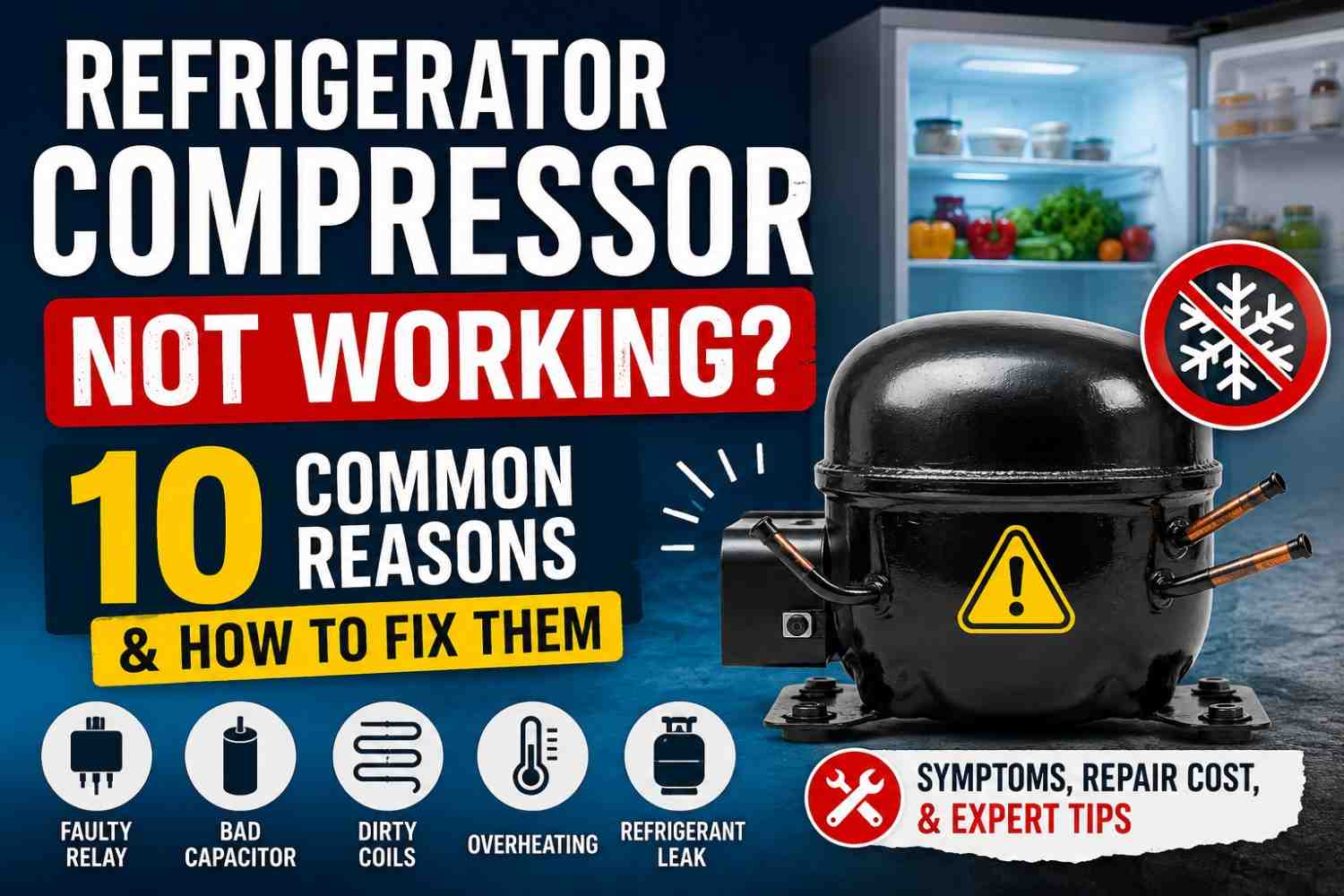
10 Common Reasons Why Your Refrigerator Compressor Is Not Working
The failure to start up the compressor of your refrigerator might happen due to various reasons. From the electrical problems to overheating issues, knowing the exact cause will help you avoid unnecessary costs.

1. Faulty Relay Start
The role of the starting relay is to assist the compressor in starting up its cycle. Failure or burnout of the starting relay makes the compressor fail to start in a refrigerator, often accompanied by the noise of a click after some time intervals.
- Symptoms: Sound of clicking, compressor not turning on
- Reason: Relay fails to transmit energy to compressor when the appliance starts
- Solution: Repair or change faulty start relay
2. Damaged Capacitor
The capacitor supplies the compressor with the necessary energy boost at startup. Failure of the capacitor results in the fridge compressor failing to start, despite the fridge having electricity and lighting features working well.
- Symptoms: Refrigerator lamp working, but compressor is not operational
- Reason: Capacitor is unable to give a burst of power to initiate compressor operation
- Solution: Change capacitor for the same ratings
3. Clogged Condenser Coils
The condenser coils help dissipate heat from the refrigerator. If the condenser coils are dusty or greasy, heat cannot be dissipated effectively; hence, the fridge compressor heats without cooling.
- Symptoms: Inefficient cooling, refrigerator runs without stop
- Reason: Heat cannot escape from coils due to dust accumulation, thus forcing compressor to work overtime
- Solution: Clean condenser coils after three to six months
4. Faulty Thermostat
The thermostat determines when the compressor starts and stops. Failure of the thermostat would mean that it cannot provide the right signals, thus keeping the compressor off and lacking cooling performance.
- Symptoms: Lack of cooling or irregular cooling
- Reason: Thermostat fails to send signals to the compressor based on temperature readings
- Solution: Set up or replace malfunctioning thermostat component
5. Voltage Problem
Insufficient voltages, damaged power cords, and poor connections between the plug and power source hinder the performance of the compressor. Therefore, there could be instances of the fridge compressor not working despite having all other features operational.
- Symptoms: Fridge operates partially but the compressor does not start.
- Reason: The fluctuating supply voltage or faulty connection disrupts the compressor's electricity.
- Solution: Fix the problem with voltage regulation and check your connections.
6. Faulty Compressor Motor
The compressor motor forms the primary element that helps circulate refrigerant. Should it get burned out or suffer internal damage, it would lead to a situation where you have a fridge compressor with no noise and cooling problems.
- Symptoms: No sound coming from the fridge compressor.
- Reason: Burnt or damaged motor inside the compressor.
- Solution: Repair or replace the compressor accordingly.
7. Refrigerant Leak
Refrigerant gas is crucial for cooling. A leaking compressor will continue operating without adequately cooling, causing a problem whereby the refrigerator compressor runs but does not cool.
- Symptoms: Fridge compressor runs but it does not provide cooling.
- Reason: The escaping gas causes a decrease in efficiency.
- Solution: Fix leaking and refill the gas.
8. Overheating
Insufficient airflow or coil blockage leads to overheating of the compressor. The compressor may stop functioning to protect itself from damage, resulting in poor cooling efficiency.
- Symptoms: Compressor keeps on stopping, ineffective cooling.
- Reason: Overheating due to inadequate ventilation or overload.
- Solution: Improve ventilation around the compressor.
9. Faulty Overload Protector
The overload protector prevents the compressor from overheating or suffering power surges. Should it malfunction, it would cut the power supply to the compressor, causing it not to operate correctly.
- Symptoms: Compressor keeps starting and shutting down.
- Reason: Fault inside the overload protector makes it cut off the supply to the compressor.
Solution: Replace the faulty overload protector.
10. Faulty Wiring
Any loose, damaged, or burnt wires would affect the electrical current going to the compressor. You would find that the fridge fan is working but the compressor is not.
- Symptoms: Fan spins but compressor does not spin.
- Reason: Damaged or loose wiring prevents power to the compressor.
- Solution: Repair or change internal wiring.
Common Causes of Refrigerator Compressor Failure
A failure of the compressor does not come suddenly; it results from prolonged use, overheating, and neglect. Problems like the compressor in a refrigerator not starting or the fridge compressor getting hot but not cooling begin small but worsen over time and end up resulting in total failure of the appliance.
| Problem | Symptoms | Difficulty to Fix |
| Faulty Start Relay | You may hear repeated clicking sounds, but the refrigerator compressor is not starting at all. | Easy |
| Dirty Condenser Coils | Heat doesn’t escape properly, causing poor cooling and gradual overheating of the compressor. | Easy |
| Thermostat Issue | The compressor doesn’t receive the signal to turn on, leading to inconsistent or no cooling. | Medium |
| Low Refrigerant Level | The fridge runs longer than usual, but cooling is weak or uneven across compartments. | Hard |
| Compressor Motor Failure | There is no sound or vibration from the unit, and the fridge completely stops cooling. | Very Hard |
Maintenance is key when it comes to avoiding these failures. Simple actions such as cleaning and inspecting the components could avoid problems with your fridge compressor not starting or even failure altogether.
What You Can Do If Your Refrigerator Compressor Is Not Working
There are several things you can do before contacting a technician if you have a problem with your refrigerator compressor not working. This will help determine whether your problem can be fixed easily or requires the expertise of an experienced technician.
- Check Voltage: Ensure the refrigerator is correctly connected to electricity and the voltage is consistent because any voltage drop can result in a fridge compressor not working, although all other functions are performing normally.
- Clean Condenser Coils: Cleaning the condenser coils is necessary to ensure proper air circulation inside the refrigerator and avoid problems such as a fridge compressor getting hot but not cold.
- Check Relay: The problem with the start relay may cause the compressor not to turn on, so observing any burn marks or rattles will be helpful.
- Adjust Thermostat: Improperly adjusted or jammed thermostat may cause the compressor not to work, which is why adjusting it may be helpful in solving the problem.
- Hear Sounds: Listen for any clicking or humming noises because they typically mean there might be some issues with the relay or the refrigerator compressor.
If the fridge fan operates normally while the compressor does not work, it usually means there is some issue with the electrical circuit or the components themselves, not with the compressor itself.
Repair vs Replace Refrigerator Compressor - What Should You Do?
The choice between repairing and replacing your appliance will depend largely on the gravity of the situation and the age of your appliance. In determining whether you should repair or replace your refrigerator compressor, diagnosis becomes essential.
| Situation / Condition | Repair or Replace | Reason |
| Minor electrical fault | Repair | Issues like relay, capacitor, or wiring faults are affordable and quick to fix without replacing the compressor. |
| Compressor overheating occasionally | Repair | Overheating is often caused by dirty coils or poor ventilation, which can be resolved with cleaning and servicing. |
| Old fridge (8–10 years) | Replace | Spending heavily on repairs for an older fridge is not practical, as efficiency is already reduced. |
| Complete compressor failure | Replace | Compressor replacement is costly and sometimes close to buying a new fridge, making replacement a smarter choice. |
Tip: You should note that if your refrigerator compressor is running but not cooling, there may be a minor problem like a gas issue or an airflow problem. Having it checked as soon as possible will save you from having to replace your fridge.
How Much Does Refrigerator Compressor Repair Cost?
There is no set price for repairing an issue with the refrigerator compressor being non-functional because many factors determine the price, such as the type of failure, brand of fridge, and costs of labor where you live. However, it could be cheaper for some faults but more expensive for others, particularly those involving the compressor.
| Issue | Estimated Cost Range (₹) | Notes |
| Start Relay Replacement | 500 – 1500 | One of the most common fixes when the refrigerator compressor is not starting, usually quick and budget-friendly. |
| Thermostat Repair | 1000 – 3000 | Costs depend on the brand and model, as some thermostats are more complex to replace. |
| Gas Refill | 2000 – 5000 | Needed when there’s a leak or low refrigerant, often seen in refrigerator compressor running but not cooling cases. |
| Compressor Replacement | 4000 – 10000+ | The most expensive fix, recommended only if the fridge is relatively new and worth repairing. |
Just because the compressor in your refrigerator isn't turning on, or even worse, it's completely silent, that doesn't mean you need to replace your entire unit. By starting off with an inspection, you may be able to find cheaper fixes.
Signs Your Refrigerator Compressor Is Completely Dead
When your fridge compressor is not functioning despite some minor troubleshooting steps taken by you, then it means that the component might have suffered permanent damage. Knowing about some symptoms of the faulty compressor would help you to prevent spending money and time on useless repair services.
- No Sound: In case the compressor is absolutely silent, it means that there was either internal motor failure or electrical malfunction inside it.
- No Cooling: Lack of cooling in case your fridge is powered can serve as an indicator of the refrigerator compressor problem.
- Clicking Sounds: The presence of frequent clicks but no work from the compressor may mean failure of the start relay or inability of the compressor to start due to some reasons.
- Overheating: An unusually hot compressor, which stops working because of overheating, might have suffered internal damage.
- Both Fan and Compressor Stopped: When the fan and compressor both do not work, there might be some serious problem with them or electricity supply.
These symptoms usually mean the compressor has reached the end of its life and replacement is the most practical solution.
Pro Tips to Prevent Refrigerator Compressor Failure
The best method of avoiding instances of your fridge compressor stopping is by maintaining your fridge in proper conditions.
- Clean Coils: Cleaning your condenser coils ensures that there is no dust that may prevent efficient heat dissipation and consequently the compressor from over-heating.
- Avoid Overloading: This means that when loading your fridge, you should be careful about how much load you put inside because over-loading affects airflow which increases the pressure on the compressor.
- Ensure Ventilation: Giving the right space for ventilation helps in efficient cooling which prevents strain on the compressor.
- Temperature Setting: Maintaining the correct temperature settings ensures that the compressor does not work continuously and over-exert itself.
- Service Check-ups: Checking your fridge periodically ensures that the small problems that might lead to large fridge compressor problems are taken care of.
How NoBroker Can Help With Refrigerator Compressor Repair
In case the refrigerator compressor not working reasons seem complicated or difficult to understand, seeking professional help will ensure accurate diagnoses and prevent any unnecessary harm or cost.
- Professional Technicians: Skilled technicians can determine whether it is a simple problem or a severe fridge compressor issue.
- Fast Response: Prompt services at the doorsteps can help address emergency situations such as the fridge compressor not running.
- Transparent Pricing: You will receive an honest quote at the outset so that there are no unexpected costs involved during the repairs.
- Warranty for Services: The services will include a guarantee, giving you confidence in case the problem recurs despite repair work.
If your fridge lights on but the compressor is not running or you’re unsure about the problem, it’s best to call a technician immediately to avoid further internal damage. NoBroker makes the entire process smooth, reliable, and stress-free with trusted professionals.
Conclusion
If your fridge compressor isn’t working, it does not necessarily mean that all is lost.There are ways to handle such a problem with ease, including proper troubleshooting and maintenance. Indeed, some issues that may arise are very frequent and easy to deal with. That being said, one should know when to replace the compressor as well.
Cities We Cover for Refrigerator Repair Services
NoBroker provides reliable refrigerator repair services across major Indian cities including Bangalore, Mumbai, Chennai, Delhi, Pune, Hyderabad, Gurgaon, Noida, Ghaziabad, Greater Noida, and Faridabad. Enjoy 15-minute technician assistance, 180-day warranty, and 100% genuine spare parts for hassle-free doorstep repairs.
What Brands Do We Cover For Refrigerator Repair Services?
From Samsung, LG, Whirlpool, Godrej, Bosch, IFB, and Haier to Panasonic, Hitachi, Siemens, and more, NoBroker provides expert refrigerator repair services for all major brands. Get quick diagnosis, 100% genuine spare parts, and reliable doorstep repairs for long-lasting performance.
Frequently Asked Questions
1. Why is my refrigerator compressor not starting?
2. What should I do if my fridge compressor is not turning on?
3. Can a refrigerator run without a compressor?
4. Why is my fridge compressor heating but not cooling?
5. How do I know if my fridge compressor is dead?
6. Is it worth repairing a refrigerator compressor?
7. Why is my fridge light on but the compressor is not running?
8. What causes the fridge compressor to make no sound?
9. How long does a refrigerator compressor last?
10. What happens if the compressor is not working in the refrigerator?

Login / Sign up
Zero Brokerage.
Thousands of new listings daily.
100 Cr+ Brokerage saved monthly.
About the Author

Siri Hegde K
Senior Editor


Recent Blogs

Subscribe to our Newsletter
Get latest news delivered straight to your inbox