How a Refrigerator Compressor Works: Complete Guide to Working Principle, Types, Problems, and Maintenance

68 Views
Table of Contents
The refrigerator compressor can be referred to as the heart of the refrigerator cooling system because it ensures that the refrigeration process remains constant. Learning about refrigerator compressor operation can help you detect cooling problems and ensure maximum efficiency in your refrigeration appliance. Whether you need information on how a fridge compressor operates or need in-depth insight into its basic operating principles, this blog will provide all the necessary details.
What Is a Refrigerator Compressor?
The refrigeration system compressors serve to compress and circulate gases. The gas is pressurized and heated up so as to facilitate the heating and cooling process in the refrigerator. In order to understand how a compressor works in a refrigerator, one has to understand its operation in the refrigeration process.
Why Does a Refrigerator Need a Compressor?
A compressor is needed to facilitate the circulation of the refrigerant around the cooling system. It generates the pressure differential necessary for heat exchange.
- Refrigerant circulation within the system
- Ensures a continuous cooling process
- Pressure and temperature increase of the refrigerant
- Assists in the removal of heat within the refrigerator
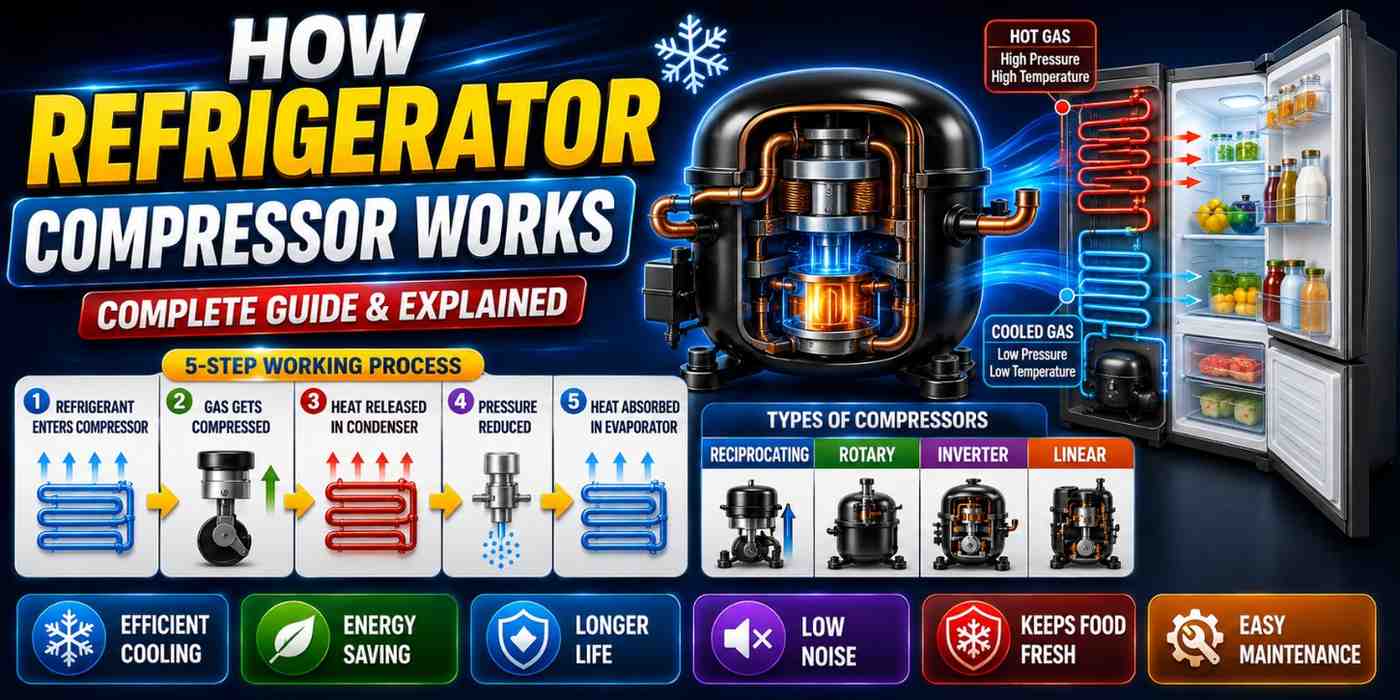
How a Refrigerator Compressor Works: Step-by-Step Explanation
It is much easier to comprehend how refrigerators compressors work when the cooling process is divided into several easy steps.
Step 1: The Refrigerant Reaches the Compressor
Refrigerant gas, after leaving the evaporator, reaches the compressor, where the gas is filled with heat that was collected in the refrigerator interior and is prepared for compression.
Step 2: Compression of the Refrigerant Gas
As a result, the compressor increases the pressure of the refrigerant gas to allow it to efficiently release the absorbed heat in the condenser coils.
Step 3: Removal of Heat via the Condenser
The high pressure gas then goes through condenser coils that are placed either inside or at the bottom of the refrigerator. As air surrounds the coils, the refrigerant releases heat and becomes liquid.
Step 4: Expansion and Cooling
Liquid refrigerant now enters an expansion valve that is designed to reduce the pressure instantly. With reduced pressure, the refrigerant becomes cooled to prepare for the next process in the refrigerator.
Step 5: Heat Absorption Inside the Refrigerator
This cooled refrigerant moves through the evaporator coils that surround the refrigerator interior. By absorbing the heat from the refrigerator interior, the refrigerant warms up and becomes gaseous again.
Main Parts of a Refrigerator Compressor System and How They Work
A number of other elements combine to form the refrigeration system along with the compressor for the proper functioning of the refrigerator.
| Component | Function |
| Compressor | Compresses and circulates refrigerant |
| Condenser Coils | Release heat from the refrigerant |
| Expansion Device | Reduces refrigerant pressure |
| Evaporator Coils | Absorb heat from the refrigerator interior |
| Refrigerant | Transfers heat throughout the system |
| Thermostat | Controls the cooling operation |
Different Types of Refrigerator Compressors: Quick Comparison Table
Different compressor types impact energy efficiency, noise generation, and cooling capacity. This understanding allows for explaining differences in compressor operation between various refrigerators.
| Compressor Type | How It Works | Features | Common Usage |
| Reciprocating Compressor | Uses piston movement for compression | Reliable and affordable | Single-door refrigerators |
| Rotary Compressor | Uses rotating mechanism to compress refrigerant | Quieter operation | Double-door refrigerators |
| Inverter Compressor | Adjusts speed according to cooling demand | Energy-efficient and low noise | Modern refrigerators |
| Linear Compressor | Uses linear motion instead of rotational movement | Reduced friction | Premium models |
How Refrigerator Compressors Work in Different Types of Refrigerators
Compressor operations vary based on various factors related to the refrigerator model being used.
| Refrigerator Type | Compressor Type | How It Works | Key Features |
| Single-Door Refrigerator | Reciprocating | Runs at fixed speed | Cost-effective cooling |
| Double-Door Refrigerator | Rotary | Delivers stable cooling performance | Better efficiency |
| Frost-Free Refrigerator | Rotary/Inverter | Supports automatic defrost cycle | Consistent temperature |
| Side-by-Side Refrigerator | Inverter | Adjusts cooling according to load | Energy savings |
| Smart Refrigerator | Inverter Compressor | Optimizes performance using sensors | Advanced efficiency |
What Are the Common Problems in a Refrigerator Compressor?
Faults in the compressor will influence the effectiveness of cooling, consume additional energy, and can also cause your refrigerator to stop working.
- Failure of the compressor to start
- Heated compressor
- Strange noises coming from the compressor
- Refrigerator not cooling
- Cycling of the compressor
- Running continuously
- Leaking refrigerant in the compressor
These issues usually indicate that the compressor is under stress or not functioning properly, and in some cases may lead to the compressor not working, so it should be checked early to avoid further damage to the refrigerator.
Expert Tips for Refrigerator Compressor Maintenance and Efficient Performance
The right maintenance will help increase the lifetime of the compressor and cooling performance while preventing expensive repairs or the need for replacement.
- Clean condenser coils frequently
- Do not overload the refrigerator
- Provide adequate ventilation
- Maintain door seals
- Maintain the ideal fridge temperature
- Have your refrigerator serviced regularly
Conclusion
With knowledge about the function of a refrigerator compressor, it is now easy to see how the device contributes to food preservation and proper cooling of your food. Regardless of whether you want to know more about how does a fridge compressor work, as well as inverter compressor work in refrigerators, it would pay off to perform some maintenance on it from time to time.
Cities We Cover for Refrigerator Repair Services
NoBroker provides reliable refrigerator repair services across Bangalore, Chennai, Hyderabad, Delhi, Mumbai, Pune, Ghaziabad, and many more cities. Get 15-minute technician assistance, expert diagnosis, and hassle-free doorstep repairs for all major refrigerator issues.
Brands Covered Under Our Refrigerator Repair Services
NoBroker provides trusted refrigerator repair services across all major brands like Samsung, LG, Whirlpool, Godrej, Bosch, IFB, Haier, Panasonic, Hitachi, Siemens, and more. Benefit from a 180-day warranty, expert diagnosis, and hassle-free repairs at your doorstep.
Frequently Asked Questions
1. How does a refrigerator compressor function in easy words?
2. How does a fridge compressor operate without stopping?
3. How do refrigerator compressors operate in an inverter refrigerator?
4. What will happen when the compressor in your refrigerator breaks down?
5. How do you identify a problematic refrigerator compressor?
6. How does the inverter compressor work in refrigerator systems?
7. Is the compressor the most essential component of a refrigerator?
8. Can a refrigerator compressor be repaired?
9. Does cleaning condenser coils affect the performance of the compressor?
10. How long does a refrigerator compressor typically last?

Login / Sign up
Zero Brokerage.
Thousands of new listings daily.
100 Cr+ Brokerage saved monthly.
About the Author

Siri Hegde K
Senior Editor


Recent Blogs

Subscribe to our Newsletter
Get latest news delivered straight to your inbox