Condensation in Fridge: Common Causes, Signs, Fixes, and Prevention Tips
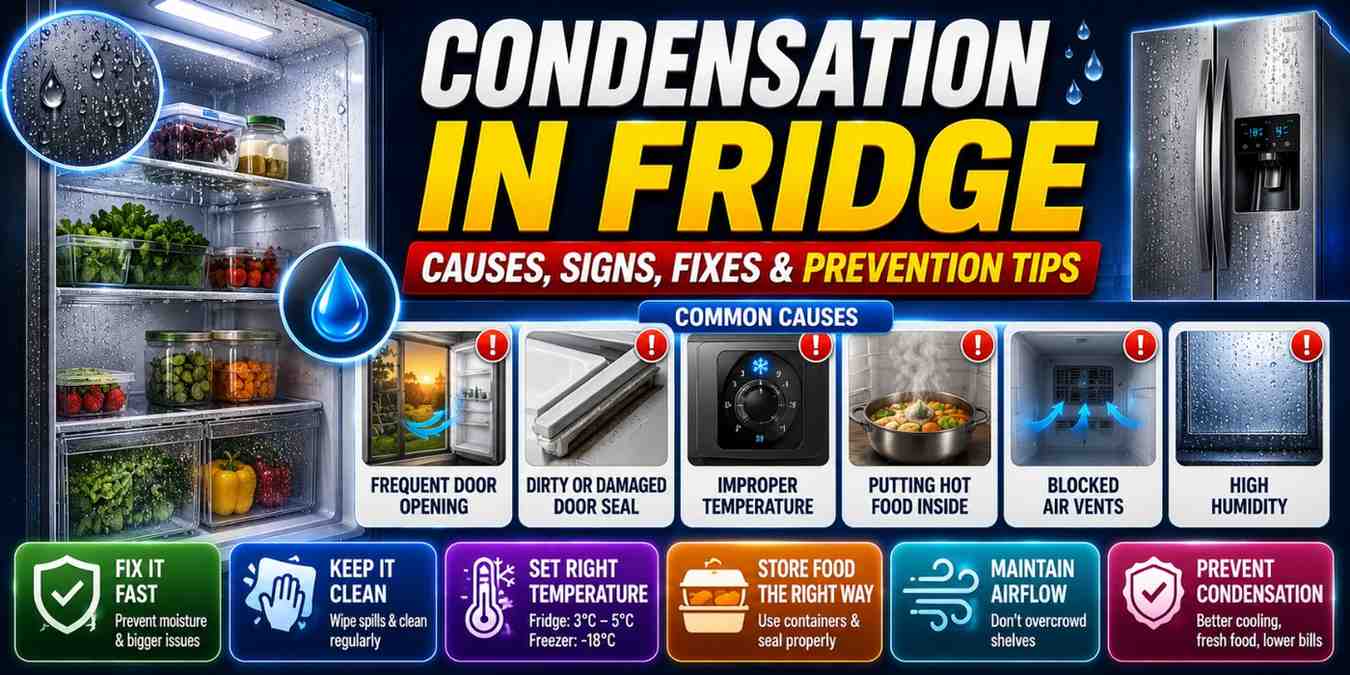

138 Views
Table of Contents
Water accumulation in the fridge is a common problem that many homeowners have experienced at least once in their lives. Whether you find water drops on the shelves of your fridge, moisture inside your food boxes, or sweating on your fridge itself, having too much condensation might be harmful to its functionality. Knowing how to spot condensation in your fridge and what causes it will help you avoid future problems.
What Is Condensation in a Fridge?
Fridge compartment condensation results from humid air that is warm contacting cool parts in the fridge. The difference in temperatures will cause water vapor to condense into water droplets. Condensation in the refrigerator is usually okay in moderation, but excessive condensation in the fridge compartments could be an indicator of some problems.
Is Condensation in a Fridge Normal?
Condensation in fridge compartments can form in small quantities under conditions of humidity or frequent door openings. Nonetheless, the consistent presence of moisture in fridge compartments should not be overlooked.
- A couple of water drops after several times of the door opening
- Presence of moisture in bottles or containers
- Temporary formation of moisture in case of hot and humid weather
- Condensation that vanishes after stabilization of the fridge
Common Areas Where Condensation Appears Inside a Fridge
| Location | Possible Reason |
| Door gasket area | Damaged or loose door seal |
| Vegetable crisper drawer | High humidity from stored produce |
| Back wall of fridge | Cooling cycle and temperature fluctuations |
| Shelves and compartments | Warm air entering frequently |
| Bottles and beverage containers | Temperature difference between the contents and the air |
| Freezer door | Poor sealing or excess humidity |
| Food storage containers | Trapped moisture from warm food |
| Fridge freezer section | Improper airflow between compartments |
Common Causes of Condensation in a Fridge and How to Fix Them
Moisture buildup in fridge parts is often caused by humidity, inadequate seals, improper temperatures, or blocked circulation of air. Finding the specific cause can help minimize moisture buildup in the fridge parts.
1. Frequent Opening of Fridge Door
Opening the fridge door often exposes the fridge to warm air that leads to condensation in my fridge and moisture build up in fridge parts.
How to Fix It
- Reduce instances of opening the fridge
- Immediately close the fridge once done
- Arrange foods in the fridge to avoid frequent opening
- Do not keep the fridge door open, trying to decide what to take
2. Damaged or Dirty Door Gasket
The broken or dirt-filled gasket seal causes the continuous entry of outside air, which results in condensation inside the refrigeration compartments.
How to Fix It
- Wipe the gasket seal with a soft cloth dipped in mild detergent solution.
- Look out for any signs of breaks and cracks in the gasket seal.
- Replace damaged gasket seals immediately.
- Make sure that the fridge door closes tightly.
3. Improper Setting of Cooling Temperature
Improper settings of the cooling temperature inside the fridge lead to condensation in the freezer compartments.
How to Fix It
- Set the ideal refrigerator temperature from 3°C to 5°C.
- Set freezer temperatures from 0°C to –18°C.
- Do not make the temperature very low or very high.
4. Putting Hot Foods in the Fridge
The hot foods release steam, which leads to the creation of excessive condensation inside food boxes kept in fridge compartments.
How to Fix It
- Let the food cool before putting it in the fridge compartment.
- Use air-tight food containers.
- Keep all fluids covered inside the refrigerator.
5. Blocked Air Vents
Air vent blockage causes condensation formation at the back of the fridge and non-uniform cooling within the fridge.
How to Fix It
- Do not place food containers on vents
- Prevent shelves from being too crowded
- Place items in such a way that there is airflow in between
- Clean out air vents regularly
6. High Humidity
Condensation in high humidity causes water formation on bottles within the fridge compartments.
How to Fix It
- Reduce the number of times you open the refrigerator
- Use moisture absorbers if required
- Ensure that your kitchen is well-ventilated
- Inspect fridge door seals often
Why It’s Important to Remove Condensation in Your Fridge
Moisture in a fridge could have negative impacts on the quality of food stored there, cause bad smells, and lead to increased energy consumption by your unit. Taking steps to eliminate condensation early is an effective way to preserve the functionality of your refrigerator.
Risks of Ignoring Condensation
- Fungal growth within the device
- Spoiled food items due to excess moisture
- Bad smell in the fridge
- Higher energy use
- Destruction of the inside of the fridge
- Inefficient cooling process
- Water collection in compartments
Benefits of a Condensation-Free Fridge
- Efficient food storage
- Energy savings
- Prevention of fungal growth
- Extended refrigerator life
- More efficient cooling mechanism
- Maintained the cleanliness of the interior
Regular maintenance and proper usage can significantly reduce moisture buildup and help your refrigerator perform efficiently for a longer time. For better hygiene and care, you can also check our detailed guide on how to clean refrigerator from inside.
When Should You Call a Technician for Fridge Condensation Problems
When condensation formation in fridge compartments is ongoing despite initial steps to fix the issue, it becomes necessary for the fridge to undergo a thorough inspection that could find a cooling system malfunction, faulty sensors, or other seal-related problems.
- Water forms in the fridge continuously
- The seal of the fridge door looks broken
- Fridge cooling efficiency reduces greatly, sometimes leading to refrigerator not cooling properly
- There is persistent condensation on the freezer door
- Regular condensation occurs at the rear of the fridge walls
- Strange sounds coincide with water formation
- Do-it-yourself methods cannot solve the problem
How to Prevent Condensation in the Fridge and Maintain Proper Cooling
Condensation prevention inside refrigerator compartments requires good practices, routine servicing, and consistent internal temperature control.
- Keep door seals in good condition
- Don’t place warm foods inside directly
- Close the door when not required
- Place foods in sealed storage containers
- Adhere to recommended temperature settings
- Don’t overcrowd shelves
- Provide adequate room for ventilation
- Regularly service your refrigerator
- Check vent blockage on a periodic basis
- Maintain appropriate kitchen humidity conditions
Conclusion
The problem of condensation in the refrigerator may arise because of many reasons, such as warm air entering the compartment, moisture, lack of proper storage, or problems related to sealing. Although some level of moisture in the refrigerator may be acceptable sometimes, it is better to solve this issue. This can be achieved by learning about the reason behind condensation and maintaining your refrigerator through preventive practices and professional help from service providers like NoBroker.
Cities We Serve for Refrigerator Repair Services
If you’re looking for refrigerator repair services, NoBroker provides coverage across Bangalore, Chennai, Hyderabad, Delhi, Mumbai, Pune, Gurgaon, Noida, Ghaziabad, Greater Noida, Faridabad, and several other locations. Our service includes a 180-day warranty, use of genuine spare parts, and fast doorstep assistance for a hassle-free experience.
What Brands Do We Cover For Refrigerator Repair Services?
We provide professional refrigerator repair services for all major brands, including Samsung, LG, Whirlpool, Godrej, Bosch, IFB, Haier, Panasonic, Hitachi, Siemens, and others. Our service ensures fast technician visits, the use of 100% genuine spare parts, and reliable doorstep support for efficient appliance repair.
Frequently Asked Questions
1. Why do I get condensation in my refrigerator?
2. Can condensation in my fridge be considered a threat to my safety?
3. Why is my fridge sweaty from the inside?
4. Why does water accumulate on bottles in my fridge?
5. Why is condensation occurring on my freezer door?
6. How do I stop condensation from forming in my fridge?
7. Why does food packaging form condensation within the fridge?
8. Can the clogging of air vents result in condensation in my fridge?
9. Does condensation formation on the fridge back happen normally?
10. Are Samsung, Hitachi, and Whirlpool fridges prone to condensation?

Login / Sign up
Zero Brokerage.
Thousands of new listings daily.
100 Cr+ Brokerage saved monthly.
About the Author

Siri Hegde K
Senior Editor


Recent Blogs

Subscribe to our Newsletter
Get latest news delivered straight to your inbox