How to Clean a Refrigerator from Inside Easily: Complete Guide with Steps, Mistakes to Avoid, and Maintenance Tips

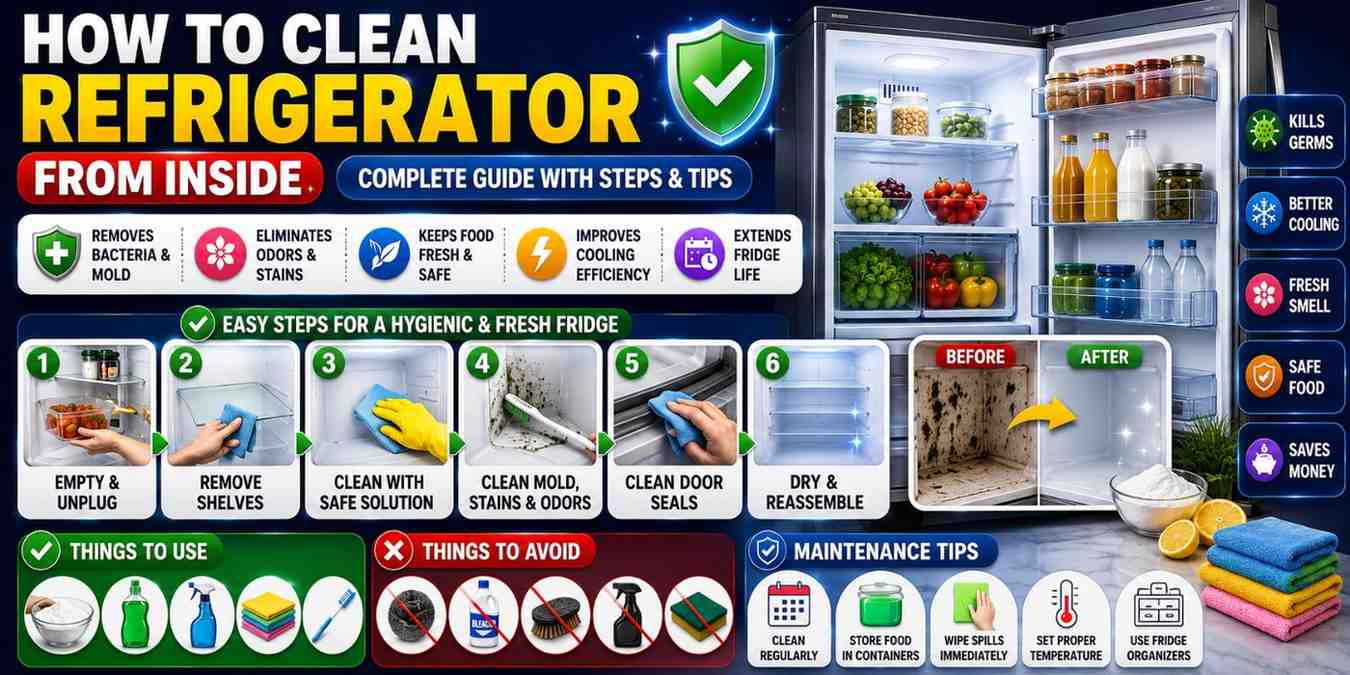

Appliance Tips & Guides

111 Views
Table of Contents
Your fridge constantly works hard for you to keep your food fresh, but at the same time, it accumulates dirt, spills, odors, mold, and more. Cleaning your refrigerator on the inside will ensure hygiene, no odor, proper use of food products, and efficient operation of the refrigerator itself. This blog discusses how to clean the inside of the fridge, eliminate stains and mold, clean the freezing chamber, and avoid the most typical errors when cleaning the fridge.
Why Cleaning Your Refrigerator Is Important
Proper fridge cleaning will help prevent the formation of bacteria, remove odours, improve the hygiene of stored food products, and prolong the life of the appliance itself. Knowing how to clean the refrigerator from inside will assist you in spotting any possible leaks, spoilage, and mold formations at an earlier stage.
- Prevents bacteria and mold formation
- Eliminates food odour and stains
- Ensures the freshness of fruits and vegetables, and other foods kept inside
- Increases refrigeration efficiency
- Prevents food contamination
- Allows to spot leaks or faulty shelves early
Things You Need Before Cleaning Your Refrigerator (and What to Avoid)
At the outset, collect some cleaning materials that are safe to use when you want to clean your refrigerator. You should avoid the use of any chemicals that will harm the surfaces inside the fridge.
| Things You Need (Safe Supplies) | Things to Avoid (Can Cause Damage) |
| Microfiber cloth | Steel wool scrubbers |
| Soft sponge | Sharp scraping tools |
| Mild dish soap | Strong bleach solutions |
| Baking soda | Harsh chemical cleaners |
| Warm water | Acidic cleaners in high concentration |
| Spray bottle | Abrasive scouring pads |
| Soft toothbrush | Metal brushes |
| Dry towel | Excessive water spraying |
Step-by-Step Process to Clean a Refrigerator from the Inside
The task of cleaning the fridge can be made simpler by adhering to a set process that involves all aspects, right from taking out foodstuffs until cleaning the fridge compartments, shelves, and any stains, rust, or molds.
Step 1: Turn Off the Fridge and Unload It
- Remove the food stuff
- Throw away old things
- Uninstall the shelves and drawers
Step 2: Prepare a Safe Cleaning Solution
- Baking soda mixture
- Soft soap mixture
- Tools to clean the fridge
Step 3: Cleaning the Shelves, Drawers, and Trays
- Soak and clean the detachable parts
- Dry them up completely
Step 4: Clean the Interior Walls of the Refrigerator
- Wipe everything inside
- Clean the corners and door bins
Step 5: Clean the Freezer Compartment
- Remove everything from the freezer
- Defrost the fridge
Step 6: Install and Turn On the Fridge
- Reinstall everything
- Arrange the food
- Turn on the fridge
How to Clean Refrigerator Mold, Stains, Odours, and Door Seals Easily
Nobody likes mold, stains, or bad smells inside a refrigerator. Cleaning them regularly helps maintain hygiene, improves cooling efficiency, and keeps food fresh. Below, we explain simple ways to clean each part safely and effectively.
How to Clean Mold Inside a Refrigerator
Mold can grow inside fridges because of moisture, spills, or forgotten foods left behind. Prompt cleaning will help keep the fridge clean, prevent odors, and preserve food.
Steps:
- Clear the surrounding area of any foodstuffs
- Put on your gloves before cleaning the mold
- Use a baking soda and water mixture to spray
- Rub gently with a soft brush or sponge
- Wipe with a damp clean cloth
- Dry the compartment completely
How to Clean Stains, Yellow Stains, and Rust inside a Refrigerator
A dirty refrigerator with stains, yellow marks, and rust is unhygienic and untidy. Using safe ways to clean these can help bring back a new appearance without causing damage to the shelves or plastic.
Steps:
- Cover stains with a paste of baking soda
- Allow paste to stay for 10-15 minutes
- Scrub food stains with a soft sponge
- Clean yellow stains on plastic with a soft sponge
- Remove rust spots with a soft brush
- Wipe any residue using a wet cloth
How to Get Rid of Bad Smells in Your Refrigerator
The smell of old food or other odors can be eliminated from refrigerators by taking certain steps. It is crucial for hygiene purposes.
Steps:
- Remove any stale food from your fridge
- Clean any spillages immediately
- Put some baking soda in an open container
- Wash the shelves and compartments periodically
- Make sure that things have enough air space
- Clean all corners, including those on the doors
- Avoid making the refrigerator humid
How to Clean Refrigerator Door Seals (Gaskets)
The seals in your fridge doors usually tend to accumulate dust, debris, and even moisture, which may cause problems with your fridge's efficiency.
Steps:
- Open your fridge door completely
- Brush the grooves with a soft brush
- Clean the seals using a warm water and soap solution
- Remove any accumulated dirt from hard-to-reach spots
- Dry the seal after cleaning
- Check the seal for cracks and tears
How Often Should You Clean Your Refrigerator?
Routine cleaning will help prevent buildup and make maintenance easier. By following a schedule, your fridge will remain hygienic and efficient throughout the year.
| Type of Cleaning | How Often | What to Do | Why It Matters |
| Quick wipe-down | Weekly | Clean spills and crumbs | Prevents stains and odours |
| Shelf cleaning | Every 2 weeks | Wipe shelves and drawers | Maintains hygiene |
| Deep interior cleaning | Monthly | Clean all compartments thoroughly | Removes hidden dirt and bacteria |
| Freezer cleaning | Every 3–4 months | Remove ice and clean surfaces | Improves efficiency |
| Door seal cleaning | Monthly | Clean gasket areas | Ensures proper door sealing |
| Full refrigerator inspection | Every 6 months | Check for mold, rust, and damage | Prevents costly repairs |
When to Call a Technician for Refrigerator Cleaning
Although you can clean the fridge yourself, sometimes, problems need the expertise of professionals. If cleaning fails to help, it may be due to a malfunction that exists within the fridge.
- There are stubborn bad odours in the fridge even after cleaning.
- The mold keeps coming back no matter what.
- The fridge shows water leakage.
- Rusting is taking place.
- The cooling function is poor.
- The drain lines look clogged.
- Components within the fridge need cleaning.
In case you experience poor cooling capacity, stubborn mold growth, clogging drain lines, or bad odour in your fridge despite doing extensive cleaning, it is time to contact NoBroker Services for help.
Common Mistakes to Avoid While Cleaning a Refrigerator
Refrigerators often suffer from accidental damage by individuals when they clean them. It is important to avoid such mistakes in order to maintain the appliance’s functionality and prevent costly maintenance work.
- Using abrasive scrubbing materials
- Using too much water
- Cleaning the appliance when it is turned on
- Failing to wipe surfaces thoroughly
- Using harsh chemicals
- Neglecting door seals and corners
- Putting away food without wiping down surfaces
Tips to Keep Your Refrigerator Clean for Longer
Proper practices on a day-to-day basis will allow you to maintain cleanliness and freshness without having to engage in thorough cleaning on a regular basis.
- Storing food items in closed containers
- Immediately wiping spilled foods
- Checking expiry dates on a weekly basis
- Using refrigerator organizers
- Regularly wiping down shelves
- Not overcrowding the compartments
Final Thoughts
Understanding how to clean the inside of the fridge is necessary to ensure food safety, prevent odor formation, and make sure that the appliance works effectively. If you wish to know how to deep clean inside the fridge, how to clean mold inside the fridge, how to clean inside the freezer, or how to get stains off inside the refrigerator, performing appropriate cleaning procedures may help your appliance stay in good condition. Proper maintenance, timely clean up after spilling, and regular deep cleaning procedures will assist you in keeping your fridge working effectively for a long period.
Cities We Serve for Refrigerator Repair Services
Whether you're in Bangalore, Mumbai, Chennai, Delhi, Hyderabad, Pune, or NCR cities, NoBroker provides professional refrigerator repair services at your doorstep. Enjoy fast 15-minute technician assistance, accurate diagnosis, and genuine spare parts for long-lasting repairs.
Brands We Serve for Refrigerator Repair Services
NoBroker provides expert washing machine repair services for major brands such as Samsung, LG, Whirlpool, IFB, Bosch, Siemens, Haier, Godrej, Panasonic, and more. Our skilled technicians are equipped to diagnose brand-specific faults accurately, ensuring dependable repairs and smooth appliance performance.
Frequently Asked Questions
1. How do you clean the inside of your refrigerator naturally?
2. What are some ways to deeply clean the inside of your refrigerator?
3. When should I deep clean my refrigerator?
4. How do you clean mold on the inside of a refrigerator?
5. How do you clean the inside of a freezer?
6. How to get rid of stains from the interior of your refrigerator?
7. How to get rid of yellow stains from the interior of your refrigerator?
8. How to get rid of rust stains from the interior of your refrigerator?
9. Can I clean my refrigerator interior using bleach?
10. Why does my refrigerator smell despite thorough cleaning?

Login / Sign up
Zero Brokerage.
Thousands of new listings daily.
100 Cr+ Brokerage saved monthly.
About the Author

Siri Hegde K
Senior Editor


Recent Blogs
Subscribe to our Newsletter
Get latest news delivered straight to your inbox