Crack Inside Fridge: What Causes It, Is It Dangerous, and How to Fix or Replace It

605 Views
Table of Contents
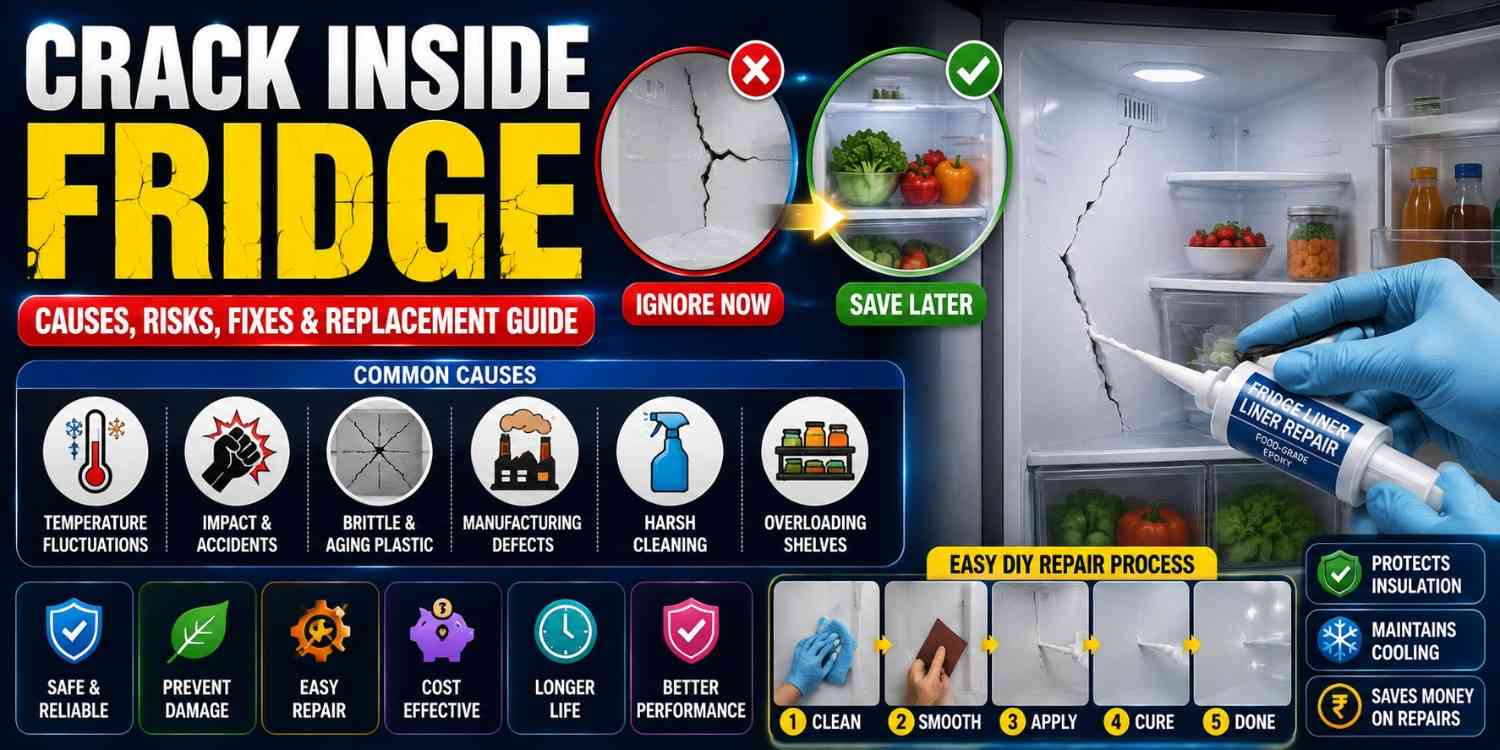
The occurrence of cracks in refrigerators' interior components is one of the typical faults that many homeowners encounter after years of usage. No matter what factors contributed to the formation of the cracks in the plastic component of your fridge, it is critical to know how serious the damage is. If your fridge was cracked from the inside or you have seen such cracks on your fridge's interior components, you should be aware of what to do next.
Is a Crack Inside a Fridge Dangerous?
A minor crack within the fridge lining is harmless; however, this problem cannot be overlooked. The presence of a crack makes moisture get stuck inside, and thus, leads to the development of mold and affects the effectiveness of the insulation. When the crack gets too deep to cause the insulation material and wires to become exposed, it can become a serious issue.
What Causes Cracks Inside a Refrigerator?
An internal fridge crack can happen due to temperature change, accidents, old age, plastic liners, overloading of fridge shelves or defects in the manufacture. An internal fridge crack may form gradually due to expansion and contraction within the freezer walls.
- Fluctuation in temperatures
- Accidents involving impact on internal surfaces
- Brittle and old plastic liners
- Faulty manufacturing process
- Aggressive cleaning procedures
- Overloading compartments with food items
Types of Cracks Found Inside Refrigerators and What They Mean
Cracks on fridge interiors do not always have the same level of severity. There are those cracks that merely serve as a cosmetic problem, but there are others that signify insulation problems.
| Type of Crack | Common Location | What It Means | Can It Be Fixed? |
| Surface Crack | Interior liner | Cosmetic damage | Yes |
| Deep Plastic Crack | Side walls | May affect durability | Yes |
| Crack Near Vents | Air circulation area | Cooling efficiency may reduce | Usually |
| Crack Inside Freezer Wall | Freezer compartment | Possible insulation concerns | Sometimes |
| Structural Split | Rear panel | Potential major damage | Depends |
Types of Fridge Cracks (Explained in Detail)
Various types of fridge cracks need various methods to be applied in fixing them. Determining the specific kind of crack is crucial in determining whether it is repairable or needs professional inspection.
1. Surface Hairline Crack
This is the most frequent type of crack on the fridge panels. This type of crack only involves the outer layer of the plastic material and does not affect the cooling ability of the fridge.
2. Deep Crack in Plastic Lining
The deep crack goes beyond just the surface and could compromise the structural integrity of the fridge's interior. In such cases, the entry of moisture into the cracked area could further exacerbate the problem.
3. Crack in the Interior Wall of the freezer
A crack that occurs in freezer wall sections may be caused by temperature changes or accidental bumping. Smaller cracks will not pose an immediate risk, although bigger cracks will need repair.
4. Shelf Support Crack
These types of cracks are found near the area of molded shelf brackets or supports. Overloading your refrigerator shelves with heavy cans may cause stress and ultimately lead to the formation of cracks.
5. Vent Area Crack
The presence of cracks near vent areas would disrupt the flow of air into your fridge. This causes inefficiencies in temperature control and performance and may need repairing.
6. Structural Split or Large Separation Crack
Structural splits or large separation cracks are among the most serious refrigerator damage. These can cause insulation exposure and may compromise the energy efficiency of the appliance.
Can You Still Use a Fridge With an Internal Crack?
Yes, in most situations. The presence of a crack inside my fridge does not necessarily mean that it cannot function safely if its operation is unimpaired and its insulation is protected from harm.
| Situation | Is It Safe to Use? | What You Should Do |
| Small surface crack | Yes | Monitor and repair |
| Deep liner crack | Usually | Seal immediately |
| Exposed insulation | No | Contact technician |
| Crack near electrical parts | No | Stop use and inspect |
| Minor freezer crack | Usually | Repair soon |
In most cases, small internal cracks are not an immediate safety risk, but they should be monitored closely and repaired before they get worse. If ignored, they may also lead to issues like a refrigerator making noise due to internal stress or loose parts.
How to Repair a Crack Inside a Refrigerator
Repairing any crack that occurs within the fridge liner helps avoid water damage to the appliance. Tiny cracks made by plastics are quite easy to fix using simple do-it-yourself techniques and the appropriate materials.
Tools and Materials Needed
- Food-grade epoxy glue
- Fridge liner repair kit
- Fine-grit sandpaper
- Cloth
- Detergent
- Plastic scraper
- Gloves
- Masking tape
Step-by-Step DIY Repair Process
Step 1: Cleaning the Damaged Area
All items, such as food or furniture, should be removed from the vicinity of the damaged area. It is important to clean the area of the cracks using a mild soap solution and then dry it.
Step 2: Ensuring That the Surface Is Moisture-Free
It is crucial to make sure that the damaged area is completely dry, otherwise, it may affect the repair process adversely. For this reason, the damaged area should be left open to dry completely.
Step 3: Smoothening of Crack Edges
Smooth the raised edges along the crack by gently rubbing them with fine-grit sandpaper. This will help with the effective bonding of the filler material to be used for the repair.
Step 4: Filling of the Crack with Food Safe Epoxy or Repair Compound
Apply a food-safe epoxy or any plastic repair compound to cover all cracks in the damaged area. Follow the instruction manual while applying the compound.
Step 5: Allow Curing of the Repair
Let the glue set for the specified time frame. Make sure that the repairs do not interfere with the use of the refrigerator's compartments, since doing so may affect the setting process of the adhesive.
Step 6: Examine and Reassemble the Refrigerator
After the repair is done, examine the area where you have applied the repair. This will enable you to see whether there are any gaps or weaknesses in your repairs.
Common Mistakes to Avoid When Repairing Cracks Inside a Refrigerator
DIY repair work usually doesn’t last long, as people make mistakes like not preparing, using the wrong kind of glue, neglecting curing time, etc. Good preparation is critical for a good repair.
- Using non-food-safe glue
- Applying adhesive to wet surfaces
- Ignoring crack expansion
- Skipping surface preparation
- Overfilling the damaged area
- Not allowing sufficient curing time
Refrigerator Crack Repair vs Replacement Cost: Which Is the Better Choice?
It all depends on how serious the crack is. Minor cracks that are purely aesthetic can be repaired, but major cracks exposing the insulation should be replaced.
| Issue Type | Estimated Repair Cost | When to Choose Repair or Replace |
| Surface crack | ₹300 – ₹1,000 | Repair |
| Deep plastic crack | ₹800 – ₹2,500 | Repair |
| Crack inside freezer wall | ₹1,500 – ₹4,000 | Depends on severity |
| Insulation damage | ₹3,000 – ₹8,000 | Evaluate appliance age |
| Major structural damage | ₹8,000+ | Consider replacement |
When to Call a Fridge Technician for a Cracked Fridge
It is advised to seek professional assistance if there are cracks that compromise the cooling ability, cause insulation exposure, show a tendency to spread, or happen in proximity to electrical parts.
- The crack gets bigger
- Insulation becomes exposed
- Cooling becomes less effective
- Water leakage occurs
- Extensive cracking inside the freezer
- Near electrical parts
For deep internal cracks, insulation damage, or cooling issues, it's best to seek expert assistance. NoBroker offers refrigerator repair services through experienced technicians who can assess the damage and recommend the most suitable solution.
Pro Tips to Prevent Cracks Inside a Refrigerator
The best preventive measure that should be taken to ensure that your refrigerator doesn’t have a crack on its inside is through preventative maintenance by adopting the appropriate usage practices.
- Do not place anything too hot inside
- Do not overload the shelves
- Be gentle while cleaning with soft sponges
- Check the condition of the inside liners frequently
- Maintain the ideal fridge temperature
- Be gentle with drawers
- Fix any small cracks immediately
Conclusion
Even though a crack within the fridge interior may appear small, ignoring it will result in bigger problems. Regardless of whether the crack that formed within the fridge occurred due to an accident, wear and tear, or temperature variations, knowing the reason behind it will allow for finding the right approach to solve the problem. It is possible to fix a cosmetic problem relatively easily, whereas any other type requires consulting a specialist.
Our Refrigerator Repair Services Across Major Cities
NoBroker offers professional refrigerator repair services across Bangalore, Chennai, Hyderabad, Delhi, Mumbai, Pune, Gurgaon, Noida, Ghaziabad, Greater Noida, Faridabad, and many more cities. Get fast technician visits, transparent pricing, and expert repair solutions delivered right at your home.
Brands We Serve for Refrigerator Repair Services
We offer expert refrigerator repair services for all leading brands, including Samsung, LG, Whirlpool, Godrej, Bosch, IFB, Haier, Panasonic, Hitachi, Siemens, and many more. Enjoy transparent pricing, skilled technicians, and dependable doorstep repairs for hassle-free service.
Frequently Asked Questions
1. What causes a crack inside freezer walls? 
2. Is a crack in the fridge hazardous?
3. Will the cracked fridge continue working fine?
4. How do I fix my fridge's interior panels that have cracks?
5. Why has the plastic inside my fridge cracked?
6. Does a freezer crack on the inside affect performance?
7. Do I need to change my refrigerator if there is a crack inside?
8. Is it possible for moisture to enter inside fridge liners due to cracks?
9. What would be the costs of getting a refrigerator fixed in India?
10. How do I avoid cracking in my refrigerator?

Login / Sign up
Zero Brokerage.
Thousands of new listings daily.
100 Cr+ Brokerage saved monthly.
About the Author

Siri Hegde K
Senior Editor


Recent Blogs

Subscribe to our Newsletter
Get latest news delivered straight to your inbox