Types of Packaging Materials for Moving: Best Packaging Solutions for a Stress-Free Move

Packers and Movers Tips

4.2K Views
Table of Contents
Summary
A smooth move starts with proper packaging, especially when fragile or valuable belongings need to travel safely. From cardboard boxes and bubble wrap to foam sheets, stretch film, and wooden crates, each material offers protection for different items. Choosing the wrong packaging can lead to scratches, dents, moisture damage, or breakage during transit. Understanding the types of packaging can help you select suitable materials, organise your belongings, and reduce moving-day stress. Let us explore practical packaging solutions that can make your relocation safer, easier, and more organised.
Wrapping & Cushioning Materials
Wrapping and cushioning materials serve to shield household goods from scratching, denting, breaking, and impacts when they are packed and transported. Here are the kinds of wrapping and cushioning materials commonly used for relocation:
Recommended Reading
Shoes Packaging Ideas: Decluttering, Pac...
7.1K Views

2026 Guide on How to Pack Kitchen Items ...
6.4K Views
How to Pack a Mattress While Moving: Ste...
6.3K Views

How to Pack a TV for Moving
6.1K Views
Best Way to Pack Framed Pictures for Mov...
6.1K Views
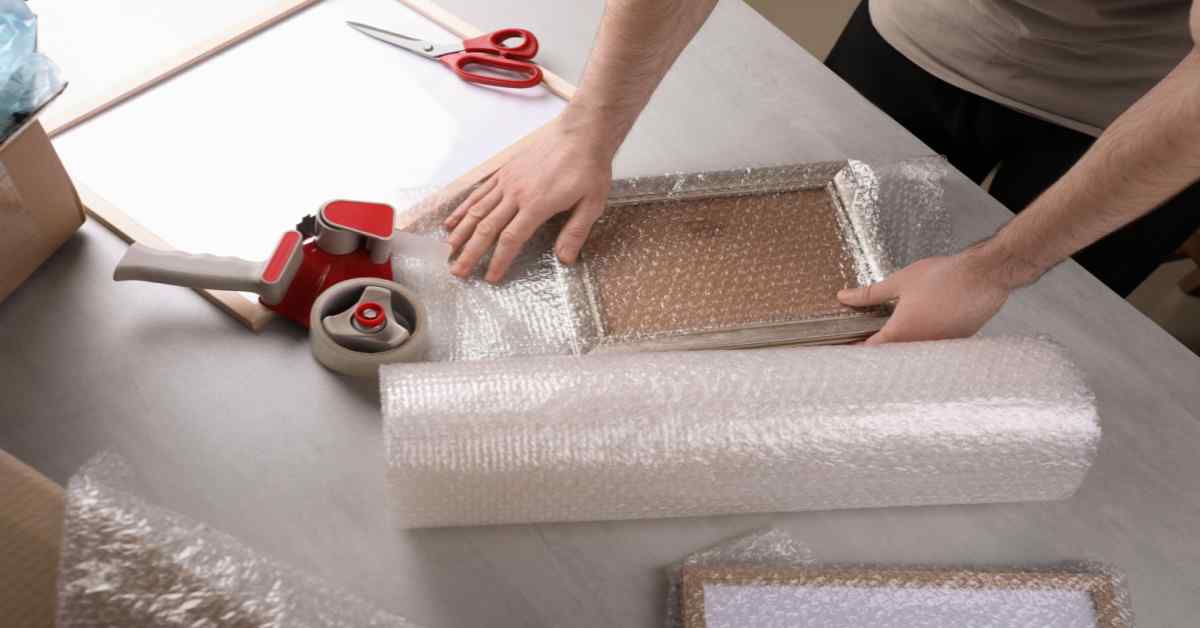
- Bubble Wrap: Material made of plastic that contains air bubbles that provide shock protection to delicate objects.
To Use It: Wrap delicate items completely with bubble wrap, keeping bubbles inward, add extra layers to fragile areas, and secure with packing tape. - Packing Peanuts: They are foam blocks that can be used to fill in any gaps within boxes to avoid movement of the objects
To Use It: Place a layer at the bottom of the box, position the wrapped item inside, and fill all gaps to prevent movement. - Foam Sheets and Rolls: These sheets and rolls are made out of foam and are used for cushioning. It can be used to cover furniture, household appliances, and delicate items to avoid scratches and shocks.
To Use It: Wrap items with foam sheets or rolls, add extra protection around edges and corners, and secure them with tape or stretch film. - Kraft Paper: They are lightweight but sturdy paper used to wrap household items and protect them from scratches, dust, and minor damage.
To Use It: Wrap household items with kraft paper, add extra layers around delicate areas, secure with tape, and place them inside suitable boxes. - Moving Blankets: They are large, cushioned covers that are used for protecting furniture from being scratched, dusty, and damaged.
To Use It: Cover furniture and bulky items completely with moving blankets, overlap the edges, and secure them with straps or stretch film.
Boxes & Structural Packaging Materials
Boxes and structural packaging provide support and protection to household goods by keeping them contained, separated, and stable during packing, loading, and transportation. Here are the kinds of boxes and structural packaging materials commonly used for relocation:
- Cardboard Boxes: These are lightweight containers made from cardboard and are commonly used to pack household and personal items.
To Use It: Choose a suitable box, reinforce the bottom with tape, add cushioning, arrange items without overfilling, and seal the box securely. - Corrugated Fiberboard Sheets: These are strong sheets with a fluted inner layer that provide additional support, separation, and protection to packed items.
To Use It: Use fiberboard sheets between items to create separation, reinforce fragile areas, or provide additional structure and protection inside boxes. - Wooden Crates: These are rigid wooden containers that provide strong protection for heavy, fragile, or valuable household items.
To Use It: Place cushioning inside the crate, position the item securely, fill empty spaces with protective material, and fasten the crate before transportation. - Pallets: These are flat, sturdy platforms used to support and organise multiple boxes or heavy items during handling and transportation.
To Use It: Arrange boxes or heavy items evenly on the pallet, keep heavier items at the bottom, and secure the load with stretch film or straps.
Securing & Protective Materials
Securing and protective materials help keep packed items stable and protect them from movement, scratches, dust, and damage during handling and transportation. Here are the kinds of securing and protection materials commonly used for relocation:
- Stretch Film: Stretch film is a flexible plastic wrap used to hold items together and provide an additional layer of protection against dust, moisture, and scratches.
To Use It: Wrap the stretch film tightly around packed boxes, furniture, or grouped items, overlapping each layer to keep them secure and protected. - Packing Tape: Packing tape is a strong adhesive tape used to seal boxes and secure wrapping materials during relocation.
To Use It: Use packing tape to seal box seams, reinforce edges, and secure wrapping materials to prevent boxes from opening during transit. - Strapping Bands / Ropes: Strapping bands and ropes are used to secure packed boxes, furniture, and bulky items and prevent them from shifting during transportation.
To Use It: Secure heavy boxes, furniture, or bundled items with straps or ropes to minimise shifting and maintain stability during transportation. - Dunnage Bags: Dunnage bags are inflatable protective bags placed between cargo to fill empty spaces and prevent movement during transportation.
To Use It: Place dunnage bags in empty spaces between cargo and inflate them to reduce movement and improve load stability during transit. - Furniture Covers: Furniture covers are protective covers used to shield furniture from dust, dirt, scratches, and minor damage during relocation.
To Use It: Cover furniture completely with protective covers, making sure corners and edges are covered too, then secure with straps or tape so the cover doesn't shift during handling. - Edge Protectors: Edge protectors are protective pieces placed along the corners and edges of furniture, boxes, and other items to reduce the risk of damage.
To Use It: Attach edge protectors to corners and exposed edges of furniture or boxes to reduce the risk of dents, scratches, and impact damage.
Factors That Determine Packaging
Here are the key factors to consider when selecting packaging, including the item’s size, weight, fragility, protection requirements, and transportation conditions:
- Size and shape of the item: Packaging must match the shape and size of the item and not have too much extra room.
- Weight: For heavy items, packaging should be made using reinforced material that can bear the weight.
- Fragility: For fragile items, more padding is needed.
- Type of the material: Different packaging materials should be selected according to the protection and type of the item.
- Type of transport: The packaging material should be able to handle the transport process.
- Storage environment: Factors such as moisture, dust, temperature, and long-term storage should be considered.
- Costs: The packaging should be economical as well as provide sufficient protection.
- Handling: Items requiring special handling may require special packaging.
Tips for Efficient Packaging During Relocation
Here are some practical tips to help you choose and use the right packaging for better protection, efficient space utilisation, and smoother transportation during a move:
- Select the correct size: Use boxes of appropriate sizes to minimize empty spaces and prevent any movement of items while in transit.
- Packaging according to the item: Use bubble wrap or foam for packing fragile items, strong boxes for heavy items, and covers for furniture.
- Do not overpack: Keep the boxes at a reasonable weight to make handling easy.
- Efficient use of space: Ensure the gaps are filled by using appropriate packing material, and pack the boxes neatly.
- Pack heavy items well: Use reinforced boxes or wooden boxes to pack bulky and expensive items.
- Package appropriately: Ensure the boxes have labels indicating what they contain for easy sorting and unpacking.
- Re-use packaging material if possible: Use old boxes and packing material wherever possible.
Why Do You Need Packers and Movers for Packing?
Here are the key reasons to choose Packers and Movers for a safe, efficient, and hassle-free packing experience:
- Professional Packing: Packers and movers make use of appropriate packing material and methods according to the size, weight, fragility, and nature of the goods. This makes sure that each item is packed properly for transportation.
- Risk of Damage: Packers and movers make sure that the items to be moved are carefully handled by using appropriate cushioning and wrapping.
- Time-Saving: Packing your whole house can take longer time; professionals can help you to finish faster.
- Reduced Physical Effort: You don’t want to handle the heavy furniture, appliances, and large boxes by yourself.
- Organised Packing: They will use proper packing and labelling to identify the items. It can make things easy for you while unpacking.
How Can NoBroker Help You?
Worried about choosing the right packaging for your move? NoBroker Packers and Movers makes relocation easier with professional packing tailored to your belongings. With 15 lakh+ moves across 100+ cities, our team handles fragile items, electronics, furniture, and household goods with care. Our damage and delay protection provides added reassurance during transportation, helping protect you against unexpected issues. From packing to delivery, our professionals manage every step, making your move safer, smoother, and stress-free. Choose NoBroker Packers and Movers for safe, reliable, and stress-free relocation from start to finish!
Frequently Asked Questions
How should I pack items with irregular shapes for moving?
Should I use the same packaging for a local and long-distance move?
How much packaging material do I need for a house move?
Can I reuse old packaging materials for moving?
How can I prevent items from moving inside boxes during transit?
About the Author

Sourabh
Senior Editor
Reviewed By
Bramha Maity
Reviewer


Recent Blogs
Subscribe to our Newsletter
Get latest news delivered straight to your inbox