2026 Guide on How to Pack Kitchen Items for Moving

6.5K Views
Table of Contents
Summary
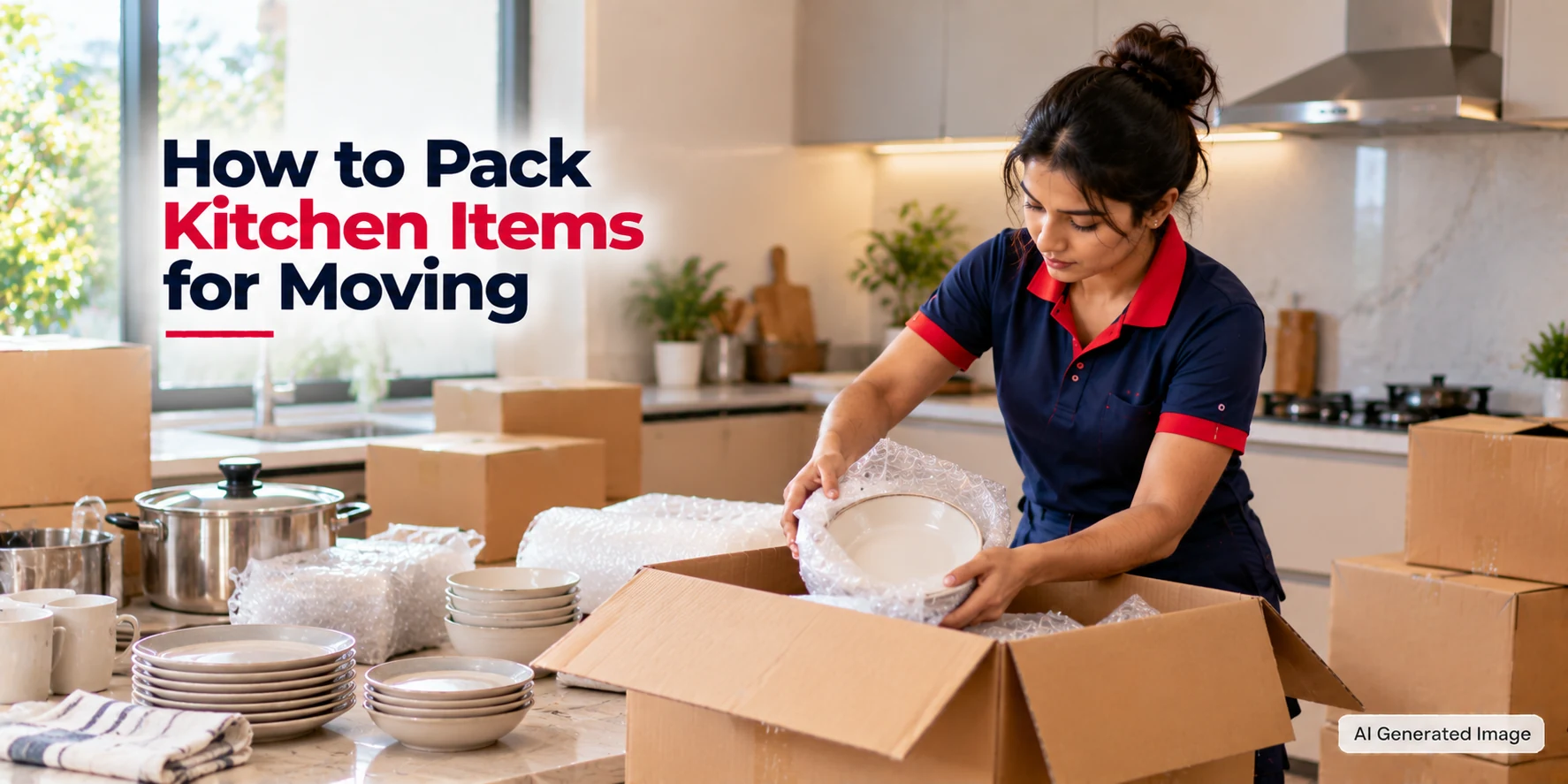
Anyone who has ever moved their home knows that knowing how to pack kitchen items is very important for a smooth move. But if you are still wondering what to do, this blog will tell you how to pack kitchen items, which materials to use, common mistakes and how to make sure nothing breaks while shifting.
Packaging Material You’ll Need to Pack Your Kitchen Items
The materials you use to pack your kitchen items play a key role in ensuring that they reach their new destination damage-free. Here is a list of packaging materials that you need to get your hands on. To keep it as helpful as possible, we have also included which items you can pack and how to pack them safely.
| Packing Materials | Kitchen Item | How to Pack | Packing Tips |
| Packing paper, bubble wrap, sturdy box, dividers | Ceramic plates, bowls, glasses and mugs | Wrap each item individually using either newspapers, foam sheets, or bubble wrap and place safely in a small-to-medium-sized box | Stuff the inside with paper to avoid shifting or crashing against each other |
| Packing paper, bubble wrap, foam sheet, sturdy medium-large-sized box | Pots, pans and lids | For ceramic or coated ones, stack with foam sheets in between to avoid breaking or scratches. For aluminum, iron, or steel, stack and secure them with large paper sheets or bubble wrap. | Pack their glass lids separately to secure them |
| Packing paper, knife guards, bubble wrap, small boxes | Cutlery and knives | Bundle similar items together and wrap securely. Make sure you put a knife guard on sharp items. If you don’t have them, use a folded piece of thick cardboard to secure the pointed edges | Keep sharp utensils separate for safety. Label the box as “Sharp” |
| Original box/small-medium sized cardboard box, bubble wrap, tape | Small Appliances | Clean, dry, and pack with detachable parts separately. Secure with bubble wrap or waste cloth rags | Wrap cords and secure loose parts |
| Packing paper, rubber bands, small-to-medium sized box | Food Containers | For glass ones, tighten the lids and secure with bubble wrap. For plastic ones, stack and pack lids separately | Avoid overstacking or overloading the box |
| Zip bags, bubble wrap, small box | Spices & Condiments | Seal lids tightly with tape, secure with bubble wrap, and pack upright | Use leak-proof bags to prevent spills |
| Small boxes, zip bags, containers | Pantry Items | Group dry goods and pack in clean, dry cardboard boxes or plastic containers. Secure everything with wrapping film and tape | Discard expired items before packing |
| Bubble wrap, packing paper, padded box, original boxes | Fragile Serveware | Wrap each piece individually and pack carefully. Secure everything with bubble wrap and tape. Avoid stacking without foam sheets | Mark the box as “Fragile” |
| Leak-proof bags, tape, plastic bins | Cleaning Supplies | Seal bottles tightly and pack separately. Use tapes/plastic films to avoid spillage | Keep away from food items |
| Coolers, ice packs, sealed containers | Refrigerator Items | Pack perishables in coolers for transport | Consume or discard perishables before moving |
Packing a Kitchen for Moving: Simple Hacks to Make Your Shifting Easier!
Shifting the kitchen is challenging. There is a higher risk of spillage, breakage, leaks, spoilage, and damage to expensive items. But if you know the right way to start packing kitchen items, you can literally save a lot of time, money, and mental stress. Keep reading to know how to pack the kitchen items for moving.
Recommended Reading
How to Pack a Mattress While Moving: Ste...
6.3K Views

How to Pack a TV for Moving
6.2K Views
Best Way to Pack Framed Pictures for Mov...
6.1K Views

How to Pack a Monitor for Moving: What Y...
6.1K Views
How to Pack Lamps for Moving: A Step-by-...
5.6K Views
- Start with decluttering at least a week before shifting: Get rid of everything you don’t need and keep everything you need on one side. You can either choose to discarded, donate or consume the items. This will help you get a clear idea of how many items you have and how much packaging material you’ll need.
- Gather all needed packing materials: You’ll need the right material to pack. This includes sturdy cartons, bubble wrap, packing paper, tape, zip-lock bags, dividers, markers, rags, and waste newspaper for wrapping items.
- Pick the right boxes: Always ensure that your heavy equipment, such as mixers, microwaves, and large utensils, goes in large boxes. All other things can be put in small to medium-sized ones. Because the kitchen usually has many small but necessary items, you should ideally get 2x as many small-to-medium boxes as large ones.
- Seal and label everything: Keep your markers in hand as you pack. Along with marking the inside content on the box, also mark the boxes as FRAGILE, HEAVY, KITCHEN, SHARP ITEMS, THIS SIDE UP, GLASS, etc., such labels so that you and your packers and movers know how to handle it.
- Pack edibles and pantry items: These items are more likely to spill, break, spoil, or leak onto other items. That's why place them in a separately marked box with their seals, locks, or handles shut tight and wrap everything in plastic film/zip locks and tape for more secure packing.
- Pack cookware by type: Not all your cookware can be packed the same way. Ensure your ceramics/glass lids are secured either with waste cloth or paper wraps, and clean and neatly pack your other pans and pots. Ensure that you pack the same type of cookware together, and that you line up packing paper between each so that nothing breaks, crashes, or scratches against another.
- Pack large appliances: Bulky appliances like fridges, microwaves, dishwashers, ovens, etc, can be packed in their respective boxes. But if you don’t have the original boxes, you can ensure that before your packers and movers arrive, you have cleared the equipment, unplugged it, and safely packed all additional equipment/add-on tools.
- Pack glassware and ceramics: These are some of the most fragile items. Your mugs and glasses, glass lids, ceramic plates, crockery, glass storage containers, tea sets, dinner sets, etc., can be secured by wrapping them in bubble wrap, taping them, and placing them safely in boxes. Always ensure that heavy and large glassware goes at the bottom. If you can avoid placing any plates vertically and placing anything with paper sheets in between. Secure the box with tape and mark the box without fail.
Common Mistakes When Packing Kitchen Items
No one wants to ruin their kitchen items, but sometimes, due to ignorance or a mistake, people end up breaking or damaging them. But worry not! We’ll tell you some of the most common mistakes that you can avoid while shifting.
- Overloading boxes: To ensure a box isn’t overloaded, see if you can lift it and set it down with little effort. This way, fragile/heavy items will stay safe over longer routes.
- Packing wet utensils or leaking bottles: Wet, uncleaned, or leaking utensils might dampen the box, and the box might break en route.
- Mixing sharp and fragile items: Even if you have to, use disposable fabrics, bubble wrap, tape, or plastic film to prevent anything from chipping, tearing, or breaking.
- Leaving gaps inside cartons: If there are gaps, then items might crash or bump against each other. To avoid any damage, you can put waste newspapers, clothes, bubble wrap, or kitchen towels in tight packaging.
- Using weak boxes: This is a nightmare, especially with glassware or heavy electronics. Their weight might cause the box to break, damaging all its contents.
- Packing essentials too early: Packing must also follow a timeline. You should first pack everything you won’t need till the last minute. Keep things like bottles, a few plates, spoons, etc unpacked till the end. So that you can use them if needed.
- Forgetting labels: Labels matter because they also tell packers and movers which boxes need extra care. Labelling also lets you know which boxes to unpack first at the new place.
Move Kitchen Items Safely With NoBroker Packers and Movers
Packing up from a house and shifting elsewhere is always an emotional and tiring process. But there are reliable experts like NoBroker Packers and Movers who can make shifting easy, quick, and affordable for you. Whether you are doing intercity shifting or moving out of state, NoBroker can help! With quality packaging material, expert professionals, excellent service,vice and transparent tracking, your shifting becomes a hassle-free experience. So, don’t spend any more time packing kitchen items for the move. Book NoBroker Packers and Movers today!
Frequently Asked Questions
Q: How many boxes are needed for a kitchen move?
Q: How do you pack kitchen appliances safely?
Q: Should plates be packed flat or upright?
About the Author

Sourabh
Senior Editor
Reviewed By

Bramha Maity
Reviewer


Recent Blogs
Subscribe to our Newsletter
Get latest news delivered straight to your inbox