





Summary
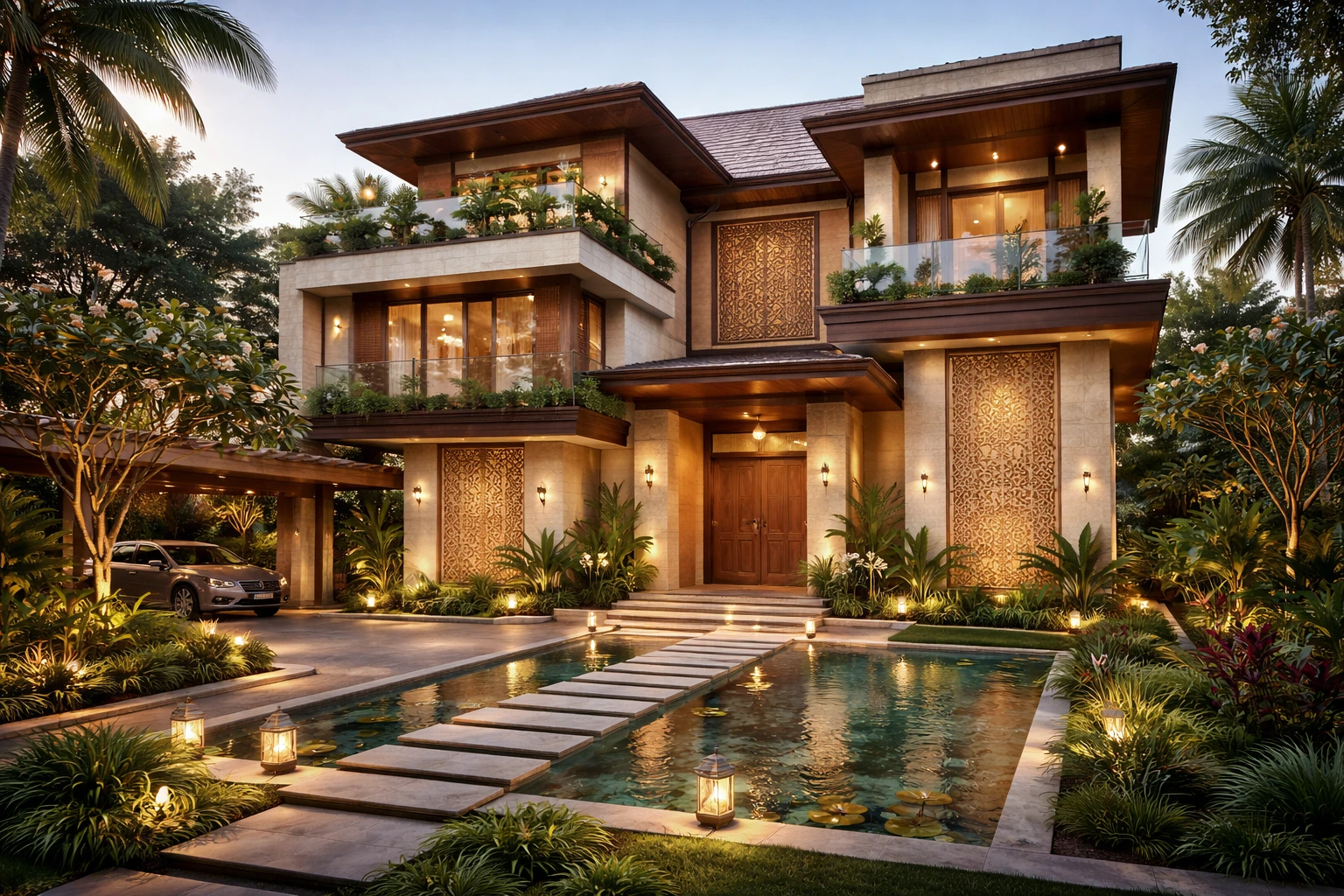
Indian contemporary house designs are the ultimate blend of tradition and modernity, creating homes that respect tradition while embracing modern living. This style is a mix of classical features, such as carved wood, jali screens, and bright colours, with contemporary features, which are open spaces, minimalistic furniture, and smart technology. Starting with the choice of genuine materials and continuing with the implementation of sustainability principles, modern Indian interior design offers an endless number of opportunities to create spaces that are meaningful in terms of culture and functional in their own way.
The contemporary Indian house design creates a home that preserves India's rich architectural heritage while incorporating modern aesthetics. This Indian Contemporary House design philosophy is not merely a visual style but also a means of creating spaces in which traditional craftsmanship meets modern functionality, combining elements of rich culture with simple, minimalist sensibilities. Whether building a new house or renovating an existing one, striking a balance among these factors has led to living conditions that are both culturally appropriate and aligned with contemporary life.
Understanding Indian Contemporary House Design
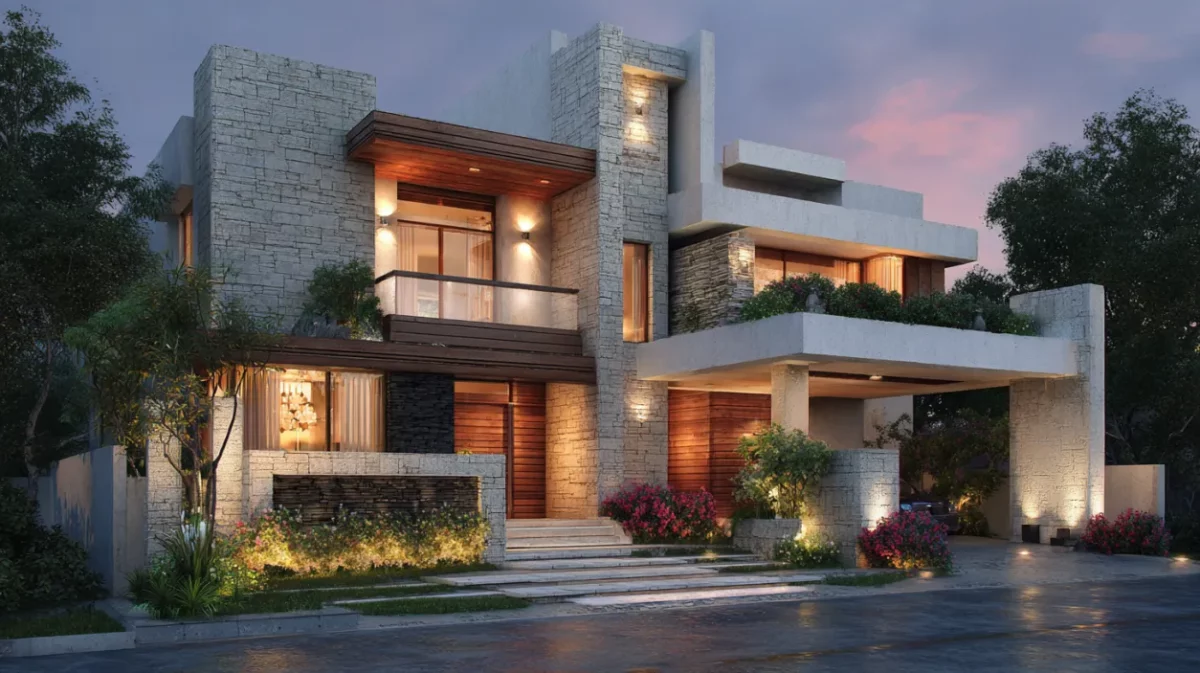
Contemporary Indian house design blends traditional architectural knowledge with modern design principles, reflecting India's multicultural heritage and the latest global trends. The ideology behind the modern house in India emphasises the creation of practical spaces that reflect personality without undermining cultural origins. Contemporary Indian interior design strikes a perfect balance between purely modern designs that are sterile and traditional styles that appear outdated. Contemporary houses in India feature clean lines and an open plan typical of modern architecture, enhanced by a blend of traditional Indian crafts, such as carved wooden panels, jali screens, and colourful fabrics, which showcase Indian craftsmanship.
Recommended Reading
Best 3 Bedroom House Plan: Modern and Sp...

69.9K Views

Jan 31, 2025
Top 20 PVC Wall Panel Design for Bedroom...
30.6K Views
Jan 15, 2025
25 Latest 2 BHK House Plans for Your Mod...
27.8K Views
Jan 23, 2025
12 Best Low-Budget Simple House Design I...
19.5K Views
Jan 31, 2025
Interior Design Cost in Bangalore
19.2K Views
Jan 31, 2025
Key Features of Modern House Design in India

Understanding the core characteristics of modern house design Indian helps create cohesive, beautiful spaces.
1. Open Floor Plans and Spatial Flow
Modern houses are increasingly focused on open plans, with fewer walls, allowing a free flow of space. This maximises natural light and encourages social interaction while maintaining functional areas, similar to concepts used in modern interior design ideas.
2. Natural Light and Ventilation
Large windows, glass doors, and strategically placed openings ensure abundant natural light throughout the Indian modern house design, reducing energy consumption while creating bright interiors, supported by thoughtful window designs.
3. Material Fusion
Modern Indian house interior design expertly combines materials—polished concrete with teak furniture, exposed brick with glass partitions, sleek countertops with hand-carved cabinets —which are often seen in curated wall and countertop designs.
4. Cultural Touchpoints
The use of pooja rooms, jali screens, brass accents, and traditional artwork helps keep the home culturally oriented while remaining contemporary, drawing inspiration from pooja room design ideas
Interior Elements of Indian Modern Interior Design

Authentic Indian modern interior design must be crafted with special attention to furnishings, colours, and arrangements.
1. Furniture Selection and Placement
Modern Indian interiors feature furniture that blends traditional design with modern functionality. Well-sculpted wooden furniture can be found alongside smooth sofas. The seating setup is low, with modern dining sets creating eclectic, harmonious environments, commonly showcased in living room interior design ideas.
2. Colour Palettes
Indian modern interiors strike a balance between neutral bases and accent colours. Calming foundations are made with earthy tones, interspersed with jewel tones, which are emerald green, sapphire blue, and ruby red, and provide energy without being overwhelming, , similar to best colour schemes for bedrooms.
3. Lighting Design
Layered lighting combines natural daylight with ambient and accent lighting. Modern fixtures with traditional metalwork are used to add character. Individual elements, such as brass chandeliers, are the focal points, aligning with curated ceiling lights design ideas.
4. Textile Integration
Indian contemporary interiors are characterized by rich fabrics. Silk cushions, cotton dhurries, brocade curtains, and hand-embroidered throws introduce texture and cultural authenticity, often paired with elegant curtain design ideas.
Architectural Elements in a Contemporary House in India
The exterior and structural design of the modern Indian house significantly contribute to its overall aesthetics.
Facade Design
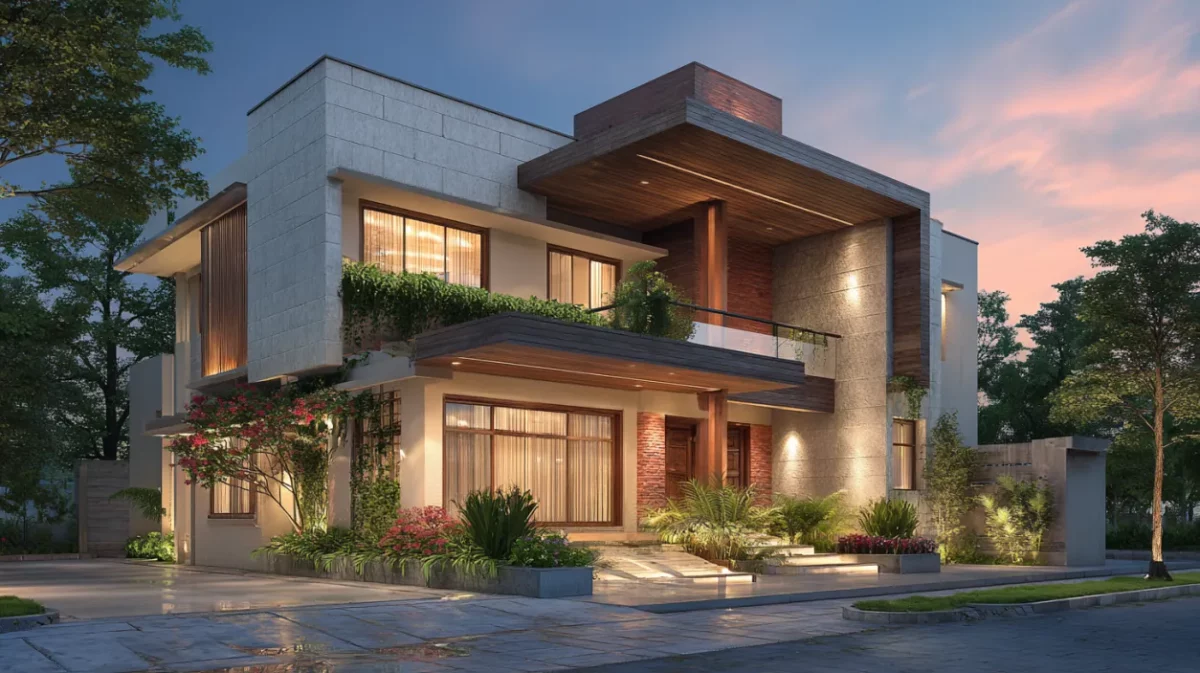
The facades of modern Indian house designs feature clean geometric lines with a touch of traditionalism. Natural stone cladding, brick, and terracotta tiles provide texture, while glass areas add lightness, a common pairing in curated exterior wall texture design ideas.
Roof Designs
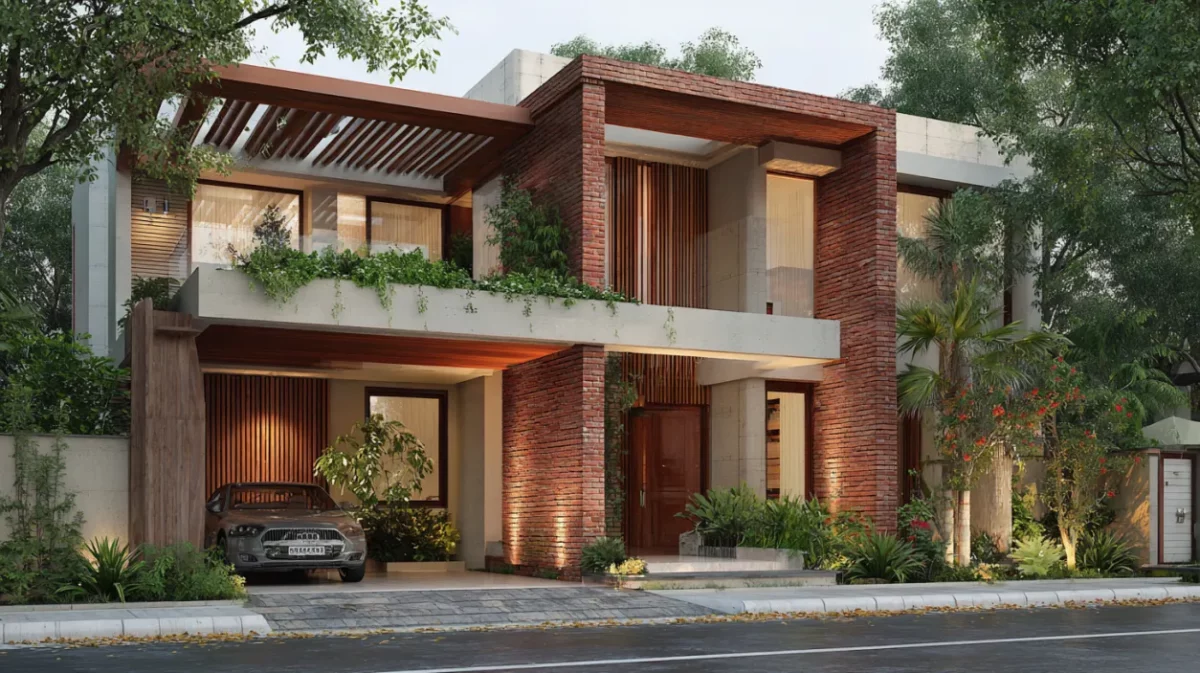
Contemporary houses in India typically have flat roofs with terrace gardens or sloping roofs with conventional tiles. The two strategies emphasise environmentally friendly features, such as solar panels and rainwater collection, often paired with thoughtful roof-sheet design.
Courtyards and Outdoor Spaces
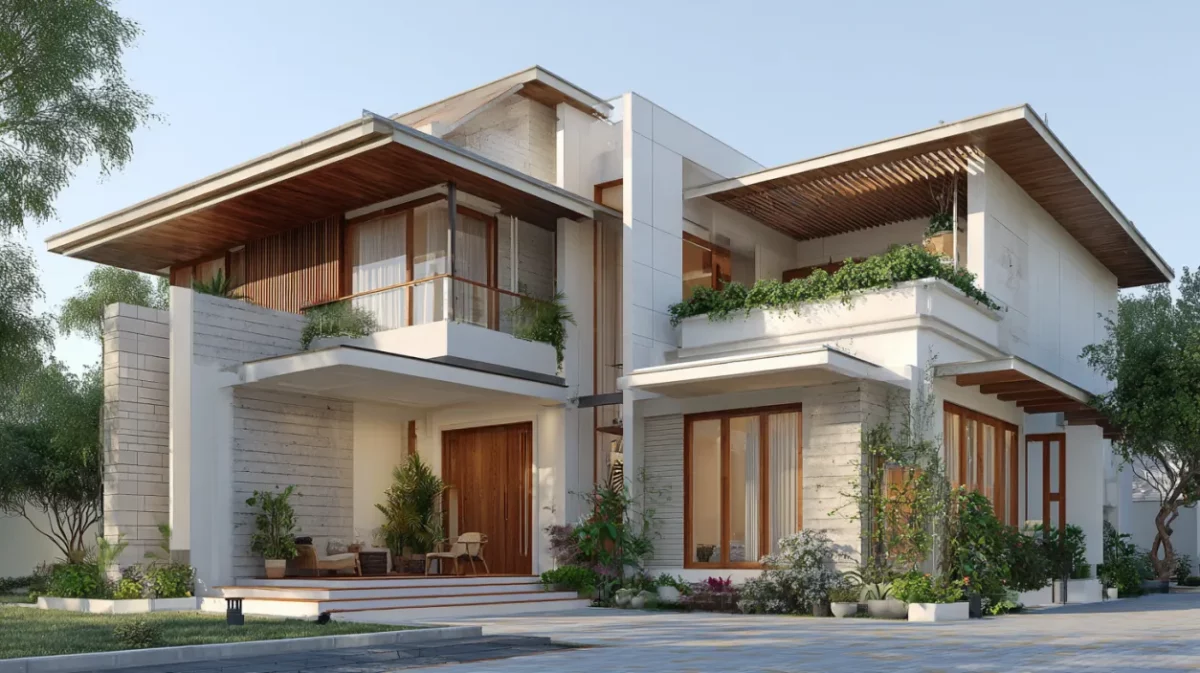
Today, Indian houses are being built with courtyards that encourage natural ventilation and create personal outdoor spaces with water features and greenery, similar to layouts used in courtyard house design ideas.
Balconies and Terraces
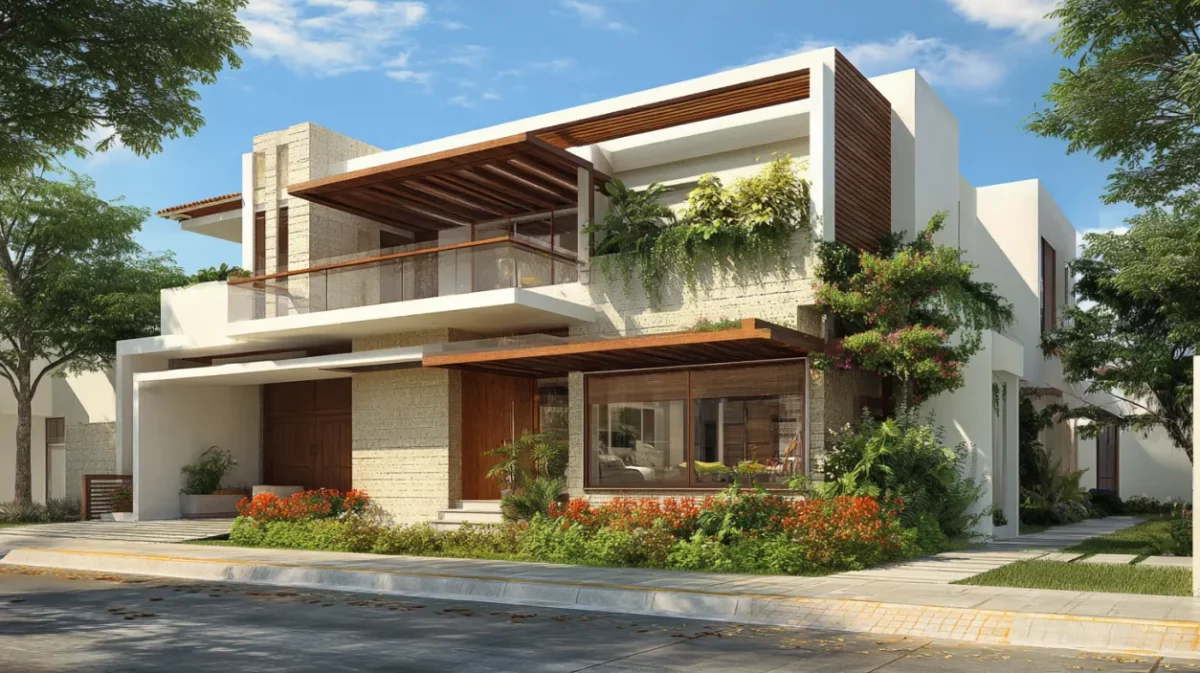
Expanding living spaces into open outdoor areas helps blur the line between indoors and outdoors and creates relaxation spaces, often designed using modern balcony design ideas.
Regional Influences in Indian Modern Interiors
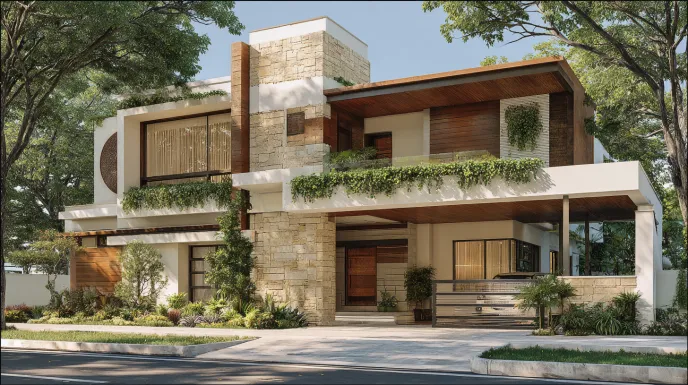
India's architectural diversity enriches contemporary design possibilities.
South Indian Elements
Kerala architecture is characterised by extensive use of wood, sloping roofs, and open verandahs. Contemporary interpretations maintain these elements with cleaner lines and updated finishes.
North Indian Touches
Rajasthani influences bring vibrant colours, intricate mirror work, and carved furniture. Modern adaptations soften these elements to create a sophisticated, cosmopolitan aesthetic, drawing inspiration from traditional Indian interior design.
Coastal Inspirations
Properties near coasts feature breezy, relaxed aesthetics with light colours, natural materials such as cane and rattan, and seamless indoor-outdoor connections.
Cost Considerations for Indian Contemporary Projects
Understanding budget implications helps you plan and execute your design vision.
| Component | Cost Range (Per Sq Ft) | Total Budget (1500 Sq Ft) | Notes |
| Basic Interior Design | ₹800 - ₹1,200 | ₹12 - 18 Lakhs | Standard finishes, modular kitchen, basic wardrobes |
| Mid-Range Design | ₹1,400 - ₹2,000 | ₹21 - 30 Lakhs | Quality materials, designer elements, complete furnishing |
| Premium Design | ₹2,500 - ₹4,000 | ₹37.5 - 60 Lakhs | High-end finishes, custom furniture, and home automation |
| Construction Cost | ₹1,800 - ₹3,200 | ₹27 - 48 Lakhs | Varies by location and material quality |
Note: Costs vary significantly depending on the city, material selection, and project complexity. Metro cities typically have 20-30% higher costs.
Sustainable Design Practices
The modern, contemporary house design also incorporates environmentally friendly elements.
Energy Efficiency
Proper orientation, high-performance glazing, and insulation reduce cooling needs. LED lighting and smart systems minimise electricity consumption and are often integrated into home lighting design.
Water Conservation
Rainwater harvesting, greywater recycling, and low-flow fixtures help conserve water, and courtyards collect rainwater naturally.
Natural Materials
Locally made wood, stone, and terracotta reduce emissions and support regional economies, frequently used in the best wood for furniture selections.
Technology Integration
Modern Indian households adopt smart technology while retaining an old-fashioned appeal.
Home Automation
There are built-in smart lighting, climate control, and security systems. The voice-activated controls are more convenient without compromising aesthetics.
Modular Solutions
Modular kitchens and wardrobes offer efficient storage while maintaining a clean look.
Common Design Challenges and Solutions
The implementation of modern Indian house design should be addressed by addressing specific challenges.
- Space Constraints: Urban properties are small. Some solutions include vertical storage, multipurpose furniture, and open layouts that maximise perceived space, as seen in space-saving furniture design ideas.
- Balancing Tradition and Modernity: Choose meaningful traditional elements as focal points within contemporary frameworks to avoid feeling dated or culturally disconnected.
- Budget Management: Prioritise investments in structural elements and high-use areas. Decorative elements can be added gradually.
Conclusion
Indian contemporary house design symbolizes the fusion of traditional culture and the modern way of life. These homes celebrate the past and look to the future by blending the old and the new in craftsmanship and beauty. In material selection, space planning, and ornamentation, Indian modern interior design has been successful, as it not only captures India's architectural tradition but also fulfils the requirements of contemporary lifestyles. What has been achieved is an authentic yet modern Indian home and contemporary Indian interiors in which families create memories filled with beauty.
How NoBroker Can Help You
NoBroker Interiors specialises in creating stunning spaces that balance traditional Indian aesthetics with modern functionality. Our design team understands contemporary indian interior design nuances and creates personalised solutions reflecting your style and needs. Whether you need complete indian modern house interior design or specific room renovations, NoBroker provides end-to-end services covering concept development, material selection, project management, and installation. We excel at sourcing authentic traditional elements while incorporating contemporary finishes and smart technology. We offer transparent pricing with no hidden costs, guaranteed timelines, and a 10-year warranty.
