What is an Affidavit for Education Loan: Meaning, Format, and Application Process


Affidavit Guide & Formats

170 Views
Table of Contents
Summary
Higher education often comes with a big financial commitment, and many students depend on loans to turn their academic goals into reality. But during the loan application process, a single missing document can delay approval and add unnecessary stress for both students and parents. This is where an affidavit for education loan becomes important. It serves as a legal declaration that supports your application and helps lenders verify key details. Understanding its meaning, format, and application process can make your education loan journey smoother, faster, and less confusing when you are already focused on securing admission and planning your future.
Why Is an Education Loan Affidavit Required?
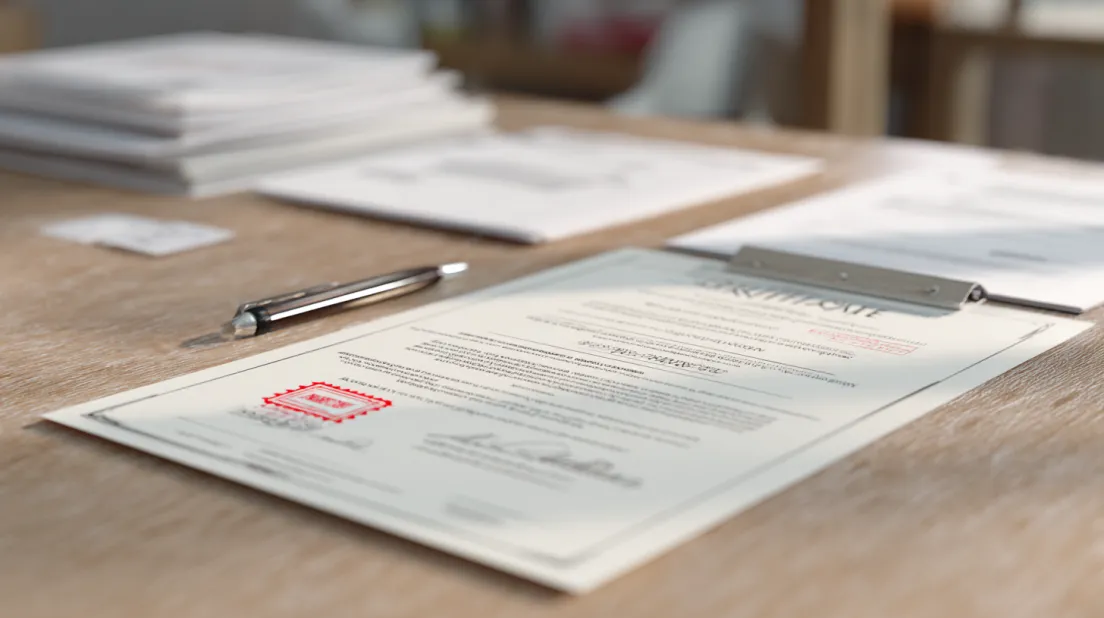
An affidavit for education loan is a legally sworn document that helps lenders verify authenticity, avoid misinformation, and assess the borrower’s true repayment capability before approving the loan. [3]
- Bank verification: Helps banks verify income, financial background, and sponsor details through a notarized declaration, ensuring the information submitted by the student is genuine, complete, and reliable for loan processing and approval.
- Prevention of fraud: Reduces risks of forged income documents, false financial claims, or hidden liabilities by providing a notarized statement that confirms the authenticity of all details shared during the education loan application process.
- Ensuring accuracy of income and financial capability: Confirms the applicant’s actual income level, family support capacity, and financial stability, ensuring banks correctly assess repayment ability before approving the education loan request.
- Strengthening loan eligibility: Improves loan approval chances by providing banks with a legally backed financial declaration that supports compliance checks, reduces documentation concerns, and demonstrates that the applicant meets eligibility criteria with confidence.
Types of Affidavit for Education Loan
Choosing the right affidavit format for an education loan helps banks verify details accurately and process the loan smoothly.
Recommended Reading

Name Change for Minor in India: Procedur...
4.9K Views


How to Change Birthdate in Birth Certifi...
4.3K Views
How to Change Name in Educational Certif...
4.3K Views

How to Change Name Legally in India: Ste...
2.8K Views

What Is One and Same Person Affidavit: M...
2.5K Views
- Income Affidavit: Used when students lack official income documents, this affidavit confirms true family earnings, financial stability, and support availability required by banks during education loan assessment and approval procedures.
- Sponsor/Parent Affidavit: Declares a parent or guardian’s responsibility for funding academic expenses, confirming their financial capability, repayment assurance, and long-term support commitment essential for education loan approval.
- Gap Affidavit: Used when students have academic gap years, explaining reasons for the break, confirming continued study intent, and helping banks verify eligibility and maintain trust during loan processing.
- Affidavit of Support (AOS): Common for overseas education, confirming a sponsor’s commitment to cover tuition, living costs, and academic expenses, ensuring banks assess financial backing accurately during loan evaluation.
- Address/Identity Affidavit: Required when address or ID documents are missing or mismatched, helping confirm the student’s correct identity and residence details for accurate education loan verification and processing.
Key Details Included in an Affidavit for Education Loan
A notary affidavit for education loan includes specific information. These verified details ensure transparency, prevent misinformation, and allow smooth processing of the student’s loan application. [4]
- Student’s personal details: Includes the student’s full name, age, address, identification numbers, and contact information.
- Parent/sponsor detail: Provides the sponsor’s name, relationship, occupation, and declared financial responsibility, confirming who will support the student’s education and ensuring the bank clearly understands the backing behind the loan.
- Annual income declaration: States the verified yearly income of the student or sponsor, helping banks assess repayment capability accurately.
- Proof of financial capability: Declares assets, savings, or income sources that demonstrate the sponsor’s financial strength.
- Purpose of loan: Explains why the loan is required, including tuition, accommodation, travel, or academic costs, helping banks understand the necessity and intended use of the requested funds.
- Academic details: Mentions course name, university, duration, and study purpose, confirming the student’s educational plan and helping the bank evaluate the relevance and authenticity of the program.
- Signature & attestation: Includes the student’s and sponsor’s signatures and official notarization, ensuring that every declaration in the affidavit is legally valid, verified, and acceptable for education loan processing.
Documents Required for an Affidavit for Education Loan
Banks ask for specific documents to verify identity, income, academic background, and financial capability before accepting a notarized affidavit. These records ensure accuracy, support compliance checks, and help process the education loan affidavit without delays. [5]
- Documents: Aadhar/PAN, address proof, passport-size photo.
- Income certificate or alternative proofs: Includes salary slips, IT returns, or official certificates showing genuine earning details, helping banks accurately assess financial strength and repayment capability for the education loan.
- Academic documents: Contains admission letters, mark sheets, and course information, confirming the student’s educational background, program authenticity, and purpose of seeking financial support through the loan.
- Bank statements: Show savings, transactions, and the sponsor's or student's financial stability, helping banks evaluate cash flow and overall eligibility to support education expenses.
Affidavit Format for Education Loan
AFFIDAVIT FOR EDUCATION LOAN
I, [Full name="true" of="true" deponent="true"], aged [Age], son/daughter of [Father s="true" mother="true" name="true"], residing at [Full address="true"], do hereby solemnly affirm and state as follows:
- That I am applying for an education loan from [Bank financial="true" institution="true" name="true"] for pursuing my [Course name="true"] at [College university="true" name="true"].
- That my family income is Rs. [Annual income="true"] and the details of my financial status are true and correct to the best of my knowledge.
- That I undertake to use the loan amount solely for educational purposes such as tuition fees, accommodation, books, and related academic expenses.
- That I will repay the loan as per the terms and conditions set by the bank/financial institution.
- That all the documents submitted by me (income proof, ID proof, admission letter, fee structure, etc.) are genuine and valid.
- That I declare that I am not availing any other education loan from any bank/financial institution for the same course.
VERIFICATION
I, [Name of="true" deponent="true"], hereby verify that the contents of this affidavit are true and correct to the best of my knowledge and belief. No part of it is false and nothing has been concealed.
Place: [City]
Date: [DD mm="true" yyyy="true"]
Signature of Deponent
(Name of Deponent)
NOTARY ATTESTATION
Signed and affirmed before me on this [DD mm="true" yyyy="true"] at [City].
Seal & Signature of Notary Public
Name: ________________________
Registration No.: ______________
Office Address: ________________
(Official Notary Stamp)
How to Get an Education Loan Affidavit?
Understanding the procedure for an affidavit for an education loan helps students follow the steps correctly and ensure the document is legally valid and accepted by the bank.
- Step 1: Prepare an accurate declaration covering identity, income, sponsor information, and academic intent, ensuring every detail matches the documents you will submit to the bank.
- Step 2: Print the completed affidavit on the correct stamp paper value required in your state to ensure its legal validity for education loan documentation.
- Step 3: Sign the affidavit in front of a licensed notary, allowing them to verify your identity and authenticate the declaration with an official seal and signature.
- Step 4: Attach the notarized affidavit with your loan application, income proofs, and academic documents so the bank can verify details quickly and process your loan smoothly.
Government Schemes Where an Education Loan Affidavit May Be Required
If you are applying for an education loan under a government-backed scheme, banks may ask for an affidavit to verify your eligibility, income status, or financial background. Here are some common schemes where this may apply [1]:
- PM-Vidyalaxmi Scheme
This scheme helps students access collateral-free education loans up to ₹10 lakh and may include interest subvention benefits for eligible applicants. Banks may request an affidavit to confirm income details or eligibility criteria. [2] - Central Sector Interest Subsidy Scheme (CSIS)
Under this scheme, eligible students from families with an annual income of up to ₹4.5 lakh can receive an interest subsidy during the moratorium period. An affidavit may be required to declare family income and support subsidy claims. [3] - Padho Pardesh Scheme
Designed for minority students pursuing higher education abroad, this scheme offers interest subsidy support. An affidavit may be needed to establish financial need and confirm eligibility. [4]
Note: Before preparing an affidavit, always check the exact documentation requirements with your bank or lending institution, as affidavit requirements can vary from one scheme to another.
Common Mistakes to Avoid When Submitting an Education Loan Affidavit
A small error in your affidavit for an education loan can delay approval or lead to additional document requests from the bank. Avoid these common mistakes in your affidavit for the education loan process:
- Providing incorrect income details: Ensure the income figures stated in the affidavit match those on the salary slips, income certificate, ITR, or other financial documents submitted to the bank. Any mismatch may raise verification issues.
- Ignoring the bank’s prescribed affidavit format: Many banks, such as SBI and HDFC Bank, may have their own affidavit templates or documentation requirements. Always check the bank’s prescribed format before drafting.
- Signing the affidavit before the notary process: Do not sign the affidavit in advance. The signature should generally be made in the presence of the notary public, who verifies and notarises the document.
- Missing important declarations: Forgetting to include declarations, such as not having availed another education loan for the same course (if required by the bank or scheme), can lead to rejection or delays.
- Using the wrong stamp paper value: Affidavits must be prepared on stamp paper of the correct denomination as per state laws, as stamp paper requirements may vary across states.
How NoBroker Helps With Education Loan Affidavits
NoBroker Affidavit Services simplifies the affidavit process by offering fast, reliable, and fully guided support for students and parents. Instead of struggling with local vendors, we help draft the affidavit for education loan accurately, ensuring all personal, income, and sponsor details match bank requirements. Our team also arranges quick e-affidavit or e-stamp procurement, removing the hassle of visiting government offices. This saves time, reduces errors, and ensures the document is legally valid. With our end-to-end assistance, we make preparing an education loan affidavit smooth, convenient, and stress-free.
Frequently Asked Questions
Is an education loan affidavit mandatory for all loans?
What is an Education Loan Affidavit, and why do banks require it?
Who should make the education loan affidavit, the student or the parent?
Can the education loan affidavit be used for multiple banks?
What documents are needed to draft an education loan affidavit?
What is the stamp paper value required for an education loan affidavit?
Can the same affidavit be submitted to multiple banks for an education loan?
About the Author

Sanjay A
Senior Editor


Recent Blogs
Subscribe to our Newsletter
Get latest news delivered straight to your inbox